
That sickening drop in your stomach when you realize your keys, wallet, or backpack isn’t where you left it is a feeling every Android user knows too well. Unlike the sealed ecosystem of competing trackers, the Android tracker landscape has rapidly matured, offering a wealth of options that leverage Google’s expansive Find My Device network to give you a genuine, crowd-sourced safety net for your most important items.
I’m Min — the co-founder and writer behind Gadgets Feed. I’ve spent hundreds of hours analyzing the technical specifications and user feedback on trackers that play nice with Android, from Bluetooth range and battery life to UWB precision and network reliability, to cut through the noise and find the gear that actually delivers.
This guide breaks down the top contenders for the best android tracker, focusing on the real-world specs and hidden trade-offs that separate a useful tag from a frustrating paperweight.
How To Choose The Best Android Tracker
Choosing the right tracker for your Android phone comes down to three critical factors: the network it uses, how you want to carry it, and the battery strategy that fits your forgetfulness level. Understanding these trade-offs will save you from buying a tag that loses connection the moment you walk out of Bluetooth range.
Network Affiliation: Google vs. Samsung vs. Universal
The biggest differentiator is which crowd-sourced network a tracker relies on. Trackers certified for Google’s Find My Device network leverage millions of nearby Android devices to report your tag’s location anonymously, even when you’re not in Bluetooth range. Samsung’s Galaxy SmartTag2, however, only connects to the Samsung SmartThings Find network, which is vast but limited to Samsung phone owners. Some newer trackers now offer dual compatibility with both Google and Apple networks, giving you the widest possible safety net, but they typically can only pair with one network at a time.
Form Factor: Card vs. Tag
The way a tracker fits into your life determines whether you’ll actually use it. Keychain tags are bulky but house larger speakers (often hitting 100 dB+) and use common, user-replaceable CR2032 coin cell batteries. Slim card-style trackers, on the other hand, slide discreetly into a wallet or passport case. The trade-off is a smaller speaker (louder is harder to achieve in a card profile) and often a non-replaceable internal battery, though some premium cards offer wireless charging and a multi-year lifespan.
Battery Life and Replacement Cycle
Battery life is a deceptively simple spec. A tracker claiming a “2-year battery life” simply means the included battery will last that long in typical use before requiring replacement or the device itself expires. Tags with replaceable CR2032 batteries are significantly more sustainable and practical—when the battery dies, you just pop in a new one for a couple of dollars. Card-style trackers often have a “6-12 year” shelf life but cannot be recharged or replaced by the user, making the entire tag a disposable unit once the battery depletes. UWB (Ultra-Wideband) features also drain batteries faster than standard Bluetooth-only operation.
Quick Comparison
On smaller screens, swipe sideways to see the full table.
| Model | Category | Best For | Key Spec | Amazon |
|---|---|---|---|---|
| WATSABRO 4-Pack | Best Overall | Multi-item tracking on a budget | 100 dB speaker | Amazon |
| Samsung Galaxy SmartTag2 | Premium Pick | Samsung phone owners needing UWB precision | Compass View + UWB | Amazon |
| NozlaID Wallet Card 2-Pack | Slim Design | Wallet/passport tracking with left-behind alerts | 120+ dB / 0.09in | Amazon |
| KIUP Wallet Card | Longest Battery | Set-and-forget wallet tracking | 10-year battery | Amazon |
| Reyke Dual-System 4-Pack | Versatile | Households mixing Android & iOS users | 180 ft Bluetooth range | Amazon |
| KIUP Air Tags 4-Pack | Value Pick | Budget-friendly bulk tagging | 98 dB speaker | Amazon |
| TIMU Dual-System 4-Pack | Entry | Basic item finding with dual-network support | 80-100 dB / 36m range | Amazon |
In‑Depth Reviews
1. WATSABRO Bluetooth Tracker 4-Pack
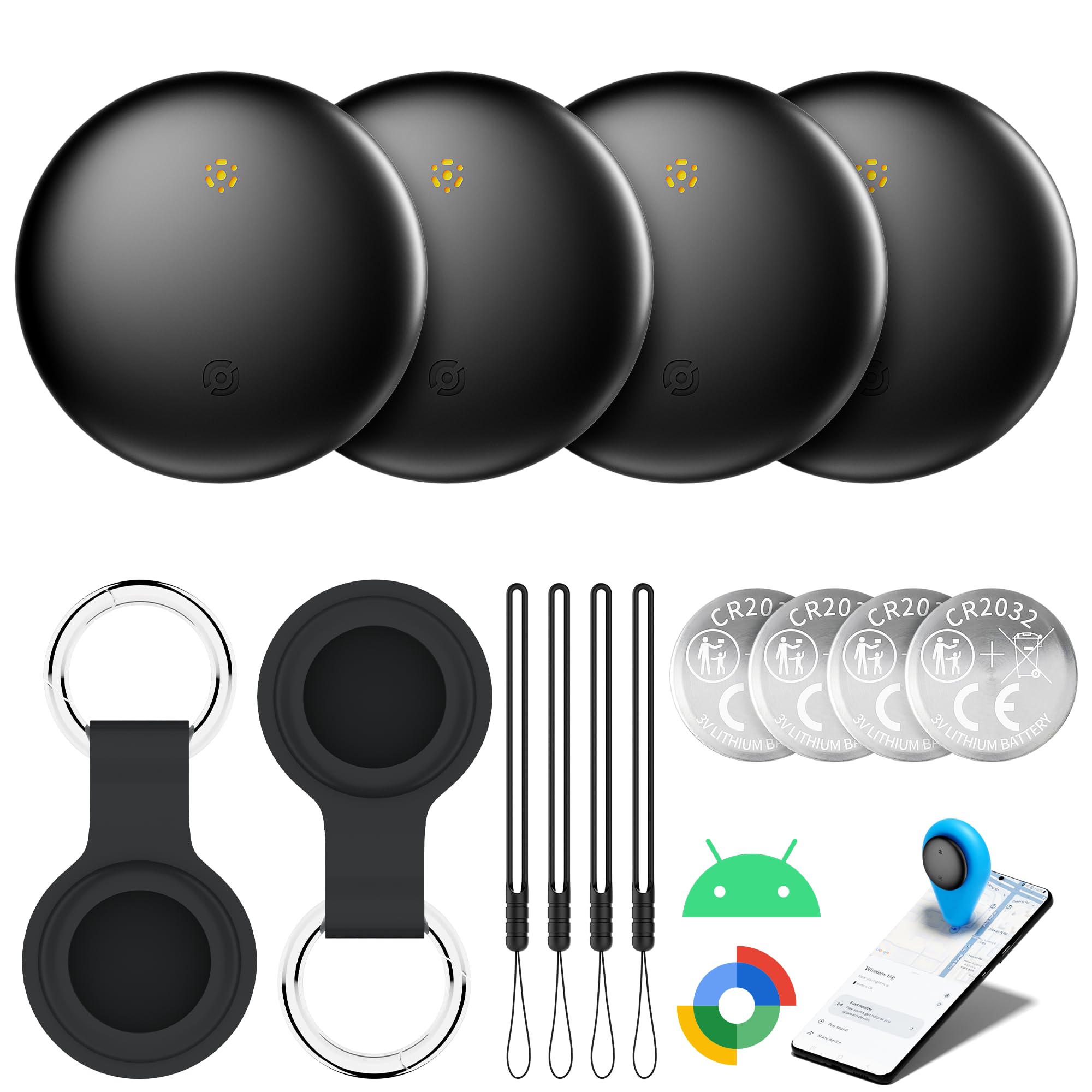
The WATSABRO 4-Pack is the current gold standard for the Android-first buyer who wants maximum utility for a minimal outlay. Each tag is officially Google-certified and locks into the Find My Device network without any additional apps or subscriptions. The 100 dB alarm is genuinely loud enough to hear a misplaced tag through a coat pocket or under a couch cushion, and the precision finding circle on your screen tightens as you close in on the item.
What sets this pack apart is the attention to daily durability. The IP66 rating means a solid spray of water from a hose or a splash from a puddle won’t faze it, while the included silicone case adds a layer of scratch and shock protection. The user-replaceable CR2032 battery is a welcome practical touch — when the two-year battery life depletes, you just swap in a fresh one instead of tossing the entire tag in the trash.
User reports highlight the simplicity of the setup, with most pairing in under two minutes on a Google Pixel or Samsung device. The global tracking feature uses the crowd-sourced network of nearby Android devices to update the tag’s last known location on a map, which is invaluable for lost luggage or a wallet left at a restaurant. The 60-gram weight means you’ll forget it’s even attached to your keychain until you need it.
Why it’s great
- Google-certified with native Find My Device support
- Loud 100 dB alarm with precision guidance circle
- Replaceable CR2032 battery ensures long-term use
Good to know
- Not compatible with Apple’s Find My network
- Some users report location updates can lag in low-traffic areas
2. Samsung Galaxy SmartTag2

The Galaxy SmartTag2 is the definitive choice for users deeply embedded in the Samsung ecosystem. Its standout feature is the UWB (Ultra-Wideband) chip which, when paired with a compatible Samsung flagship phone, enables Compass View — a directional arrow that points you directly to your lost item, telling you exactly how far away it is in feet. This is a level of precision that simple Bluetooth signal strength indicators cannot match.
Beyond precision, Samsung has refined the physical design to make it more versatile than the first generation. The IP67 rating means it can survive being submerged in a meter of water for up to 30 minutes, and the battery life indicator in the SmartThings Find app gives you clear warning before the replaceable CR2032 needs swapping — Samsung claims up to 500 days of use. The double-press feature on the tag itself can ring your phone, a simple but appreciated convenience when you’ve misplaced your handset.
Customer feedback heavily emphasizes the seamless setup (roughly 30 seconds via the SmartThings app) and the reliability of the SmartThings Find network for offline tracking. One user reported successfully locating luggage that hadn’t been loaded onto a plane, allowing them to intervene before departure. The primary limitation is its network lock — it only connects to Samsung’s crowd-sourced find network, not Google’s broader Find My Device network, which means non-Samsung phones passing by won’t help relay its location.
Why it’s great
- UWB Compass View for precise directional finding
- IP67 water and dust resistance for outdoor use
- 500-day battery life with replaceable CR2032
Good to know
- Only works with Samsung SmartThings Find network
- Compass View requires a Samsung Galaxy phone with UWB
3. NozlaID Wallet Tracker Card 2-Pack
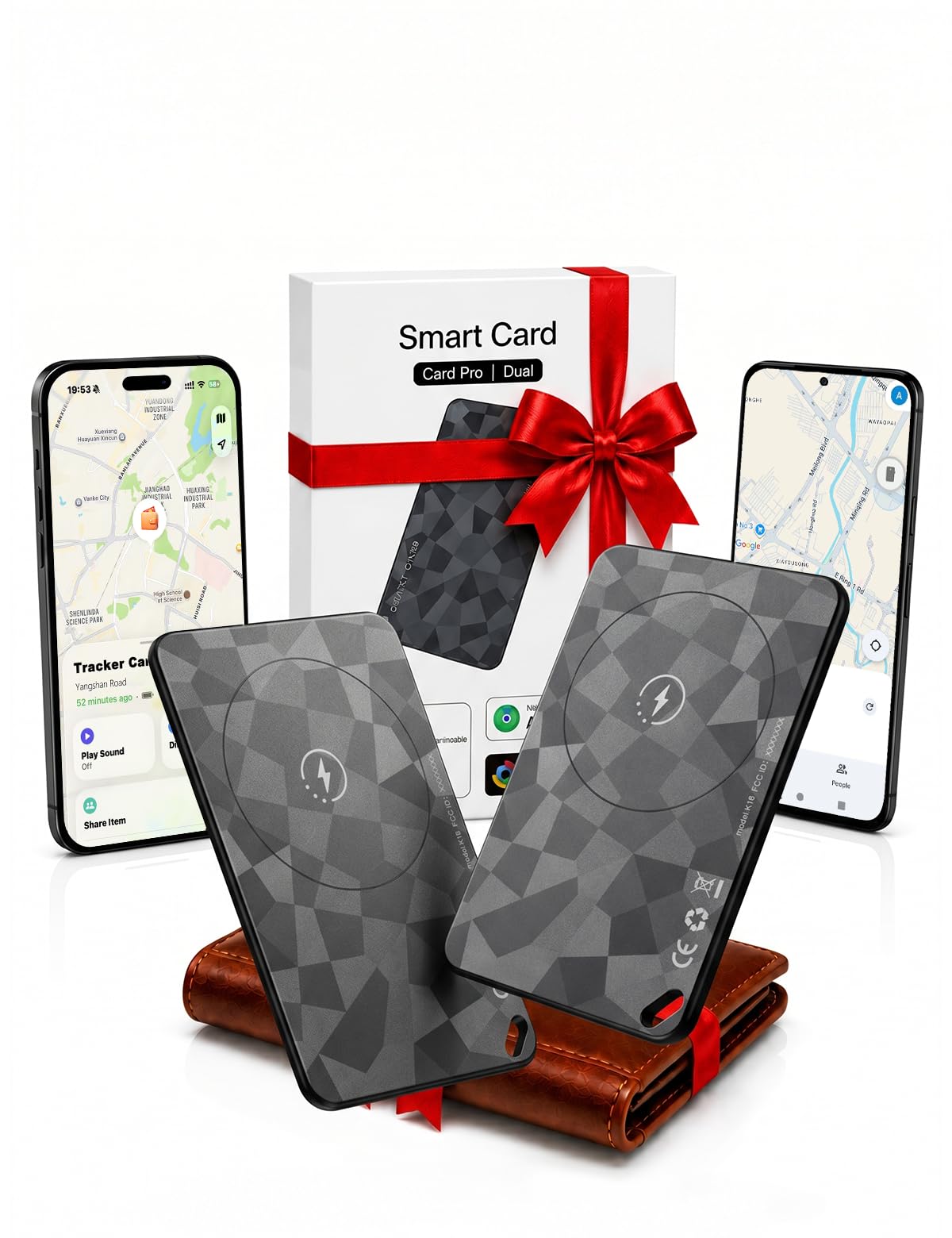
The NozlaID Wallet Card solves the one major pain point of traditional tracker tags: bulk. At just 0.09 inches thick, this tracker slides into a credit card slot in your wallet without creating a noticeable bulge. Despite its slim profile, it packs a 120+ dB speaker that is genuinely piercing — easily audible through a dense leather wallet or a closed backpack pocket.
Its network flexibility is a key advantage. The card natively works with both Google’s Find Hub and Apple’s Find My network, making it a perfect choice for households where one partner uses an Android phone and the other uses an iPhone. The left-behind alert system is a genuinely useful feature: if you walk away from your wallet without it, your phone buzzes with a warning, giving you a chance to backtrack before the item is truly lost. The left-behind distance threshold is set automatically based on Bluetooth disconnection.
Battery strategy here deviates from the CR2032 norm. The NozlaID card uses a built-in battery that is not user-replaceable but supports wireless charging. The 5-year standby time with wireless top-ups means you never have to buy a replacement battery, but when the battery ultimately dies after its 6-12 year lifespan, the entire card must be replaced. Some user reports note that the left-behind alert can occasionally be inconsistent due to Bluetooth signal fluctuation, but the core tracking and alarm functions are widely praised as reliable.
Why it’s great
- Ultra-slim 0.09in fit for any wallet slot
- 120+ dB speaker is among the loudest in its class
- Works with both Google and Apple find networks
Good to know
- Non-replaceable battery; must buy a new card when it dies
- Left-behind alerts can be inconsistent in some environments
4. KIUP Wallet Tracker Card
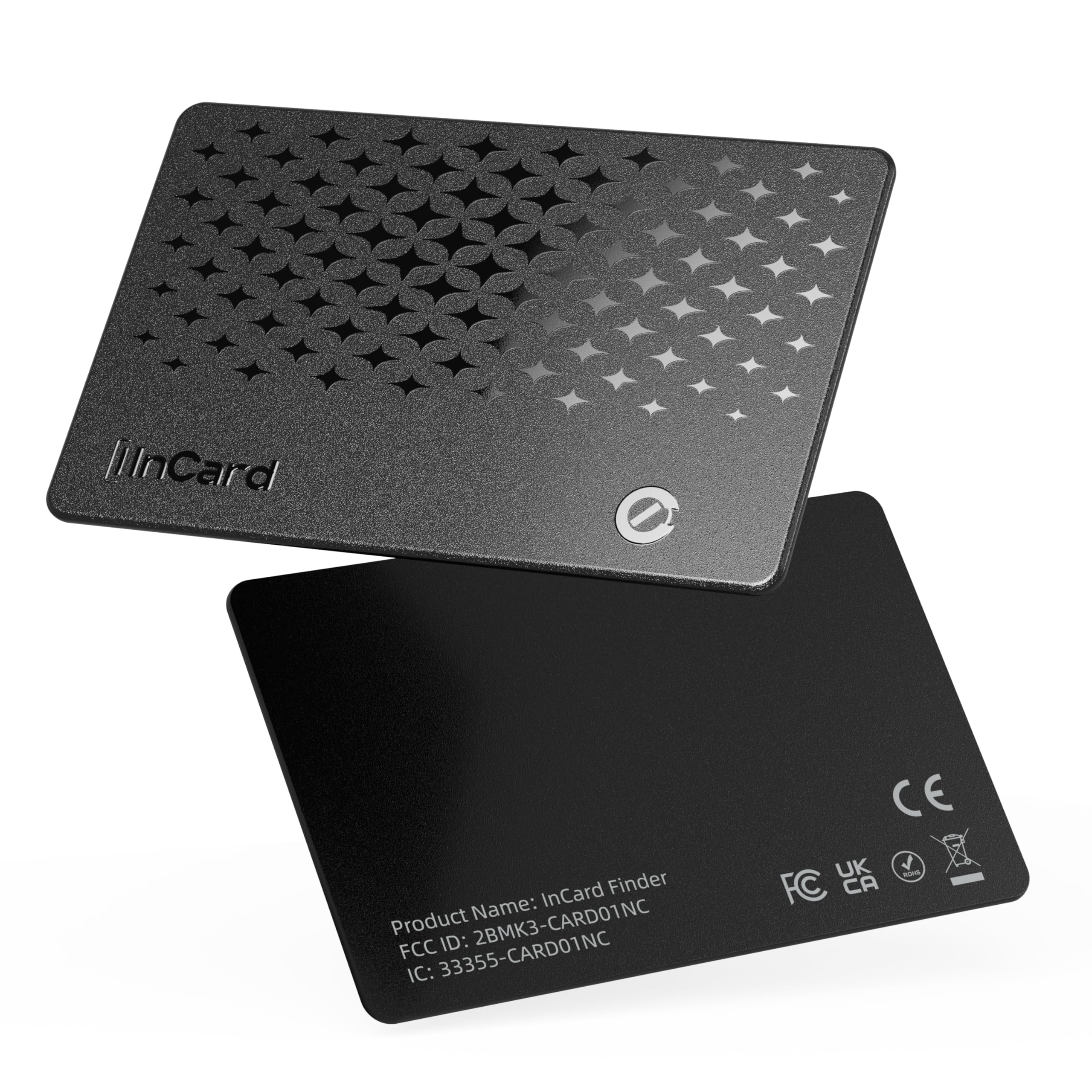
The KIUP Wallet Card is built for the ultimate set-and-forget experience. Its standout claim is a 10-year battery life, a remarkable figure achieved by using a sealed 220 mAh battery that prioritizes extreme longevity over rechargeability. The trade-off is that this card is a sealed unit with no user-replaceable battery, but a decade of worry-free tracking is a compelling value proposition for anyone who simply wants to put a tracker in their wallet and forget about it.
Despite its emphasis on battery life, the KIUP card doesn’t skimp on output power. The built-in speaker reaches up to 120 dB, which is loud enough to hear clearly through a thick leather wallet or a suitcase. The card also supports UWB-based distance visualization within Bluetooth range, showing you how close you are to the item on your phone screen. The IP68 waterproof rating means it can survive accidental immersion in water — a significant upgrade over IP65-rated competitors.
Form factor feedback is generally positive, with users noting it is slightly thicker than a standard credit card but still slim enough to fit comfortably in most wallets. Setup is praised for being fast and straightforward on both Android (via Google Find Hub) and iOS (via Apple Find My). The main limitation is the same as any sealed tracker: when the battery finally gives out after a decade, the entire card must be disposed of and replaced. For most users, however, that’s an acceptable trade-off for a tool that requires zero maintenance for years.
Why it’s great
- Exceptional 10-year battery life with no recharging required
- IP68 protection against full water submersion
- UWB distance visualization for precise locating
Good to know
- Sealed battery means the card is non-replaceable and disposable
- Slightly thicker than a typical credit card may feel snug in some wallets
5. Reyke Dual-System Air Tracker Tags 4-Pack
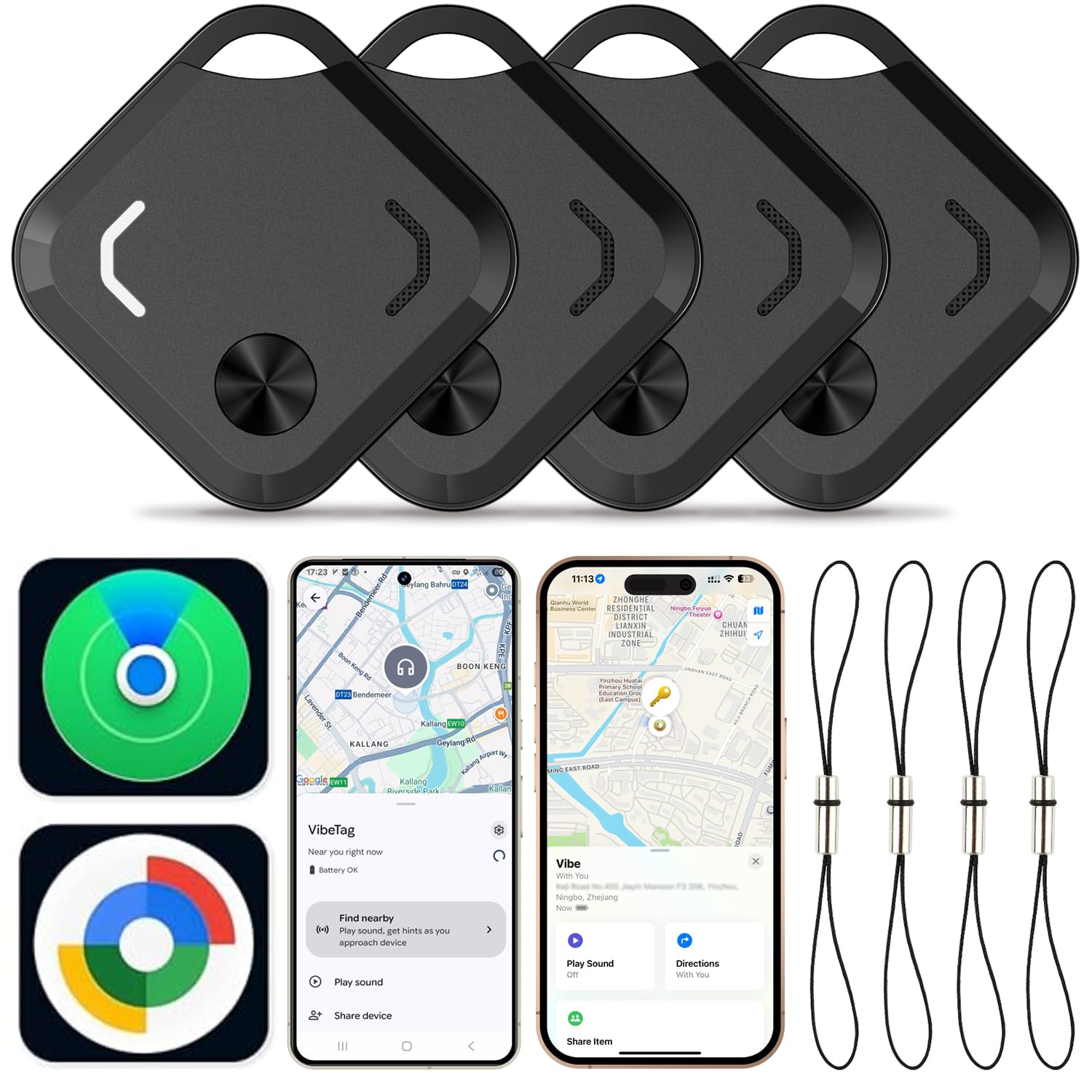
The Reyke tracker is a rare breed that bridges two separate find networks. It is certified for both Google’s Find Hub and Apple’s Find My network, meaning it can function inside either ecosystem depending on which phone you pair it with. This makes it an ideal purchase for mixed-device households — you can buy one set and let each family member pair their tag with their own phone’s native find network without needing separate branded trackers.
The Bluetooth range is rated at a generous 180 feet (approximately 55 meters), which is stronger than many competing tags. Within that range, the built-in speaker can be triggered to help you locate an item by sound. Outside Bluetooth range, the tag leverages the crowd-sourced network of whichever platform it is paired with to update its last known location. The Lost Mode feature pushes the tag’s location to the network on a continuous basis, and you can share access to the device’s location with up to five trusted contacts.
User reviews consistently highlight the ease of pairing and the compact size of the tags. One reviewer noted they are smaller than the product photos suggest, sitting unobtrusively on a keychain. The choice between networks is a critical caveat: the tag cannot pair with both an Android and an iPhone simultaneously. To switch from one network to the other, you must factory reset the tag by unpairing it from the original device. For most users who commit to one platform, this is a non-issue, but mixed-platform users need to be aware of the limitation.
Why it’s great
- Works with both Google and Apple find networks
- 180 ft Bluetooth range is above average
- Shareable location with up to 5 people
Good to know
- Cannot pair with Android and iOS devices simultaneously
- Factory reset required to switch between networks
6. KIUP Air Tags 4-Pack for Android
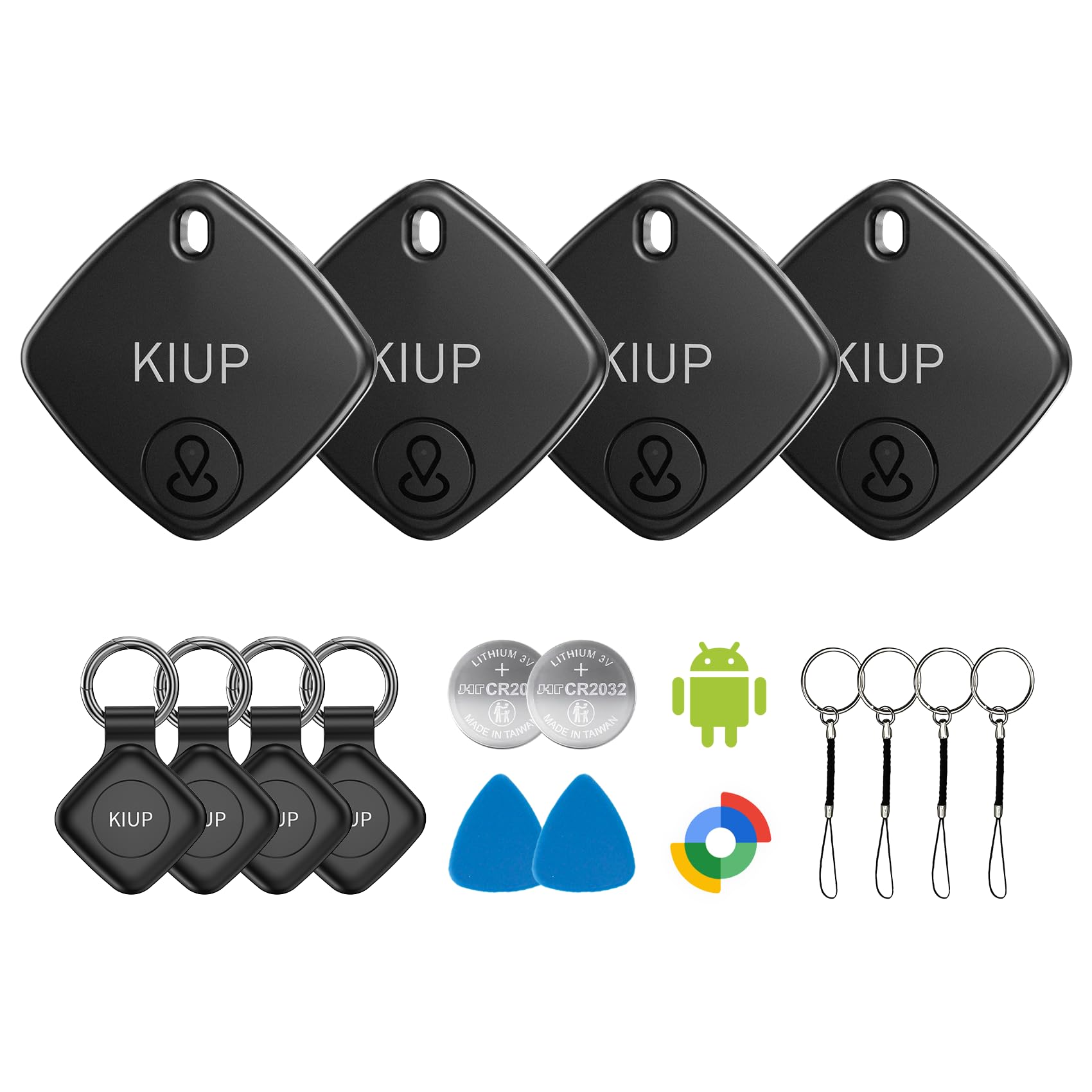
The KIUP Air Tags 4-Pack is the entry-level volume buy that delivers solid performance without any fuss. They are certified for Google’s Find Hub and pair directly with the native app on any device running Android 9 or newer — no third-party downloads or accounts required. The 98 dB speaker is slightly less powerful than the 100-120 dB competitors, but still loud enough to be heard clearly from inside a drawer or a bag in a quiet room.
Bluetooth range is rated at 100 meters (roughly 330 feet) in open air, which is competitively long for this price tier. Each tag comes with a silicone case, a keychain loop, and a spare battery, a generous accessory bundle that adds real value. The IP65 waterproof rating provides solid protection against rain and splashes, though it doesn’t match the submersion capability of IP68-rated cards. The global cloud positioning function uses the Google network to update the tag’s location on a map when out of Bluetooth range.
Customer reviews praise the simplicity of the setup, with several users reporting they were up and running in under five minutes. The included accessories (extra batteries, label stickers, and a battery tool) are a thoughtful touch that reduces the friction of getting started. The main trade-off for the price is the 98 dB alarm, which may not cut through ambient noise in a crowded coffee shop or a busy street as effectively as louder alternatives. For indoor use and home tracking, however, it is more than sufficient.
Why it’s great
- 100 meter Bluetooth range for extended coverage
- Comes with accessories including extra batteries and cases
- Simple, no-app-needed pairing with Android
Good to know
- 98 dB speaker is quieter than premium alternatives
- IP65 is splash-resistant but not submersible
7. TIMU Dual-System Air Tracker Tags 4-Pack
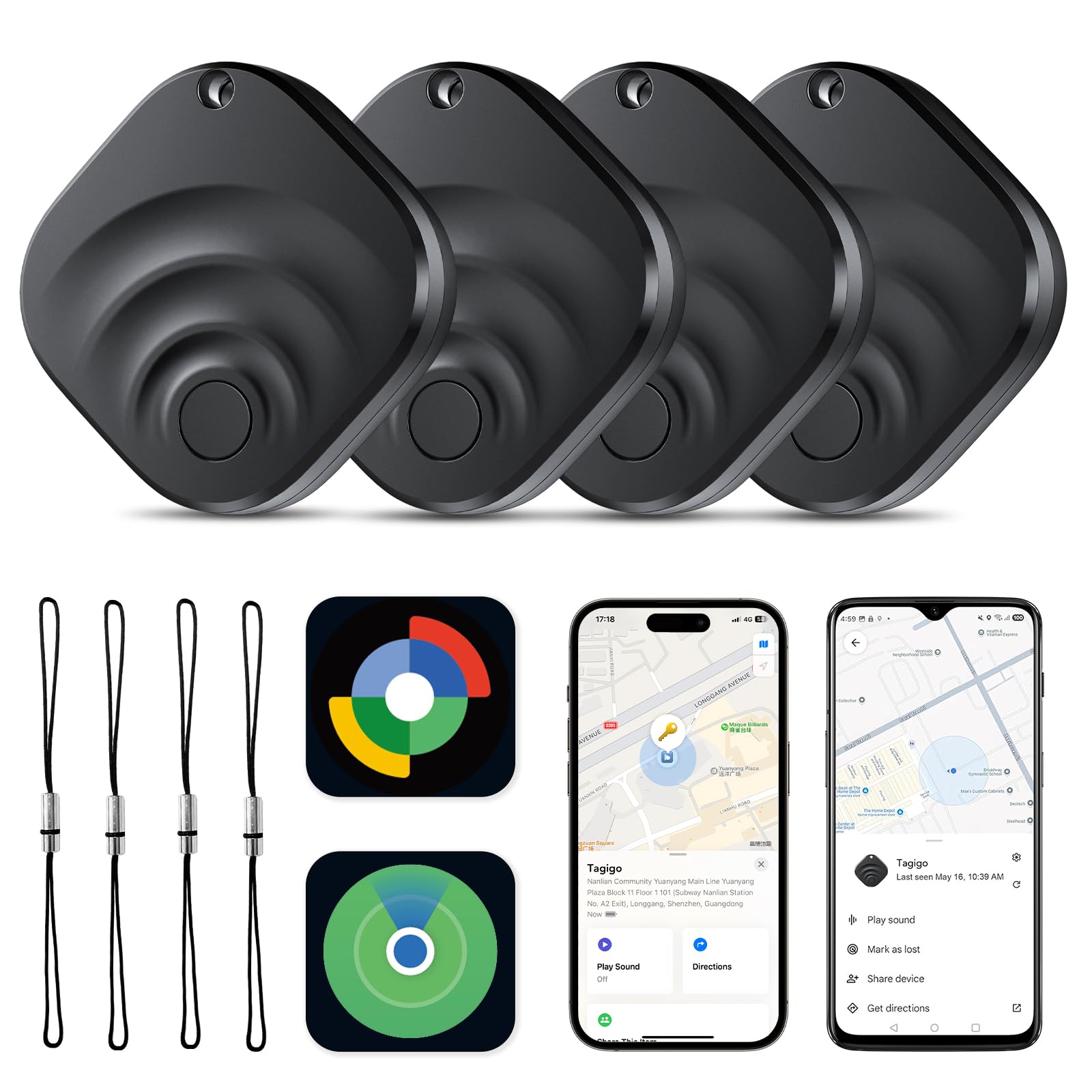
The TIMU 4-Pack offers dual-network compatibility at an accessible entry point, supporting both Google’s Find Hub and Apple’s Find My network. Each tag uses a CR2032 battery (not included) that requires a small screwdriver to access, which is a minor inconvenience compared to competitors with tool-free battery doors. The Bluetooth range is rated at 36 meters (roughly 118 feet), which is shorter than some competitors but sufficient for locating items within a typical home.
The speaker output is rated between 80-100 dB, placing it at the quieter end of the spectrum. It will be audible in a quiet room or from a nearby pocket, but may struggle to cut through background noise in a loud environment like a busy street or a gym. The device sharing feature allows you to share the tracker’s location with others through Android’s native features or iOS 17, a useful function for tracking shared keys or family luggage.
User experiences are mixed. Some buyers praise the simplicity of pairing and the solid performance for the price, while others report a frustrating initial pairing process that requires a factory reset (pressing the button once, then holding for four beeps) to get the tag recognized by a new phone. The included batteries were found pre-installed in some units, contradicting the “batteries not included” specification. For the price-conscious shopper who needs basic tracking functionality and doesn’t mind a potential setup hiccup, this pack delivers adequate performance.
Why it’s great
- Works with both Google and Apple find networks
- Device sharing for up to 5 people on Android 9+ or iOS 17+
- No subscription fees for any features
Good to know
- Pairing can be finicky and may require a factory reset
- 80-100 dB speaker is the quietest in this roundup
FAQ
Can I use an Apple AirTag with an Android phone?
What is the difference between Google Find Hub and Samsung SmartThings Find?
How does lost mode work on an Android tracker?
Final Thoughts: The Verdict
For most users, the best android tracker winner is the WATSABRO Bluetooth Tracker 4-Pack because it delivers the perfect balance of loud sound, replaceable batteries, and Google certification at a price that makes it easy to tag every important item you own. If you want the most precise finding experience with UWB compass view, grab the Samsung Galaxy SmartTag2. And for a slim, set-and-forget wallet solution that integrates with both Android and iOS networks, nothing beats the NozlaID Wallet Tracker Card 2-Pack.