
A fishing kayak isn’t a casual purchase. It’s a mobile fishing platform that needs to handle gear, weather, and the occasional big fish without compromising your safety. The difference between a frustrating day on the water and a productive one often comes down to hull design, seat comfort, and whether your hands need to hold a paddle or work a rod.
I’m Min — the co-founder and writer behind Gadgets Feed. I’ve spent countless hours analyzing hull designs, pedal drive gear ratios, and storage layouts to find the models that actually deliver for serious anglers, not just weekend paddlers.
Whether you’re chasing bass on a calm lake or working tidal creeks, choosing the right best angler kayak means matching weight capacity, stability, and propulsion to your specific fishing style and budget.
How To Choose The Best Angler Kayak
An angler kayak has different priorities than a recreational kayak. You need a stable platform that allows hands-free operation, ample storage for tackle and rods, and a seat that stays comfortable for hours. The three biggest factors are hull stability, propulsion system, and weight capacity.
Hull Design and Stability
Pontoon-style hulls offer the widest beam and best primary stability for standing and casting. Tunnel hulls provide a balance of stability and tracking. A flat deck without raised ridges lets you move your feet freely around gear. Look for a beam width of at least 32 inches if standing is a priority.
Propulsion: Paddle vs. Pedal Drive
Pedal drives free your hands for active fishing, trolling, and fighting fish. Propeller drives (PDL) offer smooth forward and reverse, while flipper drives are lighter and simpler. If your budget doesn’t allow a pedal system, a stable sit-on-top with good scupper drainage and a long paddle shaft can still perform well.
Weight Capacity and Storage
Always subtract your body weight from the rated capacity to see how much gear you can carry. A 400-pound capacity leaves room for coolers, tackle boxes, rods, and a fish finder. Large rear tankwells with bungee lacing are essential for crates or catch bags. Front hatches should be gasketed and dry.
Quick Comparison
On smaller screens, swipe sideways to see the full table.
| Model | Category | Best For | Key Spec | Amazon |
|---|---|---|---|---|
| Old Town Sportsman PDL 106 | Premium Pedal | Serious anglers needing reverse | 450 lb capacity / 107 lb weight | Amazon |
| Wilderness Systems Recon 120 HD | Premium Pedal | Stand-up fishing with 360° access | Helix PD drive / 360 swivel seat | Amazon |
| BKC Brooklyn 10.5 Pro | Mid-Range Pedal | Budget pedal drive entry | 440 lb capacity / 65 lb weight | Amazon |
| Pelican Catch HDII Premium | Mid-Range Pedal | HyDryve pedal system versatility | 3 flush rod holders / rudder control | Amazon |
| Perception Pescador Pro 12 | Mid-Range Paddle | Comfortable all-day sit-on-top | 375 lb cap / adjustable lawn chair seat | Amazon |
| Wilderness Systems Pungo 105 | Mid-Range Sit-Inside | Lightweight speed and cargo | 47 lb weight / dry dash storage | Amazon |
| Perception Outlaw 11.5 | Mid-Range Paddle | Larger paddlers and heavy gear | 425 lb cap / integrated tackle trays | Amazon |
| Pelican Catch Mode 110 | Mid-Range Paddle | Stand-friendly tunnel hull | 67 lb weight / ergoboost seat | Amazon |
| Sea Eagle FSK16 FishSkiff | Premium Inflatable | Portable storage-limited anglers | 1765 lb cap / fits in car trunk | Amazon |
| Lifetime Triton Angler 100 | Budget Paddle | Entry-level fishing on calm water | 49 lb weight / integrated skeg | Amazon |
| Lifetime Kokanee SOT | Budget Tandem | Solo or duo casual fishing | 36 inch beam / 76 lb weight | Amazon |
In‑Depth Reviews
1. Old Town Sportsman PDL 106 Solo Sit-on-Top Fishing Pedal Kayak
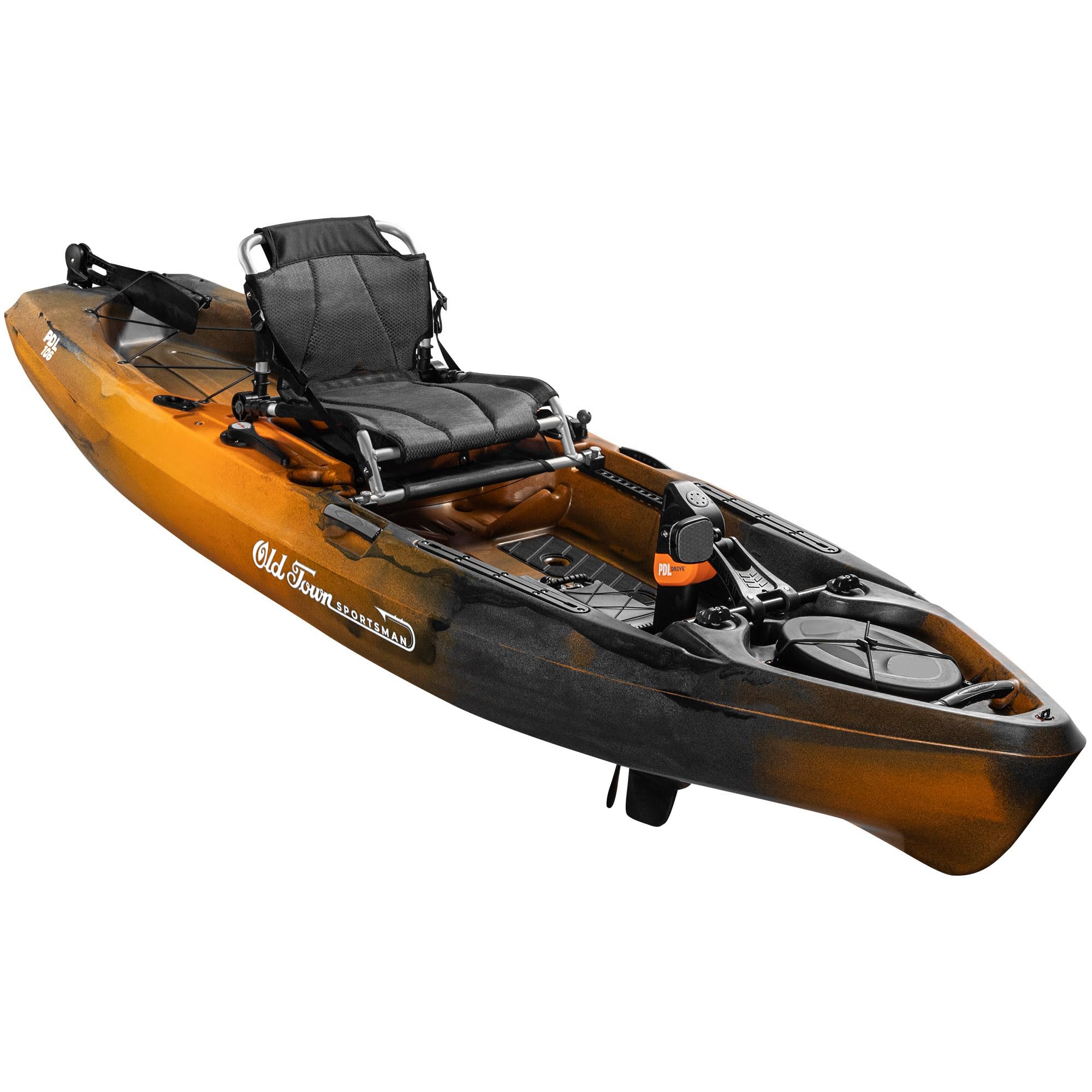
The Old Town Sportsman PDL 106 sets the benchmark for pedal-driven angler kayaks in the sub-11-foot class. Its pontoon-style hull delivers exceptional primary stability — you can stand and bounce without tipping — while the PDL (propeller drive) system provides smooth forward and instant reverse, a feature rarely found at this weight. The mesh seat offers excellent lumbar support and adjusts to leg length, making eight-hour sessions genuinely comfortable.
At 107 pounds, this is not a solo car-top kayak without a ramp or wheels. The removable pedal console weighs 18 pounds separately, easing transport slightly. The universal transducer mounting system works with most fish finders, and the Sportsman tackle box fits neatly into the bow. Users report the rudder response as exceptional, and the drive handles river debris without skipping a beat.
Weight aside, the combination of a 450-pound capacity, quiet pedal operation, and self-bailing scupper holes makes this the most capable all-around fishing platform in the guide. If you can manage the load, the PDL 106 eliminates the need for a paddle on most days and lets you focus entirely on the strike.
Why it’s great
- Forward and reverse pedal drive for hands-free positioning
- Pontoon hull extremely stable for standing
- Universal transducer mount simplifies electronics setup
Good to know
- Very heavy at 107 pounds — requires a cart or ramp
- Premium price tier limits budget access
2. Wilderness Systems Recon 120 HD
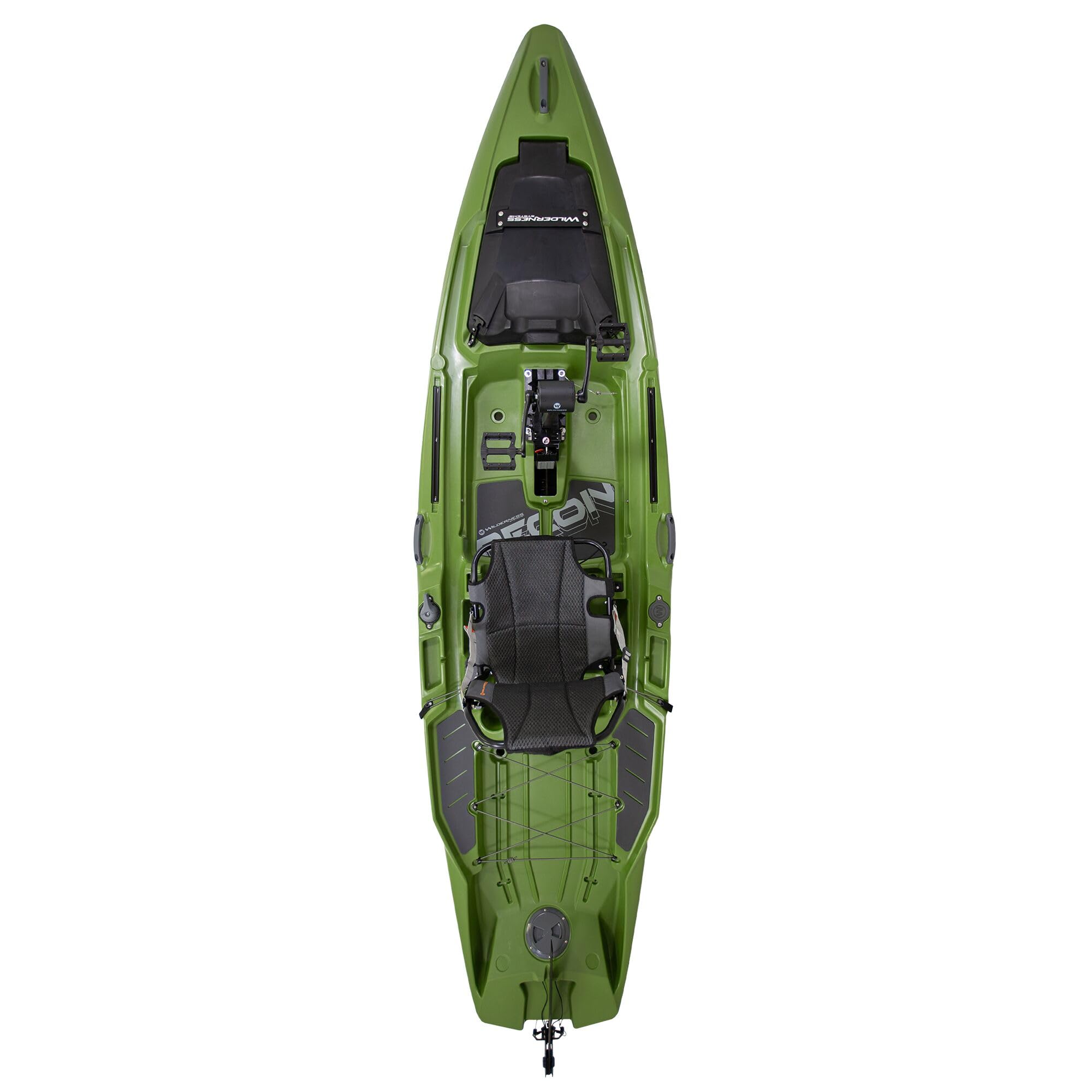
The Recon 120 HD from Wilderness Systems is built around the AirPro ACES seat that rotates a full 360 degrees, letting you face any direction without shifting your body. This is a game-changer for sight-fishing, fighting fish around the boat, or accessing rear gear. The Helix PD pedal drive offers instant forward and reverse with a lab-tested gear ratio that minimizes leg fatigue over long paddles.
The S.M.A.R.T. hull technology combines stability, maneuverability, and tracking — the 12-foot length tracks well in wind while remaining nimble in tight creeks. Dual rod troughs hold up to three 7’6″ rods on each side, secured by cross-lashing bungee, which keeps rods out of the wind and reduces breakage risk. The StowPro gasketed hatch and organized bin keep tackle dry and accessible.
Some units have arrived with cosmetic damage due to insufficient packaging, and a few users report rudder cable fraying after limited use. The non-HD drive variant is recommended if you plan to add a trolling motor. When it works, the Recon 120 HD offers the most versatile fishing position of any kayak in this class.
Why it’s great
- Full 360-degree swivel seat for all-around access
- Helix PD drive with smooth forward and reverse
- Horizontal rod storage protects long rods from wind
Good to know
- Packaging can lead to cosmetic damage on arrival
- Rudder cable durability reported as inconsistent
3. BKC Brooklyn 10.5 Pro Pedal Fishing Kayak
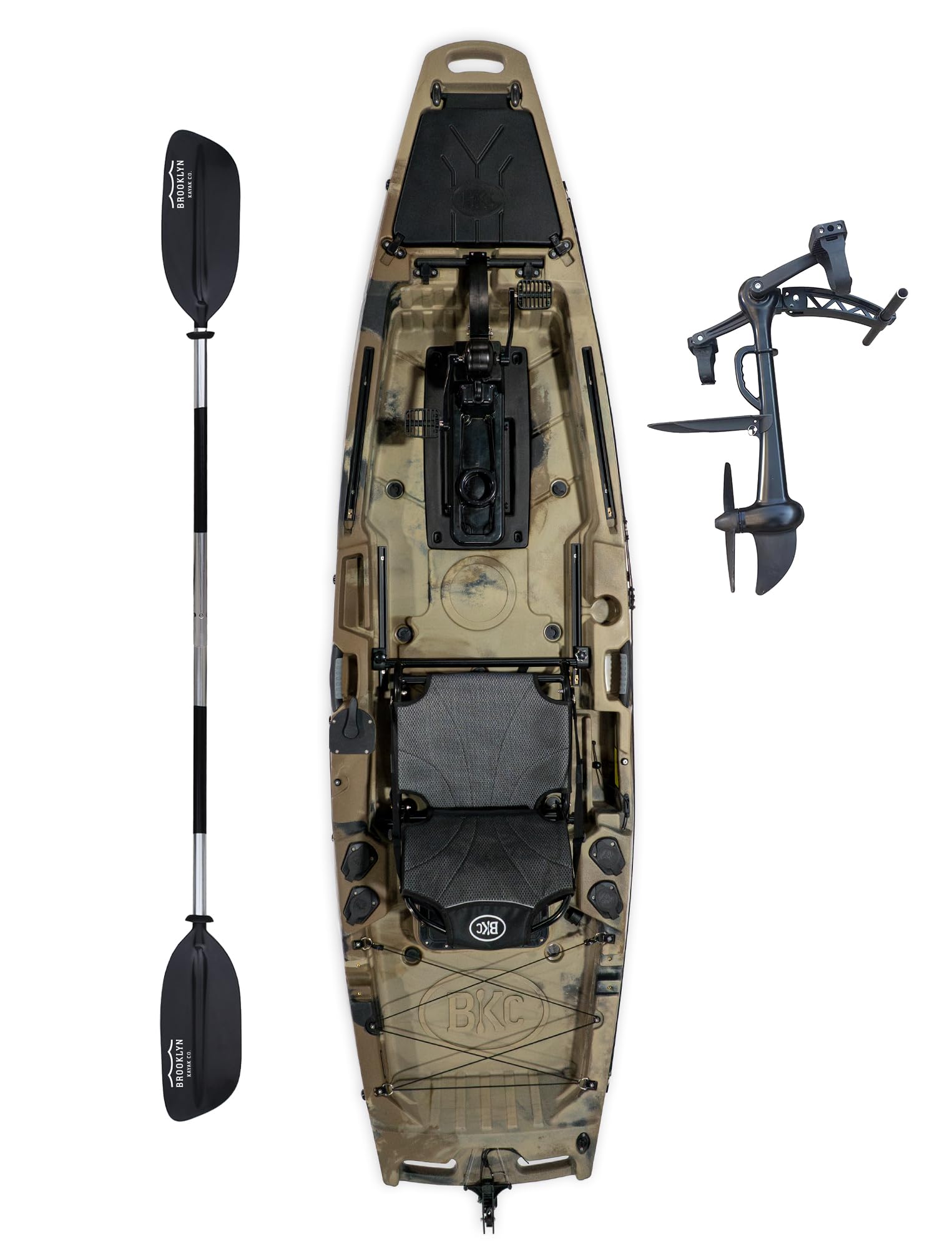
The Brooklyn 10.5 Pro brings pedal drive performance to a lighter, more affordable package. Weighing just 65 pounds, it’s one of the lightest pedal kayaks on the market, making solo rooftop loading feasible. The upgraded propeller drive system uses bicycle-style pedals with adjustable foot straps for efficient, hands-free propulsion. The hand-operated rudder provides precise tracking in wind and current.
With a 440-pound capacity, this kayak handles heavier anglers and substantial gear loads without feeling bogged down. The ergonomic aluminum frame seat keeps you elevated and dry, and the deck layout includes flush-mounted rod holders, sealed hatches, and rear cargo space with bungee tie-downs. The hull is motor-ready if you want to add a trolling motor later.
Some users noted the need for a dedicated battery compartment for a trolling motor. A small number of units shipped with minor assembly quirks. For the price, the Brooklyn 10.5 Pro delivers a genuine pedal drive experience without the premium-brand markup, making it the strongest value in the pedal category.
Why it’s great
- 65-pound weight is manageable for solo transport
- Propeller pedal drive with rudder steering
- Motor-ready hull for future upgrades
Good to know
- No built-in battery compartment for trolling motor
- Pedal system may need break-in adjustment
4. Pelican Catch HDII Premium Angler

Pelican’s Catch HDII introduces the HyDryve II pedal system, which excels in shallow water and around aquatic vegetation where propellers might snag. The rudder with hand controls allows direction changes with a flick of the wrist, and the skeg function improves tracking when pedaling against wind. The Ergocast G2 seat is widely regarded as one of the most comfortable in this class, with well-thought-out support for long sessions.
Four accessory rails give you plenty of mounting points for rod holders, fish finders, or cameras. Three flush-mount rod holders keep rods within reach but out of the way. The sit-on-top design with scupper holes drains the deck quickly. At 67 pounds, it’s lighter than premium competitors, though the rounded hull can make solo cartopping awkward.
Some users reported squeaking from the pedals that requires grease or lube, and the rudder cables may need periodic retensioning. A few units had condensation inside the hull and minor plastic gouging from normal use. For the balance of comfort, pedal performance, and storage, the Catch HDII is a strong mid-premium contender.
Why it’s great
- HyDryve II pedal system handles shallow weeds well
- Ergocast G2 seat is exceptionally comfortable
- Four accessory rails for customization
Good to know
- Pedal drive may develop squeaks over time
- Rounded hull makes solo loading less stable
5. Perception Pescador Pro 12
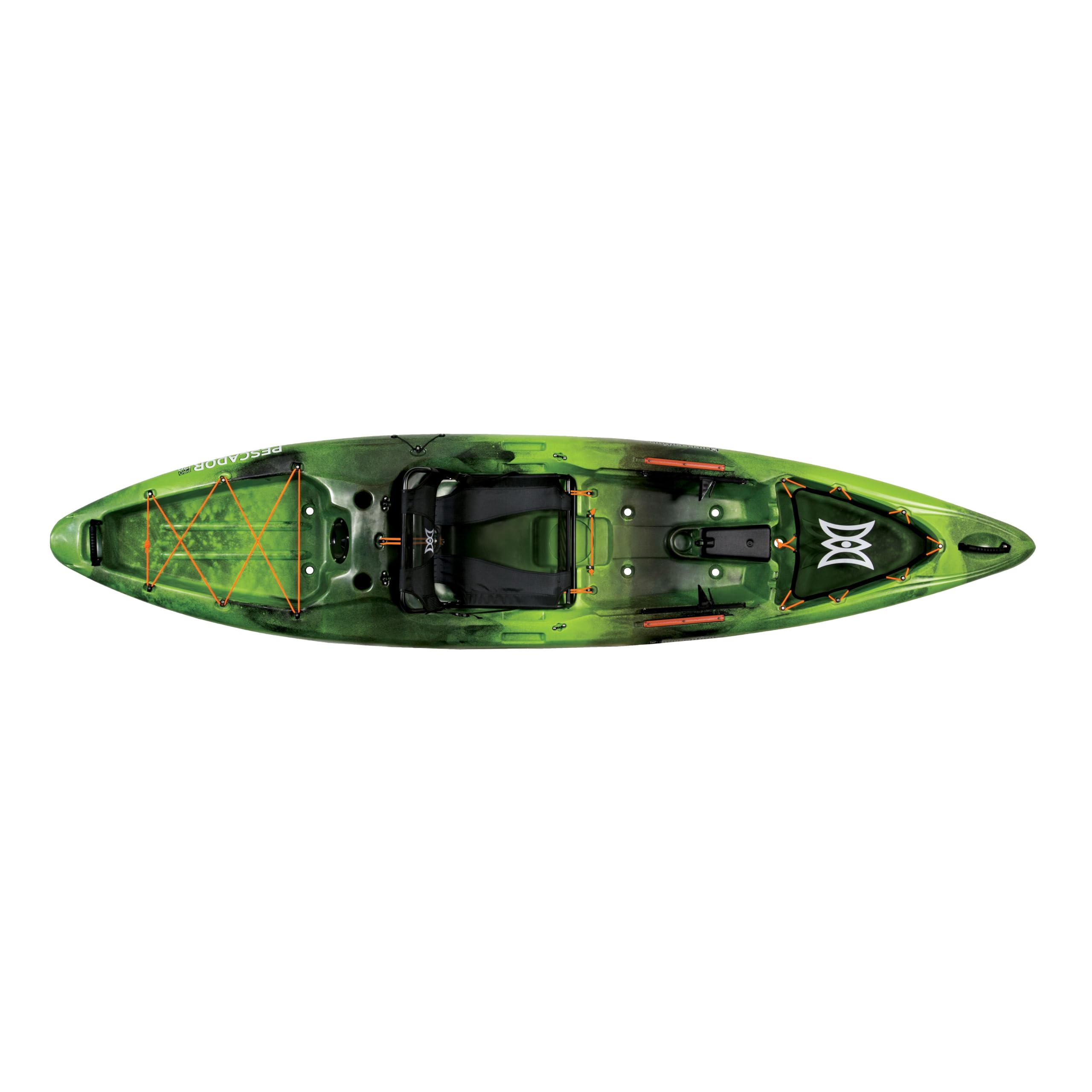
The Pescador Pro 12 is built around an adjustable lawn chair seat that sits higher than most sit-on-top seats, giving you better visibility and reducing leg fatigue. The 12-foot length tracks well and offers good glide efficiency, so you cover water without exhausting yourself. Large front and rear storage areas with bungee lacing accommodate a crate, tackle bags, and a cooler.
At 64 pounds, it’s manageable for one person to load onto a roof rack with a little technique. The hull includes built-in accessory tracks for mounting gear. Anglers report that the rod holders work well for storage but aren’t ideal for active trolling. The seat sits low enough to maintain stability, even with a 300-pound paddler aboard.
Some users found the seat cushioning insufficient for truly long days, and the hull is not optimized for ocean use without a pedal drive. For lake and slow-river fishing, the Pescador Pro 12 combines comfort and storage at a mid-range price that’s hard to beat.
Why it’s great
- Elevated lawn chair seat improves visibility and leg comfort
- 12-foot hull tracks well and glides efficiently
- Large front and rear storage with bungee tie-downs
Good to know
- Rod holders are storage-oriented, not ideal for active trolling
- Seat may need additional padding for all-day use
6. Wilderness Systems Pungo 105 Recreational Kayak

The Pungo 105 is a sit-inside kayak that prioritizes speed and portability without sacrificing fishing utility. At just 47 pounds, it’s the lightest kayak in this guide, making it ideal for anglers who need to carry their boat long distances or car-top alone. The hull is known for best-in-class glide efficiency in its size, meaning you cover more water per stroke.
The Phase 3 Air Pro seat uses honeycomb-vented foam with mesh covering for airflow, keeping your back cool on hot days. The Pungo dashboard includes a removable dry box, two cup holders, Slidetrax for accessories, and a recess for a battery to power electronics. The rear Orbit hatch with sealed bulkhead provides dry storage for camping gear or extra tackle.
The sit-inside design limits deck storage compared to sit-on-top models, and the 30-inch beam sacrifices some secondary stability for speed. Taller paddlers may find the cockpit snug. For the angler who values lightweight portability and paddling efficiency above standing stability, the Pungo 105 is a standout.
Why it’s great
- 47-pound weight is the lightest in its class for easy transport
- Dashboard with dry box and Slidetrax is well-designed
- Hull is fast and efficient for covering water
Good to know
- Sit-inside design limits deck storage vs. sit-on-top
- 30-inch beam feels narrower for standing or balancing
7. Perception Outlaw 11.5

The Outlaw 11.5 is purpose-built for larger anglers and heavy gear loads. With a 425-pound capacity and a 35-inch beam, it offers the most generous weight and space envelope in the paddle category. The fold-away frame seat sits high for good visibility and adjusts for comfort. The open deck design gives you room to move your feet and position gear without tripping.
Four integrated rod holders and two built-in tackle trays keep your rigging organized and within reach. The rear tankwell is large enough for a crate or cooler. Multiple RAM mount attachment points are molded into the hull for accessories. At 77 pounds, it’s heavy but still manageable for one person with a cart or good lifting technique.
Some users found the front storage inaccessible while seated, and the accessory rails are positioned forward of the seat where they can interfere with paddle strokes. The molded carry handles attach with only two screws each, so caution is needed when lifting. For heavier paddlers or those carrying serious gear, the Outlaw’s stability and capacity are unmatched at this price point.
Why it’s great
- 425-pound capacity easily accommodates larger anglers and gear
- Integrated tackle trays keep lures accessible
- High seat position improves casting visibility
Good to know
- 77 pounds is heavy to load solo without a cart
- Accessory rails forward of seat can interfere with paddle strokes
8. Pelican Catch Mode 110

The Catch Mode 110 uses a tunnel hull design that provides excellent stability for standing up to cast and fight fish. At 10 feet 8 inches and 67 pounds, it’s compact and light enough for most people to load alone. The Ergoboost seating system raises your seating position for better sightlines while offering an EVA pad for comfort and under-seat storage.
Fishing-specific features include two 4-inch rigging tracks, three flush-mount rod holders, front and rear tank wells, two bottle holders, and anti-slip deck carpet. The included skeg improves tracking, though some users noted it pops off on hard impacts. The hull is self-bailing with scupper holes and meets or exceeds ABYC flotation standards for safety.
The handles aren’t the most durable, and the skeg retention could be better. Some units arrived with shipping delays. For the price, the Catch Mode 110 delivers a stable stand-up platform with thoughtful fishing features that rival more expensive models.
Why it’s great
- Tunnel hull allows stable standing fishing
- Lightweight at 67 pounds for solo cartopping
- Three rod holders and two rigging tracks included
Good to know
- Skeg can pop off on submerged obstacles
- Handles are not the most robust on the market
9. Sea Eagle FSK16 FishSkiff Inflatable

The Sea Eagle FSK16 FishSkiff is a completely different approach — a 16-foot inflatable made from high-pressure drop-stitch material that feels rigid at 14.5 PSI. It packs down small enough to fit in a car trunk, making it the ultimate choice for anglers with limited storage or those who travel with an RV. The rigid 6-inch external keel improves tracking and provides a cushioned ride.
This boat supports up to three people and 1,765 pounds. The two-person swivel seat canopy package includes swivel seats on 7-inch pedestals, a paddle, and a hand pump. The floor feels solid enough to stand on at 250 pounds, and with a 9.9 HP motor, it planes at around 15 mph. Setup takes 20-30 minutes to inflate and another 30 to launch, so it’s not an instant process.
Deflating and repacking takes care and room. For the angler who needs a proper fishing boat that disappears into a closet, the FSK16 is a unique solution that no rigid kayak can match.
Why it’s great
- Fits in a car trunk when deflated for ultimate portability
- Rigid drop-stitch floor supports standing and planing
- 1,765-pound capacity handles three people and gear
Good to know
- Setup requires 20-30 minutes inflation and 30 minutes launch
- Wind affects stability more than rigid hulls
10. Lifetime Triton Angler 100

The Triton Angler 100 is a no-frills sit-on-top designed for entry-level anglers on a tight budget. Weighing just 49 pounds, it’s lightweight enough to load onto any car roof rack without assistance. The stable hull design and integrated skeg help with tracking, though the kayak sits high in the water and gets pushed around by wind more than heavier models.
Self-bailing scupper holes keep the cockpit and tankwell drained. The adjustable quick-release seat back and padded seat provide acceptable comfort for short sessions. Multiple footrest positions accommodate different paddler heights. The 275-pound weight capacity is adequate for a smaller angler with minimal gear.
The seat cushion may start ripping after extended use, and the kayak does not include a paddle. Tracking in windy conditions is mediocre, and the hull is prone to weathercocking. For calm lakes and slow rivers on a strict budget, the Triton Angler 100 gets you on the water fishing without breaking the bank.
Why it’s great
- 49-pound weight is very easy to transport solo
- Self-bailing scupper holes keep the deck dry
- Integrated skeg improves tracking for its class
Good to know
- 275-pound capacity limits gear for larger anglers
- Poor tracking in windy conditions
11. Lifetime Kokanee Sit-On-Top Kayak

The Lifetime Kokanee is a versatile sit-on-top that can be paddled solo or tandem, making it a unique option for anglers who occasionally fish with a partner. The 36-inch beam provides impressive stability for a budget kayak — one reviewer reported feeling steady with a 300-pound frame. The two adjustable quick-release seat backs allow each paddler to dial in their position.
The 10.5-foot length keeps it manageable for storage and transport, though the 76-pound weight makes solo loading difficult. A 6-inch storage hatch sits under the deck for small items, and the bungee storage system on the deck can hold a small crate or dry bag. The UV-protected HDPE construction is durable and resists fading.
This is not a fast kayak — the wide beam sacrifices speed for stability. The seats lack padding and become uncomfortable after 40 minutes without an added foam pad. There are no pre-installed eye hooks for rigging accessories. For a budget-friendly tandem that lets you fish with a buddy on calm waters, the Kokanee delivers solid value.
Why it’s great
- 36-inch beam provides excellent stability for heavier paddlers
- Can be used solo or tandem for flexibility
- Durable HDPE construction resists UV damage
Good to know
- 76 pounds is heavy to load solo
- Seats lack padding — plan on adding a foam pad
FAQ
Do I need a pedal drive for an angler kayak?
What weight capacity should I look for?
Can I stand up in a fishing kayak?
What is the difference between sit-on-top and sit-inside?
Final Thoughts: The Verdict
For most users, the best angler kayak winner is the Old Town Sportsman PDL 106 because it combines a stable pontoon hull with a forward/reverse pedal drive that makes hands-free fishing effortless. If you want a lighter pedal option that won’t break your budget, grab the BKC Brooklyn 10.5 Pro. And for larger anglers who need maximum capacity and storage, nothing beats the Perception Outlaw 11.5.