
That sharp, stabbing pain on the outside of your ankle just above the heel isn’t just a sprain — it’s your peroneal tendons screaming for stability during every pivot, step, and landing you take. An ankle brace for peroneal tendonitis must do more than squeeze; it has to offload the irritated tendons and resist the inversion roll that causes the flare-up in the first place.
I’m Min — the co-founder and writer behind Gadgets Feed. I’ve spent hundreds of hours dissecting orthopedic braces by analyzing knit density claims, splint geometry, and compression zone maps to find what truly stabilizes the lateral ankle complex versus what just feels tight.
Whether you’re recovering from a grade 2 sprain or managing chronic tendonitis on the court, the right ankle brace for peroneal tendonitis must lock down the subtalar joint without turning your shoe into a clown car.
How To Choose The Best Ankle Brace For Peroneal Tendonitis
Not every ankle sleeve stops the peroneal tendons from subluxing. The peroneals run behind the lateral malleolus, so the brace must apply counter-pressure there without impinging the tendon sheath. You need a device that controls inversion/eversion at the rearfoot, not just a sock that adds warmth.
Lateral Stabilization vs. Generic Compression
Peroneal tendonitis responds poorly to uniform compression sleeves because the pathology is mechanical — the tendons grind against the fibular groove. A brace with molded side stabilizers or rigid splints on both malleoli creates a mechanical block against the rolling motion that aggravates the tendons. Look for reinforced lateral panels or removable splints that sit flush against the bone.
Figure-8 Strapping vs. Lace-Up Systems
Figure-8 straps wrap both above and below the malleolus, mimicking the function of athletic tape by restricting excessive inversion while allowing plantarflexion. Lace-up systems provide a snug midfoot lock but often skip the specific lateral heel lock that peroneal patients need. A brace that combines both — lace-up base with an overlay figure-8 strap — offers the most targeted control for this narrow condition.
Low-Profile Fit for Daily Wear
Peroneal tendonitis doesn’t stop when you take off your sneakers — you need support during walking, standing, and casual wear. Braces exceeding 4mm of bulk around the lateral ankle force you to size up shoes, which destabilizes the foot inside the shoe. The ideal brace fits under a standard low-top shoe while still delivering that lateral buttress.
Quick Comparison
On smaller screens, swipe sideways to see the full table.
| Model | Category | Best For | Key Spec | Amazon |
|---|---|---|---|---|
| Bauerfeind MalleoTrain | Premium | Medical-grade proprioception | Viscoelastic silicone massage pads | Amazon |
| Med Spec ASO Ankle Stabilizer | Premium | Lace-up with figure-8 overlay | Dual elastic figure-8 straps plus CoolFlex tongue | Amazon |
| Fitomo Ankle Brace with Quick Lace Up | Mid-Range | Removable side stabilizers | Figure-8 strap plus dual splints | Amazon |
| AGPTEK Lace-Up Ankle Brace | Mid-Range | Quick lace system | Reinforced dual side stabilizers | Amazon |
| FOWRAES 2 Pack Brace | Value | Two-pack budget coverage | Reinforced stabilizers both sides | Amazon |
| ZOELION Compression Brace | Value | Breathable daily compression | 3D knit with removable fishnet X-strap | Amazon |
| Neo-G Achilles Tendon Support | Premium | Targeted Achilles/peroneal cushion | Silicone tendon cushion pad | Amazon |
In‑Depth Reviews
1. Bauerfeind MalleoTrain Ankle Support

The Bauerfeind MalleoTrain uses a medical-grade compression knit that doesn’t rely on Velcro or laces to do the heavy lifting — it stays put via anatomical contouring. Two anatomically shaped viscoelastic pads sit directly over the medial and lateral malleoli, massaging the peroneal tendons during every step and reducing fluid buildup. The knit is thin enough (roughly 2mm at the instep) to slide into most sneakers without needing a half-size up.
Proprioception is this brace’s hidden trick — the pads nudge your brain to sense ankle position more accurately, which trains you to avoid the inversion that torques the peroneals. In a clinical setting, this model consistently reduces pain scores during gait retraining. The open heel design keeps the Achilles unrestricted while the compression zones distribute pressure evenly across the lateral column.
Machine washing on delicate preserves the silicone pads, and the beige color disappears under most socks. For anyone with chronic peroneal tendonopathy who can’t afford to risk a flare-up, this is the gold standard.
Why it’s great
- Viscoelastic pads actively massage and offload peroneal tendons
- Thin enough for everyday shoes without sizing up
- Durable knit retains compression for 12+ months
Good to know
- Premium price point — investment for chronic users
- Must follow sizing chart exactly; between sizes size up
- Pull-on only — no adjustable straps for custom tightness
2. Med Spec ASO Ankle Stabilizer
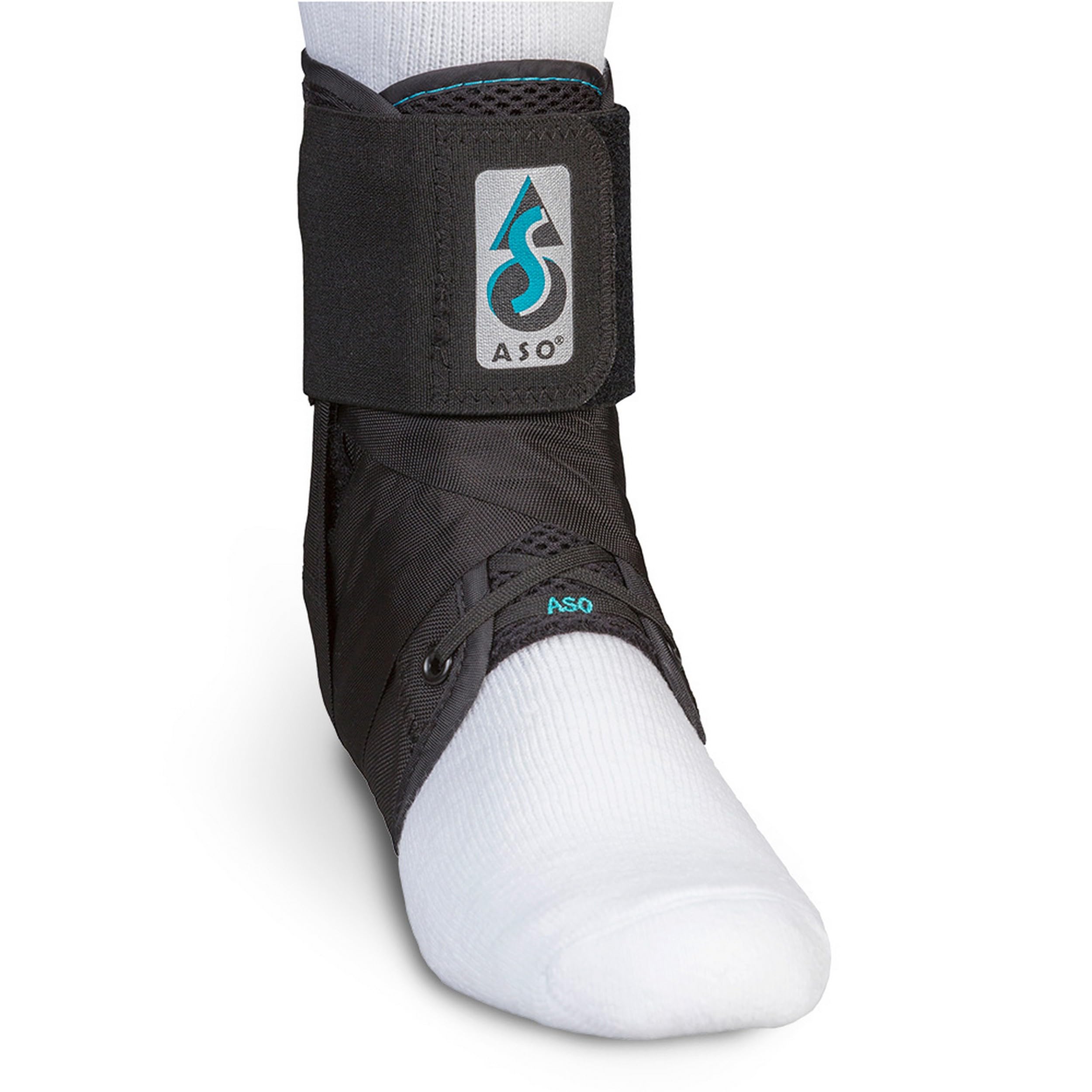
The ASO (Ankle Stabilizing Orthosis) is a staple in sports medicine clinics because its dual-layer design separates lacing from strapping. The inner nylon bootie laces up to lock the midfoot and heel, then two elastic figure-8 straps cross over the talus and distal fibula to create a mechanical inversion stop. This is the same pattern athletic trainers tape for peroneal tendon subluxation — but reusable hundreds of times.
The CoolFlex padded tongue prevents lace bite over the dorsum while the open heel lets the peroneal tendons run freely without chafing. Fits inside most basketball and cross-training shoes at under 5mm stack height over the lateral ankle. Multiple reviewers with peroneal tendon pain report that the ASO cut their recovery time by allowing earlier return to cutting sports without fear of re-injury.
At half the price of high-end knit braces, it delivers comparable inversion resistance. The only trade-off is the application time — lacing and tensioning the figure-8 takes about 45 seconds, which is longer than a pull-on sleeve. But that deliberate fit is exactly what gives you repeatable, reliable support session after session.
Why it’s great
- Dual figure-8 straps directly replicate athletic tape for inversion control
- Durable nylon resists stretching — tested for years by PTs
- Low-profile enough for sport shoes
Good to know
- Takes 30-45 seconds to lace and strap properly
- Does not fit slip-on or narrow dress shoes
- May require help to put on during acute injury phase
3. Fitomo Ankle Brace with Quick Lace Up
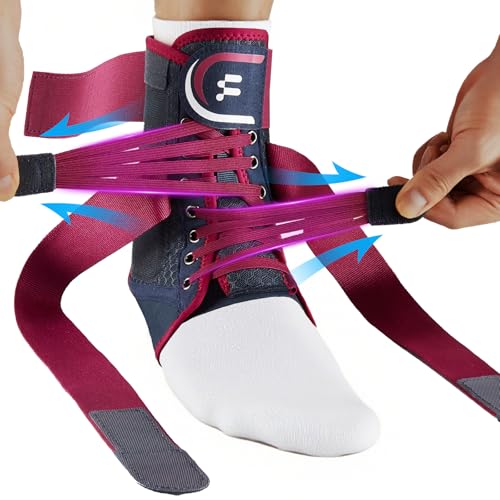
Fitomo’s Triple-Lock system packs a lace-up base, dual removable side stabilizers, and a figure-8 compression strap into one rigid-midflex package. The stabilizers are molded plastic inserts that slide into pockets on both malleoli, providing a hard stop against lateral rolling without adding bulk to the Achilles zone. When the tendonitis is quiet, you can pop the splints out and wear it as a moderate support lace-up.
The breathable mesh chassis stopped one reviewer’s skin irritation where other braces caused maceration during 8-hour wear days. The hook-and-loop closure lets you dial in compression from a 1-second pull — no threading laces required. FSA/HSA eligibility makes it an easy purchase for those using pre-tax health dollars.
Several post-surgical users confirmed this brace feels more planted than the clinic-issued version they received. The rose color option is a rare visual upgrade in a field dominated by black and beige. The only catch is sizing — if your ankle circumference lands between M and L, choose the larger for splint pocket space.
Why it’s great
- Removable splints allow step-down from max to moderate support
- Quick hook-and-loop closure under 2 seconds
- Breathable mesh prevents moisture buildup on tendon area
Good to know
- Plastic splints can dig if not aligned properly over malleoli
- Single pack only — no bundle option
- Velcro tabs may wear after 6 months of daily removal
4. AGPTEK Lace-Up Ankle Brace
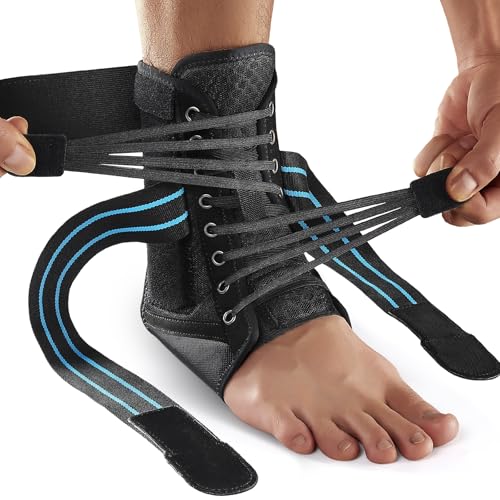
The AGPTEK uses a 360° triple-support architecture — dual reinforced side stabilizers, an X-cross compression wrap over the lateral tendon line, and a top binding strap to lock the heel. The quick-lace elastic cord replaces traditional laces with a single-pull system: pull the cord to tighten, secure with the hook-and-loop tab, and you’re done in one second. This is a game-changer for patients who struggle with fine motor control during a flare-up.
Honeycomb ventilation zones on the nylon Oxford fabric keep the peroneal area from getting swampy during extended wear in warm gyms. The open heel design lets the Achilles move freely while the lateral splints sit flush against the peroneal groove. One reviewer with a sore Achilles recovered fully playing pickleball 3x/week while wearing this brace — no worsening of symptoms.
At this price tier, you’re getting stabilizers that rival clinic-grade braces. The trade-off is material longevity — the nylon fabric can fray after 4 months of daily machine washing if you skip the laundry bag. But at the cost, buying a replacement every 4-6 months is cheaper than a single PT visit.
Why it’s great
- One-pull quick lace system saves time and effort
- Triple-support design mimics professional taping
- Open heel and honeycomb ventilation reduce heat
Good to know
- Nylon fabric shows wear sooner than premium polyester
- Runs slightly small — size up if between measurements
- Single brace per purchase; no pair option
5. FOWRAES 2 Pack Ankle Brace

The reinforced stabilizers on both sides limit lateral excursion effectively, and the numbered strap system (1-2-3) guides you into correct tension sequence every time — no guesswork for first-timers. One reviewer recovering from paralysis used these to regain stable walking gait after months of ankle rolling.
The neoprene blend provides moderate thermal compression which helps increase blood flow to the peroneal tendon sheath during early recovery. It fits comfortably inside basketball and running shoes without major bulking. Customers who wear them for volleyball report they survive the season without the stabilizers poking through the fabric — a common failure in ultra-budget models.
The double pack lets you rotate braces so one dries after washing while the other supports your day. If your tendonitis flares in hot weather, you’ll want to air them out after each wear. Still, at the per-unit cost, this is the most economical way to get real splint-based protection for both ankles or for sharing with a household member.
Why it’s great
- Two braces for the price of one — rotate or share
- Numbered strap system ensures correct application
- Rigid side stabilizers provide genuine inversion resistance
Good to know
- Neoprene runs warm; less breathable than knit alternatives
- Multiple straps can feel complex until you learn the order
- Velcro may lose grip faster with daily heavy use
6. ZOELION Compression Brace with Fishnet Strap
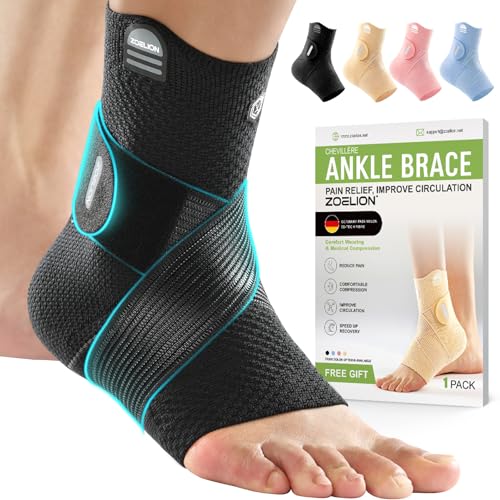
The ZOELION uses a German-sourced PA66 high-elastic yarn in a 3D-knit structure that delivers graduated compression across three zones: a comfort zone over the instep, a pressure zone hugging the arch and heel, and pressure-free edges that prevent digging. The removable fishnet X-strap adds targeted adjustable tension over the peroneal tendons without adding the bulk of a full lace system — ideal if you need compression but don’t want to wrestle with straps.
The air-knit fabric actively transports moisture away from the skin and evaporates it quickly, making this the coolest option for summer wear or high-rep gym sessions. One reviewer with plantar fasciitis and peroneal tendonitis found this sleeve more tolerable for all-day wear than any strap-based brace because the seamless toe and heel eliminated hot spots. The top pull tabs make donning easy even with reduced grip strength.
180-day after-sales support from the brand backs this brace, which is rare at this price point. The limitation is force — the X-strap provides moderate resistance, not the rigid block of a splint brace. If you need absolute lateral lockdown for cutting sports, choose a lace-up model. But for daily walking, work, and mild activity, this is the most comfortable option in the lineup.
Why it’s great
- 3D knit air fabric breathes better than any neoprene or nylon brace
- Removable fishnet strap adds custom tension without bulk
- Seamless design eliminates skin irritation points
Good to know
- No rigid splints — not enough inversion resistance for sports
- Strap can loosen during high-intensity pivoting
- Sizing is critical — too large and the sleeve slides
7. Neo-G Achilles Tendon Support

The Neo-G uses a silicone tendon cushion that sits directly behind the lateral malleolus, padding the peroneal tendons from the bony edge of the fibula. This is a unique approach — instead of fighting inversion with straps, it buffers the tendon from the bone that irritates it during dorsiflexion and eversion. The multi-zone compression knit is graduated from the foot up to the distal calf, reducing the edema that often accompanies peroneal tenosynovitis.
Registered as a Class 1 Medical Device, this brace is a favorite of physiotherapists in the UK for tendonitis patients who can’t tolerate rigid splints. The seamless anatomical fit means zero seam pressure over the tendon sheath. One traveler with achilles tendinitis called this brace a “vacation saver” after walking 10+ miles daily with no pain flare — a claim few strap braces can match due to their bulk causing shoe fit issues.
The brace works best for chronic low-to-moderate tendonitis rather than acute lateral sprains. If your peroneal pain is accompanied by instability (the feeling the ankle might give way), you need a lace-up stabilizer instead. But for pure tendon cushioning and compression with zero profile, this is the most specialized tool here.
Why it’s great
- Silicone cushion extends directly under the peroneal tendons
- Medical-grade knit with graduated compression reduces swelling
- Wears invisibly under shoes — no bulk at all
Good to know
- Limited inversion support — not for instability
- Silicone pad position is fixed; can’t micro-adjust
- Not designed for high-impact cutting sports
FAQ
Can an ankle brace fix peroneal tendon subluxation?
Should I sleep in my ankle brace for peroneal tendonitis?
How long should I wear the brace each day for peroneal tendonitis?
Final Thoughts: The Verdict
For most users, the ankle brace for peroneal tendonitis winner is the Bauerfeind MalleoTrain because its viscoelastic pads and medical-grade knit provide the best balance of tendon offloading, proprioception, and all-day comfort under any shoe. If you need max inversion control for sports, grab the Med Spec ASO Ankle Stabilizer. And for pure breathable daily compression without the bulk, nothing beats the ZOELION 3D Knit Brace.