
Posterior tibial tendonitis is a progressive condition that, left unsupported, can collapse your arch and alter your entire gait.
I’m Min — the co-founder and writer behind Gadgets Feed. I have spent hundreds of hours analyzing the technical specifications, customer durability reports, and biomechanical engineering of ankle braces to identify which designs genuinely offload the posterior tibial tendon versus those that merely wrap the joint.
This guide breaks down seven of the most recommended models, covering everything from medical-grade knit compression to figure-eight strapping and arch-lift systems, to help you find the best ankle brace for posterior tibial tendonitis for your specific foot shape and activity level.
How To Choose The Best Ankle Brace For Posterior Tibial Tendonitis
Posterior tibial tendonitis demands a brace that does more than immobilize — it must support the medial arch and control the subtalar joint to prevent the tendon from overstretching during walking or running. The wrong brace can actually worsen the condition by failing to lift the arch.
Arch-Lift vs. Simple Compression
Many ankle sleeves provide general compression but lack the structural element needed for PTTD. Look for braces that include an integrated arch strap (often called a footlok or stirrup) that physically lifts the navicular bone. This offloads the posterior tibial tendon and reduces inflammation over time.
Figure-Eight Strapping System
A figure-eight configuration wraps around both the medial and lateral malleoli, creating targeted resistance against the eversion and inversion forces that aggravate the posterior tibial tendon. Braces without this strapping pattern offer less control for dynamic activities like walking on uneven ground.
Lace-Up vs. Pull-On Design
Lace-up braces allow micro-adjustments across the instep and heel, which is critical for managing the variable swelling common with PTTD. Pull-on compression sleeves offer convenience but cannot be tightened or loosened independently across different zones of the foot.
Quick Comparison
On smaller screens, swipe sideways to see the full table.
| Model | Category | Best For | Key Spec | Amazon |
|---|---|---|---|---|
| Med Spec ASO Ankle Stabilizer | Lace-Up Stabilizer | Best Overall PTTD Support | Figure-8 strapping with CoolFlex padding | Amazon |
| MUELLER Sports Medicine The One | Speed-Lace Brace | Arthritic & Post-Fracture Relief | Integrated speed lacing & figure-8 straps | Amazon |
| BioSkin TriLok Ankle Brace | Arch-Lift Stabilizer | Active Over-Pronation Control | FootLok arch-lift with figure-8 wrap | Amazon |
| Bauerfeind MalleoTrain | Compression Knit Support | All-Day Wear & Swelling Reduction | Viscoelastic massage pads for malleoli | Amazon |
| Ossur FormFit with Speedlace | Semi-Rigid Stabilizer | Achilles & Tendonitis Pain Relief | Single-pull speedlace & removable stays | Amazon |
| Ossur FormFit Figure-8 Strapping | Low-Profile Brace | Basketball & High-Impact Sports | Figure-8 strapping, 7.05 oz weight | Amazon |
| DonJoy Stabilizing Speed Pro | Ballistic Nylon Stabilizer | Heavy-Duty Rehab & Prevention | 800D ballistic nylon & articulated stays | Amazon |
In‑Depth Reviews
1. Med Spec ASO Ankle Stabilizer
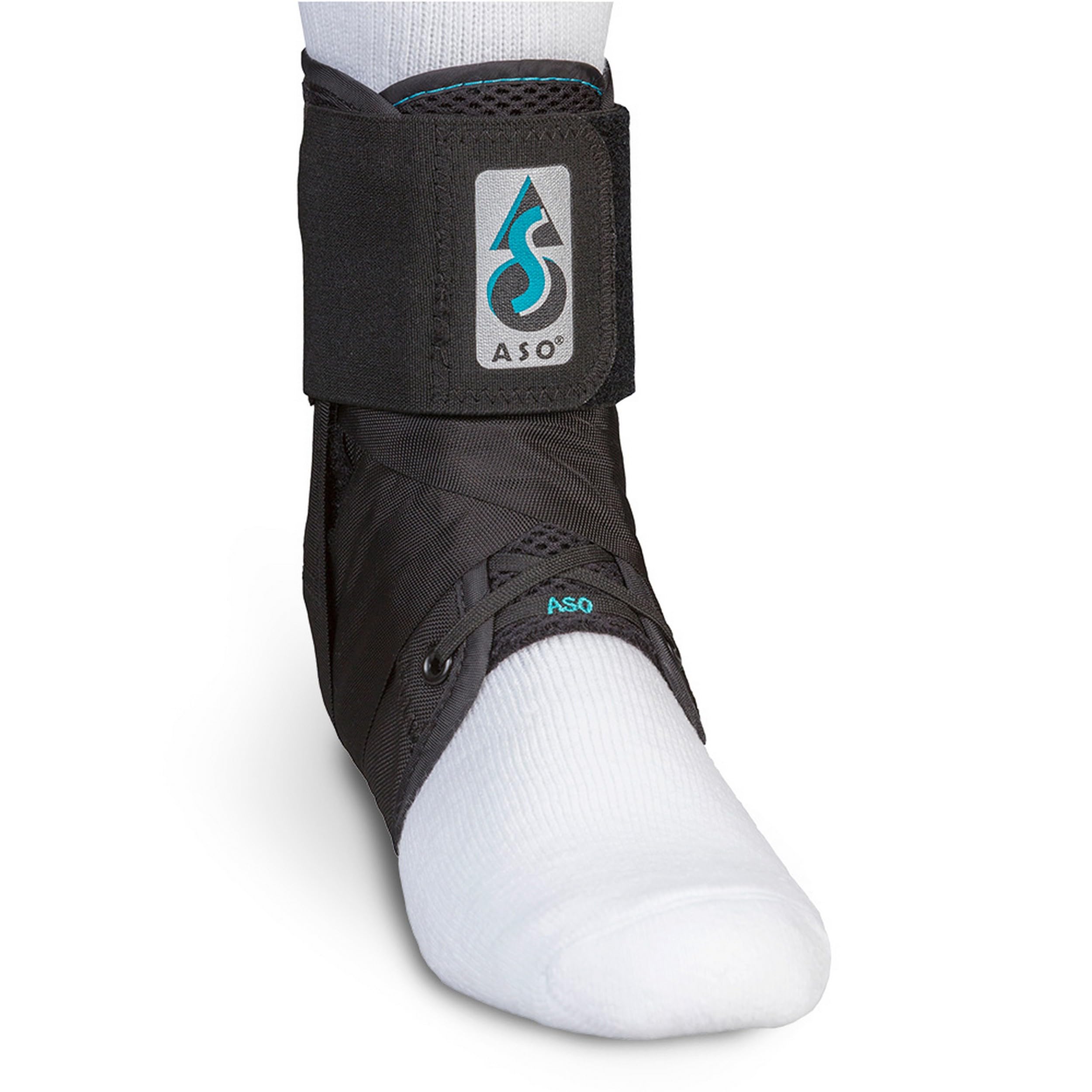
The Med Spec ASO is the most frequently recommended ankle stabilizer by athletic trainers and podiatrists for PTTD because of its dual-action design: a full lace-up panel that locks the heel, plus two figure-eight straps that wrap the medial and lateral malleoli. The CoolFlex padding and nylon body keep the brace breathable during all-day wear, which matters when you are managing tendon inflammation that flares with heat and moisture.
At 169 grams, the ASO is light enough for daily walking but the figure-eight straps provide serious resistance against the pronation that aggravates the posterior tibial tendon. Users consistently report that the adjustable tension across the instep allows them to fine-tune arch support as swelling changes throughout the day. The bilateral design means it works on either foot, and the sizing runs true to ankle circumference measurements.
Where the ASO earns its top spot is the balance between mobility and control. Unlike rigid braces that immobilize the joint, the ASO allows a normal heel-to-toe gait while preventing the inward roll that causes tendon overstretch. For PTTD patients who need to stay active—whether walking, hiking, or returning to court sports—this is the most complete package in this price tier.
Why it’s great
- Dual figure-eight straps directly counteract the inversion that stresses the posterior tibial tendon
- Breathable CoolFlex padding reduces heat buildup around the inflamed tendon
Good to know
- Does not include an integrated arch-lift strap — users with flat feet may need a supplemental arch support
- Requires socks to prevent rubbing during prolonged wear
2. MUELLER Sports Medicine The One Ankle Brace

Mueller’s “The One” pairs a speed lacing system with a figure-eight strapping pattern, drawing from the company’s six decades of sports medicine expertise. The integrated laces have fewer eyelets and flat cordage that reduces pressure points across the dorsum of the foot — a common complaint among PTTD patients whose instep is already tender from tendon stress.
The grip coating on the interior surface helps the brace stay anchored around the heel during dynamic movement, which is critical for preventing the brace from migrating and losing its targeted medial support. Users recovering from posterior tibial tendonitis and concurrent arthritis report that the criss-cross straps allow them to adjust compression levels independently across the forefoot and ankle without needing to fully unlace.
At the mid-range price point, the Mueller offers premium features like the speed lace and grip lining without the premium price of a medical-grade compression knit. The trade-off is that the construction relies on synthetic fabrics rather than the moisture-wicking knits of higher-end braces, making it less ideal for all-day wear in humid conditions.
Why it’s great
- Speed lace system enables rapid on/off without fully unlacing — useful for changing compression during swelling cycles
- Grip coating keeps brace positioned over the medial malleolus during activity
Good to know
- Heel material can bunch for some foot shapes, creating irritation
- Not as breathable as knit-based braces during extended hot-weather use
3. BioSkin TriLok Ankle Brace

The BioSkin TriLok is specifically engineered for the PTTD population because it includes the FootLok strap — a dedicated band that runs under the arch and lifts the navicular bone directly. This is the closest you will get to a functional foot orthotic integrated into an ankle brace, and it makes a real difference for patients whose posterior tibial tendonitis is driven by over-pronation.
The full figure-eight wrap and stirrup strap add lateral stability for cutting and uneven terrain, while the Lycra-and-polyester blend keeps the brace at just 0.35 pounds. Users recovering from avulsion fractures and severe supination report that the TriLok fits inside steel-toed work boots and standard trainers, which is rare for a brace with this level of structural support. The hypoallergenic materials also reduce skin reactions during long shifts.
There is a learning curve with the strap routing — first-time users often need 15–30 minutes to dial in the correct tension sequence. The outer Lycra material is slightly slippery on smooth shoe interiors, so laced shoes are recommended over slip-ons. For PTTD patients who need active arch support on uneven terrain, the TriLok’s payoff is worth the setup time.
Why it’s great
- FootLok strap provides direct mechanical lift under the navicular, offloading the posterior tibial tendon
- Low-profile enough to fit in most work boots and court shoes
Good to know
- Strap routing is complex — expect a steep initial learning curve
- Sizing can be tricky if the ankle is swollen; order 0.5–1 size up
4. Bauerfeind MalleoTrain Ankle Support

Bauerfeind’s MalleoTrain takes a fundamentally different approach to PTTD support: instead of straps and laces, it uses a medical-grade compression knit with anatomically contoured viscoelastic pads that sit over the malleoli. The pads redistribute pressure during gait and massage the surrounding soft tissue, which reduces the effusion and swelling that often accompany posterior tibial tendonitis.
The pull-on design means zero pressure points across the dorsum, making this brace ideal for all-day wear under dress shoes or during sedentary work. Bauerfeind’s knit is moisture-wicking and machine-washable, and the low-profile construction (barely thicker than a compression sock) allows it to disappear inside most footwear. Users with mild to moderate PTTD report significant pain reduction from the first wear, especially when the tendon is irritated by static standing.
The MalleoTrain does not provide the aggressive arch lift or figure-eight control that active PTTD patients need for sports or uneven terrain. It is a support brace, not a stabilizer, and works best for patients whose tendonitis is exacerbated by daily walking and standing rather than cutting or jumping. At the premium price point, you are paying for the German engineering and durability rather than maximum structural correction.
Why it’s great
- Medical-grade knit and viscoelastic pads reduce malleolar swelling without strap pressure
- Low-profile design fits under most shoes including dress shoes and loafers
Good to know
- No figure-eight strapping or arch lift — insufficient for advanced PTTD or active sports
- Premium price reflects brand engineering rather than maximum biomechanical correction
5. Ossur FormFit Ankle Brace with Speedlace

The Ossur FormFit with Speedlace brings a single-pull closure system that gathers all four lacing points into one Velcro tab, cutting application time to under 10 seconds. The removable semi-rigid stays provide customizable inversion/eversion control — you can remove them for lighter support during recovery or keep them in for maximum stability on uneven ground.
Users with Achilles tendonitis and bone spur pain report significant relief from this brace, noting that the figure-eight elastic strap adds targeted compression across the posterior ankle without restricting dorsiflexion. At 8.15 ounces, it is heavier than the competition, but the stability payoff is clear: patients transitioning from a cam boot to walking find the Ossur provides the confidence to bear weight without the bulk of a full AFO.
Long-term durability is a concern with this model — some users report the elastic strap tearing after 12–18 months of daily wear. The sizing also runs slightly inconsistent with standard shoe sizes, making ankle circumference measurement essential. For the price, the FormFit Speedlace delivers premium-level stabilization features (removable stays, speedlace, figure-eight strap) that competing mid-range braces often omit.
Why it’s great
- Single-pull speedlace allows rapid application — useful when swelling fluctuates throughout the day
- Removable semi-rigid stays enable adjustable inversion/eversion control
Good to know
- Elastic strap may tear with daily use beyond 12 months
- Heavier than comparable lace-up braces at 8.15 ounces
6. Ossur FormFit Ankle Brace with Figure-8 Strapping

The original Ossur FormFit with figure-eight strapping is the most popular ankle brace among basketball and soccer players, and for good reason: the two lateral straps lock the heel into the brace pocket and prevent the ankle from rolling inward during landing and cutting. At just 7.05 ounces, it is one of the lightest stabilizers in this guide, which matters when you are wearing it under a shoe for hours of court time.
Users with RA-related bone damage and post-stroke foot drop report that this brace provides comfortable, all-day support without restricting circulation. The low-profile design fits inside most sneakers and boots with only 0.5–1 size adjustment needed. The breathable material and odor-control properties make it a practical choice for athletes who sweat heavily during training sessions.
This version lacks the speedlace and removable stays of its newer sibling (Product 5), relying instead on traditional laces and fixed figure-eight straps. That trade-off keeps the weight down and the price lower, but it also means you cannot adjust the lateral stiffness after purchase. For PTTD patients who need protection during specific high-impact activities rather than all-day wear, this is the right pick.
Why it’s great
- Extremely light at 7.05 ounces — does not weigh down the foot during sports
- Figure-eight straps provide targeted control against ankle inversion
Good to know
- No speedlace or removable stays — tension adjustment requires traditional lacing
- May not fit narrow shoes without sizing up by half a size
7. DonJoy Stabilizing Speed Pro Ankle Support

The DonJoy Stabilizing Speed Pro is built for durability: the 800-denier ballistic nylon outer shell and reinforced eyelet area are designed to survive a full season of court sports without fraying. The speed lacing system (two Velcro tabs that gather four lacing points each) eliminates the hassle of traditional laces while providing the same level of tension control across the instep.
The removable articulated medial and lateral stays enhance proprioception — your brain’s awareness of your ankle position — which is a key recovery goal for PTTD patients learning to trust their joint again. The full circumferential elastic strap secures the strapping and adds tibia/fibula compression that helps stabilize the syndesmotic area above the ankle. Physical therapists frequently recommend this brace for patients transitioning from a cam boot to full weight-bearing.
The trade-off for all that ballistic nylon is bulk. The Speed Pro is the thickest brace in this guide, and users report that the D-rings can create pressure points against the shin during prolonged wear. Sizing is universal (fits left or right), but the heel material can bunch if the brace is not perfectly seated. For PTTD patients who need maximum stability for heavy rehab work, the Speed Pro is the strongest option available at this price.
Why it’s great
- Ballistic nylon construction withstands heavy daily use in sports and rehab settings
- Articulated stays improve proprioceptive feedback for gait retraining
Good to know
- Bulky profile may not fit in low-profile athletic shoes
- D-ring components can press into the shin during seated or driving positions
FAQ
Can a PTTD ankle brace fix a collapsed arch on its own?
How tight should my posterior tibial tendonitis brace be?
Should I buy a lace-up brace or a pull-on sleeve for PTTD?
What does ‘figure-eight strapping’ mean and why does it matter?
Can I wear my PTTD ankle brace inside my regular shoes?
Final Thoughts: The Verdict
For most users, the best ankle brace for posterior tibial tendonitis winner is the Med Spec ASO Ankle Stabilizer because it delivers the most complete balance of figure-eight control, breathable comfort, and durable construction for daily walking and moderate activity. If you need an integrated arch-lift to offload the tendon directly, grab the BioSkin TriLok. And for all-day wear without straps or laces, nothing beats the Bauerfeind MalleoTrain.