
Our readers keep the lights on and my morning glass full of iced black tea. As an Amazon Associate, I earn from qualifying purchases.
Specs are compiled from manufacturer listings and verified buyer reviews and can change over time — please confirm the key details on the product page before buying.
Your water heater’s worst enemy isn’t the burner or the thermostat — it’s the hard water sitting inside the tank, quietly eating the metal from within. A sacrificial anode rod (a metal core that corrodes on purpose so your tank doesn’t) is the single cheapest insurance you can buy against a sudden, flooding failure.
I’m Min — the founder and writer behind Gadgets Feed. This guide is built by comparing the manufacturers’ published specifications and the patterns across verified customer reviews, so you get each pick’s real strengths and trade-offs instead of marketing spin.
You’ll find the right anode rod for water heater by matching the metal to your water chemistry, the length to your tank, and the design to how much clearance you have above the unit.
Our Picks at a Glance


How To Choose The Right Anode Rod
The rod is a metal core, usually magnesium or aluminum, screwed into the top of your tank through a 3/4-inch NPT port (a standard plumbing thread size). It corrodes so your tank doesn’t, which is why it’s called “sacrificial.”
Match the metal to your water
Magnesium rods protect fastest and are the most electrically active, which makes them ideal for municipal soft water where rot is slow. But in hard well water with high mineral content, they react aggressively and can trigger that sulfur “rotten egg” odor. Aluminum and aluminum-zinc rods are your pick for well water, since they’re less reactive and rarely produce odor. If you already smell eggs, a powered titanium rod eliminates it entirely by sending a tiny current through the water instead of relying on a dissolving metal.
Check the fit before you buy
Standard residential tanks take a rod with the same 3/4-inch NPT thread, but length matters. A 32-inch rod covers most smaller tanks, while 42-44 inch rods suit 50-gallon units — though you can safely trim a flexible rod shorter with a hacksaw. Confirm the clearance above your heater before ordering a rigid rod; if your ceiling is low, you’ll want a hinged flexible design that bends into place section by section.
Quick Comparison
| Model | Best For | Material | Length | Design | Amazon |
|---|---|---|---|---|---|
| Camco Aluminum Anode Rod★ Best Overall | Universal well-water replacement | Aluminum | 42″ | Rigid | Amazon |
| Eau 44″ Flexible MagnesiumBest Value Kit | DIY kits with included socket | Magnesium | 44″ | Flexible 4-part | Amazon |
| Yrjns 44″ Flexible MagnesiumOdor Killer | Odor removal on gas heaters | Magnesium | 44″ | Flexible 4-part | Amazon |
| Eau 44″ Aluminum Zinc | Rotten egg smell on well water | Aluminum-zinc | 44″ | Flexible 4-part | Amazon |
| Ozek 44″ Aluminum Zinc | Tight crawl spaces | Aluminum-zinc | 44″ | Flexible stainless joints | Amazon |
| Eastman 42″ Flexible Magnesium | Rusty or murky water cleanup | Magnesium | 42″ | Flexible 4-section | Amazon |
| Podoy 32″ Magnesium | Compact tanks with low clearance | Magnesium | 32″ | Rigid, trim-to-fit | Amazon |
| Briidea Powered Titanium | Sulfur smell on 40-89 gal tanks | Titanium | 12.3″ | Powered electric | Amazon |
| HertzEagle Powered Titanium | Odor-free well water, 20-yr warranty | Titanium / stainless | 12″ | Powered electric | Amazon |
In-Depth Reviews
1. Camco Aluminum Anode Rod
Our pick — over 4.5★ from 800+ verified ratings; the strongest balance of quality and price.
The rigid aluminum classic that keeps well water tanks rust-free for years
If your water heater sits in a basement with plenty of headroom, this 42-inch aluminum rod is the no-surprises choice that owners trust for a decade of service. Its 3/4-inch – 14NPT thread (the standard connection size for most residential tanks) screws straight into the port, and the plated hex bushing grips a standard wrench without slipping. The 42-inch reach means extra tank coverage versus a shorter rod — just 2 inches shy of the 44-inch flexible picks above, so it blankets the interior nicely.
Buyers report replacing a factory rod that had been in service for 8 years and this one dropped in with a perfect fit — and that the threaded nut comes off so easily that one hand does the work. The aluminum core is the right call for well water with high iron or magnesium content, where a magnesium rod would burn out fast and produce that sulfur smell. Owners call it far cheaper than replacing a 17-year-old tank when the old rod is welded in place.
The one honest trade-off is that installation requires enough room above the tank to lift a rigid rod straight out and back in — a low-ceiling utility closet will make you wish you’d bought the flexible version. Owners mention a 4-year lifespan, normal for a sacrificial core. Use a pipe wrench plus a breaker bar on a stuck fitting, and keep a 1-1/16-inch socket handy for the hex head.
What wins owners over
- Easy install with standard plumbing tools
- 42-inch reach blankets a 50-gallon tank
- Aluminum resists well-water corrosion
Who should measure twice
- Rigid design needs ceiling clearance
- Aluminum sacrifices slower than magnesium
Reach for this if: you have a standard tank with headroom and well water that would eat a magnesium rod alive.
Look elsewhere if: your heater sits under a low ceiling — a flexible rod will save you the frustration.
2. Eau 44″ Flexible Magnesium Anode Rod
The flex-jointed magnesium rod that bends into low-clearance tanks without a fight
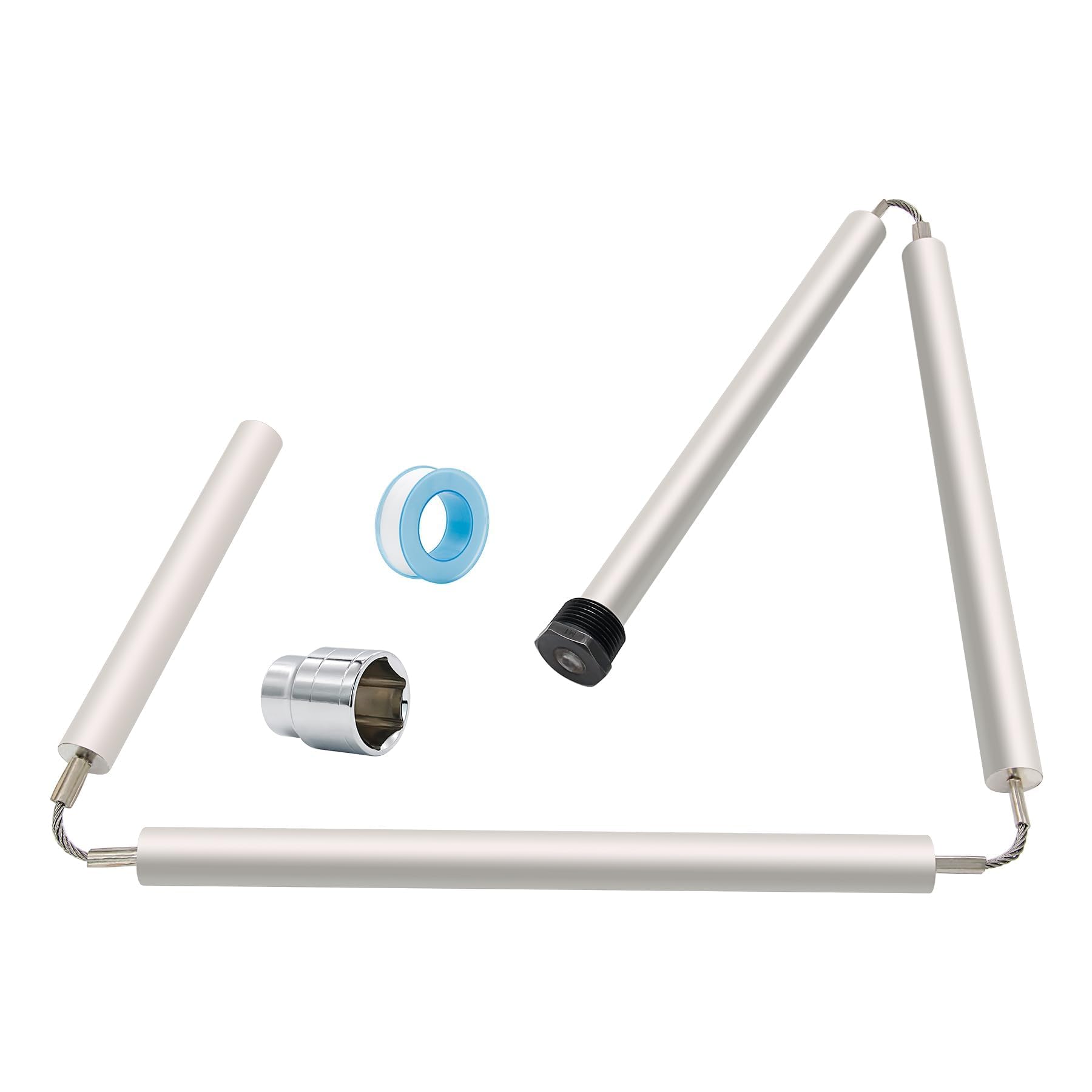
This is the kit that feels like it was designed by someone who has actually wrestled a stuck anode in a cramped closet. The 44-inch magnesium rod splits into four hinged segments, each under 12 inches, so you can feed it into a tank even when there’s barely a foot of space above the port. Throw in the Teflon sealing tape and a 27mm chrome socket, and you have everything you need without a second trip to the hardware store.
Magnesium is the most electrically active anode material, which makes it the go-to for municipal soft water where corrosion is slow and steady. Customers note the included socket and tape make the job straightforward, and the segmented design is a lifesaver on older tanks like a 22-year-old GE where a rigid rod simply won’t fit. It’s also an affordable route to extending tank life, which is why the installation praise dominates the feedback.
The catch is that magnesium reacts strongly in hard or high-iron water, which can produce that rotten egg smell — if that’s your situation, the aluminum-zinc rod below is the smarter pick. Some owners also note the factory threads arrived heavily painted and needed a grounding check with a multimeter, and the included tape runs a bit thin for their taste. One buyer needed a 150-psi impact wrench to break the factory rod free.
A complete DIY package: the socket and tape mean you can finish the job in one session, not three trips to the store.
Know your water first: magnesium is superb on soft water but can introduce sulfur odor on hard well water.
Grab it if: you want a full kit and a flexible rod for a tight ceiling.
skip it if: you’re on well water and already smell eggs — aluminum zinc is the better metal for you.
3. Yrjns 44″ Flexible Magnesium Anode Rod
The flex magnesium rod that flushed odor and sediment out of gas heaters
Owners of Rheem 50-gallon gas water heaters report this rod removes that hot-water sulfur smell and quiets a heater that was working overtime. The 44-inch magnesium core arrives hinged into four segments under 12 inches each, so it bends into low-headroom spaces where a rigid rod would refuse to go. The included 1-1/16-inch socket and Teflon tape cover you for the whole swap.
The quality here is the headline — the metal and the threads both get steady praise, and owners say the seal holds without leaks once tightened. A common DIY story: the old anode was fully corroded and bare, the flexible rod fit the low ceiling easily, and after flushing the sediment the heater ran quieter and the odor vanished. The included socket even worked on the stubborn factory rod, though removing it took a 24-inch breaker bar in most cases.
The honest friction point is threading the flexible rod back in — the segments make it slightly trickier to align than a rigid rod, and a few owners needed multiple attempts before the threads caught. One found that a rusted Rheem port needed a hefty 200 lb-ft of torque to seal, which means you’ll want an impact wrench, not just a breaker bar. If your threads sit recessed, keep needle-nose pliers nearby to start the fitting.
Built for gas tanks: owners consistently report odor removal and a quieter heater after install.
The flex trade-off: you gain ceiling clearance but pay for it with trickier thread alignment.
Choose this when: you want magnesium protection and a flexible rod for a gas heater under a low ceiling.
Think twice if: you dislike fighting threads — a rigid rod threads in more predictably.
4. Eau 44″ Aluminum Zinc Anode Rod
The aluminum-zinc alloy rod purpose-built to kill rotten egg smell at the source
If your well water leaves a rotten egg stink in every glass, this rod attacks the root cause instead of masking it. The specially formulated aluminum-zinc alloy is the key difference from a magnesium rod — it’s less electrically active, so it doesn’t trigger the sulfur reaction that causes the odor in the first place.
It’s a proven swap for owners who tried chlorine treatments that only worked for a week or two; this rod eliminated the smell within days and one owner’s sulfur-stained black water cleared up entirely. The 44-inch rod folds into four segments under 12 inches each, so it installs in tight spaces and trims easily with a hacksaw if your tank is shallow. Each kit ships with the Teflon sealing tape and a 27mm chrome socket.
The biggest caution is threading — owners warn that tight socket clearance makes hand-threading tricky, and one cross-threaded the fitting using an impact driver before fixing it with a 3/4-inch tap. The fix is simple: use hand tools only, not an impact wrench. On the upside, a factory magnesium anode that lasted just 9 months on well water was replaced by this rod, which was still working strong a year later.
The odor fix that lasts: instead of a two-week chlorine band-aid, this removes the smell at the rod.
Thread with care: hand tools only, or you risk cross-threading the port.
Pick this for: well water with sulfur smell that magnesium rods make worse.
Pass if: you’re on soft municipal water with no odor issues — magnesium gives you faster protection.
5. Ozek 44″ Aluminum Zinc Anode Rod

The aluminum-zinc flex rod with stainless joints built for the tightest basements
Some water heaters sit in spaces so cramped that even a flexible rod is a puzzle — and this one answers with stainless steel joints that squeeze into the tightest of spots. The 44-inch aluminum-zinc core protects against corrosion without the sulfur reaction magnesium can trigger in hard water, and the PTFE tape in the box covers the thread seal.
The flexible rope-style design is exactly what owners in low-ceiling basements want — one even said water heater companies should ship these from the factory. It’s a smarter pick than a solid rod for a 2014 Kenmore or Sears unit where you’d otherwise have to cut out the old one. Owners in hard-water areas report no sulfur smell after install, and the regular replacement routine is easy enough that one buyer swaps it every 1-1/2 years on schedule.
The main friction is always getting the old rod out, not this one in — factory rods can be buried under foam, needing a deep socket and a breaker bar with the full tank weight for leverage. Note this rod does not fit Bradford White water heaters, so check your brand first. One owner trimmed 8 inches off the end to match the old rod’s length with a simple hacksaw.
Confidence in tight spots: the stainless flex joints are the stand-out feature for low-clearance installs.
Check compatibility: Bradford White tanks are the one brand this won’t fit.
Reach for this if: your heater hides in a crawlspace or low basement ceiling.
Avoid it if: you own a Bradford White — you’ll need a specific replacement instead.
6. Eastman 42″ Flexible Magnesium Anode Rod
The chrome-finished flex rod that cleaned rusty water out of a 75-gallon tank
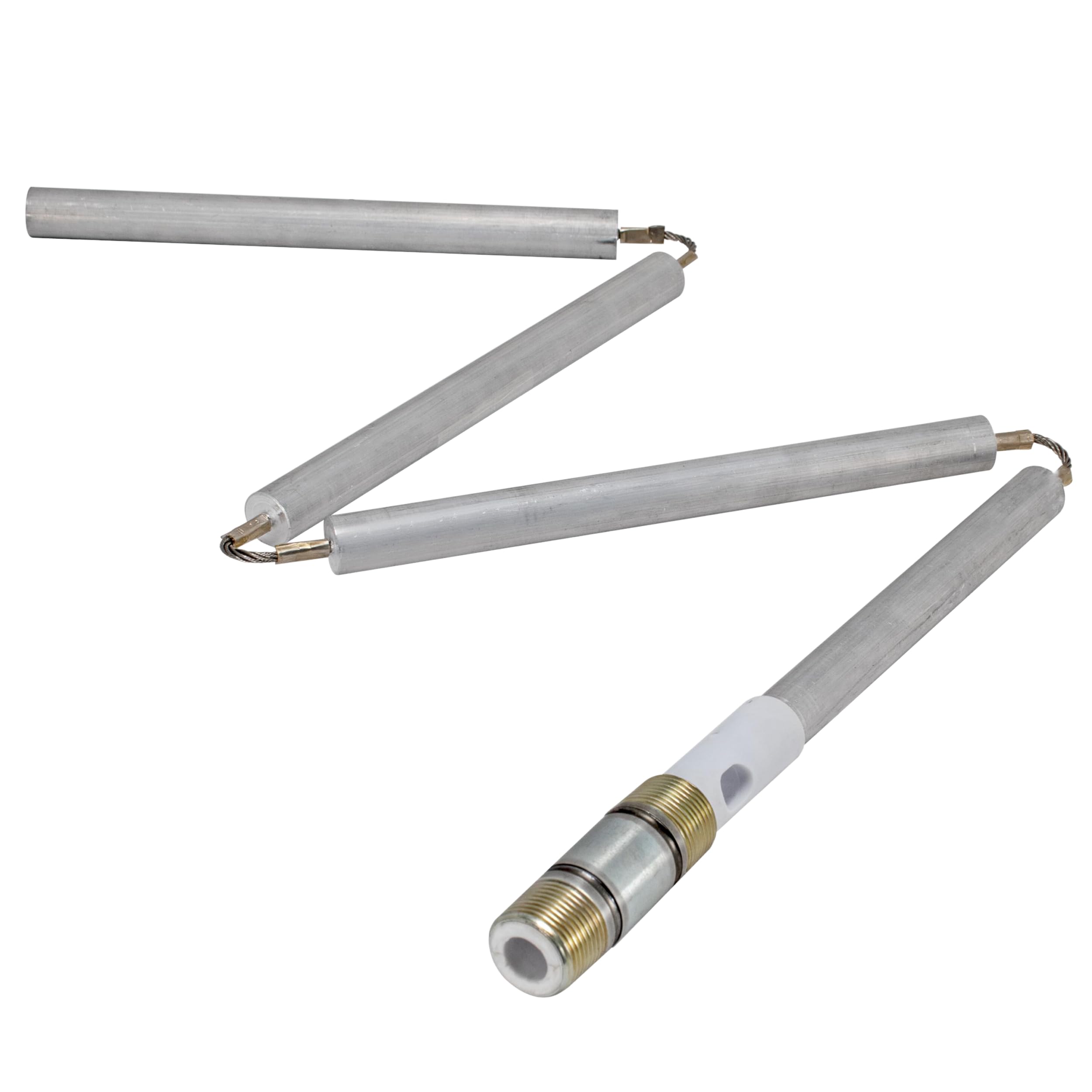
Sometimes the first sign of a dying anode is orange water, not a smell — and this magnesium rod is the fix owners reach for when the rust shows up. The 42-inch core runs along a carbon steel cable with four magnesium links, each 5/8-inch in diameter, so it flexes into tanks that a rigid rod can’t reach. The stainless steel 3/4-inch by 3-inch NPT threaded fitting mates with most residential heaters, and the chrome finish keeps the top looking tidy.
The flexible four-section design means you can install it without tipping the heater over, which is a genuine relief in tight mechanical rooms. It also carries a 1-year limited warranty, which is more protection than most rods in this category offer.
The honest caveat is that a segmented flexible rod has a shorter lifespan than a one-piece rigid rod because each link sacrifices independently — so you’ll swap it more often. Owners also note the heat trap feature isn’t included, so check your existing setup if you’re relying on that. And while magnesium is great for soft water, it’s the wrong metal for well water where odor is already a problem.
A rust-water rescue: owners saw orange water clear up after the swap.
Plan to change it sooner: flexible links wear faster than a single rigid rod.
Choose this if: you want a flexible magnesium rod with a warranty and a clean chrome look.
Look elsewhere if: you want maximum lifespan and have ceiling clearance for a rigid rod.
7. Podoy 32″ Magnesium Anode Rod
The 32-inch solid magnesium rod that fits compact tanks and trims to any length
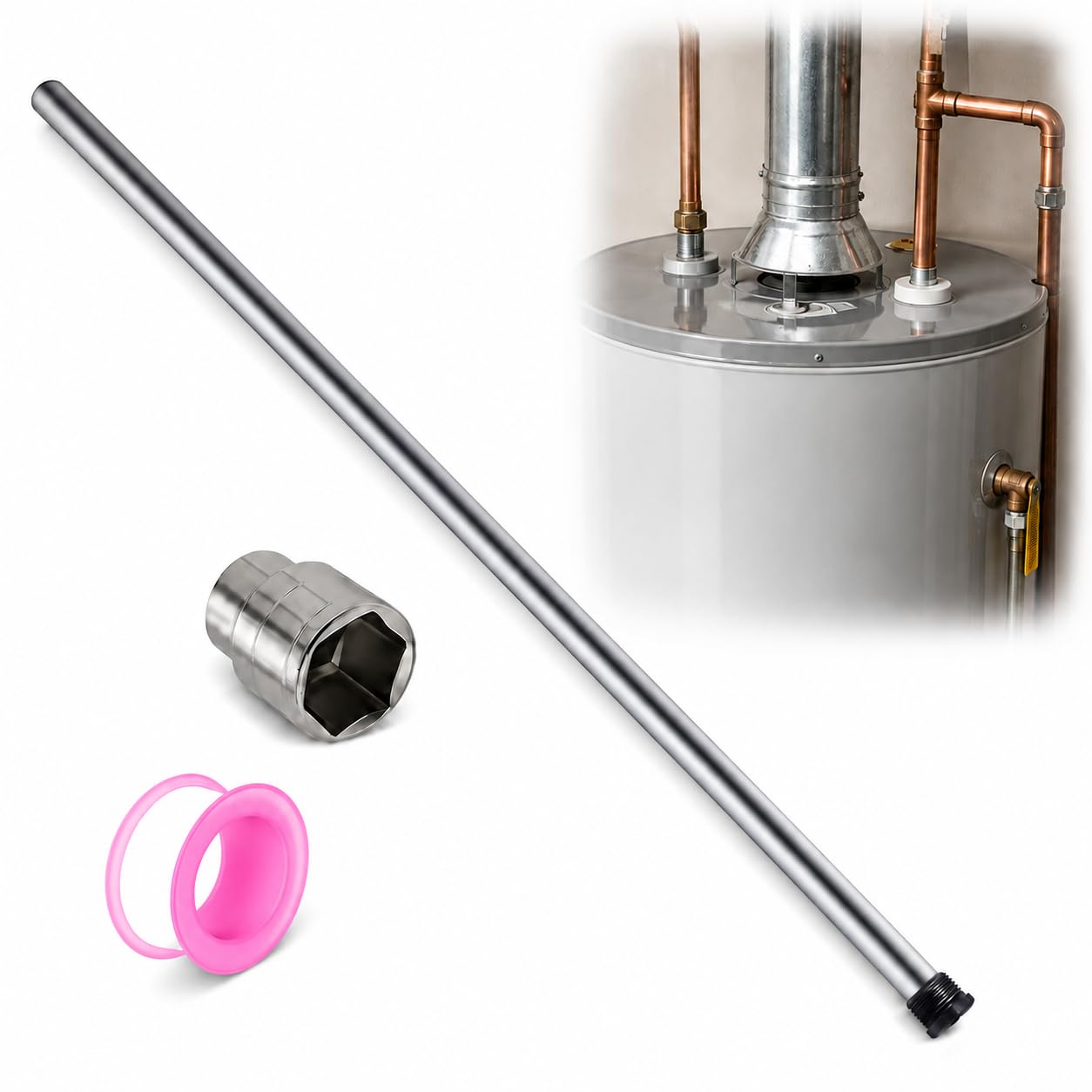
Not every tank needs a 44-inch rod — and this 32-inch magnesium core is the right fit for smaller residential heaters, utility closets, and under-sink units. It’s made from 100% solid magnesium, which provides faster corrosion protection than aluminum or zinc rods, and it attaches via a standard 3/4-inch NPT thread that fits roughly 95% of residential gas and electric water heaters.
Owners describe installing it in under 10 minutes, with the 0.84-inch hex plug grabbing a standard wrench with no special tools. The 32-inch length is trimmable with a hacksaw for even tighter spaces, and the included 27mm socket (equivalent to the standard 1-1/16-inch) means you can remove the old rod and tighten the new one without buying extra tools. It fit a 65-gallon tank perfectly, and one owner swapped it out with a simple ratchet and cheater pipe — no impact wrench needed.
The honest concern is the material — some buyers question whether it’s truly solid magnesium as advertised, so verify with a magnet test if that matters to you. The included Teflon tape is on the cheap side, so keep a quality roll handy for a reliable seal. It also carries a half-year manufacturer’s defect warranty, which is shorter than most — treat the threads gently and it’ll serve you well.
A fast, simple swap: the hex plug and included socket get the job done in minutes.
Verify the metal: a few owners doubt the magnesium claim — test with a magnet to be sure.
Pick this for: compact tanks and utility-closet installs where a shorter rod is the right call.
Pass if: you want a full-length flex rod — this is the trim, rigid option instead.
8. Briidea Powered Anode Rod

The plug-in titanium rod that kills sulfur smell within hours and never dissolves
This is the category’s most different approach: instead of a metal core that sacrifices itself, it’s a titanium rod that plugs into a wall outlet and sends a tiny impressed current through the water. That current actively blocks corrosion, so the rod never gets consumed — no annual replacement, no rust flakes, no maintenance beyond a wipe-down.
The ruthenium-iridium coating resists breakdown, giving the rod a claimed 20-year service life. It fits 40-89 gallon tanks, and the adapter’s green LED confirms the circuit is live.
The trade-off is that you need a wall outlet within reach of the heater, plus a partial drain and a ground connection to install it. The instructions are thin — owners used a 1-3/8-inch wrench, and one noted you need a 30mm deep socket rather than the 31mm the manual suggests, and to tighten to no more than 25 ft-lb. If a power surge kills the supply unit, a replacement from a compatible brand fixes it.
Set-and-forget protection: no annual rod changes, just plug it in and the LED shows it’s working.
Plan the install: you need an outlet, a drain, and a ground — not a free five-minute swap.
Reach for this if: you’re tired of replacing rods and want odor gone fast on a 40-89 gallon tank.
Think twice if: there’s no outlet near your heater and you don’t want to run one.
9. HertzEagle Powered Anode Rod

The electric titanium rod with a 20-year warranty that ends sulfur smell for good
For well-water homes where the rotten egg smell survives every other fix, this powered rod is the one owners call “actual witchcraft” — it eliminated a severe hydrogen sulfide smell within 24 hours after flushes, peroxide treatments, and even an aluminum-zinc rod had all failed. The titanium core runs on a corded electric supply that sends a protecting current through the water, so nothing corrodes and nothing needs replacing.
The 40-89 gallon model fits electric, gas, solar, hybrid, and geothermal tanks from most brands, except Bradford White’s different port. It draws only 10kWh per year and comes with a 5-year base warranty plus a 20-year extended warranty. Owners appreciate the long power cord and the green LED confirmation that the circuit is live, and the long neck gives a pipe wrench room to grip during install.
The hardest part, as with any anode, is extraction — the factory rod typically needs a breaker bar, a deep socket, and a 5-foot pipe for leverage, plus foam removal around the base. The included wide plumbers tape and easy install get praise, but you’ll want an outlet nearby. One owner noted the warranty activation requires leaving a review, so read the card in the box.
The smell ends here: reviewers point out odor gone within a day after every other fix failed.
Not for Bradford White: check your brand — this one skips that single manufacturer.
Choose this if: you want the longest guarantee and permanent odor removal on any non-Bradford-White tank.
Look elsewhere if: your heater is a Bradford White or has no nearby outlet.
Understanding the Specs
The three core metals
Magnesium is the most electrically active, protecting fastest and suited to soft municipal water — but it can trigger sulfur odor on hard well water. Aluminum sacrifices slower and resists odor well, making it the go-to for well water with high iron. Aluminum-zinc alloy splits the difference, offering odor control with a quicker reaction than pure aluminum. The metal you choose should match the water you actually have, not just the price tag.
Rigid vs flexible design
A rigid one-piece rod is simplest to thread and lasts longest, but it demands ceiling clearance above the tank to lift straight out. A flexible rod, hinged into four segments of roughly 12 inches each, bends around obstacles and fits under low ceilings — at the cost of a slightly shorter lifespan and trickier thread alignment. Measure the space above your heater port before you choose, since that single number decides which style will actually fit.
Powered titanium rods
Instead of a dissolving metal core, a powered rod uses a titanium element wired to a wall outlet that sends an impressed current through the water to block corrosion. It never gets consumed, so there’s no replacement schedule — just a green LED on the adapter to confirm it’s working. They cost more up front and need an outlet and a ground, but they’re the only option that eliminates sulfur odor without any metal reacting with your water.
Thread size and fit
The standard connection for residential tanks is a 3/4-inch NPT thread (a tapered pipe thread that seals as it tightens). A 32-inch rod suits smaller tanks, while 42-44 inch rods blanket 50-gallon units, and flexible rods trim shorter with a hacksaw. Always verify your brand — most rods fit Rheem, A.O. Smith, GE, Reliance, and Kenmore, but Bradford White is the common exception across several powered models.
FAQ
How often should I replace my anode rod?
Will a magnesium rod cause rotten egg smell in my water?
Can I cut a flexible anode rod shorter?
What’s the difference between magnesium and aluminum anode rods?
Do powered anode rods really last 20 years?
Will any anode rod fit my Bradford White water heater?
Do I need an impact wrench to remove the old anode rod?
Can a powered anode rod replace a sacrificial rod entirely?
Is a 44-inch flexible rod better than a 32-inch rigid rod?
Final Thoughts: The Verdict
For most people, the anode rod for water heater winner is the Camco Aluminum Anode Rod because its 42-inch aluminum core handles well water without odor and installs with standard tools. If you want flexible installation and a complete kit with socket and tape, grab the Eau 44″ Flexible Magnesium. And for well water plagued by sulfur smell that nothing else fixes, the HertzEagle Powered Titanium Rod is the one to reach for with its 20-year warranty.
How We Picked
We do not accept paid placement. Every pick is matched to a real buyer and a real use-case; we do not hands-on test units.
Sources & Methodology
Specifications: manufacturer listings and product documentation. Review insights: verified customer reviews, as of August 2026. Pricing: not shown on this page (it changes often); check the current price via the retailer link.
As an Amazon Associate, Gadgets Feed earns from qualifying purchases. This does not affect which products we feature.