
Our readers keep the lights on and my morning glass full of iced black tea. As an Amazon Associate, I earn from qualifying purchases.
Specs are compiled from manufacturer listings and verified buyer reviews and can change over time — please confirm the key details on the product page before buying.
A sulfurous, match-like smell from your hot water usually means the sacrificial anode rod has depleted. Replacing that rod is a straightforward DIY job once you match the metal and length to your tank. This guide compares flexible versus solid rods, magnesium versus aluminum-zinc, and powered titanium units.
I’m Min — the founder and writer behind Gadgets Feed. This guide is built by comparing the manufacturers’ published specifications and the patterns across verified customer reviews, so you get each pick’s real strengths and trade-offs instead of marketing spin.
Match the rod metal to your water chemistry and measure your headroom before buying. Finding the best anode rods for water heater starts by understanding the sacrificial metal that protects your tank.
Our Picks at a Glance

How To Choose The Best Anode Rods For Water Heater
Your steel tank rusts from the inside unless a sacrificial anode corrodes first. The anode rod is a metal core that corrodes instead of your tank’s lining. A rod pulled out as a thin wire means the tank was next to corrode. Your choice depends on metal type, rod length, and ceiling clearance.
Magnesium vs. Aluminum-Zinc vs. Titanium
Magnesium rods are the most aggressive protectors, which makes them ideal for older tanks and hard water. But in water with certain bacteria, magnesium can trigger that sulfur rotten-egg smell. Aluminum-zinc alloys are the standard fix for odor problems — they still protect the tank but rarely feed the bacteria that cause the smell. Titanium, found only in powered rods, does not sacrifice itself at all; it uses a small electric current to stop corrosion, which means no rod to replace.
Flexible vs. Solid: The Clearance Rule
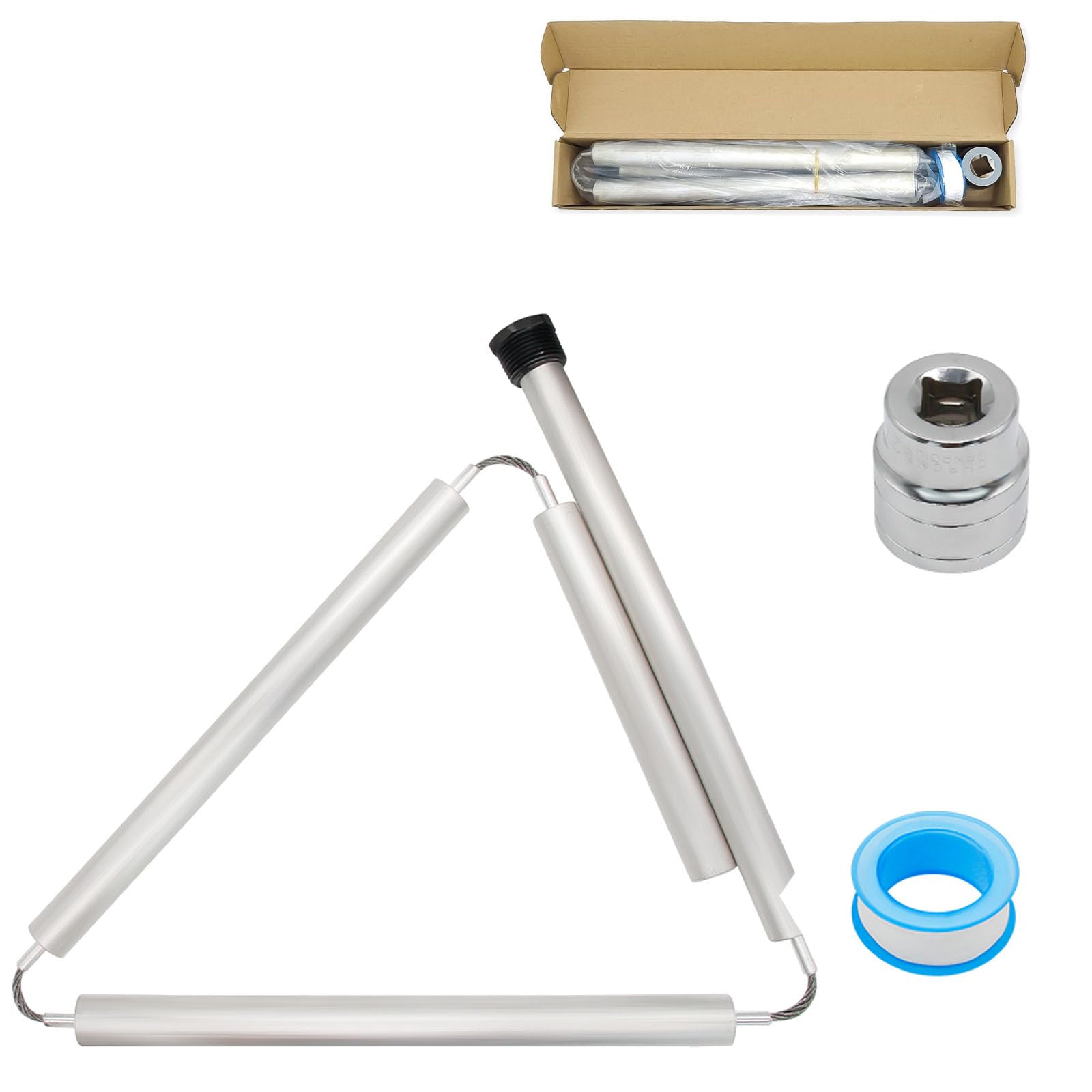
If you have about 4 feet of open space above the tank, a solid rod slides in vertically. But if your heater sits under a low ceiling or in a closet, a flexible rod — hinged into segments — needs just over a foot of clearance, because the sections bend as they slide down. Most flexible rods come in four segments, each under 12 inches, so they fit through narrow gaps.
The Thread and Socket You Cannot Skip
Nearly every residential tank uses a standard ¾” NPT thread connection, which is why most rods claim the same compatibility list. The tool matters more: you need a 1-1/16″ (or 27mm) hex socket to remove the old rod. Many kits include the socket and Teflon tape, but the factory nut is often torqued on tight enough to need an impact wrench.
Quick Comparison
| Model | Best For | Metal | Length | Install Style | Amazon |
|---|---|---|---|---|---|
| 44″ Aluminum Zinc Flexible★ Best Overall | Eliminating rotten egg odor | Aluminum-Zinc | 44 inches | Flexible (4 segments) | Amazon |
| Eau 44″ Magnesium FlexibleTop Performer | Aggressive tank protection | Magnesium | 44 inches | Flexible (4 segments) | Amazon |
| Redparts 44″ MagnesiumBest Value | Quick Rheem replacements | Magnesium | 44 inches | Flexible | Amazon |
| yrjns 44″ Magnesium Kit | Full DIY kits on a budget | Magnesium | 44 inches | Flexible (4 segments) | Amazon |
| Reliance 32″ Magnesium | Solid-rod durability | Magnesium | 32 inches | Solid (cuttable) | Amazon |
| Eastman 42″ Flexible Magnesium | Stainless steel nipple fitting | Magnesium | 42 inches | Flexible (4 links) | Amazon |
| Water Connection AR136 | Odor removal with thick metal | Aluminum-Zinc | Solid rod | Solid (needs 4 ft) | Amazon |
| Corro-Protec Powered (10-39 gal) | Maintenance-free corrosion control | Titanium (powered) | 12-inch assembly | Dedicated anode port | Amazon |
| Corro-Protec Powered (Bradford White) | Hot water outlet installation | Titanium (powered) | Fits 10-120 gal | Hot water outlet (Wye) | Amazon |
In‑Depth Reviews
1. 44″ Flexible Aluminum Zinc Anode Rod
Our pick — over 4.5★ from 500+ verified ratings; the strongest balance of quality and price.
The odor-killing specialist that flexes around tight crawl spaces and low ceilings.
If your hot water smells like rotten eggs, this is the rod buyers reach for first — the aluminum-zinc alloy is formulated specifically to stop that sulfur odor that magnesium rods can feed. It is the top-rated pick in this list, and the reason is simple: it fixes a smell that makes a shower unbearable, and it does it within days.
At 44 inches long, it folds into four hinged segments, each under 12 inches, so it slides into place even when you have almost no headroom. The kit is genuinely complete — you get the anode rod, Teflon sealing tape, and a 27mm chrome-finished socket, so you do not have to hunt for tools. The fit list covers nearly every major brand: A.O. Smith, Rheem, Reliance, Richmond, Kenmore, State, and GE, all using the standard ¾” NPT connection.
Buyers report swapping theirs out in under 5 minutes, and one owner with a low ceiling noted the flexible design was the entire reason the job was possible. The thing everyone raves about is the build quality — owners call it better than the factory-installed rod, and it carries a 4.8-star average from over 500 buyers. The recurring advice is simple: check wear every 2 years, and cut the lower segment with a hacksaw if it runs long.
What Owners Love
- Aluminum-zinc alloy targets rotten egg smell directly
- Four hinged segments install in under 12 inches of clearance
- Socket and thread tape included in the box
- Fits Rheem, A.O. Smith, GE, Kenmore and more
Before You Buy
- You may still need a 1/2″ drive socket adapter for the included 27mm socket
- Cutting the rod shorter voids its full-length reach
The fit for: Anyone fighting sulfur water odor who wants a complete, tool-included kit for a tight-space install.
Expect this: The included socket is chrome-finished; a 1/2″ drive adapter is on your list if your wrench set is standard drive.
2. Eau 44 Inch Flexible Magnesium Anode Rod
Magnesium’s extra electrochemical punch for tanks that need the strongest sacrificial pull.
Magnesium is the most electrochemically active anode metal, which means it throws more protection at your tank lining than aluminum can. The Eau flexible rod uses that aggressiveness for tanks that need it most, and it still folds into four segments, each under 12 inches, for low-clearance installs. If your water smells and you want the strongest shield, this is the rod to weigh against the aluminum-zinc pick above.
The kit is just as complete as the aluminum version: a 44-inch magnesium rod, Teflon tape, and a 27mm chrome socket. Owners who installed it in 50-gallon GE and Rheem tanks report a straightforward job that takes about 15 minutes. The installation is the most-discussed strength here, with buyers noting the articulated design saves them from removing the whole water heater.
One honest catch: the thread quality draws some criticism, and owners warn the factory nut can be torqued to 150 psi — a breaker bar or impact wrench often earns its keep. Owners mention needing an impact wrench to loosen the factory nut, and one owner with a 9-year-old Rheem found the original rod still in good shape, deciding to store the replacement for later. The magnesium core is roughly 1/3 smaller in diameter than a fresh factory rod, which is normal for this style but worth knowing.
Strongest shield: Magnesium’s higher electrochemical activity gives your tank maximum sacrificial protection, and the 44-inch flexible design fits where solid rods cannot.
The trade-off: Plan on an impact wrench for removal, and treat the included tape as a backup — some owners swap in their own Teflon.
Pick this rod when: Your tank needs maximum protection and you have a breaker bar or impact wrench ready for the old nut.
Look elsewhere if: Your water already smells sulfurous — magnesium can feed that odor, so the aluminum-zinc rod is the better match.
3. Flexible Magnesium Anode Rod with 1-1/16″ Socket
A no-frills magnesium rod that slides in with just over a foot of overhead space.
This rod’s standout promise is clearance: the flexible design needs just over 12 inches of space above the tank, where a solid rod would demand 4 feet. That makes it the pick for heaters tucked under stairs or in tight mechanical closets, and it uses the standard ¾” NPT thread that matches Rheem, GE, Reliance, Richmond, and Kenmore tanks.
The kit keeps it simple — one 44-inch flexible magnesium rod, a 1-1/16″ hex socket tool, and Teflon tape. For a 40-gallon electric tank, owners found it a right fit, and one buyer who let the original rod deplete completely over 7 years reports this replacement should extend the tank’s life substantially. The flexibility is the reason most people buy it, and it does not disappoint in tight spaces.
There is one compatibility note to file away: this rod is not compatible with Bradford White tanks. That is a real limit, but if your heater is any of the standard brands, the fit is clean and the install is genuinely easy. The flexible design makes it far more forgiving than a rigid rod when you are working blind above the unit.
Easy clearance win: The 12-inch clearance requirement beats solid rods by a mile in low-ceiling utility closets.
Know the limit: Bradford White owners need a different rod, but standard Rheem and GE tanks are a perfect match.
Reach for this if: You have a standard-brand tank in a tight space and want a straightforward, socket-included swap.
skip it if: Your heater is a Bradford White — grab the powered outlet model instead.
4. 44″ Flexible Magnesium Anode Rod Replacement Kit
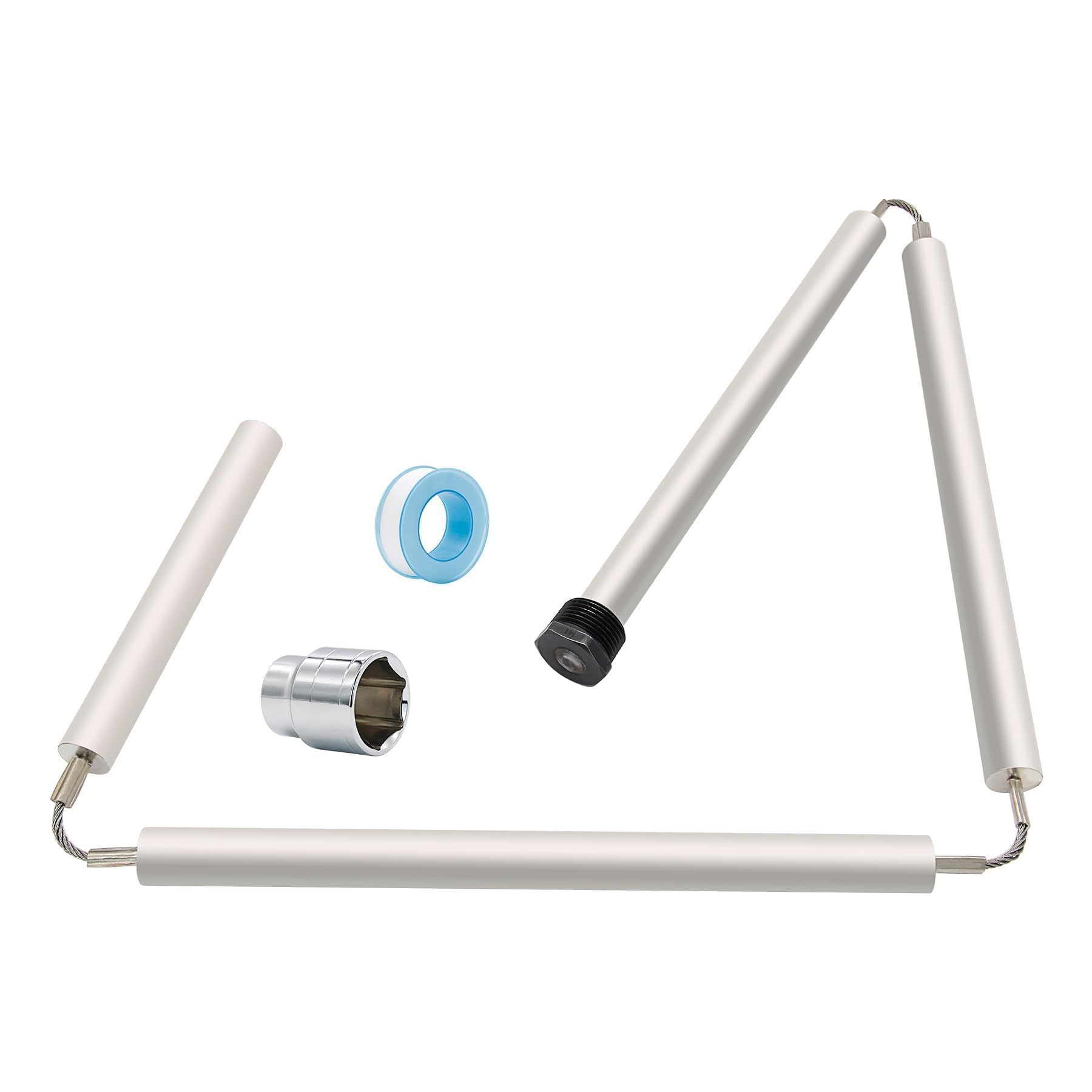
A complete magnesium kit that made one owner install five rods in 2.5 hours.
This is the efficiency pick. The 44-inch magnesium rod splits into four segments, each under 12 inches, and the kit includes the 1-1/16″ socket and Teflon tape you need to finish the job. One owner installed five of these in 2.5 hours, crediting the low-ceiling-friendly design and the fact that everything needed came in the package.
Build quality is the most-praised aspect here — owners call it high quality and note it operates stably over time. The fit list mirrors the category standard: A.O. Smith, Rheem, Reliance, Richmond, Kenmore, State, and GE, all on the ¾” NPT connection. It works especially well in tall Rheem tanks, where customers note a perfect fit and easy thread engagement.
The honest note from the review pages: the included socket looks a little light-duty, so some owners reach for their own impact socket on a driver instead. And if your old rod has been in for 7 years, expect to fight it out before the new one slides in — one owner called the removal the hard part, not the install. Still, for the money, this kit punches well above its tier for DIYers who want a full solution in one box.
Efficiency Wins
- Complete kit: rod, socket, and Teflon tape included
- Four flexible segments fit tight low-ceiling spaces
- Great fit in tall Rheem tanks
- Reviewers point out odor elimination and quieter operation
Small Caveats
- Included socket feels light-duty; an impact socket is sturdier
- Stuck old rods need an impact driver to remove
Who it serves: DIY homeowners replacing rods on multiple tanks, or anyone who wants a complete kit without buying extra tools.
One heads-up: Keep your own impact socket handy — the included one works but looks fragile on a stuck nut.
5. Reliance 9001829005 32-Inch Magnesium Anode Rod
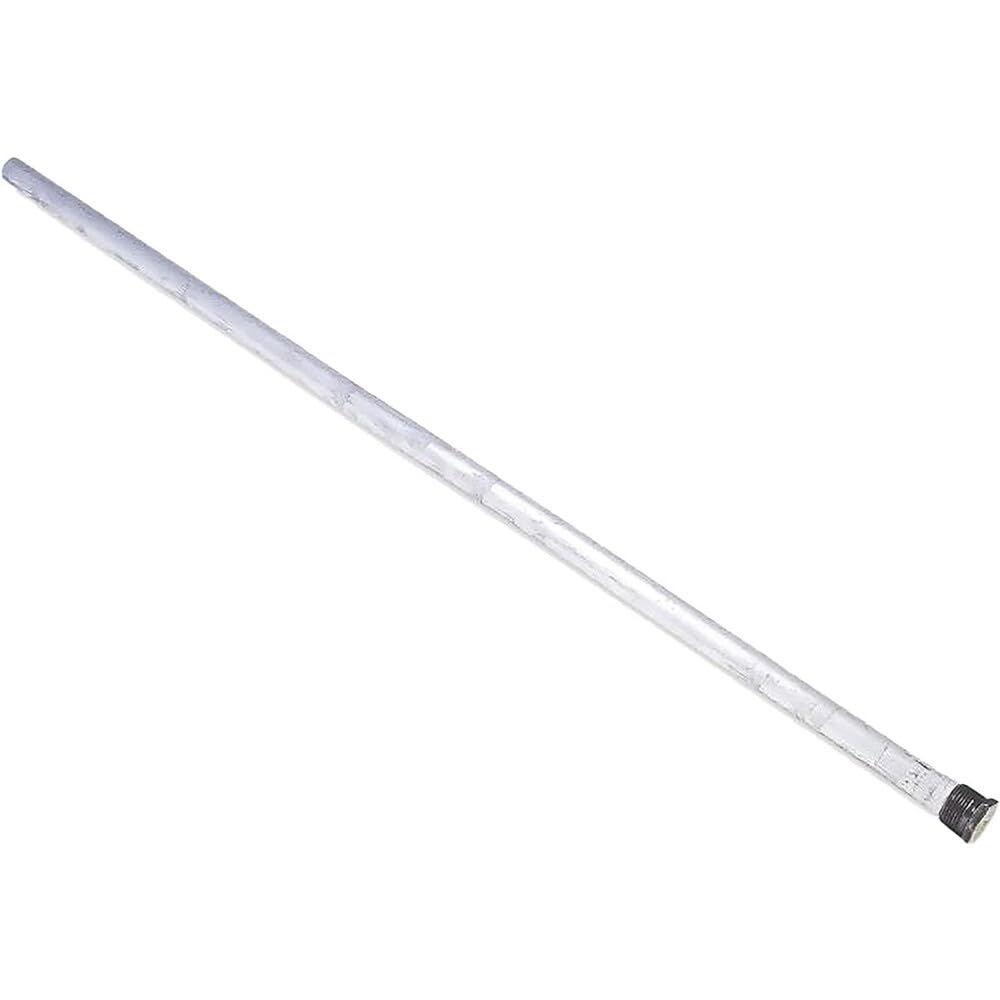
The solid 32-inch magnesium rod that lost just 10% of its metal in six years.
This is the durability champion. The Reliance is a solid magnesium rod, not the hinged flexible kind, and that solid core is why shoppers say minimal material loss over time — one buyer on very hard well water saw only 10% of the rod consumed in 6 years. On city water, another owner found the rod fully corroded after 3 years, which is why the manufacturer’s advice to replace it every year is worth taking seriously.
At 32 inches, it fits many tanks and can be cut down for shorter ones. The ¾” NPT threads and 1-1/16″ hex head are standard, and the rod measures 32-1/16 inches below the threads, so there is room to trim. It is a genuine fit for 17-year-old Whirlpool 30-gallon electric tanks and AO Smith ProMax propane heaters alike, and owners say a thicker rod simply lasts longer.
There is a clear water-chemistry warning buried in the reviews: for high-pH water (pH 7.6 or above), magnesium is the right choice — aluminum can form a blue-green crust and clog filters. If your water tests acidic, this solid magnesium rod is the safer play than an aluminum one. The trade-off is installation: a solid rod needs more overhead clearance, and the old unit may be calcified in so tight that an impact gun is non-negotiable.
Built to endure: A solid magnesium core that buyers report losing only 10% of its material over six hard years.
The catch: It needs real overhead clearance, and you will likely need an impact gun to break the old rod free.
Choose this when: You want a solid, cuttable magnesium rod with proven long-term durability on hard or high-pH water.
Think twice if: Your heater sits under a low ceiling with no room to swing a solid rod into place.
6. Eastman 42 Inch Flexible Magnesium Anode Rod
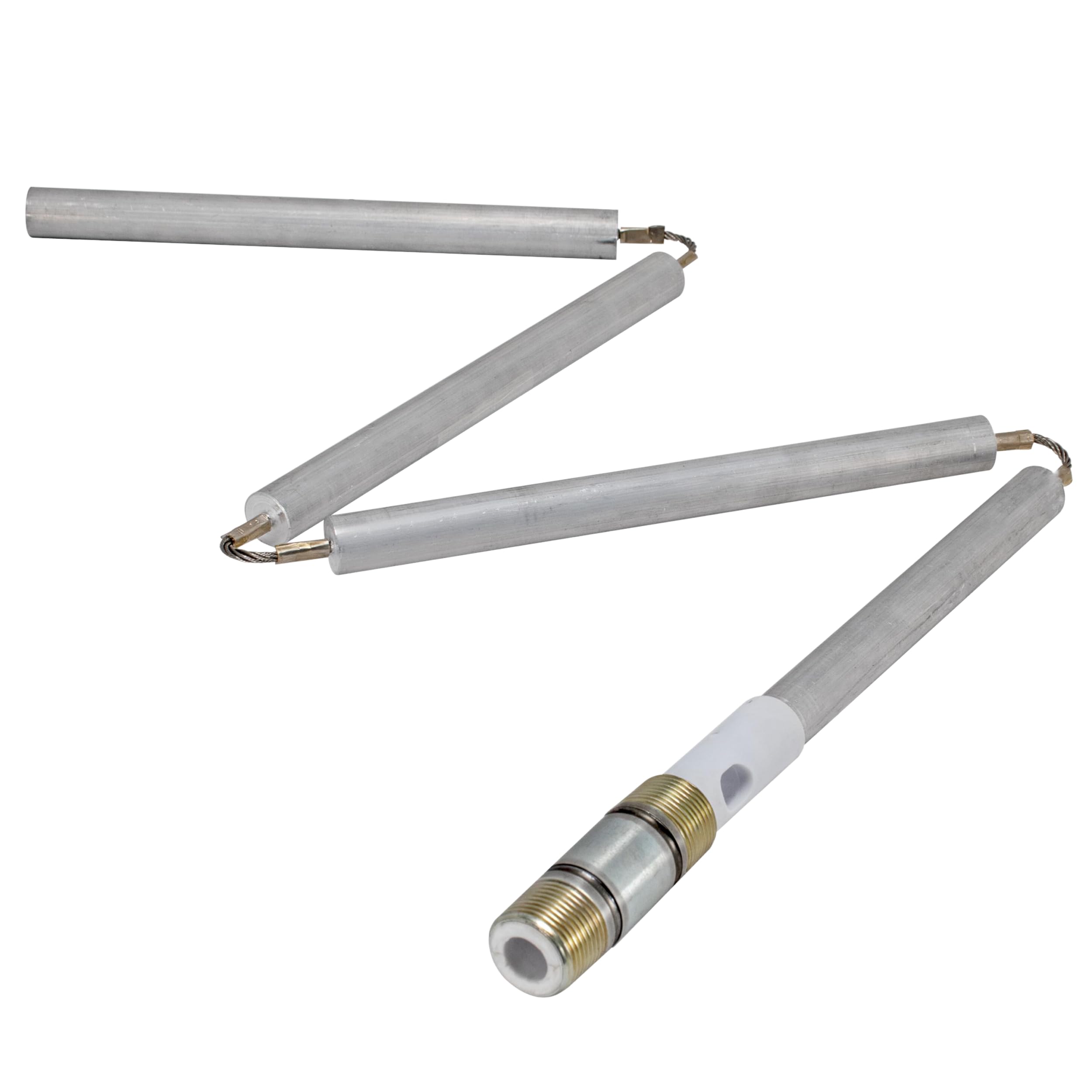
A stainless steel nipple and chrome finish make this the sharpest-looking rod in the bunch.
The Eastman stands apart with a stainless steel 3/4″ x 3″ NPT threaded fitting, which resists corrosion better than plain steel nipples and gives a clean chrome appearance. The rod itself is 42 inches of magnesium wrapped around a carbon steel cable, split into 4 links, each 5/8 inch in diameter. That four-section design is what lets it bend into tight spaces with just 12 inches of clearance at the tank top.
Owners who fit it to a 75-gallon Bradford White report a clean seal with no leaks — a notable win, since most flexible rods explicitly exclude Bradford White. The value story is strong too: buyers call it much cheaper than the OEM alternative, which matters when your water chemistry eats a rod every year. One owner in aggressive water replaces theirs annually because the corrosion in their supply destroys tanks in 2 to 4 years otherwise.
Eastman backs it with a 1-year limited warranty, and the magnesium core doubles as a sulfur-odor reducer in hot water. The honest review note is that getting the old rod out is the hard part — once that is done, the new one is “super easy.” The chrome finish is a small delight, but the stainless nipple is the real upgrade for anyone tired of rusty fitting threads.
Upgraded fittings: The stainless steel nipple beats standard threads for corrosion resistance, and the chrome finish looks far better than bare metal.
What to expect: Four magnesium links on a carbon steel cable, needing a 12-inch clearance — and a tough fight removing the old rod first.
Pick this rod for: A Bradford White or standard tank where you want premium stainless fittings and a clean chrome look.
Fair warning: Annual replacement may be your reality in aggressive water — but it is still cheaper than a new tank every few years.
7. Water Connection AR136 Aluminum Zinc Anode Rod

A thick solid aluminum-zinc rod that wiped out a metallic smell within two hours.
This is the solid-rod answer to sulfur odor. The AR136 is built from military-grade A420 aluminum-zinc alloy meeting the U.S. Mil-A-18001K/W standard, and its thick ¾” diameter gives it more sacrificial material than the 5/8″ rods some competitors use. A solid anode also offers more surface area than a flexible one, which means stronger, steadier protection across the tank.
Odor removal is absolutely the headline — it is the most-discussed aspect by a wide margin. One owner who swapped out a magnesium rod (which was causing a metallic smell) found the aluminum-zinc alloy eliminated the odor within 7 hours and fully cleared it after 2 days. Another with heavy iron in the water says it keeps the rotten egg smell away entirely. It fits every major brand: American, A.O. Smith, Bosch, Giant, GWS, GE, John Wood, Kenmore, Reliance, Rheem, Richmond, Rinnai, RUUD, State, Whirlpool, and U.S. Craftmaster.
The critical fit note is clearance — this solid rod needs 4 feet above the water heater, and Water Connection itself suggests their flexible rod if you lack that space. It also does not fit most Bradford White tanks or hot-water-outlet installs. Owners found it ran about 3 inches too long in one case and simply cut it to fit, which is easy with a hacksaw. The lifetime warranty is a genuine peace-of-mind bonus that no flexible kit here matches.
Solid Strengths
- Thick ¾” diameter offers more sacrificial material than 5/8″ rods
- Military-grade A420 alloy with a lifetime warranty
- Eliminated metallic and sulfur smells within hours for owners
- Fits American, A.O. Smith, Rheem, Rinnai, RUUD and more
Space Needed
- Requires a full 4 feet of overhead clearance to install
- Does not fit most Bradford White tanks or hot water outlet ports
Reach for this if: You have 4 feet of clearance above the tank and want a thick, lifetime-warranted aluminum-zinc rod that kills odor fast.
Look elsewhere if: Your heater is a Bradford White, or your anode sits in the hot water outlet rather than a dedicated port.
8. Corro-Protec Powered Anode Rod (10-39 Gallon)
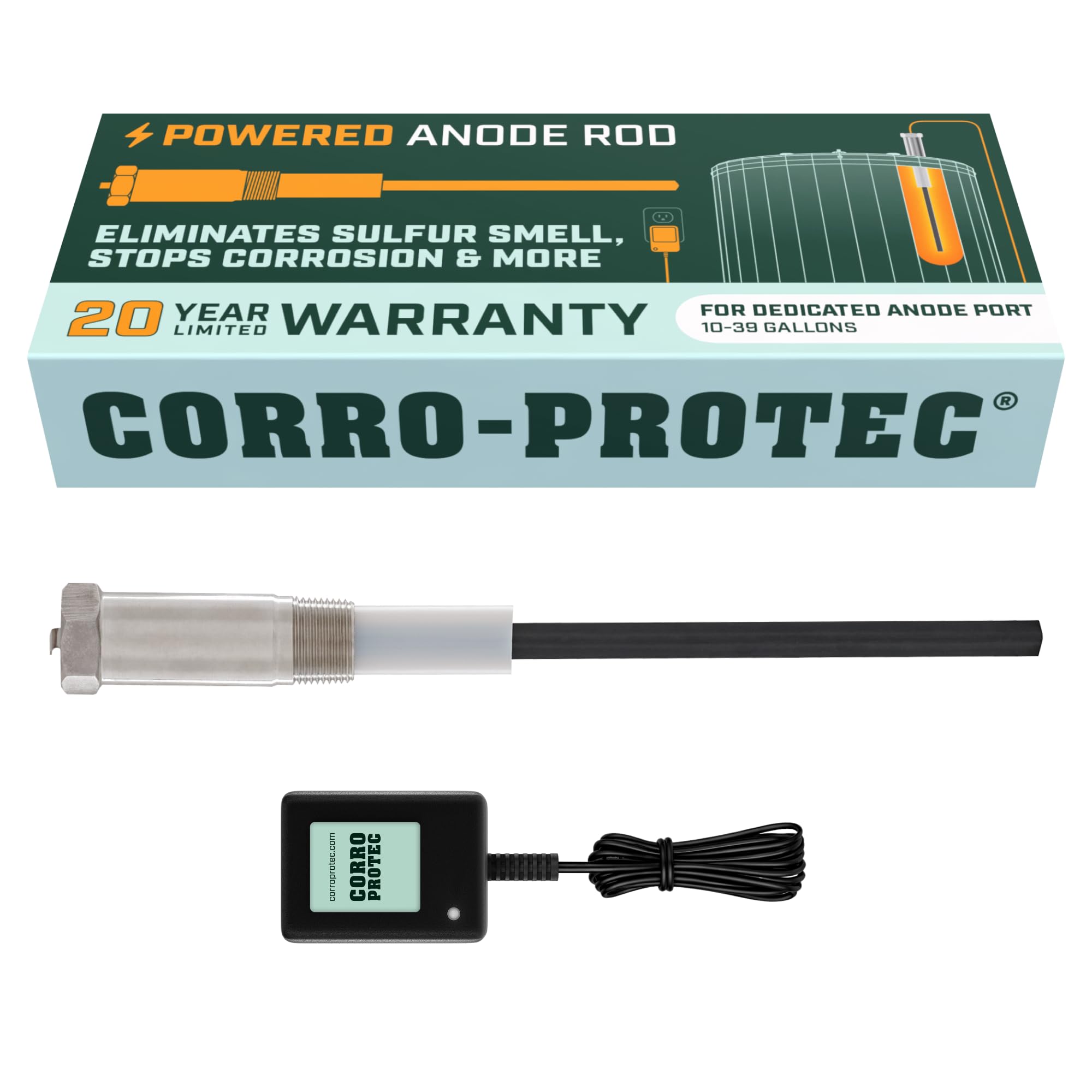
The powered titanium rod that replaces your yearly sacrificial-metal ritual for good.
This is the biggest mental shift in the category. Instead of a metal core that slowly dissolves, the Corro-Protec uses a titanium mixed-metal-oxide rod powered by a small electric current to actively push corrosion away from the tank. Because the titanium does not disintegrate, there is no rod to replace every couple of years — you install it once and forget the maintenance cycle entirely.
It is built for 10-39-gallon tanks with a dedicated hex-head anode port, and the kit includes a 12-foot power cord and step-by-step instructions. Owners mention the installation takes about 45 minutes, and the odor elimination is fast — one buyer saw the sulfur smell 80-90% gone in 5 hours and 100% gone within 24. Another running a 40-gallon tank confirmed the 39-gallon-rated unit works fine on the slightly larger heater.
The titanium construction carries a 20-year warranty, and it is certified lead-free with the Water Quality Association’s Gold Seal. The upfront cost is the real conversation — it sits far above any sacrificial rod — but owners who crunched the numbers say it pays for itself in under two years by eliminating repeated replacements. The one thing to know: it installs in the dedicated anode port on top, so Bradford White tanks (which lack that port) need the outlet-install model instead.
Set-and-forget protection: A titanium rod that never dissolves, backed by a 20-year warranty and a Gold Seal from the Water Quality Association.
The price of convenience: The highest upfront cost in the list, though customers note it paying for itself in under two years of skipped replacements.
This is for: Anyone with a 10-39-gallon tank who wants permanent corrosion protection and never wants to pull a rod again.
Not for: Bradford White tanks without a top anode port — you need the hot-water-outlet model instead.
9. Corro-Protec Powered Anode Rod for Bradford White & Hot Water Outlet
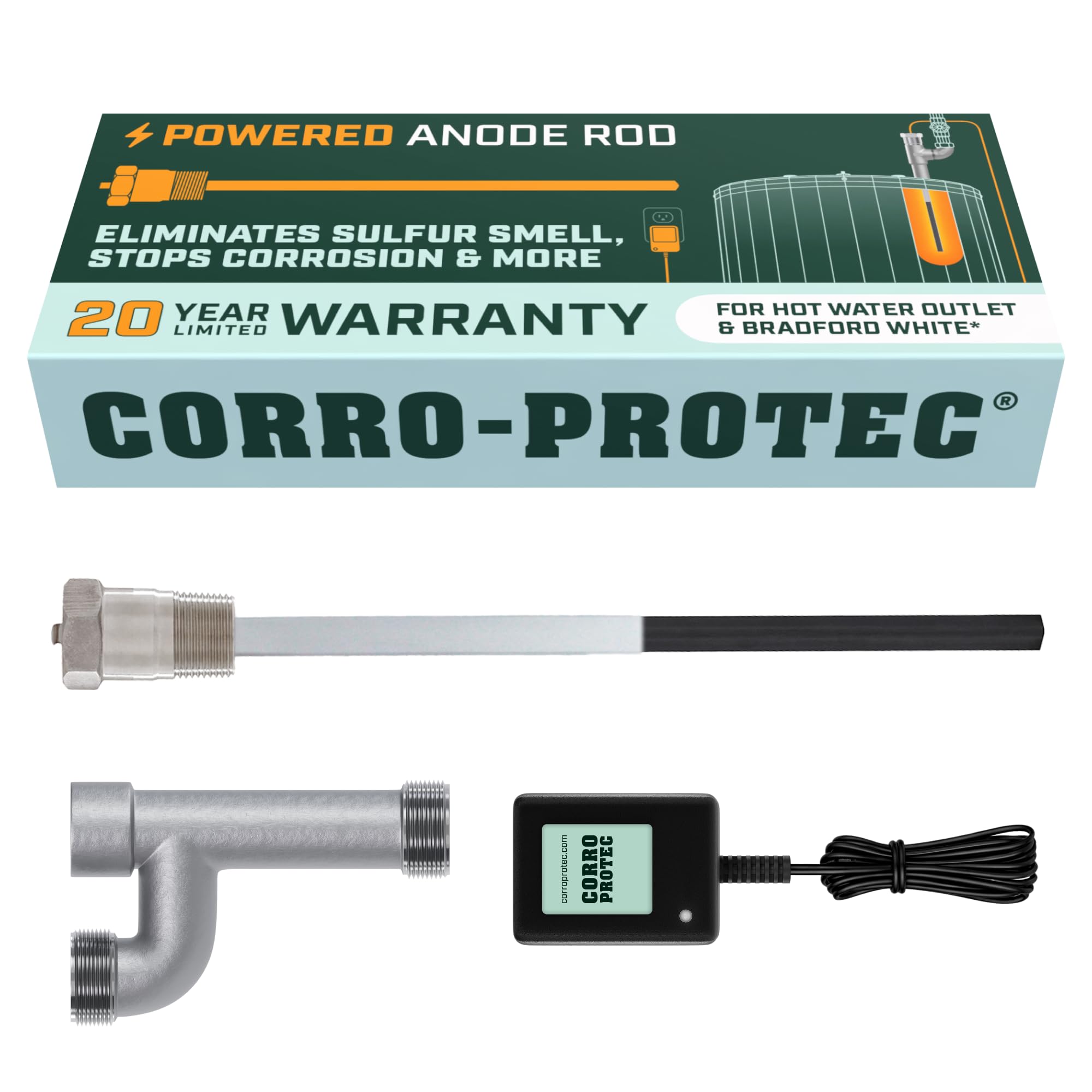
The powered solution for Bradford White tanks and any heater with a stuck anode port.
This is the Corro-Protec for the hard cases. Where the standard powered anode needs a dedicated port on top of the tank, this model threads into the hot water outlet using a standard ¾” NPT connection — which makes it the answer for most Bradford White heaters that lack an anode port, and also a rescue option if your old anode is stuck so badly you cannot remove it.
It covers a wide range, fitting 10-120-gallon water heaters from Bosch, A.O. Smith, and others. The install is more involved than the port version because you redirect the hot water pipe using the included stainless steel Wye (Y-shape) fitting, and the manufacturer is upfront that basic plumbing skills are recommended. The included manual walks through each step, and one owner hit a fitting clearance issue that support solved by sending a free alternate fitting.
Odor elimination is the top praise — more owners single it out than any other aspect in this list. One buyer with well water saw the egg smell vanish overnight, and another wiped out the sulfur smell in about 3 days after a plumber started the process with a bleach treatment. The titanium design carries the same 20-year warranty, and owners note the company even follows up personally on installs. The trade-off is real: it demands the most setup work of any pick here, and the Wye fitting can feel stiff to tighten by design.
The solution for odd tanks: Fits Bradford White and any hot-water-outlet install where a dedicated anode port does not exist or is seized up.
Plan for the work: The included stainless Wye fitting needs firm force and basic plumbing skill — this is the most involved install in the list.
Turn to this when: You own a Bradford White or your old anode is stuck and you want permanent, odor-free protection.
Be ready for: A more complex install than any other pick — the redirected hot water pipe and stiff stainless fittings require patience.
Understanding the Specs
Magnesium vs. Aluminum-Zinc
Magnesium is the most electrochemically active sacrificial metal, giving your tank the strongest protection — ideal for older tanks and hard water. The catch is that in water with certain bacteria, magnesium can produce that sulfur rotten-egg smell. Aluminum-zinc alloys protect slightly less aggressively but are the standard fix for odor problems, since they do not feed the bacteria the same way.
Flexible Segments and Clearance
Flexible rods are hinged into four segments, each typically under 12 inches, letting you thread the rod into a tank with only about a foot of overhead clearance. Solid rods need roughly 4 feet of open space above the heater. If your tank sits under a low ceiling or in a tight closet, the flexible style is the difference between a 15-minute swap and removing the whole heater.
FAQ
How often should I replace my water heater anode rod?
What causes the rotten egg smell in my hot water?
Will a flexible anode rod fit my water heater?
How many inches of clearance do I need above my water heater?
What size socket do I need to remove the old anode rod?
Is magnesium or aluminum-zinc better for my water?
Can I cut an anode rod to make it fit?
What is a powered anode rod and is it worth it?
Will a powered anode rod work in a Bradford White water heater?
How do I know if my anode rod is completely depleted?
Final Thoughts: The Verdict
For most people, the winner for anode rods for water heater is the 44″ Aluminum Zinc Flexible Rod, because it kills the rotten egg smell while still protecting the tank, and it comes with everything you need. If you want maximum aggressive protection and your water has no odor issues, grab the Eau Magnesium Flexible Rod. And if you have a Bradford White tank or a stuck anode you cannot remove, the Corro-Protec Powered Outlet Rod — the crowd favorite across the entire powered line — is the one to reach for, backed by a 20-year warranty.
How We Picked
We do not accept paid placement. Every pick is matched to a real buyer and a real use-case; we do not hands-on test units.
Sources & Methodology
Specifications: manufacturer listings and product documentation. Review insights: verified customer reviews, as of August 2026. Pricing: not shown on this page (it changes often); check the current price via the retailer link.
As an Amazon Associate, Gadgets Feed earns from qualifying purchases. This does not affect which products we feature.