
Freezer work, ice fishing, and winter construction don’t just require a heavy coat — they demand a jacket with a certified protection rating that ensures you stay operational when the mercury plummets far below zero. The wrong jacket doesn’t just make you cold; it becomes a safety liability, restricting movement and failing to insulate exactly when your body needs to focus on the task, not shivering.
I’m Min — the co-founder and writer behind Gadgets Feed. I’ve spent countless hours cross-referencing ASTM cold-weather standards, insulation materials, and real-world user reports from oil fields, warehouses, and Alaskan job sites to separate legitimate extreme-cold performance from marketing hype.
After analyzing thermal ratings, fabric durability, and ANSI compliance across dozens of models, I’ve curated this guide to help you choose the best ansi type o extreme cold jacket for your specific working conditions.
How To Choose The Best ANSI Type O Extreme Cold Jacket
Selecting an extreme cold jacket for work or recreation requires balancing thermal performance, safety certifications, and physical mobility. The stakes are high because a failure in insulation can lead to frostbite or hypothermia, while a failure in visibility can lead to a workplace accident.
Decoding ANSI Type O and FR Standards
ANSI/ISEA 107-2015 Type O designates a jacket intended for off-road use, providing background and reflective material for high visibility but not requiring specific background color placement. For workers near flame or arc flash, an FR rating (tested to ASTM D6413) is non-negotiable. Many premium options in this list carry both certifications.
Insulation Type and Temperature Rating
Look beyond vague “extreme cold” marketing. Reliable jackets specify a comfort rating in degrees (e.g., -50°F, -60°F). The insulation can be synthetic down, quilted polyester, or a reflective foil lining (like RefrigiWear’s design) that traps radiant body heat. Heavier insulation often means more bulk, so consider mobility for your specific tasks.
Shell Fabric and Weather Resistance
A durable outer shell — 300 denier ripstop polyester or a waterproof PU-backed material — resists tears from tools and sharp ice. Windproofing is critical; a gust of arctic wind can instantly negate the benefits of thick insulation. Water resistance is a bonus for wet snow or rain, but remember that waterproofing can reduce breathability.
Quick Comparison
On smaller screens, swipe sideways to see the full table.
| Model | Category | Best For | Key Spec | Amazon |
|---|---|---|---|---|
| RefrigiWear Extreme Softshell | Premium | Deep Freezer & Arctic Conditions | -60°F comfort rating | Amazon |
| RefrigiWear Iron-Tuff Ice Parka | Premium | Alaskan Winter & Extended Exposure | Rated to -50°F | Amazon |
| Carhartt Yukon Extremes | Premium | Construction & Outdoor Work | Windproof to -20°F | Amazon |
| TRUEWERK S4 Tower Parka | Mid-Range | Active Work in Wind & Snow | 4-way stretch; hard hat hood | Amazon |
| Ariat FR Workhorse | Premium | FR Compliance with Warmth | FR rated; durable shell | Amazon |
| Eskimo Roughneck | Mid-Range | Ice Fishing & Stationary Cold | Removable hood; very warm | Amazon |
| Ergodyne 6464 Freezer Jacket | Mid-Range | Freezer & Refrigerated Warehouses | Heat reflective lining | Amazon |
| BOCOMAL FR Jacket | Mid-Range | Budget FR with Hi-Vis | CAT4 flame resistant | Amazon |
| Viking Journeyman 300D FR | Mid-Range | Versatile Outdoor Work | 300D ripstop; -30°C rating | Amazon |
In‑Depth Reviews
1. RefrigiWear Extreme Softshell Insulated Jacket

This softshell from RefrigiWear earns the top spot due to its verified -60°F comfort rating, making it a legitimate choice for the most extreme environments like walk-in freezers and arctic winds. The combination of a windproof outer layer and a reflective foil lining creates a thermal barrier that outperforms many thicker, bulkier competitors. Users on snowmobiles and in single-digit Fahrenheit temps confirmed it kept them completely warm without the need for excessive layering.
The double-zipper system is a practical addition, allowing you to vent heat without fully exposing your core. However, this jacket runs significantly small and snug — most users recommend ordering one to two sizes up for comfortable movement and layering. At roughly seven pounds, it is also heavy and bulky, which limits packability but speaks to its dense insulation.
The trade-off for this extreme warmth is the lack of a hood and the slightly stiff forearm fit. The reflective piping is subtle but functional for visibility. For pure thermal retention in sub-arctic conditions, this is the most capable jacket on the list.
Why it’s great
- Industry-leading -60°F warmth rating
- Effective heat-reflective foil lining
- Double zipper for easy venting
Good to know
- Runs small; order 1-2 sizes up
- Heavy and bulky at ~7 lbs
- No hood included
2. RefrigiWear Iron-Tuff Ice Parka
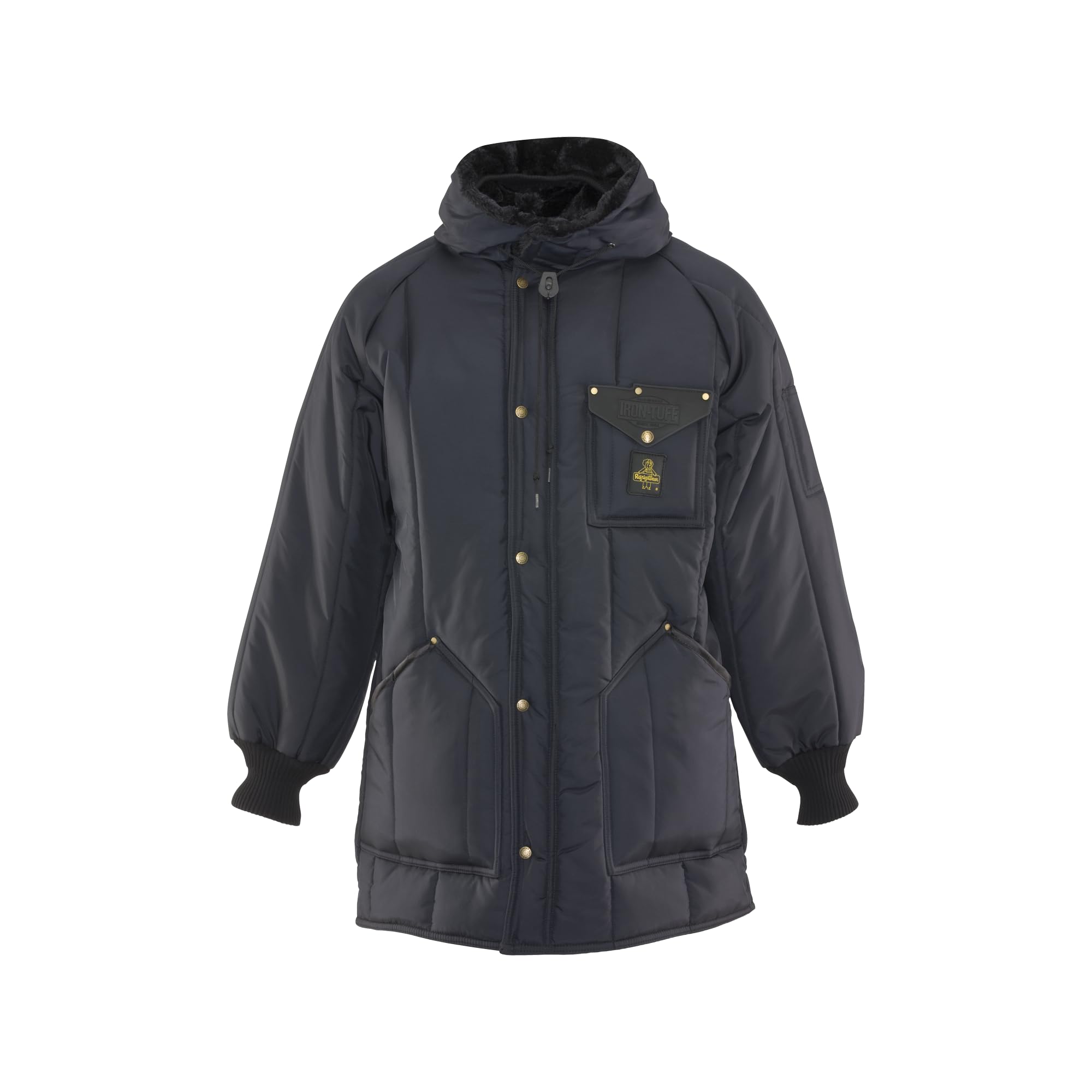
The Iron-Tuff Ice Parka is a classic choice for extreme cold, rated to -50°F and proven in Alaskan winters where temperatures hit -72°F for weeks. Its parka-length cut provides critical coverage for the lower back and upper legs, which is a major advantage for those working stationary or sitting on ice. The dense, spongy insulation feels substantial and retains heat effectively even when the jacket is brand new and stiff.
Users consistently praise the deep hand pockets (perfect for gloves and tools) and the warm hood. The outer fabric is slick and strong, resisting abrasion from job sites. However, the jacket lacks an interior chest pocket and its zipper is not a full-length type, which makes bending easier but can be a minor annoyance for some.
Fit is notably generous — many user reviews confirm the jacket runs large, allowing for heavy layering underneath. The trade-off is that the hood is small and may not fit over a hard hat. This is a functional, no-frills parka built for survival, not fashion.
Why it’s great
- Proven in -72°F Alaskan conditions
- Long parka length protects lower body
- Deep, unlined hand pockets
Good to know
- Runs large; size down
- No internal chest pocket
- Hood too small for hard hat
3. Carhartt Yukon Extremes Loose Fit Insulated Coat

Carhartt’s Yukon Extremes is a benchmark for construction and outdoor workers who need reliable warmth without the extreme bulk of a freezer jacket. Rated realistically for -10°F to -20°F, it combines the legendary Carhartt durability with a warm, insulated lining. The “loose fit” designation is accurate, providing ample room for a hoodie or sweater without restricting arm movement.
The windproofing is a standout feature — users report blocking brutal winds in Ohio and Great Lakes winters without any cold penetration. Deep hand pockets and a large, easy-to-use zipper are practical for gloved hands. The lack of a hood is actually a bonus for some users who prefer a separate beanie or hard hat.
Fitment is the main consideration. While it is labeled “loose fit,” some users find the sleeves tight in the armpit area, causing chafing. Additionally, the outer pockets lack closures, so small items can fall out. Despite these quirks, the Yukon Extremes offers proven performance at a relatively accessible price point.
Why it’s great
- Excellent windproofing tested to -25°F
- True loose fit for layering
- Classic Carhartt durability
Good to know
- Sleeves can be tight in armpit
- Outer pockets lack closures
- No hood included
4. TRUEWERK S4 Tower Winter Parka
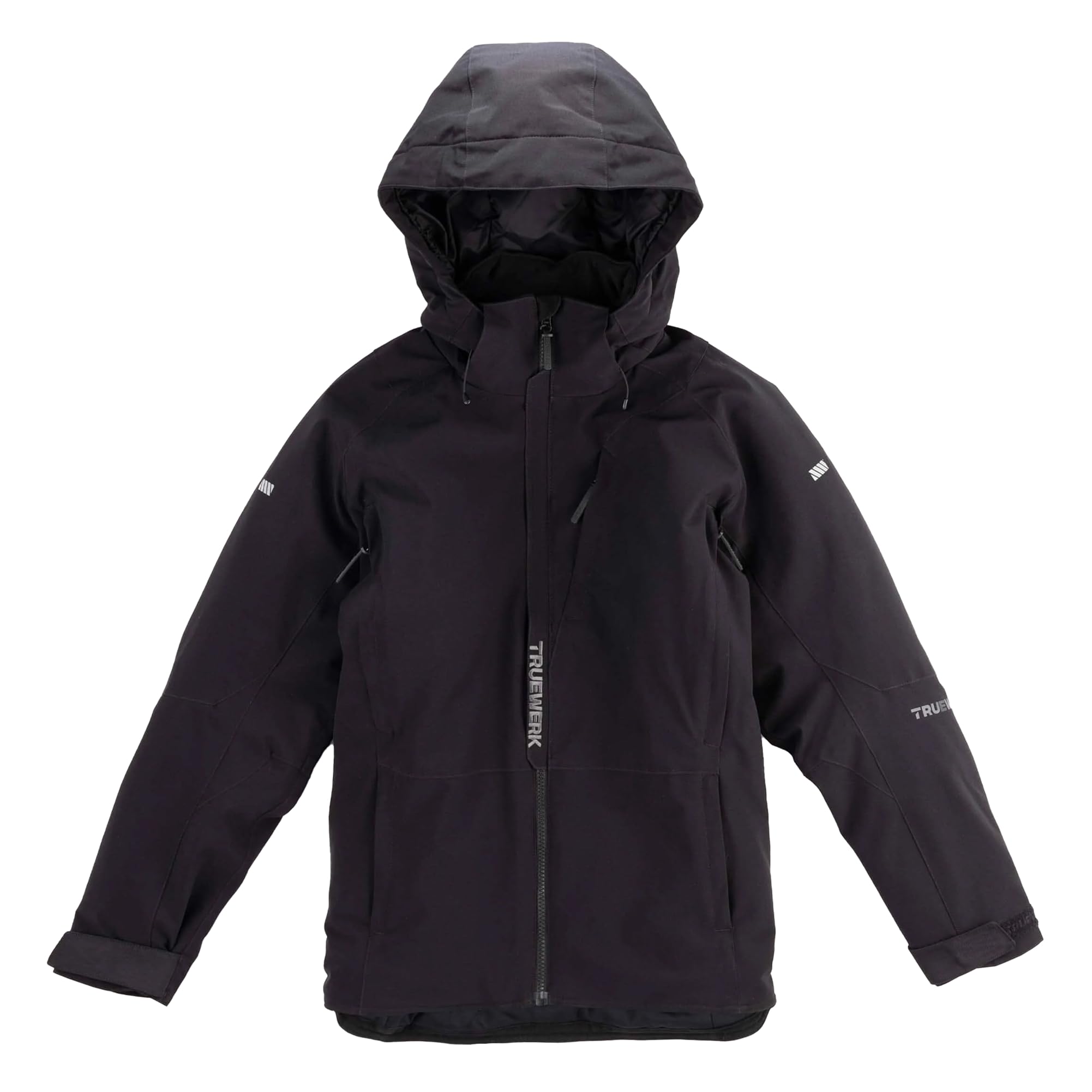
The TRUEWERK S4 Tower Parka is engineered for the active worker who needs to bend, stretch, and climb without feeling like a stuffed sausage. Its 4-way stretch shell is a rare and welcome feature in the extreme cold jacket category, allowing full range of motion that traditional stiff work coats simply cannot match. The jacket is water-resistant and windproof, holding up well against rain, snow, and biting winds.
The hood is a major selling point — it is large enough to fit over a hard hat, with adjustable drawcords to lock out drafts. Users in Minnesota snow removal and general outdoor work confirm the parka keeps them warm down to 4°F and below, even with wind chill. Two underarm vents allow for temperature regulation during physical activity.
Fit is athletic and true to size, meaning the waist is snug and may not suit larger builds. The YKK zippers are high quality, and the overall build feels modern and refined. For those who prioritize mobility without sacrificing warmth, this is the premium choice.
Why it’s great
- 4-way stretch for full mobility
- Hard hat compatible hood
- Underarm vents for temperature control
Good to know
- Snug athletic fit not for loose layering
- Price is on the higher end
- Less insulation than -50°F parkas
5. Ariat Men’s FR Workhorse Insulated Jacket
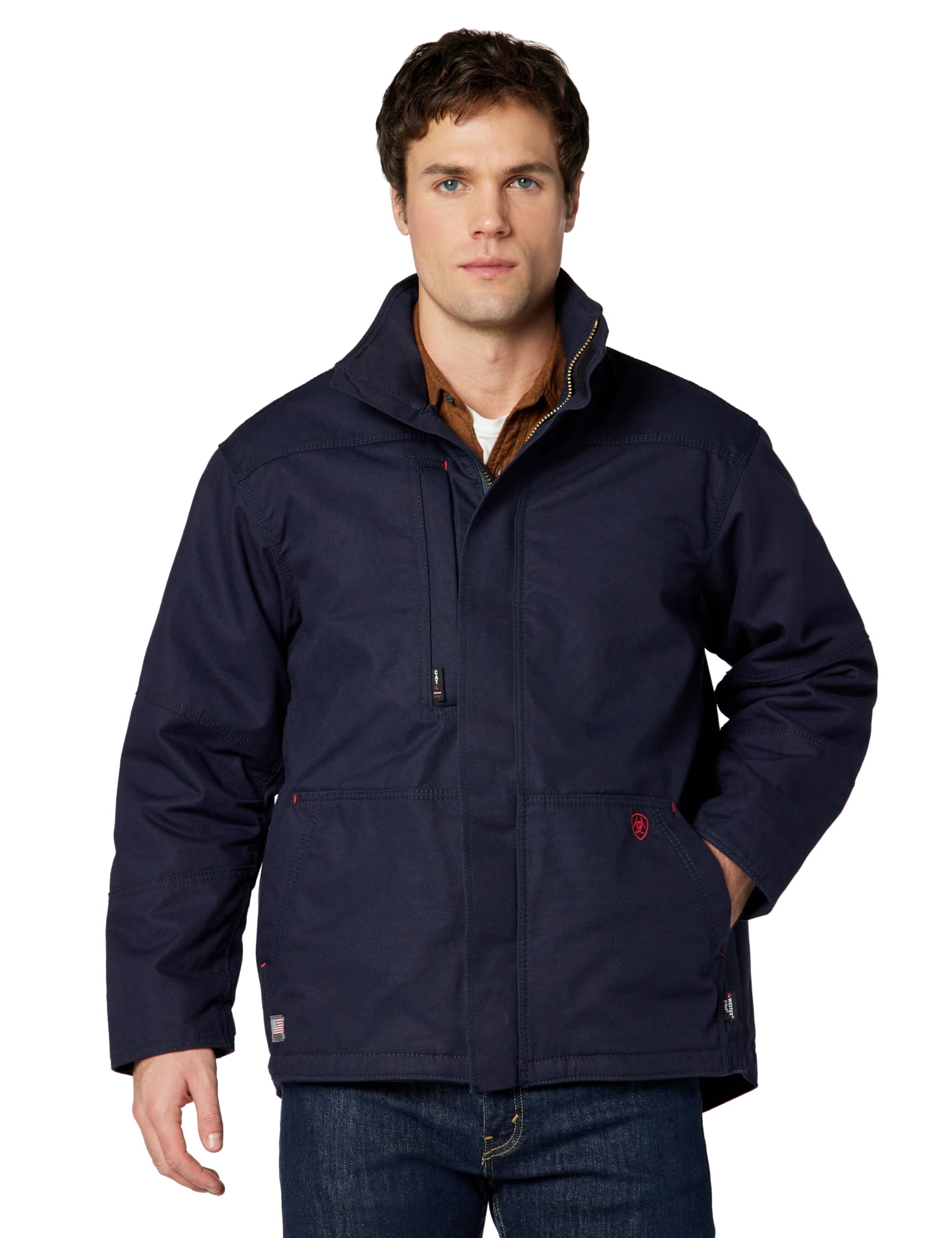
The Ariat FR Workhorse is the top-tier choice for those who require flame-resistant protection without sacrificing warmth. Rated as rugged and tough by users who tested it in -20°F conditions, this jacket delivers solid insulation without the excessive bulk found in many FR coats. The materials are premium, with heavy-duty zippers and a reinforced outer shell that resists tears from job site hazards.
Fit is generous — the 3X runs large, allowing for substantial layering underneath. A useful chest phone pocket with a zipper keeps essentials secure, and the overall build quality reportedly exceeds that of older Carhartt FR models. Users transitioning from Carhartt to Ariat noted the superior quality and comfort.
The main downside is the initial stiffness and the fact that the jacket shrinks noticeably after the first wash. At this price point, buyers should expect a long-lasting garment, but careful washing is required to maintain the fit. For the combination of FR compliance and extreme cold performance, this jacket is unmatched.
Why it’s great
- Excellent FR protection with warmth
- Durable, premium materials
- Comfortable in -20°F conditions
Good to know
- Shrinks noticeably after first wash
- Expensive for an FR jacket
- Runs large and is initially stiff
6. Eskimo Roughneck Jacket
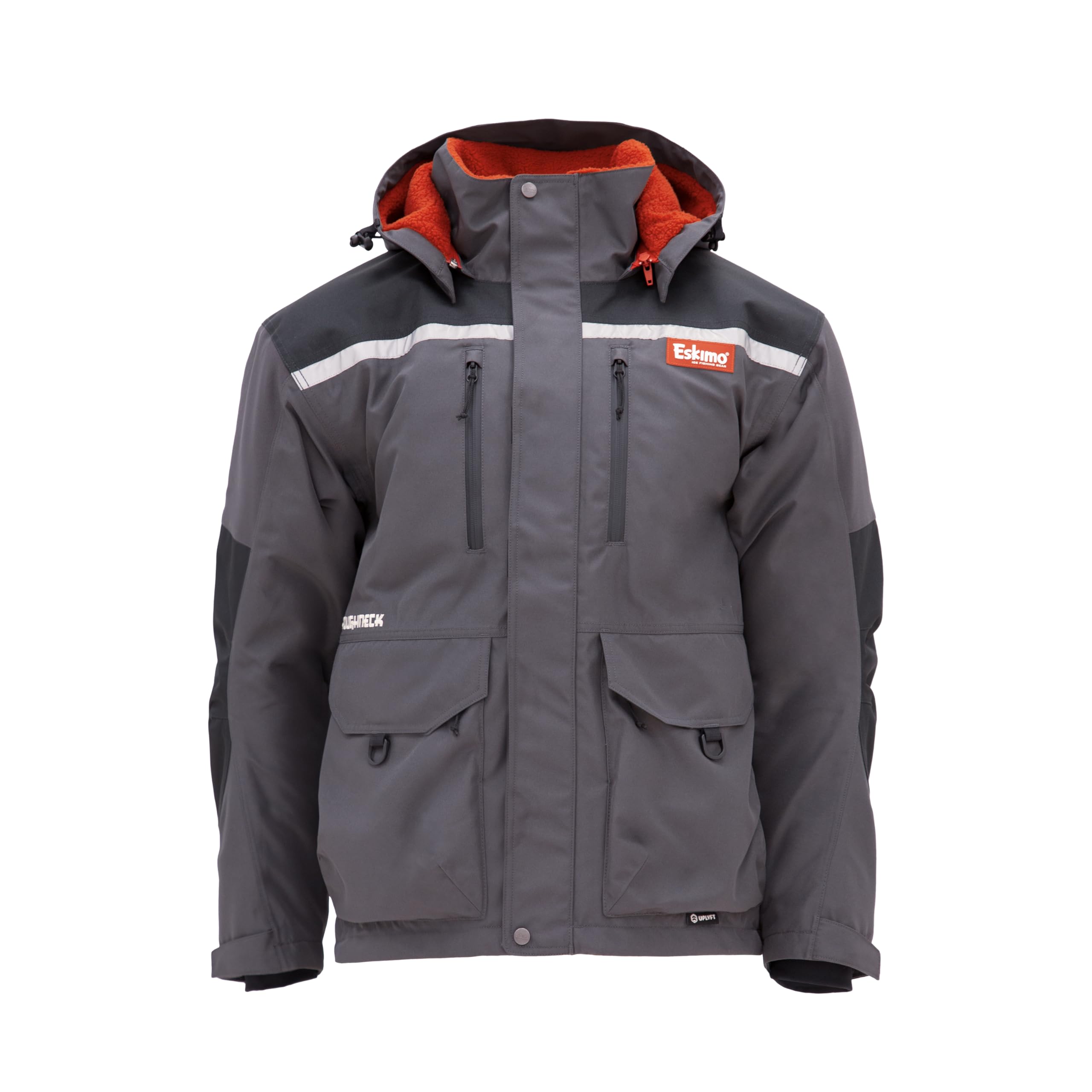
The Eskimo Roughneck is purpose-built for ice fishing, and it shows in its design. It is extremely warm — users report staying comfortable for entire days on Lake Gogebic without needing heavy layers underneath. The removable hood is a smart feature for versatility, allowing it to be worn under a hard shell or used only when winds pick up.
The pocket layout is generous, with plenty of storage for tackle, hand warmers, and small tools. The jacket fits true to size according to one user, but multiple other reviews indicate it runs small, requiring a size up. The material feels durable and wind-resistant, holding up well to the abrasive environment of ice and snow.
One area for improvement is the lack of zippered hand pockets on the sides — the available pockets are deep but not secure against losing items while bending over. For dedicated ice anglers who need a reliable, warm jacket, the Roughneck is a solid mid-range choice.
Why it’s great
- Very warm for stationary cold exposure
- Removable hood adds versatility
- Ample pocket storage
Good to know
- Runs small; order one size up
- No zippered hand pockets
- Best suited for ice fishing, not heavy labor
7. Ergodyne 6464 Insulated Freezer Jacket
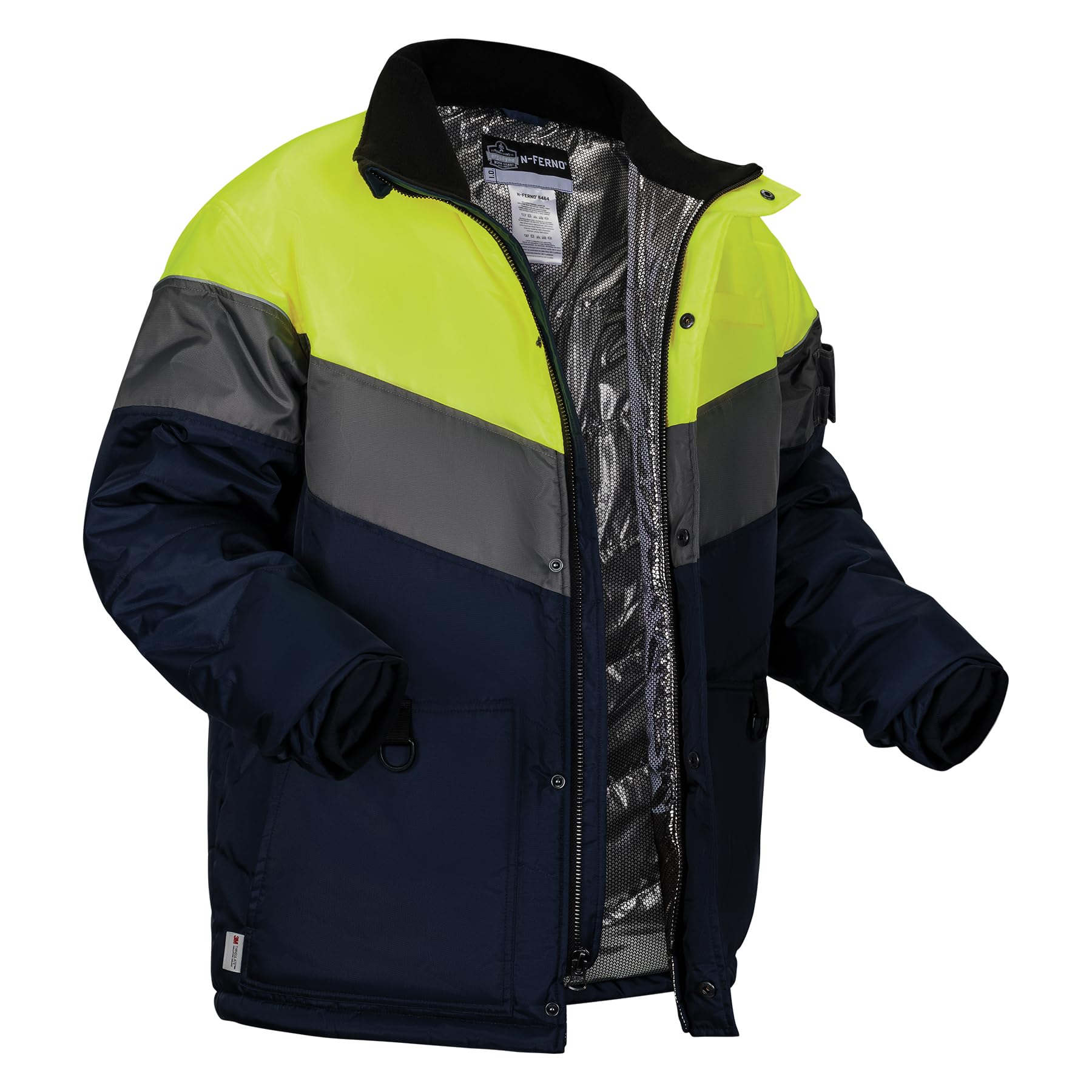
Ergodyne’s 6464 is a specialized freezer jacket that excels in refrigerated warehouse environments. The heat-reflective lining is a key differentiator, actively bouncing body heat back to the wearer to extend time in sub-freezing conditions. Users confirm it works exceptionally well in freezers, staying warm for extended shifts.
The build quality is high, with durable stitching and a water-resistant outer shell that handles condensation and light moisture. The bright yellow color enhances visibility in low-lit freezer aisles. Insulation is plentiful, but the jacket is not overly restrictive, allowing for a decent range of motion for pallet jack operation and stocking.
The absence of a hood is a notable limitation for outdoor use. Additionally, the fit runs large, so sizing down is recommended. While it is not designed for extreme arctic outdoors, it is the optimal choice for indoor cold storage applications.
Why it’s great
- Heat-reflective lining retains warmth
- Durable construction for work environments
- Water resistant outer
Good to know
- No hood
- Runs large; size down
- Not waterproof for heavy rain
8. BOCOMAL FR Jacket Insulated Hi Vis
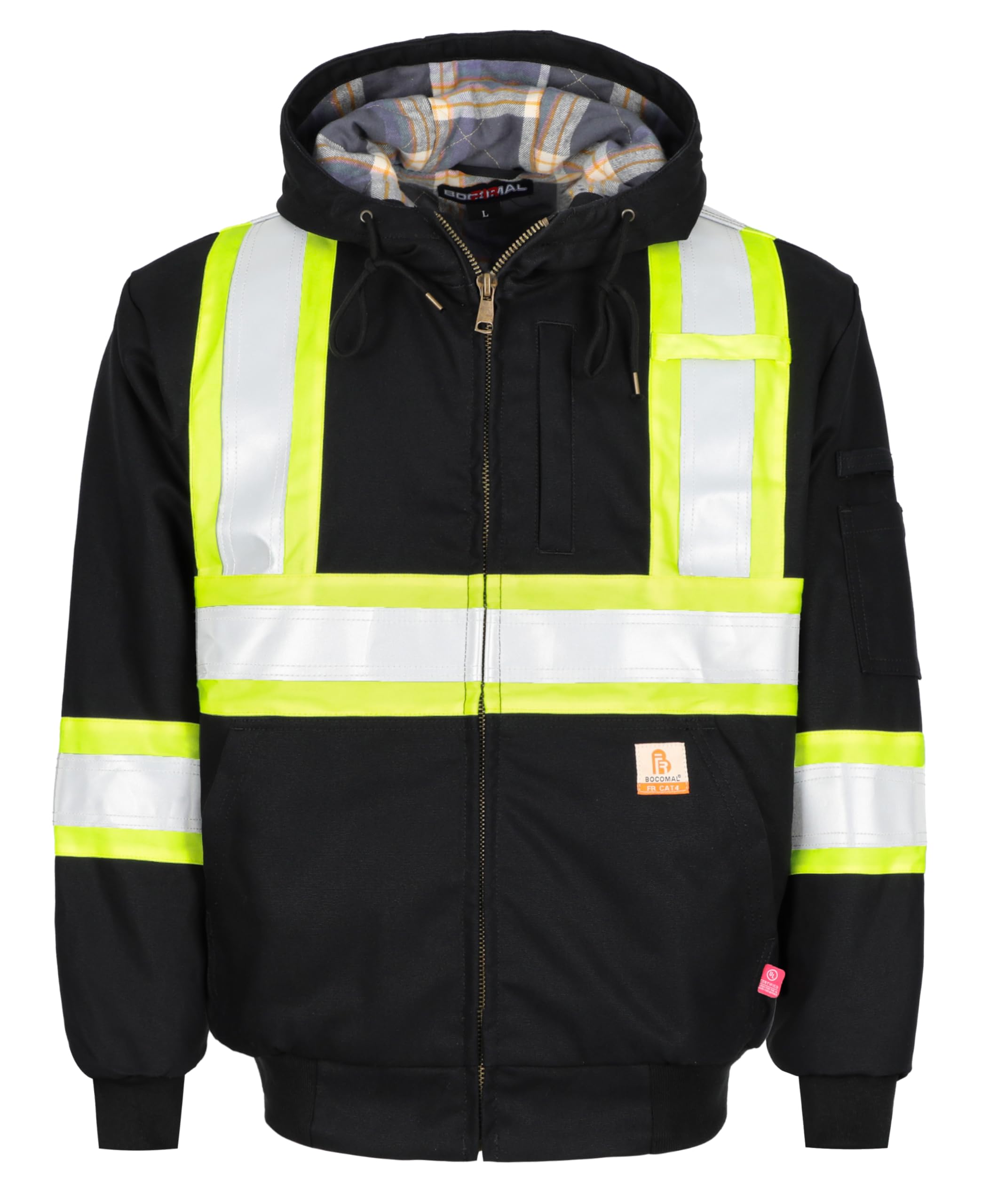
The BOCOMAL FR Jacket delivers impressive value for those needing flame-resistant protection and high visibility on a budget. It is CAT4 rated, meaning it meets rigorous arc flash and flame resistance standards, and the hi-vis exterior eliminates the need for a separate safety vest. Users in heavy equipment operation and construction confirm the jacket is very warm and wind-breaking, tested in below-zero Midwest temperatures.
Quality is on par with jackets costing significantly more. The materials feel substantial, and the stitching is clean. Inside pockets add functionality for tools and phones. However, sizing is notoriously small — nearly every review recommends ordering at least one size up, and possibly two for a comfortable layering fit.
The jacket length is a bit short, which might not provide enough coverage for the lower back when bending. Some users found the sleeve length insufficient even after sizing up. For the price, the overall warmth and FR compliance make it a smart entry-level option for cold weather workers.
Why it’s great
- Excellent FR protection at low cost
- Hi-vis exterior eliminates extra vest
- Warm and windproof
Good to know
- Runs very small; size up
- Jacket length is short
- Sleeves may be short
9. Viking Journeyman 300D FR Jacket

The Viking Journeyman is a well-rounded work jacket that balances flame resistance, weather protection, and warmth for a variety of outdoor trades. The 300 denier trilobal ripstop polyester outer shell is puncture and abrasion resistant, ideal for fishing, construction, or freezer work. It is rated down to -30°C (-22°F) and includes a waterproof PU backing, making it a true three-season workhorse.
Users praise the secure fit and the insulated hood, which is fleece-lined for comfort. The jacket runs large, allowing for layering, and many have noted it is more comfortable and less restrictive than comparable Carhartt models. The heavy-duty zipper with storm flap seals out moisture, and the zippered pockets keep tools safe.
The main drawback is the zipper orientation, which some right-handed users found awkward. Also, while the jacket is waterproof, prolonged heavy rain may eventually soak through. For the price, it offers an impressive combination of FR safety, cold weather performance, and durability.
Why it’s great
- Tough 300D ripstop shell
- Waterproof and windproof
- Warm and less bulky than Carhartt
Good to know
- Zipper is on the opposite side
- Water resistance may fade over time
- Runs large
FAQ
What does ANSI Type O certification mean for a jacket?
Can an FR jacket still keep me warm in -20°F weather?
Why do many extreme cold jackets run small or large?
Final Thoughts: The Verdict
For most users, the best ansi type o extreme cold jacket winner is the RefrigiWear Extreme Softshell because its -60°F rating and heat-reflective foil lining provide unmatched thermal retention for the most punishing cold environments. If you want flame-resistant protection with premium warmth, grab the Ariat FR Workhorse. And for maximum mobility in a windproof, hard-hat-ready package, nothing beats the TRUEWERK S4 Tower Parka.