
Optical wrist-based sensors on smartwatches are convenient, but their accuracy can falter during high-intensity intervals, weightlifting, or cycling over rough terrain. When your training demands precise, real-time heart rate data without dropouts, a dedicated ANT+ heart rate monitor becomes a non-negotiable tool for serious athletes.
I’m Rikta — the co-founder and writer behind Gadgets Feed. I’ve spent years analyzing market trends, reviewing technical specifications, and comparing real-world performance data across the most popular ANT+ heart rate monitors to help you find the right match for your training setup. (And Homer 🐱 supervised from atop the charging cables, unimpressed by any battery under 50 hours).
Whether you need seamless compatibility with a Garmin cycling computer, a Wahoo fitness app, or a Peloton bike, the right sensor will lock onto your signal instantly and never let go. In this guide, I break down the top contenders to find your ideal ant+ heart rate monitor.
How To Choose The Best ANT+ Heart Rate Monitor
Selecting the right monitor means balancing sensor type, connectivity, battery longevity, and comfort. The wrong choice can lead to frustrating dropouts during a race or inaccurate data that undermines your training goals.
Sensor Type: Optical Armband vs. Electrical Chest Strap
Optical armbands use LEDs to measure blood flow through the skin. They are comfortable to wear all day and pair well with running and cycling. However, they can be less accurate during rapid heart rate changes or strength training. Electrical chest straps measure the heart’s electrical signal directly, offering the highest accuracy for interval training, HIIT, and sports where sudden HR spikes matter most. Chest straps can be less comfortable for some, but modern designs have improved significantly.
Battery Life and Charging Method
For athletes logging several hours per week, a rechargeable battery with at least 20 hours of active life is essential. Some premium models now offer over 100 hours between charges. Look for magnetic or USB-C charging for convenience. Coin-cell battery models (like the Polar H10) can last 400 hours but require periodic replacement. Rechargeable units eliminate that hassle but need a charging routine.
Connectivity and Compatibility
ANT+ is the gold standard for connecting to Garmin watches, Wahoo bike computers, Peloton bikes, and Zwift. Dual ANT+ and Bluetooth 5.0 support ensures compatibility with smartphones and fitness apps like Strava, Polar Beat, and DDP Yoga. Some models also support 5 kHz for gym equipment. If you use multiple devices simultaneously — like a watch and a bike computer — choose a monitor that can broadcast to two devices at once.
Quick Comparison
On smaller screens, swipe sideways to see the full table.
| Model | Category | Best For | Key Spec | Amazon |
|---|---|---|---|---|
| Polar H10 | Chest Strap | ECG-level accuracy | 400 hours battery (CR2025) | Amazon |
| Wahoo TRACKR | Chest Strap | Long battery life | 200 hours rechargeable | Amazon |
| Garmin HRM 600 | Chest Strap | Running dynamics data | 2-month rechargeable battery | Amazon |
| Magene H613 | Chest Strap | 17-hour offline storage | 100 hours rechargeable | Amazon |
| iGPSPORT HR70 | Armband | Arm comfort with LED zones | 65 hours rechargeable | Amazon |
| COOSPO HW807 | Armband | Versatile device compatibility | 20 hours rechargeable | Amazon |
| FITCENT CL820W | Chest Strap | Budget-friendly rechargeable | 30 days battery (wireless charge) | Amazon |
In‑Depth Reviews
1. Polar H10 Heart Rate Monitor Chest Strap
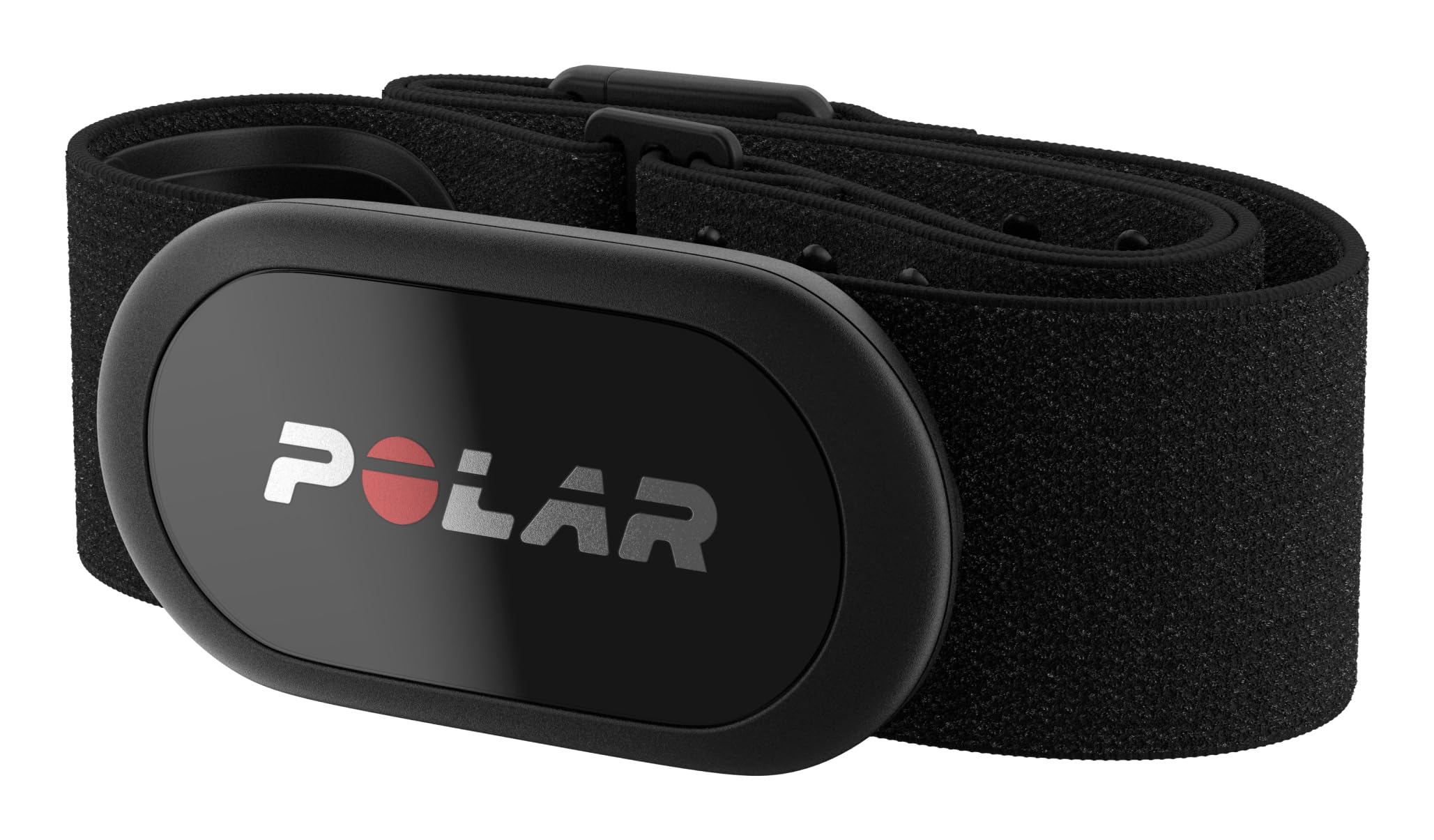
The Polar H10 is widely recognized as the gold standard for heart rate accuracy. Its electrical chest strap delivers ECG-level precision, validated by multiple third-party studies, making it the top choice for serious athletes, coaches, and researchers. The sensor supports ANT+, Bluetooth, and 5 kHz simultaneously, allowing you to broadcast heart rate data to a Garmin watch, a Wahoo bike computer, and a smartphone app all at once. The internal memory stores one full workout, a useful fallback if you forget your phone or watch.
The included Polar Pro strap features silicone dots and improved electrodes that keep the sensor firmly in place without slipping, even during sweaty interval sessions. The CR2025 coin-cell battery lasts up to 400 hours, which means you’ll replace it roughly once a year with moderate use. The sensor is also fully waterproof to 30 meters, so swimmers and triathletes can trust it in the pool. Many users report that the Polar H10 outperforms the Garmin HRM-Dual in both accuracy and reliability.
On the downside, the standard strap may be too small for individuals with a chest circumference over 42 inches. A larger XXL strap is available directly from Polar, but this adds an extra step. The coin-cell battery requires a small screwdriver to replace, which is less convenient than a rechargeable USB-C solution. A small number of users report intermittent connectivity issues after a year of use, but this is often resolved by replacing the strap rather than the sensor pod.
Why it’s great
- ECG-level accuracy verified by independent testing
- Simultaneous ANT+, Bluetooth, and 5 kHz broadcast
- 400-hour battery life with replaceable coin cell
Good to know
- Standard strap may be too small for larger chests
- Battery replacement requires a screwdriver
- Occasional strap wear after several months
2. Wahoo TRACKR Heart Rate Monitor

The Wahoo TRACKR is a refined evolution of the popular TICKR line, ditching coin-cell batteries for a built-in rechargeable unit that delivers up to 200 hours of active use. This is a major quality-of-life upgrade for athletes who don’t want to hunt for CR2032 batteries in the middle of a training block. The sensor pairs easily with ANT+ and Bluetooth devices, and it’s fully compatible with the Wahoo app, Zwift, Peloton, and Garmin devices right out of the box.
The strap is slim, soft, and features a secure fit that keeps the pod stable during high-cadence cycling or explosive box jumps. Intuitive LED indicators confirm heart rate detection, battery status, and device connection at a glance, removing guesswork during setup. The pod uses a USB-C charging cable, which is a welcome standard after years of proprietary connectors. Many users report the battery lasting between six to eight weeks of regular use before needing a recharge.
A few users with larger body frames have noted that the included strap doesn’t fit comfortably, requiring a third-party replacement. The hook on the strap can be a bit fiddly to attach at first. While the TRACKR is accurate and reliable for the vast majority of workouts, it does not offer advanced running dynamics like the Garmin HRM 600. At its price point, it sits in a premium spot, but the convenience of USB-C charging and long battery life makes it a strong contender for everyday athletes.
Why it’s great
- 200-hour rechargeable battery eliminates coin-cell hassle
- USB-C charging for modern convenience
- Stable connectivity with ANT+ and Bluetooth
Good to know
- Strap may not fit larger torso sizes comfortably
- No advanced running dynamics metrics
- Higher price point than comparable options
3. Garmin HRM 600

The Garmin HRM 600 is the premium choice for runners who want more than just heart rate. It captures advanced running dynamics including vertical oscillation, ground contact time balance, and stride length, providing deep insight into running form. This data is transmitted in real time to compatible Garmin watches and Edge cycling computers, making it a seamless extension of the Garmin ecosystem. The monitor also stores up to 2 months of battery life on a single rechargeable charge.
The HRM 600 features a sealed rechargeable battery that charges via a standard Garmin watch charging cable, a clever design that removes the risk of moisture damage from coin-cell compartments. The machine-washable strap comes in two sizes (XS–S and M–XL), ensuring a proper fit for a wide range of body types. For activities where you can’t wear a watch, like team sports or swimming, the HRM 600 records workout data directly to the module and syncs it to the Garmin Connect app afterward.
The most significant drawback is the price — this is the most expensive monitor on this list. For casual athletes or those who don’t need running dynamics, the Garmin HRM Pro+ offers nearly identical heart rate accuracy at a lower cost. Additionally, the HRM 600 does not include GPS, so runners still need to wear a watch to track route distance. Some users also found the sizing chart confusing, with the XS-S fitting those with a small shirt size perfectly but requiring careful selection.
Why it’s great
- Advanced running dynamics for form analysis
- Sealed rechargeable battery resists moisture
- Standalone recording for no-watch workouts
Good to know
- High price point for casual users
- No built-in GPS for standalone distance tracking
- Requires compatible Garmin watch for full features
4. Magene H613 Heart Rate Monitor Chest Strap

The Magene H613 delivers impressive features at a mid-range price point. Its standout feature is 17 hours of offline storage, allowing you to record an entire training week without needing your phone nearby. The data syncs automatically via the OnelapFit app when you reconnect. The rechargeable battery provides a full 100 hours of active use, making it one of the longest-lasting rechargeable options available on the market.
The H613 uses an advanced algorithm to filter noise during high-intensity bursts, delivering stable heart rate readings during cycling and HIIT. A multi-color LED indicator on the pod signals your heart rate zone at a glance, helping you stay in the right training range without checking your device. It also includes a configurable buzzer that sounds when you exceed a preset threshold, acting as a silent coach during hard efforts. The strap comes in three sizes to accommodate users from 140 cm teens to 210 cm athletes.
Early user feedback is positive but limited, given the product’s recent release. The optical sensor technology, while accurate for steady-state efforts, may not match the instantaneous response of chest-strap electrical sensors during rapid HR changes. Compatibility with the OnelapFit app is required for offline storage download, which may be an inconvenience for users outside the Magene ecosystem. A small number of users reported the initial pairing process requiring a few attempts.
Why it’s great
- 17 hours of offline workout storage
- 100-hour rechargeable battery with magnetic charging
- Configurable HR zone buzzer alerts
Good to know
- Optical sensor may lag during rapid HR changes
- Offline storage requires OnelapFit app
- Relatively new product with limited long-term reviews
5. iGPSPORT Heart Rate Monitor Armband HR70
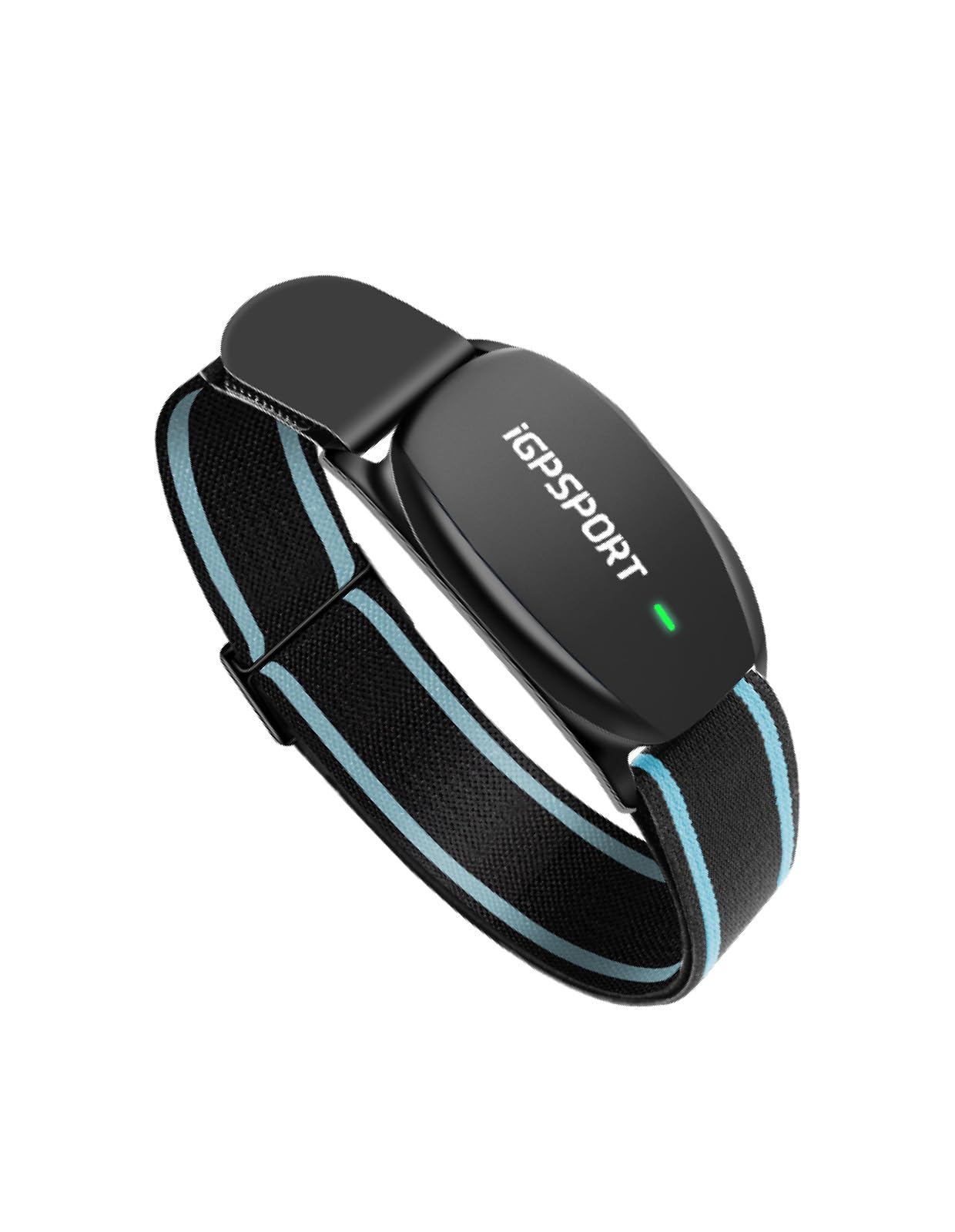
The iGPSPORT HR70 armband is an excellent choice for users who find chest straps uncomfortable during long workouts. The adjustable, breathable strap sits securely on the upper forearm or bicep without slipping, and the optical sensor delivers readings within ±1 BPM of an ECG reference. The unit supports both ANT+ and Bluetooth 5.0, enabling easy connections to Garmin bike computers, Wahoo apps, and over 200 compatible fitness applications.
Battery life is a major selling point at 65 hours of active use, recharged via a magnetic USB-C cable. The HR70 includes haptic vibration alerts and customizable LED color indicators for heart rate zones, providing immediate feedback without needing to glance at a screen. Users can switch between run, cycle, and swim modes to optimize sensor performance for different activities. The auto-off function kicks in after 5 minutes of inactivity, preserving battery during forgotten shut-downs.
The most common complaint involves the magnetic charging connector, which some users found unreliable after a year of use, with the polarity repelling and preventing charging. A replacement cable from iGPSPORT costs roughly , but the issue suggests a potential design weakness. A small number of units also exhibited an auto-shutdown problem during use, likely a defect. The armband leaves a slight pressure mark after extended wear in some users, though this is common with snug armbands.
Why it’s great
- 65-hour battery with magnetic USB-C charging
- Haptic alerts and customizable LED zones
- Comfortable armband design for long rides
Good to know
- Magnetic charger connector may fail over time
- Leaves slight pressure mark after extended wear
- Occasional auto-shutdown defect in some units
6. COOSPO Heart Rate Monitor Armband HW807

The COOSPO HW807 armband provides an outstanding entry point into ANT+ heart rate monitoring. Its patented optical sensor delivers ±1 BPM accuracy, and the device pairs seamlessly with Peloton bikes, Concept2 rowers, and most GPS bike computers. The armband includes two soft straps in the box, allowing you to wash one while using the other. The IP67 rating means it handles sweat and rain without issue, though it is not intended for swimming.
The HW807 features a simple LED indicator system that uses different colors to show your current heart rate zone, giving you immediate visual feedback during a workout. The rechargeable battery lasts about 20 hours per charge, which translates to roughly a week of daily 45-minute sessions. Setup is remarkably simple — short press to power on, long press to power off, and automatic connection to previously paired devices. The sensor is lightweight at just 10 grams.
A small percentage of users reported inconsistent heart rate readings, with some showing wild spikes to 175 BPM during a light walk. This suggests unit-to-unit variability in optical sensor quality. The LED indicators can be difficult to read in direct sunlight. The thin armband may leave a pressure mark for some users, though this is typical for snug-fitting arm sensors. While not the most feature-rich armband, the COOSPO HW807 offers reliable performance for most indoor and outdoor training at a very accessible price.
Why it’s great
- Excellent value for ANT+ and Bluetooth connectivity
- IP67 waterproof for rain and heavy sweat
- Includes two soft straps for rotation
Good to know
- Optical accuracy can vary between units
- LED zone lights hard to see in sunlight
- Not suitable for swimming
7. FITCENT Rechargeable Heart Rate Monitor Chest Strap

The FITCENT CL820W is a rechargeable chest strap that offers excellent battery management and multi-protocol connectivity. Unlike many budget chest straps that still rely on coin-cell batteries, this unit features a wireless charging dock that fully recharges the sensor in about 1.5 hours, providing up to 30 days of battery life with daily one-hour workouts. The electrical sensor directly measures the heart’s electrical signal, offering superior accuracy compared to optical armbands.
The CL820W supports Bluetooth 5.0, ANT+, and 5.3 kHz for compatibility with virtually any fitness device, from Peloton bikes to Garmin watches. The IP68 rating means it can be submerged up to 10 meters, making it suitable for swimming and triathlon training. The strap is made from polyester and is skin-friendly, adjustable to fit various body sizes. FITCENT also provides generous customer support, with one reviewer noting a free replacement strap was sent when the original felt too large.
Some users experienced difficulty pairing with Peloton Bike+ and other high-end equipment, though most had success after a few attempts. The sensor features a constant blinking green light that some users found annoying, with one covering it with duct tape. There is no built-in battery level indicator on the device itself, so you’ll need to rely on the app to check remaining charge. The pod snaps into the strap with a mechanism that can be tricky to release — a firm diagonal twist is required.
Why it’s great
- Wireless charging dock eliminates battery replacement
- IP68 waterproof to 10 meters for swimming
- Accurate electrical sensor for ECG-level readings
Good to know
- Pairing can be finicky with some bike computers
- No built-in battery level indicator
- Constant green LED light visible through shirt
FAQ
Can I use an ANT+ heart rate monitor without a watch or phone?
What is the difference between an armband and a chest strap for heart rate monitoring?
Will my ANT+ heart rate monitor work with my Peloton bike?
Final Thoughts: The Verdict
For most users, the ant+ heart rate monitor winner is the Polar H10 because it offers unbeatable ECG-level accuracy, simultaneous ANT+ and Bluetooth broadcasting, and a 400-hour battery life. If you want the convenience of USB-C charging and long battery intervals, grab the Wahoo TRACKR. And for runners who need advanced form analytics, nothing beats the Garmin HRM 600.