
Every watt you push through the pedals tells a story — of effort, of progress, of the invisible work that turns asphalt into raw speed. But without a reliable power meter, you are guessing, not training. The difference between a good ride and a perfect training session lies in the data that feeds your decisions, from pacing a climb to nailing a sweet spot interval.
I’m Min — the co-founder and writer behind Gadgets Feed. I have spent hundreds of hours cross-referencing strain gauge architectures, battery cycle claims, ANT+ pairing reliability, and real-world customer experiences across the full spectrum of cycling power meters to build this definitive guide.
Whether you are chasing a podium finish or simply want to track your progress with real precision, finding the right ant+ power meter for cycling means understanding where accuracy, durability, and compatibility intersect — and this guide maps that intersection for every budget and riding style.
How To Choose The Best ANT+ Power Meter For Cycling
Choosing a power meter is not just about picking a number — it is about matching a measurement system to your bike, your riding discipline, and your training goals. The wrong choice can mean inaccurate data, poor battery life, or a unit that simply doesn’t fit your crank or pedal system. Focus on these critical factors to narrow your options.
Accuracy and Strain Gauge Quality
The heart of any power meter is its strain gauge system. Higher-end units use multiple gauges and temperature compensation algorithms to deliver ±1% accuracy across all conditions. Cheaper units may drift in extreme temperatures or after repeated hard efforts. Look for units that advertise real-time temperature compensation — this keeps your data consistent from a freezing morning climb to a hot afternoon criterium.
Installation Type: Crank, Spider, or Pedal
Your frame’s bottom bracket standard and your current crank interface determine which power meter form factor works for you. Spider-based meters (like the SRAM AXS option) require compatible chainring bolt patterns and DUB cranks. Pedal-based meters like the Favero Assioma and Magene P715 are the most universal — they thread onto any standard 9/16-inch pedal hole and move between bikes in minutes. Crank-arm units like the 4iiii Precision 3+ replace your left crank arm and work with Shimano Hollowtech II systems but are bike-specific. Pedal meters offer the greatest flexibility, while crank and spider options integrate more cleanly for weight weenies.
Battery Life and Rechargeability
Battery strategy separates convenience from frustration. Coin-cell powered units like the SRAM RED/Force AXS spider (200 hours) and the 4iiii Precision 3+ (800 hours) offer set-and-forget simplicity but require a replacement battery every few months. Rechargeable units like the Favero Assioma (50 hours), Magene P715 (120 hours), and Magene P505/P515 crankset (380 hours) eliminate the need for spare batteries but demand that you remember to charge before long rides or multi-day events. For ultra-endurance cyclists, the rechargeable 380-hour crankset is a clear winner — you might charge it twice a year.
Quick Comparison
On smaller screens, swipe sideways to see the full table.
| Model | Category | Best For | Key Spec | Amazon |
|---|---|---|---|---|
| Favero Assioma Duo | Dual-Sided Pedal | Serious Training & Racing | 50h rechargeable | Amazon |
| Magene P715 Pedals | Dual-Sided Pedal | Value Dual-Sided | 120h rechargeable | Amazon |
| Favero Assioma PRO MX-2 | MTB/Gravel Pedal | Off-Road & Gravel Riders | IP67, rechargeable | Amazon |
| Magene PES P505/P515 Crankset | Crankset | Ultra-Endurance Riders | 380h rechargeable | Amazon |
| SRAM RED/Force AXS Spider | Spider | SRAM AXS Users | 200h coin cell | Amazon |
| Favero Assioma Uno | Single-Sided Pedal | Budget Dual Upgrade Path | 50h rechargeable | Amazon |
| 4iiii Precision 3+ | Left Crank Arm | Shimano Crankset Upgrades | 800h coin cell | Amazon |
| Bryton Rider S510 | Bike Computer | Power Meter Head Unit | 30h battery | Amazon |
| CYCPLUS Smart Trainer | Smart Trainer | Indoor Training | 2200W max, ±1% | Amazon |
In‑Depth Reviews
1. Favero Assioma Duo Power Meter Pedal

The Favero Assioma Duo is the gold standard for pedal-based power meters, and for good reason. With true dual-sided measurement, you get independent left/right power data, torque efficiency, and pedal smoothness — metrics that single-sided units can only estimate. The 50-hour rechargeable battery is a realistic claim, with many riders reporting 45-50 hours per charge in real-world use. The magnetic charging connector is secure and easy to clip in after rides, though you must remember to bring it on extended trips.
Installation is genuinely tool-free — these pedals thread onto any standard 9/16-inch crank arm in under ten minutes, and moving them between road, gravel, or TT bikes is as simple as swapping pedals. The Duo supports both ANT+ and Bluetooth simultaneously, so you can display power on a Garmin Edge while streaming to Zwift on a tablet without hiccups. Over 3000+ miles, users report zero signal dropouts and consistent accuracy verified against Quarq and Wahoo Kickr trainers. The Look Keo cleat system is compatible with most road shoes, though the pedal body is slightly wider than standard Look Keo pedals — a minor adaptation for riders with narrow stance preferences.
The Duo also supports Garmin Cycling Dynamics for pedal data junkies, though the Platform Offset metric is not transmitted via ANT+. For the price, the build quality and data depth are unmatched. The titanium spindle adds durability without excessive weight, and the pods that house the electronics do not increase the Q-factor, preserving your natural pedaling position. If you want professional-grade power data with the convenience of pedal swapping, the Assioma Duo is the benchmark.
Why it’s great
- True dual-sided power measurement with left/right balance, torque efficiency, and pedal smoothness.
- Rechargeable 50-hour battery with reliable magnetic charging connector.
- Tool-free installation and seamless transfer between multiple bikes.
- Simultaneous ANT+ and Bluetooth broadcasting for head unit and app use.
Good to know
- Slightly wider pedal body than standard Look Keo pedals — may affect riders with a narrow stance.
- Requires a charger for multi-day events; no coin cell backup.
- Garmin Cycling Dynamics data is limited on ANT+ (Platform Offset not transmitted).
2. Magene P715 Power Meter Pedals

The Magene P715 pedals deliver dual-sided power measurement at a price point that undercuts the Assioma Duo by a significant margin while offering more than double the battery life — 120 hours on a single charge. Each pedal weighs only 157 grams, which is competitive with high-end road pedals, and the IPX7 waterproof rating means you can ride through torrential downpours without worrying about internal damage. The ±1% accuracy claim is backed by Magene’s strain gauge design and intelligent temperature compensation, which keeps readings stable across temperature swings.
Setup is remarkably simple: screw them onto your crank arms, pair via ANT+ with any Garmin, Wahoo, or Bryton computer, and you are recording left/right balance, power phase, and cadence immediately. The Magene app provides seven advanced training functions, including normalized power and intensity factor calculations. Riders consistently report that the pedals feel solid under load and that the data integrates seamlessly with TrainingPeaks and Zwift. One minor hiccup — some units have experienced calibration failures or inverted left/right data, though Magene’s customer service has been responsive in replacing defective units.
The build uses an aluminum body with a clipless system compatible with Look Keo cleats, and the included crank washers ensure a snug fit on most road frames. The magnetic charging cable is easy to use, but it is proprietary — losing it means a wait for a replacement. For the price, the P715 offers an astonishing amount of data depth and battery longevity. If you want dual-sided power data without paying premium-tier prices, the P715 is the smartest investment on this list.
Why it’s great
- Dual-sided power measurement at a fraction of the cost of premium competitors.
- 120-hour rechargeable battery life — charge a few times per season.
- IPX7 waterproof rating for all-weather reliability.
- Lightweight 157g per pedal with solid aluminum construction.
Good to know
- Proprietary magnetic charger — losing it requires ordering a replacement.
- Occasional reports of calibration issues or hardware defects; Magene support has addressed these.
- Limited dealer network compared to Favero or Garmin for local support.
3. Favero ASSIOMA PRO MX Series Power Meter Pedals

The Assioma PRO MX-2 takes everything that makes the Duo great and ruggedizes it for gravel, mountain biking, and cyclocross. The body is machined from 6061-T6 aluminum with a surface hardness rated up to 800 HV, meaning it can take rock strikes, muddy creek crossings, and even being smashed against a van’s sheet metal (as one customer reported) without failing. The IP67 certification means the electronics are sealed against water, mud, and dust — you can pressure-wash your bike without worry. The SPD cleat compatibility makes sense for off-road riders who want walkable cleats and mud-shedding performance.
Like the Duo, the PRO MX-2 offers true dual-sided power measurement with ±1% accuracy using the IAV Power System, which accounts for irregular pedaling and oval chainrings. L/R balance data is real, not estimated, and the pedal broadcasts over ANT+ and Bluetooth simultaneously. Battery life is rated at a typical 50 hours per charge, and the unit uses the same magnetic charging system as the road version. A power bank is included in the bundle, which is a thoughtful addition for bikepacking trips where wall outlets are scarce. The charging port, however, is exposed and vulnerable — some users have added a rubber cover for protection.
Transferring between multiple bikes is effortless, since the pedal threads onto any standard crank arm. The cleat system is compatible with most SPD-style shoes, and the included greasing tool kit helps maintain smooth engagement. For gravel and MTB riders who need the same data accuracy as road cyclists but with durability that can handle abuse, the PRO MX-2 is the only pedal power meter that truly delivers. The price is steep, but the build quality and data integrity justify the investment for serious off-road athletes.
Why it’s great
- IP67 waterproof and dustproof rating — built for mud, rain, and pressure washing.
- Extremely durable 6061-T6 aluminum body with 800 HV surface hardness.
- True dual-sided power with real L/R balance data using IAV Power System.
- SPD cleat compatibility for walkable, mud-shedding off-road use.
Good to know
- Exposed charging port is vulnerable to damage; a protective cover is recommended.
- Premium price point — the most expensive pedal power meter on this list.
- 50-hour battery life requires charging more often than the Magene P715.
4. Magene PES P505/P515 Power Meter Crankset

The Magene PES P505/P515 crankset is the ultimate solution for endurance cyclists who cannot afford to worry about battery life. With a staggering 380 hours of ride time on a single USB-C charge, you could ride two hours every day for nearly half a year before needing to plug in. That is thanks to an energy-efficient circuit design paired with a high-capacity internal cell. The crankset itself weighs only 625g total (with a 99g spider), constructed from 7075 aircraft-grade aluminum with a triple hollow crank design that has passed 100,000 pedaling cycle fatigue tests. The ±1% accuracy is achieved using advanced strain gauges, acceleration sensors, and intelligent temperature compensation that keeps data reliable from freezing descents to hot summer climbs.
Installation is straightforward for anyone comfortable with bottom bracket work — the pre-assembled crankset uses a 24mm steel spindle compatible with most road frames. The 110BCD four-bolt design fits standard Shimano 105 and Ultegra chainrings, and users report that the chainrings bolt on without issues. The P515 spider supports ANT+ and Bluetooth, pairing seamlessly with Garmin, Bryton, and Magene computers as well as Zwift and TrainingPeaks. Data tracking includes power, cadence, left-right balance, and torque effectiveness across four key cycling metrics.
The IPX7 waterproof rating means you can ride in monsoon conditions without hesitation, and the USB-C charging port is standard — no proprietary cable to lose. Some users report the occasional ANT+ connection dropout, but firmware updates have addressed these issues. For multi-day stage racing, ultra-endurance events, or simply the convenience of charging a power meter twice a year, the Magene P515 crankset is the undisputed battery champion. The price is competitive with mid-range pedal units, but you get the integration benefits of a crank-based system with no extra pedal weight.
Why it’s great
- 380-hour battery life — charge only a couple of times per year with typical use.
- Lightweight 625g total crankset with 7075 aluminum and triple hollow design.
- IPX7 waterproof rating for all-weather riding confidence.
- USB-C charging with no proprietary cable needed.
Good to know
- Requires bottom bracket compatibility check (24mm spindle) before purchase.
- Occasional ANT+ connection dropouts reported; firmware updates improve stability.
- Chainring bolt pattern (110BCD) may limit chainring upgrade options compared to Shimano standard.
5. SRAM RED/Force AXS Power Meter Spider

For SRAM users who want integrated power measurement without replacing their crankset, the RED/Force AXS Power Meter Spider slots directly onto DUB cranks and accepts 107 BCD chainrings in 1x or 2x configurations. The accuracy is rated at ±1.5%, which is slightly less precise than the ±1% units on this list, but real-world data from DC Rainmaker and user reports consistently show it tracks within a few watts of lab-grade systems. The 200-hour battery life from a single CR2032 coin cell is excellent — replace the battery once or twice a season and you never have to think about charging.
Installation takes about an hour with basic tools: remove your existing chainring, bolt on the spider, mount your chainrings, and torque to spec. The spider is detected instantly by the SRAM AXS app and any ANT+ head unit. Wireless connectivity uses both Bluetooth Low Energy and ANT+, so you can update firmware via the AXS app while simultaneously transmitting power data to a Garmin Edge. The spider supports chainring sizes from 36T to 48T, making it versatile for everything from flat road racing to gravel grinding.
The build uses an aluminum spider in a sleek black finish, and the unit weight is minimal — just 11.2 ounces including the spider itself. SRAM’s AXS ecosystem allows for customizable power data fields and firmware updates, keeping the unit current without replacing hardware. One drawback: the CR2032 battery is tool-free to replace, but the coin cell can be hard to source on a multi-day tour. For SRAM AXS riders, this is the cleanest power add-on available, and it avoids the stack height changes that pedal meters introduce.
Why it’s great
- Integrates directly with existing SRAM RED/Force AXS cranks without replacing whole crankset.
- 200-hour coin cell battery — simple to replace, no charging cables needed.
- Supports both 1x and 2x drivetrains with chainring options from 36T to 48T.
- Firmware updates and customization via SRAM AXS app.
Good to know
- ±1.5% accuracy is slightly less precise than ±1% competition.
- Coin cell battery replacement requires finding a CR2032 — not ideal for remote tours.
- Only compatible with DUB cranksets; not universal like pedal-based solutions.
6. Favero Assioma Uno Pedal Based Cycling Power Meter

The Favero Assioma Uno is the single-sided entry point into the Assioma ecosystem — and it is a remarkably smart gateway. By measuring power from the left pedal and doubling the value (assuming equal effort), the Uno provides total power data at half the cost of the Duo. The accuracy is the same ±1% platform as its big brother, and the 50-hour rechargeable battery is just as reliable. The included bundle adds extra cleats with both 0-degree and 6-degree float, plus a Wearable4U cleaning cloth, giving you everything you need to get started.
Installation is identical to the Duo — thread on, pair via ANT+ or Bluetooth, and go. The Uno measures cadence and provides pedaling analytics including torque efficiency and pedal smoothness, though left/right balance data is obviously unavailable. For most riders, single-sided power is more than adequate for training zones and power profiles. The pedal itself is lightweight (adding only about 50g over standard pedals) and the Look Keo cleat system provides reliable clip-in and clip-out.
The Uno is also the perfect stepping stone: if you later decide you want dual-sided data, you can buy the right pedal separately and run both as a Duo set. This upgrade path makes the Uno a smart long-term investment. The magnetic charger is the same across the Assioma lineup, so you can share chargers between bikes. For budget-conscious riders who want genuine Favero accuracy without the full dual-sided expense, the Uno delivers professional-grade power data at a price that leaves room for other upgrades.
Why it’s great
- Entry-level Assioma with upgrade path to dual-sided Duo later.
- Same ±1% accuracy platform as the premium Assioma models.
- Easy multi-bike transfer with standard pedal threading.
- Extra cleats included (0 and 6 degrees of float).
Good to know
- Single-sided measurement assumes equal left/right power output — not true L/R data.
- Real-world battery life typically 20-30 hours in dual-protocol use.
- Magnetic charger is proprietary — keep it safe.
7. 4iiii Precision 3+ Powermeter Ride Ready
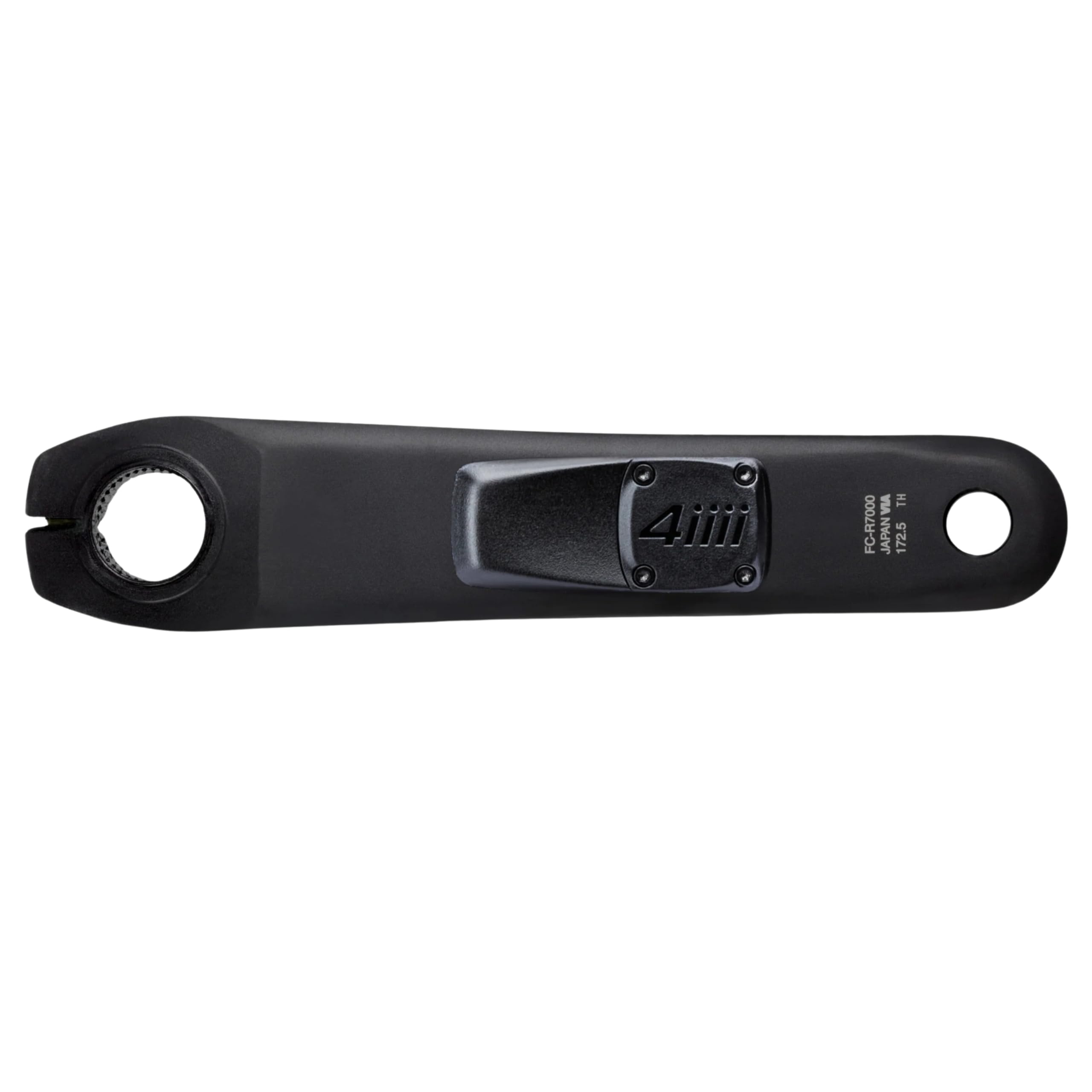
The 4iiii Precision 3+ is the most elegant power meter upgrade for any Shimano Hollowtech II crank system. It replaces your left crank arm with one that has three strain gauges embedded, delivering ±1% accuracy with automatic terrain adjustment and a wide cadence range of 30-170 RPM. The 800-hour battery life from a single CR2032 coin cell is the best on this list — replace the battery once a year and you are done.
Setup requires removing your existing left crank arm and installing the 4iiii unit — a job that is straightforward with a crank puller and an 8mm Allen key. The unit pairs automatically with any ANT+ head unit, and the dedicated 4iiii app handles firmware updates and calibration. The Precision 3+ also supports Apple Find My, which is a clever feature for recovering your power meter if your bike is misplaced. However, the Find My initial pairing process has drawn criticism — some users have reported that the activation sequence requires removing and replacing the battery cover multiple times before it registers, which can be frustrating.
The 3-year warranty is competitive and reflects 4iiii’s confidence in their build quality. Some units have failed around the 8-month mark, but these appear to be isolated cases rather than a pattern. The real strength of the Precision 3+ is its simplicity: no charging cables, no pedal compatibility checks, no bottom bracket standards to worry about. If you ride a Shimano crankset and want power without adding pedal bulk or dealing with recharging, the 4iiii Precision 3+ is your smartest route. It is also a great choice for weight weenies who want power data without the gram penalty of pedal-based systems.
Why it’s great
- 800-hour coin cell battery — the longest-lasting power meter on the market.
- Only 9g heavier than a standard crank arm — practically invisible weight penalty.
- 3-year warranty and Apple Find My compatibility for theft recovery.
- Clean integration with Shimano Hollowtech II cranksets.
Good to know
- Apple Find My setup can be finicky — may require multiple battery cover removals.
- Single-sided measurement only — no left/right balance data.
- Requires a crank puller tool and some mechanical familiarity for installation.
8. Bryton Rider S510 GPS Bike Computer
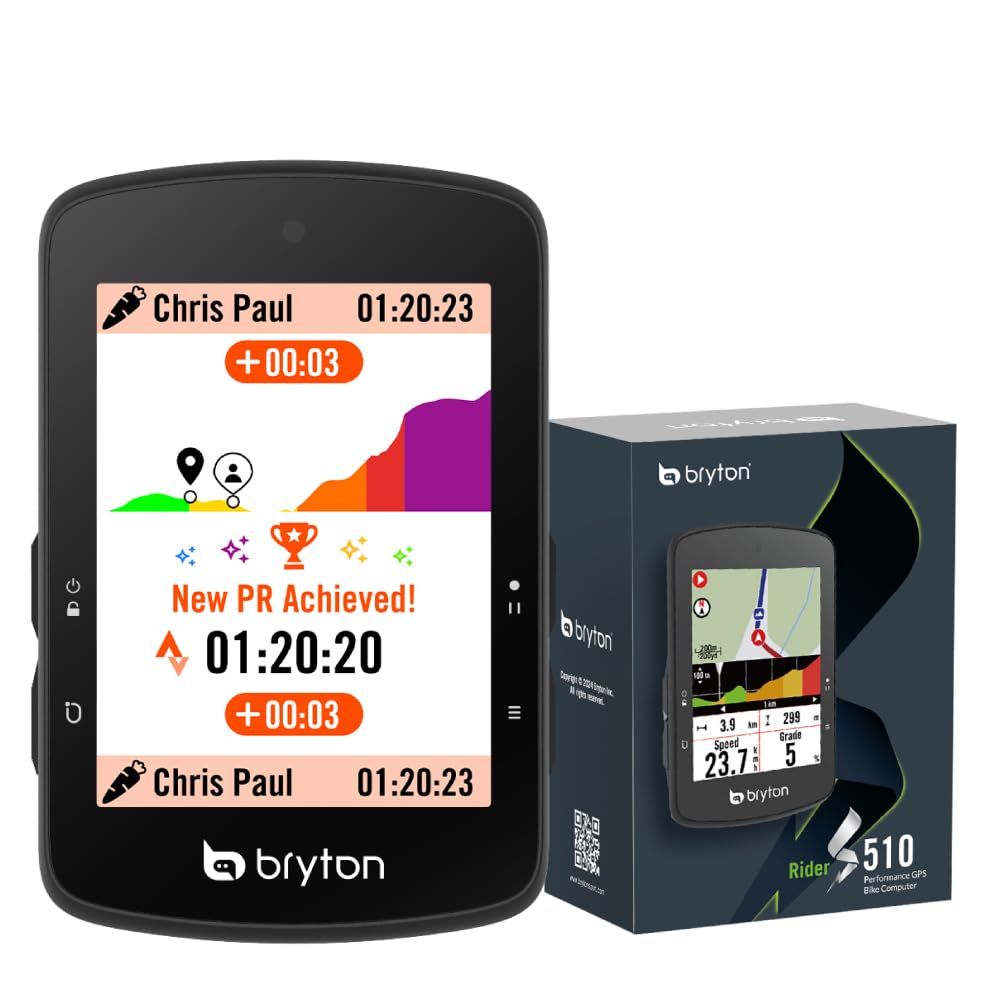
While not a power meter itself, the Bryton Rider S510 is the perfect companion unit for displaying and logging data from any ANT+ power meter. The 2.8-inch color LCD touchscreen is vivid and responsive, with an adaptive light sensor that keeps the display readable in direct sunlight — a must when staring at power numbers during a climb. The 30-hour battery life is impressive for a touchscreen computer, easily lasting through multi-day stage races or week-long tours without a recharge. The included offline USA maps ensure navigation continues even when cellular service drops.
Connectivity is robust: ANT+ and Bluetooth allow pairing with power meters, bike radar, heart rate monitors, and even smart trainers via ANT+ FE-C. The Climb Challenge 2.0 feature visualizes upcoming gradients without needing a pre-planned route — you just start pedaling and the computer calculates grade profiles ahead. Strava Live Segments are supported for riders chasing KOMs. The navigation engine provides on-device re-routing if you stray from a planned course, which is useful for exploring unfamiliar roads without fear of getting lost.
The Bryton Active smartphone app handles data syncing to Strava, TrainingPeaks, and Komoot, though some users report that route import requires downloading a GPX file through the web portal before it syncs to the phone app — an extra step compared to Garmin or Wahoo ecosystems. The interface is slightly less polished than the market leaders, but for well under half the price of a comparable Garmin Edge, the S510 delivers 90% of the functionality. For riders on a budget who need a dedicated head unit to display their power meter data, the S510 is the value king.
Why it’s great
- Bright 2.8-inch color touchscreen with adaptive light sensor — excellent daylight readability.
- 30-hour battery life lasts through multi-day events.
- ANT+ and Bluetooth connectivity for power meters, radar, HR monitors, and smart trainers.
- Offline USA maps and on-device re-routing for worry-free navigation.
Good to know
- Route import requires GPX download via web portal before phone sync — clunky process.
- Smartphone app ecosystem is less polished than Garmin or Wahoo.
- Navigation can lag 5-10 seconds on complex long routes.
9. CYCPLUS Smart Bike Trainer T2
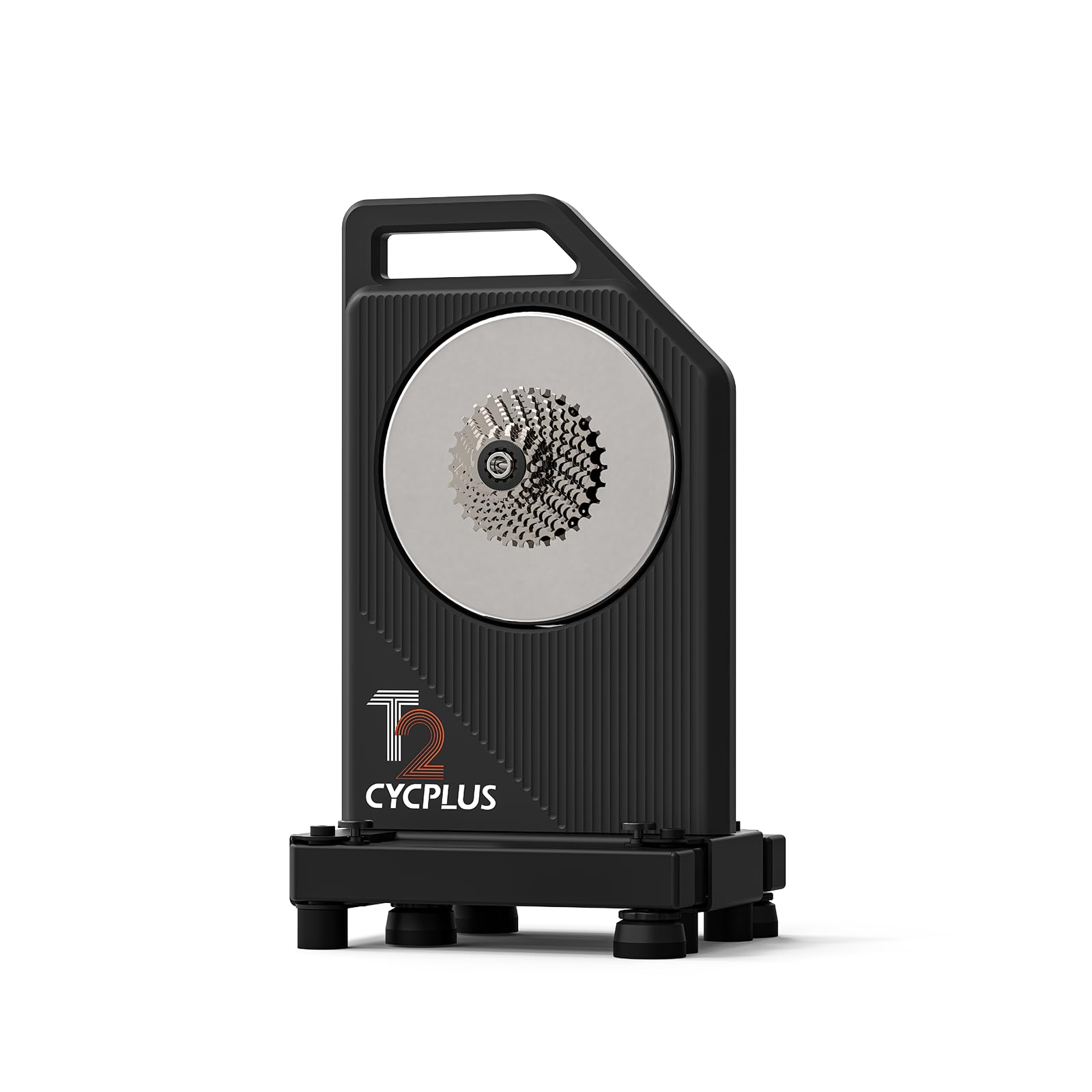
The CYCPLUS T2 is a direct-drive smart trainer that serves as an alternative power meter for indoor training — and it is remarkably accurate. The built-in brushless motor delivers up to 2200W of resistance with ±1% power accuracy, matching dedicated power meters once calibrated. No calibration is needed out of the box, which simplifies setup dramatically. The trainer simulates gradients up to 20%, auto-adjusting to terrain changes in Zwift, TrainerRoad, or any app that controls smart trainers via ANT+ FE-C. The triple-layer noise reduction design keeps operation under 60 dB — whisper-quiet compared to wheel-on trainers.
The T2 supports virtual shifting, though you need the CYCPLUS BC2 shifter (sold separately) to use it. Without it, you shift on your bike’s real drivetrain and the trainer adjusts resistance to match. The dual-fan cooling system prevents overheating during sustained VO2 max efforts, maintaining consistent resistance even at 2200W bursts. The folded footprint is just 11.8 x 10.1 inches with a slim 2.1-inch profile, making it one of the most portable smart trainers available — it fits in a suitcase for travel. The weight limit is 220 lbs, which covers most riders but may be restrictive for heavier athletes.
Connectivity is via BLE and ANT+, and the trainer pairs instantly with Zwift, Rouvy, and the CYCPLUS app. Users report that power data is consistent with Quarq crank-based meters, and the unit’s firmware receives monthly updates that fix bugs and add features. Some riders have noted that cadence can be sporadic via ANT+ on a laptop but works smoothly on Apple TV. For the price, the T2 offers direct-drive accuracy and realistic road feel without the + price tag of premium trainers. If you do your structured training indoors, the T2 is an effective power meter and a smart ecosystem all in one.
Why it’s great
- ±1% power accuracy — matches dedicated power meters for indoor training.
- Ultra-quiet brushless motor under 60 dB for disturbance-free training.
- Gradient simulation up to 20% with auto-adjustment in Zwift and TrainerRoad.
- Extremely portable — folds to 11.8 x 10.1 inches for storage or travel.
Good to know
- Virtual shifting requires separately sold BC2 shifter — adds cost.
- Weight limit of 220 lbs may be restrictive for larger riders.
- Cadence data can be sporadic via ANT+ on some laptop setups.
FAQ
Can I use an ANT+ power meter with a smartphone app like Zwift?
What is the difference between single-sided and dual-sided power measurement?
How do I know if a crank-based power meter fits my bike?
Final Thoughts: The Verdict
For most users, the ant+ power meter for cycling winner is the Favero Assioma Duo because it delivers true dual-sided power data, 50-hour rechargeable battery life, and tool-free installation at a price that undercuts premium competitors by hundreds of dollars. If you want the longest battery life in any form factor, grab the Magene P515 Crankset with its 380-hour runtime. And for off-road riders who need SPD-compatible durability, nothing beats the Favero Assioma PRO MX-2.