
An antenna mast pole is the backbone of your outdoor signal chain — the rigid steel or aluminum column that lifts your TV antenna, weather station, or Starlink dish above roofline obstructions to clear a path for reliable reception. Pick the wrong pole and your careful antenna alignment gets undone by the first strong gust. The best mast pole holds your hardware rock-steady at the exact height and angle you set, season after season.
I’m Min — the co-founder and writer behind Gadgets Feed. I’ve spent dozens of hours cross-referencing gauge thickness, weld quality, mounting bracket designs, and real-world wind-resistance reports from owners to separate the poles that genuinely perform from the ones that wobble.
Whether you are equipping a weather station, upgrading OTA TV reception, or installing a cellular booster, this guide walks through every critical spec so you can confidently pick the best antenna mast pole for your specific hardware and installation site.
How To Choose The Best Antenna Mast Pole
Before clicking buy, you need to match three variables: the pole’s length and diameter to your antenna, the material to your climate, and the mounting system to your roof or wall structure. Get these three right and installation becomes straightforward.
Wall Standoff Distance and Pole Reach
The horizontal reach of a J-pole — typically 33 to 49 inches — determines how far your antenna clears the eaves or roofline. A short 33-inch arm may still leave part of the antenna in the RF shadow of the roof, while a 49-inch pole pushes the antenna into clear air. Longer reach means better clearance but also increases leverage on the mount, so bracket thickness and screw quality become more critical.
Material: Aluminum vs. Galvanized Steel
Aluminum is lightweight, naturally rust-resistant, and easier to handle during installation, but it has lower tensile strength per gauge than steel. Galvanized steel is heavier and stronger for the same wall thickness, making it the preferred choice for heavy antennas or high-wind zones, but if the galvanized coating is scratched, rust can start. For coastal environments, 5052 marine-grade aluminum or stainless steel hardware is the right call.
Pole Diameter and Clamp Compatibility
The outer diameter (OD) of the mast must match the U-bolt or clamp on your antenna. Standard sizes include 1 inch, 1.25 inches, and 1.5 inches. A 1.5-inch OD pole offers more rigidity and is the standard for heavy satellite dishes and Starlink adapters. If your antenna clamp is 1.25 inches, a 1-inch pole will require spacers or a shim, which can introduce looseness.
Quick Comparison
On smaller screens, swipe sideways to see the full table.
| Model | Category | Best For | Key Spec | Amazon |
|---|---|---|---|---|
| imbesel Adjustable J-Pole | Mid-Range | Weather stations and light antennas | 1.25″ OD, 33.25″ arm | Amazon |
| CeKay Universal 49.5″ | Mid-Range | Long-reach TV and WiFi antennas | 1″ OD, 49.5″ arm | Amazon |
| CeKay Heavy Duty 1.5″ J-Mount | Premium | Heavy antennas and Starlink | 1.5″ OD, 35″ arm, 1.5mm wall | Amazon |
| Proxicast J-Max Pro-Grade | Premium | Rust-proof coastal installations | 1.5″ OD, solid 5052 aluminum | Amazon |
| Skywalker Tripod Base + Mast | Premium | Roof peak mounting, heavy loads | Tripod w/ 1.66″ mast, 7.5ft legs | Amazon |
| Skywalker 5′ Tripod | Premium | Large satellite dishes, tall antennas | 5ft height, fits 2″ OD masts | Amazon |
| Easy Up 20′ Telescoping Mast | Premium | HF ham radio and extreme height | 20.75ft, 5 sections, 18-16 gauge | Amazon |
In‑Depth Reviews
1. CeKay Heavy Duty 1.5″ J-Mount (WM-038E)
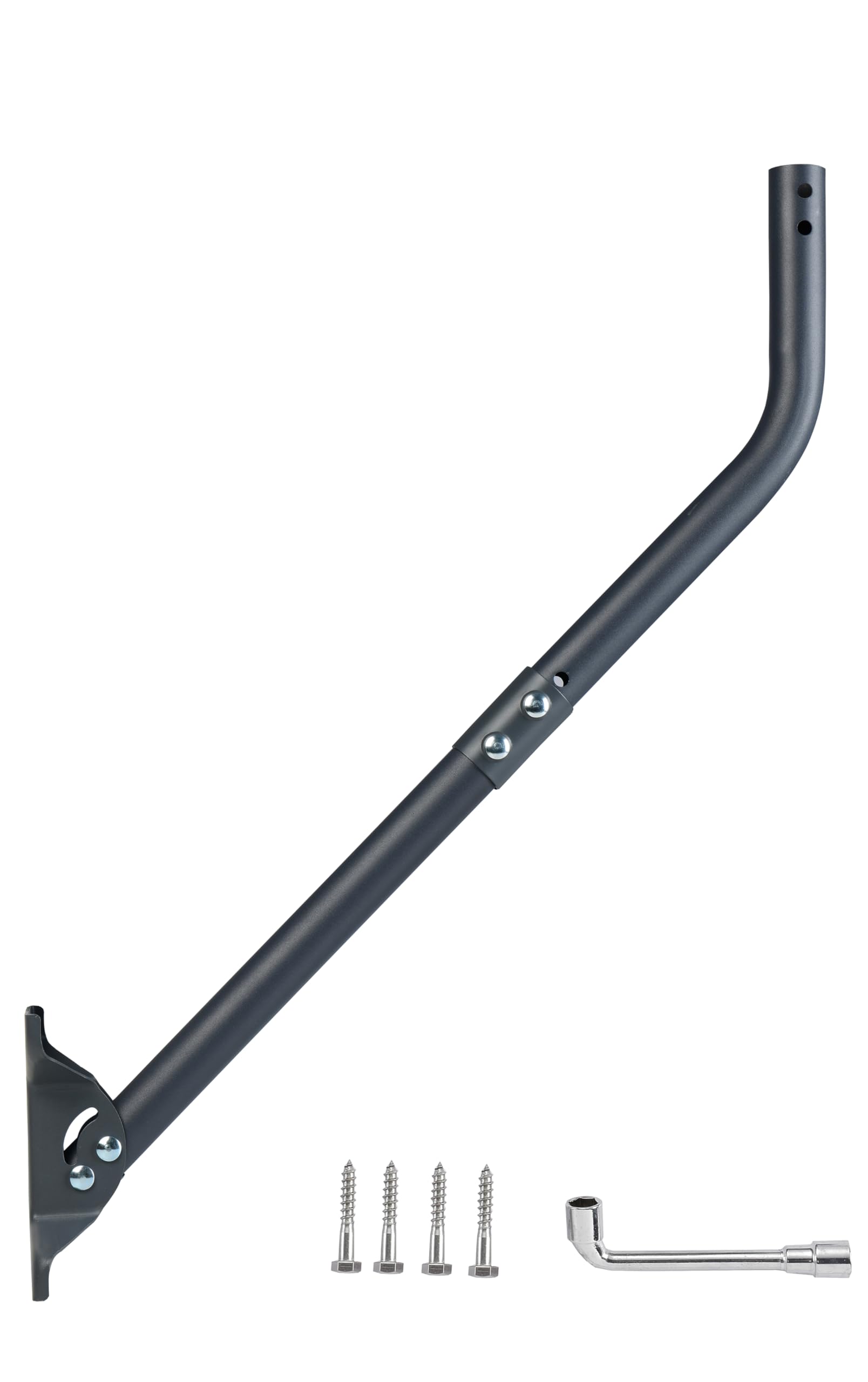
This CeKay J-mount steps up to a 1.5-inch OD with a thick 1.5mm wall and a 2.0mm bracket, giving it the rigidity to hold heavier loads like Starlink dishes and large Yagi antennas without noticeable flex. The 35-inch arm provides enough reach to clear most eaves while keeping leverage manageable. Owners consistently report that it feels “rock solid” after installation, even in moderate wind conditions.
The bracket design incorporates a unique locking pin with two fixing points for horizontal or vertical surfaces, which adds mechanical redundancy over a single-bolt pivot. The included stainless steel self-tapping screws and plastic anchors are properly sized for wood or masonry, and the screw sleeve wrench simplifies tightening in tight spaces. The reversible J-pipe also lets you vary the wall standoff by flipping the arm direction.
One limitation: the included hardware is not ideal for mounting directly to brick without first drilling pilot holes, and the 1.5-inch diameter may require a separate adapter if your antenna clamp is sized for 1.25-inch pipe. Overall, this is the strongest J-pole option for users who need to support a heavier antenna or satellite dish on a standard wall or eave mount.
Why it’s great
- 1.5mm wall thickness provides exceptional load capacity for heavy antennas
- Dual locking pin points add stability in high winds
- Fully reversible arm extends wall-standoff flexibility
Good to know
- 1.5-inch OD may not fit standard 1.25-inch U-bolts
- Bracket coating can scratch during installation if not careful
2. Proxicast Pro-Grade J-Max (ANT-800-JP2-XL)

The Proxicast J-Max is built from solid 5052 aircraft-grade aluminum with 304 stainless steel hardware, making it the premium pick for coastal or high-humidity environments where rust resistance is non-negotiable. The 1.5-inch, 36-inch arm is reversible and uses a unique locking pin that engages at 0, +45, and -45 degrees, giving you precise angle adjustments without relying on friction alone.
Installation is straightforward — the bracket slides over a flat or sloping surface and the pivot lock holds firm once tightened. The entire assembly is noticeably lighter than a steel equivalent, which simplifies one-person installation on a ladder. Multiple real-world reports confirm this mount handles Starlink dishes, ham radio antennas, and weather stations without issue after months of outdoor exposure.
The trade-off is that aluminum, while rust-proof, has lower yield strength than steel at the same gauge. A single negative report described the bracket snapping under a solar-panel load in a 20-mph gust, which suggests this mount is best suited for antennas weighing under 15 pounds rather than large panels or dishes. For dedicated antenna mast duty, the corrosion resistance and clean adjustable locking mechanism make this a long-term winner.
Why it’s great
- 5052 aluminum and 304 stainless hardware fully rust-proof
- Three-position locking pin provides vibration-proof angle adjustment
- Lightweight enough for easy solo rooftop installation
Good to know
- Aluminum is less impact-resistant than steel for heavy non-antenna loads
- Price is higher than basic steel J-poles
3. Skywalker Heavy Duty Tripod Base (SKY6031)

When your installation site is a sloped roof rather than a flat wall, a tripod base like this Skywalker provides the stable platform you need. The tripod spreads 7.5 feet wide at the base and stands 32 inches tall, with sturdy metal feet that include multiple mounting holes for lag-bolting to the roof deck. It comes with a 28-inch mast section that accepts masts up to 2 inches in OD, so you can add a longer top section if needed.
The assembly is all-metal, powder-coated, and heavy — 10.5 pounds — which contributes to its wind resistance. Owners report surviving 55-mph gusts while supporting 19-foot vertical antennas, with the tripod itself remaining unaffected even when the antenna flexed. The included hardware is 5/16-inch bolts and nuts for the mast attachment points, which is adequately sized for most consumer antennas.
The main limitation is that the tripod feet do not have pre-bent angle brackets for roof pitches steeper than 6/12. One buyer reported needing to custom-bend the brackets in a bench vise to match a 45-degree pitch. If your roof is steep, factor in some extra work or a sealant to fill gaps. For moderate pitches and standard antennas, this is the most cost-effective tripod mast solution available.
Why it’s great
- Wide 7.5-foot base offers excellent stability on sloped roofs
- Supports masts up to 2-inch OD for future height upgrades
- Proven wind resistance from real-world owner reports
Good to know
- Feet brackets may require bending to match steep roof pitches
- Lag bolts and sealant not included for roof attachment
4. Skywalker 5′ Heavy Duty Tripod (SKY6046)

For installations that demand a tall, standalone platform above the roof peak, the Skywalker 5-foot tripod is the heavy hitter. The legs are double-braced and spaced 36 inches apart, providing a stable 5-foot vertical rise that can accept masts up to 2 inches OD. This height alone often eliminates the need for a separate extension mast, especially for OTA TV antennas and satellite dishes.
The construction is galvanized steel with riveted joints, and the top plate provides three contact points for the mast for solid triangulation. Owners have successfully mounted Starlink dishes 8 feet above the roof peak by pairing this tripod with a ground-mount pole and uni-strut cross-supports. One modification recommended by multiple buyers is replacing the aluminum rivets with Grade 8 bolts for permanent ground-mount installations, as the rivets are the weakest link.
The primary drawback is that unlike the smaller Skywalker tripod, this unit does not include a mast section or lag bolts. You need to source your own mast and roof-mounting hardware separately. The 5-foot height also makes it taller and more cumbersome to handle during installation — a two-person job is advisable. Despite these points, the build quality and stability are unmatched at this tier for roof-top mast mounting.
Why it’s great
- 5-foot height clears tall rooflines without extra mast sections
- Double-braced legs provide superior wind resistance
- Accepts masts up to 2 inches OD for universal compatibility
Good to know
- Mast and lag bolts not included — sold separately
- Rivets are the weak point; upgrading to bolts is recommended
5. Easy Up 20′ 9″ Telescoping Mast (EZ TM-50-5)
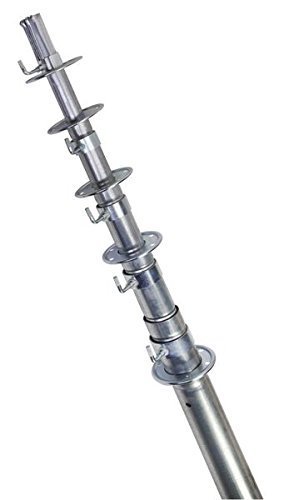
When ground elevation or tree cover demands extreme height, the Easy Up 20-foot 9-inch telescoping mast is the solution. It collapses to a compact 5 feet for shipping and storage, then extends in five overlapping steel sections. The bottom section is 2.25 inches OD with 18-gauge wall thickness, tapering to a 1.25-inch OD top section with a thicker 16-gauge wall for added tip strength. Each section overlaps for increased structural integrity at the joints.
The mast uses a heavy-duty thumbscrew-and-collar system to lock each section at the desired height, plus rotating guy rings for attaching guy wires at multiple levels. The total weight is 25 pounds, which is manageable for a two-person installation but requires proper guying or bracketing per the manufacturer’s instructions. Ham radio operators praise it for HF verticals, and OTA TV users report rock-solid signals at 20 feet above the roofline.
There is no formal instruction manual included, so this mast is best suited for experienced installers who understand guying angles, base plates, and wind-load calculations. One owner noted the sections can fall out if the mast is lifted vertically without the bottom plug. Also, no bottom cap is included. If you are comfortable with proper guy-wire anchoring, this mast delivers the tallest reach of any unit in this guide by a wide margin.
Why it’s great
- 20.75 feet extended height clears nearly any obstruction
- Collapses to 5 feet for easy transport and storage
- Thicker 16-gauge top section reduces whip at maximum height
Good to know
- Requires guy wires and experienced installation — no instructions included
- No bottom cap included; sections can slide out if lifted carelessly
6. imbesel Adjustable J-Pole (WM-032E)

The imbesel J-pole is a strong entry-level choice with a 1.25-inch OD and a 33.25-inch arm length that perfectly fits smaller TV antennas and weather stations. Its reversible design means you can orient the arm either direction to adjust wall standoff distance, and the 180-degree pivot bracket lets you dial in the exact horizontal angle for optimal signal. The included locking pin with two fixing points adds noticeable stability over basic single-bolt designs.
Installation is genuinely tool-friendly: the kit includes ST8x50mm stainless steel self-tapping screws, durable plastic anchors, and a screw sleeve wrench that makes tightening in tight spaces much easier. Owners consistently mention the easy assembly and the fact the mount feels “very sturdy” for weather stations. One reviewer noted using it for an Ambient AS-5000 weather station with perfect results, and another praised how well it cleared the roofline overhang.
A couple of buyers reported the material felt thinner than expected and added their own bracing for extra reassurance in windy zones. The 1.25-inch diameter is slightly larger than the 1-inch CeKay pole, giving it a small rigidity advantage for similar-weight loads. If you need a reliable, budget-conscious J-pole for a weather station or compact TV antenna, this is the most balanced pick.
Why it’s great
- 1.25-inch OD provides good rigidity for medium-weight antennas
- Locking pin with two fixing points adds wind resistance
- Includes full hardware kit with screw sleeve wrench for easier install
Good to know
- Some owners found the material gauge a bit light for extreme wind zones
- 33.25-inch reach may not clear very wide eaves
7. CeKay Universal 49.5″ Mounting Pole
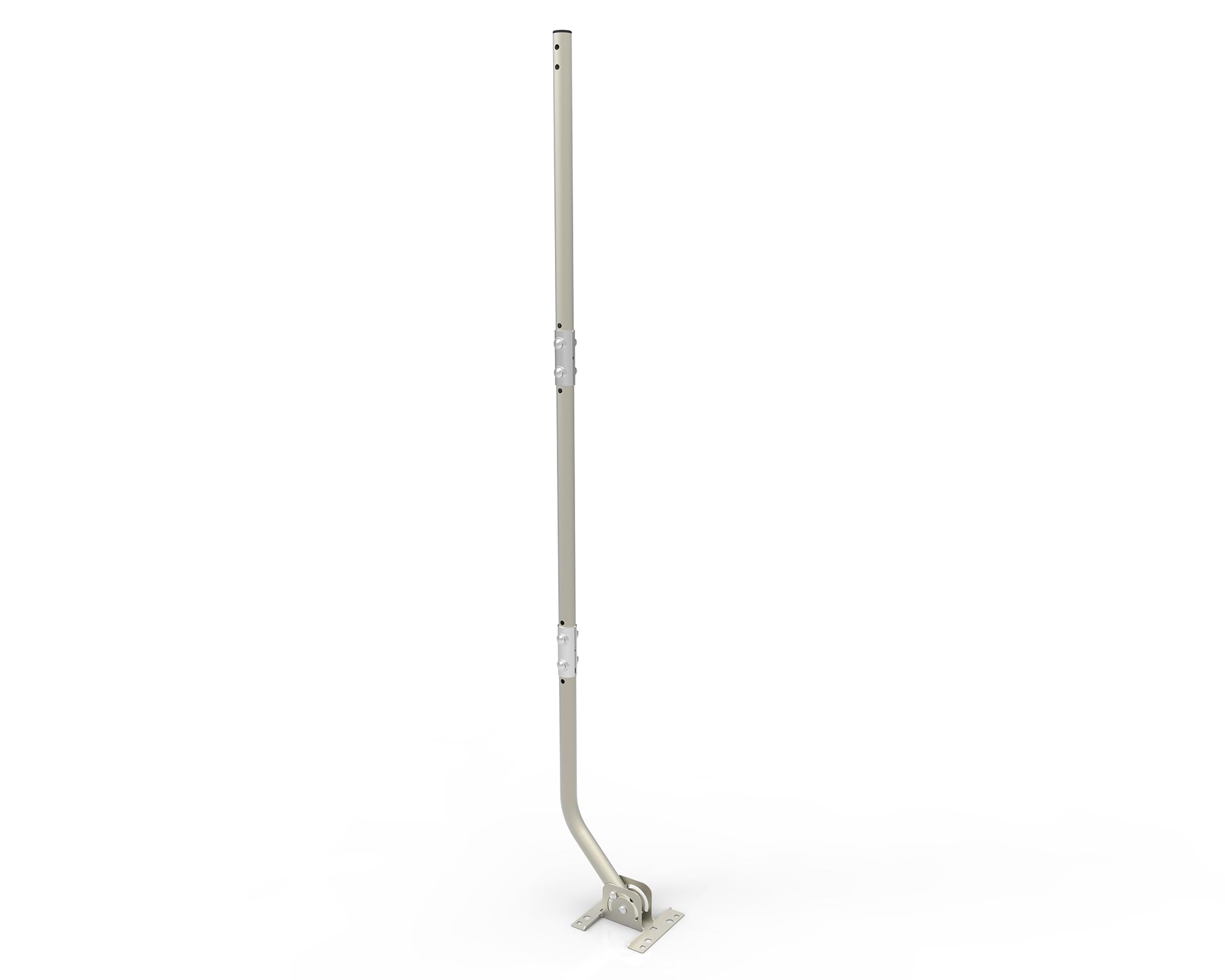
The CeKay 49.5-inch J-pole offers the longest arm reach in the standard wall-mount category, giving you maximum clearance from the roofline to minimize signal obstruction. The pole is made from rustproof aluminum alloy with a gray powder-coated finish, keeping its appearance clean even after rain or snow exposure. The 180-degree adjustable pivot bracket allows you to rotate the antenna for peak reception angle without moving the base mount.
Installation is simple and the included hardware kit has everything needed for wall, eave, or roof mounting. Owners confirm it works well for lightweight outdoor antennas, weather stations, and smaller ham radio antennas. The 1-inch diameter is notably smaller than the imbesel or CeKay 1.5-inch options, which makes it the right fit only for antennas with a 1-inch U-bolt clamp. The aluminum construction keeps weight down, which is beneficial for installations on siding where heavier steel could be problematic.
The main drawbacks are that the 1-inch width is too small for standard U-bolts without spacers, and some owners noted the steel base plate could rust over time if the powder coating is chipped. Also, unlike the CeKay 1.5-inch version, this pole does not include a locking pin, so the pivot relies entirely on bolt friction. For lightweight, long-reach applications where every inch of clearance helps, this is the best option in its class.
Why it’s great
- 49.5-inch reach provides maximum roof-eave clearance
- Aluminum construction resists rust and reduces weight
- 180-degree rotation for precise signal alignment
Good to know
- 1-inch OD requires spacers for standard 1.25-inch U-bolts
- Lacks a locking pin — pivot relies on bolt tension only
FAQ
Will a 1.25-inch mast fit a Starlink dish mount adapter?
How do I attach a mast pole to a sloped roof without a tripod?
Do I need to guy-wire a 5-foot tripod mast?
Final Thoughts: The Verdict
For most users, the best antenna mast pole winner is the CeKay Heavy Duty 1.5″ J-Mount because it combines the thickest steel wall, a locking pin, and universal 1.5-inch diameter at a reasonable cost for what it delivers. If you need total rust-proofing for a coastal installation, grab the Proxicast J-Max. And for extreme height that no wall-mount J-pole can reach, nothing beats the Easy Up 20′ Telescoping Mast.