
Our readers keep the lights on and my morning glass full of iced black tea. As an Amazon Associate, I earn from qualifying purchases.
Specs are compiled from manufacturer listings and verified buyer reviews and can change over time — please confirm the key details on the product page before buying.
Rust is a slow thief that eats trailers, boat hardware, truck frames, and tools from the inside out, and the coating you choose decides whether metal survives a salty winter or crumbles by spring. The best protection depends on one honest trade-off: a waxy film that stays soft and self-healing versus a hard, paint-like shell that seals rust permanently — and most buyers need both for different jobs. The crowd favorite here, the LPS 3 Primer in the 11 oz can, wins overall because it balances military-grade reliability with a formula that’s easy to apply anywhere.
I’m Min — the founder and writer behind Gadgets Feed. This guide is built by comparing the manufacturers’ published specifications and the patterns across verified customer reviews, so you get each pick’s real strengths and trade-offs instead of marketing spin.
Whether you’re protecting a daily driver, a boat, or a workshop full of tools, choosing the right anti corrosion coating means understanding the difference between penetrating oils, cavity waxes, and hard-setting paints before you spend a dollar.
Our Picks at a Glance
How To Choose The Best Anti Corrosion Coating
Before you pick a can, you need to know where the rust lives. A spray that seals a body panel from the inside is a different tool than a liquid that creeps into a frozen bolt, and the best anti corrosion coating for your garage is the one matched to the job.
Match the formula to the metal
Soft, waxy films like cavity waxes and heavy-duty inhibitors are built for cavities, frames, and moving parts because they stay pliable and reflow into scratches on their own. Hard paints, by contrast, form a rigid shell that stops rust permanently but needs perfect surface prep and will crack if the metal flexes. If you’re coating a truck frame, you want the soft wax; if you’re painting a mower deck or a set of rock sliders, you want the hard barrier.
Read the flash point before you spray near heat
The flash point is the temperature at which the product’s vapors can ignite, so it tells you how safe a spray is around engines, exhaust manifolds, and electrical sparks. A higher flash point, like the 132 °C on CorrosionX, means it stays safer in hot, confined spaces than a low-flash aerosol that could ignite near a hot manifold.
Decide how much prep you can handle
Hard-setting coatings demand a clean, etched surface or they will peel off in sheets, while penetrating oils and waxy sprays go on over light surface rust with almost no prep. Be honest with yourself about whether you will actually sand, degrease, and acid-etch a part before you buy a paint-style product, because that prep step is the difference between a bulletproof seal and a flaking mess.
Quick Comparison
| Model | Best For | Container Size | Flash Point | Finish Type | Amazon |
|---|---|---|---|---|---|
| LPS 3 Premier★ Best Overall | Long-term storage | 11 fl oz | 73 °F | Waxy film | Amazon |
| CorrosionXElectronics Saver | Electronics & marine | 6 fl oz | 132 °C | Dielectric film | Amazon |
| ACF-50Aviation Grade | Aircraft & motorcycles | 13 fl oz | 79.4 °C | Low-shear film | Amazon |
| H&H CB12 | Electrical connections | 12 fl oz | 79 °C | Blocking film | Amazon |
| CorrosionX HD | Harsh saltwater gear | 12 fl oz | — | Self-healing barrier | Amazon |
| 3M Cavity Wax Plus | Car body panels | 18 fl oz | — | Non-hardening wax | Amazon |
| CRC 06026 | Vehicle undercoating | 10 fl oz (4-pack) | — | Hard invisible wax | Amazon |
| POR-15 | Rusted parts, heavy-duty | 16 fl oz | — | Gloss hard shell | Amazon |
| KBS RustSeal | Large surfaces, frames | 32 fl oz | — | Satin hard shell | Amazon |
In‑Depth Reviews
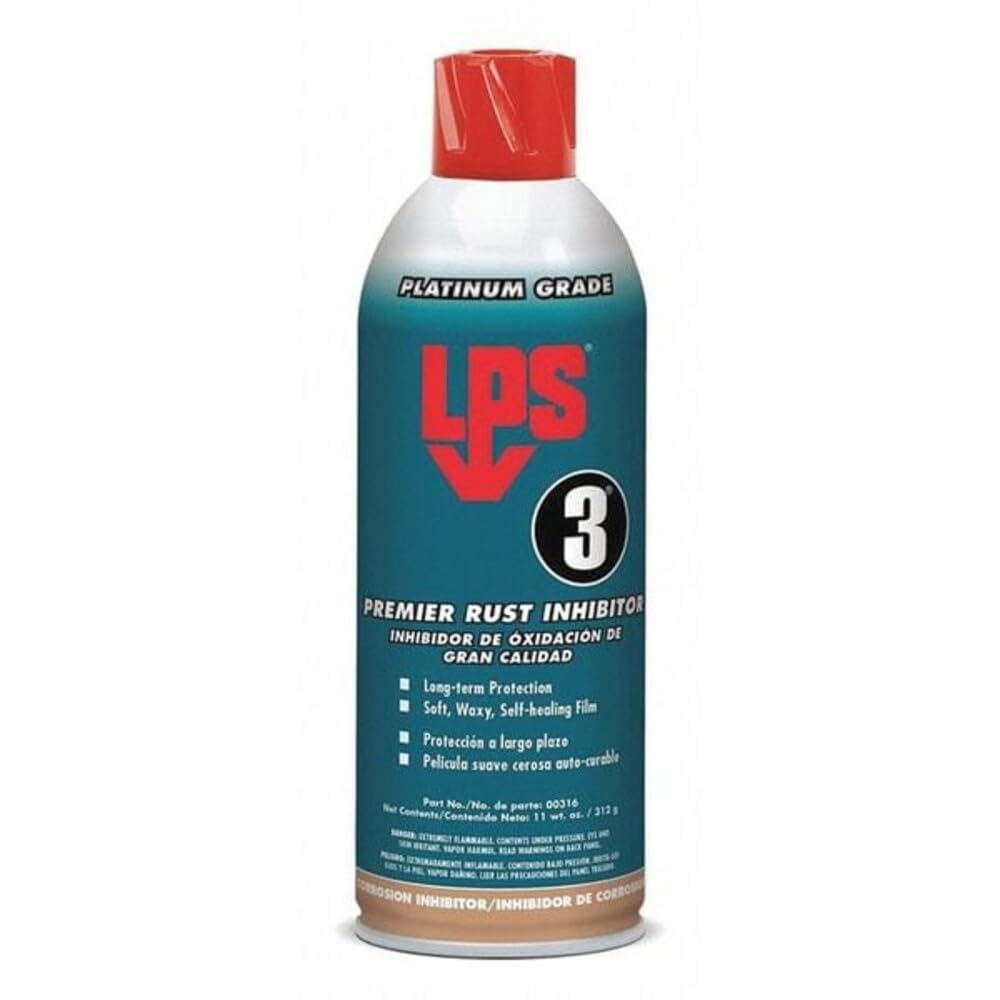
1. LPS 3 Premier Rust Inhibitor, 11 oz Aerosol
Our pick — over 4.5★ from 500+ verified ratings; the strongest balance of quality and price.
The long-term storage specialist that leaves a gummy wax shield behind.
LPS 3 protects anything you want to put away dry and find rust-free months later — firearms, garden tools, brake lines, and door panels on vehicles driven in salt and snow. The 11 fluid ounce can holds the same waxy chemistry the military has trusted for decades., and owners who spray it inside car door panels swear it stops bottom rust that would otherwise eat a vehicle from within.
The trade-off is the film itself. It dries to a gummy, waxy layer that lasts, and while it is not too bad to clean off with soap, that same grip can add friction to moving parts and thickens up in cold weather. Buyers report an outdoor test where a coated barrel half stayed rust-free after two weeks while the untreated side rusted — which is exactly the kind of real-world proof that makes this the dependable default. At 12.8 ounces and a 73 °F flash point, it is heavier than CorrosionX’s 6 oz can and ignites at a lower temperature, so treat it as a storage coat rather than a hot-engine spray.
What wins people over is rust resistance, with protection and adhesiveness close behind — owners describe it as outstanding for firearms and reliable for anything metal that sits for long stretches. The honest caveat is value: several owners find the per-can cost steep even while admitting it extends vehicle life by at least a year in corrosive areas..
Long-haul shield: the waxy, self-adhering film is exactly what long-term storage needs, and it holds up on aluminum and steel alike.
Reach for this if: you store tools, guns, or a seasonal vehicle and want one proven, no-fuss coating that lasts.
Look elsewhere if: your rust problem is inside an engine bay where heat builds — the 73 °F flash point and thickening cold film make it a poor fit there.
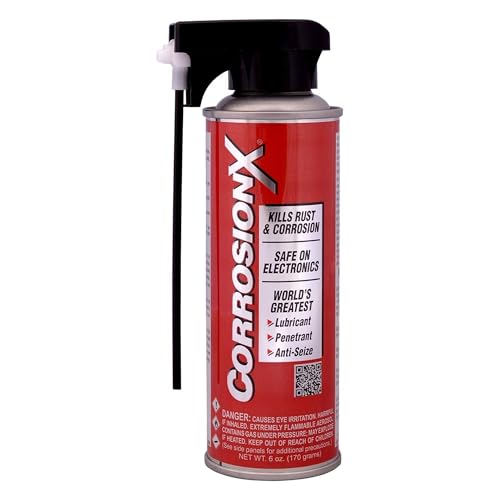
2. CorrosionX Rust Inhibitor, 6 oz Aerosol
A 39,000-volt dielectric barrier that revives seized motors and protects circuits.
CorrosionX does three jobs at once: it penetrates frozen bolts, lubricates moving parts, and wraps electrical connections in a moisture-blocking film rated to withstand over 39,000 volts. That makes it the go-to for boat electronics, battery terminals, and trailer wiring where salt water and dissimilar metals meet. Owners mention that a few squirts into the bearings of seized and dragging outdoor fan motors brings them back to life, and the fans start smoothly again even after hard rains.
Where it beats the LPS 3 above is safety around heat — its flash point of 132 °C is 66% higher than LPS’s 79.4 °C, so it is far more at home in a warm engine bay or near electrical gear. The catch is quantity: at just 6 fluid ounces, it carries less than half the LPS’s 11 oz, so you pay a premium per ounce and the small can disappears fast on a big project. Owners also note the spray nozzle can be hit-or-miss, and the application runs messy.
Quality is what wins people over, with effectiveness close behind — owners routinely call it superior to WD-40 for household squeaks, fishing gear, and restoring 50-year-old audio equipment without damaging the surfaces it touches. The one real restraint is value for money, which draws mixed reactions given the small can size.
Three-in-one performer: penetrant, lubricant, and waterproofing dielectric protector all in one can, and the highest flash point on this list keeps it safe near heat.
Choose it when: you need one spray to handle seized fasteners, squeaky locks, and boat circuits without switching products.
Think twice if: you plan to coat a whole truck frame — the 6 oz can runs out long before the job does.
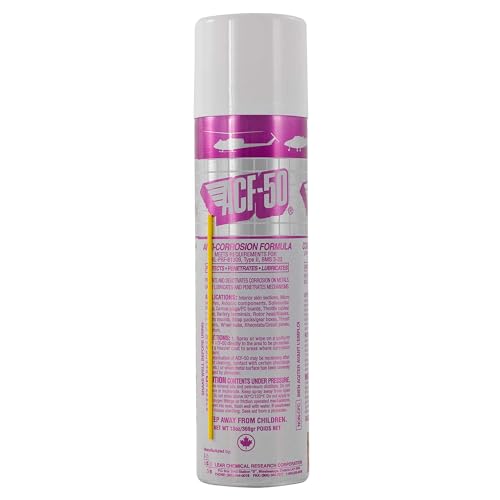
3. ACF-50 Anti-Corrosion Lubricant Compound, 13 oz Aerosol
The non-flammable corrosion killer pilots trust on airframes and electronics alike.
ACF-50 is the choice for metal that lives in constant humidity — motorcycles in damp climates, airplanes, and anything electrical you want to protect without fear. It kills corrosion already in progress in one application, and unlike most sprays it is non-flammable, non-carcinogenic, and virtually non-toxic, so owners feel safe coating radios, computers, alternators, wiring, battery terminals, and ignition systems. Whether you ride in London rain or fly a Piper Cherokee PA-28 180, this is the film that keeps aluminum frames and engine cases clean.
It pours 13 fluid ounces into the can, beating CorrosionX’s 6 oz by a 2.2x margin, which makes it the better value for covering a motorcycle or a set of boat electronics in one pass. A buyer who has used both brands puts it plainly: ACF-50 is the better choice for their needs, and they reapply annually or after any abrasion. The one recurring complaint is the spray nozzle — a few cans arrive with the applicator broken off, which forces owners to hold it in place while spraying.
Effectiveness and rust resistance are what owners praise most, with adhesion close behind — the film maintains itself even on vertical surfaces, which matters on engine cases and frame rails. The value debate shows up here too; owners call it expensive but insist it is the best of its kind and worth the price.
Humidity-proofing ace: non-flammable, electronic-safe, and low-shear lubricating all at once — the definition of a versatile corrosion coating.
Reach for it: on motorcycles, aircraft, boats, and any electrical component that must survive damp air without catching fire.
skip it if: you cannot tolerate a finicky spray nozzle — inspect the can on arrival and be ready to contact the seller for a replacement.
4. H&H CB12 Corrosion Block, 12 oz Aerosol
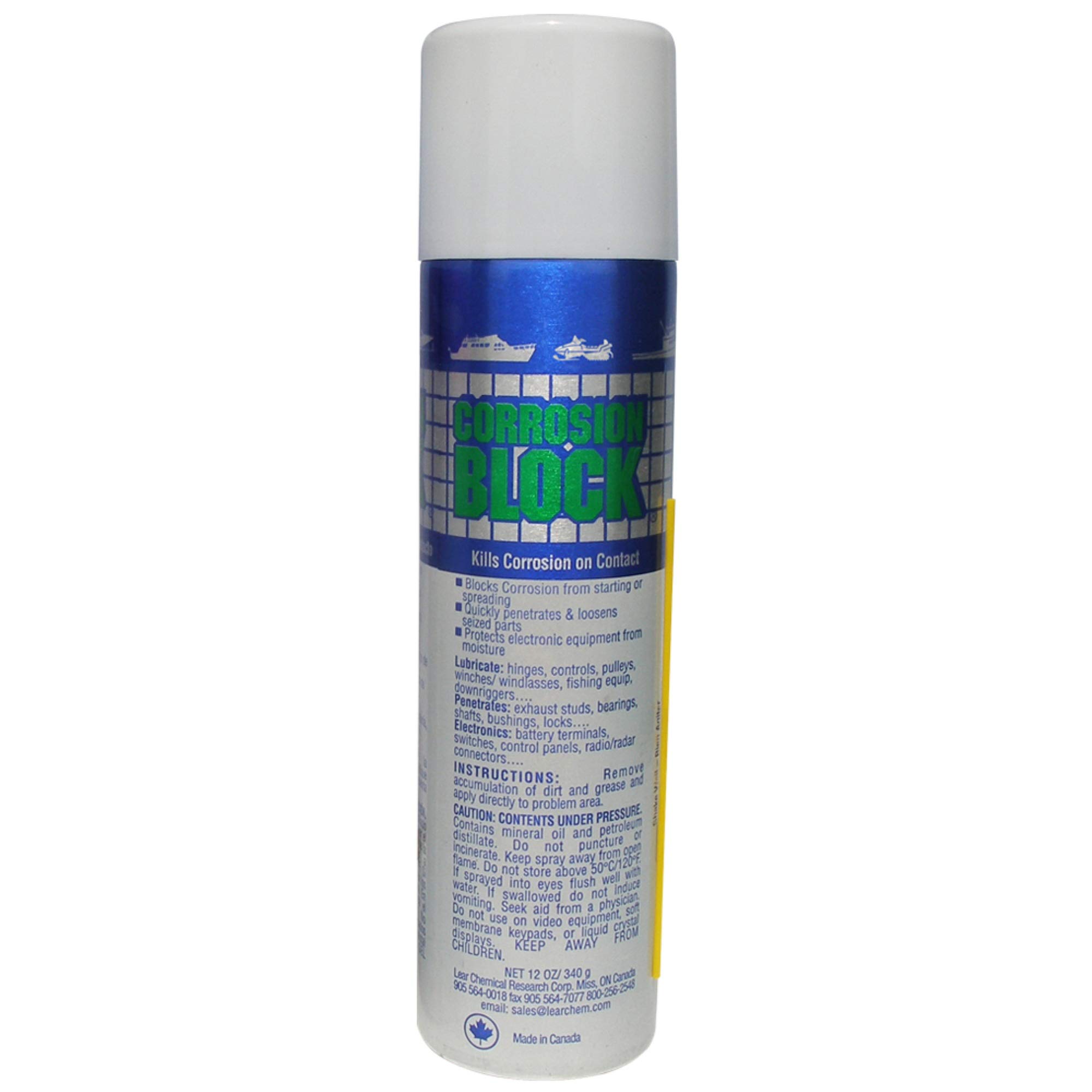
The boat owner’s secret for stopping corrosion on electrical connections and outboards.
CB12 from H&H is for anyone fighting invisible corrosion between dissimilar metals — the kind that kills low-voltage circuits, keyed door locks, and outboard motors. Owners spray it on outdoor sockets and electrical connections and report those units look like new for years, and it fixed intermittent connections between copper boards and tin connectors that no other product could touch. On motorcycle aluminum, it eliminated corrosion after a single ride where WD-40, Aerokroil, and Marvel Mystery Oil all burned off and failed.
The 12 fluid ounce can gives you room to work, and at a 79 °C flash point it sits safely in the middle of this list — fine for general electrical and marine use, not a substitute for CorrosionX’s 132 °C near extreme heat. The brand name on the listing reads “Helly Hansen,” but this is the H&H marine corrosion product, and owners treat it as the definitive answer for outboard cowlings and bronze hardware. A 20-year boat owner used it on Texas-salted hardware and says no further corrosion has appeared since, with proper winterizing each year.
Effectiveness is what owners praise most, with corrosion resistance close behind — the words “best corrosion protection product” come up repeatedly from people who have tried everything else. Value for money stays a mixed note, consistent with most premium sprays here.
Circuit whisperer: targets the hidden galvanic corrosion between unlike metals that other sprays miss entirely.
Best for: boaters, RV owners, and anyone chasing gremlins in electrical connections or outboard motors.
Not for: heavy undercoating jobs — this is a precision corrosion blocker, not a frame-coating wax.
5. CorrosionX Heavy Duty Anti Rust Spray, 12 oz Aerosol

A thick, no-drip shield built to survive five years indoors and two out in the weather.
CorrosionX Heavy Duty is the brute of the lineup, built for boat trailers, barn doors, battery posts, and grounding lugs that face rain, seawater, and pressure washing. The self-healing barrier clings without dripping and flexes with machinery instead of flaking, and the maker rates it for up to 5 years indoors and 2 years outdoors.. Customers note monthly application on boat motors stops salt corrosion and keeps metal looking new, and active rust grays out within days of coating.
The Polar Bonding science locks onto surfaces to block electrolysis and galvanic damage in hidden spots from engine bays to salty docksides. The trade-off is the mess: this stuff is thick, sprays on bubbly, stains clothes permanently, and carries a strong lingering odor, so gloves and a mask are non-negotiable. Owners also warn the 12 oz can covers less area than expected because the coating goes on so heavy, and it attracts dirt over time even while it keeps working.
Functionality is what owners praise most, with rust resistance and water resistance close behind — the marine reviews are emphatic that it survives salt spray and overspray better than anything else tried. Value for money is the recurring mixed note given how fast the can disappears on a big job.
Saltwater sentinel: the longest-lasting weather barrier here, but it demands you suit up before spraying.
Reach for it: on trailers, boat hardware, and agricultural equipment that lives in salt and spray year-round.
pass on it if: you want a clean, low-odor job — this coating is powerful but genuinely messy to apply.
6. 3M Cavity Wax Plus Aerosol Spray, 18 fl oz
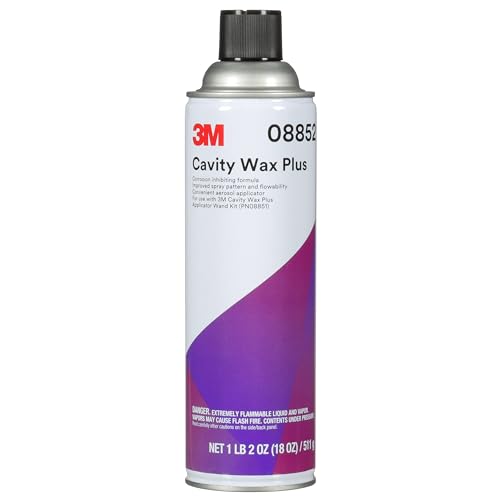
The body-shop favorite that stays soft inside panels so it never cracks or peels.
3M Cavity Wax Plus is the professional’s answer to the rust that starts inside car doors, frame rails, and rocker panels where you cannot see or reach. The formula stays soft and pliable on purpose, so it will not crack, chip, or peel as the body flexes, and it self-heals by reflowing into cracks and crevices for long-term coverage. A body man in the Northeast swears this is the only thing that truly prevents corrosion in the rocker panels and wheel wells of a pickup truck.
The 18 fluid ounce can is the biggest aerosol on this list by volume, and it is designed to be used with the 3M Cavity Wax Plus Applicator Wand Kit, sold separately, which is how you snake the wax deep inside doors and sills. It eliminates the need for bulky spray equipment, and owners say the odor stays low — just a car-wax smell for about a week — with easy overspray cleanup and no staining of black trim. One can covers doors and rocker panels, which makes it efficient if not cheap.
Ease of use is what owners praise most, with rust resistance close behind, and the sense that one can goes a long way is a recurring theme. The clear caveat is the price — owners call it ridiculously expensive, and the special applicator wand costs extra on top, so this is a commitment to doing the job properly.
Invisible armor: a self-healing wax that protects the inside of body panels exactly where rust starts.
Best for: car owners in salt-belt states who want factory-style cavity protection on doors, fenders, and frame rails.
Think twice if: you are on a tight budget — the can and the required wand add up quickly.
7. CRC 06026 Heavy Duty Corrosion Inhibitor, 10 Wt Oz — 4 Pack

The hard, nearly invisible wax that shrugs off pressure washing and winter salt.
CRC’s 06026 is the undercoating specialist, dries to a hard, non-sticky wax that resists pressure washing and keeps truck frames and jack points alive through harsh Midwestern winters. Owners applied it to a new Jeep Wrangler headed for saltwater beaches, and after three years of salt exposure and pressure washing the frame shows no rust. It sprays on wide when the can is warm, dries nearly invisible, and self-heals when it warms up — which is why it outperformed rivals in independent Project Farm testing.
This 4-pack gives you four 10 fluid ounce cans at a price that works out friendlier per can than buying singles, and owners typically use two cans for a partial undercoating or six-plus for a full truck. The trade-offs are real: the mist demands eye and mask protection, the smell lingers for days, and it ruins clothes, so a Tyvek painter’s suit is strongly advised. A couple of cans in the pack can leak from the spray nozzle, which is messy but does not affect the product’s effectiveness.
Quality is what owners praise most, with rust resistance and effectiveness close behind, and the coating itself gets consistent raves for durability after 1.5 years of use. Owners describe it as better than Fluid Film for coating because it is less runny and dries to a hard wax that withstands a pressure washer — the exact behavior you want under a daily driver.
Pressure-washer proof: a hard, invisible wax that outlasts oily undercoats and stays put through the harshest washing.
Reach for it: when you want serious vehicle undercoating without a spray gun and with real longevity.
it’s not for you if: you work indoors without ventilation — the odor and mist are intense and need protective gear.
8. POR-15 Rust Preventive Coating, 16 fl oz, Gray

The moisture-cured paint that stops rust permanently on mower decks and truck frames.
POR-15 is a different animal from every spray above — it is a paint-style coating that cures by moisture, not evaporation, so it dries faster in humid air and forms a hammer-tough, non-porous shell the manufacturer claims no paint, coating, or powder coat can match it.. It covers 50–100 square feet per can, dries to a gloss finish in about 3 hours, and fully cures in 5 hours., and is trusted by DIY and professional shops to protect automotive, farm, and marine equipment. Owners used it on a rusted mower deck and a steel garage door near a salty beach, and neither has shown new rust after about a year.
The catch is the prep and the paint’s own intensity. You must degrease, etch with metal prep, stir without shaking, and apply thin coats — and if you skip prep, the coating can peel off with minimal effort. The remaining paint hardens inside the can within days of opening, so owners strongly suggest storing leftovers in a glass mason jar. It is also strictly an outdoor-use, UV-exposed finish, so topcoating is required anywhere sunlight hits.
Performance is what owners praise most, with rust resistance close behind — the words “bulletproof seal” and “dries hard like rock” come up repeatedly. Durability and drying time carry mixed feedback because both depend heavily on how carefully you prep and apply, and the value-for-money note is negative for some given the prep demands.
Permanent barrier: the anti-rust coating that actually stops rust permanently, but only if you follow the three-step prep religion.
Best for: rusted metal that needs a permanent, abrasion-resistant shell — mower decks, rock sliders, frames, and heavy equipment.
look elsewhere if: you will not commit to the full degrease, etch, and thin-coat routine or the UV topcoat it demands.
9. KBS Coatings 4402 Satin Black Rustseal, 1 Quart

Brush-on, powder-coat-looking protection that covers 50 square feet per quart.
KBS RustSeal is the value king of hard coatings, delivering a 32 fluid ounce quart — double the POR-15 can — with the same kind of permanent, non-porous barrier against moisture and oxygen, plus a satin black finish so smooth it looks powder coated. It resists fuels, oils, most acids and alkalis, withstands temperatures up to 600°F, and is designed for brush, roll, or spray application on everything from chassis frames and floor pans to boat hulls and engine blocks. Owners coated a 1966 Ford F100 frame after treating the rust, and two years later it still looks beautiful with no bubbles or fading.
The brush-friendly formula is the big practical win: it flows and levels so brush marks disappear, giving you that professional powder-coat look without a spray booth. The trade-offs are stickiness and the can itself. Reviewers point out it is very sticky while wet and hard to remove from skin, the lid can seal shut so tightly that the can becomes impossible to reopen, and rust resistance draws mixed feedback that depends entirely on surface preparation. Proper prep means sanding or blasting, degreasing, and metal prep before the first coat.
Quality is what owners praise most, with finish and application close behind — the powder-coat appearance gets consistent raves, and the coverage is generous at 50 square feet per quart. Stickiness and lid functionality are the honest downsides, so plan to transfer leftover coating to a glass jar immediately.
Big-can bargain: twice the volume of POR-15 at the same tier, with a satin finish that fools people into thinking it was baked on.
Choose it: for large frames, boat hulls, and suspension parts where you want maximum coverage per dollar and a beautiful finish.
Think twice if: you hate sticky messes and fight with stuck lids — this coating is tenacious in every sense.
Understanding the Specs
Flash Point
The flash point is the lowest temperature at which a product’s vapors can ignite, and it tells you where a spray is safe to use. A high flash point like CorrosionX’s 132 °C means you can coat warm engines and electrical gear with confidence, while a lower figure like LPS 3’s 73 °F calls for more caution around heat sources and sparks.
Finish Type
Finish type describes whether a coating dries soft or hard, which decides its job. A soft, waxy film stays pliable and self-heals on flexing metal, while a hard, paint-like shell seals rust permanently but only on rigid surfaces — and the hard shells demand far more surface preparation before you apply them.
FAQ
What is the difference between a rust inhibitor and a rust preventive coating?
Can I spray these coatings directly over existing rust?
Which coating is safe to use on electrical connections?
How long does a rust preventive coating actually last?
What is the best way to coat the inside of car doors and rocker panels?
Why does my rust coating need a topcoat in sunlight?
Are these coatings safe to use near an open flame or hot engine?
Which is better for a truck frame, a wax spray or a hard paint?
Final Thoughts: The Verdict
If you want one dependable pick, the anti corrosion coating winner is the LPS 3 Premier because its military-proven waxy film. is the most forgiving, reliable default for storage and vehicle protection. If you need electronic safety and the highest flash point, grab the CorrosionX, and for a permanent hard shell on rusted parts,