
Our readers keep the lights on and my morning glass full of iced black tea. As an Amazon Associate, I earn from qualifying purchases.
Specs are compiled from manufacturer listings and verified buyer reviews and can change over time — please confirm the key details on the product page before buying.
The fear of a loved one falling is exhausting. You lie awake listening for footsteps or rush to the bedroom at every creak. A good anti-fall device for elderly family members changes that by doing the listening for you, so you can sleep and they can keep their dignity.
I’m Min — the founder and writer behind Gadgets Feed. This guide is built by comparing the manufacturers’ published specifications and the patterns across verified customer reviews, so you get each pick’s real strengths and trade-offs instead of marketing spin.
We break down the nine leading options, from under-mattress sensors to wearable GPS pendants, so you can match the right device to your parent’s habits, mobility, and living space. anti-fall device for elderly choices range from simple bed alarms to monitored GPS systems.
Our Picks at a Glance


How To Choose The Best Anti-Fall Device For Elderly
Before you buy, think about one thing: will your loved one actually use it? A wearable pendant is useless if it gets taken off at night, and a bed pad is useless if the caregiver can’t hear the alarm from the next room. Match the device to the person’s habits, not just the spec sheet.
Wearable vs. Bed-Based vs. Motion Sensors
Wearable pendants and watches follow your parent everywhere, but they depend on the wearer remembering to keep them on and pressing the button. Bed-based pads sit under the fitted sheet and trigger the moment weight lifts off — great for night wanderers but they only guard the bed. Motion sensors sit on the floor or in doorways, catching movement without any contact, which suits people who resist being monitored.
Range and Volume Are the Real Specs
The two numbers that decide whether an alarm works are how far the signal travels and how loud the receiver screams. A 300-foot range is plenty for a single-floor home, while a 918-foot range covers a large house plus garage. Volume matters just as much: 80 decibels (about the level of a loud alarm clock) works in a quiet bedroom, but a 113-decibel blast is the difference between hearing it in the kitchen and missing it entirely.
Subscription vs. One-Time Cost
Some GPS pendants connect to a 24/7 monitoring center that dispatches help when you press the button or when a fall is detected. These require a monthly fee and a cellular connection. Bed alarms and caregiver pagers are one-time purchases that alert you or a nearby caregiver directly — no monthly bill, but no professional response either. Choose based on whether someone is usually within earshot.
Quick Comparison
| Model | Best For | Type | Range | Volume | Amazon |
|---|---|---|---|---|---|
| CallToU Caregiver Pager★ Best Overall | Daytime help at the push of a button | Wireless call button | 500 ft | 110 dB | Amazon |
| Nesthao Bed Sensor AlarmLongest Range | Large homes needing motion alerts | Motion sensor | 918 ft | 113 dB | Amazon |
| Smart Med Alert NecklaceMonitored Response | Monitored 24/7 emergency response | GPS pendant | 4G LTE | 2-way talk | Amazon |
| Patient Aid Bed Alarm | Simple wired bed exit alerts | Wired bed pad | — | 90 dB | Amazon |
| Smart Caregiver Bed Exit | Budget bed exit monitoring | Corded bed pad | — | — | Amazon |
| Bay Alarm SOS GPS | On-the-go GPS tracking | GPS pendant | 4G LTE | 2-way talk | Amazon |
| Lively Mobile2 | Waterproof wearable with fall detection | GPS pendant | 4G LTE | 2-way talk | Amazon |
| Smart Caregiver Wireless Pad | Multi-device wireless monitoring | Wireless bed pad | 300 ft | Adjustable | Amazon |
| Lunderg Under Mattress Alarm | Patients who refuse visible monitors | Under-mattress pad | 300 ft | Vibration option | Amazon |
In‑Depth Reviews
1. CallToU Caregiver Pager System
Our pick — over 4.5★ from 100+ verified ratings; the strongest balance of quality and price.
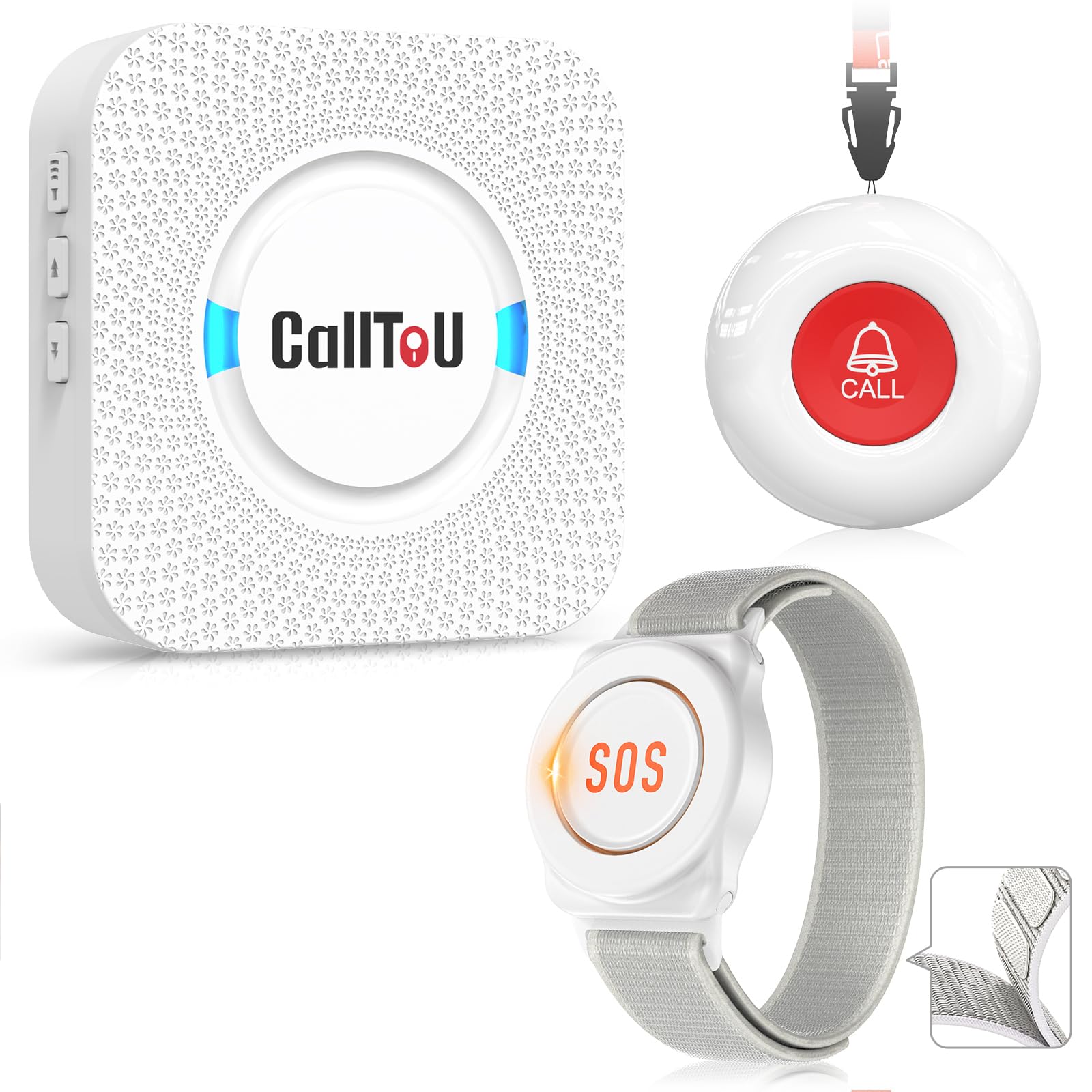
A simple wrist button that puts help one press away, for the caregiver and the senior alike.
You get daytime confidence without wiring anything to the bed. The kit includes a round call button and a watch-style button, so your parent can wear one on the wrist and keep the other in the bathroom. Press either one, the receiver chimes, and whoever is on duty comes running.
Range is the headline here: 500 feet of open-air reach, which beats the 300-foot limit on most wireless bed pads by a wide margin. The receiver plugs into any outlet and offers 55 different ringing tones with volume from 0 to 110 decibels — loud enough that buyers report hearing it across a large home, or even from a detached garage. Both the button and receiver shrug off water, so a rainy trip outside or a splash in the washroom is no worry.
The thing everyone raves about is how it changes the daily rhythm of care. As owners put it, the wrist button worn day and night means “she simply presses it and I’m right there.” Setup is genuinely plug-and-play, and the wrist design resists accidental presses, which cuts down on false alarms. The lone recurring note is that the wrist button runs large for a woman’s wrist, so it may feel bulky on smaller frames.
What wins families over
- Wearable wrist and round buttons offer flexibility for day or night
- 500-foot range reaches across most homes and into a garage
- 55 ringtones and 110 dB max volume for a seriously loud alert
The trade-offs to know
- Wrist button can feel oversized on a smaller wrist
- Receiver must stay plugged into an outlet
- Requires 3 AAA batteries, though they’re included
The right fit: Families who want a flexible, loud, no-subscription call system that works indoors and out.
Look elsewhere if: You need automatic fall detection — this only alerts when the button is pressed.
2. Nesthao Bed Sensor Alarm
Two floor sensors with the longest reach on this list, built for the caregiver who can’t stay in the room.
This is the strongest choice for a large house where a caregiver needs to be alerted from anywhere on the property. The bundle includes the receiver plus two motion sensors, which you place on the floor in an L-shape to catch feet or a walker the moment your loved one rises.
Volume hits 113 decibels at the top, the loudest setting on this list, and the receiver has four alert modes spanning sound plus flashing light, light only, and pure LED. Buyers describe the alarm as audible throughout a 2,600-square-foot home including the garage, and many run it on the lowest volume setting because even that is plenty. The sensors and receiver can run on batteries or a Micro USB cable, so you aren’t fighting over outlets.
What makes this a life-saver for dementia and Parkinson’s care is that the motion sensor alerts the caregiver rather than disturbing the patient. The factory pairing means setup is just loading batteries and testing the sensing direction. The one mixed note is the self-test start-up: the sensor blinks for 20 seconds before arming, which a few users found confusing at first.
The long-range workhorse: For a caregiver covering multiple rooms or a yard, this 918-foot reach and 113 dB alarm are the strongest safety net here.
The honest catch: Motion sensors catch movement, not weight, so positioning takes some trial and error to avoid missed alerts.
Reach for this if: You oversee a big home and need to hear an alert no matter where you are.
Think twice if: You want a wearable the senior controls themselves, since this is caregiver-directed.
3. Smart Med Alert Necklace
A cellular pendant that connects to a live operator, with automatic fall detection built in.
If your parent lives alone or you want a professional response rather than just a loud noise, this pendant is the answer. It works over AT&T 4G LTE cellular — no smartphone or landline needed — and the SOS button opens two-way voice with a trained operator. Family gets location tracking through GPS, AGPS, Wi-Fi, and LBS, plus geo-fence alerts.
The fall detection is the standout feature: it automatically sends an alert even if the wearer can’t press the button, and you can customize the sensitivity by calling support. The IP67 water-resistant body survives showers, and battery life lasts 3-6 days per charge. You can add up to 5 emergency contacts who are notified automatically.
This is where the honest trade-offs live. The device requires a monthly subscription of for the monitoring service, and the rechargeable touchscreen adds some complexity for older users. Owners mention it saved a mother-in-law three times in three months, but a small number ran into activation delays. The magnetic charger detaches easily if the wearer shifts, so a longer charging cord is worth planning for.
Live help on demand: For a senior living independently, the trained operator and auto fall detection justify the monthly fee.
The real catch: It needs activation by phone and a subscription; plan for a day or two of setup before it’s live.
Who it serves: Solo-living seniors who need a real person to respond, not just a family alarm.
Not for the impatient: The recurring subscription and phone activation are genuine hurdles to budget for.
4. Patient Aid Bed Alarm
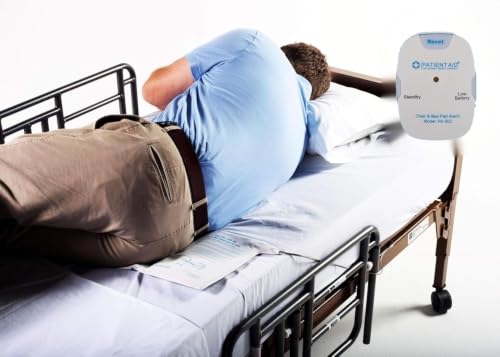
A direct, wired bed pad that alerts the moment weight lifts — no pairing, no subscription.
This is the no-fuss option for a caregiver who sleeps in the next room. The 10″ x 30″ sensor pad slides under the fitted sheet beneath the buttocks or shoulders, and a thin cord runs to the alarm unit. The instant your parent shifts weight to stand, the alarm sounds. It’s a one-time purchase with no monthly fee and no wireless pairing to fumble with.
Sound comes in two modes at two volumes: chime or music at 80 or 90 decibels. A test button previews the alarm for 3 seconds so you know what you’re working with. The slim vinyl pad is tear- and water-resistant, latex-free, and folds flat for travel. For a semi-permanent install, a U-bracket clips it to bed rails, or you can mount it on the wall with the included screws.
This device is famously efficient at its one job, with buyers calling it their third purchase of the same model and praising the one-touch reset. The recurring trade-off is battery life: it runs on a single 9V battery (included), and some users found it died within a week, so unplugging it when not in use stretches the battery. A small number also report the pad being sensitive enough to trigger from a sleeping person’s movement.
The straightforward strengths
- One-touch reset and a 3-second test button keep daily use simple
- 90 dB alarm is audible two rooms away for most buyers
- Wired design means zero pairing or signal drop-out
Where it stumbles
- 9V battery can drain in under a week with heavy use
- No AC adapter, so it’s battery-only
- Pad can false-trigger from repositioning during sleep
The value pick: A dependable wired bed alarm for a stationary caregiver, at a budget-friendly one-time cost.
skip it if: You need to be alerted from another building or room far away, since the cord limits placement.
5. Smart Caregiver Bed Exit Alert
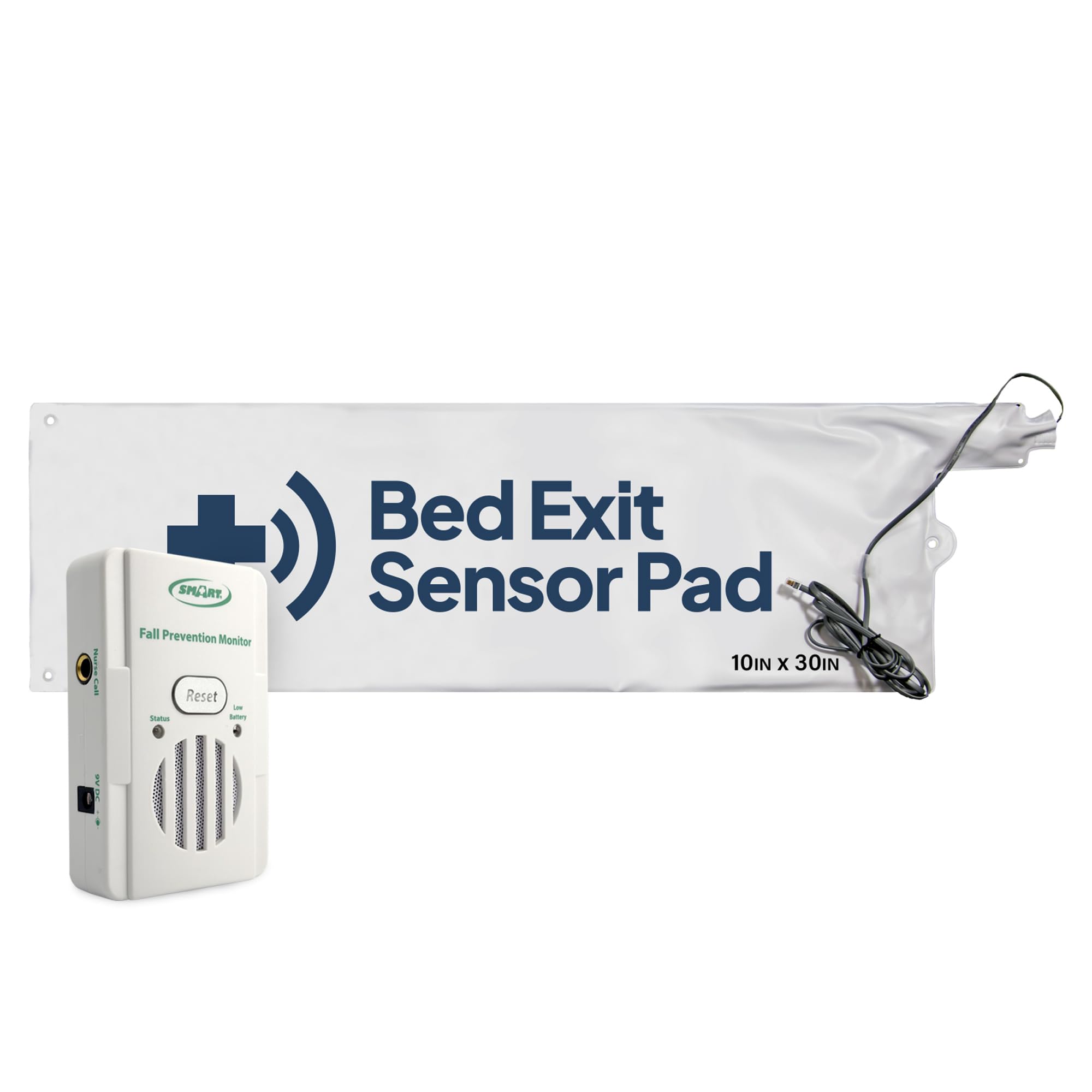
A bare-bones bed pad that trades bells and whistles for a very approachable price.
For a family that just needs to know when Dad is getting out of bed, this is the entry point. The 10″ x 30″ weight-sensing pad sits under the fitted sheet, and the moment your loved one sits up, the monitor sounds. The prominent reset button silences it fast, and a low-battery indicator plus a pad-lost alert mean you’re never guessing whether it’s still armed.
The pad itself is thoughtfully built: soft vinyl with a foam interior, sealed for incontinence protection, and latex-free. Volume is adjustable, and the monitor runs on one 9V battery (not included). Both the monitor and pad carry a 1-year warranty, which is the kind of backing that matters when you’re buying a safety device on a budget.
Where this pick divides opinion is sound level. Buyers who placed the pad 12-15 inches from the bed edge found it caught exits reliably and praised it as the best equipment from a four-week home-care stretch. But others measured the alarm at 80 dB close up and below 60 dB at 12 feet, calling it too quiet for a caregiver in another room. It’s a bedside companion, not a whole-house alarm.
The bedside sentinel: For a modest price you get a reliable pad, a one-button reset, and a year of warranty cover.
The honest limit: Sound drops off fast with distance, so keep the monitor in the same room for best results.
Best for: A caregiver sleeping nearby who needs a simple, affordable heads-up when the patient rises.
Not ideal if: You’re often in a different part of the house — the volume won’t reliably reach you.
6. Bay Alarm Medical SOS GPS

A featherweight GPS pendant for seniors who wander beyond the front door.
If your parent is still active and leaves the house, this device keeps a tether on them. It weighs under 2 ounces, so it disappears on a lanyard or belt clip, and it runs on Verizon’s 4G LTE network independently — no smartphone required. One button connects to a trained operator through the built-in two-way speaker, and the companion app lets you check device status, battery level, and activity.
Battery life is the standout spec: up to 144 hours (about six days) on a single charge, depending on usage. That’s a meaningful edge for a caregiver who doesn’t want to nag about charging every night. Optional fall detection adds another layer, and the water-resistant shell keeps it safe in the rain or a splash.
The trade-off is the same one that comes with monitored systems: a subscription is required, and a separate plan charge covers the fall-detection feature. Most buyers found setup straightforward at around 15 minutes and praised the fast response during a test call. But a smaller number hit battery or connectivity defects, so it’s worth testing the unit thoroughly within the return window.
The freedom keeper: Six-day battery life and a lightweight build make this the easiest GPS pendant to actually wear daily.
The real catch: It demands a monthly service plan, and occasional units arrive with charging or signal faults.
Reach for this if: Your parent is still mobile and spends time away from home where a bed alarm can’t help.
Look elsewhere if: You don’t want any recurring subscription cost on top of the device itself.
7. Lively Mobile2 Medical Alert

A fully waterproof pendant you can wear in the shower, where many falls actually happen.
This one earns its place for the simple reason that bathrooms are high-risk zones. The Lively Mobile2 is fully waterproof — wear it in the shower, at the pool, or in the rain — and it needs no base station or landline, so it works anywhere. One touch of the Urgent Response button connects to certified agents around the clock, and they can dial a loved one or dispatch emergency services.
Fall detection is an add-on to the Lively plan at per month, and it automatically connects to the team even if your parent can’t press the button. Family members get automatic notifications through a companion app, so you’re not the last to know. It clips to a belt, slips in a purse, or hangs from the included lanyard.
Setup takes roughly an hour, and buyers were split on how intuitive it is for older hands — some found it simple with patient support on the line, while others noted it isn’t ideal for someone with dementia or memory issues who may struggle to keep it charged. The quality earns consistent praise, and the confidence when a parent is home alone is the reason most families keep it. A belt clip did break on one unit, so handle it gently.
Shower-safe protection: The waterproof build and auto fall-detection option cover the two most common fall scenarios.
Where it’s tricky: Charging discipline and touch controls can frustrate less tech-comfortable seniors.
Who it fits: Seniors who value staying dry while staying protected, with a family member handling setup.
Who should pass: Anyone with significant memory impairment who can’t reliably keep a device charged.
8. Smart Caregiver Wireless Pad System
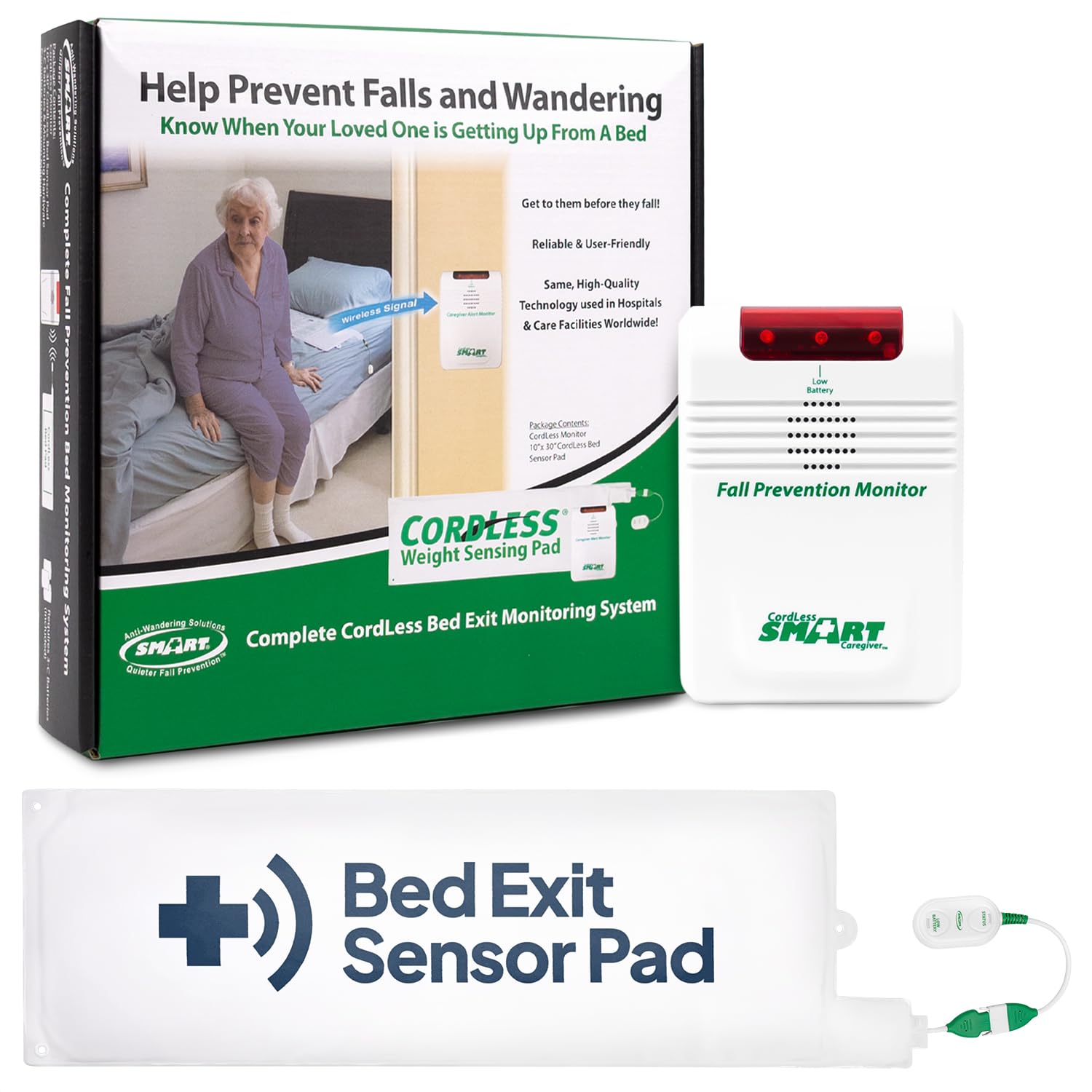
A wireless bed alarm that grows with you, monitoring up to six separate devices.
This is the pick for a caregiver managing more than one risk point. The cordless 10″ x 30″ weight-sensing pad sits under the fitted sheet, and the moment weight lifts, the included monitor sounds an alarm up to 300 feet away. The monitor is portable — carry it with you or mount it on a wall — so you’re not tied to the bedside.
The growth factor is what makes this different. The monitor pairs with up to 6 devices from the same brand, including nurse call buttons, motion sensors, door exit alarms, and other pressure pads. If your situation evolves from “just the bed” to “bed plus door plus bathroom,” you add pieces instead of replacing the system. The pad has a thin foam interior and soft vinyl, and it runs on 3 C batteries that are included.
Reliability is the unanimous chorus here, with families calling it a life-saver for a 96-year-old and praising the doorbell-style chime that’s alerting without being jarring. A slight engineered delay prevents false alarms from simple repositioning. The two honest complaints: no AC adapter is included, so you’re buying batteries over time, and one buyer’s unit failed after nine months and hit slow replacement support.
The system’s strengths
- Monitors up to 6 devices from one portable receiver
- 300-foot range with a pleasant, non-startling chime
- Battery-powered and fully portable, no outlet needed
The honest downsides
- No AC adapter means ongoing battery cost
- Pad positioning needs trial and error to avoid false alarms
The scalable choice: Start with one pad and expand to a full multi-room safety net as needs change.
Consider the cost: Battery replacement adds up, and support can be slow if a unit fails down the road.
9. Lunderg Under Mattress Bed Alarm

The invisible alarm for seniors who refuse to be monitored — nothing to see, nothing to remove.
This is the answer to a very specific and frustrating problem: a parent who pulls off wearables, kicks away bed pads, or refuses anything they can see. The sensor pad goes entirely under the mattress, hidden from sight and feel. No wires at the bedside, no crinkle, nothing to push away. The senior never knows it’s there, and every alert goes wirelessly to a pager you carry.
The patented PreRise technology triggers the alert before your loved one stands, catching the exit before a fall occurs. The system is engineered to minimize false alarms, and it works under mattresses 13 inches or thinner. The portable pager fits in a pocket with a clip, and volume adjusts from loud to a vibration-only mode, so you can be woken from deep sleep without waking the whole house.
Families caring for Alzheimer’s patients describe it as the system that finally works because the patient can’t fight it. The sensor pad lasts 15 months, far outlasting the 45-day-to-12-month lifespan of competing pads. The trade-offs are real: it’s the most expensive pick here, the pad’s internal battery is non-replaceable, and it needs a solid base — a hospital bed’s slats may require a padded mattress pad underneath.
The refusal-proof option: For stubborn or dementia patients, the invisible under-mattress design is the only system that actually stays in place.
The premium price: The 15-month pad life and vibration pager justify the cost, but the non-replaceable battery is a future expense.
Choose this when: Your loved one resists every visible monitor, and you need alerts quiet enough not to disrupt the household.
Reconsider if: You’re on a tight budget or your mattress exceeds 13 inches thick.
Understanding the Specs
Range (Feet)
This is how far the sensor’s signal travels to the receiver in an open area. A 300-foot range covers a typical single-floor home, while a 500-918-foot range reaches across a larger house, into a garage, or out to a yard. If your caregiver sleeps in a different wing or building, pick a longer range so the alert actually arrives.
Volume (Decibels)
Decibels measure how loud the alarm sounds. Conversation sits around 60 dB, an alarm clock around 80 dB, and a chainsaw near 110 dB. For fall alerts, you want at least 90 dB if the caregiver is in the next room, and 110-113 dB if they might be across the house or outside. A 3 dB difference is actually a noticeable jump in loudness.
FAQ
How does a bed alarm detect a fall before it happens?
What is the difference between a motion sensor and a bed pad?
Will a GPS pendant work without a smartphone?
Can a fall detection device be worn in the shower?
How long do the batteries last on these devices?
Do I need a monthly subscription for a bed alarm?
What is the best device for a dementia patient who removes wearables?
How loud should the alarm be to hear it from another room?
Can one monitor track multiple sensors or pads?
Is fall detection the same as a manual call button?
Final Thoughts: The Verdict
Across the board, the best anti-fall device for elderly family member is the CallToU Caregiver Pager because it offers genuine flexibility with a wearable wrist button, a 500-foot range, and an ear-catching 110 dB volume — all without a subscription. If your parent lives alone and you want a live operator to respond, grab the Smart Med Alert Necklace with its automatic fall detection. And for a dementia patient who fights every visible monitor, the Lunderg Under Mattress Alarm is the one to reach for.
How We Picked
We do not accept paid placement. Every pick is matched to a real buyer and a real use-case; we do not hands-on test units.
Sources & Methodology
Specifications: manufacturer listings and product documentation. Review insights: verified customer reviews, as of August 2026. Pricing: not shown on this page (it changes often); check the current price via the retailer link.
As an Amazon Associate, Gadgets Feed earns from qualifying purchases. This does not affect which products we feature.