
Nothing kills a movie night faster than a ceiling light or an afternoon sunbeam turning your projected image into a washed-out, silvery mess. An anti-glare projector screen is the dedicated fix—it uses optical coatings, lenticular ridges, or Fresnel layers to absorb stray room light while preserving the brightness and contrast the projector actually sends your way.
I’m Min — the co-founder and writer behind Gadgets Feed. I spend hours digging into material gain ratings, ambient light rejection percentages, and real-world user assembly feedback so this guide gives you a clear comparison of the best fixed-frame options available.
After sorting through nine serious contenders, this guide breaks down the critical specs, real assembly gotchas, and performance trade-offs you will need to pick the correct best anti-glare projector screen for your room’s lighting and your projector’s throw distance.
How To Choose The Best Anti-Glare Projector Screen
Every anti-glare screen works by prioritizing one direction of light. Before you pick a model, you need to understand how gain, material finish, and your specific projector throw type interact. The wrong combination will give you hotspotting or a dim image that defeats the purpose of the upgrade.
Gain Rating and Viewing Angle
Gain tells you how much light the screen reflects compared to a pure white reference surface. A 1.0 gain screen reflects exactly as much as a standard white wall. Higher gain (1.3 to 1.8) makes the image brighter but narrows the sweet spot where colors stay accurate—viewers sitting far to the side will see a dimmer, washed-out picture. Lower gain (0.6 to 0.8) sacrifices peak brightness in exchange for much wider viewing angles and superior black-level retention in rooms with ambient light. If you have a bright 3000+ lumen projector and a wide seating layout, lean toward a sub-1.0 gain ALR screen. For a darker, dedicated theater room with a dimmer projector, a 1.2 to 1.5 gain screen works better.
Ambient Light Rejection and Material Type
Two main optical structures dominate the market. Fresnel screens use concentric half-circle grooves that capture light from a projector positioned below or above the screen, making them almost exclusive to ultra-short-throw or long-throw projectors in specific mounting positions. Lenticular (sawtooth) screens use vertical ridges that block overhead ceiling light while reflecting projector light from below, which suits standard long-throw projectors mounted on the ceiling. The percentage of ambient light rejection (65% to 92%) is a marketing figure you should verify with real user photos—it varies heavily with the angle and brightness of the offending light source. Always check whether the material is designed for ceiling-light rejection (CLR) or side-light rejection, as some screens only block one direction.
Compatibility with Your Projector’s Throw Ratio
This is the step most buyers get wrong. A screen optimized for UST projectors uses a micro-optical structure that only reflects light coming from a very low angle—mount a standard long-throw projector to that same screen and the image will look extremely dim and uneven. Conversely, a standard ALR screen might not deliver the full contrast benefit with a UST projector because the light enters from a much steeper angle. Check the manufacturer’s compatibility list for every screen before purchasing. If you have a standard throw projector, prioritize screens labeled for long-throw or standard-throw use. For laser TV or UST models, look for explicit “UST” or “Fresnel” labeling.
Quick Comparison
On smaller screens, swipe sideways to see the full table.
| Model | Category | Best For | Key Spec | Amazon |
|---|---|---|---|---|
| NexiGo 100-Inch Fresnel | Premium | Bright rooms with UST laser projectors | 1.5 Peak Gain / 85% ALR | Amazon |
| Valerion 100-Inch Fresnel (Long-Throw) | Premium | Daylight rooms with long-throw projectors | 1.8 Gain / 85% Overhead & Side ALR | Amazon |
| Elite Screens 120-Inch ER120DHD3 | Mid-Range | Standard-throw projectors in semi-lit rooms | 1.2 Gain / 90° Viewing Angle | Amazon |
| Elite Screens Aeon CineGrey 3D | Mid-Range | Family rooms with standard throw projectors | 1.2 Gain / 65% ALR | Amazon |
| NothingProjector NothPJ Classic | Mid-Range | UST projectors in daylight conditions | 85% ALR / 160° Viewing Angle | Amazon |
| Paris Rhône 100-Inch | Mid-Range | UST projectors with strong ambient light | 0.6 Gain / 92% CLR | Amazon |
| Valerion 120-Inch Fixed Frame | Mid-Range | General purpose with long or short throw | 1.3 Gain / 170° Viewing Angle | Amazon |
| WonTeam 100-Inch ALR Grey | Budget | UST projectors on a tight budget | 0.8 Gain / 160° Viewing Angle | Amazon |
| Digital Image Screen Paint | Budget | DIY custom-sized anti-glare surfaces | 1.5 Gain / Matte Finish | Amazon |
In‑Depth Reviews
1. NexiGo 100-Inch Fresnel

This Fresnel screen is purpose-built for laser TV and UST projectors, using an 8-layer optical stack and concentric circular lens structure to redirect projector light toward the audience while burying overhead and ceiling ambient light. The 1.5 peak gain provides a noticeable brightness boost that makes daytime viewing genuinely watchable without blackout curtains.
The 0.35-inch ultra-narrow bezel reduces visual distraction, and the rollable design makes the 26.46-pound unit manageable for a two-person install. Real users consistently report that assembly takes an afternoon and requires careful handling to avoid creasing the rolled material, but the resulting image contrast is a dramatic step up from standard matte white screens.
Be aware that the Fresnel structure is directional—it works best when the projector is positioned exactly within the designed angle range. The strong chemical odor reported from the new screen surface can take several days to dissipate, so air the room out after mounting. Overall, this screen delivers the best mix of premium ALR performance for UST projectors at a competitive price point.
Why it’s great
- Exceptional brightness and contrast in lit rooms.
- Ultra-narrow bezel gives a borderless, TV-like appearance.
- Strong customer support from NexiGo resolves common issues.
Good to know
- Assembly is finicky and requires careful handling to avoid creases.
- Strong initial chemical smell that needs ventilation.
- Designed only for UST projectors—not for standard or long-throw.
2. Valerion 100-Inch Fresnel (Long-Throw)
Valerion engineers this screen specifically for long-throw projectors, which sets it apart from most Fresnel models that target UST. The 1.8 gain is among the highest in this comparison, meaning it works well with projectors in the 2000-3000 lumen range to maintain a punchy image even with bias lighting or uncovered windows in the same room.
The scratch-resistant and easy-to-clean surface addresses a real durability concern, especially for rooms near kitchens or high-traffic areas. The 90-degree viewing angle is narrow—a direct consequence of the high gain—so seating should be centralized. Users praise the wrinkle-free tension from the spring system and the modular aluminum frame that transports in a rollable package.
This screen is incompatible with UST projectors, so verify your throw ratio before purchase. Assembly is reported as difficult, with manual instructions that are sparse enough to require a YouTube tutorial. The 33-pound weight also demands a second person for hanging. For long-throw owners who prioritize anti-glare performance over wide seating, this is a top-tier choice.
Why it’s great
- Highest gain in class at 1.8 for bright-room performance.
- Rejects both overhead and side ambient light.
- Scratch-resistant, easy-to-clean surface for durability.
Good to know
- 90-degree viewing angle requires central seating.
- Assembly is difficult with poor instructions.
- Incompatible with ultra-short-throw projectors.
3. Elite Screens 120-Inch ER120DHD3
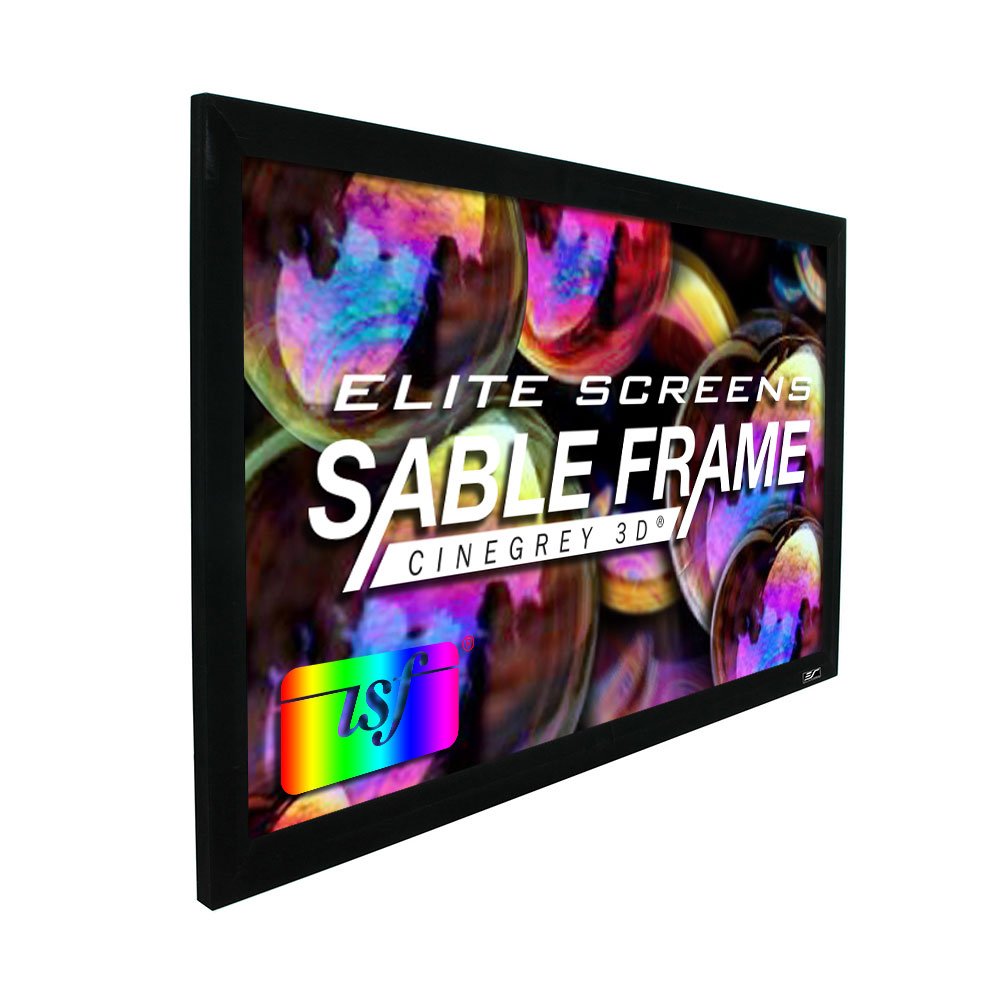
The 120-inch CineGrey 3D material from Elite Screens uses angular-reflective ALR technology to reject ambient light from above and the sides while maintaining a 1.2 gain that works well with standard-throw projectors rated around 2200-3400 lumens. The black velvet-finished frame absorbs projector overshoot and improves perceived contrast, giving the screen a refined theater look.
Build quality is excellent—the anodized aluminum frame uses metal grommets and a spring-tension system that delivers a wrinkle-free surface. The ISF certification for color accuracy means the material does not introduce a color cast, which matters when you calibrate your projector. Multiple real user reviews confirm that this screen outperforms cheaper alternatives like Silver Ticket in side-by-side comparisons, especially when rejecting overhead ceiling light.
A small but vocal group of users reports severe hotspotting when using a high-lumen projector (like the Epson 5050UB) at medium throw distances. The CineGrey 3D material seems to amplify a localized bright spot with certain projector lens designs. Keep the packaging intact during the first week of use in case you need to return it. For setups that avoid this issue, the screen is truly excellent.
Why it’s great
- Outstanding ALR performance for standard-throw projectors.
- ISF certified for accurate color reproduction.
- Black velvet frame absorbs light spill and boosts contrast.
Good to know
- Potential for hotspotting with certain high-lumen projectors.
- Assembly is tedious, requiring careful edge insertion.
- 90-degree viewing angle limits off-axis seating.
4. Elite Screens Aeon CineGrey 3D

The Aeon CineGrey 3D is essentially the same CLR/ALR material as the Elite Screens ER series but packaged in a frameless Edge Free design that makes the screen look like a giant floating flat panel TV. The 65% ambient light rejection ratio is lower than some competitors, but the 1.2 gain and 90-degree viewing angle maintain solid performance in family rooms and conference spaces with standard-throw projectors.
The 6-piece split aluminum frame is lightweight at 18.58 pounds for the 100-inch size, and the velcro tensioning system simplifies the surface mount. Users consistently call the customer support excellent, and the 2-year warranty backs the purchase. The screen supports both active and passive 3D, a bonus for enthusiasts who still own 3D-capable projectors.
Quality control reports are mixed—some users received screen material with permanent circular swirl marks from improper unrolling, and Elite Screens customer service was unresponsive in those specific cases. The instructions are also notoriously basic. If you get a flawless unit, it performs well, but the risk of receiving a defective roll is higher than with more premium Fresnel models.
Why it’s great
- Gorgeous Edge Free frameless design blends into the wall.
- Lightweight aluminum frame with easy velcro tensioning.
- Supports active and passive 3D projection.
Good to know
- May ship with permanent swirl marks from manufacturing.
- Customer service can be unresponsive for defect claims.
- 65% ALR is lower than many Fresnel competitors.
5. NothingProjector NothPJ Classic

This UST-specific ALR screen uses a PET Crystal substrate with a classic lenticular sawtooth structure to reject 85% of ceiling ambient light. The black light-absorbing core prevents light bleed-through, and the 160-degree viewing angle is notably wider than most ALR options, making it suitable for wider seating layouts common in living rooms.
The 10mm ultra-thin frame and spring-loaded wall brackets simplify mounting, and the PVC-free construction is a genuine environmental plus. Multiple users with over 30 years of AV installation experience praise the aluminum frame quality as the best they have seen at this price bracket. The image remains virtually identical with the lights on or off, a testament to the CLR efficiency.
The assembly instructions are a mixed-language photocopied mess that lacks clarity, and the bracket alignment process is finicky. Some users also report that the included assembly gloves are low quality. For UST owners who want strong ambient light rejection without paying the Fresnel premium, this screen offers the best value-to-performance ratio.
Why it’s great
- Excellent 85% ambient light rejection with wide 160° viewing angle.
- Superb aluminum frame build quality for the price.
- Eco-friendly PVC-free PET substrate.
Good to know
- Included assembly instructions are poorly organized.
- Bracket alignment requires patience and precision.
- Not suitable for standard-throw or long-throw projectors.
6. Paris Rhône 100-Inch

Paris Rhône markets this as a 92% ceiling light rejecting screen, and the 0.6 gain grey material is explicitly engineered for ultra-short-throw projectors. The low gain means you need a projector that can deliver at least 2000-2500 lumens to maintain a watchable image, but the payoff is extremely deep black levels and minimal washout even with overhead lights on.
The 160-degree wide viewing angle works well for family rooms where viewers sit spread across a sofa, and the 0.4-inch ultra-slim aluminum frame gives the screen a modern, low-profile look. Users report that colors and black depth improve dramatically over a white wall or standard white screen, and the ALR material reduces projector light splash on the surrounding wall for a cleaner theater feel.
Assembly requires careful two-person coordination to lock the spring-tension system evenly—installing one side before the other makes the final lock difficult. A few quality control complaints mention crushed micro-sawtooth lines in the screen material upon arrival. Check the screen surface carefully before starting assembly to avoid wasting time on a defective unit.
Why it’s great
- Very high ceiling light rejection reduces washout effectively.
- Excellent black levels and color saturation for a UST screen.
- Wide 160° viewing angle suits open seating layouts.
Good to know
- Low 0.6 gain requires a bright projector.
- Screen material may arrive with crushed optical lines.
- Spring tension system requires even force from both sides.
7. Valerion 120-Inch Fixed Frame
Unlike the Valerion Fresnel models, this fixed frame screen uses a matte white surface with 1.3 gain and a very generous 170-degree half-gain viewing angle. It is compatible with long-throw, short-throw, and even ultra-short-throw projectors, making it the most versatile option in the lineup for anyone who might change projector types later.
The high-quality PVC material delivers vibrant colors and sharp details without the hotspotting issues that plague higher-gain ALR screens. The frame is modular and easy to assemble, with a velvet surface that absorbs excess light. Multiple users confirm that switching from a pull-down screen to this fixed frame model is a night-and-day improvement in both flatness and image quality.
This screen does not have the deep ambient light rejection of dedicated ALR models—it is a bright white surface that works best in darker rooms or with projectors that have high lumen output. The 30-pound weight requires two people for wall mounting, and the included instructions are minimal enough that a YouTube video is recommended for assembly.
Why it’s great
- Works with all projector throw types including UST.
- Wide 170° viewing angle for large seating areas.
- Wrinkle-free tensioned surface with velvet frame.
Good to know
- No active ambient light rejection like dedicated ALR screens.
- Heavy frame requires two-person installation.
- Assembly instructions are basic.
8. WonTeam 100-Inch ALR Grey
This budget-priced Fresnel ALR screen uses a micro-toothed 3D structure with a grey surface to absorb ambient light from above while directing projector light toward the audience. The 0.8 gain suits UST projectors that need help with black levels in rooms that cannot be fully darkened.
The dual-frame aluminum alloy construction with an adaptive spring tension system maintains screen flatness, and the 1cm ultra-narrow bezel gives a clean look. Users consistently report that the picture quality is on par with name-brand screens costing significantly more, making this a compelling choice for budget-conscious buyers who still want effective ambient light rejection.
Long-term durability is a concern—one user reported sagging after only five months of use, and the ambient light rejection was described as less effective than higher-tier Fresnel options. The assembly video on the product page is helpful, but the spring attachment process can be tricky. If you need a temporary or secondary setup, this screen delivers strong performance for the investment.
Why it’s great
- Effective Fresnel ALR at a very accessible price point.
- Ultra-narrow bezel for a clean appearance.
- Good daytime image quality for UST projectors.
Good to know
- Potential for sagging and loss of tension over time.
- ALR performance does not match premium Fresnel screens.
- Spring attachment during assembly can be challenging.
9. Digital Image Screen Paint (Gallon)

If you have an irregular wall size or want to avoid the cost and hassle of a framed screen, this water-based paint from Digital Image Screen Paint turns any smooth surface into a 1.5 gain matte projection surface. One gallon covers 160 square feet with two coats, enough for a 10 by 16 foot image. The matte finish reduces hot-spotting and provides a wide viewing angle that painted walls typically lack.
The washable and repairable finish means you can touch up scratches or marks without repainting the entire surface. The formula is low-VOC and non-toxic, making it safe for home classrooms and bedrooms. Users report that the paint eliminates the hot spot they saw with standard white primer, and the contrast improvement is noticeable even with mid-range projectors.
The paint also has a slight gloss that may not suit everyone, and any wall imperfections like sheetrock seams or texture will be visible in pure white scenes. Proper surface preparation with a skim coat is essential for a good result.
Why it’s great
- Custom-sized screen for any wall at a low cost per square foot.
- Low-VOC, non-toxic, and washable finish.
- Eliminates hot-spotting from standard white paint.
Good to know
- Does not actively reject ambient light like ALR screens.
- Wall imperfections and seams are visible through the paint.
- Requires good surface prep and multiple coats for dark walls.
FAQ
Can I use a standard-throw projector on a UST-specific ALR screen?
What does a gain of 0.6 mean for my image brightness?
Will a Fresnel ALR screen work if I mount my projector on the ceiling?
Final Thoughts: The Verdict
For most users, the best anti-glare projector screen winner is the NexiGo 100-Inch Fresnel because its 1.5 gain and 85% ambient light rejection deliver cinema-grade contrast in real-world living rooms with moderate light control. If you need a wider 170-degree viewing angle for a multi-row seating arrangement, grab the Valerion 120-Inch Fixed Frame. And for a custom-sized DIY surface on a tight budget, nothing beats the Digital Image Screen Paint.