
Finding a red, picked-on spot on a chicken’s back is a gut-wrenching sight. That one small wound can escalate into cannibalism within your flock within hours. The right spray doesn’t just mask the smell; it actively deters pecking, heals damaged skin, and restores the pecking order without pulling a bird from the coop.
I’m Min — the co-founder and writer behind Gadgets Feed. I’ve spent dozens of hours analyzing formulation chemistry, reading hundreds of verified keeper reports, and comparing active ingredients like tea tree oil, calendula, and hypochlorous technology across the top sprays on the market for this guide.
The core mission here is simple: find a formula that stops the picking and accelerates healing, without harming your birds or requiring an egg withdrawal period. This is my analysis of the best anti-pecking spray for chickens you can buy right now.
How To Choose The Best Anti-Pecking Spray For Chickens
An anti-pecking spray needs to do two things simultaneously: deter the aggressive peckers with an unpleasant taste or smell, and provide a healing environment for the victim’s damaged skin. A product that only forms a physical barrier but lacks antimicrobial properties leaves the wound vulnerable to infection. Understanding the base technology is the first step.
Active Ingredients: Repellent vs. Therapeutic
Look for sprays that combine a bitterant or strong essential oil (like tea tree, calendula, or hemp seed oil) with a wound-cleaning agent. Tea tree oil is a classic repellent due to its strong scent and mild antiseptic properties, but some birds may still peck through it. Hypochlorous acid-based sprays (like those from Vetericyn) are odorless and non-irritating, making them ideal for sensitive wounds, but they rely on the spray’s taste, not a strong smell, to deter pecking. A hybrid approach — a therapeutic base with a strong botanical deterrent — is often the most effective.
Viscosity and Sprayer Reliability
A watery spray may run off too quickly, while a thick gel or hydrogel stays on the feather shafts longer, giving the repellent more time to work. However, thick formulas often clog spray nozzles. Reviews consistently cite sprayer failures as a top frustration. A spray with a safety lock and a clear, clog-resistant nozzle design is a practical necessity, not a luxury.
Safety Profile: Withdrawal Periods and Toxicity
If you keep laying hens, zero egg withdrawal period is essential. Avoid products with harsh chemical antiseptics like iodine or chlorhexidine unless you are willing to discard eggs. The best sprays use food-grade or FDA-approved non-toxic ingredients that are safe if ingested during preening. Always check for a “no withdrawal period” statement in the product description or technical specifications.
Quick Comparison
On smaller screens, swipe sideways to see the full table.
| Model | Category | Best For | Key Spec | Amazon |
|---|---|---|---|---|
| Vetericyn Plus Poultry Care Spray | Premium | Deep wound healing & odorless care | Hypochlorous acid, 8 oz | Amazon |
| Chicken’s Choice Wound Care Spray | Mid-Range | Bumblefoot & vent prolapse care | ProH Technology, 8 oz | Amazon |
| Pick No More (2 Pack) | Mid-Range | Stopping active feather picking | Grape flavor, calendula, 2×4 oz | Amazon |
| Durvet No Pick’n | Value | Budget-friendly hydrogel spray | Tea tree & hemp seed oil, 8 oz | Amazon |
| No Pick Spray (NatraPet) | Mid-Range | Herbal mist with aloe vera | Aloe vera base, 8 oz | Amazon |
| Vetrx Poultry Aid | Value | Respiratory & general poultry aid | 100% natural, 2 fl oz | Amazon |
| Safe-Guard Aquasol Dewormer | Premium | Parasite elimination (not pecking) | Fenbendazole, 3 mL concentrate | Amazon |
In‑Depth Reviews
1. Vetericyn Plus Poultry Care Spray

Vetericyn Plus is the gold standard for wound care in poultry, using hypochlorous acid (HOCl) technology to clean and heal without stinging or smelling. Unlike essential oil sprays that rely on strong odors to deter pecking, this formula is completely odorless and non-irritating, making it the top choice for sensitive wounds on the vent, comb, or around the eyes. The 8-ounce bottle delivers a fine mist that dries quickly, and the sprayer mechanism is consistently reliable.
Multiple keepers report that it resolved severe feather loss on roosters’ necks and healed large back wounds without any secondary infections. The key differentiator here is the non-toxic, no-rinse formulation — you can spray it directly on an open wound, and it will not burn the bird. The brand is also veterinarian recommended, which adds a layer of trust when dealing with serious injuries like bumblefoot or vent prolapse.
The only catch is that HOCl has no strong repellent taste or smell, so it relies on the bird’s natural instinct to avoid the sprayed area. For heavy-duty anti-pecking scenarios, you may need to combine it with a physical deterrent (like a saddle). However, for pure wound healing and skin repair, nothing else on this list matches its safety profile and effectiveness. It is the premium choice for keepers who prioritize therapeutic healing over repellent strength.
Why it’s great
- Odorless and non-stinging, ideal for sensitive areas
- Veterinarian recommended with zero egg withdrawal
- Proven to heal large open wounds without infection
Good to know
- Lacks a strong bitter taste to actively deter peckers
- Premium price point compared to essential oil sprays
2. Chicken’s Choice Wound Care for Chickens & Birds
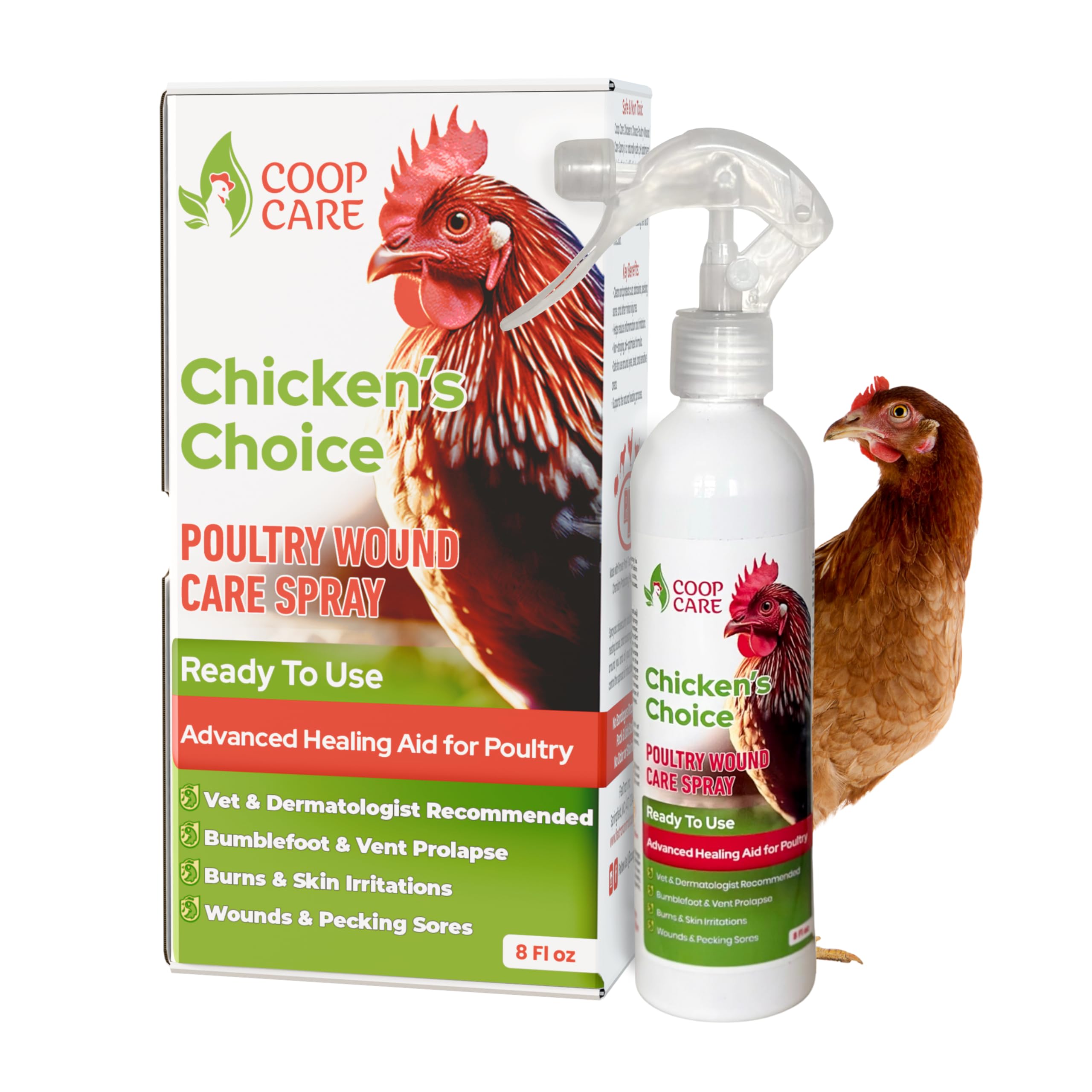
Chicken’s Choice uses proprietary ProH Technology — a low-pH, antibiotic-free formula designed to cleanse wounds and promote cellular healing. This spray is specifically marketed for bumblefoot, vent prolapse, burns, and pecking sores, making it a versatile addition to any first-aid kit. The 8-ounce ready-to-use spray is biodegradable and hypoallergenic, and it requires no rinsing after application.
Keeper reports highlight its effectiveness on cracked feet and minor cuts, with users noting that it protected wounds from bugs and supported natural healing. The formula does have a noticeable fragrance, which some users found too strong, but that same fragrance likely helps deter peckers. The sprayer delivers a consistent stream, though a few users mentioned the scent lingers longer than unscented alternatives.
Where this product excels is in its dual-action approach: it cleanses at the cellular level while providing a light physical barrier. The “no bandages required” claim holds up well for small wounds, as the spray dries to a protective film. For keepers dealing with foot problems or vent prolapse, this is a more affordable alternative to Vetericyn without sacrificing therapeutic quality.
Why it’s great
- ProH Technology promotes healing at the cellular level
- Works for bumblefoot, vent prolapse, and burns
- Biodegradable, hypoallergenic, and no rinsing needed
Good to know
- Strong fragrance may be off-putting to some keepers
- Not a strong taste deterrent for active peckers
3. Pick No More (2 Pack of 4-Ounce)

Pick No More is a grape-flavored, antibacterial spray formulated with tea tree oil and calendula that targets the root cause of feather picking: the taste. The grape flavoring makes it palatable if licked but the tea tree oil and calendula combination creates an unpleasant experience for the pecker, teaching them to avoid the treated bird. The 2-pack of 4-ounce bottles gives you a generous supply for multiple birds or extended use.
Reviews confirm that this product is highly effective at stopping gang-beating scenarios in both chickens and turkeys. One keeper reported that a hen’s bleeding tail feathers healed within four days of once-daily application. The texture is noticeably sticky, which helps the spray adhere to feather shafts and remain effective longer between applications. The sticky texture, however, also means the bottle can be messy to handle, and the smell has been described as strong enough to be smelled through a Ziploc bag.
This is the best choice if your primary goal is to change the behavior of the peckers rather than just treat the wound. The antibacterial properties also prevent infection at the peck site. The only downsides are the sticky residue and the potent smell, which some keepers with smell aversions may want a helper to apply.
Why it’s great
- Grape flavor deters peckers while heals wounds
- Calendula and tea tree oil provide antibacterial protection
- 2-pack offers great value for multi-bird flocks
Good to know
- Very sticky texture and strong, lingering smell
- May require daily reapplication for best results
4. Durvet No Pick’n for Chickens
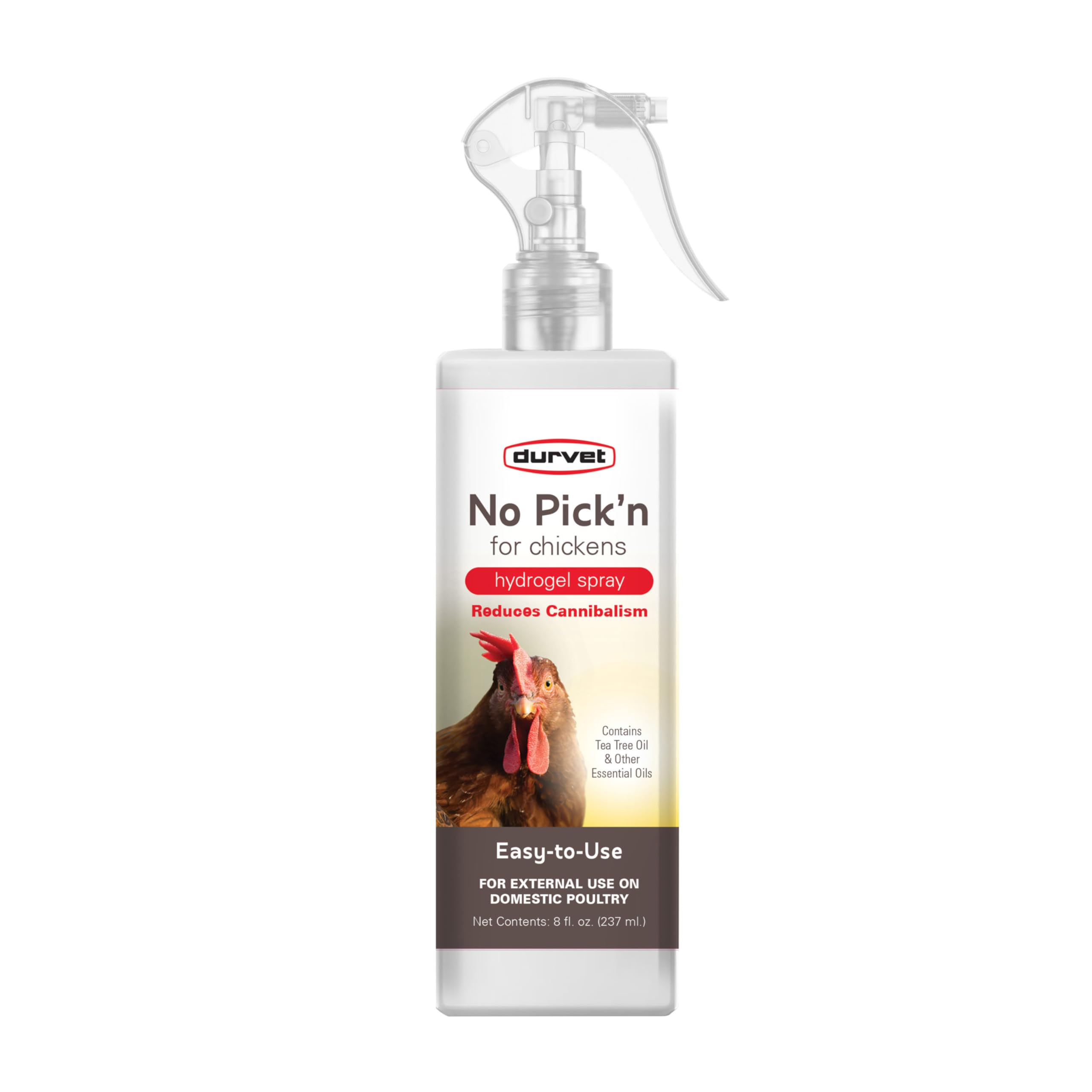
Durvet’s No Pick’n is a hydrogel spray that combines tea tree oil, hemp seed oil, and other essential oils into a thick, clingy formula designed to stay put on feather shafts. The hydrogel base is the star here — it is thick enough to resist running off the bird, giving the repellent oils maximum contact time. Users consistently report that it successfully regrew tail feathers on roosters and stopped broody hens from plucking themselves.
The formula is easy to apply and causes no distress to the chicken once sprayed. The hardest part, as one keeper noted, is catching the bird. The scent is herbal and not overpowering, described by one reviewer as “smelling like a spa.” However, the spray bottle pump is a known weak point — multiple reviews mention the stem breaking or the sprayer head failing after a few uses. Several keepers had to transfer the contents to a different bottle to continue using it.
At an entry-level price point, this is a solid budget option for keepers who need a reliable hydrogel repellent. The formulation itself is effective; the packaging is where cost savings become apparent. If you are handy with transferring liquids, this is an excellent value. Otherwise, be prepared to have a backup spray bottle ready.
Why it’s great
- Hydrogel base clings to feathers for long-lasting effect
- Tea tree and hemp seed oils effectively stop picking
- Pleasant herbal scent minimizes keeper discomfort
Good to know
- Spray bottle pump is prone to breaking after limited use
- May require transferring to a sturdier container
5. No Pick Spray (NatraPet) 8 Oz

NatraPet’s No Pick Spray is an herbal mist with aloe vera that is marketed as a topical leave-on treatment for picking and plucking. The aloe vera base provides a soothing, cooling effect on irritated skin, which can help calm the bird while the herbal ingredients work to deter pecking. The 8-ounce bottle is a standard size that will last through several treatment cycles for a small flock.
User experiences are split: some report that it stopped a bird from plucking an open wound completely, while others found it ineffective even after two weeks of three-times-daily application. The inconsistency suggests that the repellent strength of this formula is milder than tea-tree-based alternatives, making it more suitable for light picking or maintenance rather than aggressive cannibalism scenarios. The spray nozzle is generally reliable, and the mist is fine enough to cover feather shafts without soaking the bird.
This product occupies a niche space: it is best for keepers who want a gentle, aloe-based spray for mild feather plucking or as a follow-up treatment after the picking has stopped. For heavy-duty scenarios, you will likely need a stronger repellent. The price point is mid-range, but the mixed reviews mean it is not a guaranteed solution for every flock.
Why it’s great
- Aloe vera base soothes and cools irritated skin
- Fine mist application covers feather shafts evenly
- Good option for mild or maintenance-level picking
Good to know
- Inconsistent results for aggressive pecking behavior
- Milder formula requires frequent reapplication
6. Vetrx Poultry Aid, 2 fl.oz

While it is not specifically marketed as an anti-pecking spray, its primary function is respiratory health (fighting colds, roup, and scaly legs). However, some keepers use it topically on wounds due to its natural antimicrobial properties. The 2-fluid-ounce bottle is small but highly concentrated.
Reviews highlight its effectiveness for respiratory issues — sneezing, congestion, and wheezing — with noticeable improvement within days when added to water or applied under the wings. One keeper even used it successfully on a cat with severe upper respiratory problems. For pecking wounds, it may offer mild antiseptic benefits but lacks the strong repellent taste or sticky barrier that more specialized sprays provide. It is not a substitute for a dedicated wound spray.
This product earns its spot as a supplementary item. It is not the ideal primary anti-pecking spray, but it is a valuable addition to the medicine cabinet for treating the underlying health issues (like respiratory distress) that can cause a bird to become a target of pecking in the first place. Use it as a flock health tonic, not a wound barrier.
Why it’s great
- Proven effective for respiratory issues in chickens
- 100% natural and safe for all poultry species
- Can be used as a water additive or topical treatment
Good to know
- Not a dedicated anti-pecking spray or wound barrier
- Small 2 oz bottle is not ideal for multiple birds
7. Safe-Guard Aquasol Dewormer for Chickens, 3 mL
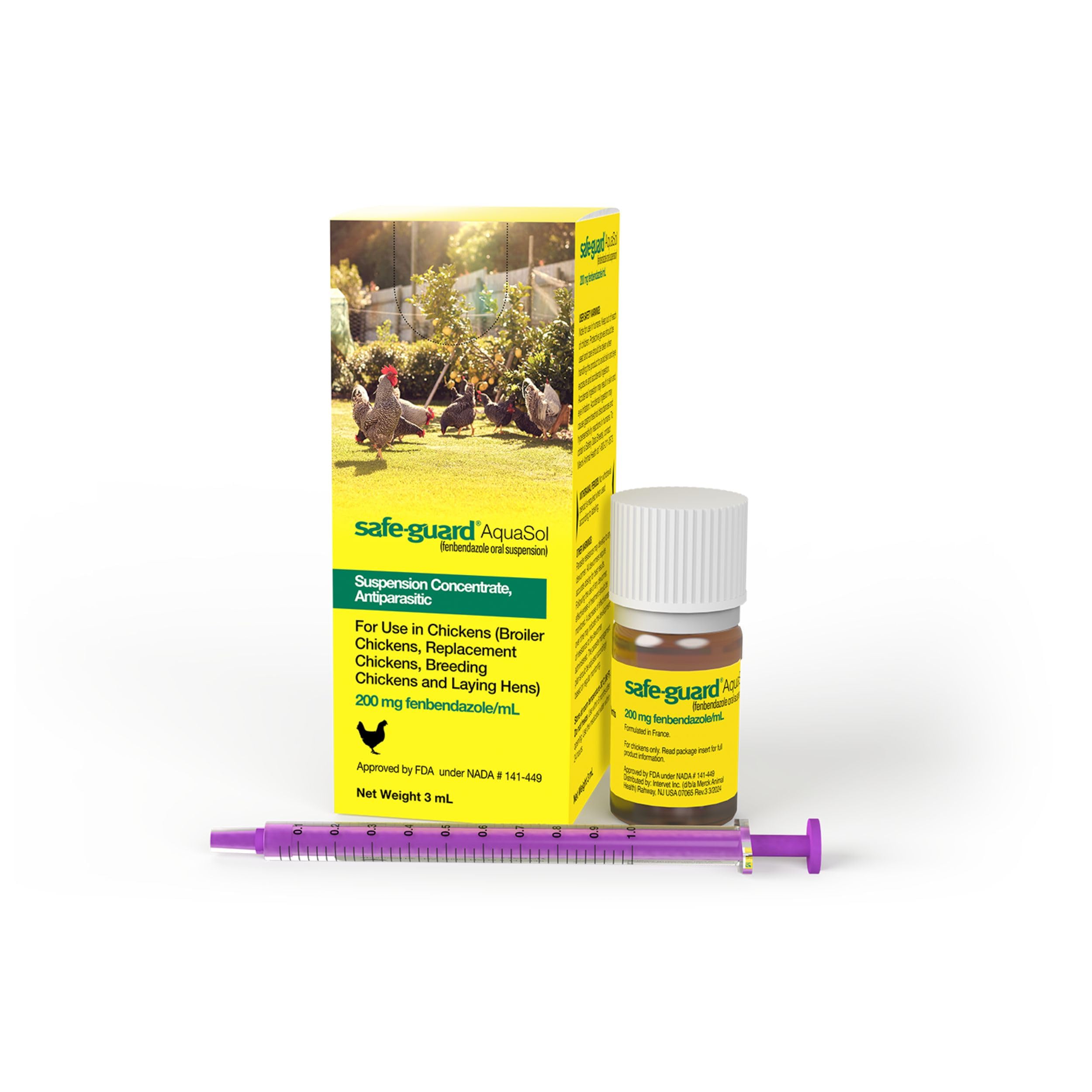
Safe-Guard Aquasol is a dewormer, not a spray. It uses fenbendazole (a benzimidazole anthelmintic) to treat internal parasites in chickens. While it does not stop pecking directly, it addresses one of the most common root causes of feather picking: parasite-induced stress and skin irritation. A bird with worms is often weaker, more irritable, and more likely to be pecked by others. This 3-milliliter concentrate treats up to 6 gallons of water, making it economical for a large flock.
Reviews are overwhelmingly positive, with keepers noting that the product dissolves easily in water, birds drink it readily, and it effectively eliminates parasites with a short 5-day treatment cycle. There is zero withdrawal period for eggs or meat, which is critical for backyard layers. The dosing guide is clear, and the results — cleaner vents, improved feather condition — are visible within the treatment period.
This is the ultimate root-cause solution. If your flock has a chronic pecking problem that persists despite using topical sprays, parasites may be the underlying issue. Combine Safe-Guard Aquasol with a good wound spray (like Vetericyn or Pick No More) for a comprehensive two-pronged approach: treat the internal cause while healing the external wounds. It is a premium-priced product for premium results.
Why it’s great
- Addresses parasite-related pecking at the source
- Zero egg or meat withdrawal period
- Easy water-based treatment suitable for large flocks
Good to know
- Not a topical anti-pecking spray — only treats internal parasites
- Higher price point for a 3 mL concentrate bottle
FAQ
Can I use human wound care products on my chickens?
How often should I reapply an anti-pecking spray?
Will the spray prevent all pecking immediately?
Final Thoughts: The Verdict
For most users, the best anti-pecking spray for chickens winner is the Vetericyn Plus Poultry Care Spray because it combines veterinarian-recommended hypochlorous acid technology with zero egg withdrawal and proven wound healing. If you want a strong taste deterrent to stop active peckers, grab the Pick No More. And for a budget-friendly hydrogel option that works well on a budget, nothing beats the Durvet No Pick’n.