
Our readers keep the lights on and my morning glass full of iced black tea. As an Amazon Associate, I earn from qualifying purchases.
Specs are compiled from manufacturer listings and verified buyer reviews and can change over time — please confirm the key details on the product page before buying.
Staring at a screen for eight hours usually ends with tired, dry eyes and a dull headache that follows you home. A good pair of anti-reflective computer glasses cuts the harsh glare bouncing off your monitor and filters the blue light that keeps your brain buzzing, so you can actually finish a workday without rubbing your eyes. This guide breaks down six real pairs, from daily-driver readers to specialized tinted lenses, and tells you exactly who each one suits best.
I’m Min — the founder and writer behind Gadgets Feed. This guide is built by comparing the manufacturers’ published specifications and the patterns across verified customer reviews, so you get each pick’s real strengths and trade-offs instead of marketing spin.
If you spend long hours in front of a monitor, finding the right fit matters more than any coating spec. This guide to the best anti-reflective computer glasses helps you match lenses to your workday and screen habits.
Our Picks at a Glance

How To Choose The Best Anti-Reflective Computer Glasses
Before you buy, decide what job the glasses actually do for you. Do you need a mild magnification boost for reading documents, or just a clear lens that filters blue light and cuts glare while you code or game? The answer decides whether you shop for a “reader” or a plain non-prescription pair.
Pick the Right Magnification
If your eyes strain when reading close-up text, a low diopter strength (like 0.50 to 1.50) helps focus without feeling like strong drugstore readers. If you look at a monitor that sits a few feet away, many prefer no magnification at all — just the blue-light filter and anti-reflective coating — because the lens stays optically neutral.
Match the Lens Tint to Your Work
Nearly clear lenses keep colors true for design work and video calls, while tinted or FL-41 lenses block a wider spectrum of harsh light for people sensitive to fluorescent or LED glare. Anyone doing color-accurate work should lean toward clear lenses so the screen doesn’t look yellow or pink.
Check the Frame and Fit for All-Day Wear
Weight and fit decide whether you forget the glasses are on your face or feel them digging in by noon. Look for lightweight frame materials and flexible hinges, but remember that a great lens in an uncomfortable frame still fails the all-day test.
Quick Comparison
| Model | Best For | Magnification | Lens Coating | Frame Style | Amazon |
|---|---|---|---|---|---|
| Prospek Blue Light Blockers★ Best Overall | All-day computer use with optional reading strength | None or 0.50–3.00 diopters | 8 advanced coatings, anti-glare | Ultra-light ergonomic frame | Amazon |
| Readerest Blue Light ReadersBest for Reading | Reading small print with spring-loaded comfort | 1.75 magnification | Anti-reflective, scratch-resistant | Bold modern frame | Amazon |
| ZanyLen Blue Light Glasses | Large head sizes and strong blue-light blocking | None | Anti-reflective, anti-glare, UV400 | TR90 metal frame | Amazon |
| Bloomoak Anti-Glare Glasses | Budget-friendly screen comfort | None | Blue-light filtering | Unisex lightweight frame | Amazon |
| HOKETOP Blue Light Glasses | Office work and daily screen use | None | UV400, anti-glare | TR90 and metal construction | Amazon |
| FL-41 Photochromic Glasses | Light sensitivity and migraine relief | None | FL-41 tint, anti-reflective, UV | Ultra-light men’s frame | Amazon |
In‑Depth Reviews
1. Prospek Blue Light Blocking Glasses
Our pick — 4.5★ from 550+ verified ratings; the strongest balance of quality and price.
The all-day desk companion that filters screen glare without washing out your display’s true colors.
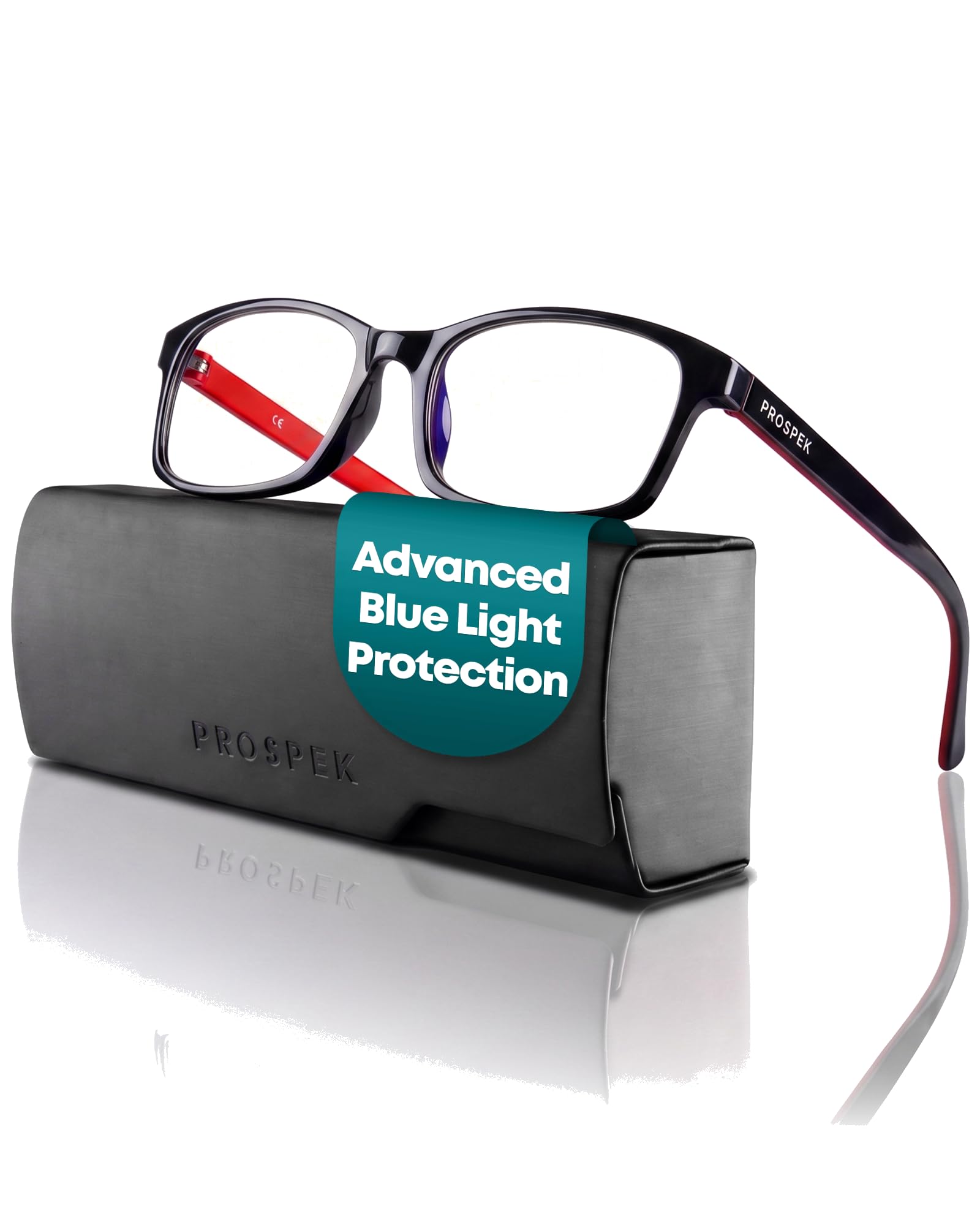
Prospek earns the top spot because it solves the two complaints that dominate screen-glasses chatter: glare and color distortion. The lenses filter blue light in the 400-455nm range using high optical-grade glass with 8 advanced coatings, including anti-glare and smudge resistance. That 8-layer approach shows up in the nearly clear lens, so your video calls and design work stay true to life instead of looking like you’re wearing amber sunglasses.
The frame comes in four looks — classic Red and Black, timeless Tortoise, modern Blue and sleek Obsidian — all on an ultra-light ergonomic design built for long stretches at the office, home, or gaming setup. What really sets this pair apart is the choice of magnification: you can buy it with no strength as everyday computer glasses, or in 0.50 to 3.00 diopters for people who want a reading boost. Since monitor distance differs from book distance, buyers report the lenses focus farther out than standard reading glasses, which makes text at screen distance noticeably crisper. If you wear readers all day, the magnification range here is the flexibility you actually want.
Comfort and quality are the things owners rave about most, with the lens clarity getting steady credit for making reading easier. There is one recurring note about value: a few buyers find the price high for what feels like a standard pair of readers, and one even found a sturdier-feeling set elsewhere at half the cost. But those voices sit against a larger crowd that calls the build comfortable, durable, and worth sticking with — many come back for a second pair. The hard storage case and microfiber cleaning cloth make it gift-ready right from the start.
Why It Wins Desk Duty
- 8 advanced coatings cut glare and resist smudges
- Four frame colors suit office and casual looks
- Magnification from 0 to 3.00 diopters
- Light frame stays comfortable all day
What Gives You Pause
- Some buyers expected sturdier lens build for the price
- Occasional fit notes on very large heads
Reach for this if: you want one flexible pair that covers both screen-work and close-up reading, with clear optics and a light frame you can wear from morning standup to late gaming session.
Look elsewhere if: you’re on a tight budget and just need a basic non-prescription screen filter, since the extra coatings and style options carry a premium.
2. Readerest Blue Light Blocking Glasses
Spring-loaded readers that end the pinched-nose feeling after hours of small print and doomscrolling.
Readerest is the pair to grab if your screen time is really reading time — documents, ebooks, and fine print on a monitor. It comes fixed at 1.75 magnification, which means it’s built specifically for people whose close-up vision needs a boost. The anti-reflective coating on the lenses helps cut reflections from screens and overhead lighting, so you’re squinting less at small text and getting clearer letter shapes instead of glare washed over them.
The highlight here is genuinely the frame. Spring-loaded hinges expand to fit a wide range of face shapes without that tight, pinching feeling, and owners mention the fit holds steady even for people who usually struggle to keep readers on. The glasses also pull double duty outside, with UV lens protection that lets you move from an indoor monitor to an outdoor errand without swapping pairs. Scratch-resistant coating on the lenses means they survive life in a bag or glove compartment rather than demanding display-case treatment.
Owners praise the quality and the glare reduction in nearly equal measure, and there’s a loyal streak here — a fair number of people are on their third pair from the same seller. The honest caveat is fit: while most find the size right, a recurring complaint says some pairs slide down the nose and fall off. If you have a narrow or very flat nose bridge, that’s the trade-off to weigh against the otherwise comfortable spring hinge design.
Strong readers, softer grip: the 1.75 magnification and spring hinges make this an easy all-day pick for print-heavy work, but the occasional slipping report means a quick nose-bridge check before you commit.
Grab these if: your work is mostly reading on screens and you want a fixed-strength reader that won’t pinch and looks sharp doing it.
Skip if: you don’t need magnification, since the 1.75 strength can blur anything farther away than arm’s length.
3. ZanyLen Blue Light Blocking Glasses
The solidly-built option that finally fits big heads without squeezing or sliding.
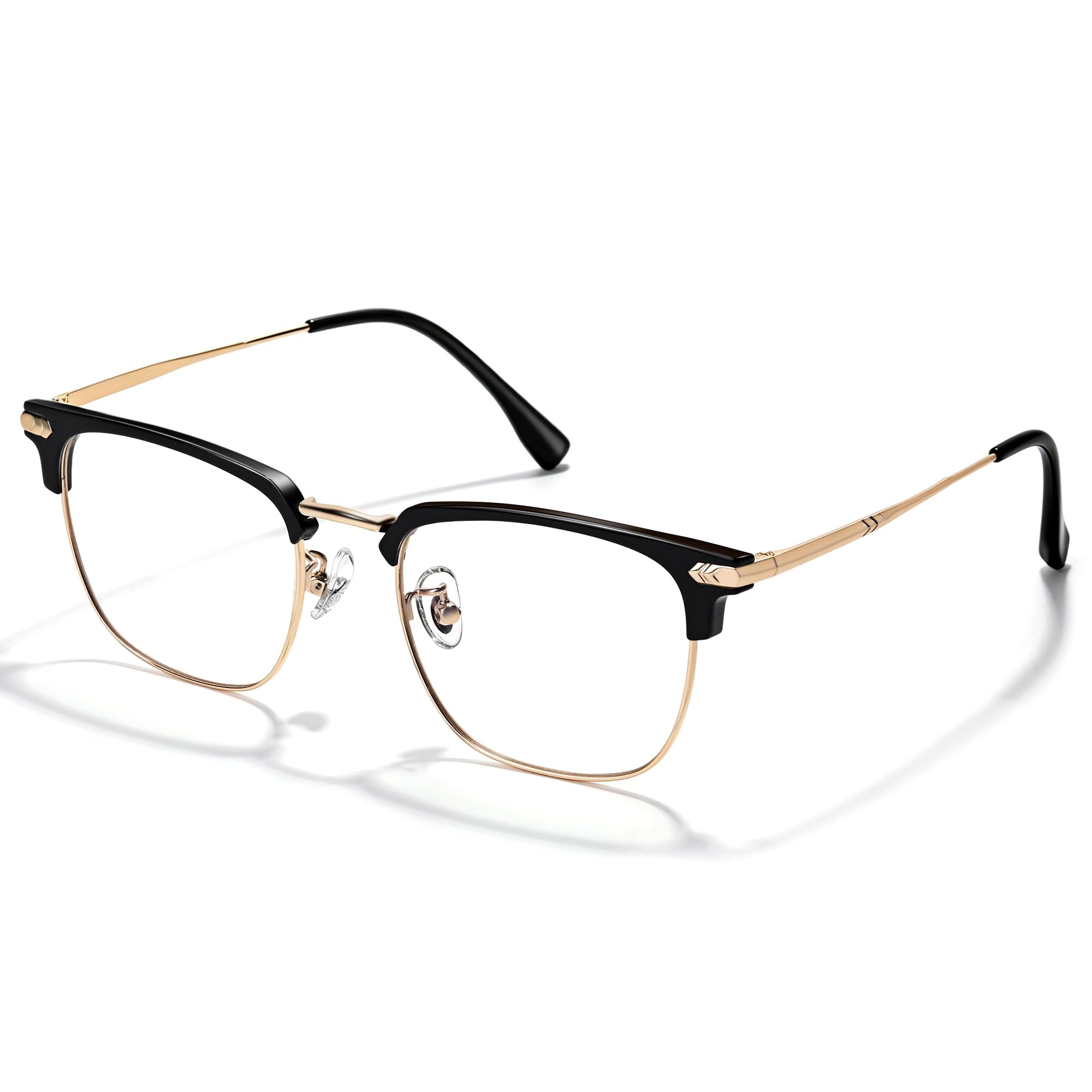
ZanyLen makes a strong case if you’ve ever felt like screen glasses were designed for someone with a smaller face. Buyers with large heads specifically call out the generous fit, and the TR90 frame material keeps it light while the metal construction adds durability. This is a non-magnified pair, so it’s purely a blue-light and glare filter for people who need clear distance vision with eye protection.
What separates ZanyLen on paper is the layered lens treatment. The anti-reflective coating goes on both sides of the lens to cut reflections from the front and back surfaces, which reduces the amount of light bouncing around and can enhance contrast in certain scenes. On top of that you get anti-glare coating to cut haze and a UV400 layer that blocks both UVA and UVB. For people whose eyes feel fried after a screen-heavy shift, Blue-light blocking earns the loudest praise, with screen headaches vanishing during work..
Style earns consistent credit too, with owners calling the look seriously good and fashionable while noting the quality holds up. The honest fit note is the nose pads: a few people find they dig in and leave a red mark, and spreading them wider doesn’t fully solve it. If you’re sensitive to pressure on your nose, that’s the one thing to test early. For big-headed users who want real blue-light blocking without sacrificing looks, this is the pair that keeps coming up in conversation.
Built For Screen-Heavy Days
- Anti-reflective coating on both lens sides
- UV400 UVA and UVB protection included
- TR90 and metal frame suits large heads
- Strong blue-light blocking feedback
The Fit Catch
- Nose pads can dig in and leave marks
- Not ideal for cycling, where wind hits the eyes
Best for: big-headed users and anyone who wants maximal blue-light blocking with a frame sturdy enough for daily desk life.
Think twice if: your nose bridge is easily irritated, since the pads are the one consistent complaint.
4. Bloomoak 99% Anti-Glare Glasses

A genuinely affordable screen filter that makes monitor fatigue disappear without emptying your wallet.
Bloomoak is the entry-level pair that doesn’t feel entry-level where it counts. The specially formulated lenses block up to 99% of blue light wavelengths, which is the kind of number you usually have to pay more for. For people who sit at a computer all day and end with tired, dry eyes, the feedback is consistent: Wearing these reduces screen-light fatigue.. One buyer’s experience sums up the appeal — Eye tiredness from computer light drops noticeably when worn..
The frame is a straightforward unisex design that reads as well-constructed and fashionable, and there’s a loyal following for the brand itself, with repeat buyers owning multiple models. Given the budget-friendly positioning, the value pitch is simple: you get real blue-light filtering and a decent frame without the premium price tag of fancier brands. It’s the kind of pair you can keep at your desk, throw in a bag, and not stress about — which is exactly the right use case for a screen filter.
The durability story is where this one splits. While many call the construction solid, there is the occasional report of a frame breaking within days of arrival, with one owner describing the pair snapping at two points after just two days of use. That’s the risk of a budget-tier price — you’re trading a margin of build quality. If you’re gentle with your glasses and want maximum blue-light protection for minimum spend, Bloomoak delivers; if you need something that survives being tossed around, spend a little more.
Real filter, fair price: the 99% blue-light blocking does the heavy lifting here, and the recurring durability complaint is the reason it sits below sturdier picks.
Choose this if: you want a low-cost daily screen filter for a home or office desk and you handle your glasses with care.
Pass if: you need a rugged pair for travel or rough daily use, where the budget build shows its limits.
5. HOKETOP Blue Light Glasses
The modern, featherlight frame that looks good enough to wear in public long after work ends.
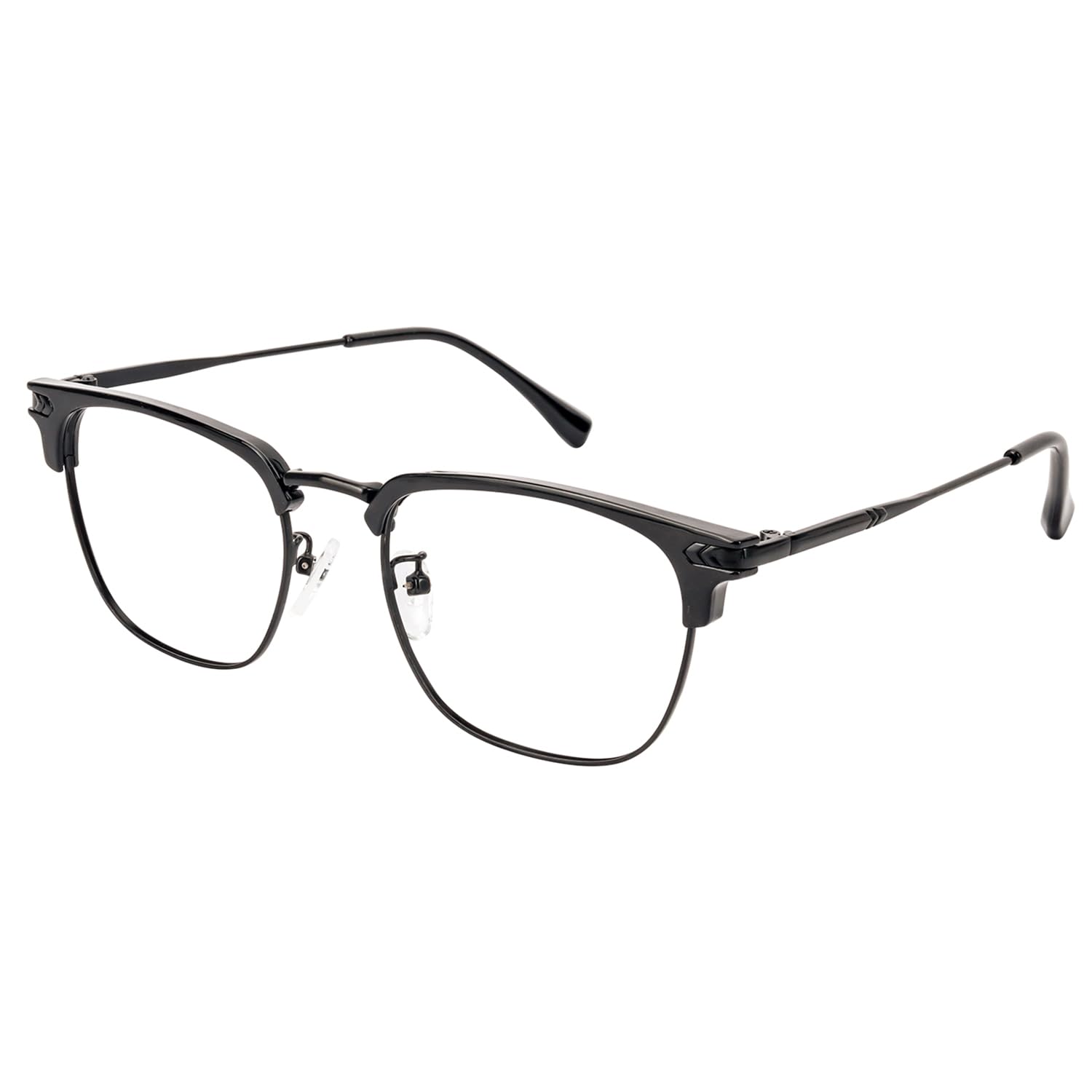
HOKETOP earns its spot for the style-and-comfort combo that most screen glasses miss. The frame uses TR90 (a flexible, lightweight nylon material) and metal, so you can wear them for several hours straight without discomfort — buyers specifically report this — and still feel confident stepping out in public because they look clean, not like tech gear. The blue-light blocking tint is thin, so they stay suitable for daytime wear, unlike glasses that make you look like you’re in a photo shoot filter.
The lenses block blue light, filter UV400 (ultraviolet rays up to 400 nanometers), and reduce glare, so your eyes feel less strained during long screen sessions. Customers note the precision assembly delivers crisp vision without distorting screen colors, and fit earns the most consistent praise — owners note the frames sit well and look sharp and modern. The design is versatile enough for office calls and casual enough for gaming sessions, matching the brand’s claim of being a cut above ordinary blue-light frames.
Durability is the honest split. A good share of buyers call the glasses sturdy and high quality, but there’s a louder-than-usual minority describing frames that broke within a week of ownership. That mixed durability feedback is the main reason this pair isn’t ranked higher despite the strong comfort and style scores. If you want a fashionable, lightweight frame for long desk days and you treat it with reasonable care, HOKETOP delivers a lot of polish for the money.
What Stands Out
- Featherlight TR90 and metal frame
- UV400 and anti-glare lens protection
- Modern design that suits any outfit
- Comfortable for multi-hour wear
Where It’s Shaky
- Mixed durability reports, including early breakage
- A few buyers question the tint strength
Ideal for: style-conscious desk workers who want a light, modern frame they can wear from morning meetings to evening gaming without any pinching.
Not for: buyers who need a hard-wearing pair that shrugs off drops, since durability is the recurring uncertainty.
6. FL-41 Photochromic Migraine Glasses
A specialized tint for eyes that flinch at fluorescent lights and glare-heavy screens.
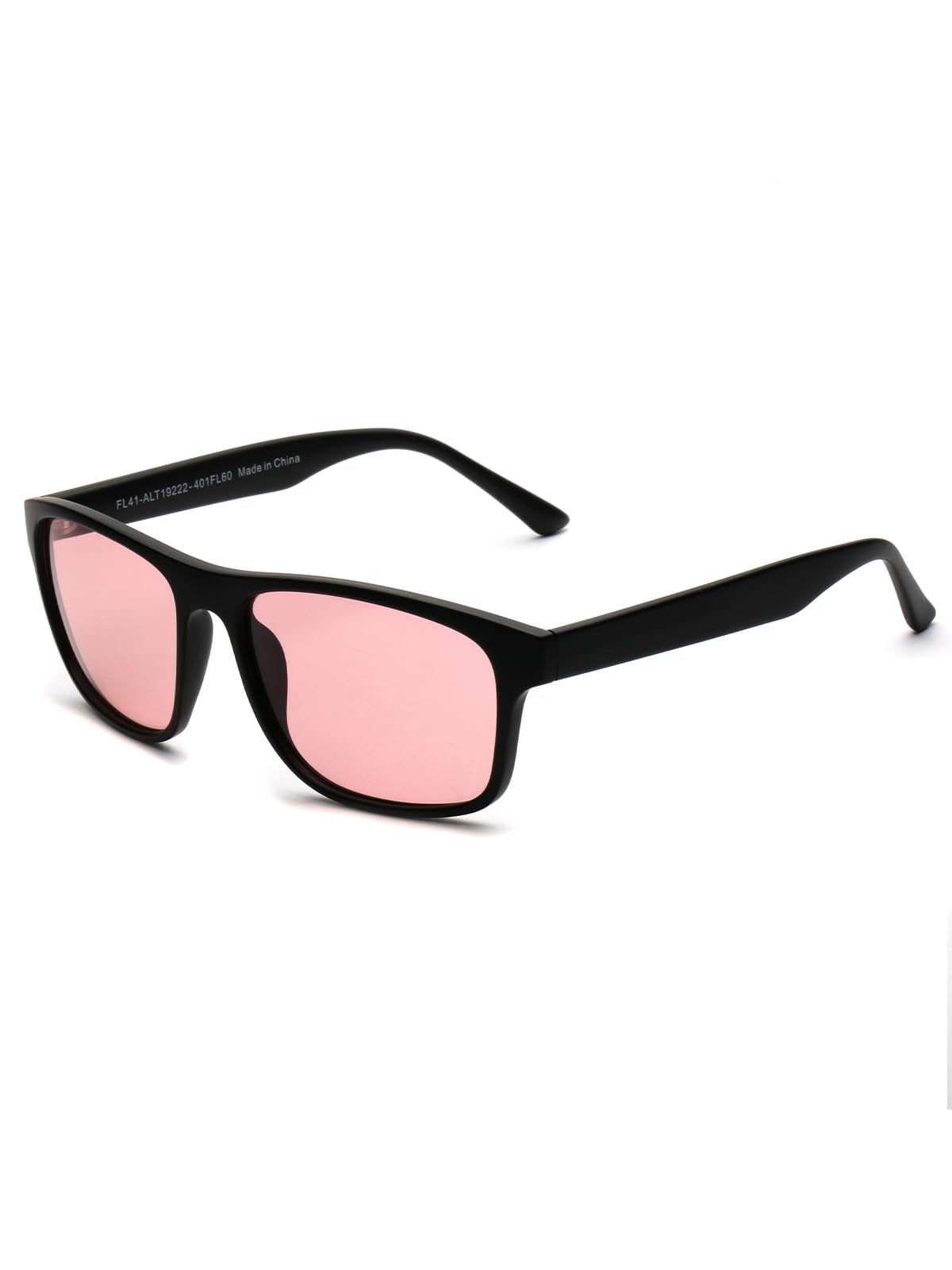
These glasses are a different animal from the rest of the list. Instead of a near-clear lens, they use an FL-41 tint — a rose-colored filter designed for people with light sensitivity — and claim to block up to 99% of harmful blue light in the 380nm-500nm range. The anti-reflective coating is included, but the real purpose here is reducing discomfort from harsh lighting, whether that’s fluorescent office tubes or bright LED screens.
The feedback from people who need this specific protection is genuinely positive. Users with light sensitivity from optic neuritis report noticeable relief., and Partners of migraine sufferers note headaches ease once the glasses are worn.. The brand frames the design around sensory comfort, with an ultra-light frame that keeps pressure low across different face shapes. It comes with a hard case, and at this price point the specialized FL-41 filtering is a lot of value for anyone who’s been recommended this lens type by a doctor.
There are two honest caveats. First, some reviewers point out the lens is not actually photochromic — testing showed no color change in different light, even though the listing says it should darken outdoors. Second, the tint shifts how screens look, with one buyer finding it altered colors noticeably enough to be unsuitable for TV or computer work. For everyday reading or general light sensitivity, the hue is fine; for color-critical work, it’s the wrong tool. Think of these as a relief pair for sensitive eyes, not a universal screen companion.
Specialized relief, with asterisks: the FL-41 tint clearly helps light-sensitive users, but the questioned photochromic behavior and screen color shift mean it’s a targeted tool, not an all-rounder.
Worth it if: fluorescent lights, bright screens, or glare trigger actual headaches, and you want a dedicated tinted lens for relief.
Reconsider if: you need true color accuracy or expect the advertised photochromic darkening, since both come up short in owner reports.
Understanding the Specs
Blue Light Wavelength Blocking
Blue light sits on a spectrum, and the numbers tell you what range is being filtered. A pair blocking 400-455nm targets the high-energy end most linked to eye strain, while others claim up to 99% of the whole harmful band. In plain terms, A higher-percentage block typically means more relief for sensitive eyes., but it can also add a stronger tint to the lens.
Magnification and Diopters
Diopter strength is the reading-power number you see on drugstore readers, usually from 0.50 up to 3.00. Higher numbers magnify more, which helps close-up reading but blurs anything at true distance. For computer work, many people skip magnification entirely so the lens stays neutral at monitor distance, or pick a low strength like 0.50 to 1.50 for a slight boost.
Anti-Reflective vs Anti-Glare Coating
These two terms get used interchangeably, but they do slightly different jobs. Anti-reflective coating reduces the light bouncing off the front and back surfaces of the lens, which cuts annoying reflections and can improve contrast. Anti-glare coating more broadly reduces haze and scattered light in poor conditions. Many quality pairs stack both, plus a scratch-resistant layer.
FL-41 and Photochromic Lenses
FL-41 is a specific rose-colored lens tint developed to filter the light wavelengths that can trigger migraines and light sensitivity, often found in fluorescent lighting. Photochromic lenses darken automatically in brighter light. If a pair is both, it should offer relief indoors and sun protection outdoors — but it’s worth confirming the photochromic function actually works before relying on it.
FAQ
Do anti-reflective computer glasses actually reduce eye strain?
What is the difference between blue light blocking and anti-reflective glasses?
Will anti-reflective computer glasses work if I don’t need reading glasses?
Why do some blue light glasses have a yellow or amber tint?
What does UV400 protection mean on computer glasses?
Can I get reading magnification and blue light blocking in the same pair?
What is an FL-41 tint and who needs it?
How long do anti-reflective computer glasses last?
Will these glasses fit someone with a large head?
Do I need photochromic lenses for computer use?
Final Thoughts: The Verdict
If you want one dependable pick, the best anti-reflective computer glasses are the Prospek Blue Light Blockers because the 8-layer coating and flexible magnification range cover both screen work and close-up reading in one comfortable frame. If you need fixed reading strength with spring-hinge comfort, the Readerest is the reliable pick. And for anyone whose eyes flinch at bright office lights, the FL-41 tinted pair offers the specialized relief that standard clear lenses simply can’t match.
How We Picked
We do not accept paid placement. Every pick is matched to a real buyer and a real use-case; we do not hands-on test units.
Sources & Methodology
Specifications: manufacturer listings and product documentation. Review insights: verified customer reviews, as of September 2026. Pricing: not shown on this page (it changes often); check the current price via the retailer link.
As an Amazon Associate, Gadgets Feed earns from qualifying purchases. This does not affect which products we feature.