
Our readers keep the lights on and my morning glass full of iced black tea. As an Amazon Associate, I earn from qualifying purchases.
Specs are compiled from manufacturer listings and verified buyer reviews and can change over time — please confirm the key details on the product page before buying.
Harsh glare bouncing off your lenses can turn a good screen session into a headache and make night driving feel like a guessing game. An anti-reflective coating (a thin layer that stops light from reflecting off the lens) cuts that glare, so your eyes stay comfortable longer. But not all anti-reflective eyeglasses are created equal — some soften computer glare beautifully yet wash out when you hit the road after dark.
I’m Min — the founder and writer behind Gadgets Feed. This guide is built by comparing the manufacturers’ published specifications and the patterns across verified customer reviews, so you get each pick’s real strengths and trade-offs instead of marketing spin.
For screen work, night driving, or all-day reading, this breakdown of the top anti reflective eyeglasses helps you find the pair that fits your actual daily scenario.
Quick Picks
- Sightline Readers Progressive Multifocus — Multifocal Master
- Prospek Blue Light Glasses — Best Overall
- B BLOOMOAK Clear Night Driving Glasses — Drivers Choice
- Eagle Eyes Ultralite Digitec Computer Reading — NASA Tech
How To Choose The Best Anti Reflective Eyeglasses
Anti-reflective eyeglasses tackle a simple problem: light that bounces off the lens and into your eye. The coating (often called AR coating) lets more light pass through the lens, so you see a clearer, sharper image with less distracting glare. Here are the three things that matter most when picking a pair.
Lens Tint vs. Clear AR Coating
Not every pair with anti-reflective properties looks the same. Some lenses are clear with just an AR coating, suitable for driving or all-day wear. Others add a visible amber or yellow tint to boost blue-light blocking. If color accuracy matters for design work, stick with a clear AR lens. If you want maximum blue light reduction during late-night screen sessions, an amber tint works better — but it will shift everything you see toward orange.
Magnification Type: Single Vision vs. Progressive
If you only need reading glasses for close-up work, a standard single-vision reader is fine. But if you read a book, glance at a monitor, and look at something across the room, a progressive (multifocal) lens gives you three magnification levels in one eyeglass without a visible line. The trade-off is that progressives need more vertical lens height so the focal zones are wide enough to use comfortably.
Fit, Weight, and Frame Material
You will likely wear these glasses for hours at a time, so comfort is key. Look for a lightweight frame (under 20g is ideal) with spring hinges that flex instead of snap. Silicone gel nose pads help stop the glasses from sliding down your nose. A narrow face might need a smaller frame width, while someone with a wider head should check the total width measurement — typically listed in millimeters on the product specs.
Quick Comparison
| Model | Best For | Lens Type | Weight | Blue Light Blocking | Amazon |
|---|---|---|---|---|---|
| Sightline Readers Progressive | Reading & computer multitasking | Progressive multifocal | Not specified | Anti-reflective only | $34.95Amazon |
| Prospek Blue Light Glasses | Screen work & eye strain relief | Amber-tinted | 17g | 99% all blue light | $39.95Amazon |
| B BLOOMOAK Clear Night Driving | Night driving glare reduction | Clear with AR coating | Lightweight PC | Not specified | $39.98Amazon |
| Eagle Eyes Ultralite Digitec | Computer use & gaming | Clear AR + blue filter | Very lightweight | 53% blue light / 99% UV | $59.95Amazon |
In‑Depth Reviews
1. Sightline Readers Progressive Multifocus Reading Glasses
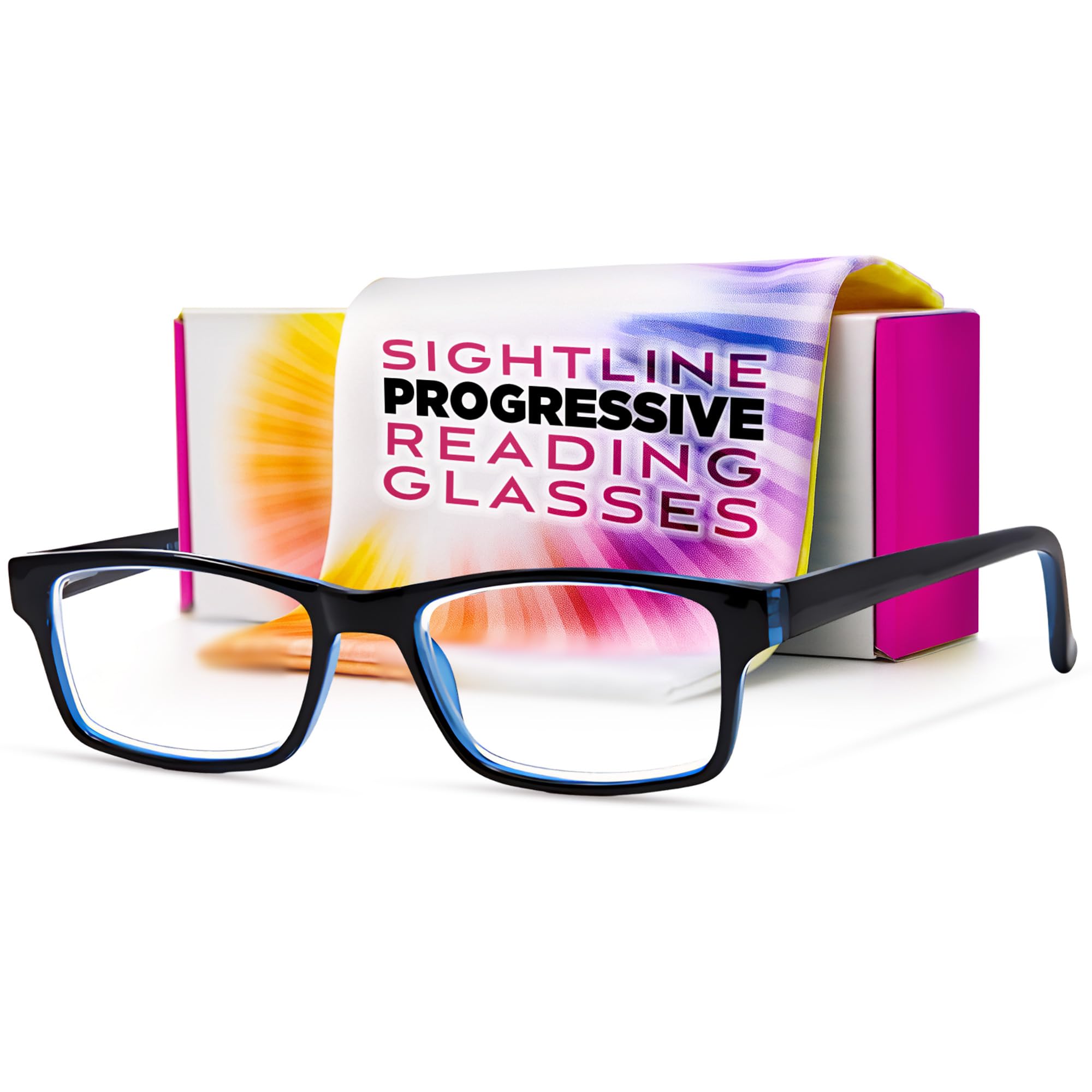
These progressives shift magnification as your gaze moves, eliminating the need to swap glasses between a book and a screen..
Sightline Readers are built around a patented progressive lens that stacks three magnification levels into one smooth pair — +1.00 to +3.00 across the lens range. You get near-vision power at the bottom for reading, intermediate power in the middle for a computer monitor, and a slightly different zone at the top for glancing across the table. The anti-reflective coating helps reduce squinting in bright indoor light, as one longtime buyer noted after two years of daily wear with no scratches.
These frames use spring hinges for durability and come with a drawstring cloth pouch and cleaning cloth. But there is a catch: if you have a narrow face, the “narrow” model (6005) is the right choice, and the progressive zones work best when the lens has enough vertical height. A reviewer with an average-width face found these glasses a bit wide and noted that a skinnier lens makes each focal range feel thinner. Another verified buyer warned that they won’t work well for people with astigmatism.
Why They Earn a Spot
- Three magnification zones in one no-line lens — convenient for reading, computer, and across-the-room glances
- Spring-hinge frames feel solid and durable
- Anti-reflective coating cuts glare after 2+ years of wear, per one owner
Before You Click Buy
- Not a good fit if you have astigmatism, according to several reviews
- Progressive zones feel thin on a narrow lens; a wider frame suits average or wider faces better
Best suited for: anyone who reads, works at a computer, and looks up across the room without wanting to juggle multiple pairs of glasses.
Smart to skip if: you have astigmatism or a very narrow face — the progressive zones may not align with your vision needs.
2. Prospek Blue Light Glasses – Eye Strain Relief, Anti Glare
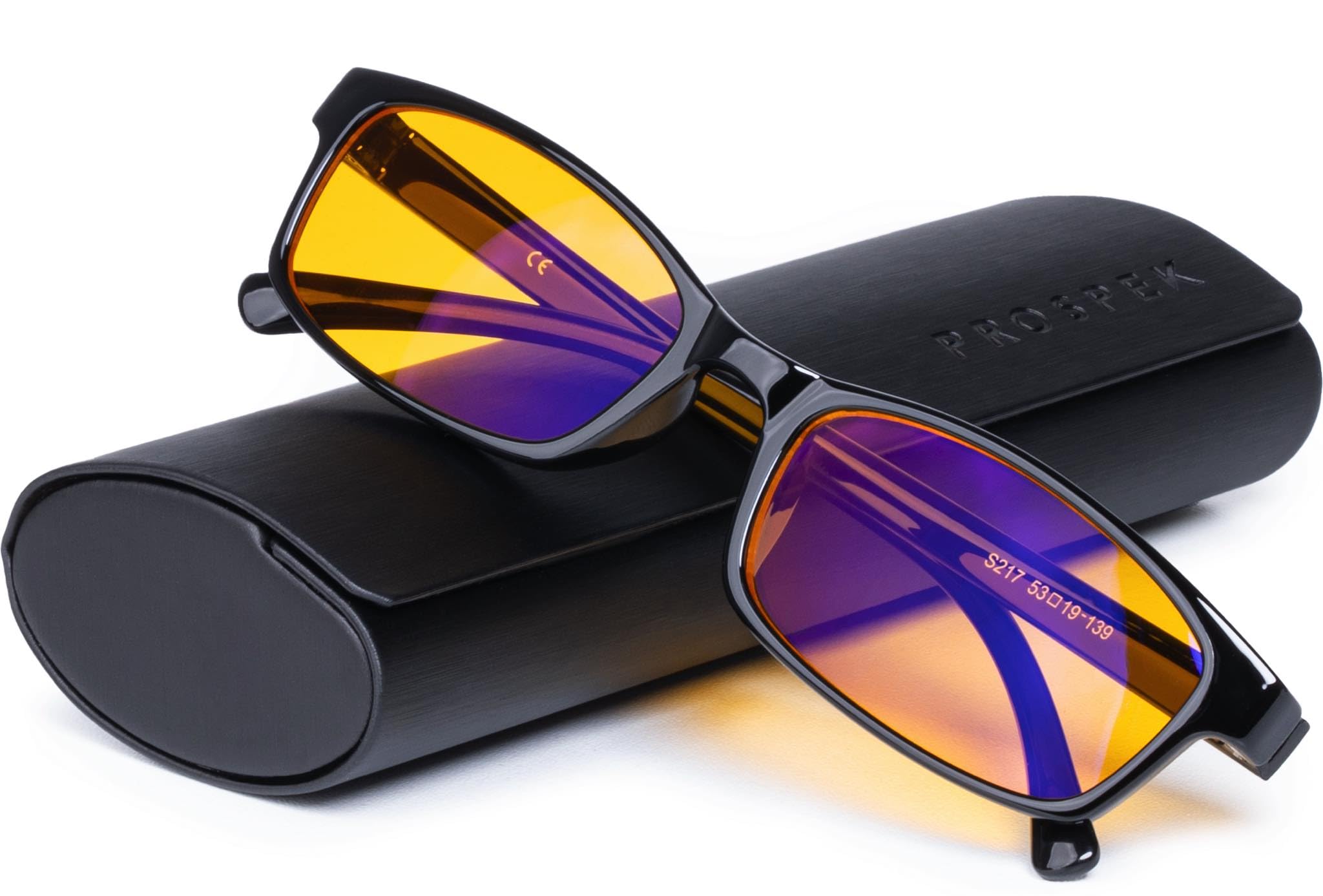
These amber-lensed blockers eliminate 99% of blue light, offering stronger protection than the clear-lens Eagle Eyes model..
The Prospek glasses use an amber (orange) tint and block 99% of all blue light across the spectrum, which is significantly higher than many clear-lens competitors. They also cut 100% UV (UVA and UVB), and feature anti-scratch, anti-reflective, anti-fog, and anti-oil coatings. At just 17 grams and with a total width of 131mm, they are light enough to forget you are wearing them. Buyers report that after a week of use, the glasses noticeably reduce eye fatigue from long screen sessions — one reviewer who had severe eye pain from 12+ hours of screen time said these were the solution.
The honest trade-off is the lens color. The amber tint makes everything appear orange, so if you work in graphic design or need perfect color fidelity, these will distort what you see. A reviewer mentioned that while the glasses cause a shift, they found them useful for writing and internet work and got fewer headaches as a result. The frame is TR90 plastic (not metal), but multiple owners say the build feels sturdy and the included case is a nice touch.
Screen-time savior: 99% blue light blocking, UV400 protection, and a featherlight 17g frame make this the go-to for anyone battling tired eyes at a desk.
Color purists beware: The orange tint is real and permanent — if you edit photos or video, look for a clear-lens blue blocker instead.
Reach for this if: you work on a computer all day and want aggressive blue light reduction with anti-glare coating, plus a lightweight frame that stays comfortable for hours.
Look elsewhere if: you need accurate color perception — the amber shift washes out blues and whites completely.
3. B BLOOMOAK Clear Night Driving Glasses
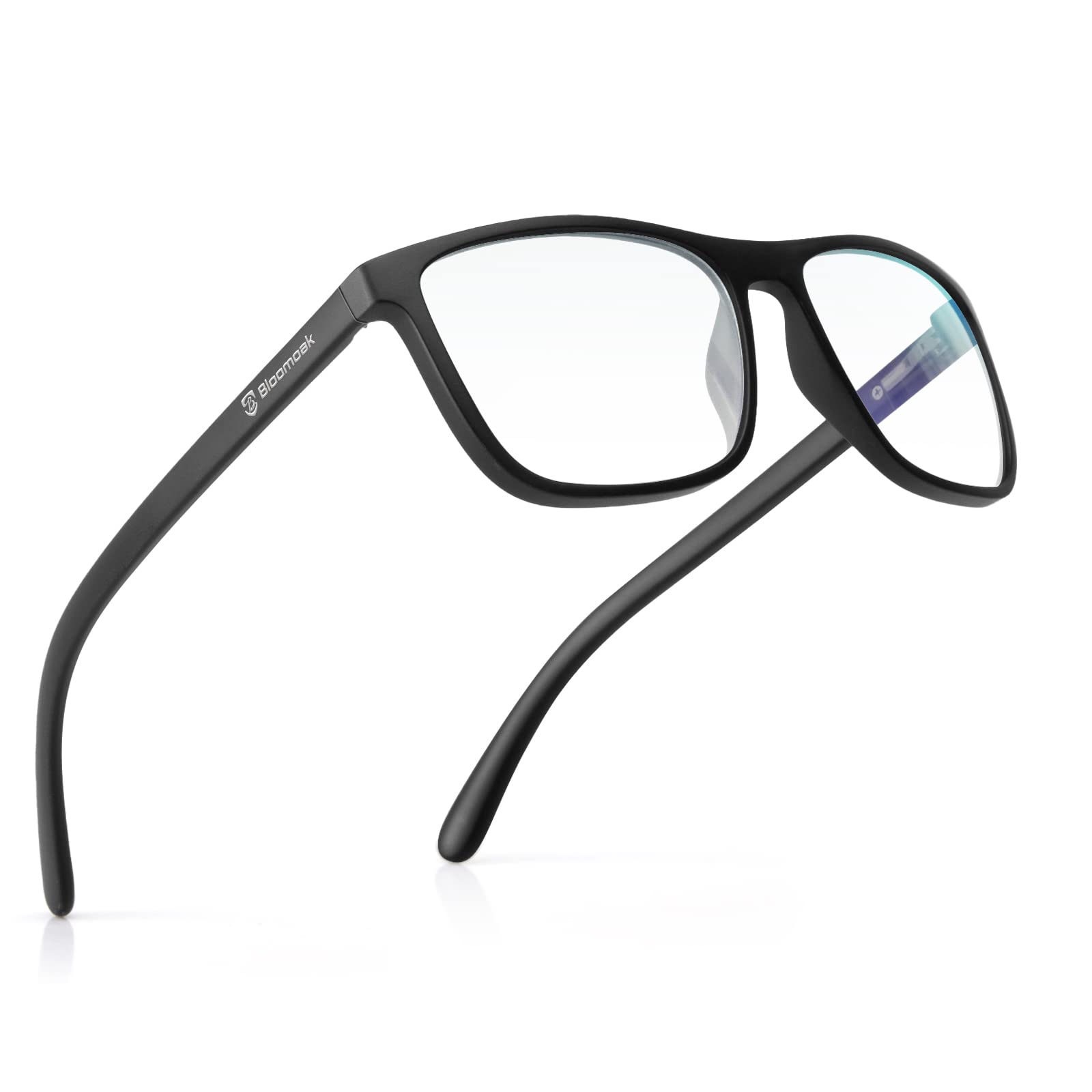
These clear PC-lens glasses claim to reduce night headlight glare, but reviews indicate the AR coating is ineffective, unlike the Prospek’s screen coating..
B BLOOMOAK markets these as night driving glasses with an anti-reflective coating designed to reduce halos and glare from oncoming headlights. The lenses are made from lightweight polycarbonate, and the frame is described as comfortable and sturdy. The package dimensions are 6.5 x 2.99 x 2.01 inches, and the model has been available since March 2022. However, the real-world results are sharply divided. One reviewer stated bluntly that the glasses are “absolutely WORTHLESS” for night driving and do nothing to reduce glare, while another said they are “good for night motorcycle riding” because they block bugs without darkening the view.
Multiple owners mention that the anti-reflective coating is ineffective against bright LED headlights and does not reduce starburst effects around streetlights. At this price point, some users felt cheaper safety glasses offer similar performance. If your main goal is reducing glare from oncoming traffic at night, the reviews suggest these fall short — but they might work as a basic clear shield for occasional use in low-light conditions where you just want a physical barrier against wind and debris.
What Works
- Lightweight polycarbonate lens is comfortable for all-day wear
- Sturdy frame at a reasonable size for most face shapes
The Real Catch
- Anti-reflective coating does not effectively reduce headlight glare or halos, per multiple reviews
- Several buyers returned them, calling them worthless for their intended night-driving purpose
Could work for: someone who wants a clear, lightweight lens for daytime driving or basic eye protection from wind and bugs while riding a motorcycle at night.
Not for you if: you specifically need to cut the blinding glare of oncoming LED headlights — the reviews here are overwhelmingly negative on that front.
4. Eagle Eyes Ultralite Digitec Computer Reading Glasses
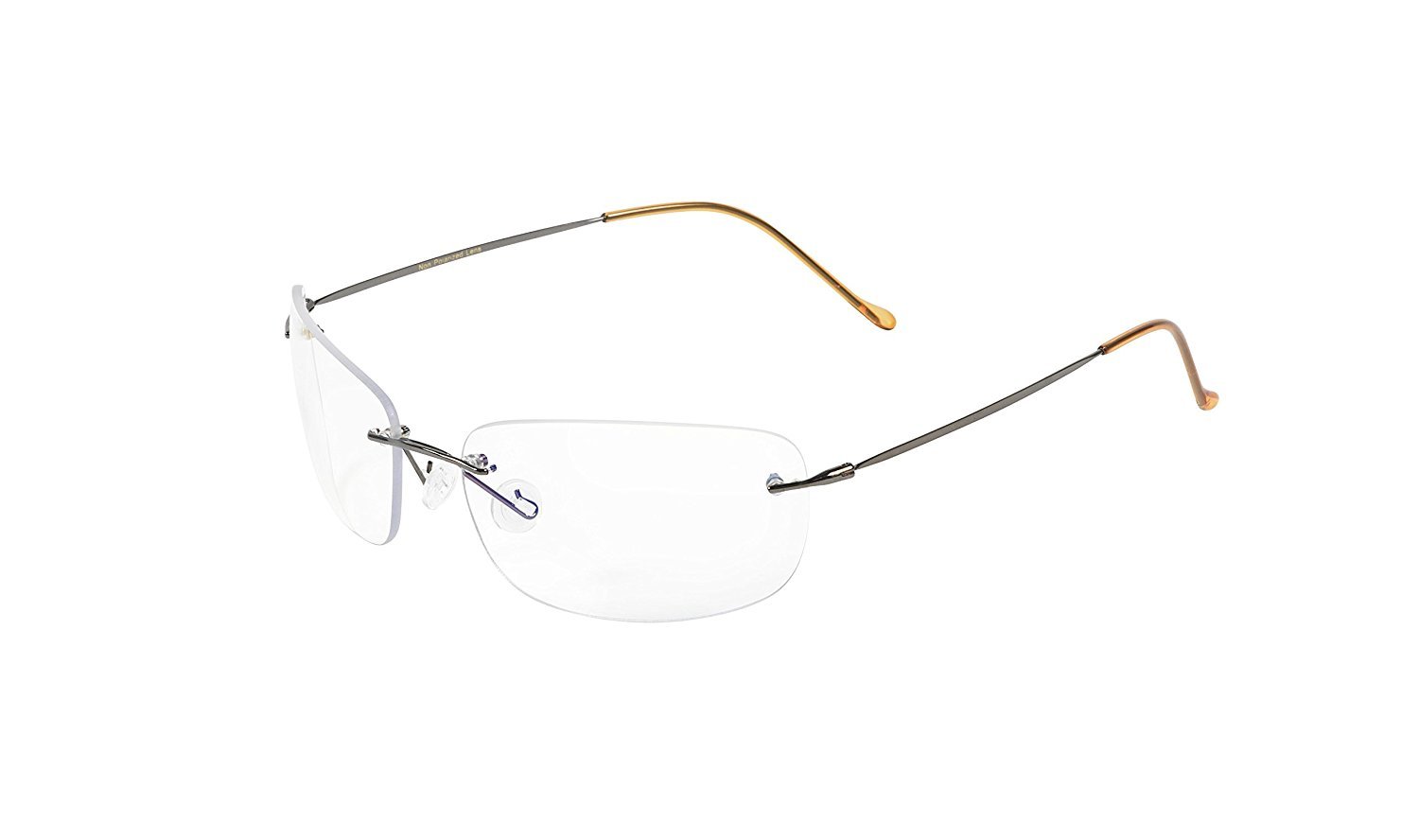
These clear-lens glasses block 53% of blue light, preserving color accuracy without the orange tint of the 99% Prospek..
The Eagle Eyes Ultralite Digitec glasses use a clear lens with an anti-reflective “AR” coating and a blue-light filter that blocks 53% of blue light and 99% UV light. Unlike the amber-tinted Prospek glasses, these lenses are nearly invisible, so they do not distort colors — a major plus for designers or anyone who needs accurate screen colors. The frame is made from PEI (a high-end plastic with bendable temples) and includes soft silicone gel nose pads. The lens dimensions are 52mm wide by 36mm tall, with a bridge of 19mm and temple length of 130mm. A zipper storage case and microfiber pouch are included.
Buyers consistently praise the comfort and lightweight feel. One reviewer noted they now wear them “day and night, everywhere I go” and found them lightweight enough to replace sunglasses and night vision glasses. However, another owner noted that the AR coating creates a blue outline or glare around lights, making them unsuitable for night driving — the coating works well against screens but not against headlights. The manufacturer, Eagle Eyes, is a known brand with an honest approach to specs, according to a verified buyer who appreciated that they did not exaggerate the blue-light percentage.
Standout Features
- Clear lens with 53% blue light and 99% UV blocking — no orange tint means accurate colors
- PEI frame with bendable temples and silicone nose pads offers exceptional all-day comfort
- Eagle Eyes is a known brand that publishes honest specs, and one buyer mentioned its NASA-backed reputation.
Not Perfect For
- The AR coating creates noticeable blue glare around bright lights at night, so you cannot wear them for driving after dark
- Shipping can take a while since the glasses are made in China
Best for: computer work, gaming, and any screen-based task where you want blue light reduction without the orange tint — the comfort makes them easy to wear all day.
Skip if: you plan to wear them while driving at night; the blue outline effect around headlights makes them worse than wearing nothing.
Understanding the Specs
Blue Light Blocking
Blue light is the high-energy visible light emitted by screens and LED bulbs. Some anti-reflective glasses block a percentage of it. A higher number (like 99%) typically means an amber or orange tint is present, which shifts all colors toward yellow-orange. Clear-lens glasses usually block less (around 30–53%) but keep your color perception normal. The trade-off is simple: more blue light blocking = more tint, less color accuracy.
Progressive vs. Single Vision Lenses
A progressive lens has a gradual change in magnification from the top to the bottom, giving you distance, intermediate, and near vision in one pair with no visible line. Single-vision lenses have one power across the whole lens. For reading or computer work, a single-vision lens is simpler and cheaper. For multitasking between a book, screen, and something across the room, a progressive lens saves you from swapping glasses — but it needs a tall enough lens so each focal zone is usable.
Anti-Reflective (AR) Coating
This is a thin layer on the lens that reduces reflections bouncing off the front and back surfaces. It helps more light pass through to your eye, so you see a clearer image with less glare. AR coating is especially helpful in bright indoor settings or when driving at night — but the quality varies. A poorly applied AR coating can actually create a blue or green reflection that makes glare worse, as some buyer reviews note.
Frame Weight and Fit
The total weight of the glasses affects how comfortable they feel after hours of wear. Look for a frame under 20 grams for all-day use. The total width (measured across the front of the frame) determines whether the glasses sit correctly on your face. A narrow face might need a total width around 120–130mm, while an average face fits 130–140mm, and a wider face needs over 140mm. Spring hinges and silicone nose pads improve long-term comfort.
FAQ
Can I wear anti-reflective glasses while driving at night?
What is the difference between anti-reflective and blue light blocking?
Will progressive reading glasses work for computer use?
Do clear anti-reflective lenses block blue light?
How do I know which magnification strength I need?
Why do some anti-reflective glasses cause blue reflections at night?
Are expensive anti-reflective glasses worth the extra money?
How long do anti-reflective coatings last on eyeglasses?
Final Thoughts: The Verdict
For most people, the anti reflective eyeglasses winner is the Prospek Blue Light Glasses because they combine industry-leading 99% blue light blocking with a lightweight 17g frame and an honest anti-reflective coating that actually reduces screen glare — all at a mid-range price that beats many premium competitors. If you need progressive multifocal lenses for reading and computer work without switching glasses, the Sightline Readers Progressive are your best bet. And if you want clear lenses with no orange tint and solid blue light blocking for all-day office wear, the Eagle Eyes Ultralite Digitec offer a comfortable, transparent solution — just don’t wear them on the road at night.
How We Picked
We do not accept paid placement. Every pick is matched to a real buyer and a real use-case; we do not hands-on test units.
Sources & Methodology
Specifications: manufacturer listings and product documentation. Review insights: verified customer reviews, as of July 2026. Pricing: not shown on this page (it changes often); check the current price via the retailer link.
As an Amazon Associate, Gadgets Feed earns from qualifying purchases. This does not affect which products we feature.
Related Guides
Product prices and availability are accurate as of the date/time indicated and are subject to change. Any price and availability information displayed on Amazon at the time of purchase will apply to the purchase of this product. As an Amazon Associate I earn from qualifying purchases.
CERTAIN CONTENT THAT APPEARS ON THIS SITE COMES FROM AMAZON. THIS CONTENT IS PROVIDED "AS IS" AND IS SUBJECT TO CHANGE OR REMOVAL AT ANY TIME.
Amazon and the Amazon logo are trademarks of Amazon.com, Inc. or its affiliates.