
Our readers keep the lights on and my morning glass full of iced black tea. As an Amazon Associate, I earn from qualifying purchases.
Specs are compiled from manufacturer listings and verified buyer reviews and can change over time — please confirm the key details on the product page before buying.
If you have ever rounded off a rusty exhaust bolt or spent an hour fighting a spark plug that refused to budge, you already know why anti-seize spray matters. It is a metal-filled film you apply to threads and mating surfaces before assembly so they release cleanly months or years later. The trick is matching the formula to the job: a 1,600°F copper spray for exhaust manifolds is not the same as a dry moly film for machinery slides, and a can that drips everywhere wastes product and coats surfaces you never aimed at.
I’m Min — the founder and writer behind Gadgets Feed. This guide is built by comparing the manufacturers’ published specifications and the patterns across verified customer reviews, so you get each pick’s real strengths and trade-offs instead of marketing spin.
You will see how temperature ratings (how hot a part can get before the spray breaks down), copper versus moly formulas, and aerosol control change what each can actually does in your garage. The crowd favorite here is the Permatex 81464, holding 4.6 stars across 100+ ratings, and it happens to be among the most forgiving formulas to spray. That makes it the sensible starting point for most shoppers comparing anti seize spray for the first time.
Our Picks at a Glance

How To Choose The Best Anti Seize Spray
Anti-seize spray is a metal-filled lubricant in an aerosol can, and you use it on threads, bolts, and mating surfaces to stop them welding themselves together over time. Picking the right can depends on three things: how hot the parts get, what the metal content is, and how much control you have over the spray. Here is what actually matters.
Match the temperature rating to the job
A can rated to 1600°F can sit on an exhaust manifold bolt that glows after a hard drive. A can rated to 1800°F handles even more heat. Lawnmower axles and household hinges never approach 750°F, so a lower ceiling is fine there, while exhaust manifolds and brake rotors need 1600°F or more. Always check the stated maximum operating temperature on the can before you commit it to a brake job or an exhaust header.
Know your metal content
Copper-based sprays conduct heat well and resist corrosion, which is why they show up on brake hardware and exhaust bolts. Aluminum, copper, and graphite blends work on a wide range of metal threads. Molybdenum disulfide, often shortened to moly, dries to a dry film instead of staying greasy, so it suits slides, gears, and dusty environments where wet lubricant would collect grit.
Weigh aerosol control against the drip risk
Spray cans reach awkward spots a brush cannot, but they are harder to aim. A wide fan pattern covers large surfaces fast and can overspray onto nearby parts. A controlled stream with a narrower nozzle keeps the product where you want it. Look for a can you can modulate with your finger rather than one that blasts everything at once.
Quick Comparison
| Model | Best For | Max Temp | Base Material | Liquid Volume | Amazon |
|---|---|---|---|---|---|
| Permatex 81464★ Best Overall | General automotive assembly | 1600°F | Aluminum, Copper, Graphite | 8.14 fl oz | Amazon |
| Anti-Seize Technology 12014Top Performer | Dry film on slides and machinery | — | Molybdenum disulfide | 14 fl oz | Amazon |
| CRC Oilfield Dry Moly Lube 03284 | High-temperature industrial use | — | Dry moly | 11 fl oz | Amazon |
| Seymour 620-1507 | Heavy-duty shop work | 750°F | Molybdenum disulfide | 0.11 gallons | Amazon |
| WEICON Anti-Seize Assembly Spray | Mechanical engineering and maintenance | 2192°F | Metal, stainless steel, aluminum, copper | 400 ml | Amazon |
| Nitro Lubricants Copper Anti-Seize | Brake and exhaust work | — | Copper, Steel | 14 fl oz | Amazon |
| Loctite Anti-Seize Copper Spray | Precision brake rebuilds | 1800°F | Copper | 12 fl oz | Amazon |
In‑Depth Reviews
1. Permatex 81464 Anti-Seize Lubricant, 12 oz. Aerosol Can
Our pick — over 4.5★ from 150+ verified ratings; the strongest balance of quality and price.
The all-rounder that handles spark plugs, exhaust bolts, and lawnmower axles without drama.
The Permatex 81464 is the safest default pick for anyone who does regular automotive and household repair. It is a refined blend of aluminum, copper, and graphite lubricants, and that metal mix is what makes it salt, corrosion, and moisture resistant. The temperature range runs from -80°F to 1600°F, so it survives exhaust head bolts and cylinder head bolts that get brutally hot, yet it still makes sense for a sticking hinge. Permatex lists suggested uses from spark plugs to anchor pins on brake assemblies, U-bolts, gears, chains, and rollers.
What wins people over is the versatility — it goes wherever a metal thread needs to come apart cleanly later. Owners use it on lawn tractor axles specifically to stop rear wheels from rusting and sticking to the axle, which is the classic failure this stuff prevents. As one owner sums it up: “It isn’t as thick as the version that comes in a bottle with a brush.” That thinner aerosol formula is easier to reach into tight spots than a brush can, though it demands some care in where you point it.
The honest trade-off is control. The recurring gripe is that it sprays messy and is hard to aim precisely, so it can land on nearby surfaces you did not intend to coat. There is one firm safety point too: do not use it on wheel lug studs. The can label explicitly prohibits it, and wheels must be torqued dry to spec — clean the studs with a wire brush instead. That is not a flaw in the product, it is a misuse warning worth respecting. With 4.6 stars across 100+ ratings, this is the formula most buyers land on first.
Where It Shines
- Covers -80°F to 1600°F, so it handles exhaust and brake heat as well as cold-weather parts
- Aluminum, copper, and graphite blend resists salt, corrosion, and moisture
- Reaches tight threads a brush cannot, on spark plugs, U-bolts, gears, and rollers
Where Care Is Needed
- Spray can is hard to aim and can get messy on nearby surfaces
- Never use it on wheel lug studs — the label prohibits it and studs must be torqued dry
Reach for this if: you want one can that covers most general automotive and household assembly jobs up to 1600°F.
Look elsewhere if: you need a dry film that will not attract dust, or you want maximum spray control.
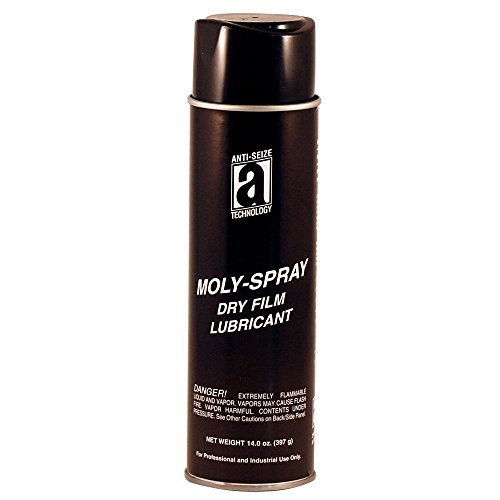
2. ANTI-SEIZE TECHNOLOGY 12014 Moly-Spray Dry Film Aerosol Lubricant, Black, (Net weight: 14 oz.) 20 oz.
A dry moly film that lands like paint and stays put on dusty, high-friction machinery.
If your work happens in a dusty shop or on machinery that would just collect grit under a greasy lubricant, this is the can to look at. It is a molybdenum disulfide dry film, which means it sprays on wet, dries fast, and leaves a non-greasy surface that does not attract dirt. The chemistry here penetrates the pores of the substrate and bonds to the surface, giving it strong corrosion and chemical resistance. It is also CFC free, VOC compliant, and RoHS compliant, which matters if you are spraying in a workplace with environmental rules.
The reason it earns this spot is the spray behavior. It goes on thin and dries to a uniform, metal-like finish that resists wiping off, so it stays exactly where you put it. This is a moly coating, not a rust inhibitor, and a can covers a lot of surface — one owner reported coating more than 20 boxes of bullets with a single can. Buyers report it leaves a perfect slippery finish and dries quickly. On the practical side, it delivers more volume than the CRC option, at 14 fluid ounces versus 8.14 fluid ounces for the Permatex, though the two serve different jobs.
The catch is honest and specific: this moly film does not inhibit rust, protect against moisture, or remove existing rust. It resists corrosion but it is not a rust treatment, so do not expect it to save a part that is already corroded. It also ships without a spot applicator tube, though the stream is controllable. With 4.2 stars, it is a solid choice for slides, steel friction joints, and dusty environments rather than general rust protection.
What owners noticed: the finish is the headliner — a thin, fast-drying coat that clings stubbornly and feels like a treated metal surface rather than a slick of grease.
The limit to plan around: treat it as a friction and seizing solution, not a rust cure — it will not restore or shield a corroded part.
Worth choosing when: you need a dry, clean film for dusty or high-friction parts and want the larger 14-fluid-ounce can.
Skip the upgrade if: your main goal is rust protection rather than anti-friction.
3. CRC Oilfield Dry Moly Lube, 11 Wt Oz, 03284

Built for high-pressure machinery where a greasy mess would ruin the job.
This is the pick for plant machinery, conveyor belts, and high-temperature slides where you want lubrication without a wet film. CRC designed it with high anti-friction and anti-seizure properties, and it lowers friction while preventing galling, working in high-temperature and high-pressure applications. The 11-fluid-ounce can lays down a dry moly coating with good adhesion, and it is non-conductive, which matters around motors and electrical equipment.
Where it fits best is the industrial list: gaskets, transfer belts, conveyor belts, motors, plant machinery, handling equipment, rubber moldings, and low-load or high-rpm slides, rollers, wheels, gears, chains, and hoists. Owners reach for it specifically when they do not want a greasy residue left behind. It also has a scent you will notice — as the review pages sum it up: “It smells like heck so heed the well ventilated instructions!” So plan to spray it in an open or ventilated area.
One packaging note worth knowing before you order: some buyers found that multi-can orders arrived with the tops knocked off and product discharged into the box. That is a shipping issue rather than a formula problem, but if you buy several at once, take a quick look at each can on arrival. With 4.8 stars, this is a high-performing choice for dry, non-greasy industrial lubrication.
Why Industry Buyers Like It
- Dry moly film leaves no greasy mess on machinery and slides
- Handles high-temperature, high-pressure, and high-rpm applications
- Non-conductive, so it suits motors and electrical equipment
Things to Know First
- Noticeably strong smell — spray it in a well-ventilated space
- Multi-can orders can arrive with tops dislodged and product spilled in the box
The call: a machine-shop staple for dry, non-greasy lubrication on high-pressure equipment.
The limit: the strong odor and packaging risk on bulk orders are the two things to plan around.
4. Seymour 620-1507 Heavy-Duty Anti-Seize

A big silver can that covers large surfaces fast and keeps mating parts coming apart.
For heavy shop work on cast iron and stored machinery, this Seymour can is a strong pick. It is a molybdenum disulfide formula that reduces wear and friction and eliminates galling and seizure up to 750°F, which is plenty for most assembly and storage jobs short of exhaust work. Its standout claim is durability: it will not wash, scrape, or burn off, so the protection stays after the job is done. The 16-ounce item weight makes it one of the more substantial cans here — noticeably heftier than the Permatex at 11.2 ounces.
Owners like how it lays down. It covers like an oil rather than a wax, which makes it easy to apply across larger surfaces, and people use it to protect cast iron machines in storage. It is an aerosol, which several owners mention is genuinely handy compared to brush-on cans. The 16-ounce can also earns its keep — customers note the large size lasts a long time.
The one thing to size correctly is the heat ceiling. At 750°F it sits well below the WEICON spray’s 2192°F, so keep it away from exhaust headers and glowing manifolds. For everything else — hinges, bolts, brake-assembly contact points, stored machines — that range is more than enough. It also comes in a bottle container type, so confirm you are getting the aerosol form if that is what you want. With 4.9 stars across a smaller pool of ratings, it earns its value reputation on quality per can.
Owner verdict on the can: the silver spray applies cleanly over large areas, and the generous size means you are not running out mid-project.
One number to respect: the 750°F ceiling keeps this out of exhaust-header territory, so match it to assembly and storage work instead.
Pick this when: you want a durable, generously sized aerosol for shop and storage use at a sensible value.
Not the one for: high-temperature exhaust or manifold jobs needing a higher ceiling.
5. WEICON Anti-Seize Assembly Spray 400 ml, Long-Lasting Release Agent, Corrosion Protection
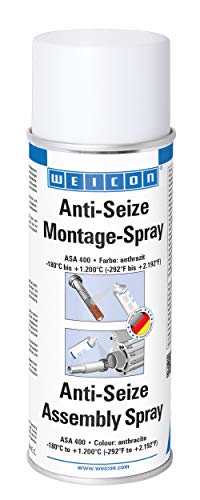
The heat champion of the group, rated to survive parts that glow under extreme stress.
When a part runs hotter than anything else on your bench, this is the can that keeps its nerve. WEICON rates this assembly spray temperature resistant up to +2192°F, which is by far the highest ceiling of the picks here and covers burning and heat-stressed components. It protects threads and connections from seizing, makes disassembly easier, and forms a protective layer against corrosion, rust, and environmental influences. The 400 ml can is a long-lasting release agent, and it works across metal, stainless steel, aluminum, and copper.
The range of uses is genuinely wide: mechanical engineering, vehicle maintenance, electronics, and household appliances all fall inside its brief. Owners who have run it for years keep coming back, including one who used it on brake slide guides, caliper contact surfaces, threaded joints, and wheel hub preservation to keep steel rims from rusting onto the hub over winter. Even after long service, the parts came apart without a fight, and a suspension-arm swap that would normally be a battle turned into a quick job. Owners describe it as a must-have for any workshop.
That is a fair thing to weigh. Still, with 4.8 stars and a 2192°F rating that beats the Loctite’s 1800°F and the Seymour’s 750°F, it leads the field on raw heat tolerance.
what separates it
- Temperature resistant up to +2192°F, the highest rating in this lineup
- Works on metal, stainless steel, aluminum, and copper for engineering, vehicles, electronics, and appliances
- Reviewers point out parts still coming apart after years of service
Fair to Mention
- Most detailed feedback is in non-English reviews, with several very short entries
Best matched to: anyone who needs the highest heat tolerance available and works across mixed metals and industries.
Consider another can if: you want a deep, detailed English-language review history to lean on.
6. Nitro Lubricants High-Temp Copper Anti-Seize Spray Lubricant, 14 oz
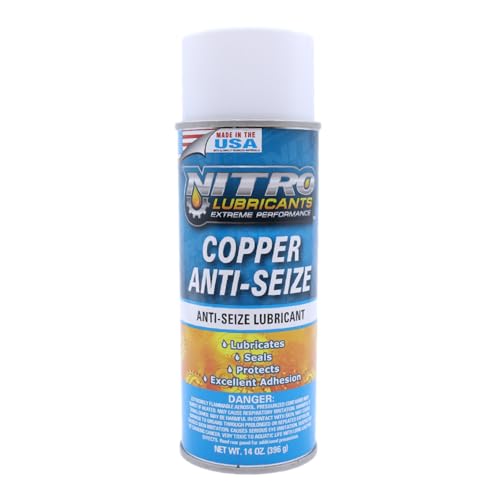
A copper-heavy spray tuned for brake jobs that would otherwise fight you apart.
If your anti-seize lives next to the brake hardware, this copper-based formula is a natural fit. It withstands extreme heat and pressure to prevent metal-to-metal contact, and it eliminates thread damage while making future disassembly easier. The copper and steel composition shields parts in harsh environments including moisture, salt, and chemicals. It is aimed at automotive, industrial, and marine use, so it holds up on a boat trailer or a plow truck as readily as in a home garage.
The everyday win here is on rotors and hubs. Coated on brake rotor hubs after a wire-brush cleaning, it stops the rotor from rust-welding itself to the hub, which is the difference between a straightforward brake job and a grinder-and-swear session. Buyers also spray it on high-performance brake pads to quiet squeaks, and it sticks to calipers well. It also applies with nice coverage.
The honest caveat is the can itself. At least one buyer received a defective can that leaked empty after a single use, and that person was frustrated the seller did not make it right. It is a single report, but it is worth checking your can on arrival before you commit it to a job. Otherwise the feedback is strong, from caliper work to squeaky-brake fixes, and at 4.5 stars across a healthy pool of ratings it earns its premium standing on the copper formula and the larger 14-fluid-ounce fill.
What the copper buys you: a formula that spreads evenly, stays put on calipers, and shrugs off the heat and pressure of repeated brake work.
The one risk to check: a defective can can leak, so inspect it before the job — a rare complaint, but an easy one to spot early.
Go here if: brake and exhaust work is the main event and you want a large copper-based can that sticks where it lands.
Think twice if: you want the highest heat rating — that belongs to another can in this lineup.
7. Anti-Seize, 12 oz, Copper, Spray Can
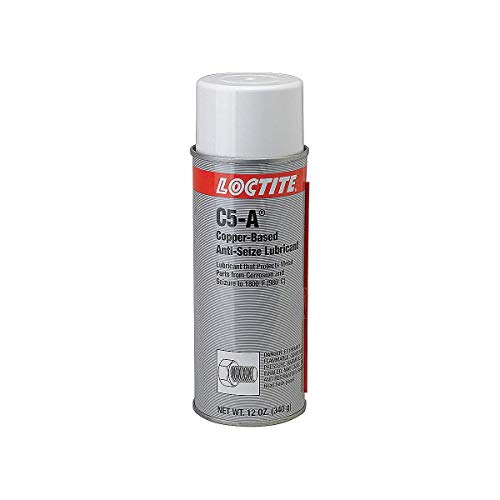
A brushless copper spray for rebuilds where clean, easy coverage wins the day.
This Loctite copper anti-seize is the one to reach for when you are tired of the brush-on can and the mess that comes with it. It is a 12-fluid-ounce aerosol with a copper lubricant additive, built to shield against high-temperature seizing and galling so that mated parts remove more easily and in cleaner condition. The specific gravity is 1.20 and the upper temperature rating is 1800°F, which covers brake and exhaust work with room to spare. The operating range runs from -20°F up to that 1800°F ceiling.
The big appeal is the spray format itself. Owners say it is way easier to spray on than a can with a brush, and they point out less mess as the main reason they switched. It works well on wheel lugs for that reason — you get even coverage without wrestling a brush into the threads. For a brake rebuild it covers the mating surfaces quickly and evenly. Loctite lists it as LB 8007 series and it carries a VOC content greater than 3%.
Two things to plan around before you buy. First, this can has a flash point of 1.4°F, which is extremely low, so keep it away from any heat or ignition source and store it sensibly. Second, the copper color is a giveaway if the formula ever lands on a surface where it shows. Neither is a reason to avoid it, but both are worth knowing. With 4.9 stars, it earns its keep on the strength of that brushless convenience.
Why Rebuilders Keep It
- Sprays on faster and cleaner than a brush-on can, with less mess
- 1800°F rating handles brake and exhaust heat comfortably
- Even coverage on wheel lugs and caliper mating surfaces
Handle-Aware Notes
- Very low 1.4°F flash point, so keep it clear of heat and ignition sources
- Copper color shows plainly if it lands on the wrong surface
Reserve this for: brake rebuilds and exhaust work where you want clean, brushless coverage you can aim.
Only skip it if: you prefer a brush-on application or want a non-copper finish.
Understanding the Specs
Maximum Temperature Rating
This is the hottest the anti-seize can get before it stops doing its job, measured in degrees Fahrenheit. A higher number means you can use it closer to exhaust manifolds and brake rotors that build serious heat. The picks here span from 750°F up to 2192°F. Match the rating to your job: household hinges and stored machines need far less than an exhaust header. When two cans both cover your job, the higher rating leaves headroom for hotter parts later.
Base Material: Copper, Aluminum, or Moly
The metal or compound mixed into the spray decides how it behaves. Copper sprays spread easily, resist corrosion, and show up constantly in brake and exhaust work. Aluminum, copper, and graphite blends handle a broad mix of threads and come with strong moisture and salt resistance. Molybdenum disulfide, or moly (a dry-film lubricant), dries to a dry film that will not attract dirt, which suits slides, gears, and dusty environments. No single base wins: copper sprays stay wet and fight corrosion on brake and exhaust hardware, while moly dries to a clean film for slides and dusty machinery.
FAQ
Can I use anti-seize spray on wheel lug studs?
What is the difference between copper and moly anti-seize?
What temperature does anti-seize spray need to handle for exhaust bolts?
Is anti-seize spray better than the brush-on version?
How long does anti-seize spray last once applied?
Do I need to clean the threads before spraying anti-seize?
Can anti-seize spray be used on brakes and rotors?
Will moly anti-seize spray prevent rust?
Do I need ventilation when spraying anti-seize?
Final Thoughts: The Verdict
The clear winner for most people is the Permatex 81464, because its aluminum, copper, and graphite blend covers -80°F to 1600°F and handles everything from spark plugs to lawnmower axles with a formula owners keep re-buying. If your job runs hotter than anything else on the bench, the WEICON assembly spray is the one, thanks to its +2192°F ceiling and multi-metal range. And for consistent brake and exhaust work with a big copper fill, the Nitro Lubricants copper spray is the strongest match. If none of those fit your specific job — say you want a dry film that will not attract dust — go with the Anti-Seize Technology moly spray and stop second-guessing. For a first anti-seize purchase, the Permatex 81464 is the lowest-risk can here, with 4.6 stars across 100+ ratings.
How We Picked
We do not accept paid placement. Every pick is matched to a real buyer and a real use-case; we do not hands-on test units.
Sources & Methodology
Specifications: manufacturer listings and product documentation. Review insights: verified customer reviews, as of September 2026. Pricing: not shown on this page (it changes often); check the current price via the retailer link.
As an Amazon Associate, Gadgets Feed earns from qualifying purchases. This does not affect which products we feature.