
Our readers keep the lights on and my morning glass full of iced black tea. As an Amazon Associate, I earn from qualifying purchases.
Specs are compiled from manufacturer listings and verified buyer reviews and can change over time — please confirm the key details on the product page before buying.
That brown spot spreading across your lawn or the sudden gush of water from the valve box usually means one thing: a failing anti-siphon valve. Choosing the wrong one means constant repairs, wasted water, and frustration every time you try to water the garden. This guide breaks down the real-world differences between the top picks so you can buy with confidence and get back to enjoying your yard.
I’m Min — the founder and writer behind Gadgets Feed. This guide is built by comparing the manufacturers’ published specifications and the patterns across verified customer reviews, so you get each pick’s real strengths and trade-offs instead of marketing spin.
Whether you are replacing a single leaky unit or planning a whole new irrigation system, finding the best anti siphon valves depends on matching the right size, construction, and flow features to your specific setup.
Our Picks at a Glance


How To Choose The Best Anti Siphon Valves
An anti-siphon valve is a one-way gate for your irrigation system. Its job is to stop dirty, fertilizer-laced water from being sucked backward into your home’s clean drinking pipes. Choosing the right one is fairly simple if you know exactly what to look at.
Start With The Inlet Size: 3/4-Inch vs 1-Inch
This is the single most important spec. The inlet connection size — usually 0.75 inches (3/4″) or 1 inch — must match your main irrigation line. A 3/4-inch valve is the standard for most residential systems with moderate flow. A 1-inch valve, like the Rain Bird DASASVF100 or the Irritrol 2713APR, handles higher volume and is better for systems with multiple zones running at once or long runs of sprinklers.
Body Material: Plastic vs Brass
Most modern valves use a durable plastic body (often PVC or a similar composite) that resists corrosion and is lightweight. The professional-grade Rain Bird and Hunter plastic valves in this list are proven to last for years. Brass valves, like the Orbit 51016, are extremely rugged and can withstand physical impact, but they are much heavier and cost significantly more.
Flow Control: The Knob That Tunes Your Sprinklers
Look for a valve with a flow control knob on top. This simple screw mechanism lets you throttle the water up or down, which is essential for preventing high-pressure misting (water hammer) or for fine-tuning the water pressure going to different zones. All six valves reviewed here include this feature, but not every budget valve does.
Quick Comparison
| Model | Best For | Inlet Size | Body Material | Weight | Amazon |
|---|---|---|---|---|---|
| Rain Bird DASASVF075★ Best Overall | Proven Reliability | 0.75 Inches | Plastic | 0.23 Pounds | Amazon |
| Rain Bird DASASVF100Best Value 1-Inch | High Flow Systems | 1 Inch | Plastic/Stainless Steel | 5.79 Ounces | Amazon |
| Orbit 57624 | Budget-friendly 1-Inch | 1 Inch | Plastic | 1.25 Pounds | Amazon |
| Hunter PGV-ASV | Residential Landscaping | 0.75 Inches | PVC | 1.4 Pounds | Amazon |
| Irritrol 2713APR | Long-Term Investment | 1 Inch | Stainless Steel | 1.2 Pounds | Amazon |
| Orbit 51016 | Rugged & Manual Use | 0.75 Inches | Brass | 1.75 Pounds | Amazon |
In‑Depth Reviews
1. Rain Bird DASASVF075 Professional Grade Anti-Siphon Valve, 3/4″
Our pick — over 4.5★ from 800+ verified ratings; the strongest balance of quality and price.
The 0.23-pound plastic valve that Rain Bird buyers report runs for years without a single leak.
If you want a set-and-forget solution for your standard residential system, this is the one. Weighing just 0.23 pounds, it is the lightest option here — but owners mention that lightness does not mean fragile. This valve uses a Reverse Flow design (a setup that pushes water flow in a direction that reduces stress on the internal rubber diaphragm, which is the part that opens and closes to control water). That is smart engineering for long-term dependability. It is designed for above-ground installation and must sit at least 6 inches higher than the highest sprinkler head to do its anti-siphon job properly.
Buyers consistently point out the superior build quality — one verified reviewer with years of experience wrote that four 1-inch versions of this valve “installed years ago still work like new: no leaks, failures, noise.” Another reviewer summed up the sentiment: “Much better quality than Orbit valves.” The flow range here covers 0.2 to 22 GPM (gallons per minute, a measure of water volume), which covers most residential spray heads and rotors. The one catch to plan for: if you are using it for low-flow drip irrigation (under 3 GPM), Rain Bird says you need to install a 200-mesh filter (a very fine screen that catches tiny particles) before the valve to keep debris from jamming it.
Why It Earns The Top Spot
- Proven long-term reliability based on actual buyer experiences spanning years
- Extremely lightweight (0.23 lbs) makes for easy handling during installation
- Reverse Flow design reduces mechanical stress for longer internal life
- Compatible with any standard sprinkler timer
The One Thing To Know
- Needs a separate 200-mesh filter if you plan to run drip irrigation (flow under 3 GPM)
Stick with this for: the buyer who wants to install it once and forget about it — the best balance of price, build quality, and proven longevity.
Look elsewhere if: you need a 1-inch inlet for a very high-flow system; step up to the 1-inch Rain Bird (reviewed below).
2. Rain Bird DASASVF100 Professional Grade Anti-Siphon Valve, 1″
The 1-inch upgrade that handles up to 40 GPM while weighing only 5.79 ounces.
When your system demands more volume — think long runs of impact sprinklers or covering a large lawn area — this 1-inch valve delivers without the bulk of heavier units. At just 5.79 ounces, it weighs 5.79 ounces versus the Orbit 57624 at 1.25 pounds, yet it bumps the flow range up to a generous 0.2 to 40 GPM. It shares the same Reverse Flow diaphragm design as its 3/4-inch sibling, so the reliability story carries over. The solenoid (the electric coil that opens and closes the valve when your timer sends a signal) is encapsulated, meaning its internal coil is sealed against moisture—a major factor for long-term electrical reliability.
Customers note very high satisfaction, with many calling it the only brand they will install. One experienced reviewer noted a useful tip: “Multiple units leaked from flow control knob; not repairable unless diaphragm issue.” This is the main risk — the flow control stem can sometimes weep a small amount of water. Many buyers recommend installing threaded unions (a coupling that screws apart) alongside it so you can swap the whole valve later without cutting and gluing PVC pipe. For a pro-grade part that is often priced well below local hardware stores, this is a strong choice for anyone needing a 1-inch valve.
Upsides
- Exceptionally high flow capacity (0.2–40 GPM)
- Very light at 5.79 ounces, making installation less awkward
- Encapsulated solenoid resists moisture damage
- Comes with a stainless steel exterior finish for corrosion resistance
Downsides
- Some units have reported leaks from the flow control knob
- Recommends threaded unions for easier future replacement
Choose this if: you need a 1-inch inlet to handle higher water volume and you want the same proven Rain Bird reliability.
skip it if: a slight weep from the flow control knob would drive you crazy; the brass manual valve below never has that issue.
3. Orbit 51016 3/4″ FPT Brass Manual Anti-Siphon Sprinkler Valve
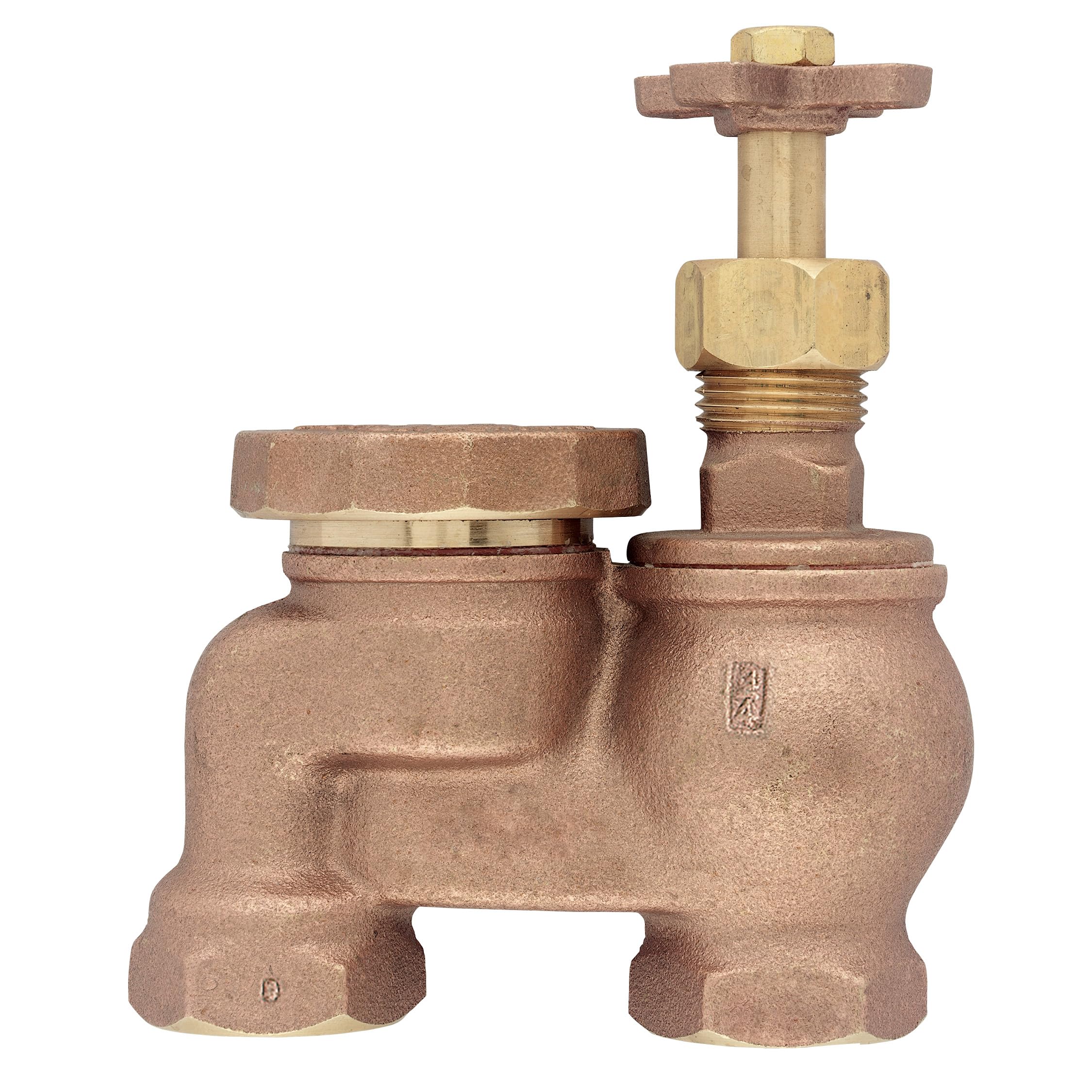
The heavy-cast brass manual valve that feels like it will outlast everything around it.
While almost all the other valves here are lightweight plastic, the Orbit 51016 is built from heavy-cast brass, making it a rugged, manual-only choice. This is not an electric valve — there is no solenoid for automatic timer control. You turn the handle to start and stop water flow, and the full flow control knob lets you adjust pressure by hand. At 1.75 pounds, it is the heaviest valve in the lineup, (the Rain Bird 3/4-inch plastic valve weighs 0.23 pounds). The threads on sand-cast brass can be a little rough, but reviewers point out they seal up tight with no leaks.
Shoppers say solid brass construction and “smooth operation, no leaks, consistent strong water flow.” One reviewer simply said it was “very beefy.” This valve is perfect if you need a simple, bomb-proof manual shutoff valve at a hose bib or for a dedicated garden area that you turn on and off yourself. The catch here is flexibility — since it has no electric solenoid, you cannot integrate it with a sprinkler timer for automatic watering. You are trading convenience for extreme physical durability.
Built Different
- Heavy-cast brass body is extremely durable and impact resistant
- Full flow control for manual pressure regulation
- Anti-siphon mechanism prevents backflow just like electric models
- Buyers confirm consistent performance with zero leaks
Consider This
- Manual operation only — no timer or automation compatibility
- Heaviest valve in the list at 1.75 lbs
Reach for this if: you want a simple, unbreakable manual valve for a garden hose or a non-automated zone where you will rarely touch the handle.
Not for you if: you rely on a sprinkler timer and need automatic valve operation.
4. Hunter 3/4″ PGV-ASV Anti-Siphon Valve

The Hunter valve that lots of landscapers reach for, but check the install quirks first.
Hunter is a huge name in professional irrigation, and its PGV-ASV valve brings a 24-volt solenoid with a captive plunger (meaning the metal rod cannot fall out when you are cleaning it). At 1.4 pounds, it is noticeably more substantial than the 0.23-pound Rain Bird DASASVF075, (the Rain Bird DASASVF075 weighs 0.23 pounds). Its 3/4-inch female iron pipe connection is standard for residential work. A nice design detail is the captive anti-siphon poppet (a small plug that stays secured inside the valve when you disassemble it for maintenance), so you will not lose a tiny part in the grass.
Buyers praise the “easy installation, solid build, great value.” However, several buyers hit a critical snag: the flow control valve ships set fully closed, and the instructions do not mention it. One reviewer noted: “Second unit leaked badly after installation.” They eventually fixed it by opening the flow control knob fully before reassembly. Another buyer noted that you must turn the center screw “counterclockwise with a large screwdriver to open.” This is an easy fix once you know about it, but it is a common enough stumble that it has caused returns. Compared to the Rain Bird models, this Hunter is bulkier and heavier, but many find it sturdier.
Strong Points
- Professional-grade Hunter solenoid is known for long life
- Captive poppet and plunger mean no lost parts during maintenance
- Solid build quality at a competitive price
Potential Hiccups
- Valve ships with flow control turned off; must fully open it with a large screwdriver or it leaks
- Heavier than comparable Rain Bird models (1.4 lbs vs 0.23 lbs)
A good pick for: the DIYer who reads the fine print and is willing to do the one-time setup step of opening the flow control knob.
Better to skip if: you want a simpler, out-of-the-box installation — the Rain Bird valves are more forgiving on that front.
5. Irritrol 2713APR Electric Anti-Siphon Valve, 1″

A 1-inch stainless steel valve that Irritrol owners say lasts for over two decades.
Irritrol is a brand with deep roots in irrigation, and the 2713APR model shows why longtime users stick with it. It uses a “Floating Metering System” (a design feature that the brand says keeps water flow steady even when the supply pressure or quality changes). The full stainless steel bonnet (the top cap) resists corrosion better than the plastic/washer combos found on cheaper models. At 1.2 pounds, it is heavier than the Rain Bird 1-inch valve but lighter than the Hunter 3/4-inch valve. The 1-inch ports match the Rain Bird DASASVF100 directly for inlet size, so you can compare the two apples-to-apples.
One buyer summed up the longevity perfectly: “Second one in over 20 years, so no complaints.” Another owner noted that all internal parts still fit a valve that was over two decades old, making this a great candidate for in-place rebuilds. The downsides are minor but real: it takes a few minutes to read the manual and understand the control layout. Compared to the Rain Bird DASASVF100, the Irritrol is slightly heavier and uses a different internal design philosophy, but its track record with long-term owners is hard to argue with.
what separates it
- Proven lifespan: buyers report getting over 20 years from one unit
- Stainless steel bonnet resists rust and corrosion
- Patented floating metering system for consistent flow
- Internal parts are cross-compatible with older models for easy rebuilds
What To Note
- Requires reading the manual to understand the internal and external bleed controls
- Fewer total reviews (245) compared to top-selling Rain Bird models, so less crowd-sourced data
The verdict: your best bet if you want a 1-inch valve from a brand with a fiercely loyal long-term following and an emphasis on rebuildability.
Look elsewhere if: you want the lightest possible valve or the most widely available replacement parts — Rain Bird has a broader retail footprint.
6. Orbit 57624 1-Inch FPT 100 Series Automatic Anti-Siphon Valve

An affordable 1-inch valve that works fine, but expect the occasional quality slip.
If you are outfitting a large system on a tight budget and need a 1-inch inlet, the Orbit 57624 is the entry point. It connects with a standard 24 VAC solenoid that works with any major timer brand, including smart controllers like Rachio (buyers confirm it works well). The valve body measures 10.75 x 6.5 x 10.5 inches—quite a bit bulkier than the Rain Bird 1-inch valve, which is just 3 x 6.5 x 7.5 inches. The built-in scrubber filter (a coarse screen inside the valve) is a nice touch to catch a little debris, but it is not as thorough as the separate filter Rain Bird recommends for low-flow use.
Buyer feedback here is a mixed bag. One verified reviewer who ordered four of these to replace leaking valves gave them a 4/5 but noted a critical problem: “one of the valves had a seal missing in the anti siphon valve. I had to scavenge a seal from one of the old valves.” This summarizes the value trade-off—you save on the upfront cost, but the quality control is not as tight as Rain Bird or Irritrol. For a spare valve or a non-critical zone, this is a fine budget option. For the main valve on your system, the Rain Bird DASASVF100 is a safer bet for only a modest increase in price.
Why It Might Work
- Affordable entry point for a 1-inch valve with flow control
- 24 VAC solenoid is compatible with all major sprinkler timers
- Built-in scrubber filter helps reduce clogging
- Owners mention working well with smart controllers like Rachio
Why To Hesitate
- Quality control issues reported — some units arrive with missing seals (as one buyer experienced)
- Larger physical footprint than competing 1-inch valves
Buy this for: a secondary zone or a project where absolute reliability is not critical and saving on up-front cost is your priority.
Avoid it for: a primary valve where a failure means a flooded yard — step up to the Rain Bird or Irritrol 1-inch valves.
Understanding the Specs
Inlet Connection Size
This measurement (usually 0.75 or 1 inch) tells you the diameter of the threaded port that screws into your main water supply pipe. A 3/4-inch valve is the normal size for most home sprinkler systems. A 1-inch valve lets more water through at once, which is important if you have a large yard with many sprinkler heads on the same zone. Picking the wrong size means the valve either restricts your flow or, worse, will not physically fit your pipe threads without an adapter.
Flow Control
This is an adjustable knob or screw on top of the valve that lets you precisely dial down the water pressure going to that specific zone. Without it, your sprinklers get full line pressure—which can cause fine misting that wastes water and gets blown away by the wind. A flow control knob gives you the freedom to tune each zone for the specific sprinkler heads on it, saving water and ensuring even coverage.
FAQ
What does an anti-siphon valve actually do?
How high does an anti-siphon valve need to be installed?
Can I use a 3/4-inch valve on a 1-inch pipe?
How do I tell if my anti-siphon valve is leaking internally?
What is the difference between an anti-siphon valve and a standard irrigation valve?
Why does my new valve leak from the top after installation?
Can I install an anti-siphon valve underground or in a box?
How long do plastic anti-siphon valves typically last?
What should I do if my valve’s flow control knob is leaking?
Final Thoughts: The Verdict
For most buyers, the best anti siphon valves winner is the Rain Bird DASASVF075 because its proven reliability, light weight, and wide compatibility make it the safest investment for a standard 3/4-inch home system. If you need a 1-inch inlet for higher flow, grab the Rain Bird DASASVF100. And for a simple, rugged manual valve that will outlive your sprinkler system, the standout is the Orbit 51016 Brass Valve.
How We Picked
We do not accept paid placement. Every pick is matched to a real buyer and a real use-case; we do not hands-on test units.
Sources & Methodology
Specifications: manufacturer listings and product documentation. Review insights: verified customer reviews, as of July 2026. Pricing: not shown on this page (it changes often); check the current price via the retailer link.
As an Amazon Associate, Gadgets Feed earns from qualifying purchases. This does not affect which products we feature.