
If the smell of fresh coffee bubbling through a glass knob takes you back to your grandparents’ kitchen, you already know why modern drip machines fall short. An antique-style percolator delivers deep, full-bodied flavor extracted by the simple, honest physics of boiling water cycling over grounds — no plastic pods, no circuit boards, just heat and time.
I’m Min — the co-founder and writer behind Gadgets Feed. I’ve combed through hundreds of reviews, cross-checked material safety data, and measured percolator basket hole diameters to find the seven models that genuinely honor the old-school method without cutting corners on construction.
Whether you need rugged stainless steel for a campfire, a glass stovetop pot, or an electric unit for the kitchen counter, this guide breaks down the best antique percolator coffee pot options for every brewing scenario.
How To Choose The Best Antique Percolator Coffee Pot
Percolators look simple, but the construction details separate a pot that delivers clean, rich coffee from one that introduces metallic off-flavors or lets sediment through. Focus on these four decisions before clicking buy.
Material: Stainless Steel vs. Enameled vs. Aluminum vs. Glass
Stainless steel is the safest modern choice — it resists corrosion, adds no metallic taste, and is dishwasher-safe in many cases. Enameled steel offers a charming retro look (blue or green speckles) but can chip if dropped, exposing raw steel underneath. Aluminum moka pots like the classic Bialetti heat quickly and deliver that traditional Italian profile, but some buyers dislike the slight aluminum tang that develops over time. Borosilicate glass percolators let you watch the entire perking process but require gentle handling and low heat to avoid thermal shock.
Capacity and Cup Size
Percolator cup measurements rarely match a standard 8-ounce mug. Most brands define one cup as 5 fluid ounces, so a 12-cup model actually yields about 60 ounces of brewed coffee — roughly seven standard mugs. For solo use or couples, a 4- to 6-cup pot is plenty. For camping with a crew or keeping a full house caffeinated, the 12-cup size is the sweet spot. Check the “cup” definition in the specs before you buy.
Brewing Method: Stovetop vs. Electric
Stovetop percolators require you to manage heat manually — too high, and you get steam-locking and bitter coffee; too low, and it never reaches percolation. Electric percolators like the Presto regulate temperature automatically and keep coffee hot, but they lack the portable, campfire-ready character that buyers seek in an antique-style pot. Your choice depends on whether you want visual control over the brew cycle or set-and-forget convenience.
Basket and Stem Construction
The basket (where grounds sit) and the stem (the tube that carries water up) determine how evenly the coffee extracts. Look for a stainless steel basket with evenly spaced, moderately sized holes — too few or too small, and water barely wets the grounds; too large, and sediment floods the final cup. A well-designed stem with a flared or angled base ensures the water jet hits the basket center rather than the outer walls.
Quick Comparison
On smaller screens, swipe sideways to see the full table.
| Model | Category | Best For | Key Spec | Amazon |
|---|---|---|---|---|
| Presto 02811 | Electric | Countertop convenience, auto-keep-warm | 12 cups (5 oz each), 750W | Amazon |
| COLETTI Bozeman | Stainless Steel | Camping set with double-walled cups | 9 cups, dishwasher safe, 2.1 lbs | Amazon |
| COLETTI Classic Enamel | Enameled Steel | Nostalgic camping set with mugs | 12 cups, 1.77 kg, blue enamel | Amazon |
| Coleman 12-Cup | Stainless Steel | Lightweight, rugged outdoor brewing | 12 cups, 13″ x 7″, 1.2 lbs | Amazon |
| Bialetti Moka Express | Aluminum | Italian stovetop espresso (not true percolator) | 6 cups (300 ml), patented safety valve | Amazon |
| NONNA 2.0 Glass | Borosilicate Glass | Watching coffee percolate, plastic-free brewing | 4 cups, borosilicate glass + stainless steel | Amazon |
| Alessi La Cupola | Design Moka Pot | Design-focused espresso on stovetop | 6 cups (10.1 fl oz), cast aluminum | Amazon |
In‑Depth Reviews
1. Presto 02811 Stainless Steel Electric Coffee Percolator
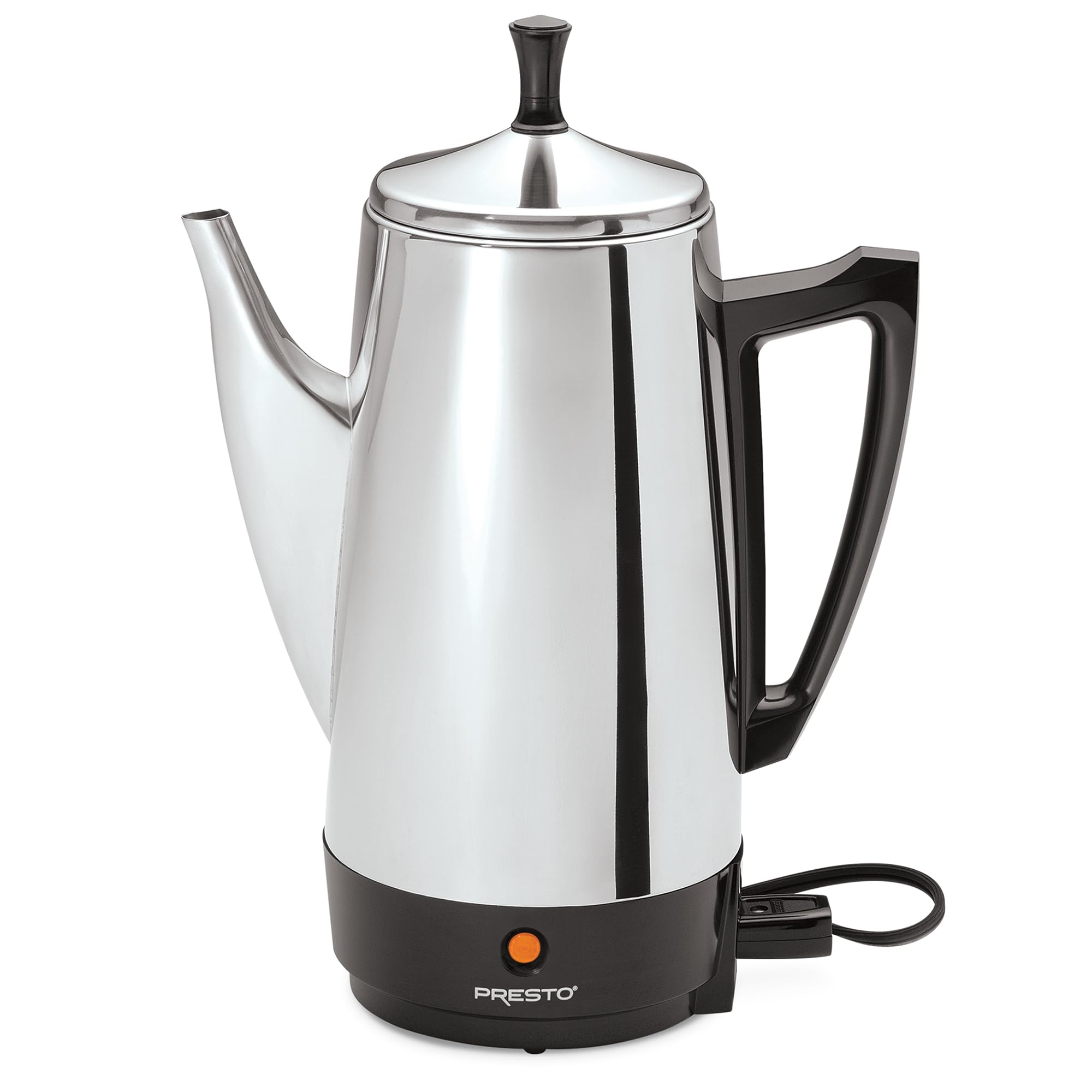
The Presto 02811 is the most practical electric percolator for anyone who wants real antique-style flavor without hovering over a stove. Its 750-watt heating element brings 12 cups of water (5 ounces per cup, yielding about 60 ounces total) to percolation speed in roughly 8 minutes, and the signal light indicates when brew is complete. The all-stainless interior eliminates any plastic contact during brewing — a critical point for buyers who complain about off-flavors from plastic-encased alternatives.
The automatic temperature control system keeps the coffee hot after the cycle finishes, but there is no shut-off timer; you must unplug when leaving the house. Customers report that the basket holes, while effective, can let fine sediment through unless you use a small paper filter punched with a center hole. The slim spout pours cleanly without dripping, and the stay-cool handle remains comfortable even after multiple cycles.
Owners consistently praise the 10-year reliability of this unit — many reviews describe daily use for over half a decade with no component failure. The only mechanical niggle is the lack of a glass knob; the plastic knob on the lid does not allow visual inspection, meaning you judge readiness by sound and steam rather than the classic bubble-watching ritual.
Why it’s great
- All-stainless steel internal path — zero plastic touching hot water or coffee
- Fast brew cycle (8 minutes for 12 cups) with automatic keep-warm function
- Dishwasher-safe construction simplifies cleanup
Good to know
- No auto shut-off — must unplug manually when leaving
- Plastic lid knob eliminates the glass visual feedback that antique pot fans prefer
- Basket hole design may allow fine grounds through; a small paper filter helps
2. COLETTI Bozeman & Scouts Coffee Serving Set
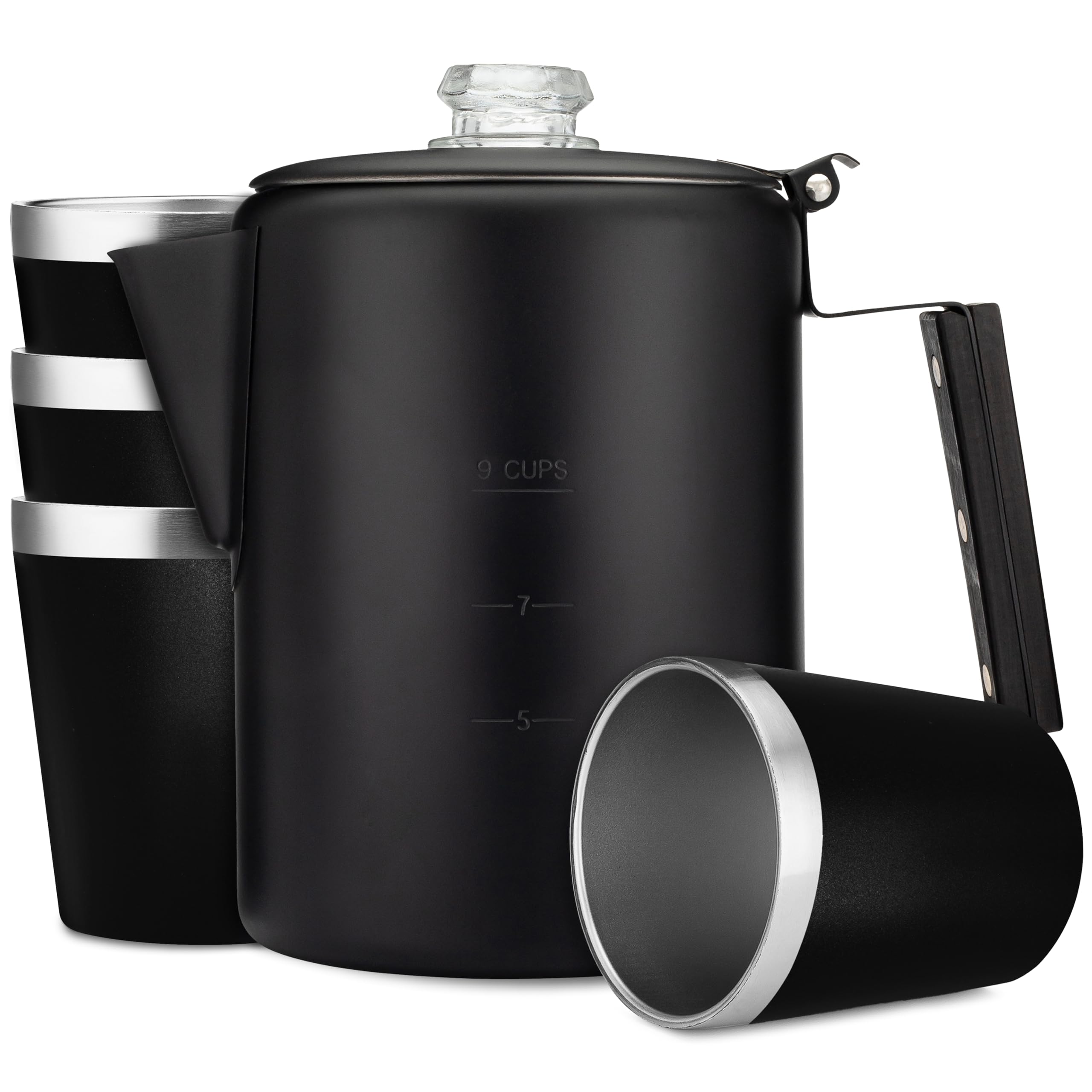
The COLETTI Bozeman is a complete camping coffee system built from toxin-free stainless steel — the percolator itself, a glass knob for watching the perk, and four double-walled 10-ounce cups that keep coffee hot without cozies. The 9-cup capacity (based on the 5-ounce standard) hits the sweet spot for two people who want a strong morning mug plus a refill, or for solo campers who do not want leftover stale coffee at midday.
The included 15-pack of paper filters effectively eliminates the sediment issue common to many percolators, and the smooth rim on the cups makes drinking pleasant without the sharp edge found on lesser camp cups. Multiple verified buyers emphasize that the unit must be heated on low to medium heat only — cranking the flame high causes steam to escape the lid seal rather than forcing water up the stem, effectively stalling the brew cycle.
Customer feedback consistently notes the heavier-gauge basket and stem compared to budget percolators. The stem has a wider opening than average, which some users claim requires a slightly coarser grind to avoid over-extraction. The handle stays cool throughout the brew, and the thumb rest on the lid prevents the glass globe from launching off when pressure builds — a real risk with lid-only designs.
Why it’s great
- Complete set with double-walled insulated cups that retain heat for over 30 minutes
- Dishwasher-safe percolator and cups simplify camp cleanup
- Includes 15 paper filters to remove sediment before it pours
Good to know
- Requires low/medium heat only — high heat causes steam leaks and no percolation
- 10-ounce cups are smaller than standard 12-ounce mugs, may feel short for some drinkers
- Wider stem opening demands coarser grind to avoid bitter over-extraction
3. COLETTI Classic Enamel Set Coffee Percolator & Mugs

If the phrase “cowboy coffee” gets your attention, the COLETTI Classic in its tried-and-true blue enamel finish delivers exactly the visual and functional experience you want. The pot is kiln-hardened twice at 1,000°F to bond the enamel to the heavy-gauge steel, and the interior components are all stainless steel — no aluminum or plastic touches the brew. The set includes four matching camping mugs, making it a ready-to-go coffee station for a weekend campsite.
The 12-cup capacity (using the 6-ounce per cup standard listed on the box) means this pot can handle larger groups, though several users note that the lid hinge feels less robust than the rest of the build. Over campfire use, the over-the-fire hanging handle allows suspension from a tripod, though the enamel coating can chip if the pot clanks against rock or metal surfaces. The heat-toughened glass top lets you watch the bubble cycle, which is half the enjoyment of brewing with an antique-style pot.
Reviewers report that the coffee tastes noticeably cleaner than aluminum percolators because of the stainless basket and stem. The basket assembly sits heavier than budget stainless models, which helps it maintain contact with the boiling water even in windy conditions. One caution: the included mugs, while charming, are not as durable as the pot itself — several owners report the enamel cups chipping after a few dishwasher cycles.
Why it’s great
- Fully stainless steel internal contact surfaces — no risk of metallic coffee taste
- Includes over-the-fire hanging handle and four enamel mugs in matching color
- Blue enamel finish is visually distinctive and resistant to moderate wear
Good to know
- Lid hinge feels flimsy relative to the pot’s otherwise heavy-gauge build
- Enamel on mugs chips after repeated dishwasher cleaning; hand wash recommended
- Glass knob is more fragile than fully metal designs — pack padding for transport
4. Coleman Stainless Steel Coffee Percolator, 12-Cup
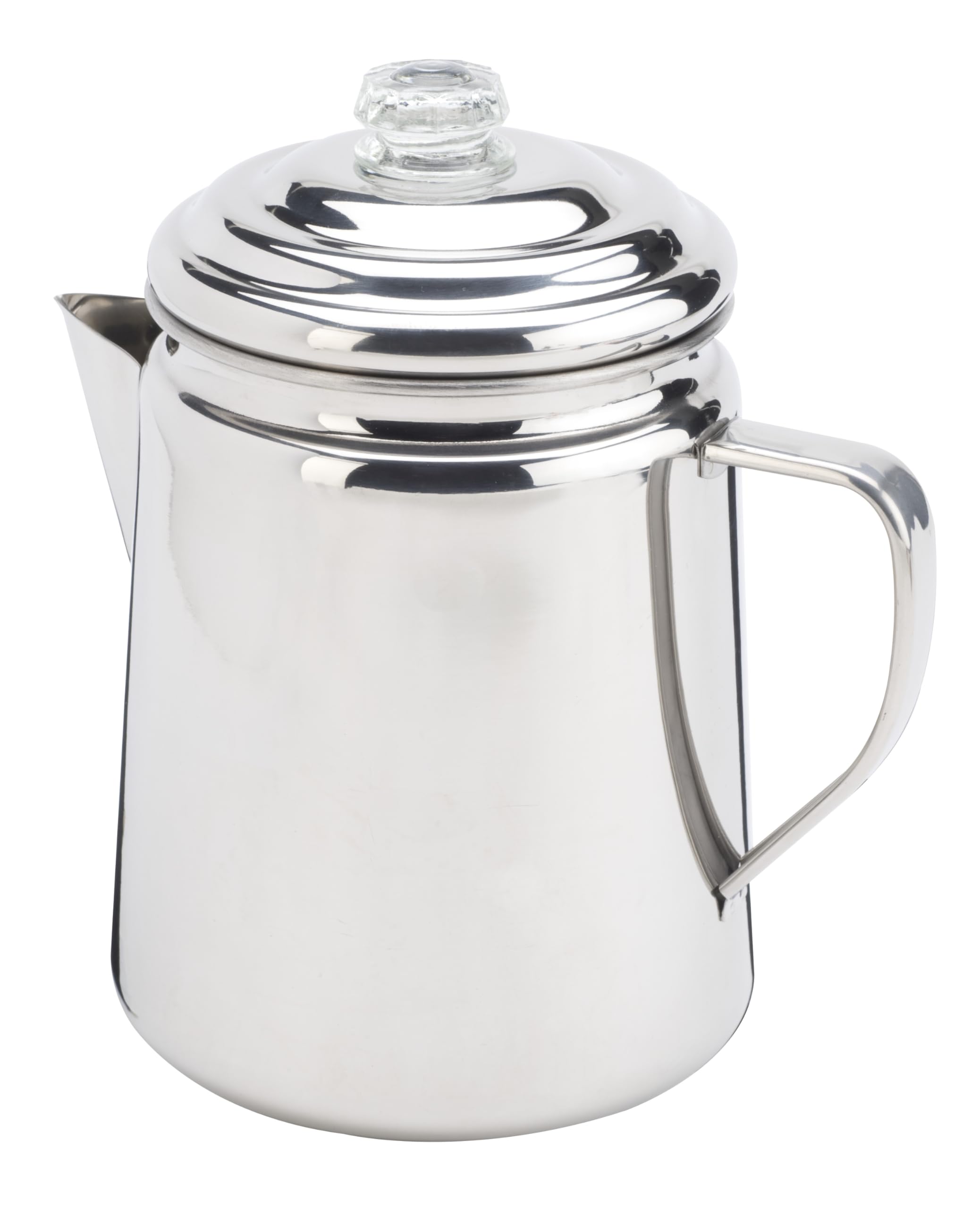
Coleman’s 12-cup stainless steel percolator has been a go-to for campers for years, and its appeal is simple: at 1.2 pounds with dimensions of 13 by 7 inches, it is lighter and narrower than most enameled competitors, fitting easily into a backpack side pocket or cooler corner. The construction is 100% stainless steel inside and out, with a reusable basket that requires no paper filters — just grounds, water, and heat.
The basket lid has drawn criticism for being slightly undersized, allowing some grounds to drift up into the water during the initial agitation phase. Experienced Coleman users recommend a two-step approach: let the water heat to a gentle simmer before inserting the basket assembly, then lower the heat so the percolation is a gentle “bubble per second” rather than a violent sputter. Brew time runs around 35 minutes for a full 12-cup batch if you start with cold water, or closer to 15 minutes if you pre-warm the water in a separate kettle.
The folding handle and bail wire are well-designed for tripod hanging over a campfire, though the handles on early production models occasionally had weak spot welds at the spout joint. Coleman’s customer service has historically replaced leaking units without hassle — a positive sign for durability confidence. The glass cap needs slight loosening during brewing to prevent pressure locking, and the pot should sit for 4 to 5 minutes after the fire is off to let grounds settle before pouring.
Why it’s great
- Lightest full-size percolator at 1.2 pounds — ideal for backpacking or canoe trips
- All-stainless steel construction with no plastic, aluminum, or enamel that can chip
- Proven spout and bail-wire handle design for campfire hanging
Good to know
- Basket lid is slightly too small, allowing fine grounds to escape into the brew water
- Requires a slower, gentler heat curve for proper percolation — rushing causes bitter coffee
- Early production units had spout joint weld failures; check current batch quality
5. NONNA 2.0 Glass Coffee Percolator
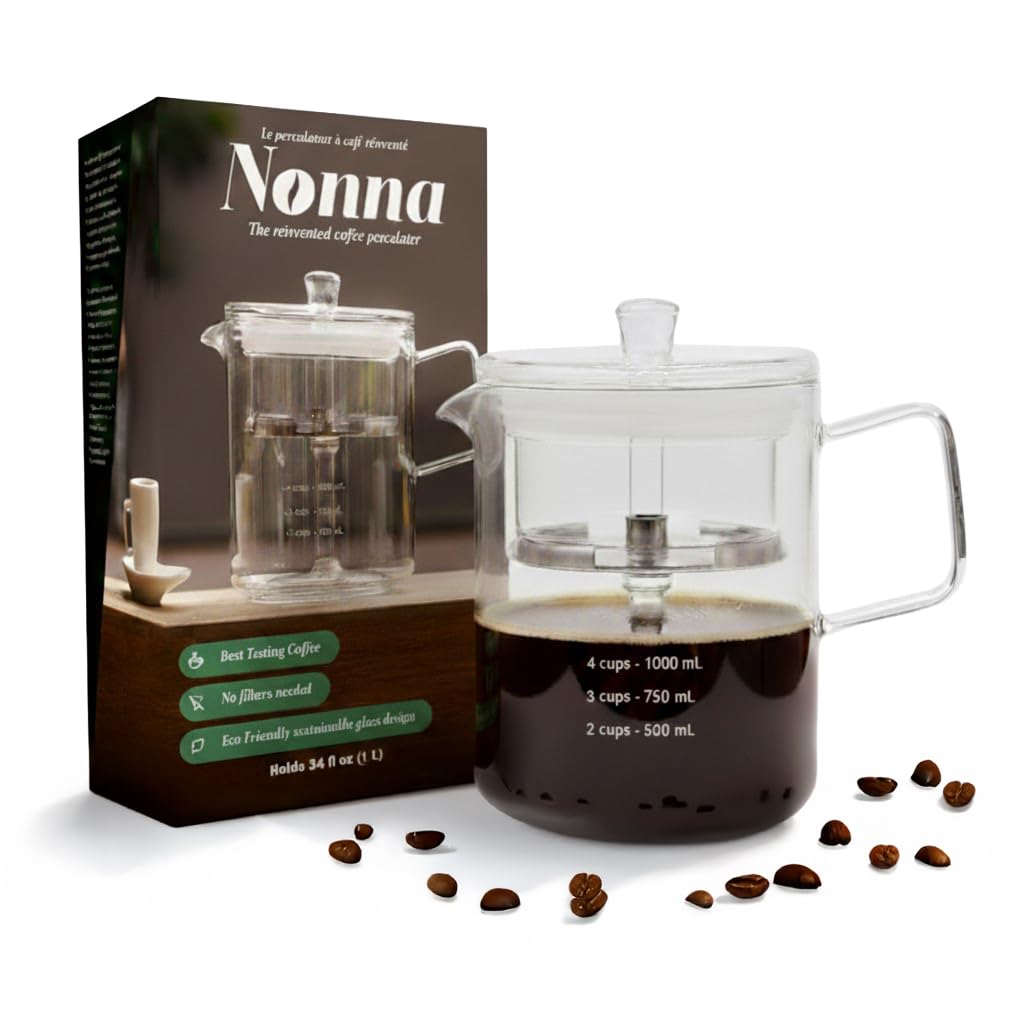
The NONNA 2.0 is the only glass percolator in this roundup, and it earns its place for the simple joy of watching the entire percolation cycle through transparent borosilicate walls. The revised 2.0 model fixes the original’s stem design issues — the glass stem now has a metal bottom, and the coffee basket features a glass body with a stainless steel bottom and lid, eliminating plastic entirely. The heat diffuser plate sits at the base to prevent direct flame contact with the glass reservoir.
This is a 4-cup percolator (using the standard 5 to 6 ounce cup definition), producing roughly 20 to 24 ounces of finished coffee — enough for one heavy drinker or two modest cups. The brew cycle runs 10 to 15 minutes from a cold start. Some buyers report that the stem’s three tiny holes barely wet the coffee bed, forcing them to manually pour hot water over the basket to kick-start extraction. This is a design trade-off unique to glass percolators — the stem must be narrow enough to fit the glass tube, limiting hole size.
Cleanup requires hand-washing with care; the glass components are dishwasher-safe according to the manufacturer, but the silicone seal around the lid can degrade in high-heat cycles. A quick rinse and soft sponge is safest. The coffee produced is noticeably smooth with no metallic aftertaste, which is the primary reason buyers accept the slightly longer brew time and the delicate handling requirements.
Why it’s great
- Fully transparent brewing — you can see the water clarity and percolation rhythm
- Zero plastic or aluminum in the brew path; borosilicate glass plus stainless steel
- Produces remarkably smooth, non-bitter coffee with proper grind and timing
Good to know
- Glass stem’s small holes may not wet all grounds evenly without manual assistance
- Fragile — requires low heat and careful handling to avoid thermal shock or breakage
- Silicone lid seal degrades in dishwasher heat; hand washing is strongly recommended
6. Bialetti Moka Express Iconic Italian Stovetop Espresso Maker

The Bialetti Moka Express is not technically a percolator — it uses steam pressure rather than boiling water cycling — but it is the closest non-electric antique-style coffee maker that millions of households recognize. The six-cup model produces roughly 7.5 ounces of concentrated coffee when filled correctly (cold water up to the safety valve, medium-fine grounds without tamping). The patented safety valve on the lower chamber ensures that if pressure climbs too high, steam vents safely rather than sending the pot airborne.
The 300-milliliter capacity is best for two people who want a small, strong serving or for one espresso-based drink maker who uses the output as a latte base. The aluminum body heats quickly and evenly on gas and electric stoves, but it is not induction-compatible without the Bialetti adapter plate. The handle, made of thermoplastic resin, stays cool during brewing — a major safety advantage over full-metal moka pots.
Customer feedback over the decades confirms that the Moka Express delivers consistent, rich coffee with a decent crema layer when used correctly. The main complaints revolve around cleaning — the aluminum must be hand-washed with water only (no soap), and the lower chamber can develop a white oxidation film if not dried immediately. The gasket and filter plate need replacement every 12 to 18 months depending on use frequency.
Why it’s great
- Proven design since 1933 — millions of users can’t be wrong about the learning curve
- Patented safety valve prevents dangerous pressure buildup
- Compact footprint (2 inches wide) fits any stovetop easily
Good to know
- Not a true percolator — uses steam pressure, not water cycling, so flavor profile differs
- Aluminum body can develop metallic taste over time; avid users season pots first
- Gasket and filter plate require periodic replacement for optimal performance
7. Alessi A9095/6 B La Cupola Espresso Maker

The Alessi La Cupola occupies a unique niche: it is a functional espresso maker that also serves as a statement piece on your stovetop. Designed by architect Aldo Rossi, its dome-shaped lid and matte-black thermoplastic handle give it a minimalist, almost sculptural profile. The 6-cup capacity yields about 10.1 fluid ounces of rich espresso-like coffee, and the cast aluminum body heats faster than the Bialetti equivalent due to thicker wall construction.
The key difference from standard moka pots is the polished cast aluminum finish. Multiple owners report that this material does not develop the black discoloration that plagues cheaper aluminum pots over time, maintaining its silver appearance for years with proper care. The handle and knob are made from thermoplastic resin that stays comfortable to touch even after several brew cycles. The basket and filter plate are reusable and easy to remove for cleaning.
Brewing technique differs slightly from the Bialetti: the La Cupola requires medium-ground beans (not espresso grind, which clogs the filter plate), and the pot must be hand-washed with mild soap and dried immediately to prevent oxidation. The cover of the basket has a built-in silicone gasket that pushes the coffee through at a consistent rate; users recommend tightening the pot only hand-firm — overtightening makes disassembly difficult once the body expands with heat.
Why it’s great
- Museum-quality design by Aldo Rossi that doubles as a functional coffee maker
- Cast aluminum body resists blackening better than standard moka pot alloys
- Consistent extraction thanks to well-engineered silicone gasket in the basket lid
Good to know
- More expensive than functionally similar moka pots due to designer branding
- Not dishwasher safe — hand cleaning required to preserve surface finish
- Overtightening the body causes difficult disassembly; requires careful hand closure only
FAQ
What is the difference between a percolator and a moka pot?
Do I need paper filters for an antique percolator coffee pot?
Can I use an antique percolator on an induction stovetop?
How do I clean an antique-style percolator without damaging it?
Final Thoughts: The Verdict
For most users, the best antique percolator coffee pot winner is the Presto 02811 because its electric operation combines the classic percolation cycle with set-and-forget temperature control and all-stainless construction. If you want the full campfire ritual with modern materials, grab the COLETTI Bozeman. And for the sheer visual pleasure of watching water bubble through glass, nothing beats the NONNA 2.0.