
The tactile crackle of a real metal bell, the weighted heft of a handset that demands two hands, and the hypnotic whir of a numbered dial spinning back — no smartphone notification can replicate that. An antique rotary phone isn’t just a decoration; it’s a functional time machine that grounds your space in an era when communication had a deliberate, physical rhythm. But the market is flooded with lightweight resin replicas that look the part but feel hollow, and the single biggest pain point for buyers is separating a genuine-feeling, working piece of history from a cheap prop that fails within weeks.
I’m Min — the co-founder and writer behind Gadgets Feed. My research for this guide involved cross-referencing thousands of customer reports and technical datasheets to identify which retro phones actually deliver on their promise of authentic construction and reliable landline performance.
Buying a best antique rotary phone means choosing between a conversation piece that works daily and a decorative trinket that collects dust after its first ring.
How To Choose The Best Antique Rotary Phone
Not every retro-shaped box on a shelf is ready for real daily calling. The difference between a phone that becomes a family conversation piece and one that ends up in a closet comes down to four core categories: the authenticity of the dial mechanism, the material of the enclosure, the type of ringer, and its compatibility with modern telephone networks.
Dial Mechanism: Mechanical Feel vs. Digital Shortcuts
A true rotary dial has a spring-loaded escapement that produces a distinct mechanical noise and a finger-stop that prevents over-rotation. Many budget-friendly units use push-button electronics hidden under a rotary-shaped plastic disc; these lack the physical resistance and tactile feedback that purists expect. The dial is the single most defining user interface on an antique rotary phone.
Enclosure Material: Weight as a Proxy for Quality
Premium phones use thick resin, die-cast metal, or a combination that gives the body a substantial weight — typically over three pounds. Lightweight ABS plastic units under two pounds tend to slide across a desk when you dial, breaking the illusion of sturdiness. Inspect the listed weight in grams or pounds before buying.
Ringer Type: Real Metal Bell vs. Digital Speaker
The difference between a real mechanical bell and a digital speaker is immediately audible. A real bell produces a resonant, two-tone “brrring-brrring” that fills a room naturally. A digital speaker emits a tinny, compressed tone that sounds like a budget alarm clock. Models explicitly advertising a “real metal bell” or “mechanical bell” are the only ones that deliver authentic sound.
Network Compatibility: Pulse Dialing and VoIP
Most antique rotary phones use pulse dialing (loop disconnect), which modern VoIP adapters and some digital home networks do not natively support. Look for models that explicitly state “tone dialing” or “touch-tone” compatibility, as these internally convert the rotary input to DTMF tones that work with services like MagicJack, Ooma, and modern PBX systems.
Quick Comparison
On smaller screens, swipe sideways to see the full table.
| Model | Category | Best For | Key Spec | Amazon |
|---|---|---|---|---|
| Opis Technology 60s Cable | Premium | Authentic Bell Sound | Real Metal Bell Ringer | Amazon |
| GPO 746 Rotary | Premium | Modern Network Compatibility | Tone Dialing / DTMF | Amazon |
| Crosley CR62-BC Kettle | Mid-Range | 1930s Reproduction Style | Real Mechanical Bell | Amazon |
| XICHEN Imitation Copper | Premium | Heavy Ornate Decor | 3 lbs Resin + Metal Build | Amazon |
| TelPal Bronze Desk | Mid-Range | Full Function Dial + Redial | Resin Construction | Amazon |
| DYRABREST European Rotary | Mid-Range | Decorative Display Piece | Zinc Alloy Bracket | Amazon |
| WICHEMI Vintage Gold | Budget-Friendly | Ornate Aesthetic on a Budget | Gilded Ceramic Texture | Amazon |
In‑Depth Reviews
1. Opis Technology 60s Cable – Rotary Landline Phone
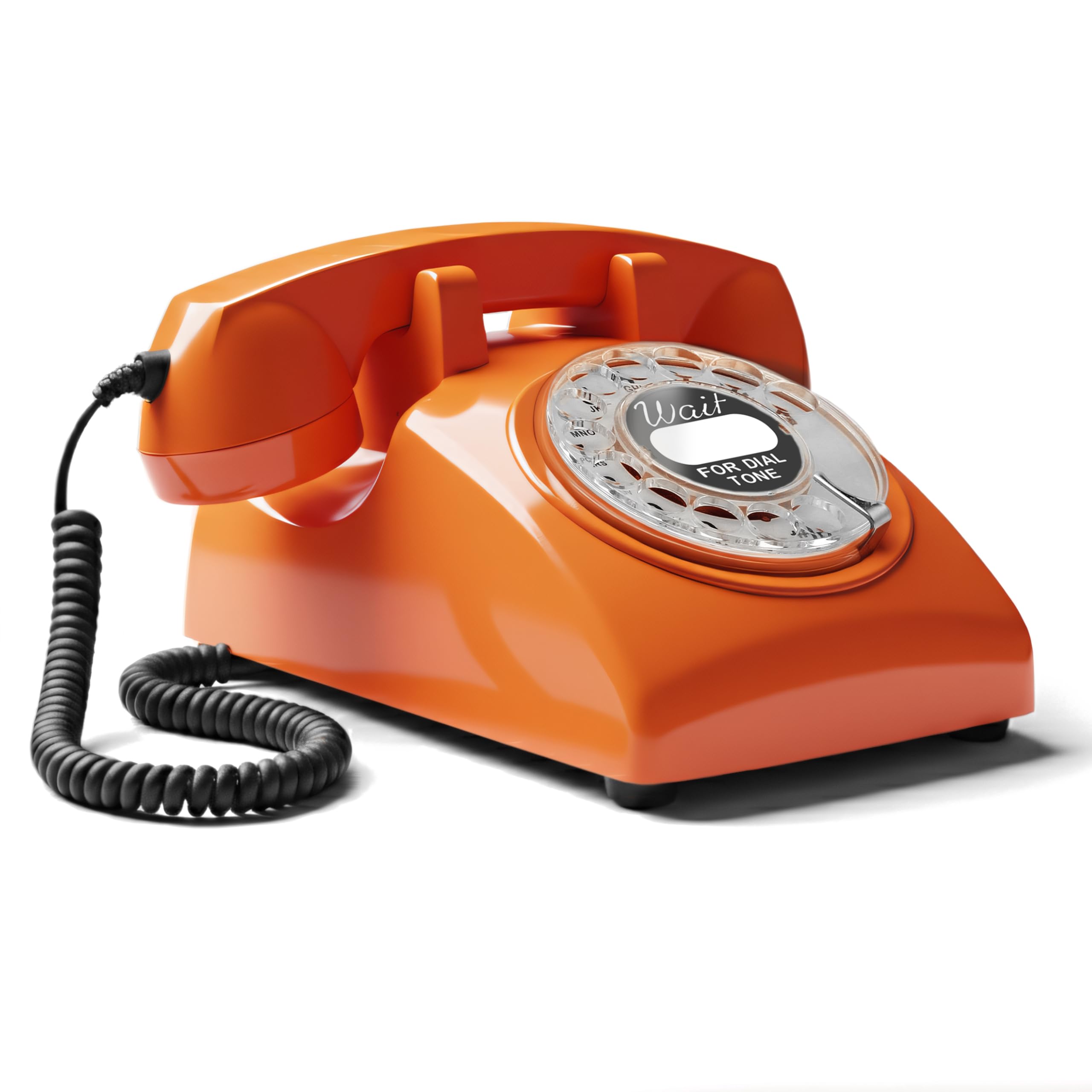
The Opis 60s Cable is the only phone in this roundup that combines an original German design pedigree with a genuine metal bell ringer — no digital speaker simulation. When it rings, the two-tone mechanical hammer strikes physically resonate through the 1.1-kilogram body, producing the unmistakable room-filling sound that defines the vintage telephone experience. The dial mechanism has a satisfying click-and-return action that feels close to an original 1960s unit.
Available in eight colors including this stand-out orange, the phone is built with a high-density plastic chassis that feels denser than typical budget resin models. It supports both pulse and DTMF tone dialing, making it compatible with most modern landline and VoIP services including 2G cellular network adapters. The handset cord is a straight PVC cable rather than a coiled curly cord, a minor deviation from strict period accuracy.
Call quality is loud and clear for standard conversations, though one reviewer noted that the microphone sensitivity requires a quiet room to avoid echo. The handset cradle holds the receiver securely with no wobble, and the base is heavy enough to stay planted during dialing. For buyers who prioritize authentic sound and tactile feedback over cheap plastic decorations, this is the clear pick.
Why it’s great
- Real metal bell ringer produces authentic two-tone sound
- German brand with solid build and satisfying dial feel
- Compatible with pulse and tone networks
Good to know
- Straight handset cord, not a curly cord
- Microphone sensitivity can pick up background noise
2. GPO 746 Rotary 1970s-style Retro Landline Phone

The GPO 746 is an icon of British telecommunications design, reproducing the classic 1970s rotary telephone that was a staple in millions of homes across the UK. The defining feature here is its use of true tone dialing (DTMF) under the rotary interface, which means it works natively with modern digital networks, VoIP services, and automated phone banking systems without any adapter. The included Ringer On/Off switch adds practical modern control.
The enclosure is made from ABS plastic, which keeps the weight down to just 1 kilogram. This makes it one of the lighter rotary phones on this list, but it also means the base can slide slightly when dialing unless you add adhesive bumper pads (a user-proven hack). The curly cord is a highlight — it’s a genuine coiled handset cable that matches the era perfectly, and the bell ringer produces a clear, recognizable ring that evokes genuine nostalgia.
Sound quality is good but not exceptional; the handset speaker is clear for voice calls but lacks the deep resonance of heavier metal-bodied phones. The dial spins freely and returns with a pleasant mechanical whir, though the plastic finger-stop feels less robust than all-metal alternatives. For users who need guaranteed compatibility with BT, Virgin, or any VoIP service, this is the safest choice.
Why it’s great
- Tone dialing works with BT, Virgin, VoIP, and digital services
- Authentic curly cord and recognizable bell ring
- Ringer On/Off switch for practical use
Good to know
- Lightweight ABS body slides during dialing without adhesive pads
- Sound quality adequate but not premium
3. Crosley CR62-BC Kettle Classic Corded Desk Phone
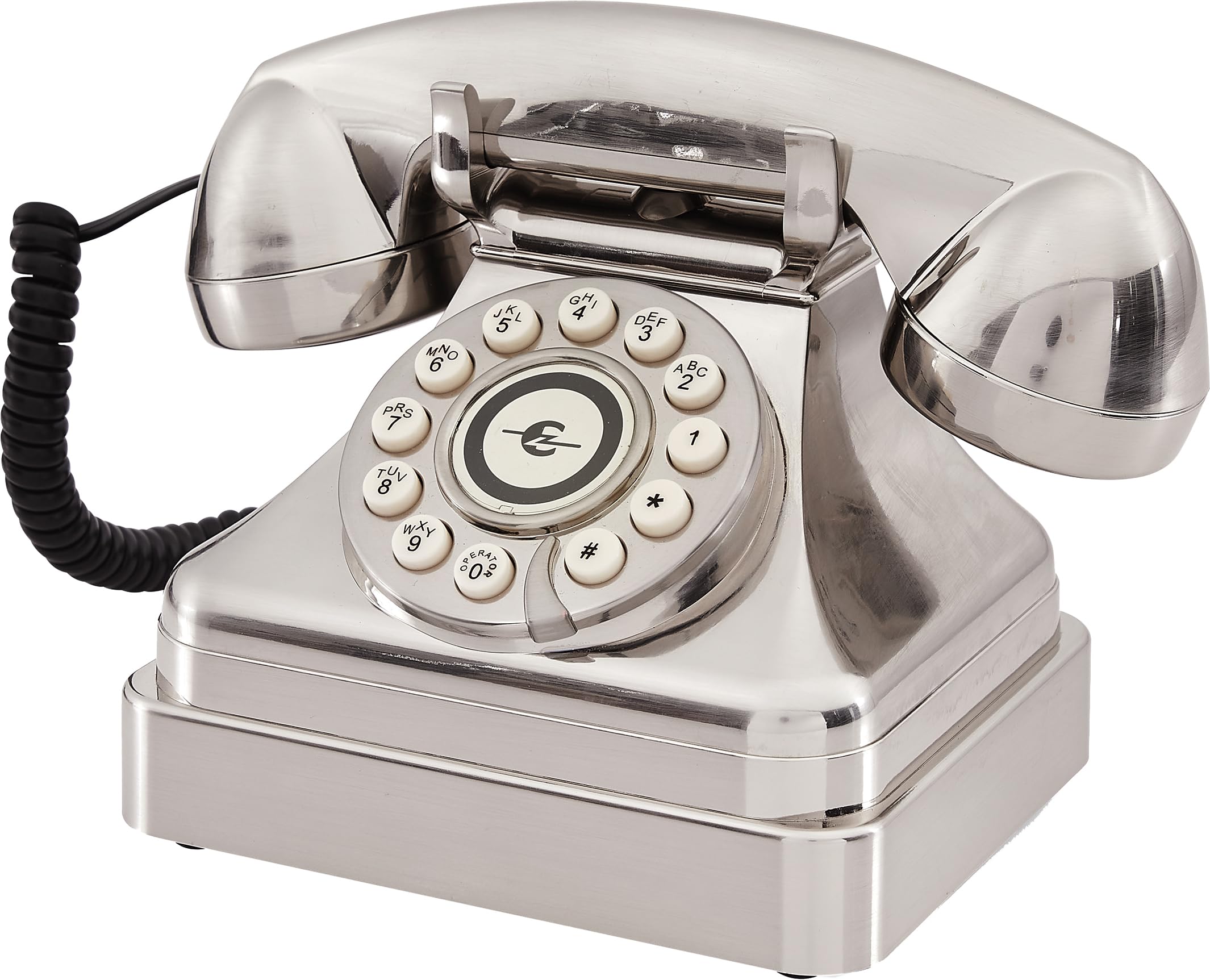
The Crosley Kettle Classic is a faithful reproduction of the 1930s Leich 90 desk phone, built around a real mechanical bell that creates the full, resonant ring tone buyers associate with vintage telephones. The brushed chrome finish is understated and fits mid-century modern decor without being overly ornate. It weighs 2.75 pounds, giving it a satisfying desk presence without being cumbersome.
The rotary dial is push-button activated under the spinning disc, meaning it is not a true mechanical rotary mechanism — the dial spins but the connection is made through modern contacts. This hybrid approach allows the phone to work with modern networks without adapters while retaining the visual and tactile act of spinning the dial. The handset is lighter than an original 1930s unit, which some users note as the primary tactile compromise.
Earpiece volume control is a welcome modern addition, and the phone supports flash and redial functions. One significant durability concern: multiple reports indicate the phone can fail after a few months of light use, often losing dial tone or handset function. The manufacturer offers a repair service, but the failure rate is higher than expected for a mid-range product. For decoration-focused buyers, the aesthetic is excellent; for daily calling, proceed with caution.
Why it’s great
- Real mechanical bell produces authentic ring sound
- 1930s design is a classic mid-century decor piece
- Earpiece volume control and functional redial
Good to know
- Handset is lighter than original, reducing tactile authenticity
- Reliability issues reported — some units fail within months
4. XICHEN Resin Imitation Copper Vintage Rotary Phone

The XICHEN imitation copper phone prioritizes visual heft and decorative impact over every other metric. At 3 pounds and measuring over 11 inches wide, it commands desk space with an ornate gold finish that mimics aged copper. The enclosure combines dense resin with metal components, producing a thud when placed on a table that immediately signals quality. It is the heaviest phone in this comparison.
The dial is a functional rotary mechanism, and the phone works on standard PSTN landlines. The ringer uses a digital speaker rather than a metal bell, producing a preset jingle that can be adjusted in volume but not changed. This is the biggest compromise — the ring sound is pleasant but lacks the mechanical authenticity that antique phone seekers crave. The handset is plastic, which creates a noticeable weight disparity between the heavy base and light receiver.
Users consistently praise the “sturdy, heavy build” and note that the sound quality for voice calls is surprisingly good — better than some modern cell phones according to one extended review. The instructions are poorly translated and the handset cradle can wobble, but the overall construction feels robust. This phone is best suited for buyers who want a heavy, visually commanding display piece that still works as a backup phone.
Why it’s great
- 3-pound all-resin build with metal accents feels premium
- Voice call quality is clear and full-bodied
- Ornate design works as a standalone art piece
Good to know
- Digital ringtone speaker, not a real metal bell
- Handset is plastic and feels light compared to base
5. TelPal Bronze Desk Rotary Dial Telephone

The TelPal Bronze phone aims to be a truly functional workhorse disguised as a 1950s relic. It includes one-touch redial, a built-in speaker and microphone for hands-free calling, and can make and receive calls on standard landline networks. The resin body is substantial and weighted to stay put, and the rich bronze finish captures the mid-century look without being overly decorative.
The rotary dial operates with the classic finger-stop and spin-back action, though the internal mechanism uses modern contacts rather than vintage pulse generation. The phone does not require batteries or external power — it draws everything from the phone line, making it a true plug-and-play unit. The handset jack is recessed, and the unit ships packed in styrofoam that can shed debris into the headset port, requiring a careful inspection before first use.
Customer feedback is polarized: many praise the phone as “stunning” and “luxurious,” noting it works perfectly for daily use and draws compliments in any room. However, a significant minority received units that were broken on arrival or failed within days. The packaging is minimal, and the lack of a protective bag for the handset plug means debris ingress is a recurring complaint. Buyers should inspect and test immediately upon delivery.
Why it’s great
- Full hands-free operation with built-in speakerphone
- One-touch redial works reliably
- Heavy resin body stays planted on the desk
Good to know
- Packaging debris can clog the handset jack
- Inconsistent quality control — some units arrive broken
6. DYRABREST European Rotary Corded Antique Telephone

The DYRABREST European Rotary phone leans heavily into decorative excellence, with a carved bronze-colored resin body and a zinc alloy bracket that gives it a 4-pound total weight — the heaviest single unit in this lineup. The fiberglass panel and ABS handset construction are chosen for fire and moisture resistance, suggesting this unit was designed for commercial spaces like hotels, galleries, and coffee shops more than home desks.
Functionally, it works as a standard landline phone with noise reduction circuitry that produces clean call quality. The redial function is a button-based feature activated by pressing an “RD” key after hanging up, which is a modern convenience grafted onto the retro form. The rotary dial spins freely but does not generate pulse tones — it operates as a visual shell over modern electronics.
Most buyers use this phone exclusively as a display item, and it excels in that role. The ornate carved detailing catches light effectively, and the large footprint (10.24 x 11.81 inches) makes it a statement piece on any surface. The tactile experience is mixed: the dial feels good, but the handset is lighter than the base, reducing the overall sensory authenticity. For pure decoration with occasional calling, this is a strong contender.
Why it’s great
- Heaviest model at 4 pounds with zinc alloy bracket
- Carved resin design is highly decorative and detailed
- Noise reduction circuitry for clean calls
Good to know
- Primarily a display piece — dial is a visual shell
- Handset is significantly lighter than the base
7. WICHEMI Vintage Phone Retro Rotary Dial Landline

The WICHEMI Vintage phone offers the most ornate aesthetic at an entry-level price point, combining a gilded ceramic texture with epoxy resin and copper metallic luster. The visual impact is impressive for the money — the bronze finish catches light and looks far more expensive than the price suggests. At 1.8 kilograms, it has enough heft to feel substantial without being desk-dominating.
Functionally, this phone is a mixed bag. The rotary dial operates with improved accuracy over earlier budget models, solving the common issues of error codes and missed digits. It offers one-key answer, redial, and hands-free calling. The ringtone is a digital speaker that plays a preset jingle — it is loud and clear but lacks the character of a mechanical bell. The phone is corded electric and draws power directly from the phone line with no batteries required.
User feedback is overwhelmingly positive, with reviewers noting that the phone “works seamlessly with MagicJack” and “fits Victorian decor perfectly.” The primary trade-off is in the materials: the body is a mix of resin, metal, and wood composites, and the handset lacks the solid feel of all-metal or thick-resin competitors. For buyers who want maximum decorative flair at minimum expense, the WICHEMI delivers strong visual value.
Why it’s great
- Ornate gilded ceramic texture looks premium on a budget
- Improved dial accuracy and reliable redial function
- Works with MagicJack and VoIP adapters
Good to know
- Digital ringtone speaker — no authentic bell sound
- Mixed material construction lacks all-metal solidity
FAQ
Will a rotary phone work with my modern VoIP service like MagicJack or Ooma?
How can I tell if a rotary phone has a real metal bell ringer or just a digital speaker?
Why does my new rotary phone feel lightweight and slide on the desk when I dial?
Final Thoughts: The Verdict
For most users, the best antique rotary phone winner is the Opis Technology 60s Cable because it delivers the single most important sensory feature — a real metal bell ringer — in a solid, German-engineered body that works with modern networks. If you need guaranteed compatibility with digital services and a classic curly cord, grab the GPO 746 Rotary. And for purely decorative purposes where visual weight and ornate detailing matter most, nothing beats the DYRABREST European Rotary.