
A salamander heater is the difference between a crew that works through a bitter winter day and a jobsite that grinds to a halt by noon. These portable forced-air heaters are built to throw a wall of warm air across barns, warehouses, and construction zones, but the market is flooded with units that struggle to ignite, burn through fuel, or fail mid-season. Finding a real salamander — one that starts every time, holds a steady flame, and safely heats a large space — takes more than picking the first yellow tank you see.
I’m Min — the co-founder and writer behind Gadgets Feed. I’ve spent hundreds of hours analyzing the technical specs of propane, kerosene, and electric forced-air heaters, including BTU ratings, fuel consumption rates, thermocouple designs, and safety shutoff systems, to separate legitimate commercial-grade units from disposable consumer-grade models that look the same on a shelf.
Whether you need to dry out a concrete pour, keep livestock warm overnight, or finish a trim-out in an unheated shell, this guide breaks down the best antique salamander heater options that deliver real, repeatable heat without the headaches.
How To Choose The Best Antique Salamander Heater
Salamander heaters live a hard life: dropped off truck beds, run in dusty barns, fueled with whatever diesel happens to be in the can. Picking one that survives that abuse means looking past the paint job and understanding the guts that matter.
Fuel Type Dictates Everything
Kerosene and diesel-fired salamanders are the workhorses of unpowered job sites — they produce intense heat quickly and run hours on a single tank. The trade-off is fuel odor, soot on ignition, and the need for ventilation. Electric salamanders, like the Dr. Infrared and TPI models, deliver clean, instant, odorless heat with no exhaust, but they require a dedicated 240V circuit with a heavy breaker, making them impractical for remote locations without existing power infrastructure. Natural gas units like the Heatstar offer low fuel cost but need a gas line connection, limiting portability.
The BTU Number Isn’t Everything
A 175,000 BTU kerosene heater can warm a massive warehouse, but if the space is leaky or uninsulated, that heat leaves as fast as it arrives. Focus on the heater’s ability to move air — cubic feet per minute (CFM) is often more predictive of real-world performance than raw BTU output. A heater with a high-output fan and a well-designed combustion chamber will circulate warm air farther and more evenly than one with a weak blower and a bare flame.
Built to Be Beat On
Look for welded steel frames, recessed controls that won’t snap off if the unit tips, and fuel tanks made from thick-gauge material that resists dents and rust. Flat-free tires and lift handles make a real difference when you’re moving a 60-pound heater across a muddy site. LED diagnostics and accessible replacement parts — like thermocouples and igniters — separate a heater you’ll own for a decade from one you’ll throw away after a single season.
Quick Comparison
On smaller screens, swipe sideways to see the full table.
| Model | Category | Best For | Key Spec | Amazon |
|---|---|---|---|---|
| Mr. Heater 75,000 BTU | Kerosene | Reliable daily use | 11-hour run time on full tank | Amazon |
| Dura Heat DFA135C | Multi-Fuel | High-output commercial use | 135,000 BTU with thermostat | Amazon |
| VEVOR 175,000 BTU | Kerosene | Large spaces on a budget | 13.2-gallon tank, 9.5-hour run | Amazon |
| Mr. Heater 80,000 BTU | Kerosene | Garages and workshops | Built-in thermostat, 2,000 sq ft | Amazon |
| DEWALT DXH75KT | Kerosene | Brand consistency on-site | 75,000 BTU, 1,875 sq ft coverage | Amazon |
| Heatstar HS125NG | Natural Gas | Patio and slab work | 125,000 BTU, 3,000 sq ft | Amazon |
| Dr. Infrared DR-PS11024 | Electric | Clean, odor-free construction | 10,000-Watt, 240V hardwire | Amazon |
| Dr. Infrared DR-PS11524 | Electric | Largest electric coverage | 15,000-Watt, 240V, 80A breaker | Amazon |
| TPI FES15243E | Electric | Industrial 3-phase heat | 15kW, 240V 3-phase forced air | Amazon |
In‑Depth Reviews
1. Mr. Heater 75,000 BTU Forced Air Kerosene Heater

This Mr. Heater model sits at the sweet spot of the category: enough BTU output to warm a 1,750-square-foot uninsulated garage from freezing to comfortable in under ten minutes, but with a fuel consumption rate that gives you 11 hours of continuous heat on a single tank of K-1 kerosene. The rugged steel cabinet and heavy-duty fan are built for the bumps and drops of daily jobsite life, and the six-function LED diagnostics take the guesswork out of troubleshooting a no-start condition.
Users consistently report that this unit burns clean when fed proper K-1 fuel — very low carbon monoxide output and minimal odor on ignition, which is rare for forced-air kerosene heaters at this price tier. The thermostat-equipped version lets you set a target temperature, and the lighted on/off switch with fuel gauge makes operation straightforward even in low-light conditions. Several long-term owners note the heater still runs like new after years of regular seasonal use.
The key to longevity with this model is fuel quality: stale diesel or contaminated kerosene will clog the nozzle and produce heavy smoke. Stick with fresh 1-K kerosene and run the heater periodically even in warmer months to prevent gummed-up fuel lines. At 37.9 pounds, it’s manageable for one person to move between the truck bed and the jobsite without breaking a sweat.
Why it’s great
- Proven reliability with years of owner reports backing its durability
- LED diagnostics system saves time on ignition and burner troubleshooting
- Economical fuel consumption reduces daily operating costs on long jobs
Good to know
- Requires a specific fuel grade (K-1) for best results; stale fuel causes issues
- No built-in wheels or handle at this price range, though weight is manageable
2. Dura Heat DFA135C 135K BTU Kerosene Forced Air Heater

The Dura Heat DFA135C is a commercial-grade unit that accepts K-1 kerosene, #1 and #2 fuel oil, diesel, JP-8, and Jet-A fuels, making it the most versatile fuel option in this lineup. The 135,000 BTU output heats up to 2,900 square feet, and the large-capacity fuel tank with front and rear lift handles and flat-free tires makes repositioning across a muddy site feasible without a dolly. The piggyback power plug is a clever addition that lets you daisy-chain another tool without hunting for a second outlet.
Owners praise the LED digital temperature indicator and diagnostics, which provide real-time feedback on the heater’s operating state. The commercial-grade construction — thicker steel, reinforced welds, and a heavy-duty blower — gives this unit a noticeably more solid feel than entry-level salamanders. Multiple users report that it warms a three-car garage from below freezing to 70°F in about 15 minutes, even on the coldest winter days.
One trade-off is the need to occasionally adjust the air/fuel mixture after extended use to maintain a clean burn. Some owners note that the thermostat’s temperature sensor placement can cause cycling if the unit is positioned too close to a drafty door. At 59.5 pounds, it’s not lightweight, but the integrated wheels and handles make it manageable for one person to wheel across a flat surface.
Why it’s great
- Accepts the widest range of fuels of any unit on this list
- Commercial-grade steel and welds hold up to job site abuse
- Digital temperature display with thermostat for precise heat control
Good to know
- Flat-free tires help mobility but add weight and cost
- Mixture adjustment may be needed after several tank cycles
3. Mr. Heater 80,000 BTU Forced Air Kerosene Heater Black

The 80,000 BTU variant from Mr. Heater is a direct competitor to the 75K model but comes with a built-in thermostat, high-temperature safety shut-off switch, and a photo cad cell flame sensor. Heating 2,000 square feet, it’s well-suited for barns and workshops where you need a set-it-and-forget-it approach. The LED troubleshooting diagnostics are the same proven system used on the company’s larger units, providing quick visual feedback on ignition, flame detection, and fuel pressure.
Customer feedback shows strong satisfaction with its ability to take a two-stall shop from arctic to t-shirt weather in about 20 minutes. Owners running it on diesel report similar performance to kerosene, though with slightly more odor on startup. The exterior remains cool to the touch during operation, which is a meaningful safety feature in tight workspaces where people and equipment pass close to the heater.
Some users noted that the heat output projects about five feet before the warm air begins to rise, so positioning the unit to blow across the work area rather than directly at the wall is key. A few reviewers mentioned that the unit did not ship with a pressure gauge as advertised, though the manufacturer provided one after a phone call. The noise level is typical for a forced-air unit — comparable to a shop vac — so ear protection is advisable for extended exposure.
Why it’s great
- Built-in thermostat maintains consistent temperature automatically
- Cool-to-touch exterior adds safety in tight workspaces
- Proven ignition system with photocell flame sensor for reliable starts
Good to know
- Heat travels only about 5 feet before rising, requiring strategic positioning
- Some units shipped without the advertised pressure gauge
4. DEWALT DXH75KT Kerosene Heater, 75K BTU
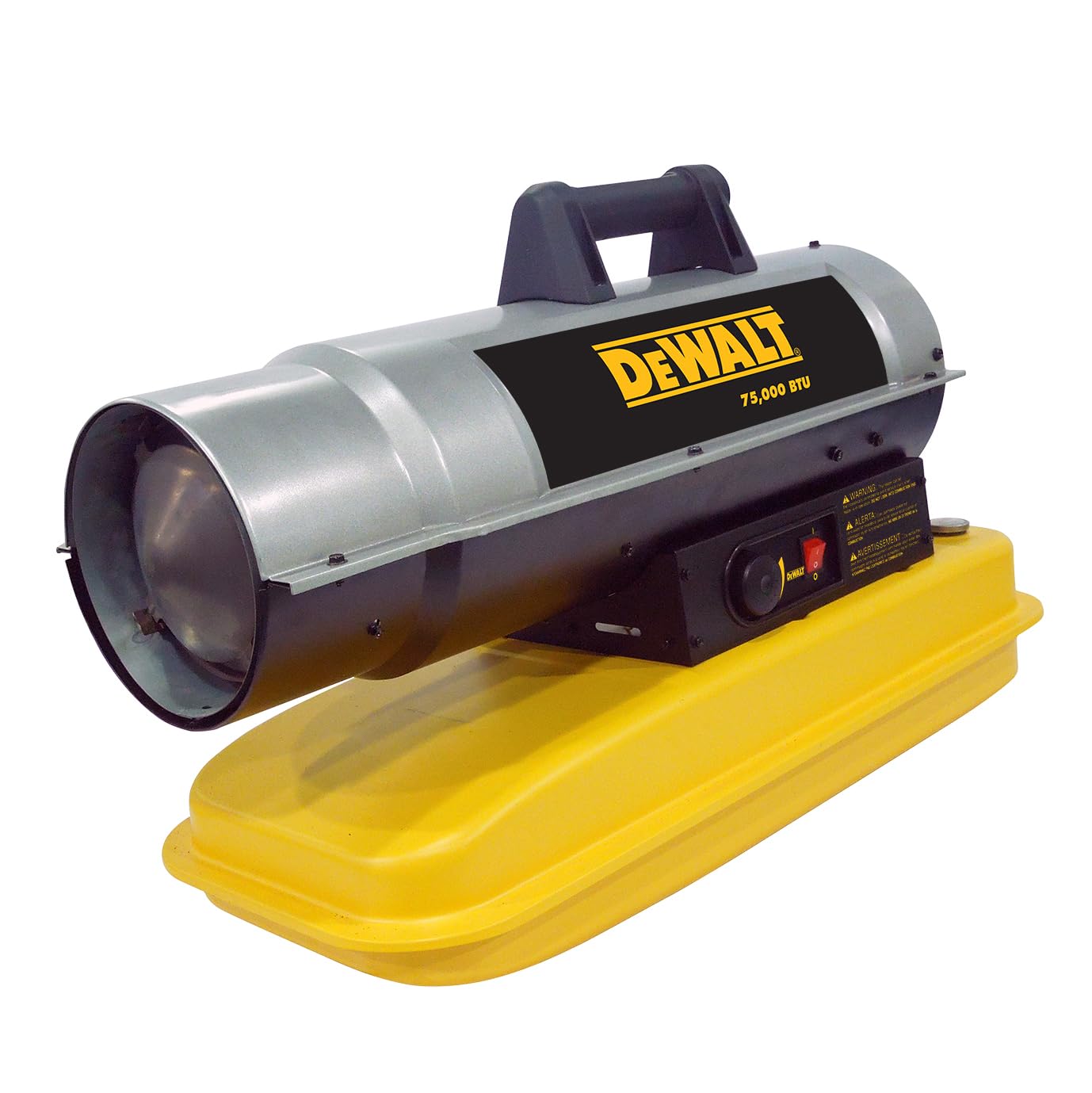
DEWALT brings its brand-level quality control to the salamander category with the DXH75KT, a 75,000 BTU kerosene heater that covers roughly 1,875 square feet. The recessed control panel is a thoughtful design choice — it protects the switches and thermostat from accidental damage when the heater is loaded into a truck bed or stored next to other equipment. Assembly is minimal: attach the handle and you’re ready to fill and fire.
Owner reports consistently highlight the superior build quality compared to generic branded units. The blower motor runs quieter than many competing models in the same BTU class, which is appreciated on long shifts where noise fatigue is a real concern. It burns both kerosene and diesel, so you can fuel it from the same pump as your work truck. Several users have reported that the thermostat works well when the heater is positioned close to the floor, matching the room’s actual temperature rather than the warmer air near the ceiling.
A notable durability concern surfaced in some reviews: the yellow painted fuel tank scratches easily, and the fuel level indicator can become difficult to read over time. There are also mixed reports on long-term motor reliability — some owners have units that run flawlessly for years, while others experienced motor failure after roughly eight tank cycles. The heater is well-packed for shipping, but the cardboard box is not reinforced, so arrive with a vehicle large enough to transport it securely.
Why it’s great
- Recessed controls are protected from impacts and debris on job sites
- Quieter blower motor than many other 75K BTU models
- Runs on both kerosene and diesel for fuel flexibility
Good to know
- Yellow paint on fuel tank scratches easily and shows wear quickly
- Mixed long-term reliability reports on the motor
5. Heatstar By Enerco F170850 Radiant Natural Gas Heater HS125NG
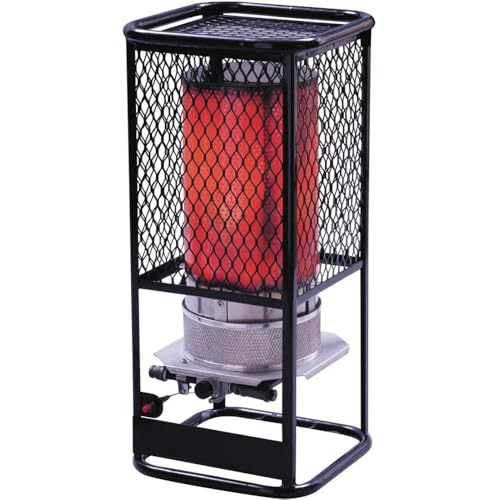
The Heatstar HS125NG is a different beast from the kerosene salamanders on this list — it’s a radiant natural gas heater designed for areas where a gas line is already present and you want quiet, fume-free heat without the roar of a forced-air blower. At 125,000 BTU, it covers up to 3,000 square feet, and the tower radiant design makes it stable and less conspicuous than a typical torpedo-shaped salamander.
Owners appreciate its low profile and lightweight construction — it’s easier to position and reposition than the heavy steel kerosene units. The heat output is substantial and feels more gentle than the blast of forced air, which makes it popular for patios, temporary construction heat in finished interiors, and earthquake preparedness. The difference between the low and high heat settings is minimal, but the gas consumption is low enough that running it on low all day is still economical.
The main recurring issue is the pilot assembly: multiple owners reported that the thermocouple is finicky and can require sanding or repositioning to keep the pilot lit consistently. In high-wind conditions, the pilot is nearly impossible to light outdoors. Customer service from the manufacturer is difficult to reach, so you may need to troubleshoot the thermocouple yourself — a manageable fix for someone comfortable with basic gas appliance maintenance but frustrating for those expecting plug-and-play operation.
Why it’s great
- Quiet radiant heat with no blower noise, ideal for occupied spaces
- Very low fuel cost when connected to natural gas
- Lightweight and low profile for easy repositioning
Good to know
- Thermocouple and pilot assembly can be unreliable out of the box
- Useless in windy outdoor conditions; pilot blows out easily
6. VEVOR 175,000 BTU Kerosene Forced Air Heater

The VEVOR 175,000 BTU heater is the heavy hitter of the budget category, delivering massive BTU output for spaces up to 36,021 cubic feet — that’s a 6,000-square-foot room with 6-foot ceilings or a smaller warehouse. The 13.2-gallon fuel tank supports up to 9.5 hours of continuous operation at a consumption rate of 1.3 gallons per hour. The thermostat knob with a room temperature display lets you set a target between 40°F and 110°F, and the unit shuts off automatically when the target is reached or if it overheats past 176°F.
Owners report impressive real-world performance: a 24×24 garage at 45°F reached a comfortable 75°F in about ten minutes. The dual fuel filters reduce smoke and odor compared to budget units with single-stage filtration, and the pressure gauge gives you feedback on fuel system health. Assembly is simple — just six bolts to attach the wheels and handle — though one user noted that a screen inside the fuel orifice fell into the tank immediately upon opening, which may or may not affect long-term reliability.
The two biggest drawbacks are noise and after-sales support. At full output, this heater is loud — several owners describe it as “jet engine” levels of sound, so ear protection is mandatory. The customer service experience is poor: users who experienced igniter or pump failure after a few weeks reported going in circles with email support and being unable to source replacement parts. For the price, the performance is excellent, but it’s a calculated risk if you need it for critical commercial work where downtime is expensive.
Why it’s great
- Highest BTU output in its price tier — heats massive spaces fast
- 9.5-hour runtime means fewer refueling stops on long shifts
- Dual fuel filters reduce smoke and odor during operation
Good to know
- Extremely loud — comparable to a jet engine at full throttle
- Customer support is unresponsive, and replacement parts are hard to find
7. DR. INFRARED HEATER DR-PS11024 Salamander Construction 10,000-Watt

The Dr. Infrared DR-PS11024 is a 10,000-watt electric salamander that delivers the cleanest heat possible: no fumes, no odor, no exhaust, and no fuel to store. It requires hardwiring to a dedicated 240-volt circuit with a 55-amp breaker — this is not a plug-and-play unit and demands a professional electrician for installation. The adjustable thermostat range from 37°F to 104°F gives you precise control, and the heavy-duty steel frame with safety guards on both intake and output ends is built for construction site abuse.
In real-world use, owners report that this heater keeps a 3,200-square-foot insulated house at roughly 60°F during an Idaho winter while running at half power. The heat output feels warm and even rather than the intense blast of a propane torch, making it suitable for spaces where people are working for extended periods. The cart makes portability straightforward on flat surfaces, and the unit is significantly quieter than any kerosene salamander — you can hold a conversation or listen to music nearby without shouting.
The major downside is electrical demand: the heater draws a massive amount of current, and running it full-time can add hundreds of dollars to your monthly electric bill. There is also a worrying reliability pattern in customer reviews — multiple owners reported internal sparking and noise after a few weeks of use, requiring return or replacement. The manufacturer’s support process is cumbersome, demanding photos and videos for warranty claims, and sourcing replacement parts is difficult. This unit is best suited for temporary construction heat where a 240V circuit is already available and the operator is prepared for potential early-life failures.
Why it’s great
- Completely clean, odorless, and fume-free operation — no ventilation needed
- Significantly quieter than kerosene salamanders
- Adjustable thermostat with wide range for precise temperature control
Good to know
- Requires professional hardwiring to a dedicated 240V, 55A circuit
- Reported reliability issues with internal components sparking early in life
8. DR. INFRARED HEATER DR-PS11524 Salamander Construction 15,000-Watt

The DR-PS11524 is the 15,000-watt version of the Dr. Infrared electric salamander, pushing heat output to the limit of what a single-phase 240V residential circuit can supply. The required 80-amp breaker and appropriate gauge wiring make this a serious electrical project — most homes and job sites will need a new sub-panel or a dedicated circuit run to accommodate the draw. The same heavy-duty steel frame, safety guards, and adjustable thermostat range (37°F to 104°F) carry over from the 10kW model, and the included cart aids mobility.
Owners report that the 15kW version heats spaces comparable to the 10kW model in practice, likely because both units move similar volumes of air. The higher wattage means faster heat-up in larger spaces, but the electricity cost is substantial — one user estimated an additional per month in electric bills during continuous operation. The quiet operation relative to fuel-fired units remains a strong advantage for spaces where noise is a concern, such as churches or occupied commercial buildings during renovation.
Reliability concerns are identical to the 10kW model: multiple units have failed with sparking or motor noise within weeks of purchase, and the manufacturer’s warranty process is frustratingly slow. Several commercial contractors who bought multiple units reported that every single one developed issues, leading them to abandon the brand entirely. For a heater at this price tier, the failure rate is unacceptable for anyone relying on it for critical work. Consider this only if you have the electrical capacity and can absorb the risk of downtime or return logistics.
Why it’s great
- Highest electric heat output available in a portable single-phase unit
- Clean, quiet, odorless operation ideal for indoor occupied spaces
- Adjustable thermostat provides precise temperature management
Good to know
- Requires professional installation with an 80-amp circuit breaker
- High early-life failure rate reported across multiple units and owners
9. TPI Corporation FES15243E Heat Wave Portable Electric Salamander
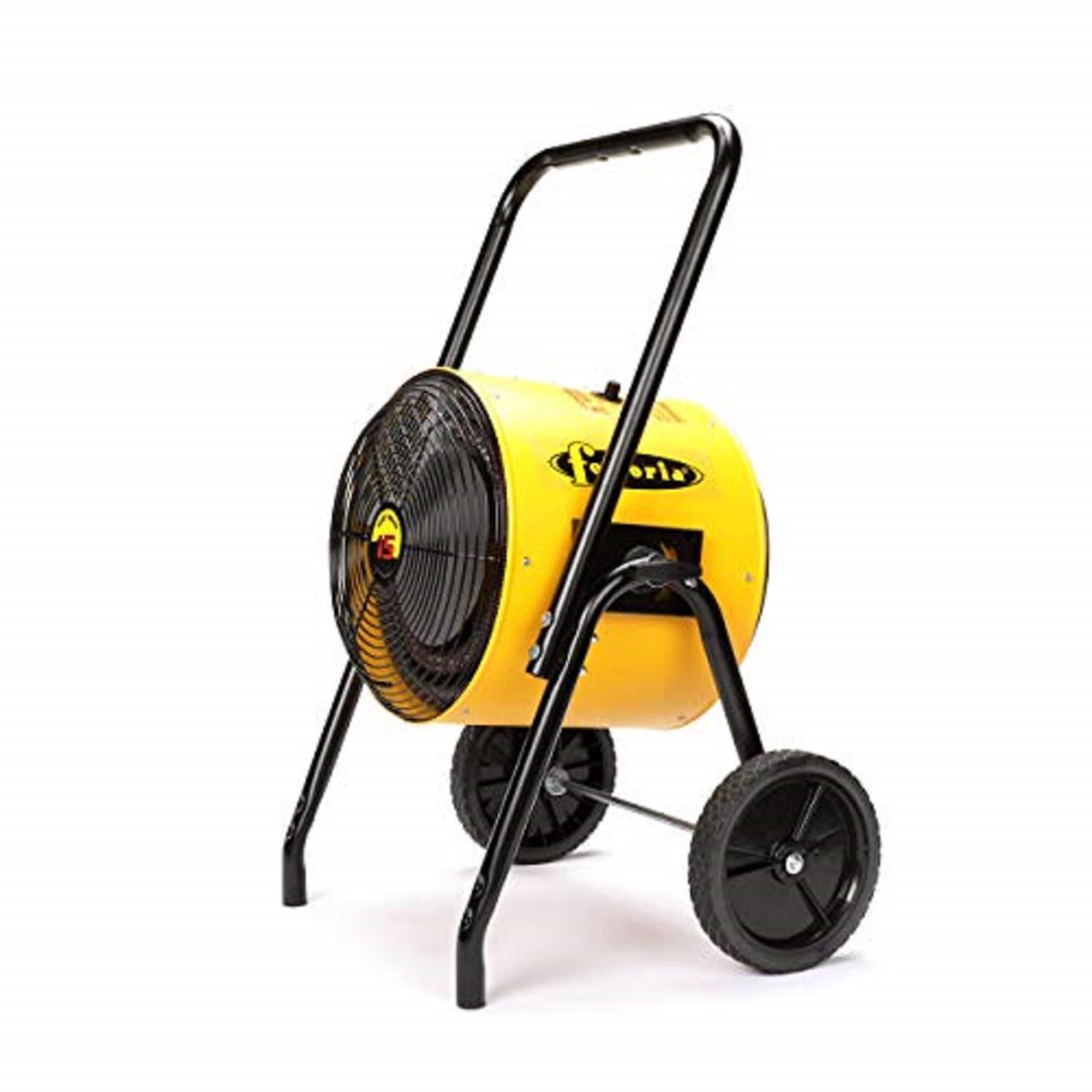
The TPI FES15243E is a 15kW, 240V three-phase electric salamander built for industrial environments where single-phase power isn’t available or sufficient. The three-phase design provides smoother power delivery and more consistent heating element performance compared to single-phase units. TPI is a well-established manufacturer of commercial heating and cooling products, and this unit reflects that pedigree with premium materials, corrosion-resistant construction, and full safety certifications.
Professional contractors who use this heater exclusively report that it outperforms kerosene units in the same BTU class, delivering clean, dry heat with no fumes, no fuel storage headaches, and no ignition delays. One reviewer using it in a 4,000-square-foot, three-story new construction home reported that placing it in the stairwell comfortably heated the entire structure enough to finish interior work. Another praised it as a direct replacement for kerosene salamanders, noting that the elimination of exhaust gases makes it vastly preferable for finishing work in occupied or nearly-complete buildings.
The electrical requirements are significant: it requires a three-phase 240V supply, which is standard in industrial facilities but absent from most residential or small commercial sites. The weight is listed at just 1 pound in the spec sheet — almost certainly a product listing error — but the actual unit is substantial and requires a floor mount installation. Some users report disappointment with the heat output relative to a 4,000-watt single-phase Cadet heater, while large-scale users find it indispensable. This unit is not for the casual homeowner — it’s a tool for commercial contractors with three-phase power on site.
Why it’s great
- Three-phase power delivery provides smoother, more consistent heat
- Completely fume-free, making it safe for finishing work in enclosed spaces
- Industrial-grade construction withstands constant job site use
Good to know
- Requires a three-phase 240V power supply — not available at most residential sites
- Significant investment with premium price tag reflecting commercial-grade build
FAQ
Can I use diesel instead of kerosene in a salamander heater?
What size salamander heater do I need for a 2-car garage?
Why does my salamander heater smoke on startup?
Can I use a salamander heater indoors?
Final Thoughts: The Verdict
For most users, the best antique salamander heater winner is the Mr. Heater 75,000 BTU Forced Air Kerosene Heater because it delivers proven reliability, easy-to-access replacement parts, LED diagnostics, and an 11-hour run time that covers a full workday without compromise. If you need massive heat for a warehouse or barn, grab the VEVOR 175,000 BTU for the highest BTU-per-dollar ratio available. And for fume-free, quiet operation in occupied construction spaces where a 240V circuit is available, nothing beats the Dr. Infrared DR-PS11024 electric salamander.