
A blacksmith’s anvil is the single most defining tool in the forge — and picking the wrong one means fighting your own equipment for years. The difference between a cast-iron lump that dents on your first project and a properly hardened steel anvil that rebounds your hammer with 70% or more energy return is the difference between frustration and flow. Every pound of mass, every HRC point on the Rockwell scale, and every millimeter of face flatness directly controls how much force you can put into the steel without your anvil absorbing the energy instead of your workpiece.
I’m Min — the co-founder and writer behind Gadgets Feed. I’ve spent hundreds of hours analyzing metal composition reports, heat-treatment specifications, and real-world rebound measurements across dozens of anvil models to separate the forged steel from the brittle imposters.
After comparing 9 anvils across material grades, working surfaces, and rebound rates, I’ve narrowed down the best options to help you confidently choose your next anvil for blacksmithing without guessing whether you’re buying a tool that will last decades or fail within months.
How To Choose The Best Anvil For Blacksmithing
Choosing the right anvil means understanding how steel type, weight, and hardness interact under the hammer. A cheap anvil that rings too loud, dents easily, or lacks a proper hardy hole will rob you of efficiency and enjoyment. Focus on these three factors first.
Material: Cast Steel vs. Cast Iron vs. Forged Steel
Cast iron anvils are cheap but brittle — they chip, crack, and absorb hammer energy instead of transferring it. Cast steel anvils, heat-treated to 50–55 HRC, deliver excellent rebound (70%–90%) and resist face deformation under heavy blows. Forged steel anvils, like the NC Tool models, offer superior density and structure but come at a premium. For most blacksmiths, a quality cast steel anvil with proper heat treatment hits the sweet spot between cost and performance.
Weight: Matching Mass to Your Work
Heavier anvils stay put without being bolted down and transfer more energy into the workpiece. A 65–86 lb anvil works well for hobbyists doing knives and small blades. At 110–132 lbs, you get a stable platform for forging larger tools and scrollwork. The 112 lb and 132 lb options in this guide represent serious workhorses. Lighter anvils under 70 lbs require a good stand or bolting to a heavy base to prevent walking across the shop with each hammer strike.
Hardness and Rebound: The True Performance Metric
Face hardness measured on the Rockwell C scale (HRC) should be at least 50 for a durable anvil. The best anvils in this guide reach 55–56 HRC. Rebound rate — tested by dropping a steel ball bearing from a set height and measuring how high it bounces — reveals face hardness and energy return. A rate above 70% means your hammer strikes will transfer efficiently into the metal rather than deforming the anvil face. Models with 80–90% rebound drastically reduce fatigue during long forging sessions.
Quick Comparison
On smaller screens, swipe sideways to see the full table.
| Model | Category | Best For | Key Spec | Amazon |
|---|---|---|---|---|
| NC Tool 70 Lb Anvil | Forged Steel | Novice bladesmiths & starter shops | 70 lb forged steel body | Amazon |
| NC Tool Calvary 112 Lb | Alloy Cast | Knife making & high-rebound needs | 85% ball bearing rebound | Amazon |
| Happybuy 132Lbs | Drop-Forged Steel | Heavy general forging & shaping | 50 HRC, 132 lb weight | Amazon |
| Easmvetaln 132Lbs | Cast Steel | Hobbyists wanting high rebound | 90% rebound, 55 HRC face | Amazon |
| Easmvetaln 110Lbs | Cast Steel | Serious hobbyists & knife makers | 80%+ rebound, 55 HRC | Amazon |
| VEVOR 116Lbs Cast Steel | Cast Steel | DIY enthusiasts & weekend smiths | 50 HRC face, 116 lb mass | Amazon |
| Easmvetaln 65Lbs Cast Steel | Cast Steel | Portable forging & craft fairs | 55 HRC, 90% rebound | Amazon |
| VEVOR 86Lbs Single Horn | Drop-Forged Steel | Entry-level smiths on a budget | 86 lb drop-forged steel | Amazon |
| SIMOND STORE Propane Forge | Propane Forge | Budget forge for knife making | 2600°F rated, 10x4x2.75″ chamber | Amazon |
In‑Depth Reviews
1. NC Tool 70 Lb Anvil with Turning Cams
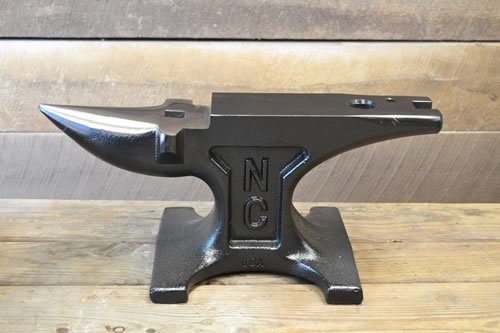
The NC Tool 70 Lb anvil is built from solid forged steel rather than cast material, giving it a density and ring that separates it from the cast-iron junk flooding the budget market. Reviewers confirm the face is hard enough to resist denting under daily use, and the integrated turning cams add versatility for bending and shaping soft metals. The 70 lb weight requires a sturdy stand or bolting down, but it anchors well once secured.
Multiple customers describe this as an ideal starter anvil for novice bladesmiths, noting that the steel does not exhibit the softness typical of cheaper imports. The packaging can be a concern — one reviewer received a unit with the horn protruding through damaged cardboard — so inspect yours immediately upon arrival. The extra set of back cams included provides useful options for chain-link work and scroll forming without needing additional tooling.
At 70 lbs, this anvil is lighter than the heavyweights in the 110–132 lb range, but its forged construction means it absorbs shock far better than cast iron equivalents of similar weight. The working face remains flat and the edges handle chamfering well. If you are a beginner who wants an anvil that feels like a real tool from day one rather than a lump you will outgrow, this is a strong candidate.
Why it’s great
- Genuine forged steel construction holds up to heavy use
- Turning cams add bending versatility without extra tooling
- Solid value for entry-level bladesmiths
Good to know
- 70 lbs requires a stand or bolting for stability
- Packaging may not fully protect the horn during shipping
2. NC Tool Calvary Anvil, 112 Lb

The NC Tool Calvary 112 Lb anvil is a premium alloyed casting that delivers an exceptional 85% ball-bearing rebound rate, meaning nearly all your hammer energy returns into the workpiece rather than being absorbed by the anvil. The balanced alloy composition ensures consistent hardness across the face, which knife makers specifically praise for its ideal striking surface. The 1-inch hardie hole in the horn provides accessory mounting without compromising the main working area.
Customers report that the face is perfectly suited for forging knives, with a smooth surface that does not mar blade blanks. The turning cams included with this model add practical functionality for bending operations. At 112 lbs, the anvil provides significant mass to stay planted during heavy work without requiring elaborate mounting solutions. The gray alloy finish resists surface rust better than painted alternatives.
The 1-1/2 inch right and left hand square clip horn gives you two distinct forming profiles, which is rare at this price tier. The balanced casting eliminates dead spots — the ringing tone is consistent across the entire face. This anvil sits at the high end of the price spectrum, but for a blacksmith who expects professional-grade rebound and longevity, it justifies every unit of cost through reduced fatigue and better energy transfer.
Why it’s great
- 85% rebound reduces hammer fatigue significantly
- Alloyed casting provides consistent face hardness
- Dual clip horns give two forming profiles
Good to know
- Premium price limits it to serious hobbyists or professionals
- Not the largest working surface at this weight
3. Easmvetaln 132Lbs Cast Steel Anvil

The Easmvetaln 132 lb cast steel anvil pushes hardness to 55 HRC and achieves a measured 90% rebound rate according to customer ball-bearing tests — numbers that rival anvils costing significantly more. The 13.58 x 3.94 inch working surface gives you generous real estate for blades and scrolls, and the London-style pattern includes a proper cutting shelf. The face is precision-milled flat, which is critical for achieving consistent bends and straight hammer blows.
Reviewers confirm the anvil survived shipping in a wooden crate with no damage, and after six months of hobbyist use the face shows no denting or chipping. The round and square holes are functional, though one customer noted they measured smaller than the stated 3/4 inch, requiring extra machining for some tooling to fit. The horn has a more triangular cross-section rather than perfectly round — a minor compromise for an otherwise stellar value.
The 132 lb mass provides excellent inertia, meaning even heavy hammer strikes barely shift the anvil on its base. The rebound is remarkably even across the entire face except a slight drop near the hardy hole area. If you are a hobbyist who wants flagship-level rebound and hardness without paying flagship prices, this Easmvetaln model is a compelling choice that punches well above its weight class.
Why it’s great
- 90% rebound rivals premium anvils
- 55 HRC face resists denting under heavy use
- Large flat working surface for blades and scrolls
Good to know
- Hardy and pritchel holes may require tooling adjustment
- Horn shape is triangular rather than perfectly round
4. Happybuy Single Horn Anvil 132Lbs

The Happybuy 132 lb anvil is drop-forged from high-grade steel, achieving a 50 HRC hardness level that provides reliable durability for general forging tasks. At under per pound delivered, it represents outstanding value for weight. The fully polished surface resists oxidation and reduces friction when shaping hot metal. Round and flat horns give you both bending profiles, while the hardy and pritchel holes accommodate accessories for punching and twisting work.
Customer reviews confirm over 70% rebound with consistent ringing across the face. One unit arrived with a slightly off-size hardy hole that required custom adaptation, but most buyers report clean castings without voids or cracks. The blue paint finish is functional but will wear quickly on high-contact areas — consider stripping it if you prefer bare steel. The 125 lb shipping weight means you will need help moving it into position.
For the blacksmith who wants maximum mass per dollar without stepping into cast iron territory, this Happybuy anvil delivers. The 50 HRC face is adequate for blades and general forging, though for heavy daily use you may eventually want a harder surface. The working area is wide enough for most projects, and the solid base keeps it planted during aggressive hammer work. A strong mid-range option that balances affordability with real performance.
Why it’s great
- Excellent weight-to-value ratio at 132 lbs
- Drop-forged construction provides structural integrity
- Polished surface resists oxidation
Good to know
- Hardy hole dimensions may not be perfectly consistent
- 50 HRC is adequate but not as hard as 55 HRC alternatives
5. Easmvetaln 110Lbs Cast Steel Anvil
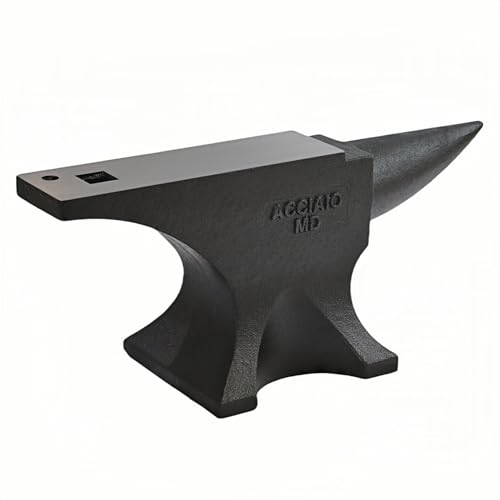
The Easmvetaln 110 lb cast steel anvil delivers 55 HRC face hardness and over 80% rebound in a package that serious hobbyists consistently praise as the best bang-for-buck in the mid-range bracket. The 13.1 x 3.7 inch working surface is ample for knife making and scrollwork, and the heat-treated face shows no denting after extended use. Customers specifically note the face is “harder than Emerson” — tougher than many known brands at double the price.
Reviewers confirm the anvil arrived in a reusable wooden crate with no voids or patches in the casting. The face is milled flat from the factory, though some edges require light dressing with a file to remove sharp corners. One buyer found the hardy hole larger than 1 inch square and created a wedge to tighten tooling — a common workaround with cast steel anvils at this price point. The minimal ring keeps shop noise manageable compared to older wrought iron anvils.
At 110 lbs, this anvil strikes an excellent balance between portability and inertia. It is light enough for a single person to move with a hand truck but heavy enough to stay planted during most forging operations. The rebound is consistent and the face remains true after months of use. If the 132 lb models are too heavy for your shop layout, this 110 lb version sacrifices little performance while saving significant weight and cost.
Why it’s great
- 55 HRC face provides professional-grade durability
- 80%+ rebound reduces striking fatigue
- Great balance of weight and portability
Good to know
- Hardy hole may require wedging for tight tool fit
- Edges need light dressing before use
6. VEVOR 116Lbs Cast Steel Anvil
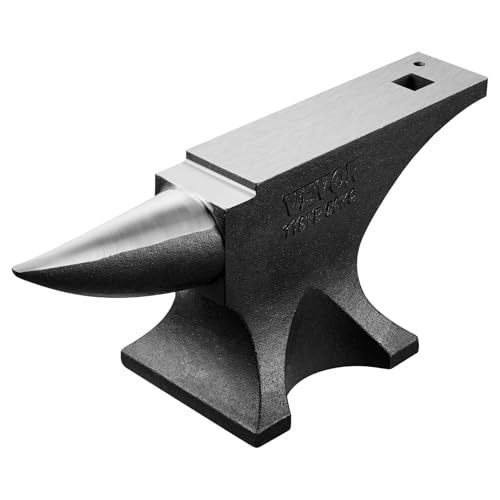
The VEVOR 116 lb cast steel anvil features an oversized 22.5 x 3.9 inch working surface — one of the largest in its weight class — giving you generous room for laying out longer workpieces. The 50 HRC heat-treated face provides 70%+ rebound and decent impact resistance. The cutting table design helps prevent dents from migrating to the main working area, which is a thoughtful engineering detail that extends usable face life.
Multiple customers highlight this as an excellent choice for leatherworkers and weekend DIY smiths, praising the cast steel build for being far more durable than cast iron options at similar price points. The screw notches in the base allow secure bench mounting. One reviewer noted the tail lacks a proper taper, which limits some horn-forming operations. The thick base design reduces movement during processing, and the included holes are smoothly machined compared to some competitors.
For a blacksmith working primarily on riveting, flattening, and shaping small to medium projects, this VEVOR anvil offers a compelling combination of large surface area and reasonable weight. The 50 HRC hardness is sufficient for hobbyist use, though serious full-time smiths may want to step up to the 55 HRC options. The free shipping and competitive pricing make it a strong contender for anyone establishing a home forge on a budget.
Why it’s great
- Largest working surface in the 110 lb class
- Cutting table prevents face damage during shearing
- Smoothly machined hardy and pritchel holes
Good to know
- Horn taper is less pronounced than traditional designs
- 50 HRC is adequate but not premium-tier hardness
7. Easmvetaln 65Lbs Cast Steel Anvil
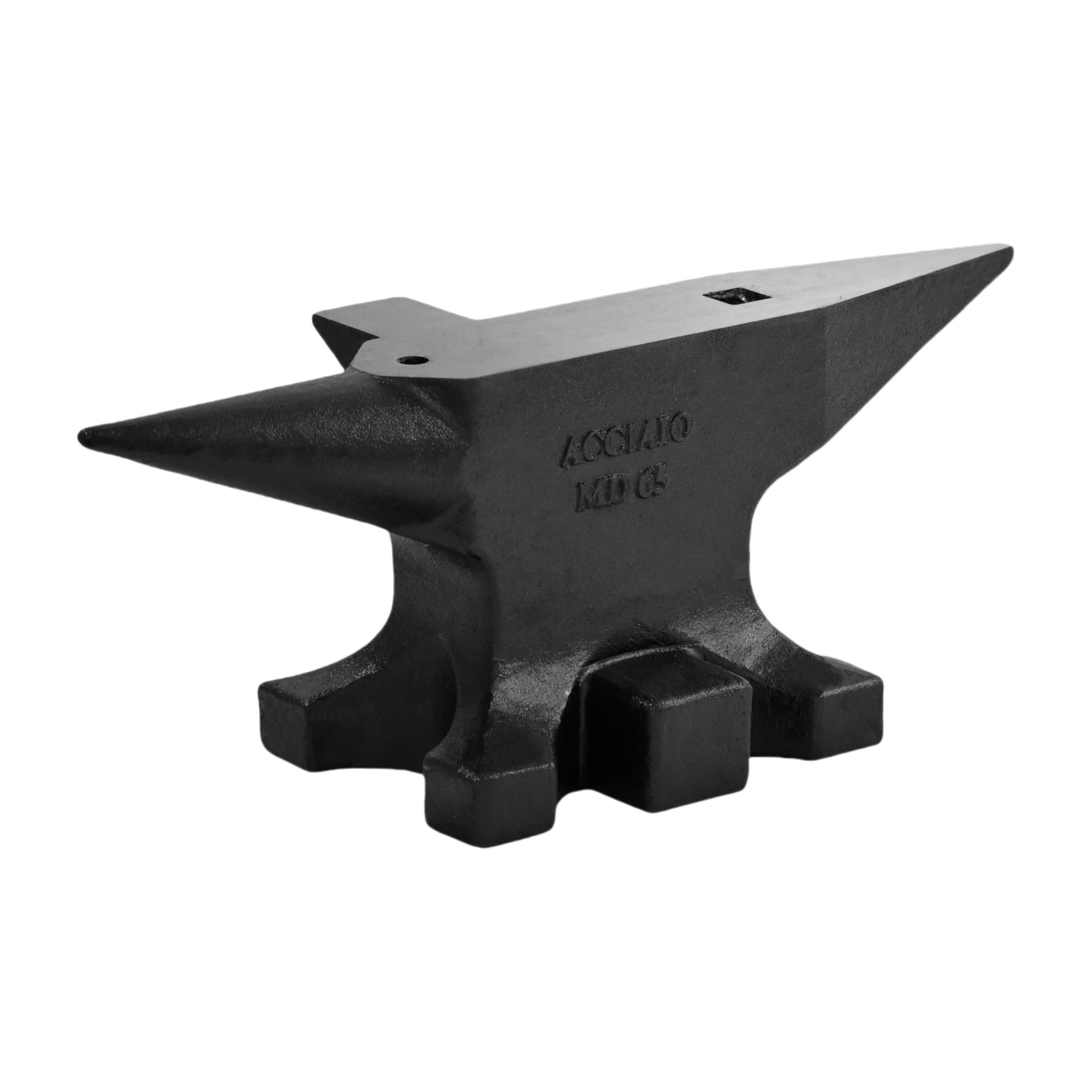
The Easmvetaln 65 lb cast steel anvil packs 55 HRC hardness and a measured 90% rebound into a portable package that is perfect for traveling smiths and craft fair demonstrators. The 14.76 x 3.07 inch working surface gives you enough room for knife making and jewelry work without the back strain of moving a 100+ lb anvil. The multi-head shaped design includes a round horn, sharp corner, and step for clean chisel-based metal shearing.
Customers consistently rate this anvil far above its weight class, with one reviewer describing it as “beautiful quality” that performs even better than expected in public forging events. The cast steel face exhibits no voids or inclusions, and the mirror-smooth surface ensures even force distribution during hammering. The horn requires light dressing to remove paint before use, and the compact size means you will need to secure it to a stand to prevent movement during heavy strikes.
At 65 lbs, this anvil is ideal for the blacksmith who needs to move between locations or has limited shop floor space. The heat-treated face at 55 HRC rivals much heavier anvils in wear resistance. The rebound is exceptional for the weight, meaning you lose less energy per strike. If your work focuses on smaller blades, jewelry, or precision metal forming, this compact anvil delivers top-tier specs in a highly portable form factor.
Why it’s great
- Exceptionally high 90% rebound in a portable package
- 55 HRC face rivals anvils twice its weight
- Perfect for mobile forging and craft demonstrations
Good to know
- Light weight requires a stand for stability
- Horn paint needs removal before first use
8. VEVOR 86Lbs Single Horn Anvil

The VEVOR 86 lb anvil is drop-forged from high-grade steel, providing a durable working surface that withstands heavy blows without the cracking risk of cast iron. At 86 lbs, it is heavy enough to feel substantial under the hammer while remaining manageable for a single person to position. The round and flat horns give you smooth bending and shaping capabilities, and the hardy hole accommodates standard accessories. The fully polished surface receives a quenching treatment that enhances oxidation resistance.
The paint finish should be stripped before use as it can flake under impact. The packaging is sturdy but the crate may need reinforcement for long-distance shipping. The 86 lb weight is light enough that you will want to bolt it to a stand or heavy base to prevent walking during hard hammer strikes.
For a beginner who wants a real drop-forged steel anvil without stretching into higher weight classes, this VEVOR model represents a solid entry point. The face is hard enough for general blacksmithing and knife making, though the exact Rockwell rating is not specified. The price per pound is competitive, and the included hardy hole and pritchel hole provide essential functionality for punching and bending operations. A reliable starter anvil that will serve well through the learning phase.
Why it’s great
- Drop-forged steel construction avoids cast iron brittleness
- Manageable 86 lb weight for single-person setup
- Functional hardy hole and pritchel hole included
Good to know
- Unspecified Rockwell hardness compared to competition
- Paint finish should be removed before use
9. SIMOND STORE Single Burner Propane Forge

The SIMOND STORE single burner propane forge is rated to 2600°F, which is sufficient for forging tool steel and even reaching forge welding temperatures with minor burner adjustments. The internal chamber measures 2.75 x 4 x 10 inches — compact but ideal for knife making blanks and small projects. At 24.7 lbs, it is highly portable and can be easily moved between workstations or taken to demonstrations. The refractory insulation holds heat efficiently, though several users recommend applying a coating of Satanite to protect the factory insulation from flaking.
Customers consistently rate this as an excellent budget forge for beginners, noting it heats up quickly and uses gas economically. One reviewer achieved forge welding heat after minor tuning of the burner. The chamber is too small for large blades or long stock, but for small knives, hooks, and jewelry components it performs admirably. The included regulator may need upgrading depending on your local gas setup. The legs are slightly uneven on some units, requiring a shim for level placement.
If you are building a blacksmithing setup from scratch and need both a forge and an anvil within a tight budget, this forge paired with one of the mid-range anvils above gives you a functional starter kit. The small chamber size limits project scope, but the ability to reach welding temperatures at this price point is impressive. The outer shell gets very hot during operation — allow adequate clearance and ventilation. A practical entry into propane forging that leaves room to upgrade later.
Why it’s great
- Reaches 2600°F and forge welding temperatures
- Highly portable at 24.7 lbs
- Low gas consumption for cost-effective operation
Good to know
- Small chamber limits project size
- Factory refractory may flake without added coating
FAQ
Why does a cast steel anvil outperform cast iron for blacksmithing?
How much anvil weight do I need as a beginner blacksmith?
What does 80% rebound actually mean for my hammer strikes?
Final Thoughts: The Verdict
For most users, the anvil for blacksmithing winner is the Happybuy 132 lb Single Horn Anvil because it delivers premium weight and drop-forged durability at an accessible price point. If you want maximum rebound and face hardness, grab the NC Tool Calvary 112 lb Anvil. And for a portable yet powerful setup, nothing beats the Easmvetaln 65 lb Cast Steel Anvil with its 90% rebound in a mobile package.