
You notice the first cluster of tiny green or black specks on your rose stems, then your tomatoes, and within days the leaves curl and wilt. Aphids reproduce faster than you can pick them off, draining the life from your garden while leaving sticky honeydew that invites mold. The right aphid killer stops this cycle immediately, but choosing wrong means wasted time and damaged plants.
I’m Min — the co-founder and writer behind Gadgets Feed. I’ve spent hundreds of hours researching pest control formulations, reading technical labels, and cross-referencing active ingredients with real-world customer experiences to determine which products actually deliver measurable results against aphid infestations.
Whether you need a ready-to-use spray for houseplants or a concentrated solution for acres of crops, this guide breaks down the most effective options so you can confidently choose the best aphid killer for your specific garden.
How To Choose The Best Aphid Killer
Every aphid killer works through one of two mechanisms: contact killing (it must physically hit the insect) or systemic absorption (the plant absorbs the chemical, killing aphids when they feed). Your choice depends on the size of your infestation, the type of plants you’re treating, and your tolerance for synthetic chemicals versus organic options.
Contact Killers vs. Systemic Insecticides
Contact killers like neem oil, insecticidal soaps, and pyrethrin-based sprays work immediately on aphids they touch but provide zero residual protection — new aphids arriving tomorrow are completely safe. Systemic insecticides like acephate (found in Bonide Systemic Insect Control) are absorbed into the plant’s vascular system, killing aphids for weeks after application even on new growth you missed spraying. The trade-off: systemics cannot be used on edible crops and may harm pollinators visiting treated flowers.
Concentrate, RTU, or Repellent Format
Ready-to-use (RTU) sprays are perfect for casual gardeners with a few potted plants or roses — no mixing, no measuring, immediate application. Concentrates (like Bonide’s 16 oz bottle that makes 16 gallons) drastically reduce cost per treatment for larger gardens. Repellents like Garlic Barrier work differently by making plants taste bad to aphids rather than killing them outright — ideal as a preventative but ineffective against heavy existing infestations.
OMRI Listing and Harvest Safety
If you’re treating vegetables, herbs, or fruit trees, check whether the product is OMRI Listed for organic gardening and how many days must pass between spraying and harvest. Products like Grower’s Ally Crop Defender 3 and Monterey Neem Oil allow same-day harvest, while synthetic systemics like Bonide Systemic Insect Control are explicitly labeled for ornamental use only and should never contact edible plants.
Quick Comparison
On smaller screens, swipe sideways to see the full table.
| Model | Category | Best For | Key Spec | Amazon |
|---|---|---|---|---|
| Grower’s Ally Crop Defender 3 | Triple-Action | Indoor/outdoor organic protection | OMRI Listed botanical oil blend | Amazon |
| Ortho Rose and Flower Insect Killer | Systemic + Contact | Roses and ornamental flowers | Dual-action contact + systemic | Amazon |
| Monterey B.t. | Biological | Caterpillars and worms on edibles | OMRI Listed biological insecticide | Amazon |
| Bonide Systemic Insect Control | Systemic | Ornamentals with persistent infestations | 16 oz concentrate makes 16 gallons | Amazon |
| Hi-Yield 55% Malathion Spray | Synthetic | Heavy-duty outdoor pest elimination | 55% Malathion concentrate | Amazon |
| Monterey Neem Oil RTU | Botanical | Edible plants up to harvest day | Ready-to-use neem oil spray | Amazon |
| Garlic Barrier Liquid Garlic Repellent | Repellent | Large-area prevention and bird deterrence | 1 gallon concentrate, OMRI Listed | Amazon |
In‑Depth Reviews
1. Grower’s Ally Crop Defender 3
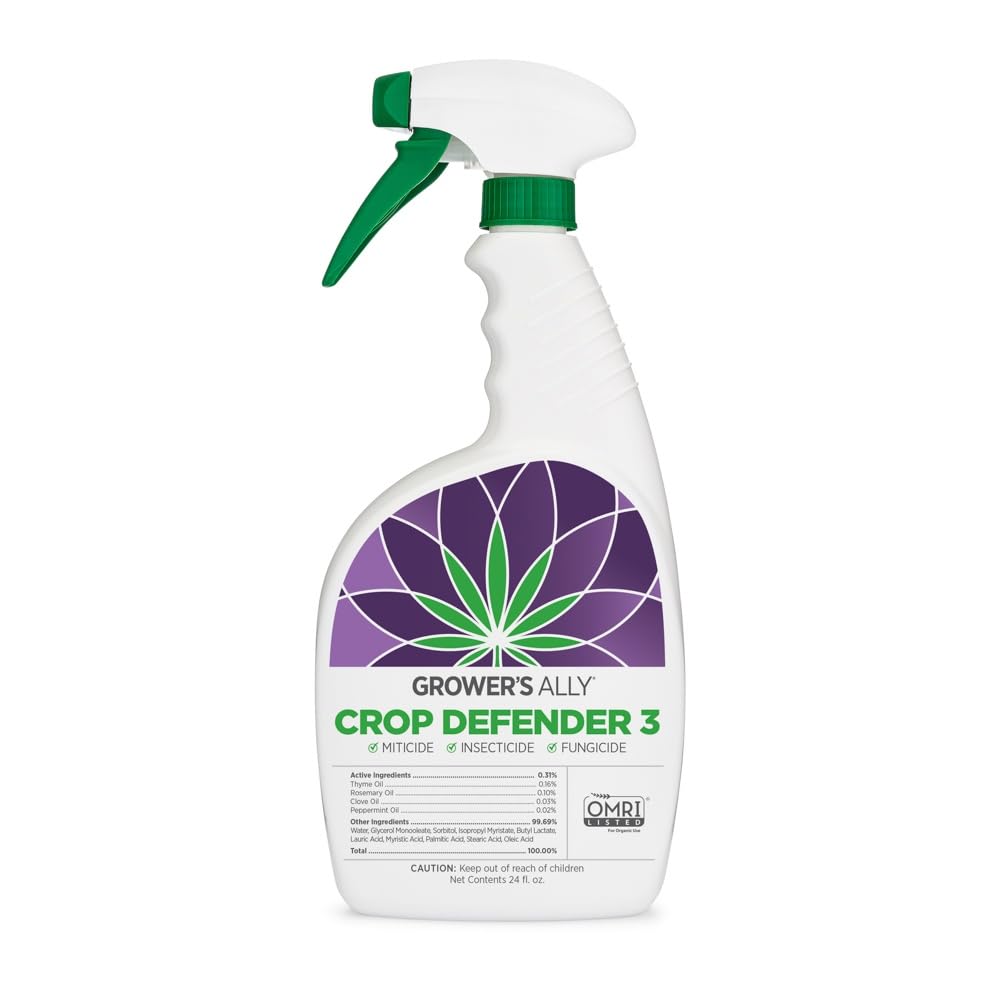
This 24 oz ready-to-use spray combines a miticide, insecticide, and fungicide into one bottle — a practical solution for gardeners fighting multiple problems at once. The synergistic blend of botanical oils includes a built-in surfactant that helps the spray coat waxy leaf surfaces where aphids hide, ensuring thorough contact coverage. Customers consistently report that it kills aphids, spider mites, and thrips on contact without burning leaf tissue, even on seedlings.
What sets Crop Defender 3 apart is its clearance for organic gardening: it’s OMRI Listed and FIFRA 25(b) exempt, meaning it contains no synthetic pesticides or heavy metals. You can spray and harvest the same day, which is critical for vegetable gardeners dealing with sudden aphid outbreaks. The pleasant clove-like smell dissipates quickly, and the formula is bee-safe when applied according to directions, a rare combination in a triple-action product.
The bottle is listed at 24 oz, which covers about 30-40 medium-sized plants per application depending on spray technique. For larger gardens, the product is also available in a concentrated format that mixes with water for significantly more coverage per dollar. Just be aware that as a contact killer, it provides no residual protection — you’ll need to reapply every 7-10 days during active infestations.
Why it’s great
- Triple-action kills aphids, mites, and fungal diseases simultaneously
- Safe for organic use with same-day harvest capability
- Does not burn plant leaves even on delicate seedlings
Good to know
- 24 oz bottle covers limited area for large gardens
- No systemic activity requires frequent reapplication
2. Ortho Rose and Flower Insect Killer

Ortho’s dual-action formula attacks aphids both through contact and systemic absorption — insects die when they eat treated plant tissue even if the spray missed them. The systemic component is absorbed through leaves and stems, providing up to four weeks of protection against over 100 listed insects including aphids, Japanese beetles, and spider mites. This makes it ideal for rose bushes and ornamental flowers where aphid populations tend to resurge weekly.
Customers with rose gardens report dramatic results: leaves that were being skeletonized by Japanese beetles recovered within days, and aphid colonies vanished after a single thorough application. The spray won’t harm the plant or its blooms when used as directed, making it safe for prized hybrid roses. However, some users note that the systemic activity is moderate — heavy infestations of mealybugs required multiple drenching sprays rather than a single treatment.
A major limitation: this product is not labeled for use on edible plants. If you’re growing vegetables, herbs, or fruit trees, you’ll need to choose a different option. Additionally, as a systemic insecticide, it can harm beneficial insects including bees if sprayed on open flowers. Apply only during times when pollinators are less active, and avoid spraying blooms directly.
Why it’s great
- Dual-action kills on contact and through systemic absorption
- Four weeks of residual protection per application
- Effective against over 100 insect species
Good to know
- Not safe for use on vegetables or edible plants
- Systemic activity is weaker than dedicated systemic products
3. Monterey B.t. Bundled with Measuring Spoon
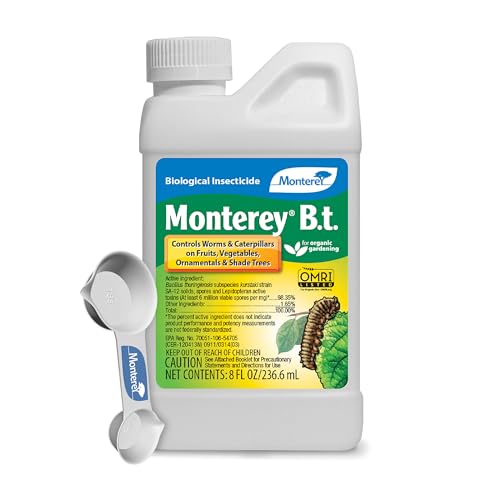
Monterey B.t. uses Bacillus thuringiensis, a naturally occurring soil bacterium that produces proteins toxic specifically to caterpillars and worm-type insects while being completely harmless to birds, earthworms, honeybees, and ladybugs. This targeted biological approach is ideal for vegetable gardens where cabbage loopers and bagworms destroy broccoli, cabbage, tomatoes, and ornamentals — pests that often accompany aphid infestations on leafy greens.
The 8 oz concentrate instantly mixes with water and should be applied using a trigger sprayer or pressure tank. Customers rave about its effectiveness on Texas Mountain Laurel and flower seedlings, noting that it eliminated loopers completely within days without affecting the beneficial insect population. The product is OMRI Listed for organic gardening, meeting USDA National Organic Program standards.
Keep in mind that B.t. is species-specific — it only works on caterpillars and worm-like larvae. If your primary pest is aphids themselves, you’ll need a separate aphid-specific treatment alongside this. The small 8 oz container makes about 6-8 gallons of spray solution depending on your dilution ratio, which is reasonable for a season’s worth of caterpillar control on a mid-sized vegetable garden.
Why it’s great
- Targeted biological control with zero harm to beneficial insects
- OMRI Listed and safe for edible crops up to harvest
- Excellent for cabbage loopers and bagworms on vegetables
Good to know
- Only affects caterpillars and worm-type pests, not adult aphids
- 8 oz container requires mixing and a separate sprayer
4. Bonide Systemic Insect Control Concentrate

Bonide Systemic Insect Control is the go-to choice when you need a product that works from the inside out. Its active ingredient acephate is absorbed by the plant’s roots and leaves, making the entire plant toxic to aphids, thrips, mealybugs, scale, and whiteflies for weeks after a single application. One 16 oz bottle mixes to produce 16 gallons of spray solution, which is tremendous value for large ornamental gardens with persistent pest problems.
Customers report it instantly eliminated fungus gnats in houseplants and stopped bagworms on arborvitae trees after a single treatment. The included measuring cup simplifies mixing, and the product can be combined with certain fungicides or fertilizers for an efficient multi-purpose spray. However, be prepared for the smell — multiple reviews describe the odor as “unbelievably strong” and “like a dumpster baking in the sun,” though it dissipates as the product dries.
The critical restriction: Bonide Systemic Insect Control is labeled for ornamental use only — flower beds, roses, shrubs, and non-edible landscaping plants. Never use it on vegetables, fruit trees, or herbs. Also, because it’s a systemic chemical, it can burn leaves if sprayed in direct sunlight. Apply in the evening or when the plant is shaded, and wait 24-48 hours before any additional watering to allow full absorption.
Why it’s great
- Long-lasting systemic protection for weeks per application
- Incredible value — 16 oz makes 16 gallons of spray
- Effective against thrips, scale, and mealybugs that resist contact killers
Good to know
- Not safe for edible plants — ornamental use only
- Extremely strong odor that lasts until the spray dries
5. Hi-Yield 55% Malathion Spray
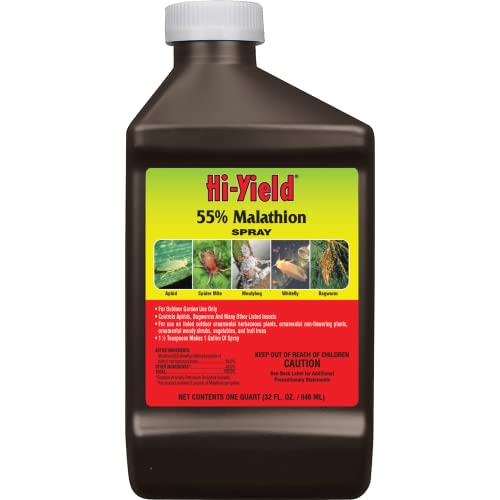
Hi-Yield Malathion is the product you turn to when everything else has failed. With 55% malathion concentration, this is a potent organophosphate insecticide that wipes out aphids, thrips, spider mites, lace bugs, and more across herbaceous plants, ornamentals, shrubs, vegetables, and fruit trees. It is the most aggressive chemical option in this lineup and is best reserved for serious infestations that resist botanical and milder synthetic treatments.
Users confirm that it works where other approaches failed — scale, red spider mites, and mosquitoes are all effectively eliminated. The concentrate mixes with water and applies via hose-end or tank sprayer, and one 32 oz bottle covers a substantial property. Customers recommend wearing protective clothing and a respirator during application, as malathion is a known skin irritant and suspected carcinogen with prolonged exposure.
This is not a product for casual use. You must follow label directions precisely: apply in calm weather when rain is not predicted for the next 24 hours, avoid spraying during bloom periods to protect pollinators, and never exceed the recommended dilution rate. Many users suggest hiring a licensed pest control professional for malathion application if you’re not comfortable handling strong chemicals.
Why it’s great
- Extremely effective on stubborn pests that resist other treatments
- Works on vegetables, fruit trees, ornamentals, and shrubs
- 32 oz concentrate covers large areas economically
Good to know
- Requires full protective gear during application
- High toxicity to beneficial insects and requires careful timing
6. Monterey Neem Oil RTU
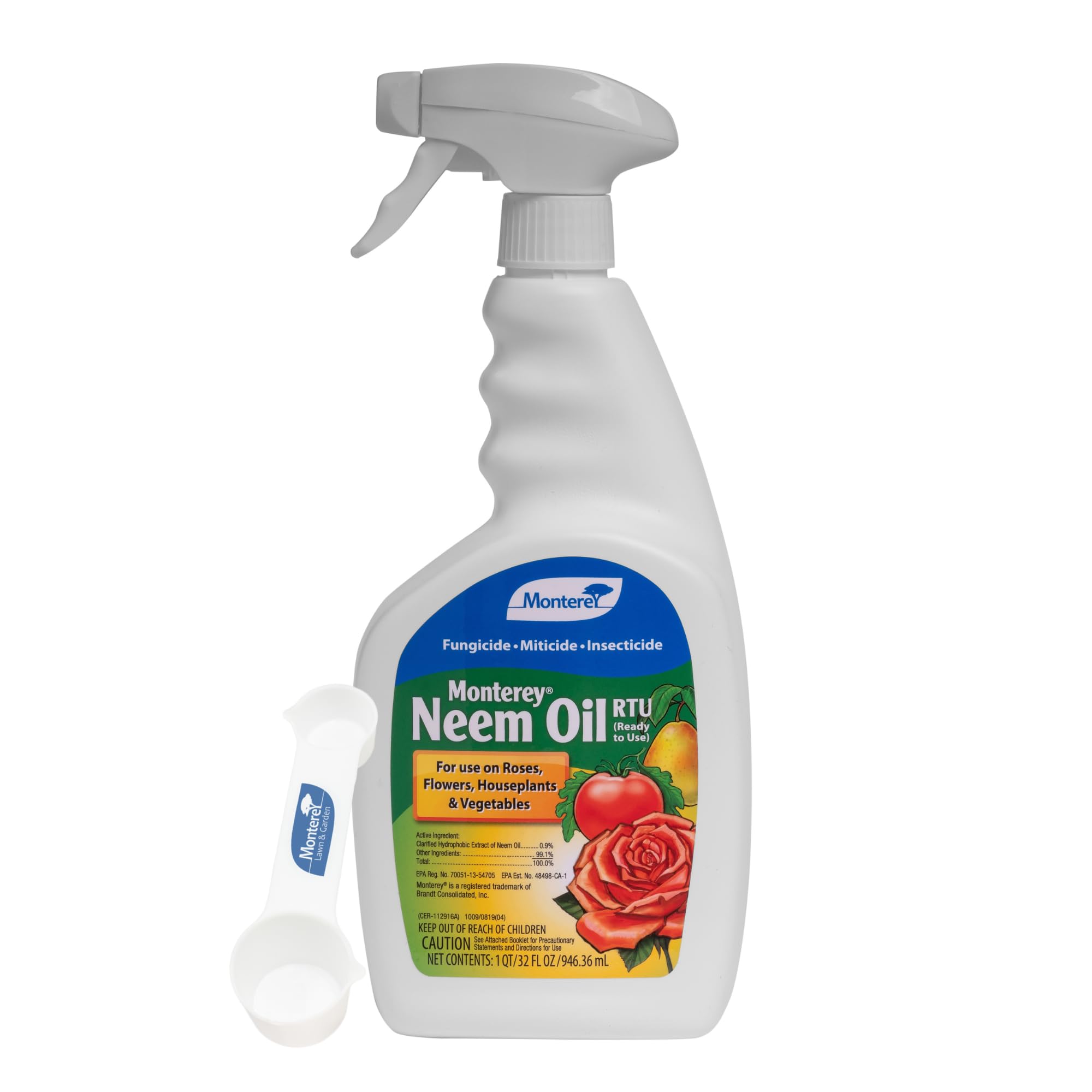
Monterey Neem Oil RTU brings the proven power of cold-pressed neem oil into a ready-to-use 32 oz sprayer. As a fungicide, insecticide, and miticide, it controls black spot, powdery mildew, rust, spider mites, and aphids — all while being safe for use on fruits, vegetables, and herbs up until the exact day of harvest. The spray requires no mixing: shake the bottle, spray all plant surfaces, and you’re protected.
Gardeners consistently praise its dual effectiveness against both fungal diseases and pest infestations. One user reported it controlled both caterpillars and powdery mildew on their tomato plants in a small container garden. The neem oil also adds a natural shine to leaves, which is a welcome side effect for ornamental plants. The Monterey brand is well-regarded for quality formulation, often costing half the price of premium competitors like Dyna-Gro.
Neem oil has a signature smell — customers describe it as “strong, unpleasant odor like a dirty diaper” — though the smell fades as the spray dries. Note that neem oil works best as a preventative or early-intervention treatment; heavy aphid infestations may require more frequent applications (every 5-7 days) compared to synthetic alternatives. Also, avoid spraying in direct sunlight or high heat, as neem oil can cause leaf burn.
Why it’s great
- Triple-action controls aphids, fungal diseases, and spider mites
- Safe for edible plants right up to harvest day
- Ready-to-use format with zero mixing required
Good to know
- Strong odor that lingers until the spray dries
- Less effective on heavy infestations without frequent reapplication
7. Garlic Barrier Liquid Garlic Repellent Concentrate

Garlic Barrier takes a fundamentally different approach to aphid control: rather than killing pests, it makes plants unappetizing by coating them with a concentrated garlic extract. This OMRI Listed formula is designed for farms, orchards, and large gardens where consistent coverage of many plants is essential. One gallon of concentrate dilutes with water to treat substantial acreage, making it the most cost-efficient option for serious growers.
Customers with acreage report excellent results — spraying around the yard keeps mosquitoes away, and fruit trees treated with Garlic Barrier experience less bird damage as birds avoid the garlic-flavored fruit. Users also note that deer, rabbits, and squirrels are deterred from treated areas, though birds are notably unaffected. The formula contains capsaicin in addition to garlic, which adds a mild skin-burning sensation if not washed off after handling.
The key limitation: Garlic Barrier is a repellent, not a killer. If you already have a severe aphid infestation covering your plants in honeydew and sooty mold, this product won’t solve the immediate problem — you’ll need to knock down the population first with a contact killer like neem oil or Grower’s Ally before switching to Garlic Barrier as a preventative maintenance spray. The garlic smell, while intense during application, dissipates after drying and does not impart a garlic taste to crops.
Why it’s great
- Enormous coverage from 1 gallon concentrate — ideal for farms and orchards
- Repels aphids, deer, rabbits, and birds without killing beneficial insects
- OMRI Listed and safe for organic production systems
Good to know
- Repellent only — does not kill existing aphids
- Requires reapplication after rain for continued protection
FAQ
Can I use neem oil on my vegetable garden to kill aphids?
How long does it take for systemic aphid killers to work?
Will aphid killer harm my bees and ladybugs?
Why do aphids keep coming back after I spray?
Final Thoughts: The Verdict
For most users, the best aphid killer winner is the Grower’s Ally Crop Defender 3 because it combines triple-action pest control with organic certification and same-day harvest safety, all in a ready-to-use spray that won’t burn your plants. If you need weeks of residual protection for your ornamental garden, grab the Bonide Systemic Insect Control — it’s unbeatable value at 16 gallons per bottle. And for large-scale preventative coverage or farm operations, nothing beats the Garlic Barrier Liquid Garlic Repellent for keeping aphids and larger pests away without harming your ecosystem.