
Our readers keep the lights on and my morning glass full of iced black tea. As an Amazon Associate, I earn from qualifying purchases.
Specs are compiled from manufacturer listings and verified buyer reviews and can change over time — please confirm the key details on the product page before buying.
You want a camera that fits how you actually shoot, not one that just looks good on a spec sheet. The real choice depends on trade-offs: a pocketable superzoom for hiking, a full-frame body for portraits, or a DSLR that grows with your lens collection. Sensor size, autofocus reach, zoom range, and video capability each matter differently depending on your subject, so here is how to match them to your moment.
I’m Min — the founder and writer behind Gadgets Feed. This guide is built by comparing the manufacturers’ published specifications and the patterns across verified customer reviews, so you get each pick’s real strengths and trade-offs instead of marketing spin.
The options below span from a budget-friendly bridge camera to a premium full-frame body, and each one earns its place for a specific kind of shooter. This is the practical rundown of the best appareil photo numérique picks that translates specs into real-world results you can trust.
Our Picks at a Glance


How To Choose The Best Appareil Photo Numérique
Before you compare models, pin down the kind of photography you do most. A camera that excels at wildlife will frustrate you at a dim wedding, and a full-frame body with a prime lens is overkill for casual vacation snaps. Start with your subject, then work backward to the sensor and lens.
Match the sensor to your light
Sensor size dictates how well the camera performs when the sun goes down. A larger sensor physically captures more light, which means cleaner images at higher ISO settings. If you shoot indoors, at dusk, or in any condition with low light, prioritize a full-frame or APS-C sensor over a smaller 1/2.3-inch type found in many superzoom bridge cameras.
Decode the autofocus system
Autofocus points are the spots where the camera can lock focus across the frame. More points, and especially more cross-type points, mean better tracking of moving subjects. For kids, pets, or sports, a system with a dense array of points and a fast burst rate will deliver more keepers than a camera with a slower, simpler autofocus.
Weigh zoom range against image quality
A 52x optical zoom lens lets you fill the frame with a distant bird, but that long glass often comes on a compact body with a small sensor. That trade-off is fine in bright daylight. If you value sharp, detailed images over sheer reach, an interchangeable-lens camera with a quality zoom lens will serve you better.
Quick Comparison
| Model | Best For | Sensor | Autofocus Points | Max Zoom | Amazon |
|---|---|---|---|---|---|
| Nikon D7500★ Best Overall | All-around DSLR power | 20.9MP APS-C | 51 | 18-140mm lens | Amazon |
| KODAK PIXPRO AZ528Best Value | Budget superzoom reach | 16MP BSI CMOS | 25 | 52x Optical | Amazon |
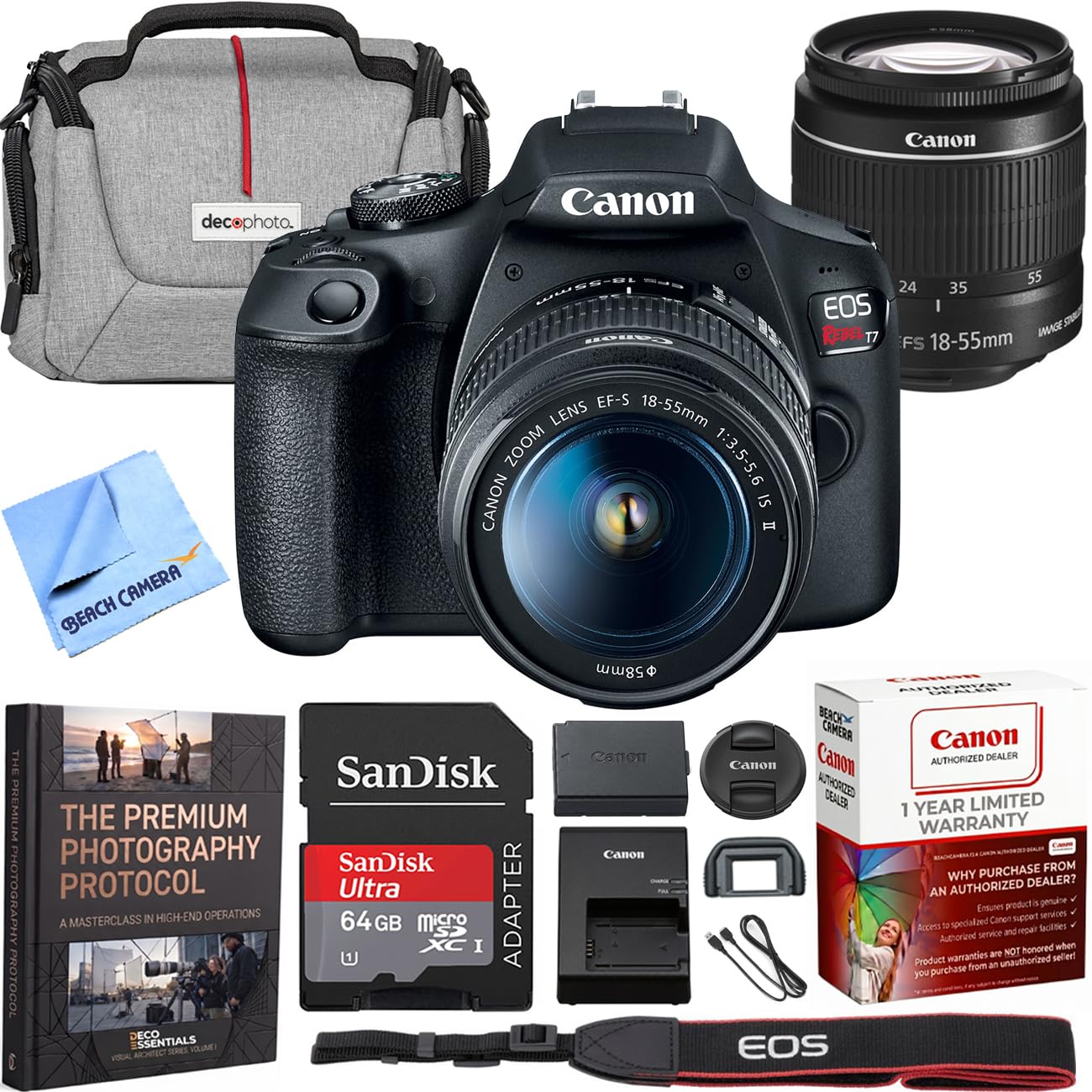
| Canon EOS Rebel T7Starter Bundle | Starter DSLR bundle | 24.1MP APS-C | 9 | 18-55mm lens | Amazon |
| Panasonic LUMIX FZ80D | Travel superzoom | 18.1MP (1/2.3″) | 39 | 60x Optical | Amazon |
| Canon EOS RP | Entry full-frame mirrorless | 26.2MP Full-Frame | — | 24-105mm lens | Amazon |
| Nikon Z50 II | Compact mirrorless duo | 20.9MP APS-C | 231 | 16-50mm + 50-250mm | Amazon |
| Sony Alpha a7 III | Pro-level hybrid | 24.2MP Full-Frame | 693 | 28-70mm lens | Amazon |
| Nikon D850 | High-resolution DSLR | 45.7MP Full-Frame | 153 | Body Only | Amazon |
| Leica Q2 | Premium fixed-lens street | 47.3MP Full-Frame | 49 | 28mm f/1.7 prime | Amazon |
In‑Depth Reviews
1. Nikon D7500 DSLR with 18-140mm Lens
Our pick — over 4.5★ from 650+ verified ratings; the strongest balance of quality and price.
The enthusiast DSLR that nails action, low light, and video without demanding a second mortgage.
You get sharp shots of fast-moving subjects because this camera pairs a 20.9MP APS-C sensor (a crop-sensor format that balances resolution and low-light performance) with a 51-point autofocus system (15 of them cross-type sensors) and can fire off 8 frames per second. That means a running dog or a flying bird stays in razor-sharp focus shot after shot. The kit 18-140mm f/3.5-5.6G ED VR lens covers everything from wide landscape to decent telephoto, and buyers report it is “superb at all focal lengths.”
It also doubles as a serious video tool. You get 4K Ultra HD and 1080p Full HD recording with stereo sound, power aperture control, and 4K UHD time-lapse built in. The large 3.2-inch tilting LCD screen adds touch functionality, making menu navigation and focus selection feel modern even though the body itself launched in 2017. As owners put it, it “lacks latest tech but near-perfect for needs.”
The honest trade-off is size and age: it’s a chunky DSLR with 2017 tech, not a pocket camera with AI tracking. This is a chunky DSLR, not a pocket camera, and the model is several years old — meaning no cutting-edge features like AI subject tracking. But for a photographer who wants class-leading image quality, a weather-sealed body, and a lens that does it all, the crowd favorite here holds a 4.8-star average across hundreds of owners. The battery life also draws consistent praise, so you can shoot a full day without hunting for a charger.
Why enthusiasts love it
- 8 fps burst with full autofocus tracking for fast action
- Weather-sealed body and excellent viewfinder clarity
- Versatile 18-140mm lens handles most scenes
Who should think twice
- Dated 2017 tech, so no modern AI tracking modes
- Heavier and bulkier than mirrorless rivals
Reach for this if: you want one camera that shoots sports, portraits, and 4K video with minimal fuss.
Look elsewhere if: you need the absolute latest autofocus tech or a compact body for travel.
2. KODAK PIXPRO AZ528
A beginner-friendly bridge camera whose 52x zoom brings distant wildlife right into your frame.
This is the budget pick that proves you don’t need a giant lens to shoot faraway subjects. The 52x optical zoom on a 24mm wide-angle lens reaches birds, athletes, and mountain peaks that a phone simply cannot touch — and it does it with genuine optical sharpness rather than cropped digital zoom. The 16MP BSI CMOS sensor (backside-illuminated, meaning it gathers light more efficiently) plus optical image stabilization keeps handheld telephoto shots crisp, even at maximum reach.
Owners mention the zoom is “phenomenal” and that connecting to Wi-Fi to transfer photos to a phone is easy. The six frames-per-second burst mode helps capture fast-moving subjects, and the 3-inch LCD lets you review each burst to pick the sharpest frame. It accepts SD, SDHC, or SDXC cards up to 512GB — enough for thousands of photos and hours of Full HD video on a full-day shoot.
The recurring gripes are worth knowing before you buy. Picture quality gets mixed feedback, with some owners reporting blurry shots and focus hunting, and battery life is described as short — though a spare is cheap and the USB-C fast charging helps. Also, as customers note, it “doesn’t come with an SD card,” so you’re limited to three pictures from the start until you add one. Body scuffs easily, so treat the shell gently.
Best for beginners: an affordable, lightweight entry into superzoom photography with wireless sharing built in.
The honest catch: expect softness at full zoom in low light, and budget for a memory card and spare battery.
Pick this up if: you want maximum zoom reach for the lowest outlay and value easy phone transfer.
skip it if: you demand tack-sharp images in dim conditions or need professional-level reliability.
3. Canon EOS Rebel T7 DSLR Bundle
A complete starter kit that bundles the camera, lenses, bag, and memory card into one box.
This is the classic entry-level DSLR, and the bundle makes it even easier to start. The 24.1MP CMOS (APS-C) sensor with an ISO range of 100-6400 (expandable to 12800) delivers clean, detailed images for portraits, landscapes, and everyday shots, with buyers noting solid performance in low light. The included 18-55mm f/3.5-5.6 IS II lens adds image stabilization, so handheld shots stay sharp even in tricky conditions.
Compared to the Nikon D7500 above, the Rebel T7 is a much simpler machine — its 9-point autofocus system and 3.0 fps continuous shooting are a fraction of the D7500’s 51 points and 8 fps. That gap matters if you shoot fast action, but for a first-time DSLR owner it keeps the learning curve gentle. The 3.0-inch LCD with 920,000 dots and an on-board Feature Guide walk you through settings as you shoot.
Buyers consistently praise the value, noting the bundle arrives with more accessories than expected — a Deco Gear camera bag, a SanDisk 64GB microSD card, and a microfiber cloth all come in the box. Full HD 1080p video, built-in Wi-Fi and NFC for wireless printing and remote shooting round out the package. The main complaint is that the included slave flash doesn’t work with the camera, so budget for a compatible flash if you shoot indoors a lot.
What the bundle gets you
- Everything to start: camera, bag, 64GB card, and cleaning cloth
- Simple Feature Guide helps beginners learn as they shoot
- Compatible with the entire Canon EF and EF-S lens lineup
What to know first
- The bundled slave flash doesn’t sync with the camera
- 9-point AF and 3 fps burst limit fast-action shooting
Start here if: you want one purchase that includes everything needed to begin shooting DSLR-quality photos.
Move up if: you already know you’ll shoot sports or wildlife where 3 fps and 9 AF points will hold you back.
4. Panasonic LUMIX FZ80D

The lightweight superzoom that pulls distant mountain goats and stadium action into sharp view.
If your photography happens on trails and in the grandstands, this Panasonic is built for you. Its 60x optical zoom with a 20-1200mm wide-angle lens (in 35mm equivalent) reaches subjects that would be tiny specks through a phone camera, and the POWER O.I.S. (Optical Image Stabilizer) suppresses hand-shake blur even at full telephoto. At 1.4 lbs, it’s light enough to hang from your neck on an all-day hike — noticeably lighter than the comparable Nikon P1100 at 3.1 lbs.
The 4K video and 4K Photo features add real flexibility. You can record 4K video at up to 4x the resolution of Full HD, then extract a perfect 8-megapixel still from that footage — a great way to catch a moment you might have missed. The Post Focus feature lets you tap the area you want in focus after the shot is taken, which buyers find helpful for macro and wildlife work.
There are two clear caveats. First, this camera has no built-in Wi-Fi, so transferring photos requires a memory card reader — a step that some owners find tedious. Second, low-light performance is weak; the small sensor struggles after sunset, though shooting in RAW and using denoise software recovers a lot. Buyers also note the interface takes some getting used to, and the 2,360K-dot viewfinder (0.74x magnification) is a real advantage for bright-sun shooting over many rivals.
Great for hikers: a featherweight superzoom that captures distant wildlife safely and sharply.
Not for night owls: plan around low light and budget for a card reader since Wi-Fi is absent.
Choose this for: travel, hiking, and outdoor wildlife where reach and light weight matter most.
Pass if you need: wireless photo transfer or strong indoor low-light performance.
5. Canon EOS RP with RF 24-105mm Lens

A compact full-frame mirrorless that delivers pro-level image depth without the pro-level price.
You get the shallow depth of field and rich detail that APS-C cameras can’t quite match, because the EOS RP pairs a full-frame sensor with the RF 24-105mm F4-7.1 IS STM lens. Buyers describe it as “a fantastic way to get into Full Frame while staying affordable.” The lens gives you a versatile 24-105mm zoom range with up to 5 stops of optical image stabilization, so your handheld shots stay steady even in lower light.
Travel and vlogging are where it shines. The body is compact and lightweight for a full-framer, and it doubles as a high-quality webcam via the EOS Utility Webcam Beta Software on Mac and Windows, or through clean HDMI output. The 0.4x maximum magnification with a 0.66-foot minimum focusing distance in autofocus lets you get satisfyingly close to small subjects. Maximum magnification extends to 0.5x with a 0.43-foot distance when you use Center Focus Macro.
The trade-offs are predictable for an entry full-frame. Reviewers point out the kit lens edges get soft below f/8 (though the center stays sharp), and it’s not the tool for fast sports or birds in flight. Some shoppers say the 4K video has limitations — no Dual Pixel AF, a crop factor, and a 30-minute cap — so 1080p is the safer bet for serious video on this body. Battery life also draws the occasional complaint, so a spare is a smart addition.
Why it stands out
- Full-frame image quality in a compact, travel-friendly body
- 5-stop image stabilization on the kit lens
- Dual-purpose as a webcam for streaming and calls
Limits to expect
- 4K video lacks Dual Pixel AF and has a crop
- Not built for fast sports or birds in flight
Pick this if: you want full-frame quality for travel, portraits, and vlogging in a light package.
Step up if: you need sturdy 4K video autofocus or high-speed action tracking — this body handles both without hunting for focus.
6. Nikon Z50 II with Two Lenses

A two-lens mirrorless kit with 231-point autofocus that tracks birds, pets, and people with ease.
This is the modern mirrorless answer for photographers who want DSLR-quality images without the bulk. The Z50 II packs a 20.9-megapixel DX format (APS-C) sensor — several times larger than a typical smartphone sensor — into a body light and compact enough to slip into a small bag. The kit includes two stabilized lenses: the NIKKOR Z DX 16-50mm f/3.5-6.3 VR for everyday shots and the NIKKOR Z DX 50-250mm f/4.5-6.3 VR for telephoto reach.
Autofocus is the headline feature here. The 231-point system can automatically detect and track nine distinct subjects — people, dogs, cats, birds, and vehicles — with dedicated bird and airplane modes for extra accuracy. Buyers describe the kit lenses as “sharp” and the autofocus as “fast and very good,” making it a genuine upgrade over the original Z50 for wildlife and macro work. The fully articulated rear screen is another welcome improvement.
Video shooters get real power too: 4K UHD at 60p, in-camera 120p slow motion in Full HD, built-in electronic VR, and a product review mode. The 31 built-in Picture Control presets let you dial in a look at the press of a button, and you can download bespoke Cloud Picture Controls from Nikon Imaging Cloud. One reviewer noted an autofocus issue after three weeks, but the overwhelming consensus is strong Nikon quality at a fair price.
The appeal
- Two-lens kit covers wide to telephoto right from the start
- Reliable subject tracking for people, pets, and birds
- 4K UHD/60p video with in-camera slow motion
Keep in mind
- An occasional unit reports autofocus stopping after a few weeks
- Entry-level APS-C sensor, not full-frame quality
Reach for this if: you want a lightweight, two-lens mirrorless kit with subject-tracking autofocus.
Think twice if: you demand full-frame depth of field or maximum low-light performance.
7. Sony Alpha a7 III with 28-70mm Lens

The full-frame workhorse that blends 693-point autofocus, 10 fps bursts, and outstanding low-light shots.
This is the camera that serious hybrid shooters keep coming back to. The advanced 24.2MP back-illuminated full-frame sensor delivers 15-stop dynamic range, 14-bit uncompressed RAW, and an ISO range of 50 to 204,800 — numbers that translate directly into clean, detailed images even in dim conditions. Buyers call the low-light performance “excellent” and note the picture quality, particularly in 4K video, is stunning.
Action photographers will love the autofocus and speed. The 693 phase-detection points with 425 contrast AF points cover 93% of the image area, and the camera can shoot up to 10 fps with either the silent or mechanical shutter while maintaining autofocus and auto-exposure tracking. That combination means fast-moving subjects stay locked and sharp frame after frame. The kit 28-70mm f/3.5-5.6 lens is reliable and firmware-updatable, and buyers report the battery shoots roughly 710 photos per charge.
The main caveats are the complex menu system and limited weather sealing, both of which buyers flag. Some owners mention reliability and battery life as mixed, though complaints are a minority against a large base of glowing reviews. For the price, this remains among the most complete mirrorless cameras available — a “pro level at an accessible price,” as owners put it. Just remember it needs a fast UHS-II card (a high-speed memory card standard) to open up its full 4K potential.
Why it dominates
- 693 AF points with 93% frame coverage for confident tracking
- 10 fps burst with silent shutter option
- Outstanding low-light and 4K video quality
What to watch
- Complex menu can intimidate beginners
- Limited weather sealing for harsh conditions
Invest here if: you want a professional-grade hybrid that handles both stunning photos and 4K video.
Look elsewhere if: you need a simple menu system or heavy-duty weather protection.
8. Nikon D850 FX-Format DSLR Body
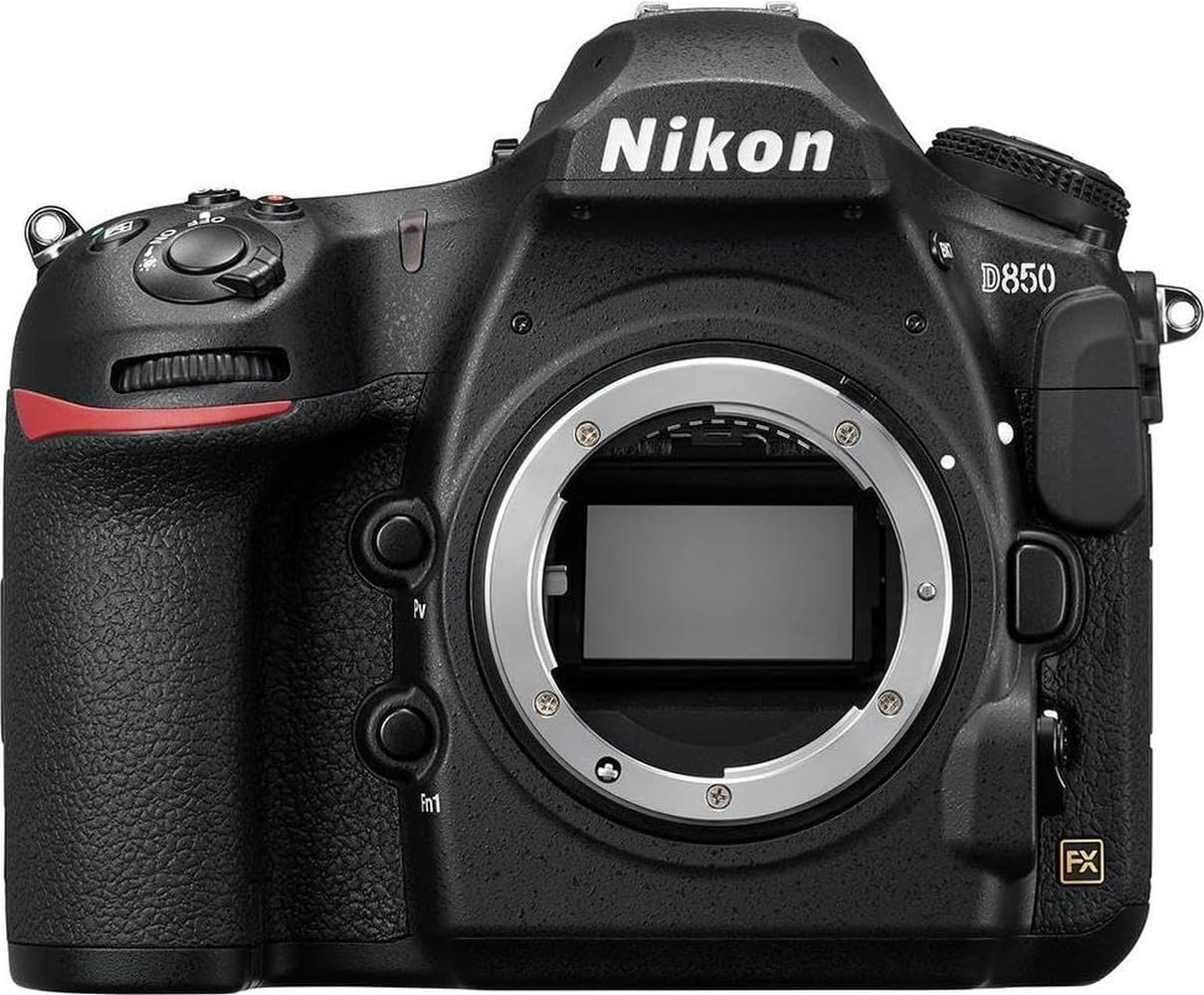
The 45.7-megapixel full-frame DSLR that sets the standard for resolution and dynamic range.
You get extraordinary detail and dynamic range because the backside-illuminated full-frame sensor delivers 45.7 megapixels of resolution with no optical low-pass filter (a filter that softens images to prevent patterns). This design keeps the risk of moiré (a wavy color artifact) virtually nonexistent. Buyers call the image quality a “standout,” with stunning contrast at the full 45.7-megapixel count.
It’s not just a studio camera, though. The D850 shoots up to 9 frames per second at full resolution with full autofocus performance, and its 153-point AF system is praised as industry-leading for nailing action shots. The tilting touchscreen, illuminated buttons, and focus shift shooting mode (for easy focus stacking) make it a versatile tool for everything from landscapes to sports. In-camera 8K and 4K time-lapse movies add another creative layer.
The demands of this camera are real: 45.7MP files fill cards fast and it’s not for beginners. Those 45.7MP files fill a 32GB card fast — you’ll want 128GB or larger high-speed SD cards. The menu system is complex, and it’s explicitly not for beginners. Some customers note battery drain when using live view, and a notable minority say their unit stopped turning on after a few months. As owners note, it also “exposes weak lenses,” so you’ll want quality glass to match the sensor’s resolution.
The high-res advantage
- 45.7MP delivers massive cropping flexibility
- 9 fps burst with full AF at full resolution
- Weather-sealed with excellent build quality
The honest cost
- Huge RAW files demand big, fast memory cards
- Complex menus and steep learning curve
Buy this if: you’re a serious photographer who needs maximum resolution and dynamic range in a DSLR.
pass on it if: you’re new to photography or want something light and simple for casual shooting.
9. Leica Q2 Digital Camera

A fixed-lens full-frame icon whose 28mm Summilux f/1.7 glass delivers peerless sharpness in a compact body.
You get one tool that covers many situations because the Leica Q2 pairs a 47.3MP full-frame sensor with a fixed Summilux 28mm f/1.7 ASPH prime lens (a non-zoom lens with a wide aperture). Owners describe the optics as “superb” and say images are so detailed you can crop the 28mm shot down to a 100mm equivalent and still have plenty of resolution left. At 10 frames per second with 49 autofocus points, it keeps up with street and travel moments easily.
Portability is the defining trait. Reviewers point out taking it to 28 countries and shooting 35,000 photos while never losing the excitement, calling it their “go-to camera for hikes to dinners.” The minimal user interface, tactile dials, and clean menus make it fast to operate — a refreshing change from menu-heavy rivals. It’s weather-sealed, quiet, and produces “beautiful clarity on screen and prints,” with sizes up to 16×20 earning high praise.
The honest considerations are weight and price: it’s slightly heavy for its size and a premium investment. Owners note it’s slightly heavy for its size and suggest adding thumb support and a spare battery. Raw files run around 140MB each, so storage planning matters. And while buyers call it “extremely well priced” relative to its capabilities, this is firmly a premium investment — resellers sometimes overcharge about above the MSRP, so buy carefully. For the right photographer, though, owners say it’s “possibly the only camera you will ever need.”
The Leica magic
- 47.3MP full-frame with superb 28mm f/1.7 prime lens
- Heavy cropping possible — 28mm crops to 100mm equivalent
- Fast, quiet, weather-sealed, and endlessly portable
Before you commit
- Slightly heavy for its compact size; needs thumb support
- Premium price and large 140MB RAW files
Choose this for: a lifelong travel and street camera that delivers stunning prints with minimal gear.
Look past it if: you need interchangeable lenses or a more budget-conscious investment.
Understanding the Specs
Sensor Size and Type
The sensor is the light-capturing heart of your camera, and its physical size matters more than its megapixel count. A larger sensor gathers more light per pixel, which means less noise in dim conditions and a shallower depth of field for that creamy background blur. You’ll commonly see APS-C (smaller) and full-frame (larger) sensors; full-frame offers better low-light performance and more professional results.
Autofocus Points and Burst Rate
Autofocus points mark where the camera can lock onto a subject, and more points — especially across the frame — make it easier to track moving targets like kids or pets. Cross-type sensors are more sensitive and work better in low contrast. Burst rate (measured in frames per second) is how many shots the camera takes per second; higher numbers mean you won’t miss the peak action moment.
FAQ
Is a full-frame camera always better than an APS-C camera?
How many megapixels do I really need?
What’s the difference between optical zoom and digital zoom?
Is a DSLR better than a mirrorless camera?
What does image stabilization do and do I need it?
Will an older model like the Nikon D7500 still be a good buy?
What memory card should I get for my camera?
Can I use this camera as a webcam?
What’s the difference between a bridge camera and an interchangeable-lens camera?
How many shots can I expect from a single battery charge?
Final Thoughts: The Verdict
If you want one dependable pick, the appareil photo numérique winner is the Nikon D7500 because it pairs a proven 51-point autofocus system with 8 fps bursts and 4K video in a weather-sealed body that grows with your skills. If you want the lightest possible kit with two lenses and modern subject tracking, grab the Nikon Z50 II. And for maximum zoom reach on a budget, the KODAK PIXPRO AZ528 is the one to reach for.
How We Picked
We do not accept paid placement. Every pick is matched to a real buyer and a real use-case; we do not hands-on test units.
Sources & Methodology
Specifications: manufacturer listings and product documentation. Review insights: verified customer reviews, as of September 2026. Pricing: not shown on this page (it changes often); check the current price via the retailer link.
As an Amazon Associate, Gadgets Feed earns from qualifying purchases. This does not affect which products we feature.