
Our readers keep the lights on and my morning glass full of iced black tea. As an Amazon Associate, I earn from qualifying purchases.
Specs are compiled from manufacturer listings and verified buyer reviews and can change over time — please confirm the key details on the product page before buying.
Buying fabric online usually depends on one fear: that what lands on your doorstep will be thinner, stiffer, or a completely different shade than the swatch on your screen. So here is the short answer first — the African Fabric 6 Yard Printed Wax Cloth is the best apparel fabric by the yard for most sewers, because it gives you six continuous yards of vivid, structure-holding print in one order. Below, the nine apparel fabrics worth cutting into are separated from the ones that will sit in your stash, with the exact projects each one handles best.
I’m Min — the founder and writer behind Gadgets Feed. This guide is built by comparing the manufacturers’ published specifications and the patterns across verified customer reviews, so you get each pick’s real strengths and trade-offs instead of marketing spin.
You will learn how weight, width, and fiber content decide whether a fabric drapes, stretches, or holds a crisp crease, so you can pick the right yardage for shirts, skirts, or quilting the first time. Here are the apparel fabric by the yard options that actually sew the way you expect.
Our Picks at a Glance


How To Choose The Best Apparel Fabric By The Yard
Every fabric decision starts with one question: what are you actually making? A fabric that makes a perfect flowing skirt will frustrate you on a structured blazer, and a heavy denim that sews beautifully on jeans is the wrong choice for a summer dress. Match the cloth to the garment first, then worry about color.
Match the fabric weight to your project
Weight decides how a fabric behaves in your hands. A lightweight cloth like the 100GSM broadcloth drapes and flows, making it right for shirts, linings, and summer tops. A medium-weight muslin holds its shape for mock-ups and quilt backings. A heavier 9-10oz denim stands up on its own, so it suits jeans, jackets, and aprons where structure matters. Pick a weight that matches the finished garment, not the swatch photo.
Check the fiber blend before you buy
Fiber content drives everything from stretch to how the fabric ages. Pure cotton breathes and takes dye well but can wrinkle. Adding polyester, as in an 80% Polyester / 20% Cotton broadcloth, brings wrinkle resistance and durability. Adding spandex, as in a 95% Cotton / 5% Spandex blend, gives you the stretch you need for leggings and activewear. Read the blend and picture how you want the garment to move.
Width and yardage decide how much you can cut
A wide bolt means fewer seams and more layout options. A 62-inch denim or 63-inch muslin gives you room to fit pattern pieces side by side, while a 45-inch fabric makes you plan cuts more carefully. Always buy a little extra for pattern matching, shrinkage, and the occasional cutting mistake — running short mid-project is the most common frustration sewers report.
Quick Comparison
| Model | Best For | Fabric Type | Width | Length | Amazon |
|---|---|---|---|---|---|
| African Fabric 6 Yard Printed Wax Cloth★ Best Overall | Statement dresses and bold prints | Polyester | 45 in | 216 in | Amazon |
| Denim 9 OZ. Indigo Washed Deep ColTop Performer | Jeans, jackets, and aprons | 100% Cotton | 62 in | 62 in | Amazon |
| Barcelonetta Poly Cotton BroadclothBest Value | Shirts, linings, and dress shirts | 65% Poly / 35% Cotton | 60 in | 2 yd | Amazon |
| Barcelonetta Cotton Spandex Fabric | T-shirts, leggings, and loungewear | 95% Cotton / 5% Spandex | 60 in | 1 yd | Amazon |
| Ice Fabrics Stretch Velvet Fabric | Costumes, crafts, and statement garments | 90% Poly / 10% Spandex | 60 in | 1 yd | Amazon |
| Ice Fabrics Cotton Polyester Broadcloth | Dress shirts and formal wear | 80% Poly / 20% Cotton | 60 in | 2 yd | Amazon |
| FIVEIZERO Cotton Muslin Fabric | Quilting, embroidery, and draping | 100% Cotton | 63 in | 5 yd | Amazon |
| 5 Yards Cotton Unbleached Muslin | Mock-ups, dyeing, and crafts | 100% Cotton | 63 in | 5 yd | Amazon |
| 10 Yards Cotton Unbleached Muslin | Large draping and bulk projects | 100% Cotton | 63 in | 10 yd | Amazon |
In‑Depth Reviews
1. African Fabric 6 Yard Printed Wax Cloth African Ankara Ethnic Fabric FP6383
Our pick — over 4.5★ from 950+ verified ratings; the strongest balance of quality and price.
Six yards of vivid wax-print drama that sews as easily as it photographs
If you want one cut to carry a whole statement dress, wrap skirt, or party outfit, this is the fabric that does it. The yardage is generous — 216 inches by 45 inches — which is far more cloth than the 62 inches you get from the denim pick, so you are not piecing together panels. That is the single biggest reason it earns the top spot: you get real, usable length in one order.
This fabric is 100% polyester (a synthetic fiber that resists wrinkles and dries fast), and it behaves like a crisp wax print rather than a floppy cotton. That means it holds bold shapes, presses clean, and stands up to repeated machine washing, softening a little each time. Bright orange, yellow, and other saturated prints stay vivid after a wash, so a finished dress still looks new after a season of wear. Owners care about exactly that — the fabric’s appearance and color draw the loudest praise across the review pages.
One honest caveat sits in the texture. The same polyester that keeps colors bright can feel thinner and stiffer than a fine cotton on the first touch, and a few sewers notice that before a wash relaxes it. Treat the first cut as the stiffness test — wash a scrap, press it, then decide your needle and thread. Buyers report: “Very cute fabric!!! It is light weight and absolutely a wax print but it is easy to work with, vibrant orange and yellow colors.”
Where This One Wins
- 216 inches of continuous length — 154 inches more than the denim pick’s 62 — so big garments need fewer seams.
- Vivid, saturated wax prints that stay bright and hold structure after washing.
- Machine washable and forgiving to cut, so it works for both costumes and everyday garments.
The Honest Trade-Off
- Pure polyester can feel stiff and thin on first unboxing until a wash softens it.
- The 45-inch width is narrower than the 60-63 inch rolls, so wide pattern pieces need more layout planning.
Made for: anyone sewing a bold statement garment who wants plenty of yardage in one cut.
Think twice if: you need a soft, flowing cotton drape straight out of the bag — this one wants a prewash first.
2. Denim 9 OZ. Indigo Washed Deep Col 100% Cotton Fabric 62″ Wide by Yard
Real denim weight for jeans and aprons, with one dye warning worth hearing up front
The number that defines this pick is 9-10oz — that is the cloth weight, and it is what separates true denim from a thin cotton print. At that weight it stands up on its own, so jeans, jackets, skirts, and aprons get genuine structure. It is also the widest everyday cut in this group at 62 inches, which gives you far more room to lay out pattern pieces than the 45-inch African print above.
Pure 100% cotton means it takes dye and presses beautifully, and the indigo is deep and rich, so your finished piece keeps its color instead of fading to gray. Cut and sew performance is the strength here — the fabric quality is what dominates owner feedback, closely followed by the substantial weight, and reviewers describe it as easy to cut and sew with good drape for structured summer pieces. It also holds its shape without stretch, so a well-fitted garment stays fitted.
Now the catch, and it is a real one: this indigo bleeds. The dye transfers onto hands and can run in the first washes, so wash the finished garment separately until the water runs clear. A few also mention the cloth arriving as pre-cut one-yard pieces rather than one continuous three-yard roll, so measure before you plan a long cut. Owners mention: “As expected for navy denim fabric. Good quality, thickness and good value for the price. I am glad that I ordered two packs.”
Weigh it first: at 0.45 kg for the cut, this is lighter in the hand than the 0.72 kg African print, so it is easier to maneuver at the machine even though it sews heavier.
Wash rule: prewash cold and dry low before cutting, then treat the finished piece on its own until the indigo stops running.
Reach for this if: you are making structured denim garments and want true 9-10oz weight with a wide 62-inch layout.
Pass if: you need a pre-shrunk, no-bleed fabric you can wear the same week — this indigo demands a dedicated wash cycle.
3. Barcelonetta Poly Cotton Broadcloth Fabric by the Yard, 60″ Wide Roll
The beginner-friendly broadcloth that forgives mistakes and presses to a crisp finish
If you are new to a machine and nervous about wrecking expensive cloth, start here. This 65% Polyester / 35% Cotton broadcloth is forgiving by design — the blend resists wrinkles, holds a press, and does not punish a wobbly seam. At 60 inches wide with a lightweight, breathable hand, it is a natural for shirts, dress linings, skirts, and tote bags where you want a smooth, flat finish.
The cotton brings softness and the polyester brings durability and easy care, which is why fabric quality draws the most consistent praise of any single trait here. Color runs deep and true too — sewers describe matching it to a specific team shade and getting a crisp, solid result. It also takes heat well, so a sharp press with a smaller needle gets you professional-looking seams even on a first dress shirt.
The honest limit is thickness. This is a light broadcloth (a smooth, tightly woven plain-weave cotton) built for shirts and linings, not for a garment that needs body — a few sewers find it stiffer or thinner than they pictured, and it can go slightly translucent behind a bright light, so a dark underlayer may show through. That makes it a lining and shirt fabric, not a stand-alone dress fabric. As owners put it, it “required a smaller needle, it went together just fine eventually.”
Strongest Points
- Wrinkle-resistant blend that presses crisp and stays sharp.
- 60-inch width gives generous layout room for shirts and skirts.
- Lightweight and breathable — comfortable for warm-weather garments.
- Forgiving for beginners and easy to handle on a first project.
Where It Falls Short
- Light and potentially see-through behind strong light — best as a lining, not a stand-alone dress.
- Some sewers find it stiffer than a pure cotton on first touch.
Best pick for: first-time sewers and anyone making shirts, linings, or lightweight summer garments on a modest budget.
Look elsewhere if: you need a fabric with real body for a structured garment or an opaque dress.
4. Barcelonetta Cotton Spandex Fabric by the Yard, 60″ Wide Roll

A jersey-soft cotton blend that stretches with every move and bounces right back
When the garment has to move with the body — tees, leggings, armbands, loungewear — stretch is the whole game. This blend is 95% Cotton and 5% Spandex, and that small spandex share is what turns ordinary cotton into a soft, recoverable jersey. The 60-inch width gives you comfortable cutting room for fitted patterns, and the cotton keeps it breathable next to the skin.
The quality of the base cloth is what carries this pick: owners call it perfect t-shirt material and keep buying it in multiple colors. Owners call it perfect t-shirt material and keep buying it in multiple colors, and the softness, stretch, and recovery all draw steady praise. It grips and holds without sagging, which matters most on tight tees and fitted tops where a cheap knit would stretch out at the neckline after a few wears.
Two things to know before you cut. First, the color can run cooler or more muted than the screen suggests, so order a swatch if a precise shade matters. Second, yardage can come up short — an owner ordering two yards reported receiving 67 inches instead of 72, so measure as soon as it arrives and speak up if a cut is light. Customers note: “The quality was amazing. It has good weight and good stretch. Good recovery. The color is beautiful and consistent.”
Recovery matters most: the 5% spandex is why tight tees and leggings snap back instead of bagging out, and that is the trait that keeps sewers returning for more colors.
Check the color in person: screen shades tilt, so treat the swatch photo as a guide and verify the tone on arrival.
Pick this for: t-shirts, leggings, activewear, and anything that needs to stretch and recover beautifully.
Skip if: you need an exact, screen-accurate color or a guaranteed trimmed length straight out of the bag.
5. Ice Fabrics Stretch Velvet Fabric by The Yard, 60″ Wide, 90% Polyester 10% Spandex

The high-drape showpiece that turns simple garments into something that looks expensive
Velvet is the fabric that makes people stop and look, and this stretch version delivers that without the fuss of a stiff backing. The blend is 90% Polyester and 10% Spandex across a full 60-inch width, and that spandex share gives it a soft, flowing drape that presses into rich folds. It is machine washable and resists pilling and fading, so a costume or a statement dress can actually be worn and cleaned.
The look is the headline — owners describe the sheen and depth as regal, and its appearance and color draw the most consistent praise after overall quality. The softness lands right behind, with the surface described as silky against the skin. For costumes, jewelry backdrops, and lapels, that combination is hard to fake with a plain flat cloth.
Here is what to plan for. Stretch velvet wants to shift and slide while you cut, and experienced sewers recommend pinning heavily and working slowly — this is not the fabric to learn on. A few also note that a rare cut in one color arrived with dark splotches, so inspect the whole piece before you commit it to a garment. Reviewers point out: “This is exactly I was looking for! It needed a blue velvet background for my jewelry shadow box frame, and I am in love. It is stretchy, good quality, and it made the brooches pop.”
Why Velvet Wins Here
- Rich, drapey 90% Polyester / 10% Spandex blend that folds and flows like luxury cloth.
- Resists pilling and fading, and machine washes cold for real-world wear.
- Full 60-inch width for dramas, cloaks, and statement garments.
- Silky surface that reads expensive for jewelry displays and costumes alike.
Guard Rails To Know
- Stretchy pile fabric slips and shifts during cutting — pin heavily and sew slowly.
- Occasional cuts in some colors have arrived with blemishes, so inspect before you cut.
For the showpiece makers: costume and garment sewers who want a high-drape cloth that photographs and wears beautifully.
Not the starter fabric: if you are still learning to cut and pin stabilized cloth, master a broadcloth first.
6. Ice Fabrics Cotton Polyester Broadcloth Fabric by The Yard, 60″ Wide, 2 Yards

The 100GSM broadcloth that presses flat, washes clean, and takes on dress shirts
This is the do-it-all broadcloth for anyone sewing shirts, tops, or formal pieces. The spec that matters is 100GSM, a light weight measured in grams per square meter, and at that weight the cloth cuts and sews with a crisp, controlled drape that makes shirt-making straightforward. The blend is 80% Polyester and 20% Cotton, so it resists wrinkles while keeping some breathability, and it spans a full 60 inches for easy layout.
The wrinkle resistance is the quiet hero: garments hang smooth, spot-clean nicely, and hold their look through repeated washing. Garments made here hang smooth, spot-clean nicely, and hold their look through repeated washing, so a dress shirt comes out of the dryer ready to wear. That is exactly what owner feedback reports — softness, washability, and a crisp finish after several cycles with no ironing required if you hang it promptly. For a dress shirt or a slack, that combination of a sharp press and easy care is the whole point.
It is light, and that cuts both ways. Used as a dress lining or a structured shirt it shines, but a few sewers find the cloth thinner than a heavier broadcloth would be for a stand-alone garment, so treat it as a light shirt and lining fabric rather than an armor-plated outer layer. Shoppers say: “Good quality, excellent thread count. Nice quality lightweight fabric for costuming.”
The 100GSM answer: that weight gives just enough body to resist wrinkles and press flat without feeling heavy — a comfortable middle ground for warm days.
Best use case: dress shirts, tops, and linings where a crisp, wrinkle-resistant finish matters more than thickness.
Suits you if: you sew shirts, tops, and formal wear and want a wrinkle-resistant cloth that holds a press.
Look past it if: you need real body and thickness for an outer garment.
7. FIVEIZERO 100% Cotton Muslin Fabric by The Yard, 63 Inch x 5 Yards
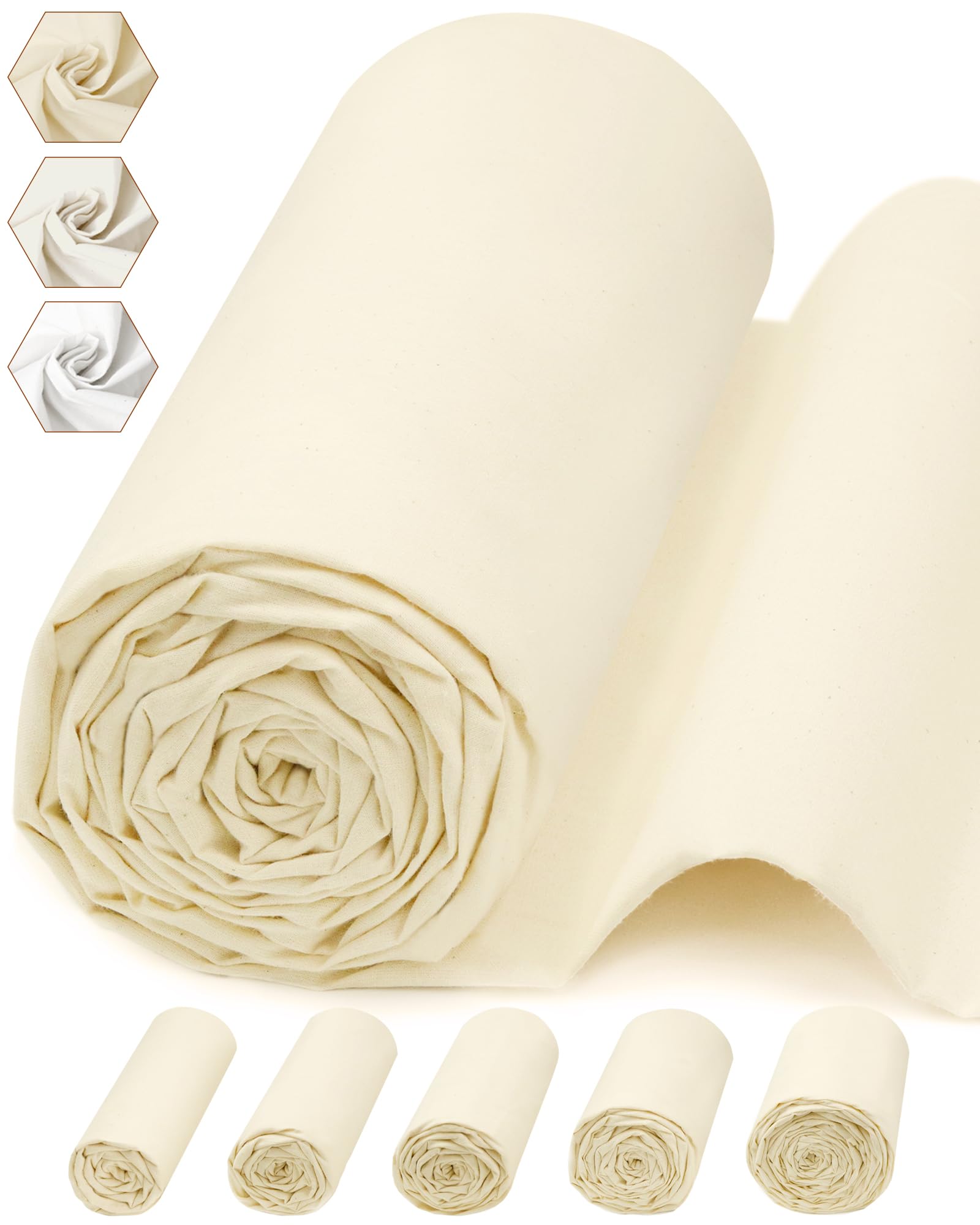
Five yards of natural, unbleached cotton muslin built for quilters and embroiderers
What you get matters as much as what it is. This is a 100% cotton muslin, undyed and unbleached, delivered in a 5-yard piece at 63 inches wide — the kind of footprint that lets you cut quilt backings, draping panels, and large mock-ups without running short. At 1.11 kg for the cut, it has real substance in the hand rather than the flimsy feel of a bargain muslin.
The texture is the strength: medium weight, breathable, and reliably consistent for quilt linings, embroidery backing, and bag linings. It is medium weight, breathable, and reliably consistent, so it works equally well for quilt linings, embroidery backing, and bag linings where you want a cloth that holds its shape. Owners consistently praise how it cut, ironed, and sewed, and it carries a natural beige tone that takes embroidery threads and dyes cleanly without fighting your colors.
Here is the one mismatch to expect: muslin arrives stiff, because it still holds the sizing used to finish it. A single wash softens it up and it relaxes into a comfortable cloth, so plan a prewash before you cut. One order also came with heavy sizing and less length than expected, so measure as soon as it arrives. Buyers report: “Often hard to find white that is not super thin. This fabric is excellent for quilts. The weave is great. Stiff when I received it but after a quick wash it softened right up.”
What Quilters Love
- Large 5-yard, 63-inch cut that covers quilt backings and big mock-ups in one piece.
- 100% cotton with a consistent, medium-weight weave that sews cleanly.
- Natural unbleached tone that takes dye and embroidery thread beautifully.
- Softens nicely after one wash and irons with a smooth finish.
Plan Around This
- Arrives stiff with sizing and needs a prewash to reach its softer hand.
- Yardage can come up slightly short, so measure and speak up if a cut is light.
Go-to for quilters: anyone who wants a big, natural cotton muslin for backings, embroidery, and draping.
Only caveat: budget a prewash before you cut, and confirm the length on arrival.
8. 5 Yards 100% Cotton Unbleached Muslin Fabric, 63 Inch x 5 Yards
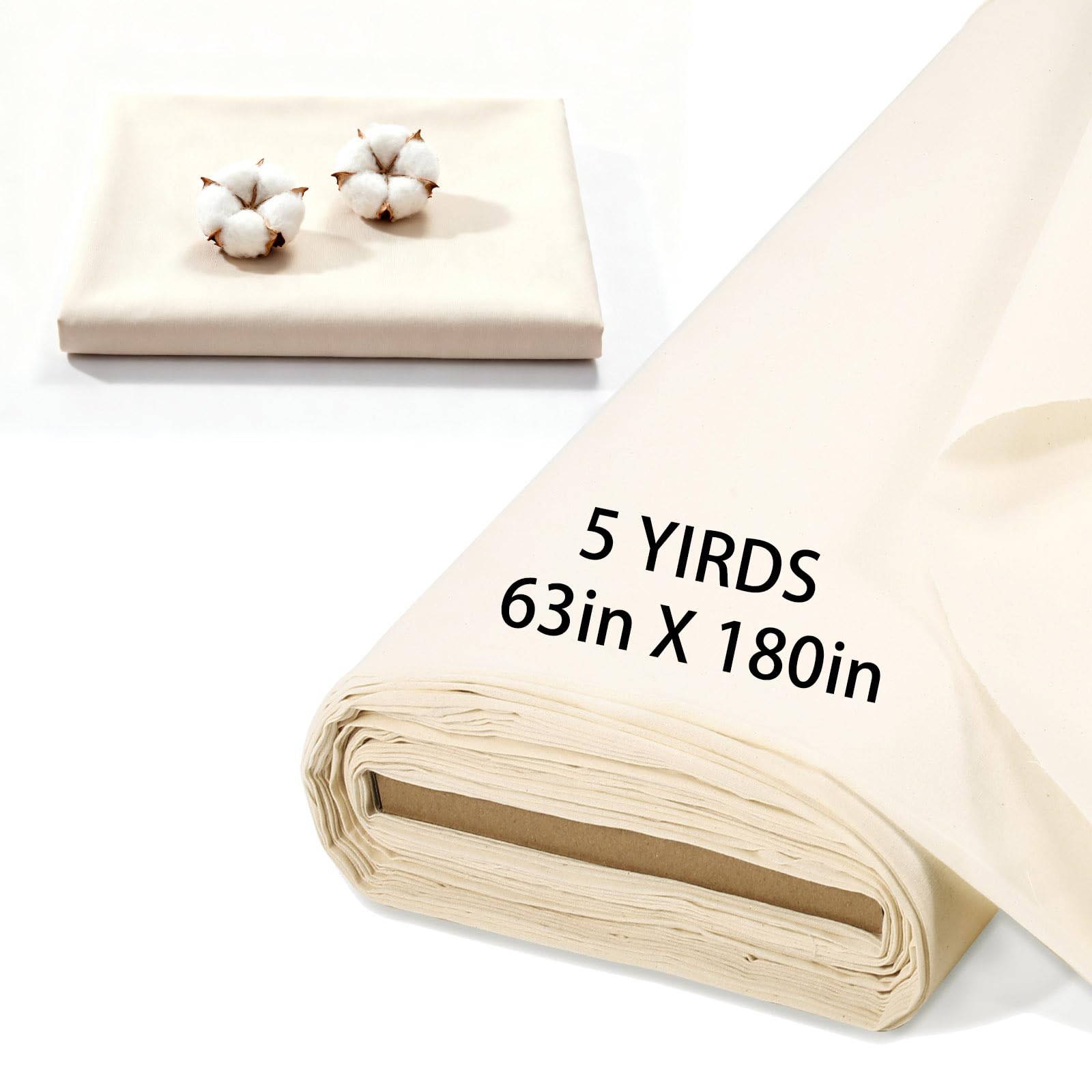
The test-cut muslin that lets you nail a pattern before you risk the good fabric
Here is a use-case worth knowing: if you sew garments, you cut your pattern in cheap muslin first to check the fit, then cut the real cloth once. This 5-yard, 63-inch unbleached cotton is exactly that tool — natural, mechanically finished and not chemically treated, with a light drape and enough stiffness to hold a shape while you set your pins.
At 0.76 kg for the cut, it is lighter than the FIVEIZERO muslin above (1.11 kg), which makes it easier to fold and lay out on the table when you are testing a pattern. The raw cotton tone takes dye and printing well, and because it is unfinished, small flecks of cotton seeds can show in the weave — that is a natural characteristic, not a flaw. It also makes a wearable blouse or a quilt backing if your test garment turns out well.
The honest friction point is the shipping format. It arrives folded into a bag rather than on a bolt, so you will need to press it before cutting to get a flat, true surface. Skip a prewash if you want it stiff for draping, and wash it if you want it soft. Owners mention: “It’s thicker than regular fabric so I use it as a sample to see how a shirt would come out but it looks great.”
Smart-sewer move: cut your pattern here first to dial in the fit, then commit your good yardage only once it fits — that saves expensive fabric from mistakes.
Press before cutting: the bag-folded arrival needs a good ironing to sit flat and true under the scissors.
Designed for: sewers who test a pattern in muslin before cutting their final fabric.
Know before ordering: it ships folded in a bag, not on a bolt, so plan a pressing session.
9. 10 Yards 100% Cotton Unbleached Muslin Fabric, 63 Inch x 10 Yards

Ten unbroken yards for canopy drapes, big backdrops, and anyone who cuts in bulk
For large-scale projects, the deciding spec is length, and this muslin hands you 10 continuous yards at 63 inches wide — twice the run of the 5-yard picks above. That is enough for canopy bed drapes, photo backdrops, upholstery lining, or a long run of quilt backing where piecing seams would be a headache. It is 100% cotton, mechanically finished and not chemically treated, with the same soft touch and natural light drape as its shorter sibling.
The natural cotton breathes and lets light through, which is why it works so well for sheer drapes and window dressing. It takes dye and embroidery cleanly, irons without fuss, and the raw tone keeps your colors honest. For lining a period jacket or backing a large quilt, the unbroken 10-yard length means far fewer seams to align.
The one quirk to expect is the same as its shorter cousin — it ships folded rather than on a bolt (a cardboard tube the fabric is rolled around), so budget a pressing session before you cut, and the cotton seeds flecked through the weave are natural, not defects. As for thickness, a few sewers find it lighter than they pictured, so judge it by weight before you plan a heavy project. Customers note: “Perfect texture and very easy to work with. I use it to line the top half 1700 era British Officers jackets.”
Why Buy In Bulk
- 10 continuous yards at 63 inches wide — the longest run in this group for big projects.
- 100% natural, unbleached cotton that takes dye and printing beautifully.
- Light, airy drape that lets light through for canopy and window projects.
- Fewer seams on large backings and draping thanks to the unbroken length.
Worth Weighing
- Arrives folded in a bag, so press it flat before cutting a true edge.
- Some sewers find the cloth lighter than expected — check the weight before a heavy project.
Made for: large projects — canopy drapes, backdrops, and bulk quilt backings — where a single 10-yard run saves seaming.
Heads up: it ships folded and the natural weave is light, so press before cutting and match the weight to your project.
Understanding the Specs
Fiber Content
The fiber blend — the recipe of natural and synthetic threads — decides how a fabric feels, moves, and holds up. Pure cotton breathes and takes dye and a press, but it wrinkles easily. A poly-cotton blend like 65% Polyester and 35% Cotton adds wrinkle resistance and durability while keeping some breathability. A stretch blend like 95% Cotton and 5% Spandex lets the cloth move with you and recover its shape. Read the percentages first, because they tell you more about the finished garment than the swatch photo ever will.
Fabric Weight
Weight is measured in ounces per square yard or in GSM — grams per square meter — and it sets how a cloth behaves. A light broadcloth at 100GSM drapes softly and is right for shirts and linings. A medium muslin holds its shape for mock-ups and quilting. A heavier 9-10oz denim stands up on its own for jeans, jackets, and aprons. When you match the weight to the garment, cutting and sewing become far more predictable.
Width and Yardage
Width and length both change what you can cut. Wide rolls of 60 to 63 inches let you lay pattern pieces side by side, while a 45-inch fabric makes you plan every cut more carefully. Always buy a little extra for pattern matching, shrinkage, and simple mistakes. Continuous yardage also matters — a single 10-yard run of muslin avoids the seams that smaller pieces force you to work around.
Stretch and Drape
Stretch is the ability to stretch and spring back, and drape is how the cloth falls when you hold it up. A stiff denim drapes into hard folds and holds structure; a stretch velvet flows into soft, deep folds. Choose stretch for fitted garments like leggings and tees, and choose structure for a crisp shirt or a jacket. Getting this match right is the difference between a garment that feels made for the body and one that fights it.
FAQ
What is the difference between muslin and broadcloth for sewing?
How much fabric do I need for a dress shirt?
Do I need to prewash fabric before sewing?
Why did my denim fabric turn my hands blue?
Is cotton spandex good for leggings and activewear?
How wide should fabric be for sewing garments?
Is stretch velvet hard to sew for beginners?
What does GSM mean on fabric?
Will 100% cotton muslin shrink after washing?
How do I stop fabric colors from bleeding in the wash?
Final Thoughts: The Verdict
For most sewers, the apparel fabric by the yard winner is the African Fabric 6 Yard Printed Wax Cloth because it hands you six continuous yards of vivid, structure-holding print that carries a whole garment, and its 216-inch length outruns the 62-inch denim cut for big projects. If you want true denim weight for jeans and aprons, the Denim 9 OZ Indigo Washed is the one to reach for. And if you just want the easiest possible start with the widest margin for error, grab the Barcelonetta Poly Cotton Broadcloth.
One last nudge worth acting on: The African print pick is the crowd favorite here — 4.6 stars across 900+ ratings — and its 216-inch cut makes it the safest first order on this list.
How We Picked
We do not accept paid placement. Every pick is matched to a real buyer and a real use-case; we do not hands-on test units.
Sources & Methodology
Specifications: manufacturer listings and product documentation. Review insights: verified customer reviews, as of September 2026. Pricing: not shown on this page (it changes often); check the current price via the retailer link.
As an Amazon Associate, Gadgets Feed earns from qualifying purchases. This does not affect which products we feature.