
Finding a base layer that traps heat without soaking in sweat is the real challenge when you’re on a chairlift in single-digit wind. A jacket that seals snow out but lets body vapor escape determines whether you finish your last run shivering or perfectly comfortable. Most skiers spend entire seasons battling a system that fails at one specific moment — and that’s where precision in your apparel stack makes the difference between a great day on the mountain and a miserable one.
I’m Min — the co-founder and writer behind Gadgets Feed. Over many hours of cross-referencing waterproof ratings, insulation weights, seam constructions, and real-user durability reports, I’ve built this guide to cut through the noise on exactly what performs when motion, moisture, and cold converge.
Whether you need a moisture-wicking base layer for high-output days or a fully insulated shell for deep powder, this guide breaks down the essential specs to help you find the best apparel for skiing to match your conditions and budget.
How To Choose The Right Apparel For Skiing
Your ski apparel system works as a team — a base layer manages moisture, a mid layer traps heat, and an outer shell stops wind and snow. Choosing the wrong piece at any level forces the other layers to compensate, which they rarely do well. Focus on these three areas to build a reliable system.
Waterproofing vs. Breathability
Look for a minimum 10,000mm waterproof rating on outer shells and pants. This prevents snowmelt from soaking through during a fall or sit-down rest. The breathability rating (often paired as 10K/10K or 15K/15K) controls how quickly body vapor escapes. Low breathability traps sweat against your base layer, which then chills you when you stop moving. For high-output skiing, a 15K/15K standard delivers the best balance.
Insulation Weight and Type
Synthetic insulation like Heatseeker or PrimaLoft retains warmth even when wet, making it safer for snow environments than down. The gram weight (e.g., 80g or 120g) tells you how much warmth the jacket holds. Mid-range 80g body insulation works for most resort days; lighter options suit spring skiing or high-exertion touring where you generate your own heat. Shell-only jackets let you dial insulation via mid layers, which gives more flexibility across changing conditions.
Base Layer Fiber: Merino vs. Synthetic
Merino wool naturally resists bacterial odor and regulates temperature across a wider range of activity levels — it keeps you warm when static and cool when exerting. Synthetic polyester or nylon base layers dry faster but accumulate odor after one day. For multi-day ski trips where washing gear isn’t practical, merino’s odor resistance is a real advantage. Fabric weight measured in grams per square meter (gsm) — 165gsm for higher-output days, 250gsm for deep cold — helps match the layer to the conditions.
Quick Comparison
On smaller screens, swipe sideways to see the full table.
| Model | Category | Best For | Key Spec | Amazon |
|---|---|---|---|---|
| THE NORTH FACE Men’s Freedom Insulated Jacket | Insulated Jacket | All-resort performance and warmth | 80g Heatseeker insulation, DryVent 2L shell | Amazon |
| Oakley Men’s Thermonuclear Protection Tbt Insulated Jacket | Insulated Jacket | Cold-weather resort and park riding | Three-zone moisture regulation lining | Amazon |
| Columbia Whirlibird V Interchange Jacket | 3-in-1 Jacket | Variable conditions and multi-season use | Waterproof-breathable shell + removable liner | Amazon |
| Spyder Men’s Vertex Insulated Ski Snow Hooded Jacket | Insulated Jacket | Warmth in sub-zero single digit temps | Lightweight but warm insulated build | Amazon |
| Helly Hansen Insulated Ski Pants | Insulated Pant | All-day warmth on cold resort days | Medium-stretch polyester with insulated lining | Amazon |
| Volcom Men’s Roan Bib Overall Snowboard Pant | Bib Pant | Deep snow coverage and mobility | 15K/15K waterproof breathability, REPREVE fibers | Amazon |
| The North Face Men’s Freedom Pant | Shell Pant | Durable resort shell with layering flexibility | Waterproof and breathable shell construction | Amazon |
| Helly-Hansen LIFA Merino Midweight Half-Zip Base Layer | Base Layer | Moisture wicking with merino comfort | 2-layer LIFA + Merino wool construction | Amazon |
| MERINNOVATION Merino Wool Base Layer Set | Base Layer Set | Odor-resistant warmth across multiple ski days | 100% merino wool, 165gsm or 250gsm weight | Amazon |
In‑Depth Reviews
1. THE NORTH FACE Men’s Freedom Insulated Jacket
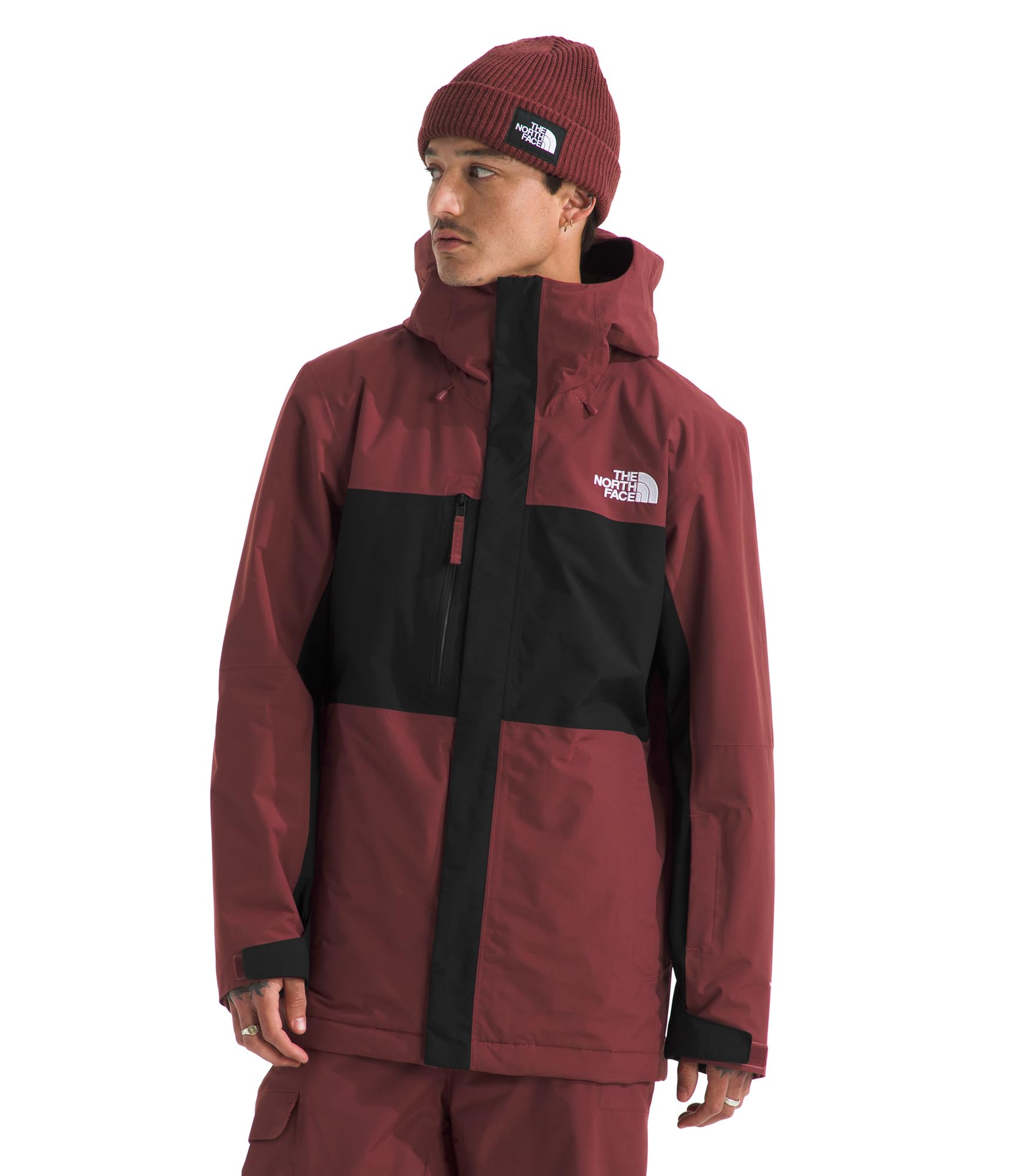
The Freedom Insulated Jacket from The North Face uses a 100% recycled nylon DryVent 2L shell with a non-PFC DWR finish, delivering reliable waterproof protection without relying on harmful chemicals. Inside, 80g of Heatseeker synthetic insulation in the body holds warmth effectively even when damp, which is critical for wet snow days or when you work up a sweat on the climb. The fixed helmet-compatible hood and snap-down powder skirt with gripper elastic seal out snow during falls or deep powder runs.
Underarm zippered vents provide instant temperature control when your output spikes, a feature that separates this from cheaper jackets that rely only on front zippers. The wrist pocket with integrated goggle wipe is a small but real convenience — no more pawing around for a separate cloth. Multiple user reports confirm reliable warmth down to -20°F when layered properly, which puts this in the top tier for resort skiers who face genuine winter conditions.
Real users note that the jacket feels lighter than its warmth suggests, which makes it easier to move in all day. The standard fit accommodates a mid layer without being bulky. The only caution is that it does not come with a separate fleece liner — the built-in 80g insulation is the primary heat source, so for extreme cold, a proper merino or synthetic mid layer underneath is recommended. That minor clarification aside, this jacket consistently delivers on its waterproof and wind-resistant claims.
Why it’s great
- DryVent 2L shell with non-PFC DWR offers strong waterproofing without environmental trade-offs
- Underarm vents, powder skirt, and wrist goggle wipe add real utility for all-day skiing
- Lightweight build with 80g Heatseeker insulation handles sub-zero temps effectively
Good to know
- No built-in fleece liner; requires a dedicated mid layer for extreme cold (-20°F range)
- Standard fit may feel snug if wearing a thick puffy underneath
2. Oakley Men’s Thermonuclear Protection Tbt Insulated Jacket
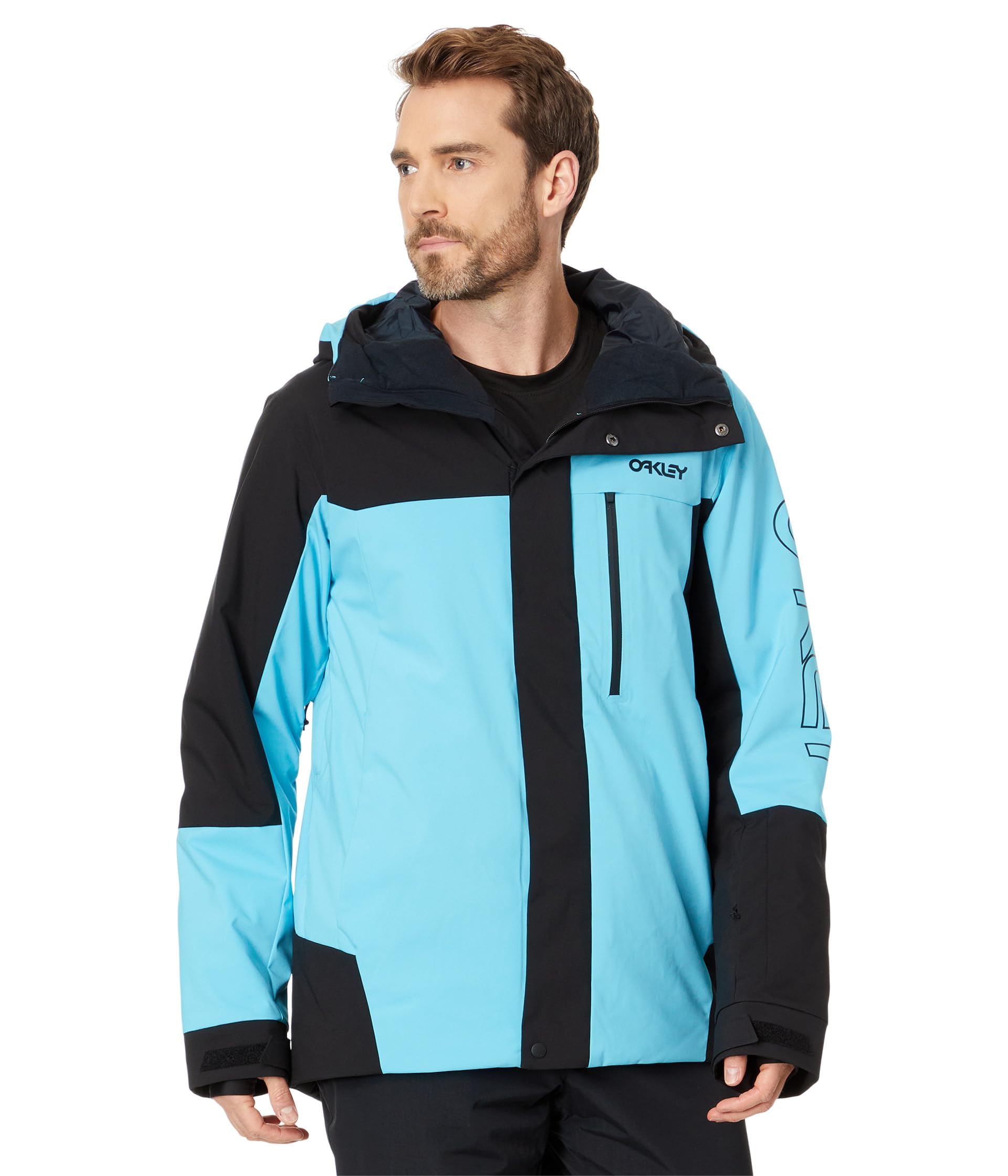
The Oakley Thermonuclear Protection TBT Insulated Jacket uses an exclusive three-zone lining system that places moisture regulation where your body needs it most — drier zones over high-sweat areas and warmer zones over core retention areas. This isn’t a gimmick; the zoning directly addresses the common problem of a jacket being too hot on the chest and clammy under the arms after a few runs. Taped seams in critical areas further prevent moisture ingress where stitching typically fails first.
The adjustable hood is designed to fit over a ski helmet, which means you don’t need to sacrifice head coverage for goggle compatibility. The low back drop is a thoughtful addition for snowboarders who spend time in a seated position, preventing snow creep up the back. Sleeves run intentionally long to accommodate reaching positions on skis or a board — a detail that shorter-torso jackets miss. Users consistently report that the jacket runs slightly large in the chest and stomach, so sizing down one from your usual street size often delivers a better athletic fit.
Underarm vents and secure zippered pockets round out the practical features. The jacket’s warmth-to-weight ratio is strong — it keeps you comfortable in single-digit temperatures without the bulk of a heavy parka. The vibrant color options, including a notably orange shade, ensure visibility on the mountain. If you prioritize intelligent moisture management over generic insulation, this jacket delivers a noticeable upgrade over standard single-layer shells.
Why it’s great
- Three-zone lining actively manages moisture where sweat accumulates most
- Helmet-compatible hood and low back drop suit both skiers and snowboarders
- Taped seams at critical stress points extend jacket life in wet conditions
Good to know
- Runs slightly large in chest/stomach; sizing down is recommended for athletic builds
- Sleeves are extra long, which may require adjustment for shorter arms
3. Columbia Whirlibird V Interchange Jacket

The Whirlibird V is a true 3-in-1 system: a fully waterproof-breathable outer shell rated for snow, plus a removable insulated liner with Columbia’s Omni-Heat thermal-reflective dots. Wear the shell alone as a raincoat in spring, the liner as a standalone parka for cool days, or both together as a serious ski coat. The recycled insulation in the liner adds sustainability without sacrificing warmth, and the powder skirt, ski pass pocket, and underarm zippered vents are present in the shell, not the liner — a smart design choice that keeps the versatility intact.
The shell’s hood fits over a ski helmet, though it’s not as snug as dedicated ski helmet hoods — it works fine for most resort situations but may feel floppy in heavy rain. The liner is not itself waterproof, so extended exposure to rain while wearing it solo will wet it out. Real users report that the system handles 30°F and above with the shell alone when active, and with both coats plus a thermal base layer, it can sit through an hour in snow before the cold starts creeping in. For stationary use below 20°F, an additional mid layer is advisable.
Sizing runs slightly small; ordering one size up from your usual creates room for comfortable layering underneath both the liner and the shell. The active fit means it moves with you rather than flopping around, which ski purists will appreciate. The zippered cell phone pocket on the chest has had occasional zipper issues reported, but Columbia’s customer service handled replacements promptly. For skiers who want one jacket that works across three seasons, this system delivers unmatched flexibility.
Why it’s great
- Three distinct configurations cover rain, cool weather, and deep winter skiing in one jacket
- Omni-Heat reflective liner boosts warmth without adding heavy bulk
- Smart feature placement (powder skirt, vents) in the shell preserves all-weather utility
Good to know
- Runs small; size up for comfortable layering
- Inner liner not waterproof — avoid wearing it alone in sustained rain
4. Spyder Men’s Vertex Insulated Ski Snow Hooded Jacket

The Spyder Vertex Insulated Jacket punches above its weight class for warmth — multiple users report staying comfortable in single-digit temperatures and wind chills below zero while wearing it. Despite being lighter than traditional insulated monsters, the Vertex uses modern synthetic insulation that traps heat efficiently without the heavy feel. This is the jacket you reach for on genuinely cold days when lesser shells force you to add an extra layer you didn’t pack.
The hood fits well over a ski helmet, though it’s not the most cavernous option — it works for standard helmets but may feel snug with oversized ones. Zipper quality is good but not premium-level; the jacket uses functional hardware that gets the job done without rattle. The standard fit works for 5’9″ 185 lbs in size L, but the same user notes that sizing up is advisable if you plan to wear a thick mid layer underneath. This is a jacket designed for warmth first, with features like the powder skirt and secure pockets supporting that priority.
One real-world highlight: a user specifically called the Vertex the warmest jacket they’ve ever owned. That kind of specific claim against a background of previous cold-weather gear suggests the insulation density and shell construction are genuinely effective. For skiers who run cold or who regularly face sub-freezing temperatures, the Vertex delivers heat retention that competes with jackets costing significantly more. The trade-off is that it’s a dedicated cold-weather piece — less suited for spring skiing or mild days.
Why it’s great
- Exceptional warmth in single-digit and sub-zero temperatures without heavy bulk
- Helmet-compatible hood and powder skirt provide solid snow protection
- Lightweight feel makes it comfortable for all-day wear on cold days
Good to know
- Not ideal for spring skiing or mild days — it’s a cold-weather specialist
- Zippers are functional but not premium-feeling
5. Helly Hansen Insulated Ski Pants
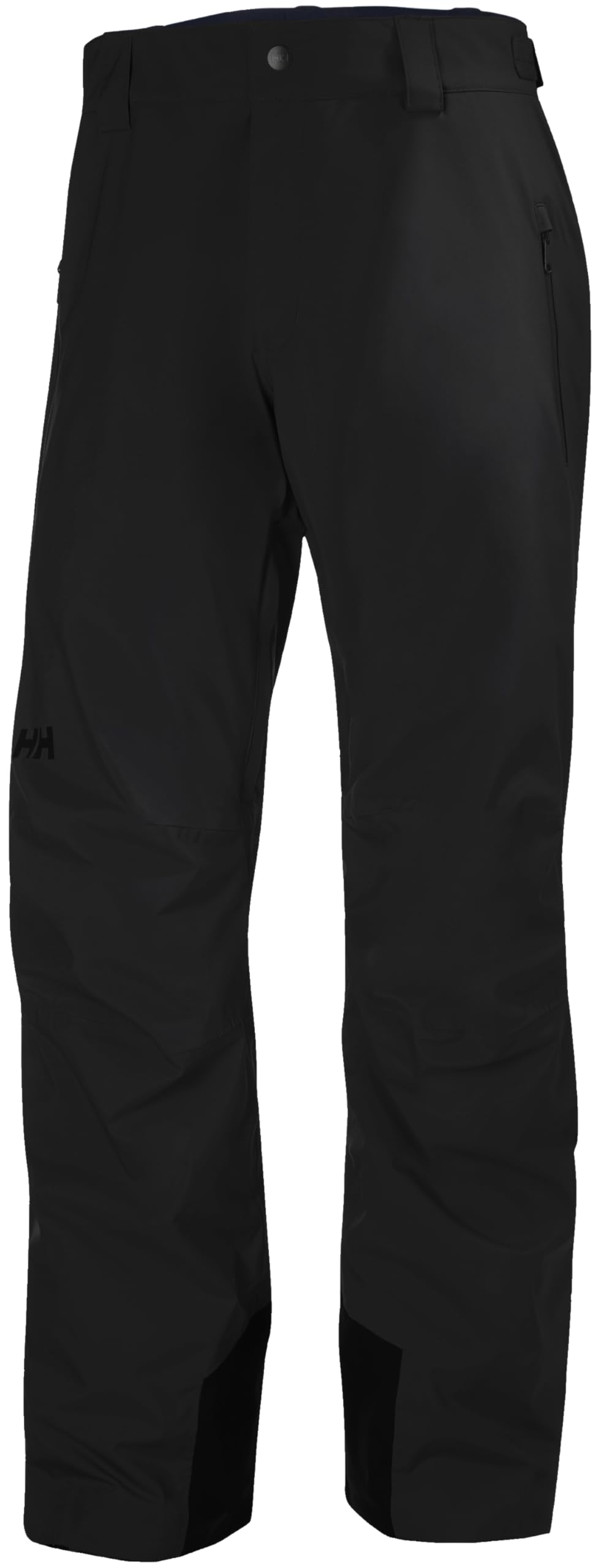
Helly Hansen’s Insulated Ski Pants deliver solid waterproof performance with 100% polyester construction and medium stretch — enough to allow full range of motion for carving turns without feeling restrictive. The adjustable waistband lets you dial the fit over a base layer, which is critical for pants that get worn all day. Insulation is present but not excessive, making these suitable for both cold resort days and spring skiing when layered appropriately.
Real-world feedback from users highlights that these pants keep you warm without overheating — a specific compliment for the insulation balance. One user explicitly named these pants “legendary” for fit, citing their 5’8″, 160 lb athletic build fitting perfectly in a Small/Regular without being too tight or baggy. The two front pockets hold essentials, though multiple users note the absence of a zippered thigh pocket — a gap that some skiers consider a meaningful omission for lift pass or phone storage.
The pants are lightweight enough to wear comfortably for long days, yet warm enough for typical 10-20°F conditions in Utah and similar mountain environments. The lack of a reinforced knee area or stain-resistant treatment are minor compromises at this price point. For skiers who want a reliable, well-fitting insulated pant that handles the vast majority of resort conditions, the Helly Hansen ski pant is a consistent choice that avoids the common pitfalls of being too bulky or too thin.
Why it’s great
- Medium stretch fabric allows full range of motion for skiing and snowboarding
- Adjustable waistband ensures a secure fit over varying base layers
- Excellent warmth balance — insulated without overheating during activity
Good to know
- No zippered thigh pocket for secure lift pass or phone storage
- Fabric is not stain-resistant — food spills may leave marks after washing
6. Volcom Men’s Roan Bib Overall Snowboard Pant
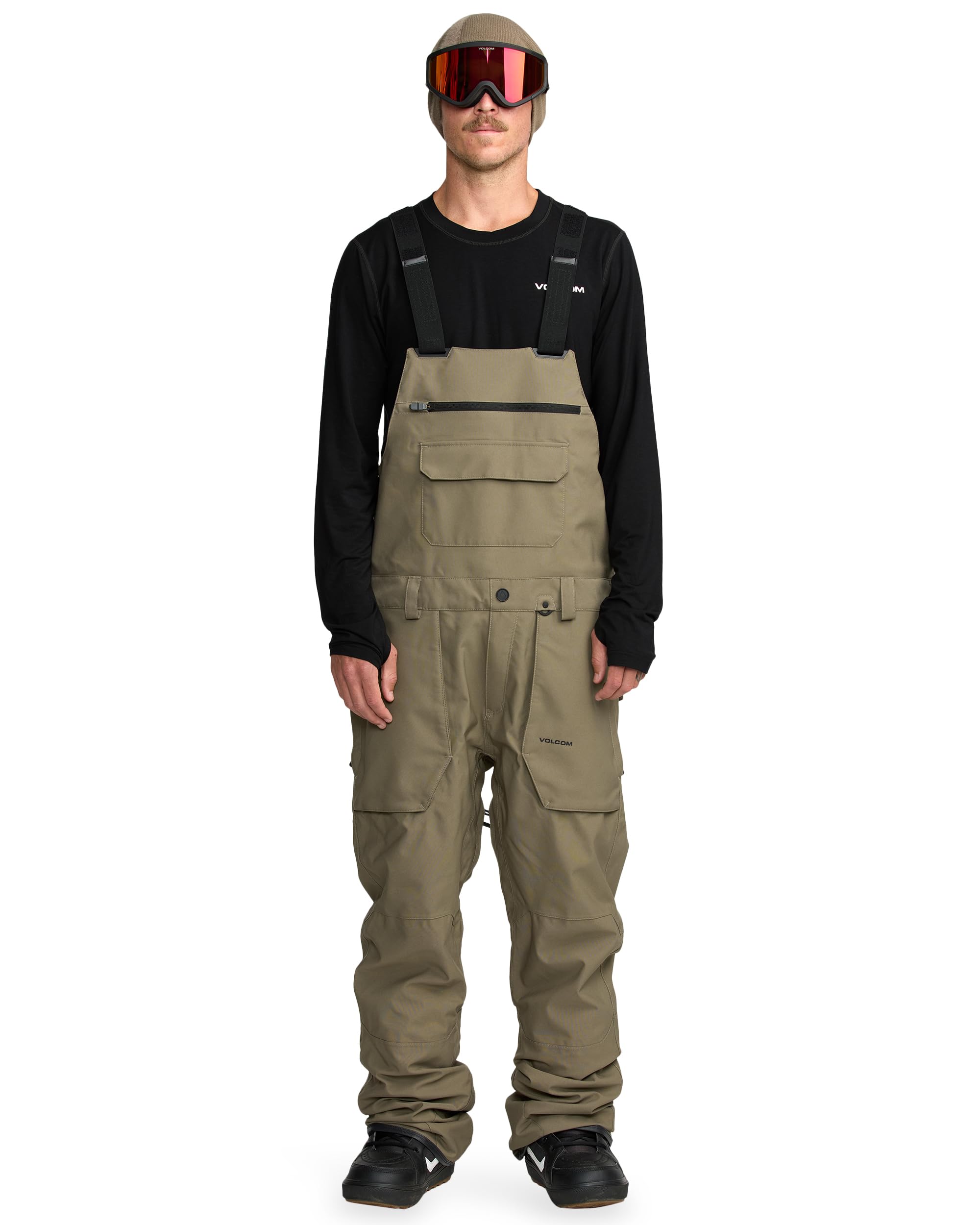
The Volcom Roan Bib Overall sports a 15K/15K waterproof breathability rating with fully taped seams — meaning it stops snow ingress while letting body vapor escape during high-exertion runs. The V-Science 2-Layer stretch Oxford fabric uses REPREVE recycled fibers and a non-fluorinated DWR, making this a genuinely sustainable choice without sacrificing performance. The adjustable elastic suspenders combined with neoprene side panels give excellent mobility, which bib wearers know is the deciding factor between comfort and restriction.
The Zip Tech jacket-to-pant interface is a functional seal that prevents snow from creeping up your back during falls — a common failure point in non-bib pants. Users consistently report the bib fits true to size: 5’7″ 155 lbs in Small, 5’9″ 180 lbs in Medium. The cut has a modern relaxed fit that isn’t baggy, with tapered legs that contour well around boot tops. The dual chest pockets — zippered on one side, Velcro on the other — offer secure storage for phone, wallet, and pass.
The main downsides are a front fly zipper that users find slightly small, making mid-day bathroom breaks more fiddly than they should be, and side pockets that feel less sturdy than the rest of the construction. The bib is essentially a shell — it has minimal built-in insulation, so you’ll need to pair it with an appropriate base and mid layer for deep cold. The lack of reinforced knees is a consideration for skiers who spend time on their knees adjusting bindings, but for most resort use, the Roan bib delivers excellent coverage and waterproofing at a compelling price point.
Why it’s great
- 15K/15K waterproof breathability with fully taped seams provides serious snow protection
- REPREVE recycled fibers and non-fluorinated DWR make it an eco-conscious choice
- Zip Tech interface prevents snow creep between jacket and pant
Good to know
- Front fly zipper is small — can be tricky to operate with gloves on
- No reinforced knees — durability could be an issue for riders who kneel frequently
7. The North Face Men’s Freedom Pant
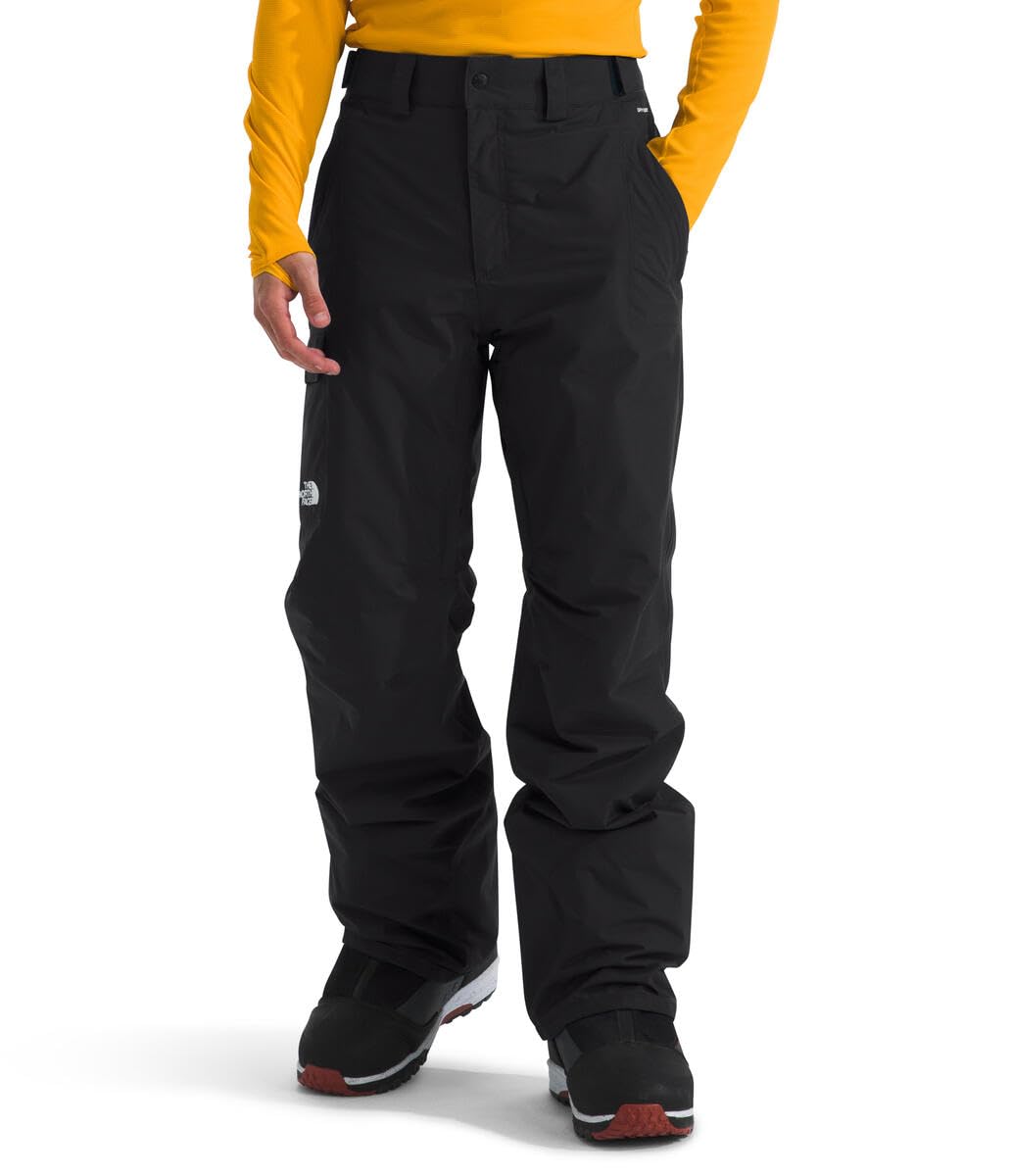
The North Face Freedom Pant is a reliable shell pant that pairs with your choice of insulation layers, giving you control over warmth based on conditions. The outer fabric is waterproof and breathable, capable of shedding snow and slush through a full day on the mountain. The standard fit is generous without being baggy — users describe it as “roomy but not sloppy,” with enough space for a base and mid layer underneath. The reinforced construction at the cuffs and seat points to longevity; one user replaced a 13-year-old Spyder pant with these, a strong durability indicator.
Heel and toe reinforcements at the cuff hem protect against boot abrasion, a common failure point in cheaper pants. The pockets — two hand pockets and a Velcro-closed cargo pocket — provide functional storage, though some users note the cargo pocket could benefit from a zipper closure. The integrated gaiter at the hem seals around boot tops, effectively preventing snow from riding up your leg. The pants are warm enough on their own for mild days and pair well with a thermal base layer once temperatures drop below freezing.
Length is a notable consideration. Users who ordered the “short” size still found them long, and one 5’7″ skier reported excess length despite going short. If you’re on the shorter side, expect to have the pants hemmed or cinch them at the boot. The 14.46 oz weight is light enough for all-day wear without fatigue. Overall, the Freedom Pant is a straightforward, well-constructed shell that prioritizes durability and waterproofing over gimmicks — exactly what you want in a pant that’s meant to last multiple seasons.
Why it’s great
- Durable waterproof shell with reinforced cuffs and seat resists wear from boots and falls
- Standard fit allows comfortable layering without being baggy
- Boot gaiter effectively seals out snow at the hem
Good to know
- Runs long — shorter skiers may need hemming even in “short” sizes
- Cargo pocket uses Velcro only — a zipper would provide more secure storage
8. Helly-Hansen LIFA Merino Midweight Half-Zip Base Layer
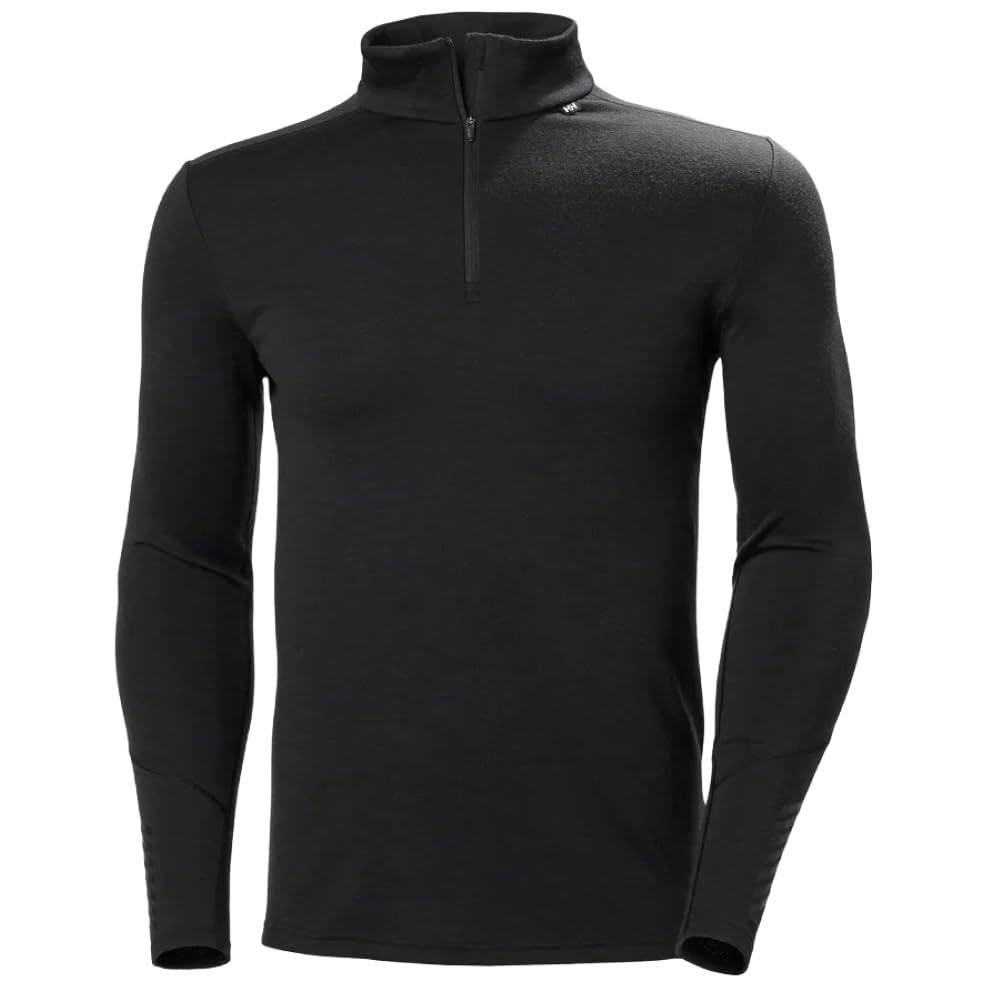
The Helly-Hansen LIFA Merino Midweight uses a two-layer construction that pairs a 100% merino wool exterior with an inner layer of Helly Hansen’s proprietary LIFA fibers. The LIFA layer sits against your skin and actively wicks moisture to the merino layer, where it evaporates rather than pooling against your body. The half-zip design provides neck ventilation control — a crucial feature when you transition from a windy chairlift climb to an exposed descent. Flat-lock seams reduce chafing under a backpack or harness strap.
The merino layer is very thin — measured in microns, as one user noted — which keeps the shirt light and packable but also means it’s best suited as a midweight between a lightweight summer base and a heavy expedition layer. Users consistently praise the fit for athletic builds: 6’1″ 175 lbs in size Large, 6’2″ 245 lbs in XL. The length is sufficient to tuck into ski pants without coming untucked during movement. One user noted a slight initial itch that resolved after washing, which is typical for merino.
The synthetic LIFA liner does partially reduce merino’s natural odor resistance — the synthetic fibers touching skin can hold odors more than pure wool would. This is a trade-off for the superior moisture transport. At its full retail price, some users feel the value isn’t there unless purchased on sale, where it becomes an excellent value proposition. For skiers who want the best of both worlds — rapid moisture wicking plus merino’s thermal regulation — the LIFA Merino delivers a genuinely innovative solution that most single-fabric base layers can’t match.
Why it’s great
- Two-layer LIFA + merino construction wicks moisture faster than pure merino alone
- Half-zip allows precise neck ventilation control on the move
- Flat-lock seams prevent chafing under layers and backpack straps
Good to know
- LIFA inner reduces some of merino’s natural odor resistance compared to pure wool
- Very thin fabric — best as a midweight layer, not a heavy-duty winter base
9. MERINNOVATION Merino Wool Base Layer Set
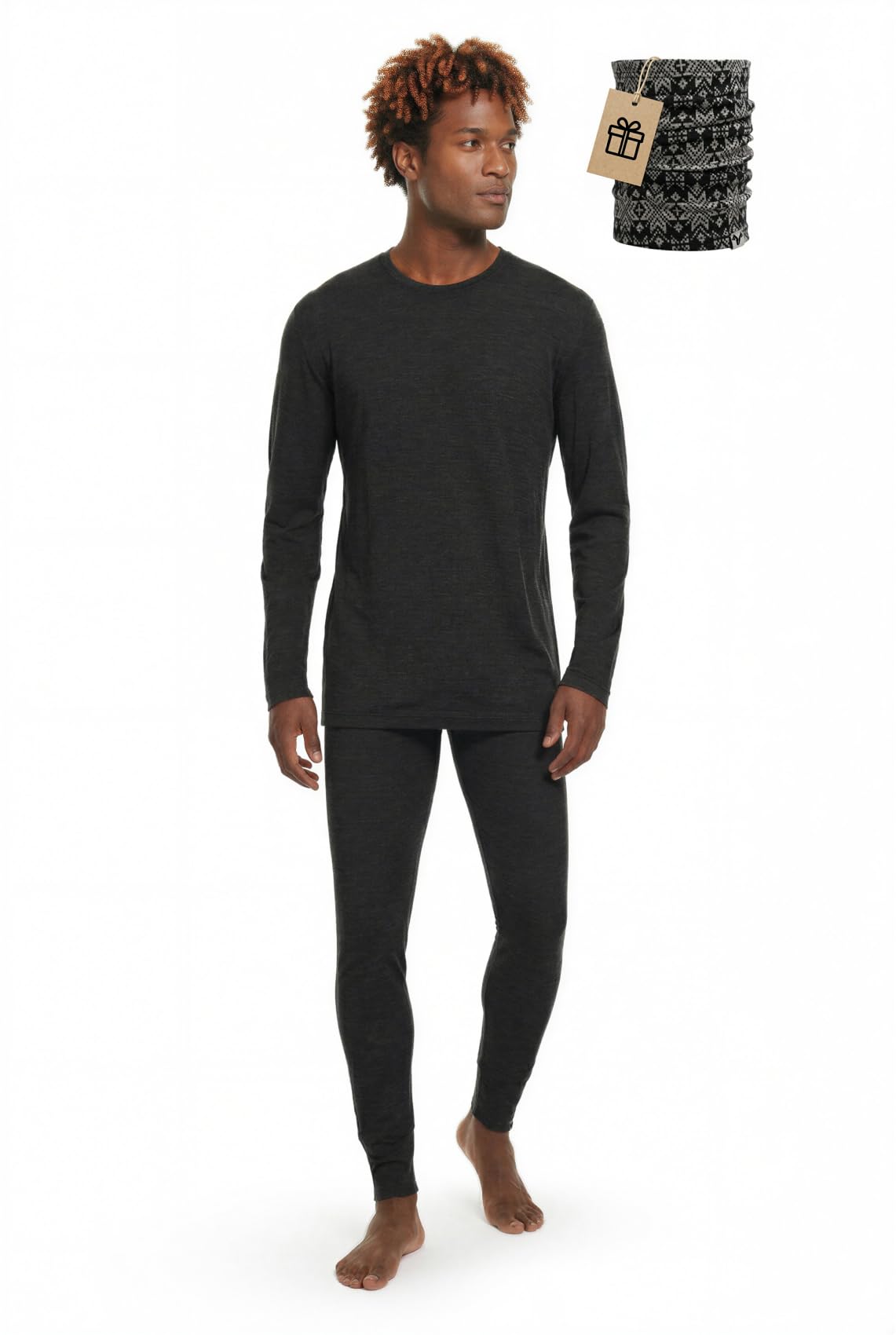
The MERINOVATION Merino Wool Base Layer Set offers 100% merino wool in two weight options — 165gsm for high-output activity and 250gsm for sustained cold. This dual-weight approach lets you match warmth to your specific skiing scenario: the lightweight suit for spring skiing or intensive touring where you generate body heat, and the midweight for chairlift-heavy resort days where retained warmth matters more. The set includes both a long-sleeve top and thermal bottom, making it a complete base layer solution.
Merino wool’s natural structure regulates temperature by creating an open knit that adjusts ventilation based on your activity level. This means you stay warm when resting on the lift but don’t overheat during a hard run — a temperature range that synthetic base layers struggle to achieve without active venting. The odor resistance is proven across multi-day use; multiple users report wearing the set for consecutive days without laundry access and staying fresh. This is a genuine advantage for ski trips where you pack light.
Users who owned the set for two years report it holds up well with proper care — hand washing extends life significantly, while frequent machine washing may accelerate wear. The fit is true to size: 5’9″ 175 lbs in Medium fits well, with an ankle cuff that stays in place without constricting. The set’s main limitation is that it has no integrated stretch panels or elastane blend, so the fabric is less forgiving for very athletic builds. For pure merino purity at a competitive price point, this set delivers on warmth, odor control, and versatility across a full season.
Why it’s great
- 100% merino wool with no synthetic blend — natural temperature regulation and odor resistance
- Two weight options (165gsm and 250gsm) let you match warmth to activity and conditions
- Complete top-and-bottom set provides a full base layer solution out of the box
Good to know
- Frequent machine washing may shorten lifespan; hand washing is recommended
- No stretch panels — less forgiving for very athletic or muscular builds
FAQ
Is a 10K waterproof rating enough for skiing in powder?
How should ski base layers fit — tight or loose?
What is the difference between a shell jacket and an insulated jacket for skiing?
Can I ski in bib pants instead of regular ski pants?
Final Thoughts: The Verdict
For most skiers, the best apparel for skiing system starts with the THE NORTH FACE Men’s Freedom Insulated Jacket for its reliable DryVent waterproofing and 80g Heatseeker insulation that handles single-digit temps without bulk. If you want a true 3-in-1 system that works across seasons, the Columbia Whirlibird V Interchange Jacket offers unmatched flexibility. And for a base layer that won’t stink after multiple days on the mountain, the MERINNOVATION Merino Wool Base Layer Set delivers pure merino performance at a competitive price point.