
Our readers keep the lights on and my morning glass full of iced black tea. As an Amazon Associate, I earn from qualifying purchases.
Specs are compiled from manufacturer listings and verified buyer reviews and can change over time — please confirm the key details on the product page before buying.
The real fight isn’t the height of the tree — it’s getting the fruit down without a bruise or a broken branch. A good apple picking device turns that wrestling match into a five-minute chore, letting you stand safely on the ground while the basket does the work.
I’m Min — the founder and writer behind Gadgets Feed. This guide is built by comparing the manufacturers’ published specifications and the patterns across verified customer reviews, so you get each pick’s real strengths and trade-offs instead of marketing spin.
The seven models below cut through the common headaches of bent poles, dropped fruit, and tangled branches, giving you a clear route to the right apple picking devices for your backyard trees.
Our Picks at a Glance


How To Choose The Best Apple Picking Device
A fruit picker is a simple tool with one job: get the fruit off the branch and into your hand without a ladder. But the details — how the basket attaches, how the pole extends, and what cushions the fruit — make the difference between a tool you use for years and one you toss after a single season. Focus on these three things before you buy.
Basket Design and Cushioning
The basket is where the fruit lands, so its softness determines whether you eat the apple or compost it. Most good pickers include a foam pad at the bottom to absorb the drop. The basket material matters too — wire tines (also called claws or fingers) hook around the stem to pluck the fruit, while a mesh bag catches it after the stem is released. Wire claws work better for larger fruit like apples and mangos, while mesh bags handle small, delicate fruit like cherries and crabapples without bruising.
Pole Type and Reach
You have two main options: telescoping poles (one continuous pole that collapses into itself) and sectional poles (separate rods you screw together). Telescoping poles are faster to adjust and store compactly — just twist and slide. Sectional poles let you dial in an exact length by adding or removing rods, but assembly takes a minute and you have to store the loose pieces. Both can reach 12 to 20 feet, but a telescoping pole at full extension can feel wobbly if the lock mechanism isn’t tight.
Weight and Stability at Full Reach
A picker that weighs 2 pounds in your hand feels like 10 pounds when you’re holding it horizontal at 12 feet. Lightweight aluminum and fiberglass poles reduce fatigue, but a too-light pole may flex or bend under a full basket. Stainless steel is heavier but stiffer — look for a design that balances weight with rigidity. The attachment method matters too: a screw-on or double-clamp connection keeps the basket from spinning loose when you tug, while a simple press-fit will fail mid-reach.
Quick Comparison
| Model | Best For | Max Reach | Basket Cushion | Weight | Amazon |
|---|---|---|---|---|---|
| EVERSPROUT 4.5–12 Ft★ Best Overall | Overall reliability and ease | 12 ft (telescoping) | Foam-cushioned | 2.3 lb | Amazon |
| Fiskars Extendable 7’–12′Premium Pick | Delicate fruit and smaller crops | 12 ft (telescoping) | Mesh bag (no foam) | 3.2 lb | Amazon |
| LAANPOLE 5–20 Ft | Very tall trees | 20 ft (telescoping) | Bowl-shaped foam | 5.24 lb | Amazon |
| Walensee 8 Ft (35–95 in) | Multi-season harvesting | 8 ft (sectional) | Foam pad | 2.2 lb | Amazon |
| BlumeTrec 9 Ft (35–105 in) | Backyard orchard variety | 9 ft (sectional) | Thick foam pad | 3.52 lb | Amazon |
| Oak Leaf 13 Ft | Budget reach for tall trees | 13 ft (sectional) | Foam pad | 2.7 lb | Amazon |
| Ginbel Direct Fruit Picker 40–100″ | First-time buyers on a budget | 100 in (sectional) | Soft foam | 2.18 lb | Amazon |
In‑Depth Reviews
1. EVERSPROUT 4.5 to 12 Ft Fruit Picker
Our pick — over 4.5★ from 8,500+ verified ratings; the strongest balance of quality and price.
The telescoping pole that makes high fruit feel like low-hanging fruit — no ladder, no struggle.
This is the picker that keeps coming up first when owners talk about a tool that just works. The telescoping pole extends from 4.5 to 12 feet, and buyers report it eliminates reaching by ladder — “the telescoping pole makes it easy to reach the high fruit at the top of the tree.” That reach pairs with a foam-cushioned basket that catches fruit between 1.25 and 5.5 inches in diameter, so small citrus and large apples both land without dents.
The defining feature here is the twist-on basket design. Unlike pickers that rely on a flimsy press-fit, the EVERSPROUT screws onto the 3/4-inch ACME pole thread for a tight connection that won’t spin loose under heavy fruit. That secure fit is backed by an overall crowd sentiment that sums the tool up as well-made, durable, and likely to last for years. At 2.3 pounds, it is 0.12 pounds heavier than the budget Ginbel picker (2.18 lb) — insignificant for the leap in build quality.
What Wins People Over
- Securely twists onto the pole — no wobble or detachment while picking
- Foam liner inside the basket catches fruit gently, preventing bruises
- Pre-assembled from the start, ready to use immediately
- Reaches 12 feet from the ground, eliminating ladder risks
One Thing to Know
- Arrives loose in the box for some buyers, occasionally causing a bent basket (easily reshaped with a mallet)
Reach for this if: you want a single picker that handles everything from backyard apples to high mangos without frustration — the crowd favorite at 4.7 stars with thousands sold.
Think twice if: your trees are under 5 feet tall; the 4.5-foot minimum may feel like more pole than you need.
2. Fiskars Extendable Fruit Picker Tool (7′-12′)
A mesh-bag design that treats every peach and cherry like it’s headed to a farmer’s market display.
Fiskars takes a different route than the wire-claw pickers above. Instead of a metal basket, this fruit picker uses a soft, machine-washable mesh bag to catch fruit as it is released from the branch. Owners say it is a big improvement over older claw models — the flexible FiberComp tabs grip the stem gently, and a slight upward tug drops the fruit straight into the bag without bruising. That makes it ideal for soft fruit like peaches, which owners call out as the tool’s strong suit.
The telescoping fiberglass pole extends from 7 to 12 feet and uses a double-locking system that stays extended during use. At 3.2 pounds it is the second-heaviest picker in this lineup — 0.9 pounds heavier than the EVERSPROUT — but the heft comes from a thick, stable pole that owners say has no wobble at full length. The trade-off is that some find it heavy to hold at the full 12-foot extension for long sessions, and a few note the plastic fingers can be slightly rough on small branches. Still, the mesh bag prevents hard landings that wire baskets sometimes cause.
Bag vs. basket: the mesh bag catches falling fruit in a soft pocket, eliminating the bruising that can happen when fruit hits a metal basket bottom. Downsides: you have to angle the bag correctly, and emptying it means reaching into the mesh.
Best fit: any tree that produces delicate fruit — peaches, plums, cherries, crabapples — where a single bruise ruins the harvest.
Perfect for: the grower who values fruit condition over basket capacity — the Fiskars bag keeps every apple and cherry blemish-free.
Not ideal if: you prefer a wire basket that collects multiple fruits before you need to empty it; this picker collects one or two pieces per tug.
3. LAANPOLE 26 Ft Reach Fruit Picker (5-20 Ft Telescoping)

The extra-long telescoping pole that reaches high avocados and mangos without the wobble.
When your tree hits 20 feet or more, a standard 12-foot picker leaves you staring at unreachable fruit. The LAANPOLE solves that with a telescoping pole that adjusts from 5 to 20 feet on the ground — and can reach 26 feet when you lift it. Owners mention it locks securely even at full extension, thanks to a flip-lock design that keeps the pole from collapsing mid-pick. That stability is rare in a picker this tall, and the non-slip handle at the bottom adds control when you’re reaching upward at near-horizontal angles.
The 5-inch diameter basket uses a bowl-shaped foam cushion that owners say prevents scratches and bruises on apples, avocados, and mangos. At 5.24 pounds, this is the heaviest picker here — nearly 3 pounds heavier than the EVERSPROUT. But the weight is necessary for rigidity at 20 feet; lighter poles at this height would bend under a full basket. Assembly is straightforward, and owners consistently call it sturdy, easy to extend, and effective for tall trees without needing a ladder.
Heavy but stable: the 5.24 lb build is a trade-off — you trade lightness for the confidence that the basket won’t sway at full reach. Fine for occasional use; tiring for hours of continuous picking.
Who it’s for: anyone with a single very tall tree — avocado, mango, or high-branching apple — where no 12-footer will cut it.
Reach for this if: your fruit grows at 15–20 feet and no other picker on this list can touch it — the LAANPOLE at 4.7 stars is the specialist for tall trees.
Pass if: your trees are under 12 feet; the shorter EVERSPROUT or Fiskars will be lighter and easier to handle.
4. Walensee 8 FT Fruit Picker Pole (35-95 Inch Adjustable)

A lightweight sectional picker that screws together quickly for mid-height trees.
The Walensee is a sectional pole system — each section is 1.4 feet long, so you assemble the exact reach you need by screwing rods together. The maximum reach is 8 feet (with 6 poles) or 13 feet (with 10 poles), giving you flexibility for different tree heights. Owners call it very sturdy and easy to assemble, noting that the screw-lock system and double metal clamps keep the basket firmly attached. An anti-pull-out screw on the first pole section prevents the basket from separating when you tug.
At 2.2 pounds it is one of the lightest pickers here, making it comfortable for extended picking sessions. The stainless steel basket has an anti-rust and anti-corrosion coating and a foam pad that cushions fruit from 1 to 5.5 inches in diameter. The main drawback: it works best for smaller fruits like mangoes and plums — owners say larger fruit like papaya gets poked by the tines. It is also slightly less stable at full extension than a telescoping pole because the screw joints can flex under heavy loads.
What People Like
- Screw-lock assembly is tool-free and quick
- Light enough (2.2 lb) to hold steady for long picking
- Foam pad cushions fruit well, reducing waste
What to Watch
- Metal tines can poke large fruit (papaya); best for mango-to-plum size
- Sectional joints may flex under a full basket at max height
Best for: homeowners with mid-height fruit trees (8–13 feet) who want a lightweight, adjustable picker at a value price, backed by 4.5 stars from hundreds of buyers.
Skip if: you mainly pick large fruit like papaya or grapefruit; the tines won’t cooperate.
5. BlumeTrec 9 FT Fruit Picker (35–105 Inch Adjustable)
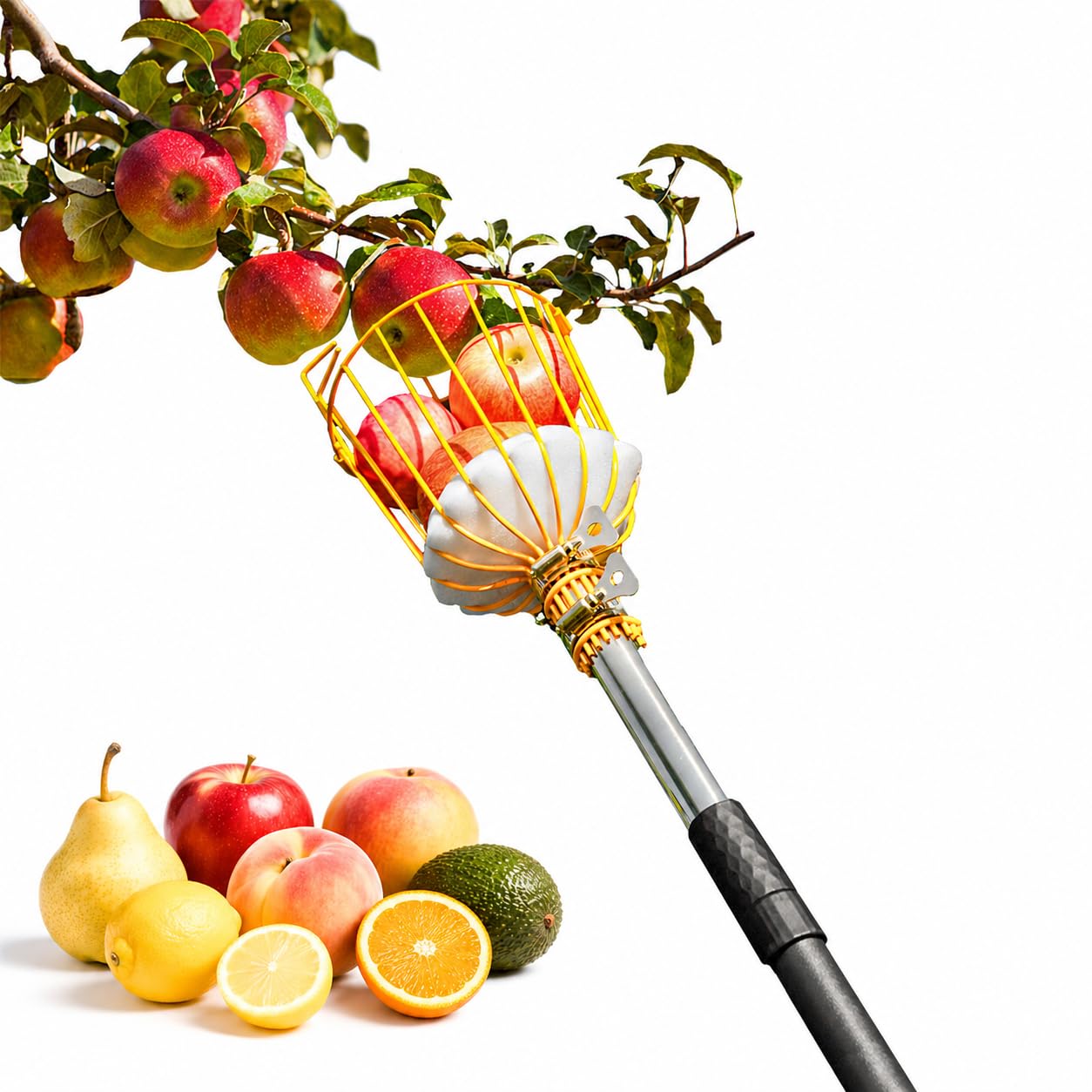
A claw-style picker with a thick foam pad that handles apples to papayas without bruising.
The BlumeTrec picker stands out for its generous fruit diameter range — the claw-style basket handles fruit from 1 to 6 inches, the widest range in this lineup. That means it can pluck tiny kiwis one day and large citrus the next without swapping tools. The basket uses a thick foam pad at the bottom to cushion the drop, and owners say it works beautifully for tangerines, apples, oranges, and even soft papayas as they ripen.
The pole is a sectional stainless steel design, adjustable from 35 to 105 inches by adding or removing 16-inch rods. An anti-pull-out screw and double metal clamps secure the basket, preventing the basket from spinning or detaching mid-pick. At 3.52 pounds it is heavier than the Walensee (2.2 lb) — the trade-off is a sturdier feel at full extension. The main feedback: at 9 feet, some buyers wish they had gotten the 13-foot version for taller trees, though the 9-foot is plenty for standard backyard trees.
Claw-style advantage: the tines hook around the stem rather than scraping the fruit skin, which owners say reduces drops and handling damage. The large 6-inch max diameter means even large avocados and grapefruit fit.
One catch: the sectional rods screw together, which is secure but takes 30 seconds to assemble. Not as instant as a telescoping pole.
Reach for it if: you have a mix of fruit sizes in your backyard orchard — one picker that does apples, mangoes, citrus, and papayas equally well.
Not for: extreme tall trees over 12 feet; step up to the telescoping LAANPOLE or EVERSPROUT for that reach.
6. Oak Leaf 13 FT Fruit Picker
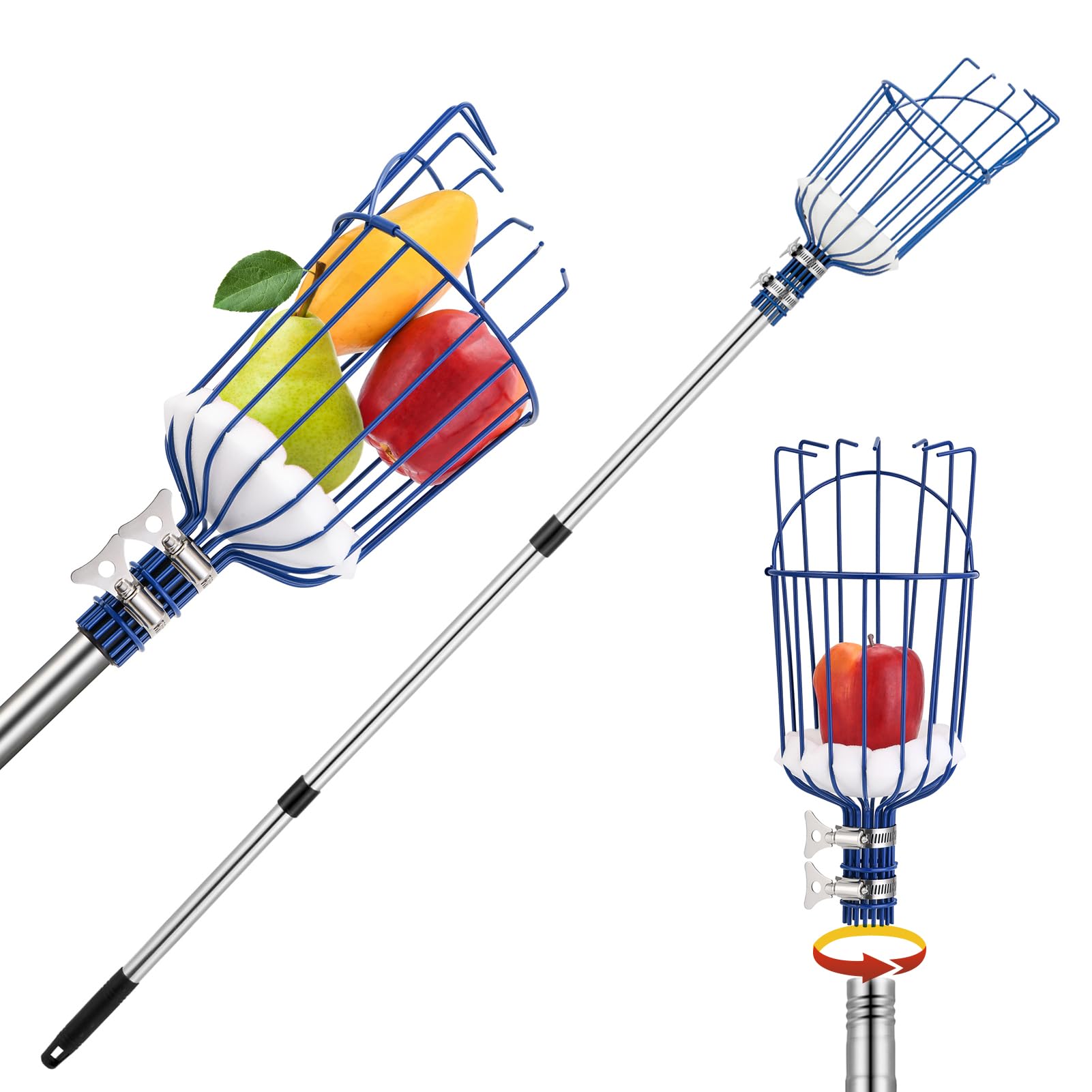
A low-cost, long-reach picker that trades convenience for extreme value.
The Oak Leaf picker gives you the most raw reach for the lowest cost in this lineup — a full 13 feet with a stainless steel sectional pole that, when held up, can access fruit at 20 feet. The basket is a 5.5-inch diameter iron (coated for rust-resistance) with a 0.79-inch gap between tines, designed for apples, oranges, avocados, and plums. It includes a foam pad to protect fruit, and the double metal clamps tighten by hand with no screwdriver needed.
At 2.7 pounds, it is lighter than the Fiskars (3.2 lb) and lighter than the BlumeTrec (3.52 lb), so your arms won’t tire quickly. Owners call it light, practical, and great value — with one buyer reporting collecting 100 pounds of fruit in a single session. The catch: the basket attaches to a smooth plastic pole end via clamps, and some owners find the basket can detach when tugging on stubborn fruit, getting stuck in the tree. The fix is simple — wrap duct tape around the pole end to give the clamp more grip — but it’s an extra step from the start.
Value vs. hassle: you get 13 feet of reach for a fraction of the premium-pole cost, but the plastic-on-metal connection is the weak point. Duct tape solves it, but a screw-on connection (like the EVERSPROUT) is more reliable.
Best use: low-stakes backyard picking where occasional basket detachment is an annoyance, not a crisis.
Grab it if: you need 13 feet of reach on a tight budget and don’t mind a minor DIY tweak to secure the basket — backed by 4.3 stars from over 900 buyers.
Move on if: you expect flawless out-of-box reliability at full extension; the EVERSPROUT at position 1 is worth the extra spend.
7. Fruit Picker Pole with Basket, Adjustable Fruit Tool (40–100″)
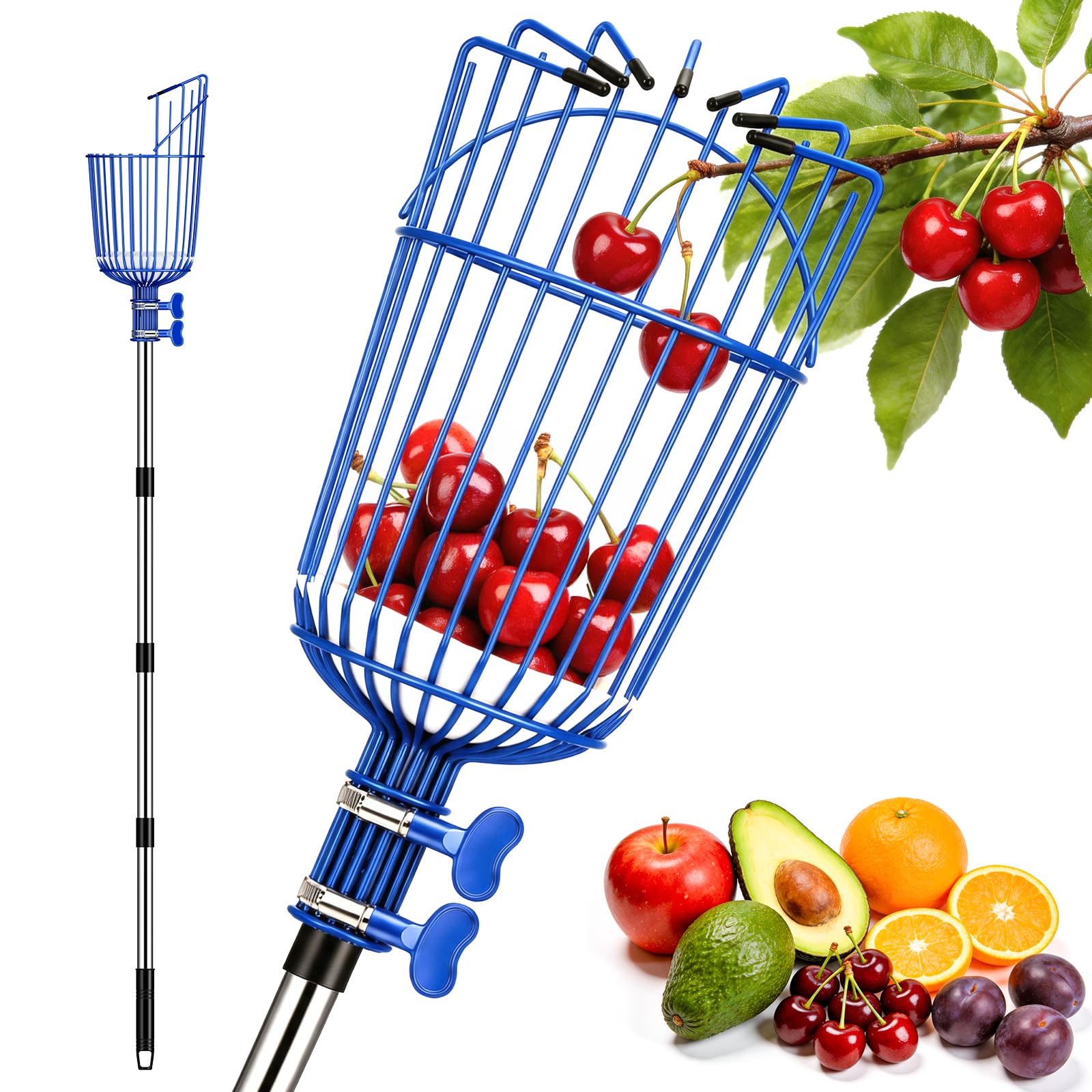
The lightest picker on the list — great for first-time buyers with low fruit trees.
This Ginbel Direct picker is the most affordable entry point to fruit picking, weighing just 2.18 pounds with a detachable aluminum pole that reaches 100 inches fully assembled. The basket has a soft foam cushion and a protective tip meant to prevent bruising on peaches and avocados. For small fruits like cherries, plums, and figs, owners say it works just fine — one buyer picked all his plums and considered it good value for the money.
The catch comes in the details. The rubber caps on the wire grabbers tend to fall off after a few uses, according to owner reports — and without the caps, the bare wires can poke and damage fruit. The wire gaps are also too wide for very small fruit like cherries, which can slip through during maneuvering. Assembly is simple, though the product lacks an instruction manual (owners say the installation images suffice). It’s a functional picker for someone with low expectations, but the budget-tier materials show in the mixed durability feedback.
What it does well: gets you started for the lowest possible cost. At 2.18 lb it is the lightest pole here — 0.12 lb lighter than the Walensee — and it folds down small for storage.
Where it falls short: the rubber grip caps on the grabbers come loose, and the basket’s wire spacing isn’t tune for cherries or other tiny fruit. Best for peaches, plums, and medium citrus.
Best for: a first-time buyer with a single small fruit tree who wants the lowest possible spend, and who is okay with minor tweaks like gluing the rubber caps in place.
Look elsewhere if: you have multiple trees, tall trees, or delicate fruit — the small step up to the Walensee or EVERSPROUT eliminates the reliability questions.
Understanding the Specs
Pole Reach and Type
Your pole’s maximum reach determines which trees you can harvest without a ladder. Telescoping poles (one continuous piece that collapses) are faster to adjust and store — just flip a lock and slide. Sectional poles (separate pieces you screw together) let you choose an exact length but take longer to assemble. For most backyard trees, 10–13 feet is enough; for tall avocados and mangos, you may need 20 feet.
Basket Cushioning and Diameter
A foam pad or cushioned liner at the basket’s bottom absorbs the impact of falling fruit, preventing bruises and cuts. The basket diameter — usually 5 to 5.5 inches — determines the fruit size range it can handle. Most pickers handle fruit from 1 to 5.5 inches across, but some (like the BlumeTrec) extend to 6 inches for larger fruit like papayas. A claw-style basket uses wire tines to grip the stem, while a mesh bag catches fruit after release — bag styles are gentler on delicate fruit.
FAQ
Will a fruit picker damage my tree branches?
How do I know which pole length I need?
Can I use a fruit picker on wet or rainy days?
Is a telescoping pole better than a sectional pole?
What size fruit can I pick with these devices?
How do I attach the basket to the pole securely?
Can seniors or people with limited mobility use a fruit picker safely?
How do I clean and store a fruit picker pole?
Will a fruit picker work for stone fruit like peaches and plums?
What is the difference between a stainless steel and an aluminum pole?
Final Thoughts: The Verdict
Across the board, the strongest choice among apple picking devices is the EVERSPROUT 4.5 to 12 Ft Fruit Picker because it combines a secure twist-on basket, soft foam cushioning, and a telescoping pole that goes from 4.5 to 12 feet — all in a ready-to-use 2.3-pound package. If you value gentleness above all else for delicate fruit, the Fiskars Extendable Fruit Picker and its machine-washable bag are the way to go. And for anyone with towering trees over 15 feet, the LAANPOLE 26 Ft Reach Fruit Picker delivers the extra length you won’t find elsewhere in this list.
How We Picked
We do not accept paid placement. Every pick is matched to a real buyer and a real use-case; we do not hands-on test units.
Sources & Methodology
Specifications: manufacturer listings and product documentation. Review insights: verified customer reviews, as of July 2026. Pricing: not shown on this page (it changes often); check the current price via the retailer link.
As an Amazon Associate, Gadgets Feed earns from qualifying purchases. This does not affect which products we feature.