
Bringing a crisp, homegrown apple to the table starts with the right sapling — one that matches your climate, resists local pests, and sets deep roots before its first winter. Store-bought fruit can’t match the flavor of a variety you’ve nurtured from a bare-root stick into a twenty-foot canopy.
I’m Rikta — the co-founder and writer behind Gadgets Feed. I’ve spent years digging into nursery catalogs, cross-referencing USDA hardiness zones with real grower feedback, and tracking which young trees actually survive shipping and transplant shock. (And Homer 🐱 sniffed each sapling box for approval before we logged a single word.)
Whether you’re planting for tart pies or sweet lunchbox snacks, choosing the right young tree determines your orchard’s success. This guide breaks down the top-rated varieties to help you find the perfect apple tree sapling for your backyard.
How To Choose The Best Apple Tree Sapling
Picking a sapling isn’t just about which apple you like to eat. The tree’s root stock, chilling requirement, and bloom time determine whether it will thrive or struggle in your specific yard. Focus on these three factors before anything else.
Match Your Hardiness Zone and Chill Hours
Every apple variety needs a certain number of winter chill hours (temperatures between 32°F and 45°F) to break dormancy and set fruit in spring. A Honeycrisp needs 800–1000 hours, while an Anna Apple needs only 200–300. Check your local zone first — planting a high-chill tree in a warm climate guarantees disappointment.
Understand Root Stock and Mature Size
The root stock dictates how tall your tree will ultimately grow. Semi-dwarf root stocks keep trees manageable (12–15 feet) for home picking, while standard root stocks can push past 20 feet. Most saplings listed here are on semi-dwarf or standard root stock, so verify the expected height before choosing a planting spot.
Cross-Pollination Partners
Most apple trees are not self-pollinating. You need two compatible varieties that bloom in the same “flowering group” to get fruit. A Red Delicious pairs well with a Gala or a Liberty, but a Granny Smith may not overlap perfectly with an early bloomer. Plan your pairings ahead of ordering.
Quick Comparison
On smaller screens, swipe sideways to see the full table.
| Model | Category | Best For | Key Spec | Amazon |
|---|---|---|---|---|
| Red Delicious Apple Tree | Mid-Range | Classic sweet snacking | 2-3 ft. height, 1 gal. pot | Amazon |
| Gala Apple Tree by DAS Farms | Mid-Range | Reliable growth in zones 4-8 | 3 ft. tall, gallon pot | Amazon |
| American Plant Exchange Anna Apple | Mid-Range | Warm climates & low chill hours | 1-2 ft. tall, 1 gal. pot | Amazon |
| Large Granny Smith Apple Tree | Mid-Range | Immediate landscape presence | 5-6 ft. tall, semi-dwarf | Amazon |
| Liberty Apple Tree (Premier) | Premium | Fastest fruiting & disease resistance | 7 gal. pot, 25 lbs. root mass | Amazon |
| Mutsu Apple Tree (Premier) | Premium | Large, late-season cooking apples | 7 gal. pot, fruits 2 yrs faster | Amazon |
| Brighter Blooms Honeycrisp Apple Tree | Premium | Cold-hardy premium dessert apples | 3-4 ft. tall, cold to -30°F | Amazon |
In‑Depth Reviews
1. Gala Apple Tree by DAS Farms

The DAS Farms Gala arrives as a sturdy 3-foot whip in a gallon pot, double-boxed for transit. Multiple verified buyers report healthy leaf buds and a robust root system that takes off quickly after planting. The seller backs it with a 30-day successful transplant guarantee if you follow the included instructions — a rare safety net for live plants.
Gala thrives in zones 4 through 8 and requires a full-sun location with loam soil. Because Gala is not self-fertile, you’ll need a pollination partner like a Red Delicious or a Liberty in the same flowering group to see fruit. The moderate watering needs make it forgiving for first-time apple growers.
One recurring caution from reviewers: deer will eat young apple saplings down to a stick. Several customers lost the top of their tree before realizing the threat. Plan on a physical barrier or repellent if your yard has deer pressure. Beyond that, this Gala is the most consistently praised mid-priced sapling we evaluated.
Why it’s great
- Healthy 3-foot size with active leaf buds on arrival
- 30-day transplant guarantee from a reputable nursery
Good to know
- Requires a second variety for pollination
- Deer protection is essential in suburban areas
2. Liberty Apple Tree, Premier Size
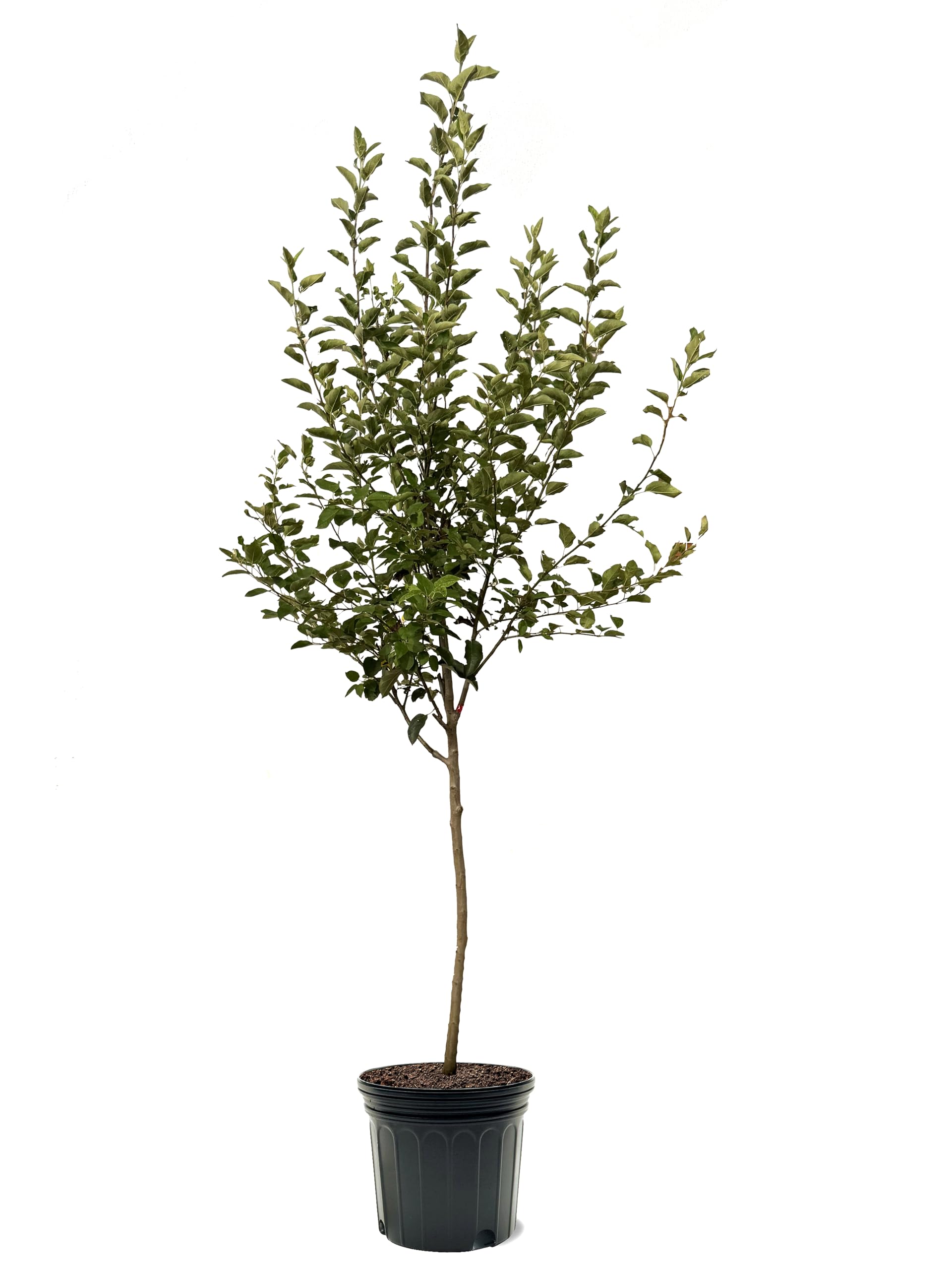
The Liberty Apple from Simpson Nursery ships in a massive 7-gallon pot with a 25-pound root mass — the largest deliverable size on this list. This head start translates to fruit production two years faster than smaller potted or bare-root saplings. Buyers consistently describe it as “robust” and “thriving” within weeks of planting.
Liberty is bred for strong disease resistance, particularly against apple scab and cedar-apple rust, which means fewer fungicide sprays in the home orchard. It reaches a mature height of about 25 feet on standard root stock and blooms in mid-spring, pairing well with Gala, Red Delicious, and Mutsu for cross-pollination.
The main trade-off is the weight — at 25 pounds, this is a two-person transplant job. The tree also cannot ship to CA, AZ, AK, or HI due to agricultural restrictions. A few buyers reported a broken branch in transit, but the tree recovered fully within three weeks.
Why it’s great
- 7-gallon root mass accelerates fruiting by up to 2 years
- Superior disease resistance reduces chemical maintenance
Good to know
- Heavy pot requires two people to move and plant
- Restricted shipping to 4 western states
3. Brighter Blooms Honeycrisp Apple Tree
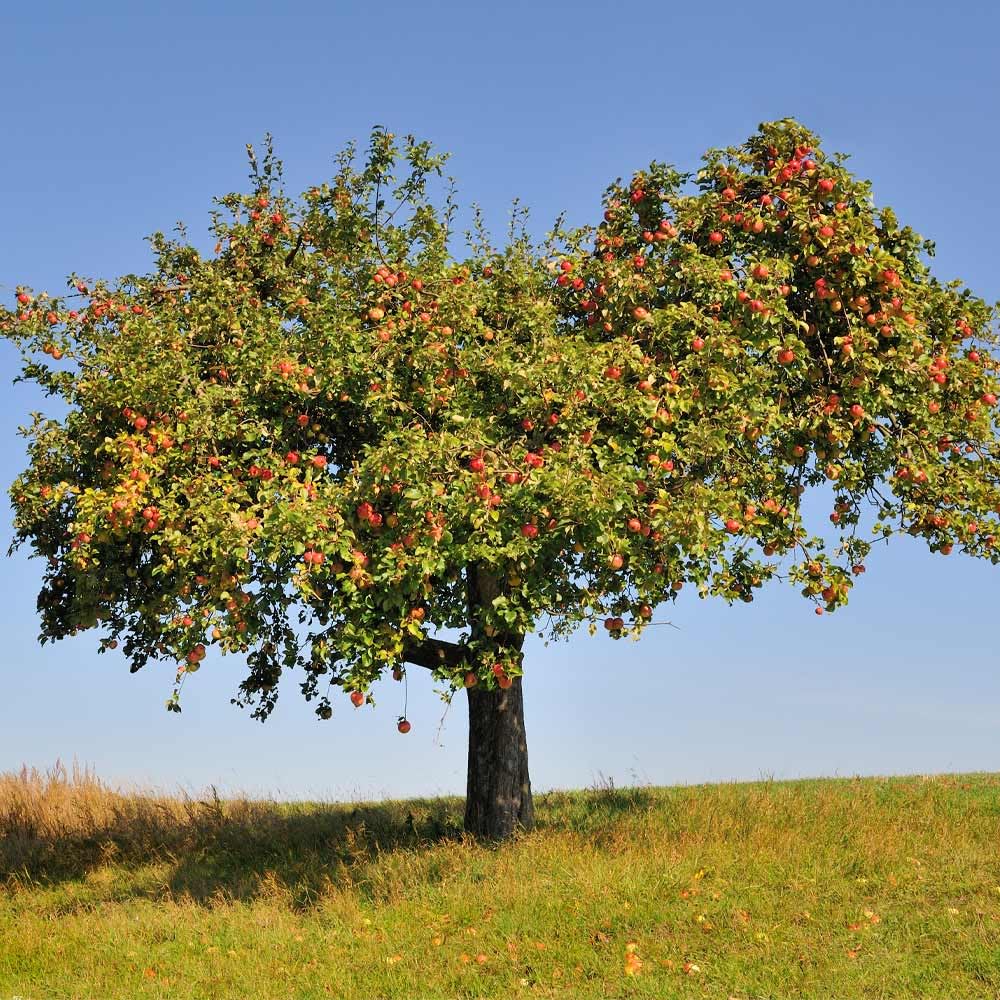
Brighter Blooms delivers a 3- to 4-foot Honeycrisp sapling that withstands winter temperatures down to -30°F — ideal for northern growers in zones 3 through 6. The Honeycrisp is the gold standard for crisp, sweet dessert apples, and several buyers confirm their tree arrived with leaf buds already popping.
This variety needs 800–1000 chill hours, so it’s not suitable for the Deep South. It also requires a cross-pollinator; plant a Red Delicious or Liberty nearby. The soil type is sandy loam with moderate watering. Brighter Blooms includes a warranty that covers delivery issues, though it does not cover cosmetic leaf damage from shipping.
Reviewers praise the tree’s size and condition at arrival, but note that the root ball is sensitive — one buyer lost leaves after disturbing it during transplant. Leaving the root ball intact and watering consistently gives the best results. Shipping restrictions apply to AZ, CA, ID, OR, and WA.
Why it’s great
- Extreme cold tolerance down to -30°F for northern climates
- Premium Honeycrisp genetics for homegrown dessert quality
Good to know
- Root ball is sensitive to disturbance during transplant
- Cannot be shipped to 5 western states
4. Large Granny Smith Apple Tree by DAS Farms
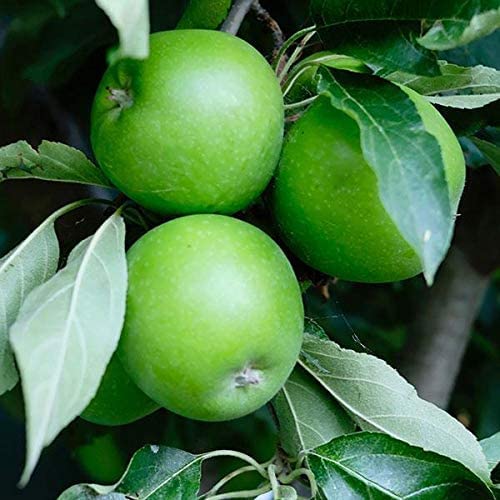
At 5 to 6 feet tall, this Granny Smith from DAS Farms is the largest sapling you can buy in a standard nursery pot. It’s shipped on semi-dwarf root stock, keeping its mature height manageable for backyard picking. The tree arrives dormant (leafless in winter) and leafs out naturally in spring — many reviewers reported seeing white blossoms within weeks.
Granny Smith thrives in zones 4 through 8 with full sun and loam soil. It’s a late bloomer, which helps it dodge spring frosts but means you need a late-season pollination partner like a Mutsu or a Liberty. The moderate watering needs are straightforward, and the tree is known for producing heavy crops of tart green apples ideal for pies.
Some buyers received a tree that looked like a “stick with roots” and worried it was dead, only to see vigorous growth a month later. Patience is key with this variety. A small number reported the tree never broke dormancy, but the vast majority saw strong leaf and branch development by early summer.
Why it’s great
- Immediate landscape impact at 5-6 feet tall
- Semi-dwarf root stock keeps picking manageable
Good to know
- Dormant trees look like bare sticks at arrival
- Requires a late-blooming pollination partner
5. Mutsu Apple Tree, Premier Size
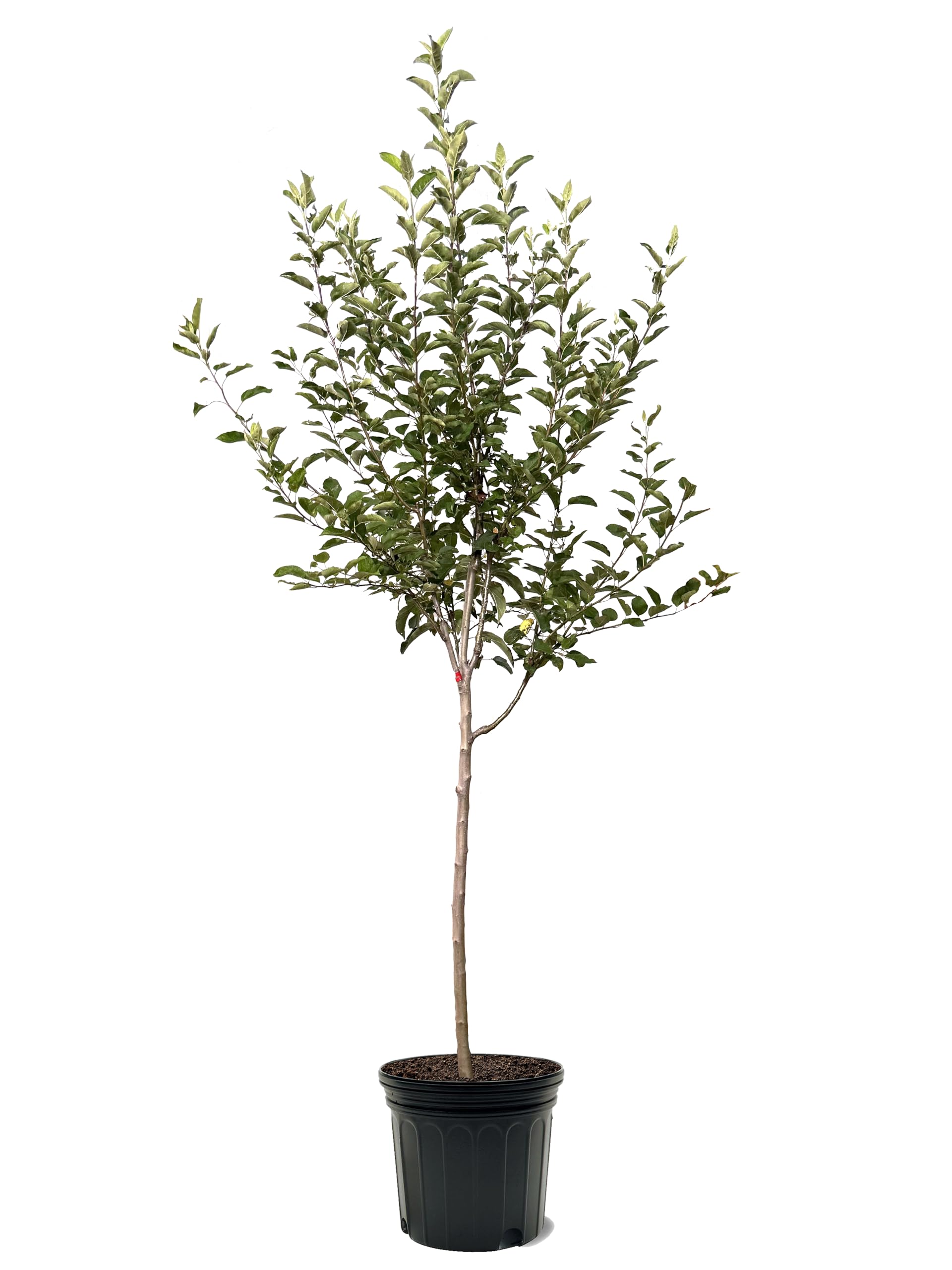
The Mutsu (also known as Crispin) from Simpson Nursery is the cooking apple powerhouse — large, late-season green-gold fruits that hold their shape when baked. Like the Liberty, it ships in a 7-gallon pot with a 25-pound root system, cutting two years off the wait for your first harvest. Buyers describe it as “robust, healthy, and thriving” after transplant.
This variety reaches about 25 feet at maturity and needs a full-sun position with loam soil. Mutsu blooms in mid-season, making it compatible with Granny Smith, Liberty, and Honeycrisp for pollination. The regular watering schedule is easy to maintain, and the tree shows good resistance to common orchard diseases.
The 25-pound pot is the same physical challenge as the Liberty — expect a heavy lift. A few units arrived with minor branch damage from shipping, but customers reported full recovery within weeks. The same agricultural shipping restrictions apply: no CA, AZ, AK, or HI.
Why it’s great
- Premier 7-gallon size delivers fruit years sooner
- Exceptional for baking with large firm fruits
Good to know
- Heavy pot demands two people for planting
- Restricted shipping to CA, AZ, AK, and HI
6. Red Delicious Apple Tree

The Red Delicious from Simpson Nursery is the most affordable entry point for starting a home orchard. It ships at 2-3 feet in a 1-gallon pot — small enough to handle alone but large enough to establish quickly. Reviewers consistently call it “beautiful” with brilliant green leaves and branches on arrival.
This tree blooms later in spring, a smart adaptation that helps it dodge late frosts that can wipe out earlier-flowering varieties. It’s hardy in zones 4 through 8 and requires loam soil with regular watering. The Red Delicious produces classic sweet, crisp fruits that store well, and it pairs naturally with a Gala or Honeycrisp for cross-pollination.
The biggest risk for this entry-level sapling is deer browsing. Multiple reviewers warned that deer will eat the leaves and kill a young tree if unprotected. A wire cage or fence around the trunk is necessary for the first few seasons. The tree also cannot ship to CA, AZ, AK, or HI.
Why it’s great
- Low-cost entry point for a classic home orchard variety
- Late bloom helps avoid spring frost damage
Good to know
- Young trees are highly vulnerable to deer damage
- Small 1-gallon pot requires careful watering in the first season
7. American Plant Exchange Anna Apple Tree

The Anna Apple from American Plant Exchange is the go-to choice for gardeners in mild-winter climates (zones 6-9) where traditional high-chill varieties refuse to fruit. It needs only 200–300 chill hours, meaning it produces reliably in Southern gardens. The tree reaches about 25 feet and can yield 15-20 pounds of honey-sweet apples annually once established.
This variety thrives in sandy soil with full sun and moderate watering. Anna is partially self-fertile but crops much better with a pollinator like a Dorsett Golden. The tree ships 1-2 feet tall in a 1-gallon pot, and many buyers praised the packaging and speed of delivery. A few arrived with black spots on leaves, but copper fungicide cleared it up quickly.
The primary downside is winter survival in colder zones. Several zone-6 buyers lost their tree over the first winter, and the seller does not offer a long-term survival guarantee. If you’re below zone 6, choose a hardier variety. Anna also cannot ship to AK, AZ, CA, or HI.
Why it’s great
- Only 200-300 chill hours needed — perfect for warm climates
- High annual yield of 15-20 lbs. of sweet apples
Good to know
- Not reliably hardy below zone 6 in cold winters
- Some arrivals showed leaf spots requiring fungicide treatment
FAQ
How long does it take for an apple tree sapling to produce fruit?
Do I need two apple trees to get fruit?
What does shipping restriction per agricultural laws mean?
How do I protect a young apple tree from deer?
Final Thoughts: The Verdict
For most users, the apple tree sapling winner is the Gala Apple Tree from DAS Farms because it combines a healthy 3-foot size, a reliable 30-day guarantee, and strong performance across zones 4-8 at a fair mid-range price. If you want fruit in the shortest time possible, grab the Liberty Apple Tree in the Premier 7-gallon pot — it’s the fastest path to your first harvest. And for warm-climate growers who need a low-chill variety, nothing beats the Anna Apple from American Plant Exchange for reliable sweetness in the South.