
Our readers keep the lights on and my morning glass full of iced black tea. As an Amazon Associate, I earn from qualifying purchases.
Specs are compiled from manufacturer listings and verified buyer reviews and can change over time — please confirm the key details on the product page before buying.
When wildfire smoke turns the sky hazy, the air you breathe is suddenly full of microscopic particles that can irritate your lungs. You need an appliance that physically pulls those particles out of the air, and the proof is in a number called the Clean Air Delivery Rate (CADR, a measure of how fast a purifier filters smoke from a room). The picks below all carry true HEPA filtration (a filter type that traps at least 99.97% of particles) and a published smoke-specific CADR, so you can trust they are built for smoky conditions.
I’m Min — the founder and writer behind Gadgets Feed. This guide is built by comparing the manufacturers’ published specifications and the patterns across verified customer reviews, so you get each pick’s real strengths and trade-offs instead of marketing spin.
Your choice depends on your room size, how much noise you can tolerate, and how often you want to replace filters. Here are the best appliances for indoor air quality during wildfires, ranked by real owner experiences and hard specs, not marketing claims.
Our Picks at a Glance


How To Choose The Best Appliances For Indoor Air Quality During Wildfires
Smoke particles are tiny, so a bargain fan with a washable sponge inside will not do the job. You want a machine that has been independently rated for how fast it cleans smoky air, in a size that matches the room you need to protect.
Look for a true HEPA filter, not “HEPA-type”
Real HEPA media is a dense mat that physically traps particles as they pass through. The best wildfire picks use H13 or H14 grade filtration that captures 99.97% or more of particulates down to 0.1 or 0.3 microns — that is the size range where smoke and ash live. A washable pre-filter in front of it catches the bigger dust and pet hair so the expensive HEPA layer lasts longer.
Check the smoke CADR number
CADR (Clean Air Delivery Rate) is the only honest apples-to-apples measure of how many cubic feet of smoke the unit can scrub per minute. For wildfire season, buy on the smoke CADR figure specifically, not the pollen or dust number. A higher smoke CADR means the room clears faster, and it determines the square footage the manufacturer can honestly claim.
Match coverage to your room, with a margin
Manufacturers list a maximum square footage, but that number assumes the purifier runs at full speed. For a bedroom you sleep in, you want a unit that can cycle the room’s air at least four times per hour on a normal setting — that gives you headroom so you are not running it on max and listening to a jet engine all night.
Price the filters before you buy the machine
During a long smoke event, a purifier runs 24/7 and the filter takes a beating. Check the cost and availability of genuine replacements before you commit. A cheap machine with expensive or hard-to-find filters can end up costing more than a premium one over a couple of seasons, and some units simply stop working properly if you cannot get the right filter.
Quick Comparison
| Model | Best For | Smoke CADR | Coverage | Noise (Lowest) | Amazon |
|---|---|---|---|---|---|
| LEVOIT Core 300★ Best Overall | Bedrooms & small rooms | 143 CFM | 1,073 ft² | 24 dB | Amazon |
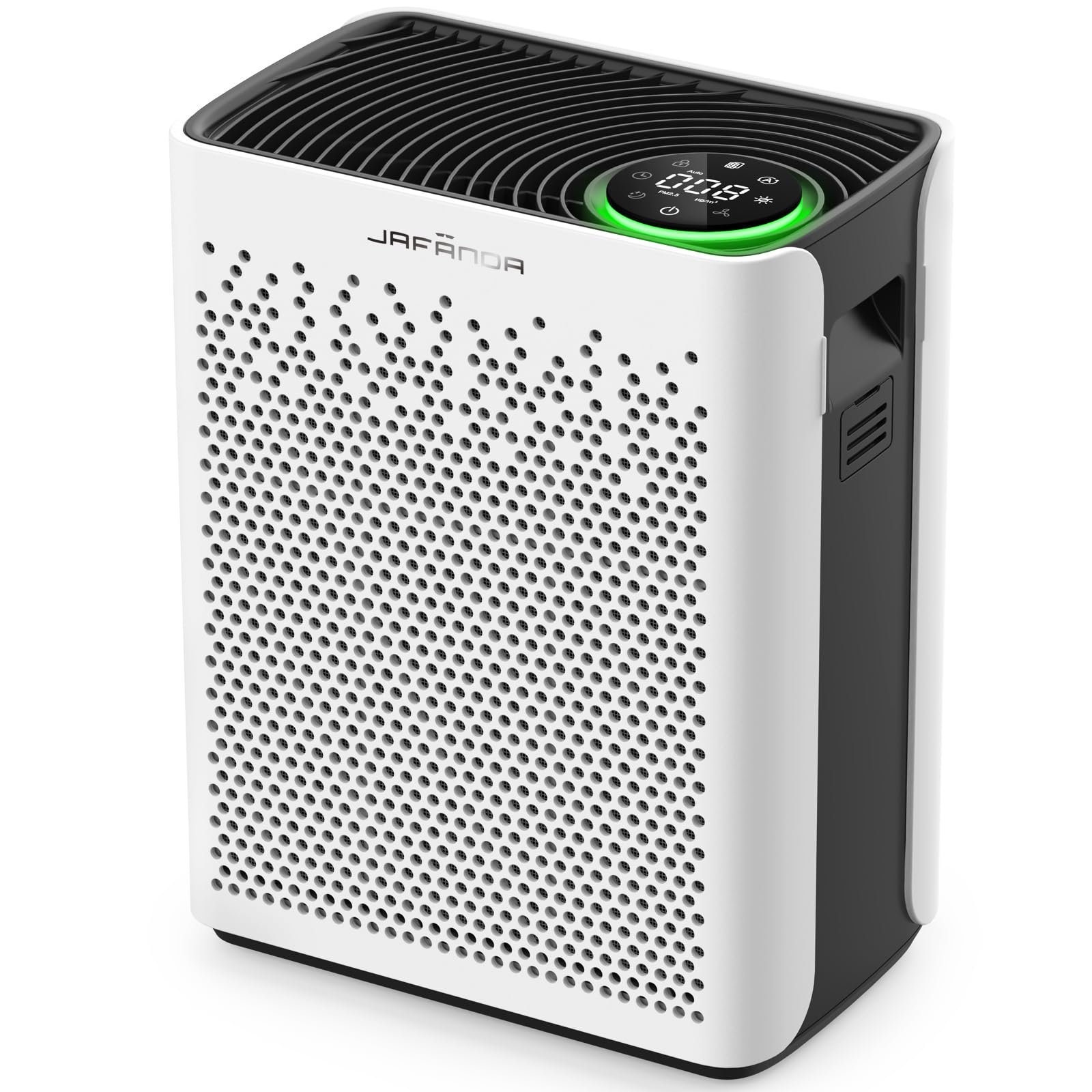
| Jafanda Air JA280Best Value | Budget large rooms | 135 CFM | 1,015 ft² | 20 dB | Amazon |
| Wyze Smart Air PurifierSmart Pick | Smart monitoring | 350 m³/h | 500 ft² | 21 dB | Amazon |
| WINIX 5510 | Large rooms & value | — | 1,881 ft² | 23.5 dB | Amazon |
| Honeywell HPA180 | Wildfire season backup | — | 990 ft² | — | Amazon |
| SIESEAN AP-400 | Open-concept homes | 235 CFM | 3,500 ft² | 30 dB | Amazon |
| Blueair Blue Pure 211i Max | Smart large rooms | 435 CFM | 3,235 ft² | — | Amazon |
| Medify MA-40 UV | Extra UV layer | 380 CFM | 1,793 ft² | 46 dB | Amazon |
| CleanForce Rainbow | Certified allergy relief | 282 CFM | 2,250 ft² | ~29 dB | Amazon |
| AirDoctor AD3500 | Ultra-fine filtration | — | 2,520 ft² | — | Amazon |
In‑Depth Reviews
1. LEVOIT Core 300
Our pick — over 4.5★ from 108,500+ verified ratings; the strongest balance of quality and price.
The compact bedroom champion that scrubs smoke while you sleep in near silence
This is the pick most people should start with, and the reason is the crowd of more than 100,000 owners behind it — the strongest consensus in this list. Its 143 CFM smoke CADR refreshes a 222 ft² room 4.8 times per hour, which means a smoky bedroom gets cycled clean roughly every twelve minutes. That performance comes with an AHAM Verifide seal, meaning the claims were independently tested rather than just printed on the box.
What wins people over is the night experience. Sleep Mode drops noise to a near-silent 24 dB, and the display lights switch off completely, so nothing glows at you while you try to rest. Owners with severe allergies report noticeable relief after just one night of use., and households running two units daily for years say the dust and pet debris they trap is obvious. The 56W motor is efficient enough for around-the-clock running during a long smoke event.
The honest trade-off is that the replacement filters are a recurring cost, though owners consistently call them reasonably priced, with one noting they last 6-8 months. Off-brand filters can damage the unit, so you will want to stick with the official Levoit 3-in-1 filter. It is certified AHAM, FCC, ETL, and CARB compliant, and it runs on 120V for U.S. outlets only.
What Owners Rave About
- Fast smoke and odor removal — cooking and wildfire smells gone quickly
- Sleep Mode is genuinely near-silent at 24 dB with a light-off button
- Proven across a huge owner base for allergies and pet households
What To Know Before You Buy
- Replacement filters are a recurring cost — budget for official Levoit filters only
- Best as a single-room machine, not for open-concept living areas
Your best bet if: you need one reliable, whisper-quiet purifier for a bedroom or office and want the safest, most proven choice on this list.
Look elsewhere if: you are trying to clean a wide-open living room — this one shines in one focused room.
2. Jafanda Air JA280
The budget large-room purifier that nicks the LEVOIT on quietness and weight
If you want big-room coverage without a big-room price, the Jafanda model delivers a 135 CFM smoke CADR (cubic feet per minute, a measure of how much smoke it filters) and cleans up to 1,015 ft² in an hour. It has a little less raw airflow than the LEVOIT Core 300 (143 CFM vs 135 CFM), but it is noticeably lighter at 6.39 pounds versus the LEVOIT’s 9.32 pounds, so you can easily move it from bedroom to living room as smoke shifts. It is also the quietest machine on this list, dropping to just 20 dB (decibels, a measure of sound level) in Sleep Mode.
The smart features make it a value standout. A built-in PM2.5 sensor (a sensor that measures fine particulate matter, the tiny particles in smoke) tracks your air in real time, and in Auto Mode the fan speed adjusts itself when air quality drops — buyers report the indicator light shifts from red when air is poor to green once the room is scrubbed clean. The washable pre-filter catches pet hair and dander first, which extends the life of the main True HEPA filter and cuts how often you buy replacements.
The catch is on the filter side. Owners love the machine but warn that genuine replacement filters can be hard to find, which is a real risk during a long smoke event when you cannot afford downtime. The manufacturer recommends replacing the filter every 4-6 months depending on use. It is certified CARB, AHAM, CE, FCC, and RoHS 2.0, so the safety and performance claims are independently backed.
Smoke-season verdict: a genuinely light, quiet, sensor-driven purifier that covers a whole floor for less money — just buy a spare genuine filter the same day you buy the machine.
One honest warning: filter availability is the recurring owner gripe, so plan ahead before smoke season hits.
3. Wyze Smart Air Purifier With Wildfire Filter
The sensor-driven smart purifier that names wildfire smoke right on the filter
This is the only pick on the list that sells a filter specifically labeled for wildfire smoke, ash, and smoke smell — the Special filter option is built for exactly what you are dealing with when the skies turn orange. The unit itself cleans a 500 ft² room over three times an hour on a 350 m³/h CADR (cubic meters per hour, another measure of smoke filtration speed), making it the smallest-coverage pick here, better suited to one large room than a whole floor.
The defining feature is the laser dust sensor, which scans the air continuously and adjusts fan speed on its own. Owners mention Auto Mode catching everything from cooking fumes to a sweeping session, spiking the reading and kicking the fan up without being asked. The app gives you real-time indoor air-quality tracking and full remote control, so you can check your room from anywhere — handy if you want to confirm the smoke haze is gone before you head home.
On low it sleeps beside you at 21 decibels, and even on high it stays conversational at 54 decibels. The honest downsides from owners: filter changes come more frequently and cost more than they would like, the app can disconnect daily for some, and the unit is a bit awkward to lift since it weighs 9.32 pounds. Three filter tiers let you swap based on season — Standard for everyday particles, Special for smoke, Premium for formaldehyde and heavy odor.
Why It Stands Out
- A filter built specifically for wildfire smoke and ash
- Laser sensor + app gives you live air-quality readings and remote control
- Auto Mode reacts instantly to spikes in particles
The Trade-Offs
- Filters are a recurring cost and need changing more often
- Some owners hit daily app disconnects and inaccurate readings
Reach for this if: you want a smart purifier that watches your air for you and has a filter purpose-built for wildfire season.
Think twice if: reliability of the companion app matters more to you than the sensor smarts.
4. WINIX 5510

The workhorse that anchors a 1,881 ft² floor and still whispers at 23.5 dB
For open-concept homes where smoke drifts through several rooms at once, the WINIX 5510 is the strongest mainstream choice here, cleaning rooms up to 1,881 ft² in one hour. Its True HEPA filter captures 99.99% of airborne allergens down to 0.3 microns — smaller than the standard HEPA threshold — and the washable fine mesh pre-filter grabs the biggest particles first so the main filter lasts longer. The 1-inch HEPA plus carbon filter combination is a proven setup customers note running for 12 months before replacement.
The quiet is the headline. It runs nearly silent on its slowest speed at 23.5 dB, and a light-automated Sleep Mode kicks in automatically when the room darkens — no button presses, no forgetting. Owners call it effective for both pet dander and wildfire smoke, and the Auto Mode with built-in sensor adjusts fan speed in real time as air quality shifts. The Winix Smart App adds remote monitoring and control alongside Alexa and Google voice commands.
One owner summed up why this machine builds loyalty: five years of constant use and it still works. The recurring notes are positive — quiet, durable, effective for smoke, affordable replacement filters. The main caveat is that the companion app draws complaints about lag, and it runs a little louder on Turbo. It is AHAM Verified and UL Certified, with a 13.3-pound frame you will not want to move daily.
Long-haul verdict: a big-room purifier with a proven five-year track record, near-silent sleep mode, and affordable filters — the value king for whole-floor smoke protection.
The one knock: the app can feel laggy, and at 13.3 pounds it is a set-it-and-leave-it machine, not a move-it-around one.
5. Honeywell HPA180 Insight
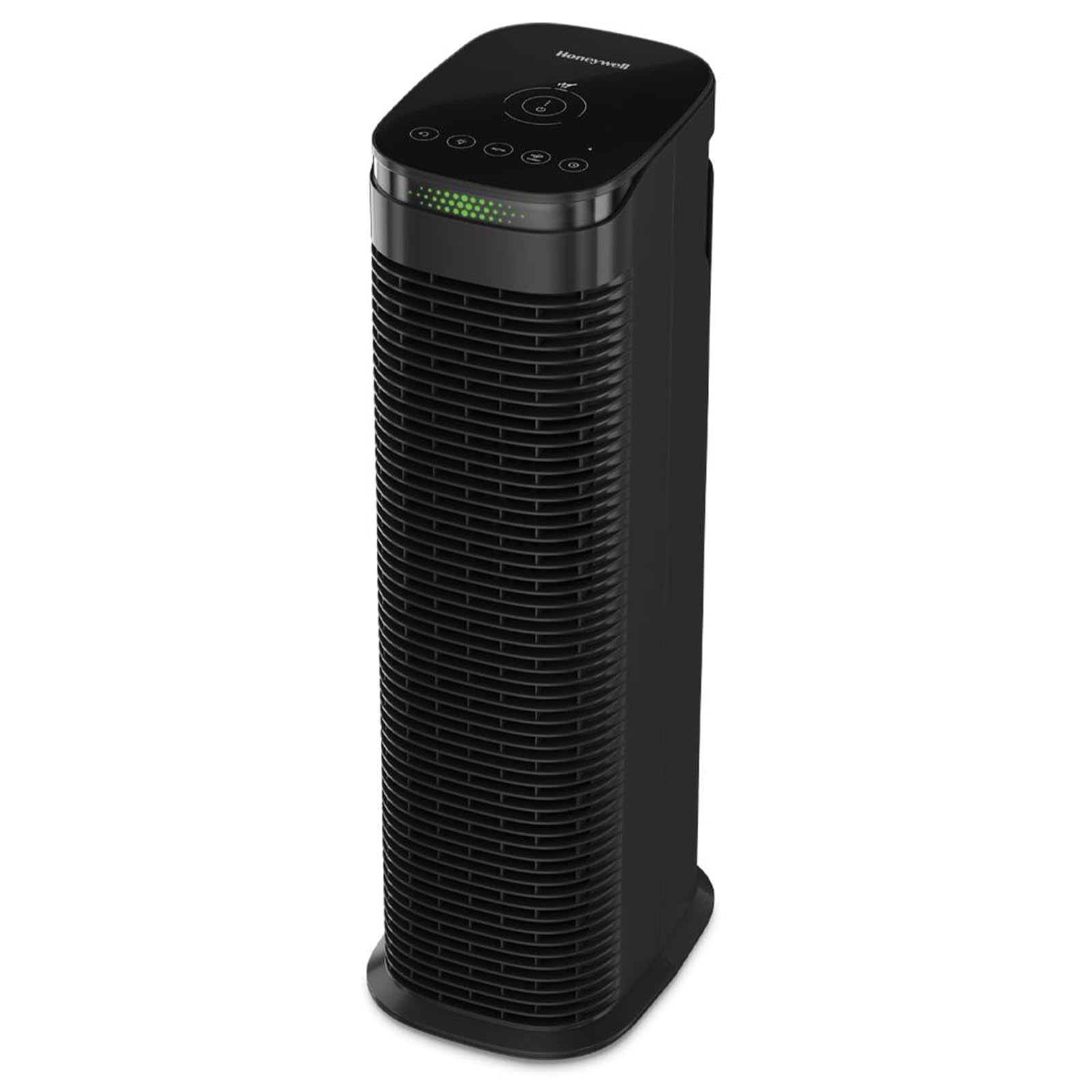
The slim tower built with wildfire season written into its design brief
Honeywell is one of the few brands on this list that markets an air purifier directly at wildfire smoke, noting that smoke can impact air quality even far from the fires themselves. The HPA180 captures up to 99.97% of microscopic airborne particles including dust, pollen, pet dander, and smoke, and it is AHAM Verifide (a certification from the Association of Home Appliance Manufacturers that confirms performance) to circulate a 200 ft² room 4.8 times per hour or a 990 ft² room once per hour. The slim, compact tower fits into tight spaces a boxy purifier would not.
An Air Quality Indicator with Auto Mode continuously monitors your indoor air and adjusts to the optimal filtration level on its own. Owners specifically call it excellent for wildfire smoke and rural dust, and they note an immediate air-quality improvement. It is light at 7.34 pounds, so it travels easily — one owner in a 1,600 ft² home moves it to the bedroom at night and back to the living area by day. The dimmable panel is a small touch that matters when it runs beside your bed.
The trade-off is the noise curve. On low it is genuinely quiet, but reviewers point out medium and high settings get loud enough to bother a sleeping partner. The Certified HEPA Filter plus Activated Carbon Pre-Filter handles odors and VOCs, and the filter quality earns consistent praise. Ratings lean strongly positive, though the air-quality sensing gets mixed feedback from some owners who were not sure it made a difference — most disagree and say it does.
Best for: the person who wants a slim, portable wildfire-season purifier with a trusted brand name and doesn’t mind keeping it on low settings.
Consider the other picks if: you need a big-room machine that stays quiet at high fan speed — this one gets loud when pushed.
6. SIESEAN AP-400
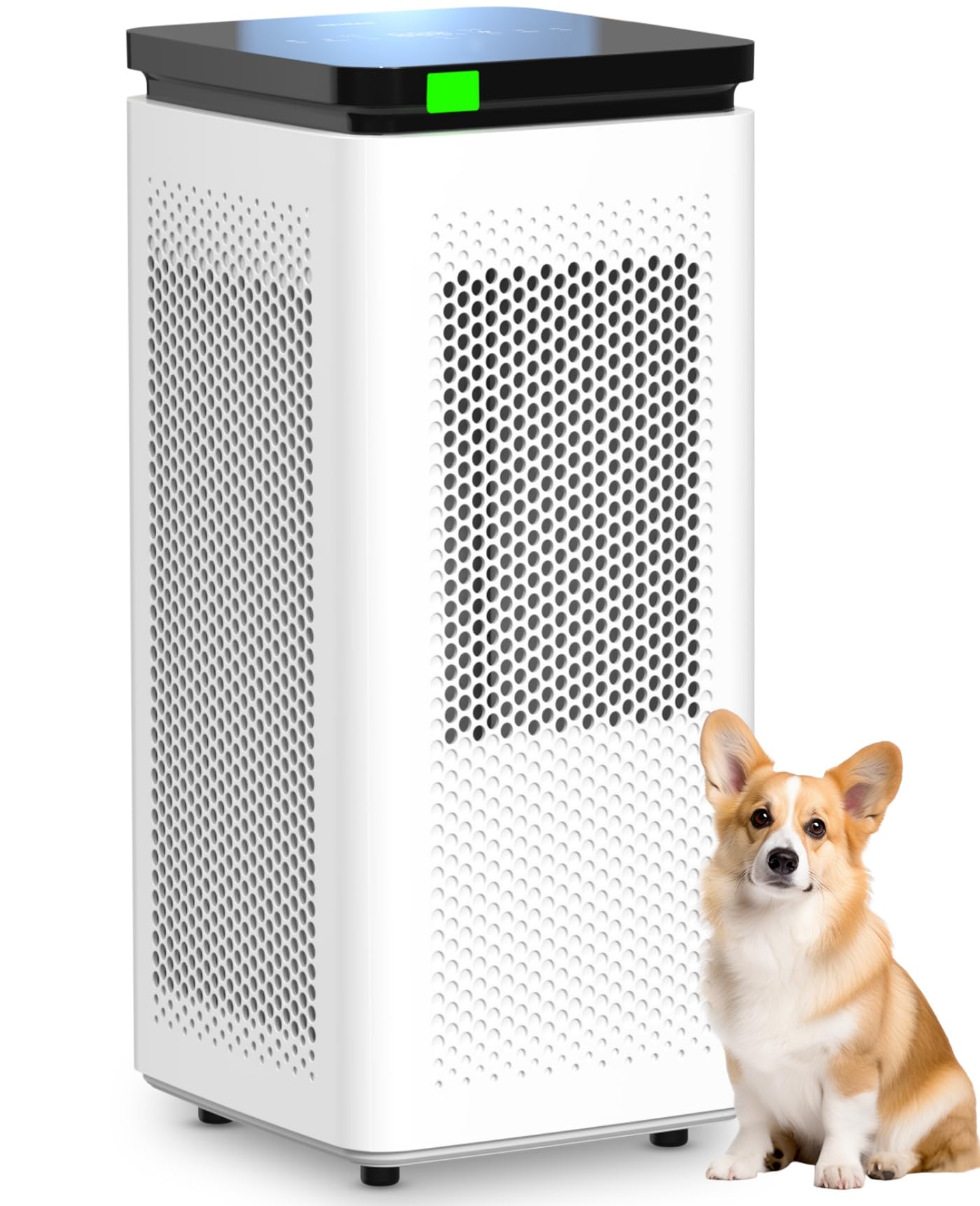
The dual-inlet tower that cycles 3,500 ft² and sounds like a library doing it
This is the machine for the open-concept floor plan. With a 235 CFM CADR and dual-sided air intake, it cleans 500 ft² in 15 minutes and covers up to 3,500 ft² — the widest reach on this list, more than triple the Wyze’s 500 ft². The H13 True HEPA filter captures 99.97% of particles down to 0.3 microns, including cigarette smoke and wildfire smoke, while the activated carbon layer attacks VOCs and odors.
The quiet is remarkable for something this powerful. Sleep Mode drops to just 30 dB, and the dimmer function lets you adjust or kill the panel brightness for nighttime use. Owners describe it as whisper quiet even at max speed, with one calling the build “a serious piece of equipment.” The PM2.5 digital display gives you a live particle count, and Auto Mode adjusts fan speed to match — shoppers say seeing particle spikes drop below 5 PM (a measure of fine particulate concentration) within minutes of the unit kicking up.
It is ENERGY STAR certified, using as little as 0.66 kWh per day, and certified CARB, DOE, EPA, and UL. The floor-standing design includes a child lock and timer for safety around kids and pets. The honest caveat: one owner in a 14×18 room felt it did not reduce particles visible in morning light as much as hoped, so the 3,500 ft² figure assumes ideal conditions. The manufacturer recommends replacing the filter every 3-4 months based on usage.
Where It Wins
- Biggest coverage on the list — up to 3,500 ft² with a 235 CFM CADR
- Whisper quiet at 30 dB in Sleep Mode, even at high speed per owners
- Energy Star certified, pulling as little as 0.66 kWh per day
Where To Set Expectations
- Real-world results in a small 14×18 room fell short for one owner
- Filters need replacing every 3-4 months with genuine SIESEAN media
Pick this for: large living rooms, basements, and open-concept homes where a 3,500 ft² reach matters more than a compact footprint.
skip it if: you only need to clean a single bedroom — a smaller unit will do the same job for less.
7. Blueair Blue Pure 211i Max

The Scandinavian-styled smart purifier that scrubs 3,235 ft² and looks good doing it
Blueair’s HEPASilent dual filtration is the standout engineering here, combining electrostatic charging with mechanical filtration to pull dust, pollen, wildfire smoke, pet hair, and mold particles out of the air. Its smoke CADR is an impressive 435 CFM, the highest smoke rating on this list, and it cleans up to 3,235 ft² in one hour — a 674 ft² room in just 12.5 minutes. The 360° air intake means you can place it closer to walls without choking the airflow.
The smart controls are genuinely useful. Built-in sensors automatically raise the fan speed when pollution spikes, and the Blueair app lets you monitor air quality, adjust settings, and track filter life from anywhere. Buyers report cooking smells and trace smoke getting caught within minutes — one noted a PM2.5 reading jumping from 0 to 50+ and back to 0 in under 45 minutes. The washable pre-filter cuts down on how often you buy replacements.
The recurring theme in owner feedback is that it is quiet on low and medium, and genuinely noisy at max — though several note the max setting is exactly what you want during heavy wildfire smoke. At 16 pounds it is heavy and hard to move, so pick your corner carefully. Some owners mention a chemical odor from the unit, and replacement filters are on the expensive side, running yearly. It is AHAM verified with CADR ratings of 450 pollen, 452 dust, and 435 smoke at 674 ft².
If you want: the strongest smoke CADR (435 CFM) on the list plus app control and a design that does not scream “appliance,” this is the premium smart pick.
The honest catch: it is heavy at 16 pounds, loud at max, and the premium filters carry premium prices.
8. Medify MA-40 UV

The H14-grade purifier that adds a UV light layer to the smoke fight
If you want the strongest filter grade on this list, the Medify MA-40 uses HEPA H14, which captures 99.99% of particles down to 0.3 microns — finer than the H11 (0.3 micron) standard most purifiers use. With a 380 CFM CADR it cleans up to 1,600 ft² in one hour. The UV light is an added layer of protection, trapping particles and removing them from the air stream as they pass through.
Owners who live with wildfire smoke and multiple pets report it handles both impressively. One owner credited the unit for staying healthy while a sick partner recovered in the same house. The touch panel includes a 0-8 hour timer, 3 fan speeds, sleep mode, a filter replacement indicator, and a child lock. On the lowest setting it runs virtually silent, and Sleep Mode dims the panel lights completely.
The honest flip side is the noise and the filters. At a minimum of 46 dB it is not the quietest machine here — the LEVOIT at 24 dB and the Jafanda at 20 dB both beat it easily — and some owners find even Sleep Mode louder than expected. The H14 filters (a high-efficiency filter grade) are pricey, and the brand requires genuine filters every 4-5 months or 3,000 hours to keep the lifetime warranty valid, which locks you into a recurring cost. It weighs 9.4 pounds.
Choose this for: the highest filter grade (H14) on the list and an extra UV layer, especially if you are in a heavy smoke zone with pets.
Weigh it against: the 46 dB minimum noise — quieter options exist — and the premium, brand-locked filter cost.
9. CleanForce Rainbow Series
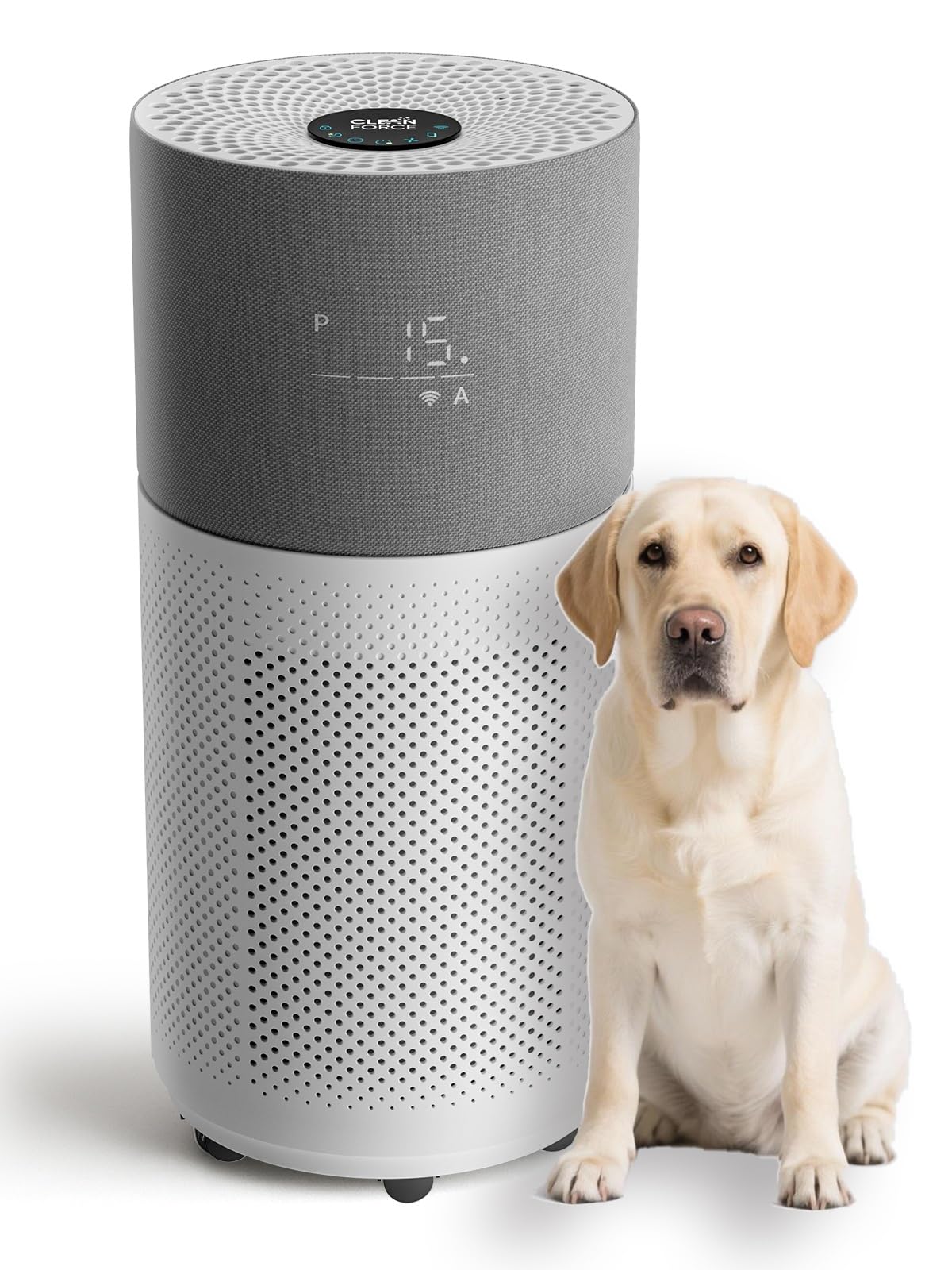
The certified asthma-and-allergy-friendly tower with lab-tested smoke CADR
The CleanForce Rainbow Series is the only pick here with an independent asthma & allergy friendly certification (AAFC: 1897/24/08/01/2143), tested to reduce exposure to certain airborne particles. Its lab-tested smoke CADR of 282 CFM and dust CADR of 290 CFM power it through rooms up to 2,250 ft², and the H13-grade HEPA media captures 99.97% of particles down to 0.3 microns. The activated carbon layer takes on pet, cooking, and smoke odors plus certain VOCs.
Owners consistently praise how much air it moves and how quiet it stays on the low settings, with speeds 1 and 2 described as quiet and speeds 3-4 noticeably louder. One atmospheric report: a PM2.5 reading that hit 999 during a smoke event recovered to normal in about an hour. The color-coded LED display and PM2.5 readout give you live feedback, and the CleanForce app plus Alexa voice control add remote management. Wheels come pre-installed, so moving a 15.4-pound machine is manageable.
The value question is the recurring gripe. The machine itself earns praise, but the two-filter replacement, and owners recommend vacuuming the pre-filter frequently to extend their life. One long-term owner in a dusty desert runs it 24/7 and says it drastically reduces dust but is weak at kitchen odors. It is CARB certified, ETL listed, FCC compliant, and Energy Star certified. At 15.4 pounds it is built to stay put.
Why It Earns Its Spot
- Independent asthma & allergy friendly certification — the only one here
- Lab-tested 282 CFM smoke CADR for rooms up to 2,250 ft²
- Wheels make a heavy 15.4-pound unit genuinely mobile
What To Budget For
- Replacement filters run about for the set
- Weak at kitchen odors, and speeds 3-4 get loud
Reach for this if: you want third-party-certified allergy relief plus a lab-tested smoke rating and a machine that rolls from room to room.
Look elsewhere if: filter running costs are your top concern, or you need strong kitchen odor removal.
10. AirDoctor AD3500
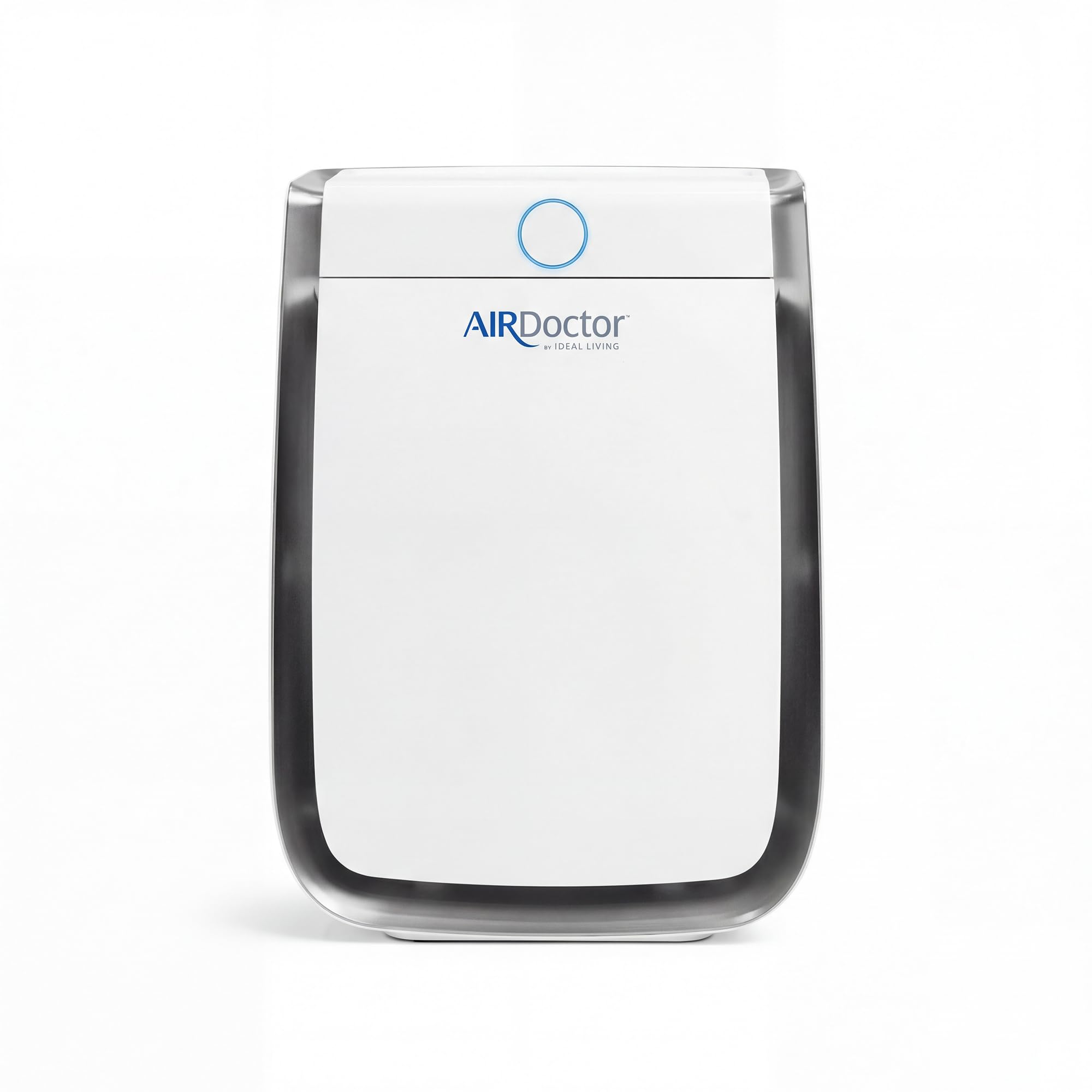
The hospital-grade UltraHEPA tower that captures particles far below the HEPA standard
If money is less of a concern than absolute filtration depth, the AirDoctor AD3500 is the most aggressive particle hunter here. Its UltraHEPA filtration captures 99.99% of airborne particles at 0.003 microns (a micron is one-millionth of a meter, so this is extremely tiny) — a size range the standard HEPA spec does not even try to reach. It cleans 630 ft² in 15 minutes and up to 2,520 ft² in one hour, and the premium activated carbon filter uses both carbon and potassium permanganate to absorb and break down toxic gases, cooking fumes, gas emissions, and wildfire smoke.
The Auto Mode with the AirDoctor Halo is the centerpiece. PM2.5 sensors monitor the air in real time while the Halo displays color-coded quality levels, and Auto Mode adjusts fan speed and activates a Boost mode when conditions worsen. Owners with lung conditions call it the best filter they have found for trapping the smallest, most irritating particles., and they note the unit ramps up automatically when they use a nebulizer or when cooking creates fumes. It runs quiet on low settings, with Sleep Mode dimming the bright display.
The 3-stage filtration includes a Pre-Filter, the Premium Activated Carbon filter, and the UltraHEPA filter. Genuine replacements run on a schedule — carbon every 6 months, UltraHEPA every 12 months, and the UltraHEPA filters are made in Japan. The honest downsides: Turbo mode is loud, the unit is bulky at 24 pounds, and this is the most expensive pick on the list. It is FSA and HSA eligible, which softens the upfront cost if you have a flexible spending account.
The premium verdict: if you or someone in your home has respiratory sensitivity and you want the deepest filtration available here, the AD3500’s UltraHEPA depth is worth the premium.
Before you commit: it is 24 pounds, loud on Turbo, and the filter schedule is a real ongoing cost.
Understanding the Specs
True HEPA vs HEPA-type
A True HEPA filter is a dense mat that physically traps particles as air is pushed through it, stopping 99.97% of particles at 0.3 microns. “HEPA-type” or “HEPA-like” filters are often just electrostatic sheets that catch less and are not held to the same standard. When smoke is the threat, only True HEPA — and ideally H13 or H14 grade — reliably pulls the fine particles out.
Smoke CADR
CADR stands for Clean Air Delivery Rate, the number of cubic feet of air a purifier cleans per minute. The smoke-specific CADR is the honest figure for wildfire season because it tests actual smoke particles, not just pollen or dust. A higher smoke CADR means faster room clearing, and it directly determines the square footage a manufacturer can claim.
Room Coverage vs Air Changes Per Hour
Coverage figures assume the purifier runs at max speed. For a room you actually live in, you want the unit cycling the air at least four times per hour — that is the standard for meaningful smoke protection. If a manufacturer claims 1,000 ft² but you need 4 air changes in a 200 ft² bedroom, check the math before you buy.
Noise Level and Filter Cost
A purifier only helps if you actually run it, and you will run it most during sleep and long smoke events. A unit that hits 46 dB minimum will be harder to sleep beside than one at 20-24 dB. Filter replacement is the hidden cost — check the price and availability of genuine replacements before you commit, because washable pre-filters and long filter life (6-12 months) lower your total cost of ownership.
FAQ
What does smoke CADR mean for wildfire smoke protection?
How many air changes per hour do I need during heavy smoke?
Is a washable pre-filter worth having?
How often should I replace the filter in a wildfire purifier?
Will an air purifier remove the smoky smell or just the particles?
Is a higher fan speed always better for smoke?
Should I get one big purifier or two smaller ones for a two-story house?
What does the PM2.5 reading on the display tell me?
Is an air purifier with a UV light better for smoke?
Can I run a HEPA purifier safely 24/7 during wildfire season?
Final Thoughts: The Verdict
Across the board, the winner among appliances for indoor air quality during wildfires is the LEVOIT Core 300 because it pairs a proven 143 CFM smoke CADR with a crowd-tested track record and a 24 dB sleep mode that lets you run it all night. If you need whole-floor coverage, grab the WINIX 5510 for its 1,881 ft² reach and near-silent 23.5 dB operation. And for the deepest filtration available here, the AirDoctor AD3500 with its UltraHEPA capture down to 0.003 microns is the one to reach for, especially if respiratory sensitivity is a concern. The Wyze Smart Air Purifier remains the smart-money pick for those who want live air-quality data on their phone, while the CleanForce Rainbow earns its place with the only independent asthma-and-allergy-friendly certification on this list. Whichever you choose, pair it with genuine replacement filters and run it on Auto Mode — your lungs will notice the difference long after the smoke clears.
How We Picked
We do not accept paid placement. Every pick is matched to a real buyer and a real use-case; we do not hands-on test units.
Sources & Methodology
Specifications: manufacturer listings and product documentation. Review insights: verified customer reviews, as of August 2026. Pricing: not shown on this page (it changes often); check the current price via the retailer link.
As an Amazon Associate, Gadgets Feed earns from qualifying purchases. This does not affect which products we feature.