
The trail between a technical climb and a casual hike demands a boot that bridges both worlds. Approach boots need sticky rubber for edging on slabs, enough stiffness for scrambling, and a mid-cut profile that won’t slow you down on the walk out. The wrong pair leaves you slipping on wet rock or nursing hot spots before you reach the first pitch.
I’m Min — the co-founder and writer behind Gadgets Feed. I spend my time analyzing rubber compound data, last shapes, and outsole lug patterns to understand how each boot performs on granite, sandstone, and alpine approaches..
This guide breaks down what makes an approach boot grip, edge, and last, then reviews the top contenders that deliver on those promises. After comparing rubber compounds, fit philosophies, and waterproofing systems, you’ll find a clear path to the best approach boots for your climbing objectives.
How To Choose The Best Approach Boots
Approach boots live in the gap between hiking footwear and climbing shoes. A good approach boot protects your feet on a miles-long trail approach, then delivers precise edging and smearing on low-angle rock, talus, and boulder fields. The wrong boot sacrifices either walking comfort or technical climbing performance, leaving you frustrated on both fronts. Understanding the key specs — rubber compound, last shape, rand coverage, and waterproofing — will help you choose the pair that matches your local rock and typical approach distance.
Rubber Compound: The Grip That Keeps You on Rock
The outsole rubber is the single most important technical feature of any approach boot. Vibram® IdroGrip and Megagrip are the two most common compounds, with IdroGrip offering superior stickiness on wet rock and Megagrip balancing dry traction with durability. Softer compounds, like Stealth C4 found on some specialized approach shoes, max out grip but wear faster on pavement approaches. For mixed terrain with paved walk-ins and slabby rock, a Megagrip compound delivers the best compromise of longevity and sticky performance.
Last Shape and Toe Box Volume
European brands like La Sportiva and Scarpa traditionally use a narrower last with a snug heel pocket and moderate toe taper — ideal for precise edging but punishing on long descents if your feet swell. American brands like Merrell and Keen favor a wider toe box that accommodates anatomical foot shapes and allows toes to splay during long approaches. Altra takes this furthest with a fully foot-shaped toe box and zero-drop platform. For multi-hour approaches carrying a rack, a roomier forefoot reduces blister risk, while a snug midfoot and heel improve security on side-hilling and downclimbs.
Rand Coverage and Protection
The rubber rand — a protective strip wrapping the toe and often the sides of the boot — shields the upper from abrasion when jamming your foot into cracks, stemming on edges, or kicking into gravel. Full-wrap rands, like those on the Scarpa Mojito Wrap and Arc’teryx Konseal, extend higher up the sides and protect the leather upper from scuffs and sharp rock. Partial rands save weight but leave the upper vulnerable. If your typical approach involves chimneying, crack scrambling, or loose scree, prioritize a full-wrap rand that reaches above the widest part of the boot.
Waterproofing vs. Breathability
A Gore-Tex membrane keeps your feet dry through wet grass, puddles, and light stream crossings, but it also traps heat and slows moisture wicking, which can lead to sweaty feet on warm approaches. For dry, alpine approaches or desert rock, a non-waterproof suede or mesh upper breathes better and dries faster after a river crossing. If you climb in the Pacific Northwest, the United Kingdom, or any region with reliable precipitation, a Gore-Tex liner — like the one in the Salomon X-Adventure Recon Mid and the ALTRA Olympus 6 Hike Mid GTX — offers practical protection that outweighs the slight breathability penalty.
Quick Comparison
On smaller screens, swipe sideways to see the full table.
| Model | Category | Best For | Key Spec | Amazon |
|---|---|---|---|---|
| Arc’teryx Konseal | Premium | Technical scrambling & bouldering approaches | Full-wrap rand, Vibram Megagrip | Amazon |
| La Sportiva TX4 EVO | Premium | Multi-pitch & aid climbing approaches | Resoleable leather upper, Vibram IdroGrip | Amazon |
| SCARPA Mojito Wrap | Premium | Urban travel & light trail approaches | Full-wrap rand, 15 oz weight | Amazon |
| ALTRA Olympus 6 Hike Mid GTX | Premium | Long, high-mileage approaches with heavy packs | Zero-drop, FootShape toe box, max cushion | Amazon |
| Salomon X-Adventure Recon Mid GTX | Mid-Range | All-weather trekking & ridge walking | Gore-Tex liner, 540g weight | Amazon |
| SCARPA Crux Lightweight | Mid-Range | Technical edging & bouldering | Stout reinforced toe box, suede leather upper | Amazon |
| KEEN Targhee 4 Mid Waterproof | Mid-Range | Day hikes & moderate approaches with wide feet | Roomy toe box, KEEN.DRY waterproofing | Amazon |
| Merrell Speed Strike 2 Mid WP | Mid-Range | Travel & day approaches on mixed terrain | Waterproof membrane, 2.5 lb weight | Amazon |
| LaCrosse Alpha Agility 17″ | Budget | Wet, muddy, or snowy approaches | 17″ height, 1200g Thinsulate, natural rubber | Amazon |
In‑Depth Reviews
1. Arc’teryx Men’s Konseal Shoe
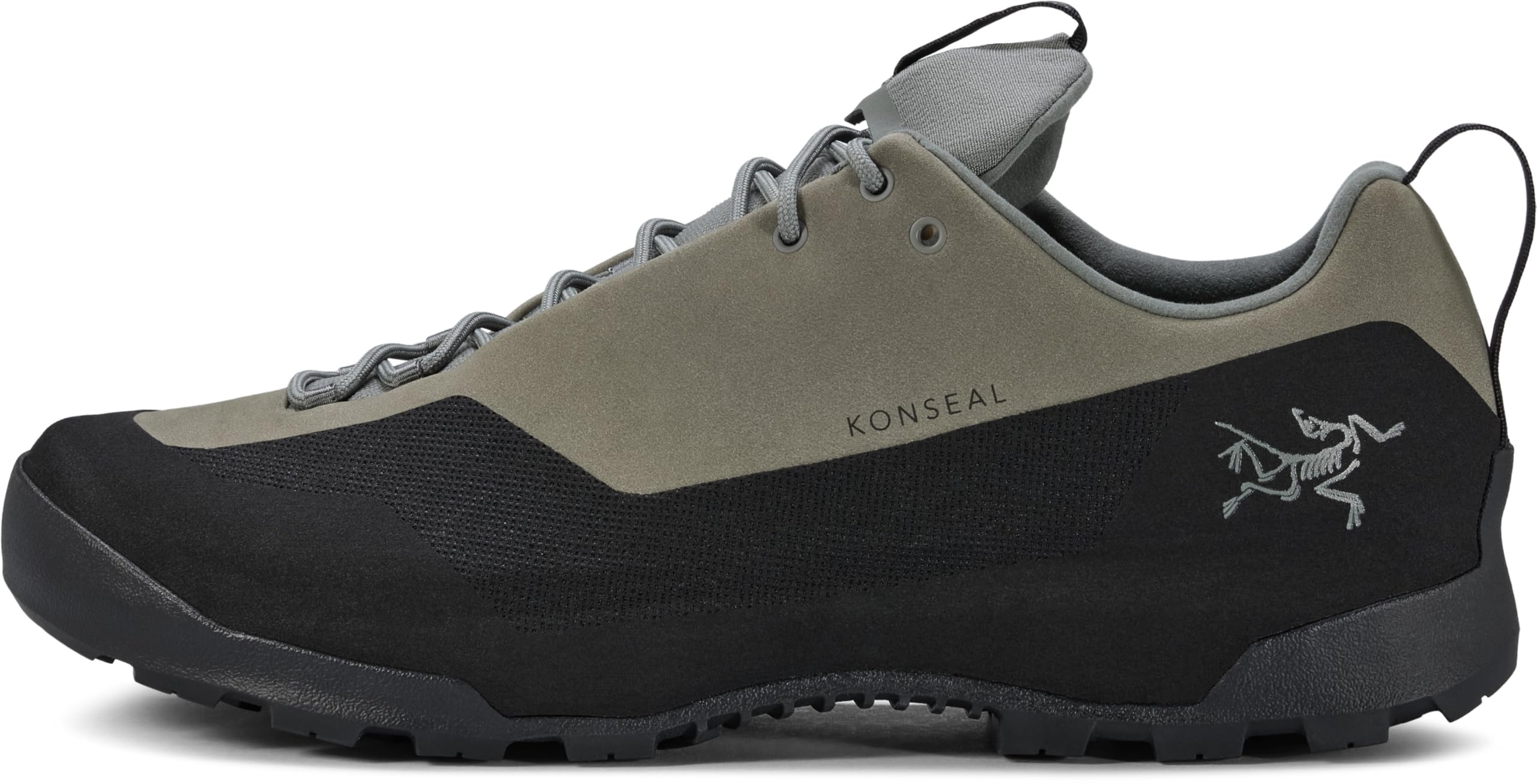
The Arc’teryx Konseal is a precision instrument for technical approaches where every edge and smear matters. Its Vibram Megagrip outsole delivers reliable traction on granite slabs, sandstone, and mixed scree, while the full-wrap rubber rand protects the upper from sharp rock and crack abuse. Arc’teryx engineered the Konseal with a supportive midsole that balances stiffness for edging with enough flex for comfortable walking on mile-long trail approaches.
The upper uses a combination of leather and textile that hugs the foot securely without pressure points, and the external heel counter locks the heel in place during downhill scrambling. Multiple owners report it fits consistently with Arc’teryx footwear sizing and feels comfortable straight out of the box for day-long wear. The Konseal’s construction quality reflects the brand’s reputation for durability, with reinforced stitching at stress points and a protective toe cap that withstands repeated contact with rock.
For climbers who want a single boot that handles bouldering circuits, slab approaches, and moderate alpine terrain without sacrificing precision, the Konseal checks every box. It is not the lightest approach boot at this tier, but the combination of Megagrip compound, full rand protection, and supportive chassis makes it a serious choice for technical objectives.
Why it’s great
- Vibram Megagrip outsole provides confident traction on wet and dry rock.
- Full-wrap rand offers excellent abrasion protection for crack and slab scrambling.
- Supportive midsole balances edge precision with approach walking comfort.
Good to know
- Premium tier pricing makes it a significant investment.
- Heavier than dedicated lightweight approach shoes for travel-focused climbers.
2. La Sportiva Mens TX4 EVO Leather Technical Approach/Hiking Shoes

The La Sportiva TX4 EVO is built for climbers who demand a technical approach boot that edges like a climbing shoe. Its Vibram IdroGrip compound is among the stickiest available, providing excellent smearing and edging on wet and polished rock. The full-grain leather upper conforms to the foot over time, offering a personalized fit that synthetic uppers rarely match, and the boot is resoleable through La Sportiva’s recrafting program, extending its lifespan well beyond standard approach footwear.
The TX4 EVO features a stiff midsole that transfers power directly to small edges, making it ideal for technical terrain where precision matters. The heel pocket is snug, reducing lift during heel hooks and downclimbing, while the toe rand extends high enough to protect the leather during crack jamming. Multiple reviewers report the boot runs small; sizing up half a size from your normal street shoe is strongly recommended to avoid the reported 20-mile blister break-in period.
Despite the break-in demands, experienced climbers consistently return to the TX4 EVO for its unmatched edging performance and durability. The lacing system uses thin, short laces that some users find prone to loosening during long approaches — replacing them with longer, waxed laces resolves the issue. The TX4 EVO is a specialist tool for multi-pitch and aid climbing where approach precision directly affects safety and efficiency.
Why it’s great
- Vibram IdroGrip compound delivers outstanding smearing and edging traction on wet rock.
- Resoleable leather upper construction provides long-term durability and personalized fit.
- Stiff midsole offers precise power transfer for technical edging and heel hooks.
Good to know
- Requires significant break-in; expect hot spots for the first 15–20 miles.
- Narrow last may not accommodate wide feet; sizing up half a size is recommended.
3. SCARPA Men’s Mojito Wrap Lightweight Outdoor Leather Shoes
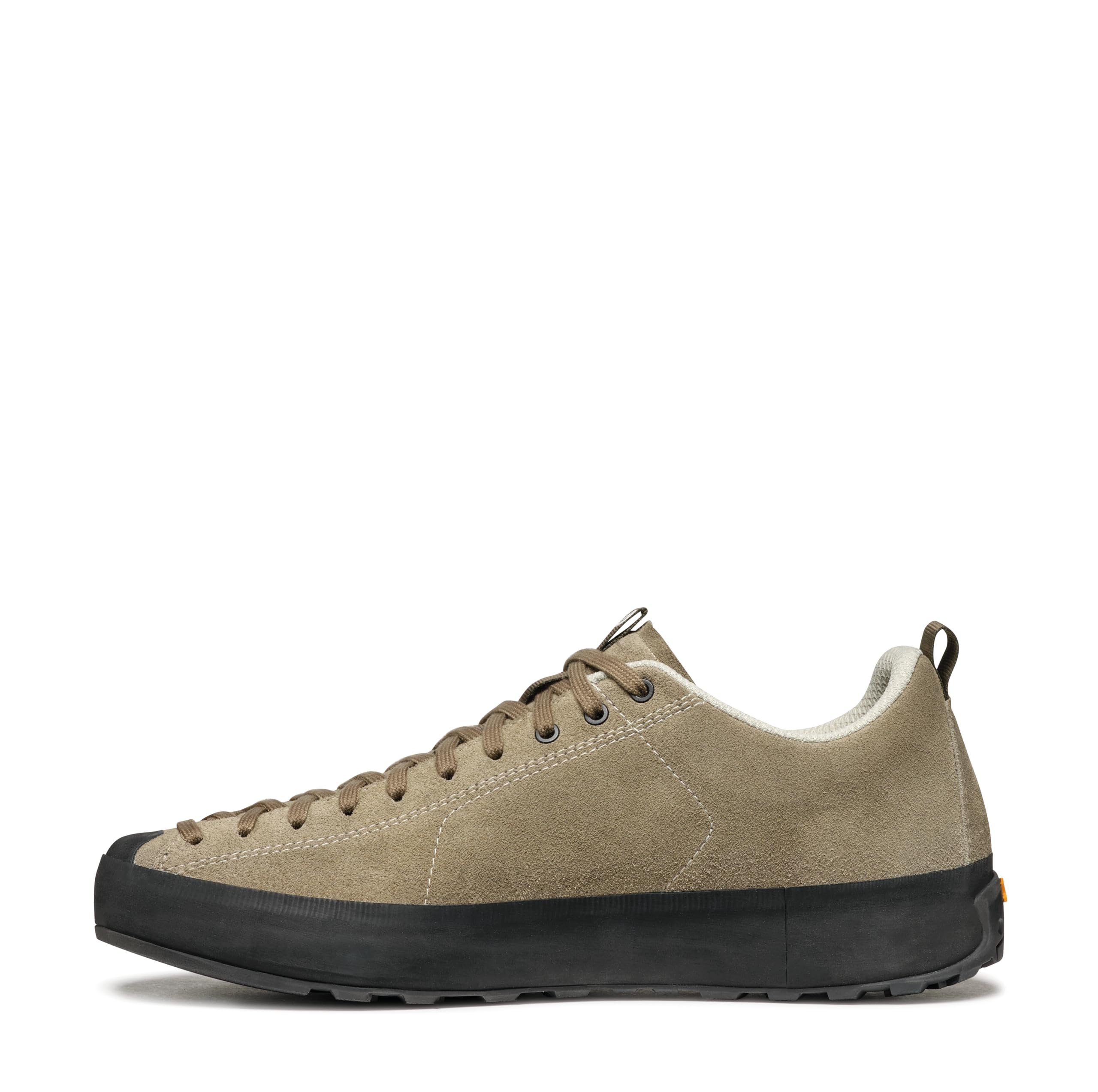
The SCARPA Mojito Wrap is an elegant hybrid that blurs the line between approach shoe and casual everyday footwear. At just 15 ounces per shoe, it is one of the lightest full-wrap rand approach boots on the market, making it an excellent choice for climbers who travel frequently and want a single shoe for the airport, the cafe, and the crag approach. The soft suede leather upper requires virtually no break-in and conforms to the foot after a few wears, delivering a slipper-like comfort that multiple reviewers praise for all-day wear.
The full-wrap rand extends up the sides of the shoe, providing surprising protection for its weight class, while the Vibram outsole offers decent dry grip on gravel and low-angle rock. The outsole does not feature a climbing-specific edging zone, so the Mojito Wrap is best suited for moderate approaches and bouldering approaches rather than technical multi-pitch terrain. The Dark Rock color is subtle enough to wear with jeans or khakis, making it a preferred option for urban explorers who also want scrambling capability.
Reviewers consistently note that the Mojito Wrap fits wide feet comfortably, with ample toe room in the forefoot and a secure heel. The breathable suede upper sacrifices waterproofing, so wet approaches require careful route selection or a waterproofing treatment. For climbers who value style, low weight, and versatility for travel and casual outdoor use, the Mojito Wrap delivers a unique combination that few approach boots match.
Why it’s great
- Extremely lightweight at 15 oz per shoe — ideal for travel and casual wear.
- Full-wrap rand provides surprising protection for a lightweight approach shoe.
- Soft suede upper requires no break-in and fits wide feet comfortably.
Good to know
- Not waterproof; wet traction is average compared to Megagrip-equipped competitors.
- Lacks a dedicated climbing edging zone for technical terrain.
4. ALTRA Men’s Olympus 6 Hike Mid GTX Hiking Shoe

The ALTRA Olympus 6 Hike Mid GTX redefines the approach boot for climbers who prioritize comfort on long, heavy-pack approaches. Its max-cushion midsole absorbs shock from rocky terrain, reducing fatigue over multi-hour walk-ins, while the zero-drop platform encourages a natural, midfoot strike that improves stability on uneven ground. The FootShape toe box allows toes to splay fully, reducing blister risk on long descents — a major advantage over tapered European lasts.
The Gore-Tex liner keeps feet dry through wet grass and shallow stream crossings, and the Vibram Megagrip outsole provides reliable traction on wet and dry rock. The Olympus 6 Hike Mid GTX weighs significantly more than dedicated lightweight approach shoes, but the cushioning and zero-drop geometry make it ideal for climbers carrying heavy racks, overnight gear, or body armor on training approaches. Multiple reviewers note it runs slightly tight initially but loosens to a comfortable fit after a few trail miles.
Some users with narrow or thin feet report blistering on the fourth and fifth toes from the hard plastic reinforcement at the top of the toe box — a design trade-off for the wide forefoot. The Olympus 6 Hike Mid GTX is not the best choice for technical edging or crack climbing where precise foot placement matters most, but for climbers who cover long distances to reach the climb, the comfort advantage is transformative.
Why it’s great
- Max-cushion midsole excels at reducing fatigue on long, rocky approaches.
- FootShape toe box allows natural toe splay and reduces blister risk.
- Zero-drop platform encourages stable midfoot strike on uneven terrain.
Good to know
- Heavier than dedicated approach boots; not ideal for technical edging or crack climbing.
- Toe box reinforcement may cause blistering for narrow or thin feet.
5. Salomon Men’s X-Adventure Recon Mid Gore-Tex Hiking Shoe
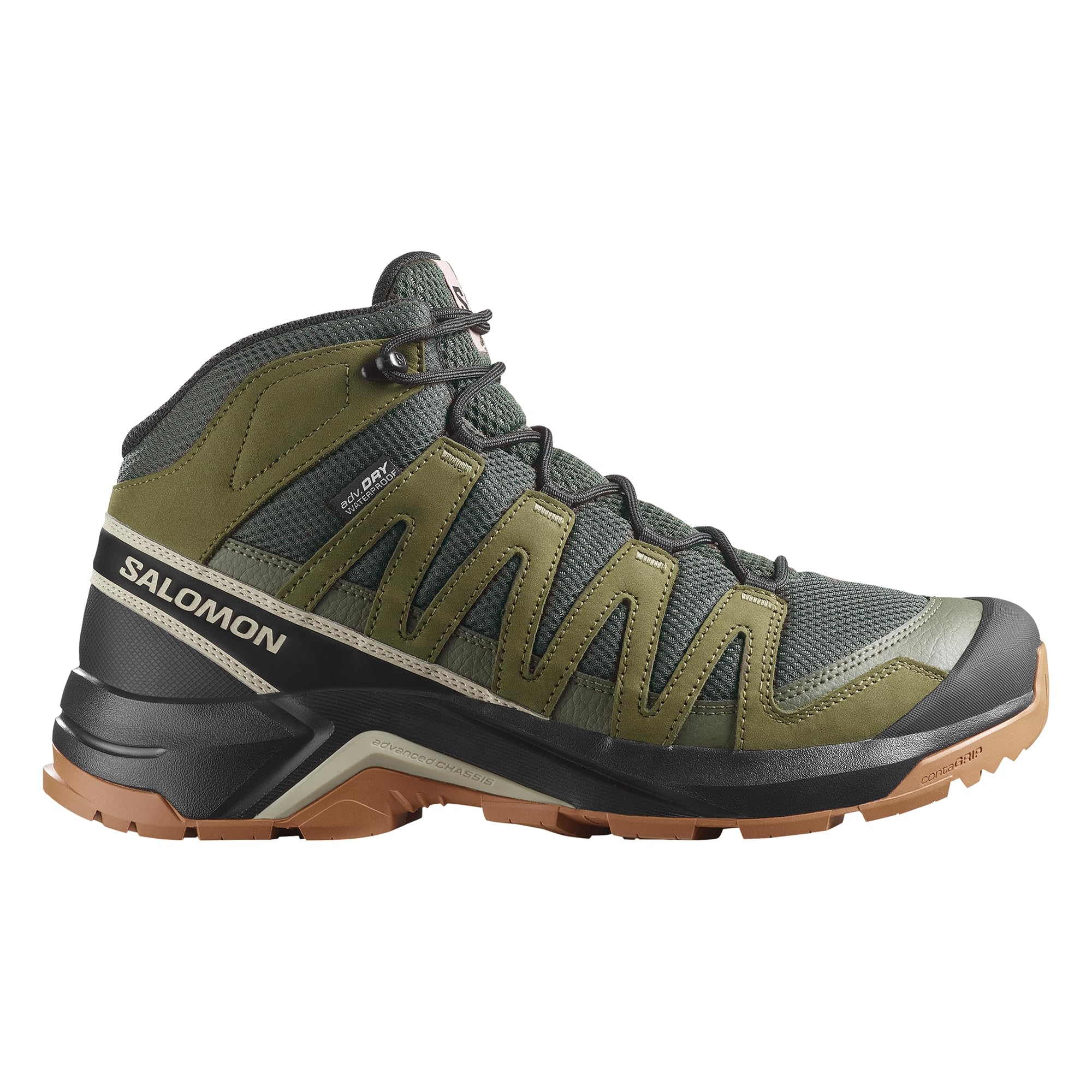
The Salomon X-Adventure Recon Mid Gore-Tex is a do-it-all approach boot that performs equally well on soaked ridge traverses, dry desert approaches, and snow-dusted alpine trails. Its Gore-Tex liner keeps feet bone-dry through stream crossings, wet grass, and afternoon downpours, while the mid-cut design provides ankle support that prevented sprains during multiple reviewers’ falls on slippery, rocky terrain. The 540-gram weight strikes a strong balance between protection and agility for a waterproof mid boot.
The outsole uses Salomon’s Wet Traction Contagrip compound, which delivers confident grip on wet slabs, loose scree, and muddy singletrack. The lace system employs Salomon’s Quicklace drawcord, which tightens evenly across the foot and tucks securely into a pocket — reducing snag risk on rock and bushwhacking sections. Reviewers report the X-Adventure Recon Mid requires virtually no break-in, with one reviewer completing a 27-mile, 3-day Blue Ridge hike without a single blister or the need for special insoles.
While the Gore-Tex liner limits breathability in warm conditions, the boot performed well in temperatures ranging from the teens to the 50s Fahrenheit when paired with thin wool socks. The toe box offers a moderate volume that accommodates most foot shapes without feeling sloppy, and the heel lock minimizes lift during steep descents. For climbers who face unpredictable weather and want a boot that handles everything from approach trails to ridge walking, the X-Adventure Recon Mid is a reliable workhorse.
Why it’s great
- Gore-Tex liner delivers reliable waterproof protection across all weather conditions.
- Wet Traction Contagrip outsole provides confident grip on wet and loose terrain.
- Minimal break-in required; comfortable for long hikes straight out of the box.
Good to know
- Gore-Tex membrane limits breathability in hot or humid conditions.
- Moderate toe box volume may not suit those who prefer a very wide or very narrow fit.
6. SCARPA Men’s Crux Lightweight Suede Leather Approach Shoes
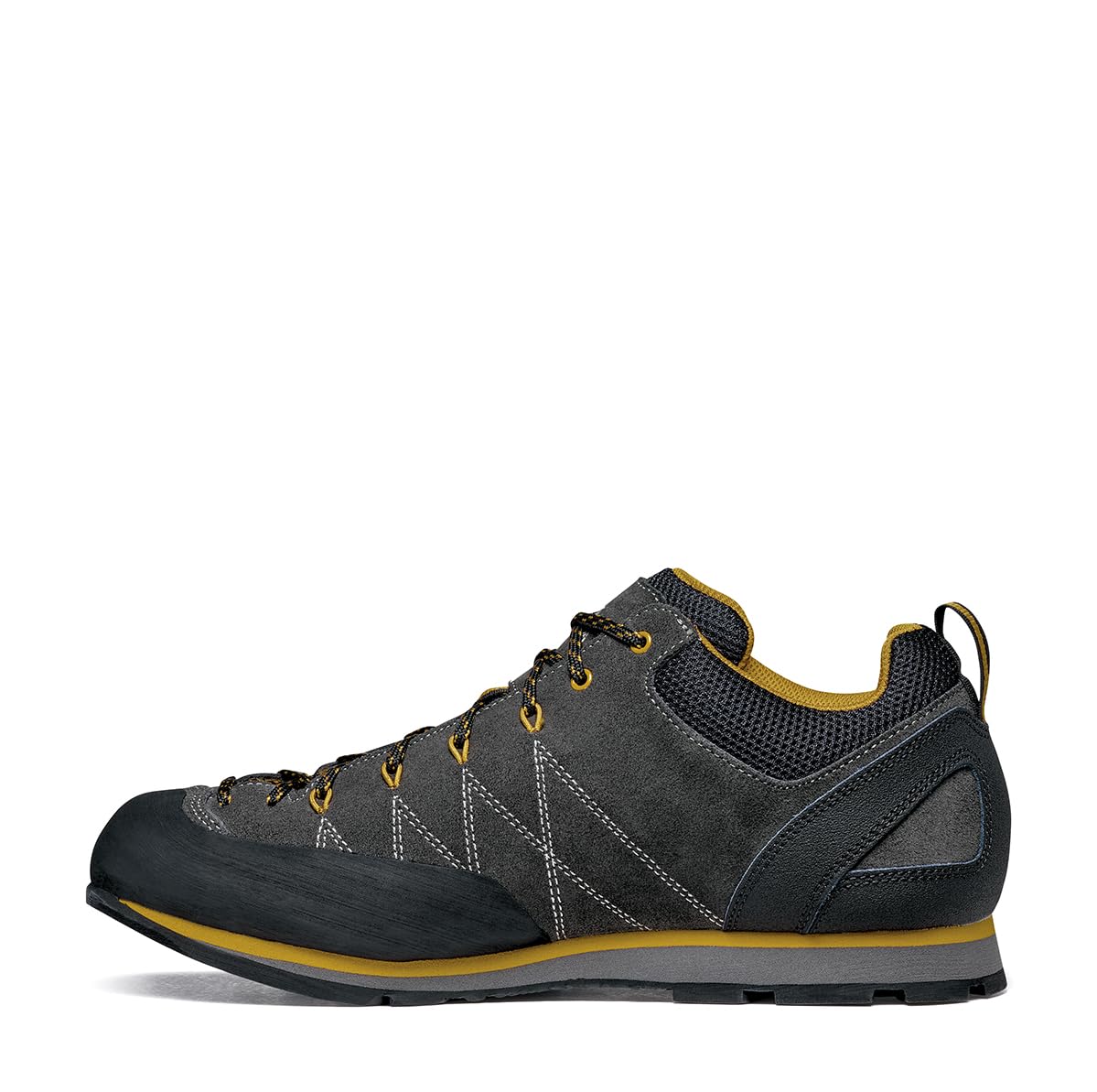
The SCARPA Crux Lightweight is a purpose-built approach shoe for climbers who prioritize edging sensitivity and scrambling precision over hiking comfort. Its stout reinforced toe box and full rubber rand provide excellent protection when jamming into cracks and stemming on sharp edges, while the suede leather upper offers a durable, supple fit that molds to the foot after a short break-in. The Crux weighs under a pound per shoe, making it one of the lighter options for technical approaches where every ounce matters.
The outsole features SCARPA’s Vibram approach compound that delivers reliable grip on dry rock, with small lugs that provide purchase on low-angle slabs and boulder problems. Reviewers consistently note the Crux excels for bouldering approaches, glacier hiking, and any scenario where precise foot placement on rock is the primary demand. The short tongue is the only consistent criticism, as it allows debris to enter more easily than a taller tongue design — a common trade-off for the low-profile, climbing-shoe-like fit.
Traction on wet surfaces and snow is a noticeable weakness, making the Crux less suitable for mud season conditions in the Adirondacks or Pacific Northwest approaches. The narrow last fits snugly, particularly in the heel and midfoot, which enhances edging precision but limits comfort for wide-footed climbers. For rock-focused climbers who want a dedicated approach shoe that handles technical scrambling and bouldering circuits with minimal compromise, the SCARPA Crux delivers proven performance.
Why it’s great
- Stout reinforced toe box and full rand provide excellent protection for crack and slab scrambling.
- Lightweight suede leather construction offers quick break-in and good durability.
- Vibram outsole delivers confident grip on dry rock for precise edging.
Good to know
- Wet traction is poor; not suitable for muddy or snowy approaches.
- Short tongue allows debris entry; narrow last may not suit wide feet.
7. KEEN Men’s Targhee 4 Mid Height Waterproof Hiking Boots
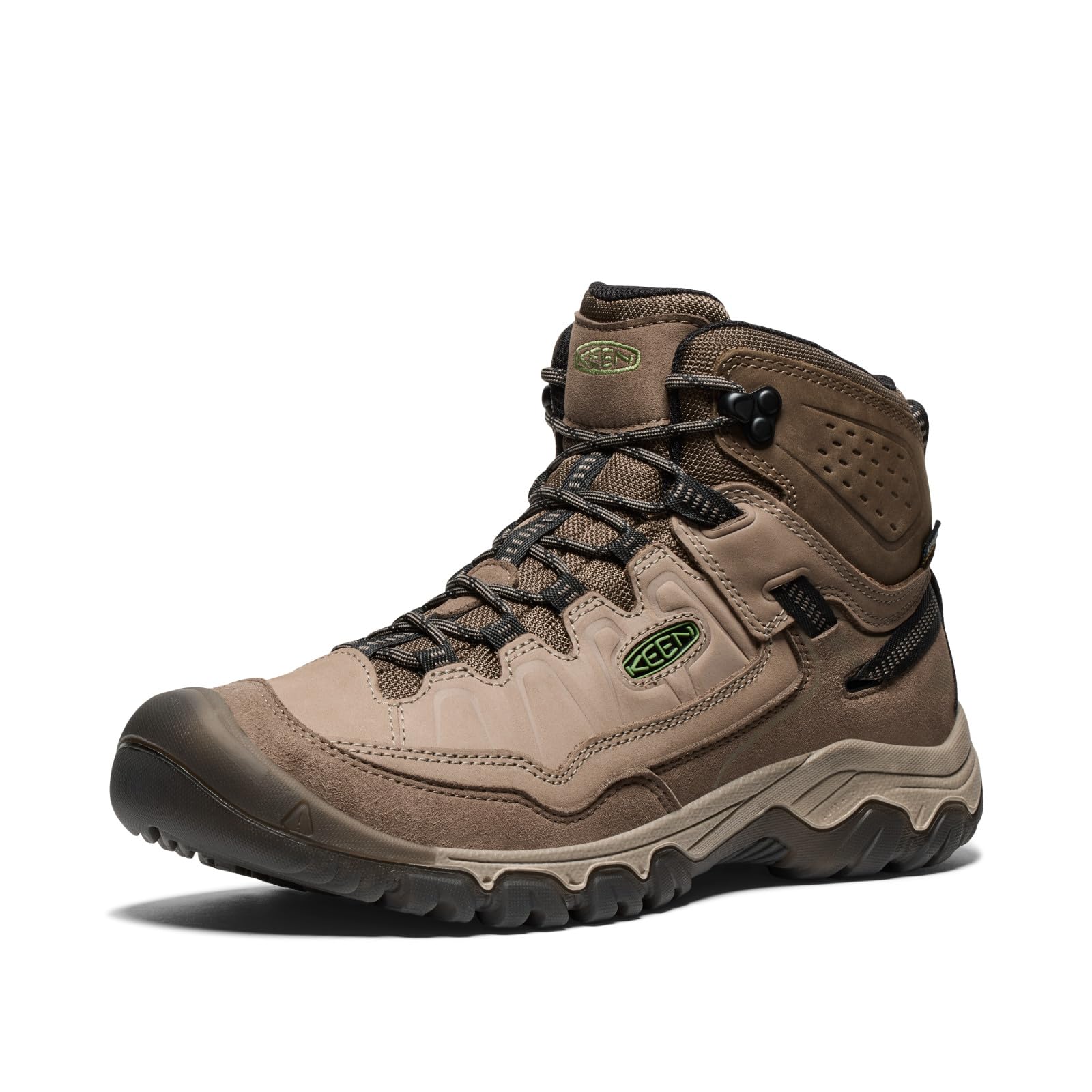
The KEEN Targhee 4 Mid Waterproof is a rugged, comfortable approach boot that proves you do not need to spend premium-tier money for reliable performance. The roomy toe box — a signature KEEN feature — accommodates foot swelling on long approaches and allows space for prescription orthotics or thick socks, a benefit that reviewers with neuropathy and wide feet specifically praise. The KEEN.DRY waterproof membrane keeps feet dry through stream crossings and wet vegetation, and the LuftCell midsole provides responsive cushioning that reduces fatigue on rocky trails.
The outsole uses KEEN’s own proprietary rubber compound, which offers good traction on dry and moderately wet terrain, though it does not match the stickiness of Vibram Megagrip or IdroGrip on polished rock. The Targhee 4 is built with KEEN’s FUSION construction that bonds the upper directly to the outsole, reducing the risk of delamination — a common failure point on approach boots used for scrambling and side-hilling. The boot weighs 620 grams per shoe, placing it on the heavier side for a mid approach boot, but the durability and comfort offset the weight for most users.
Some reviewers note that the factory insoles provide inadequate arch support for all-day approaches and recommend upgrading to a third-party insole like KEEN’s K-30 or a custom orthotic. The synthetic upper lacks the premium feel of full-grain leather but resists abrasion well and dries quickly after wet approaches. For climbers on a mid-range budget who prioritize a wide, comfortable fit and waterproof protection over technical edging precision, the Targhee 4 delivers exceptional value.
Why it’s great
- Roomy toe box with prescription orthotic compatibility is ideal for wide feet.
- KEEN.DRY waterproofing keeps feet dry in wet conditions.
- Durable FUSION construction reduces delamination risk on technical terrain.
Good to know
- Factory insoles lack adequate arch support for long approaches.
- Heavier than many mid-range approach boots; not as sticky on polished rock.
8. Merrell Men’s Speed Strike 2 Mid Waterproof
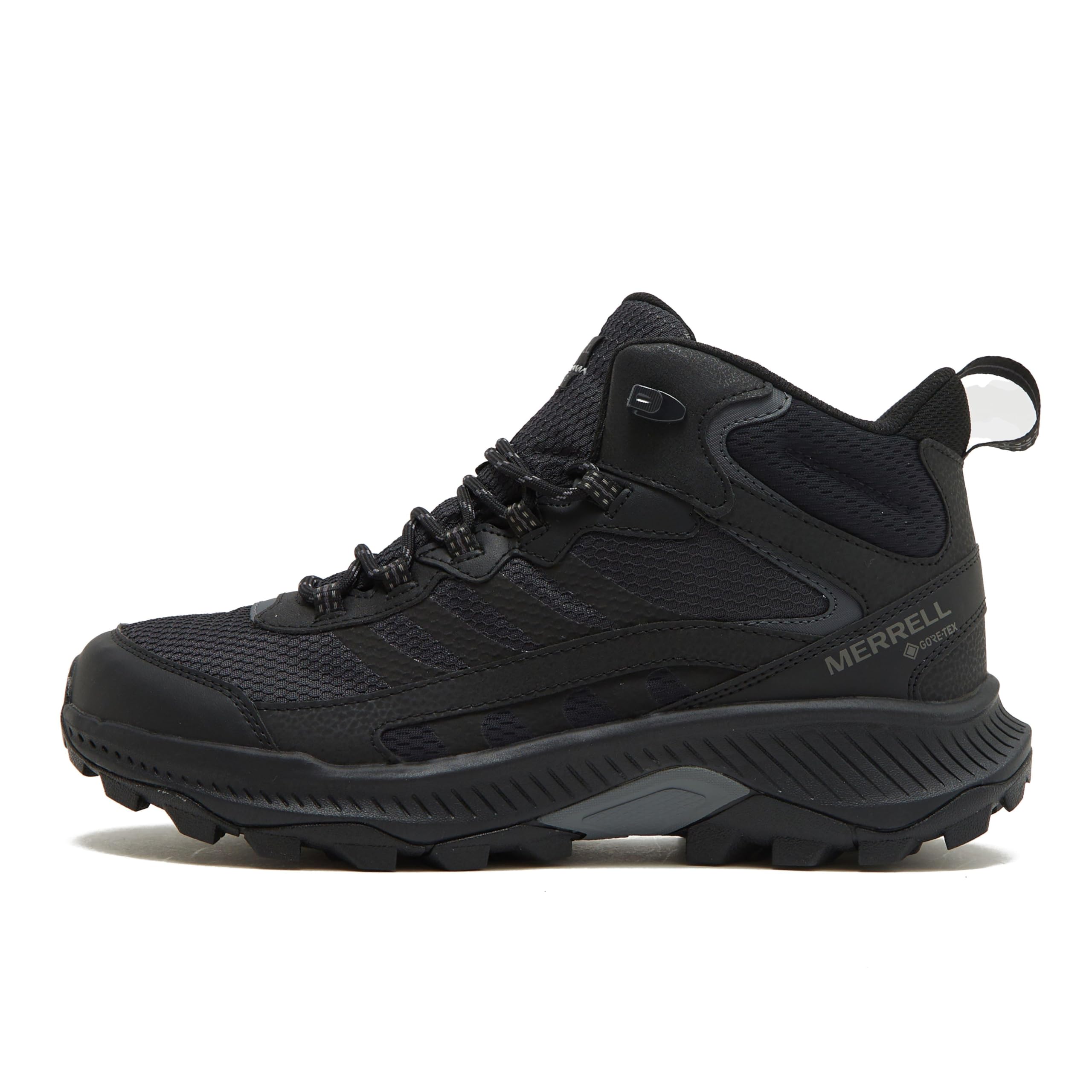
The Merrell Speed Strike 2 Mid Waterproof is an accessible, comfortable approach boot that performs reliably across hiking, scrambling, and travel scenarios without demanding a premium investment. Its waterproof membrane keeps feet dry during wet approaches and stream crossings, and the Vibram outsole offers dependable traction on mixed terrain including dirt, gravel, and low-angle rock. The mid-cut provides ankle support that multiple reviewers describe as sufficient for day hikes and moderate approaches without restricting mobility.
The Speed Strike 2 Mid uses a mesh and synthetic leather upper that breathes well and dries quickly, making it a good choice for warmer approaches where a Gore-Tex liner would trap too much heat. The footbed delivers adequate arch support for all-day wear, though some reviewers with high arches wanted more pronounced support. The olive green color has a low-profile aesthetic that transitions smoothly from trail to town — a feature that reviewers who used these boots for European travel specifically highlighted.
Reviewers consistently note the Speed Strike 2 Mid fits true to size and requires virtually no break-in, with no reports of blistering during the first wear. The lacing system provides secure lockdown across the midfoot, and the heel counter minimizes lift during descents. For climbers who want an entry-level approach boot that handles day-oriented objectives, travel, and casual hiking without breaking the bank, the Merrell Speed Strike 2 Mid offers proven comfort and reliable waterproof protection.
Why it’s great
- Comfortable out of the box with no break-in period required.
- Waterproof membrane keeps feet dry without sacrificing breathability.
- Versatile style suits both trail use and daily wear for travel.
Good to know
- Arch support may not be sufficient for those needing pronounced arch contouring.
- Not designed for technical edging or slab scrambling at a high level.
9. LaCrosse Men’s Alpha Agility 17″ Insulated Hunting and Work Boots
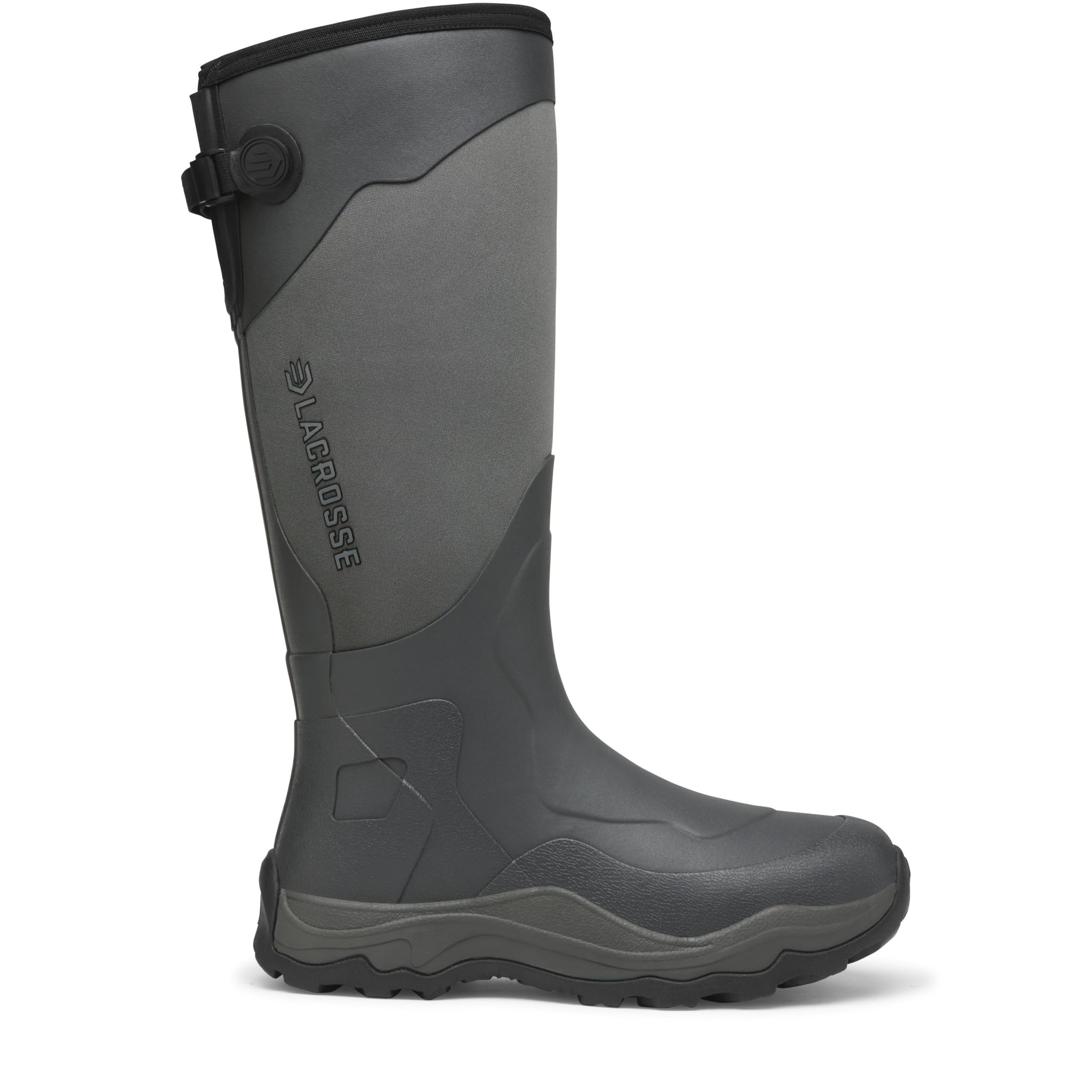
The LaCrosse Alpha Agility 17″ is a specialized tool for approaches that cross deep mud, snow, or standing water. Its hand-laid natural rubber construction over neoprene provides complete waterproof protection up to 17 inches, while the 1200-gram Thinsulate insulation keeps feet warm in temperatures as low as -60°F — making it the only boot in this guide suitable for winter approaches, swampy terrain, or wet-snow conditions. The Traction Agility Outsole delivers surprising grip on slick mud and wet grass, and the kick-off heel plate allows hands-free removal after a long day.
The EVA footbed offers lightweight cushioning that reduces fatigue during the approach, and the active fit design keeps the foot secure without feeling constrictive. The Alpha Agility’s rubber upper is highly abrasion-resistant, protecting the lower leg from branches, rocks, and brush during bushwhacking approaches. Some reviewers report that the neoprene liner shows wear over the heel after years of heavy use, but the boots are otherwise durable enough for frequent hunting, foraging, and wet-weather hiking.
The Alpha Agility is not a technical approach boot for slab scrambling or crack climbing — its rubber outsole lacks the stickiness and edge precision of climbing-specific compounds. Sizing runs large, so ordering down a half size is recommended for those between sizes. For climbers who need a dedicated wet-weather boot for boggy approaches, stream crossings, or winter trailhead access, the LaCrosse Alpha Agility fills a niche that no traditional leather-and-Vibram approach boot can match.
Why it’s great
- Complete waterproof protection up to 17 inches for deep mud and standing water.
- 1200g Thinsulate insulation keeps feet warm in extreme cold conditions.
- Natural rubber construction is highly durable and abrasion-resistant.
Good to know
- Not suitable for technical edging or slab climbing due to soft, non-precise outsole.
- Sizing runs large — order down a half size for a secure fit.
FAQ
How do approach boots differ from regular hiking boots?
Can I use approach boots as my primary hiking shoe?
Should I buy approach boots with Gore-Tex or without?
What does the rubber rand do for performance?
How do I know what size approach boot to buy?
Final Thoughts: The Verdict
For most climbers, the best approach boots winner is the Arc’teryx Konseal because it blends a precision-fitting chassis, Vibram Megagrip outsole, and full-wrap rand into a boot that handles everything from bouldering circuits to alpine approaches. If you want sticky wet-rock traction and a resoleable leather upper for long-term durability, grab the La Sportiva TX4 EVO. And for long, heavy-pack approaches where comfort matters more than edging precision, nothing beats the ALTRA Olympus 6 Hike Mid GTX.