
Our readers keep the lights on and my morning glass full of iced black tea. As an Amazon Associate, I earn from qualifying purchases.
Specs are compiled from manufacturer listings and verified buyer reviews and can change over time — please confirm the key details on the product page before buying.
Approach shoes sit in a strange middle zone: they need to hike like a trail shoe, scramble like a climbing shoe, and walk like a sneaker at the cafe afterwards. Most buyers pick wrong by grabbing a hiking boot with vague “grip” marketing. The real decision hinges on one thing: the rubber on the sole, and how precisely it fits your foot.
I’m Min — the founder and writer behind Gadgets Feed. This guide is built by comparing the manufacturers’ published specifications and the patterns across verified customer reviews, so you get each pick’s real strengths and trade-offs instead of marketing spin.
Whether you are eyeing your first pair or upgrading worn-out ones, this breakdown of the top approach shoes for climbing focuses on the sticky rubber, the fit quirks, and the real-world durability that actually decides whether your feet survive the mission.
Our Picks at a Glance
How To Choose The Best Approach Shoes For Climbing
Start by asking: how much of your day is walking versus actual climbing? A shoe that excels on a 5.10 pitch might feel stiff and awkward on a two-hour hike in. Define your mission before fixating on any single spec.
The Rubber Is Everything
Ignore the marketing adjectives and look for the actual compound name. High-end brands use sticky rubber blends designed for rock — like Vibram Megagrip or POMOCA — and the difference is felt the moment you step onto a smooth slab. It is the difference between tip-toeing and walking with confidence.
Sizing: The Silent Dealbreaker
Almost every technical shoe brand runs small, and approach shoes are no exception. A common failure is buying your exact street size and ending up with crushed toes on the descent. Check each model’s fit notes carefully, and when in doubt, size up — a slightly roomy shoe beats one that hurts.
Waterproofing and Breathability
A waterproof membrane is a blessing in wet alpine conditions but a curse on a hot, sweaty hike where it traps heat. Consider your typical terrain. If your approaches involve morning dew or stream crossings, the trade-off is worth it; if you chase dry desert rock, breathable mesh wins.
Quick Comparison
| Model | Best For | Weight (½ pair) | Sole Rubber | Waterproofing | Amazon |
|---|---|---|---|---|---|
| SCARPA Crux★ Best Overall | Versatile all-rounder | 11.3 oz | Vibram | None | Amazon |
| La Sportiva Boulder X | Rugged hiking & guiding | 13.6 oz | Vibram Megagrip | None (water resistant) | Amazon |
| Salewa Wildfire 2 GTX | Technical alpine climbing | No data | POMOCA Speed MTN | GORE-TEX | Amazon |
In‑Depth Reviews
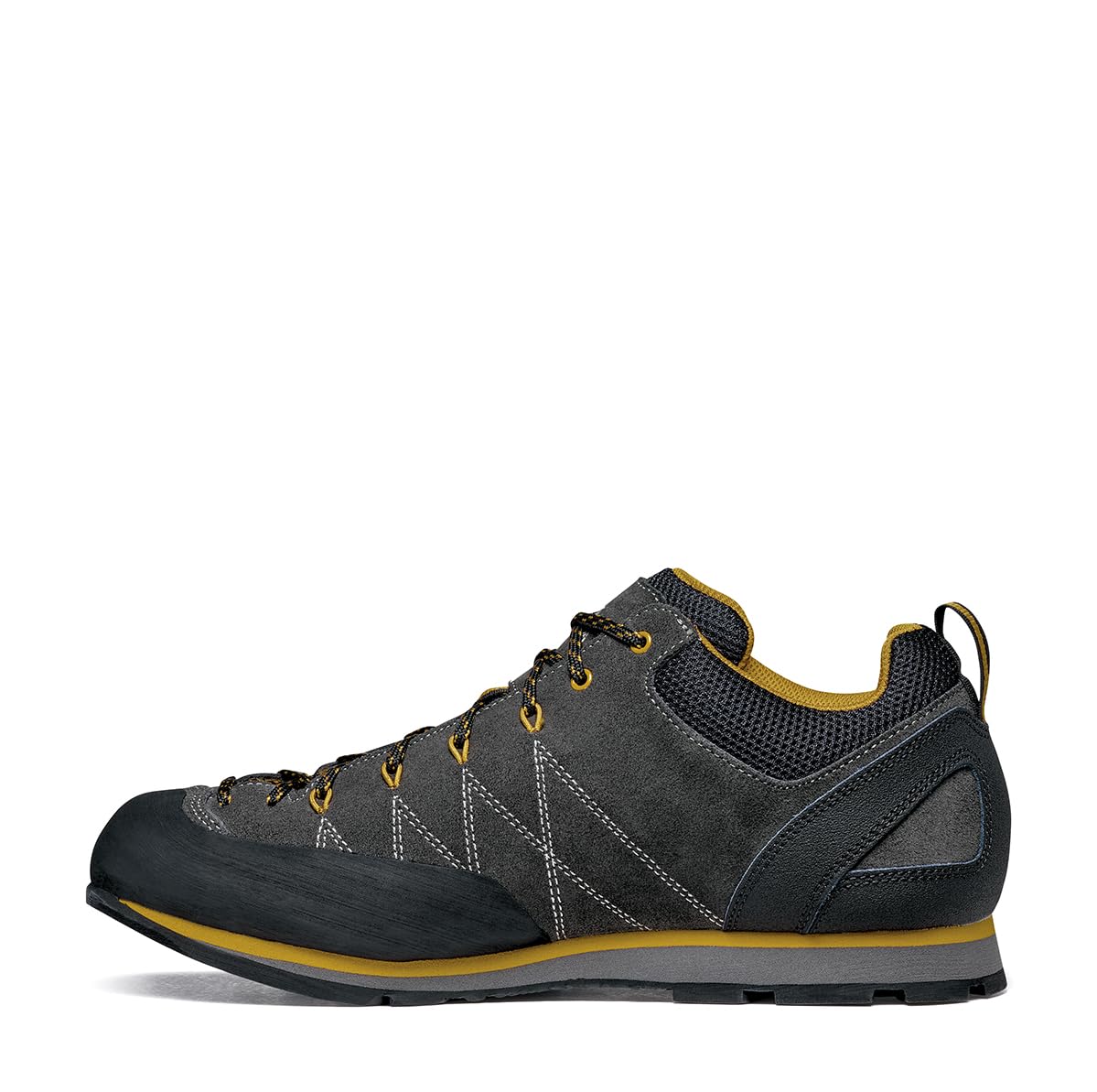
1. SCARPA Men’s Crux Approach Shoes
Our pick — over 4★ from 150+ verified ratings; the strongest balance of quality and price.
The featherweight that climbs without wheezing, crossing from path to pitch with zero drama.
At just 11.3 oz per half pair (size 42), this is the lightest pick here — a full 2.3 oz lighter than the La Sportiva Boulder X on the same scale. That lightness pays off on a long approach where every extra ounce compounds with every step, and it is why the comfort is the thing owners rave about most. The 1.8 mm suede upper keeps the structure tight without needing a heavy break-in.
What wins people over is the balance struck between walking and climbing. The Vibram rubber handles scrambling on rock, yet the shoe stays comfortable enough for casual wear. Buyers report it has handled a Grand Teton summit in hail, snow, rain, and rocks with no blisters after break-in — a seriously punishing test that shows its versatility. One owner calls them “hands down the best approach shoes,” a sentiment echoed across reviews.
The main trade-off is the fit. The toe box runs narrow, and even buyers with narrow feet found it too tight; sizing down significantly is the common advice, and the fit feedback is genuinely mixed. If you have a wide forefoot or bunions, this may not be your shoe — but for normal-to-narrow feet that value ground feel, it is a remarkably capable all-rounder that stretches from 4th class to easy 5th class climbing.
Why it clicks
- Comfort wins over the most owners — the single biggest point of praise in the reviews
- Featherweight at 11.3 oz, ideal for long approaches
- Sticky Vibram sole scrambles rocks with confidence
- Loyal following: buyers keep coming back to SCARPA
What to watch
- Narrow toe box troubles even narrow-footed owners
- Strong for scrambling but not an aggressive hiker
- Thin laces and a heel logo feel a touch delicate
Your match if: you want one shoe that hikes, scrambles, and handles easy technical climbing without feeling like a boot.
Think twice if: your feet are wide — the narrow toe box is the recurring complaint, so size carefully.
2. La Sportiva Mens Boulder X Approach/Hiking Shoes

The workhorse that laughs at scree, guiding boots for those who live on the mountain.
At 13.6 oz per half pair, the Boulder X is 2.3 oz heavier than the SCARPA Crux, but that heft translates into rugged durability. The leather upper and Vibram Megagrip sole deliver a durability story that keeps owners coming back for a second pair after years of use. This is the shoe for the Dolomites, for guiding, for Via Ferrata — owners mention exactly that kind of punishing terrain without complaint.
Quality is the thing everyone raves about here, and it shows in the details: a stiff sole that holds up to 12-plus hours a day on concrete, gravel, and river rock with zero wear issues. The grip is superb in all conditions, and the wide toe box is a genuine blessing for those who find the SCARPA too snug. One buyer even credits them with improving back comfort during long days on the trail.
Sizing is the biggest catch. The fit feedback is the most mixed of any aspect here: this shoe runs small, with a narrow toe box and multiple owners reporting they needed a full size — sometimes 1.5 sizes — larger than their normal street shoe. One owner bluntly advises ordering “at least a whole size bigger than normal!!!” A single review notes it is “not for climbing” despite the name, so treat it as a rugged hiker with approach-shoe grip rather than a technical edging weapon.
Built to last: owners praise the quality and durability most — this is a buy-it-once shoe for hard daily use on rock and trail.
The sizing trap: the recurring gripe is the fit — plan on sizing up a full size, and your feet will thank you.
Reach for it if: your days are spent on steep scrambles, guiding, or long rough-terrain hikes where toughness outranks lightness.
skip it if: you want a technical edging shoe — the wide toe box and stiff sole favor hiking over precision climbing.
3. Salewa Men’s Wildfire 2 GTX Approach Shoes

The alpine specialist with a climbing zone in the toe, built for technical granite and wet rock.
This is the most technically ambitious shoe of the three, engineered for “fast approaches, technical and easy alpine climbing” straight from the brand’s own description. The POMOCA Speed MTN outsole carries a dedicated climbing zone in the toe area — a patch of rubber meant to bite onto small rocky protrusions when you edge up a pitch. That is a genuine difference from the other two, which rely on general-purpose sticky rubber.
The Wildfire 2 adds serious weather protection: a GORE-TEX Extended Comfort membrane that keeps water out while staying breathable, plus a recycled mesh upper with Kevlar wire wrapping for a precise, supportive fit. The Switchfit setting lets you toggle between hiking and climbing modes, and the Multi Fit Footbed Plus (MFF+) lets you adjust the footbed individually. Owners love that it needs no break-in period and looks sharp right from the start.
But the durability complaints here are the most serious of any pick. Customers note the toe box tore on both shoes, and one owner who used them for work at a golf course found wet feet after four months — noting their older KEENS lasted longer, and concluding it was “not worth it.” A separate review flags ridiculously small lace eyelets that struggle with standard laces. The comfort and climbing performance are praised, but treat this as a shoe that prioritizes technical grip over long-term ruggedness.
Performance first: the climbing zone toe rubber and GORE-TEX make this the most capable technical climber of the group.
Durability doubt: the recurring gripe is the upper — toe tears and a reduced waterproofing after a few months are real reports, not isolated.
Your match if: you want maximum technical performance on wet, technical alpine rock and value the climbing-zone toe rubber.
Look elsewhere if: your priority is a rugged workhorse that survives seasons of abuse — the reports of toe tears say this is not that shoe.
Understanding the Specs
Sole Rubber Compound
The single most important spec is not the tread pattern but the rubber itself. Sticky compounds like Vibram Megagrip and POMOCA are designed to grip rock, and the difference shows on smooth slabs. Look for a “climbing zone” in the toe — that is where edging on footholds happens.
Weight Per Half Pair
Approach shoes are worn for miles before any climbing, so weight matters. A difference of 2.3 oz per shoe (like between the SCARPA and the La Sportiva) translates to over 4.5 oz of extra lift per step over a full day. Lighter is easier on the legs, but heavier usually signals more durable materials.
FAQ
Do approach shoes run small compared to sneakers?
Can I use approach shoes for actual rock climbing?
What is the difference between Vibram Megagrip and POMOCA rubber?
Is a GORE-TEX waterproof membrane worth it?
How do I know which size to order for the SCARPA Crux?
Are the La Sportiva Boulder X shoes good for all-day wear?
Why did the Salewa Wildfire 2 lose waterproofing quickly?
What is the Switchfit setting on the Salewa Wildfire 2?
Final Thoughts: The Verdict
If you want one shoe that does it all, the approach shoes for climbing winner is the SCARPA Crux — its featherweight 11.3 oz build and raved-about comfort make it the most versatile all-rounder. If you need a rugged workhorse that survives guiding and long rough hikes, grab the La Sportiva Boulder X. And for maximum technical performance on wet alpine rock, the Salewa Wildfire 2 GTX is the one to reach for — just know its durability has question marks.
How We Picked
We do not accept paid placement. Every pick is matched to a real buyer and a real use-case; we do not hands-on test units.
Sources & Methodology
Specifications: manufacturer listings and product documentation. Review insights: verified customer reviews, as of August 2026. Pricing: not shown on this page (it changes often); check the current price via the retailer link.
As an Amazon Associate, Gadgets Feed earns from qualifying purchases. This does not affect which products we feature.