
Our readers keep the lights on and my morning glass full of iced black tea. As an Amazon Associate, I earn from qualifying purchases.
Specs are compiled from manufacturer listings and verified buyer reviews and can change over time — please confirm the key details on the product page before buying.
Your plants’ roots need a solid anchor and steady food, and the aqua soil substrate you pick decides both. Choose well and roots dig deep; choose poorly and you’ll face cloudy water and melting stems. Every active soil trades nutrient-rich granules for startup dust and ammonia spikes. Here are the top options, matched to your tank size, plant goals, and how much water-changing you can handle.
I’m Min — the founder and writer behind Gadgets Feed. This guide is built by comparing the manufacturers’ published specifications and the patterns across verified customer reviews, so you get each pick’s real strengths and trade-offs instead of marketing spin.
Most planted-tank failures trace back to a mismatch between the soil and the setup, so here is the honest breakdown of the top aqua soil substrate choices for lush, stable planted aquariums.
Our Picks at a Glance


How To Choose The Best Aqua Soil Substrate
Aqua soil is not gravel — it’s a living medium packed with nutrients that actively feed plant roots and buffer your water chemistry. Your choice hinges on tank size, plant types, and your tolerance for early water changes.
Match the Bag Size to Your Tank
Volume matters more than weight when you’re layering a bed. A 3-liter bag suits a nano or small tank, while a 9-liter or larger bag is what you need for a serious planted scape. Think about the depth you want — most aquascapers aim for a sloped bed several inches deep, which eats through bags quickly.
Check the Startup Ammonia Curve
Nearly every active soil releases ammonia as it cycles — the amount and duration vary a lot between products. Soils that claim “low ammonia” still need a fishless cycle with frequent water changes before you add livestock. Plan your stocking timeline around this ammonia curve.
Decide Your Rinsing Philosophy
Some soils say rinse thoroughly, others say never rinse — and following the wrong instruction can destroy the product or cloud your tank for days. Volcanic soils with fragile granules can break down into mud if washed aggressively, while clay soils usually rinse clean in a colander. Always follow each product’s specific rinsing instructions.
Quick Comparison
| Model | Best For | Volume | Weight | Granule / Type | Amazon |
|---|---|---|---|---|---|
| Fluval Volcanic Soil Bio Stratum★ Best Overall | Best Overall | 17.6 L | 17.6 lbs | 1mm Powder | Amazon |
| Aqueon Plant and ShrimpBest Value | Best Value | — | 5 lbs | Clay Spheres | Amazon |
| ADA Aqua Soil Amazonia Ver 2 (3L)Premium Compact | Premium Compact | 3 L | 2.64 kg | Natural Granules | Amazon |
| Ultum Nature Controsoil | Low Ammonia | 3 L | — | Fine Volcanic | Amazon |
| Thriva Aqua Soil | Premium Growth | 5 L | 10 lbs | 3-5mm Normal | Amazon |
| FZONE Aquarium Soil | Top Performer | 8 L | 18 lbs | 3mm Porous | Amazon |
| ADA Aqua Soil Amazonia Ver 2 (9L) | High-End Scape | 9 L | 7 kg | Irregular Natural | Amazon |
| Hygger CO2 Aquarium Soil | Budget Pick | — | 4.4 lbs | Porous Sintered | Amazon |
In‑Depth Reviews
1. Fluval Volcanic Soil Bio Stratum
Our pick — over 4.5★ from 2,500+ verified ratings; the strongest balance of quality and price.
The heavy-hitting volcanic powder that gives roots an easy path through the bed
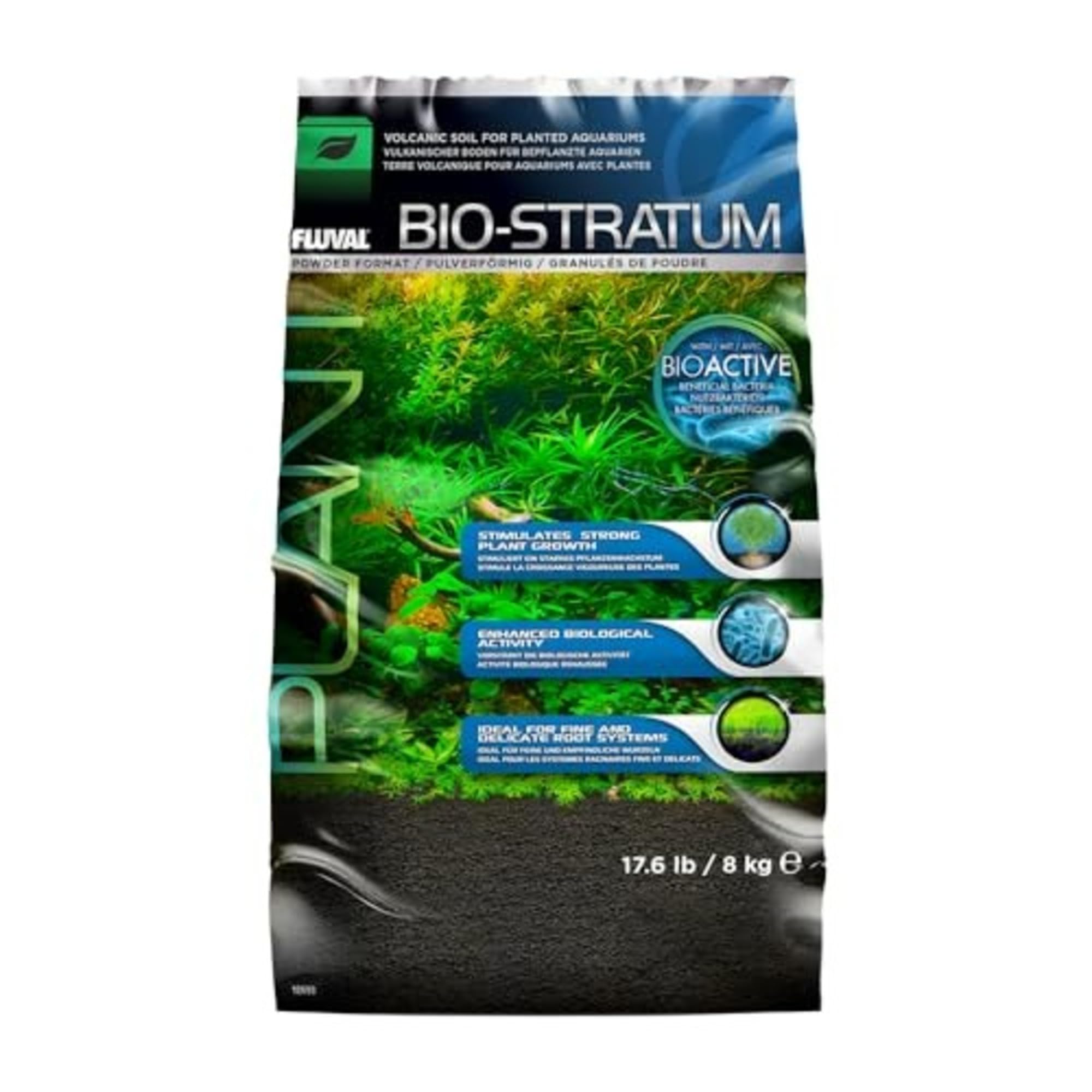
This is the bag most planted-tank keepers graduate to, and the reason is the granule itself — a lightweight 1mm powder that stays loose so delicate roots penetrate and spread without compacting. At 17.6 lbs and 17.6 liters, it’s a serious volume that anchors a full scape, while the Aqueon bag weighs just 5 lbs. What wins people over is the growth: the soil is loaded with dormant nitrifying organisms that kick into action on contact with water, breaking down waste and starting the nitrogen cycle fast.
Buyers report capping it with white sand and seeing every plant thrive for a month straight, with some species needing constant trimming and zero root tabs (fertilizer pellets you push into the gravel) required. The porous granules double as biological filtration, hosting the bacteria that keep water quality stable. The recurring gripe is clarity: some owners get crisp water, others watch it go murky, and the fragile particles demand gentle handling when you pour.
For shrimp keepers and fish owners alike, the mineral-rich blend is what makes plants pop visually, and the nutrient content carries demanding species. It’s pricey for large tanks, but you’re paying for growth, not bulk.
Why It Wins
- Plants flourish with big roots — effectiveness is the top praise by a wide margin
- Dormant nitrifying organisms speed up the nitrogen cycle
- Porous granules act as extra biological filtration
- Huge 17.6 lb bag covers large scapes
The Trade-Offs
- Fragile granules need gentle handling — don’t crush them
- Water clarity splits opinions: some see murk, some see clear
- Value for money is debated for larger tanks
Grab this if: you want a proven, mineral-rich foundation that makes roots run deep and plants grow fast without extra fertilizers.
Think twice if: you’re on a strict budget and don’t want to risk the occasional murky start.
2. Aqueon Plant and Shrimp Aquarium Substrate
The spherical clay classic that holds its shape while your roots hold their ground
Unlike the Fluval above, which is a lightweight volcanic powder, this is a denser clay ball about the size of expanded styrofoam pellets — and that density is why owners love sculpting it into mounds and valleys that hold their shape. The spheres stay intact over time instead of crumbling to dust. At 5 lbs it’s a fraction of the Fluval’s 17.6 lbs, so you’ll likely need a few bags for a big tank, but the easy setup is the real draw.
Owners describe rinsing it easily in a colander and spreading it without clouding, with plants thriving on the built-in nutrients. One detailed setup runs root tabs, CO2 injection, and an inch of gravel on top of two inches of this soil — and the tank stays clean year after year. What wins people over is the balance: it holds nutrients well enough that shrimp stay comfortable and water params remain stable, though some note the built-in nutrients run low and root tabs help demanding plants.
Durability is solid for most, though a few report granules breaking down over time. For beginners scared of active soils, this is the gentlest entry point: no ammonia drama, just solid plant growth and a natural look.
Best for: first-time planted tank owners who want a forgiving, easy-to-rinse clay soil that won’t spike ammonia and holds aquascaping shapes.
Note: budget for extra bags on larger tanks and consider root tabs for heavy root-feeders.
3. ADA Aqua Soil Amazonia Ver 2 (3L)
The Japanese soil that sets the aquarium world’s gold standard for natural growth
This is the small-format version of the legendary ADA Amazonia — a 3-liter bag that’s perfect for a nano tank, a shrimp cube, or topping up a mid-size scape. The substrate comes from natural soil through a special process, carrying high humic and nutrient content with less nitrogen than the original Amazonia formula. It’s the choice of owners who want that classic Japanese aquascaping look and the growth that follows.
Enthusiasts describe scooping it into mesh bags with non-metal zippers, placing those on the tank floor, and topping with fine gravel for a flawless slope. Plants root in and take off, water levels stay balanced, and the tank gets that clean, polished aesthetic. Expect an initial ammonia release requiring frequent water changes or a dark start, plus potential pH drops with CO2.
For the price per liter, it’s a premium spend — but owners who buy it twice say the results justify it. If you’re building a serious planted tank and want the soil that top aquascapers trust, this is the compact way in.
Reach for this if: you’re setting up a nano or small planted tank and want the authentic ADA soil experience with exceptional plant rooting.
Plan for: a fishless cycle with frequent water changes to ride out the initial ammonia release.
4. Ultum Nature Systems Controsoil

The volcanic fine that clears faster than any soil you’ve rinsed before
If the number one thing you fear about aqua soil is a week of white-out cloudiness, this is the answer. Owners who have cycled through many substrates call this the cleanest they’ve used — it needs significantly less rinsing to be tank-ready, and the initial cloud clears in around 30 minutes to 4 hours with the filter running. The fine grade makes it ideal for foreground plants and shrimp, who love the slightly acidic water it buffers toward.
Made from volcanic ash with a 6.8pH target and low ammonia release, it actively absorbs impurities as it clarifies the water. Plant growth responds fast — owners describe a healthy plant suddenly looking like it got a strong vitamin boost and growing rapidly. The granule composition is engineered for oxygen exchange and rich nutrients, giving roots what they need without the heavy nutrient spike of competing soils.
The trade-off is the same rinse caveat in reverse: though it’s cleaner than most, the fine dust still appears when you first pour it, so don’t skip the rinse-and-settle step. For cories, shrimp, and delicate tropical fish that want soft, acidic water, this is a standout mid-premium choice.
Choose this if: you prioritize fast water clarity, low ammonia startup, and a fine grade that suits shrimp and foreground plants.
Keep in mind: expect a brief dusty cloud on setup — it clears within hours, not days.
5. Thriva Aqua Soil Aquarium Substrate Black 5L

The 5-liter black soil that turns high-hardness tap water into a planted paradise
This is the bag owners reach for when their local water runs hard and their plants keep struggling. The black, 3-5mm grain soil is made from specially processed natural earth and reproduces the mildly acidic conditions most aquatic plants prefer, softening water that’s naturally harsh. At 5 liters and about 10 lbs, it’s a generous mid-size bag that comfortably handles a 55-gallon community tank without needing a second order.
The porous structure creates a stable breeding ground for beneficial bacteria that keep the water clean, and it extends the slow release of fertilizer so plants keep feeding for months. Owners mention fish becoming more active, water improving in every category, and plant growth taking off — carpet plants can establish in about two weeks. It’s ready to use without rinsing, and any initial cloudiness dissipates quickly as the filter runs.
The honest warning that isn’t on the bag: it can cause an ammonia spike even in cycled tanks, so pre-soaking in a bucket with water changes is a smart move before adding livestock. Once past that, the water runs crisp and the whole community thrives.
Best for: aquascapers with hard water who want a no-rinse black soil that softens conditions and delivers visible plant growth.
Plan ahead: soak it before setup — the unlabeled ammonia spike catches some owners off guard.
6. FZONE Aquarium Soil for Planted Tanks
The high-temperature sintered soil that stays dust-free while your carpet plants explode
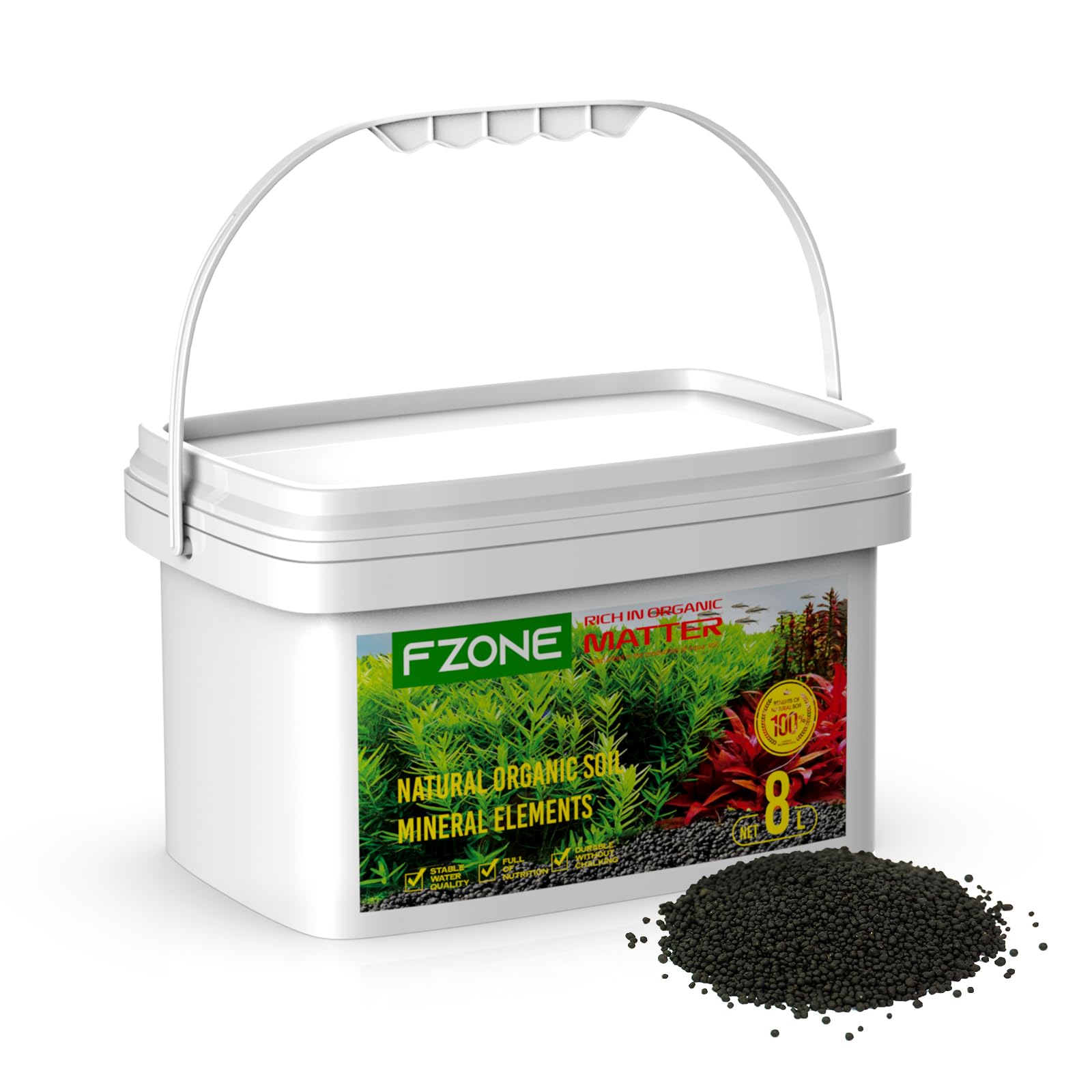
Owners who switch to this from the Fluval above often don’t go back — the 3mm porous granules are processed with high-temperature sintering, so they hold their shape underwater instead of breaking into dust and clouding the water. At 8 liters and a substantial 18 lbs, it’s a heavy, dense bag that gives big tanks real substance. The blend of organic matter, activated carbon, silica, soil, and minerals feeds a wide range of aquatic plants.
The standout claim is no rinsing needed and clear water from the first fill — and owners confirm it, noting it’s less dusty and more dense than the Fluval. A Monte Carlo carpet grows faster and bigger in a dry start than the same plant in Fluval Stratum, and cryptocoryne roots dig in strongly. The reusable bin packaging is a genuinely nice touch for storage between scapes.
The powerful nutrient release is the double-edged sword: it leeches 4-8ppm ammonia for about 17 days, demanding daily 50% water changes even with a cycled filter running. Fragile stem plants may melt from the ammonia shock. If you can ride out the heavy buffering, the growth payoff is exceptional.
The Highlights
- No dust, no clouding, no rinsing needed from the first fill
- Monte Carlo and stem plants grow noticeably faster
- Reusable bin for easy storage
The Heavy Cost
- Leeches 4-8ppm ammonia for ~17 days — daily water changes required
- Heavy buffering can shock sensitive plants like buce
Grab this if: you want top-tier growth and are prepared for a rigorous two-week water-change schedule at setup — the results speak for themselves.
skip it if: you can’t commit to daily water changes during the first weeks.
7. ADA Aqua Soil Amazonia Ver 2 (9L)

The 9-liter Japanese foundation that demanding plants like Monte Carlo call home
This is the big brother of the 3L Amazonia above, and it’s the bag serious aquascapers build entire 90cm scapes with — owners have used three of these for a sloped tank and the results speak for themselves. Made with rare Japanese plant-based black soil, it ships with a separate bag of Amazon concentrate supplement that lets you enhance organic components locally for different layout patterns. The granules have a natural irregular shape that reads as deeply natural in the tank.
It naturally buffers and lowers pH and hardness to an ideal level for most aquatic plants, and the granule size and density are tuned for fast root development. Owners pair it with CO2 and fertilizer to grow demanding species like UG, baby tears, Monte Carlo, and Bucephalandra — plants that struggle in lesser soils thrive here. One owner’s take: “Best aquasoil there,” with no issues adding it to new or existing tanks.
The trade-offs are real: expect a temporary ammonia spike for 2-4 weeks that makes it unsafe for fish or shrimp initially, and it can lower KH and pH significantly, especially with CO2. The included fertilizer should be used sparingly — some owners battle high nitrates after using it all. For the price, it’s a premium foundation, but owners who build with it say it’s worth it as the base of a high-tech tank.
Invest in this if: you’re building a serious high-tech planted scape and want the soil that top-tier plants respond to best.
Expect to: cycle for 2-4 weeks with frequent testing before adding any livestock — this soil demands patience.
8. Hygger CO2 Aquarium Soil Water Grass Mud
The budget-friendly sintered soil that gets roots air while the tank settles in
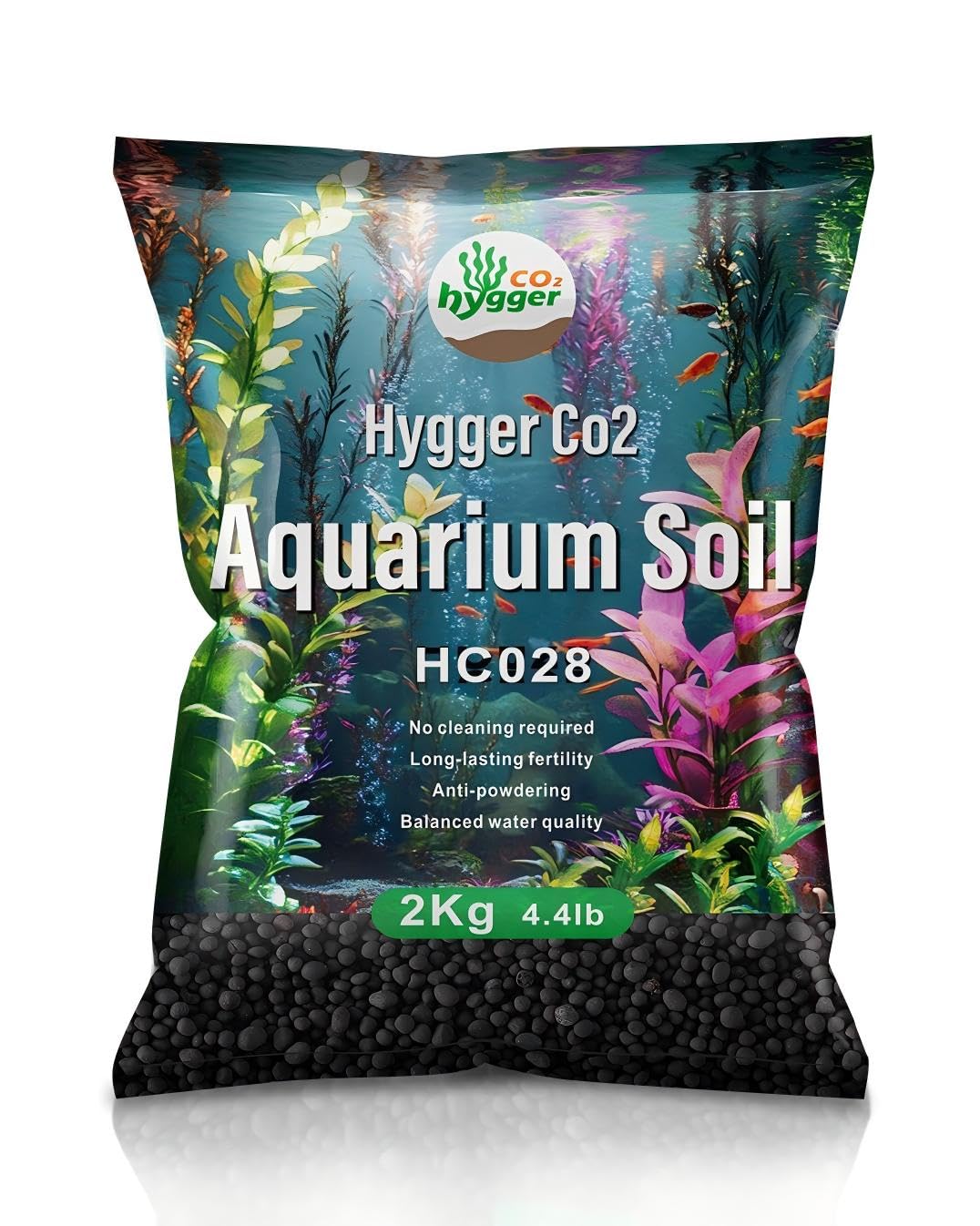
If you want to try planted aquascaping without committing to a premium bag, this is the entry point that still delivers real plant growth. The porous sintered soil structure promotes fast colonization of beneficial bacteria while naturally acidifying and softening water — so it’s gentle on sensitive shrimp and tropical plants. The 4.4-pound bag (1,928g) is a handy size for a small-to-mid tank.
Owners describe plants doing great and roots getting lots of air in the medium, with some calling it a must-have for any planted tank or terrarium. The fine texture doesn’t scatter easily, and it buffers water to a slightly acidic pH while reducing hardness. The pH formula targets 6.5-7.5, which is ideal for shrimp and soft-water plants.
The honest caveat is the startup mess: the soil is dirty when first opened and needs a thorough wash before going in — even then, some cloudiness appears and clears after a short time. The brand’s own instruction says never rinse it, which conflicts with owner experience, so follow your water-clarity instinct. It’s a budget pick with growth results that rival pricier bags.
Best for: beginners and budget-minded keepers who want solid plant growth and shrimp-safe pH without premium pricing.
Expect to: rinse it well despite the label saying otherwise — a bit of initial cloudiness is normal.
Understanding the Specs
Granule Size and Structure
The size of the granules determines how easily roots penetrate and how the soil sits in your tank. Fine powder granules like 1mm let delicate roots spread easily but can compact or cloud if handled roughly. Larger 3-5mm grains hold their shape better, allow more oxygen exchange, and are easier for shrimp to forage through. Match the grain size to your plants — foreground carpets like fine grades, while stem plants root fine in larger grains.
Ammonia and pH Buffering
Active soils release ammonia as they cycle — this is normal and necessary, but the amount varies hugely between products. Soils that buffer pH and lower hardness create the soft, slightly acidic water most aquatic plants and shrimp prefer. The trade-off is that these same soils often cause the biggest ammonia spikes, so a fishless cycle with regular water changes is essential before adding livestock.
FAQ
Do I need to rinse aqua soil before putting it in my tank?
Why does my new aqua soil release ammonia?
How much aqua soil do I need for my tank?
Is aqua soil safe for shrimp?
Can I mix aqua soil with gravel or sand?
How long does aqua soil last before it needs replacing?
What is the difference between aqua soil and regular aquarium gravel?
Does aqua soil lower pH in my tank?
Final Thoughts: The Verdict
For most buyers, the aqua soil substrate winner is the Fluval Volcanic Soil Bio Stratum because it pairs proven root growth with the largest single bag at 17.6 lbs, giving you the most reliable foundation for a planted tank. If you want a budget-friendly, beginner-proof clay soil that skips the ammonia cycle drama, the Aqueon Plant and Shrimp is the pick. And if you’re building a high-tech scape for demanding plants and a rigorous cycling routine, the ADA Amazonia Ver 2 is the premium foundation worth the patience.
How We Picked
We do not accept paid placement. Every pick is matched to a real buyer and a real use-case; we do not hands-on test units.
Sources & Methodology
Specifications: manufacturer listings and product documentation. Review insights: verified customer reviews, as of August 2026. Pricing: not shown on this page (it changes often); check the current price via the retailer link.
As an Amazon Associate, Gadgets Feed earns from qualifying purchases. This does not affect which products we feature.