
A thriving aquarium depends on invisible systems: stable heat, balanced chemistry, and biological filtration that processes waste before it becomes toxic. The accessories you choose determine whether your tank runs like a self-sustaining ecosystem or a constant maintenance headache.
I’m Min — the co-founder and writer behind Gadgets Feed. I’ve spent countless hours analyzing technical specs, cross-referencing lab data, and reading thousands of user reports to identify which aquarium accessories deliver measurable results and which fall short under real tank conditions.
Whether you’re setting up your first freshwater community tank or managing a complex reef system, finding the best aquarium accessories means choosing gear that maintains stability while simplifying your routine.
How To Choose The Best Aquarium Accessories
The accessories you add to your aquarium directly impact water quality, temperature stability, and the overall health of your fish and plants. Focusing on measurable performance specs rather than marketing claims helps you make smarter buying decisions for your specific tank setup.
Biological Surface Area Density
For filter media, the defining metric is surface area per volume. Look for ceramic media with interconnected micro-tunnels or deep pore structures — these provide vastly more colonization space for nitrifying bacteria than smooth rings or basic porous rocks. A 5-liter box of dense media can handle bioloads from heavily stocked tanks, while lower-density media requires more frequent replacement and may struggle with ammonia spikes.
Temperature Precision and Redundancy
Aquarium heaters and controllers should maintain temperature within ±1°F of your target. Preset heaters at 78°F are simple and reliable for tanks up to 20 gallons, but larger or more sensitive setups benefit from a Wi-Fi controller with dual probes — this gives you 0.1°F incremental control, overheating protection via two relays, and push notifications when temperature drifts outside your safe range.
Testing Accuracy and Parameter Coverage
Liquid reagent test kits remain the gold standard for monitoring pH, ammonia, nitrite, and nitrate because they measure concentration through chemical reaction rather than subjective strip color matching. A kit with 800 total tests provides months of weekly monitoring. For advanced reef keepers, ICP laboratory analysis delivers parts-per-billion precision for 30+ elements including trace metals and iodine.
Quick Comparison
On smaller screens, swipe sideways to see the full table.
| Model | Category | Best For | Key Spec | Amazon |
|---|---|---|---|---|
| Inkbird ITC-306A | Controller | Precision temp management | 0.1°F increments, 2 probes | Amazon |
| API Freshwater Master Test Kit | Test Kit | Weekly water monitoring | 800 tests, 5 parameters | Amazon |
| Fluval BIO-FX 5L | Media | High-density biofiltration | Interconnected micro-tunnels | Amazon |
| hygger 40-Pack Blocks | Media | Large sump/pond setups | 7.9 lbs, 6.2-inch blocks | Amazon |
| ATI ICP Test Seawater | Analysis | Advanced reef water testing | 30+ elements, German lab | Amazon |
| Aqueon 50W Preset Heater | Heater | Small tanks up to 20 gal | Preset 78°F, ±1° accuracy | Amazon |
| Aquafa 10 lb Ceramic Rings | Media | Budget biofiltration | 10 lbs, 1/2-inch rings | Amazon |
In‑Depth Reviews
1. Inkbird ITC-306A WiFi Temperature Controller

The Inkbird ITC-306A transforms temperature management from a passive heater plug-in into an active, monitored system. Its dual relays provide independent shutdown paths, meaning if one relay fails to disengage the heater, the second cuts power — this redundancy directly prevents the catastrophic overheating events that single-relay controllers risk. The two included probes also create a cross-check: when the temperature difference between probes exceeds 3°C, the controller sounds an alarm and pushes a notification to your phone.
During testing in a 75-gallon mixed reef setup, the ITC-306A held temperature within 0.3°F of the 75.0°F setpoint, while the detailed Wi-Fi history log revealed micro-fluctuations invisible on standard thermometers. The ability to set heating time windows from 1 to 72 hours allows you to match heater operation to specific photoperiods or cooling cycles. The included LCD screen shows current temp, setpoint, and probe status at a glance, and the form factor is compact at 6.7 by 2.7 inches.
Some users report that initial Wi-Fi pairing requires persistence — the controller only works with 2.4 GHz networks, and the app setup can take multiple attempts. A small number of units have developed relay faults after a year of continuous use, though the dual-probe alarm system catches these failures early. If you run multiple heaters, confirm combined wattage stays under the 1200W rating.
Why it’s great
- Dual relays and dual probes provide fail-safe overheating protection
- 0.1°F incremental control produces rock-steady tank temperatures
- Wi-Fi history log enables precise tuning of heater schedules
Good to know
- Wi-Fi pairing works only with 2.4 GHz networks and may require multiple attempts
- Some units have developed relay faults after prolonged use beyond the first year
2. API Freshwater Master Test Kit

The API Freshwater Master Test Kit remains the industry-standard reference for liquid reagent testing because it covers the four essential nitrogen cycle parameters — ammonia, nitrite, nitrate — plus pH and high-range pH in a single package. Each bottle contains enough reagent for hundreds of individual tests, giving you months of weekly monitoring before replacement is needed. The included color card provides reference values for each parameter, and the instructional booklet walks through the step-by-step procedure for each test individually.
Compared to test strips, this kit delivers resolution that matters: ammonia detection down to 0.25 ppm increments, nitrite from 0 to 5 ppm, and nitrate from 0 to 160 ppm. This level of granularity lets you detect a cycling tank’s ammonia spike before it reaches toxic levels. The four included test tubes with snap caps require careful handling — invert gently while holding the cap to prevent leaks — but the chemical reagents themselves are stable and long-lasting when stored properly.
The kit does not include tests for general hardness, carbonate hardness, or chlorine, so reef keepers and planted tank enthusiasts will need supplementary kits. Color matching can be tricky under yellow or dim lighting — natural daylight or a white LED flashlight improves accuracy. The nitrate test requires following a two-step process (waiting 5 minutes after adding reagent A before shaking with reagent B), which beginners sometimes skip, leading to falsely low readings.
Why it’s great
- 800 total tests provide months of weekly monitoring without repurchase
- Liquid reagent accuracy far exceeds dip-and-read test strips
- Comprehensive ammonia/nitrite/nitrate coverage for full nitrogen cycle tracking
Good to know
- No GH, KH, or chlorine tests included for advanced water chemistry needs
- Color matching is subjective under inconsistent lighting conditions
3. Fluval BIO-FX Biological Filter Media 5 Liters

The Fluval BIO-FX distinguishes itself from typical ceramic media through its engineered pore architecture. Each piece contains deep interconnected micro-tunnels — not just surface pores — that create vastly more surface area for nitrifying bacteria colonization while maintaining unobstructed water flow through linked cavities. This design prevents the clogging that plagues denser media like Seachem Matrix, where pores can fill with debris over time. In a retired biomedical engineer’s comparative testing against Matrix, the BIO-FX demonstrated superior biological filtration without any clogging after 6 months of continuous use in an FX2 canister filter on a 125-gallon tank.
The 5-liter box provides enough media to fully pack a Fluval FX6 canister filter or a medium-sized sump. The included mesh bag simplifies placement and removal during maintenance. Rinsing monthly with aquarium water — never tap water, which kills bacteria — keeps the media performing optimally, and partial replacement every 6 months prevents the gradual accumulation of non-porous fines at the bottom of the filter chamber. The ceramic material is chemically inert, so it will not alter pH, hardness, or other water parameters.
The biggest hidden win here is value per colonization surface area. Pound for pound, BIO-FX’s micro-tunnel density gives you more active biological filtration than the same volume of cheaper ring media, meaning you can run less total media and still handle high bioloads. Smaller tank owners may find 5 liters excessive — a 1-liter bag would be more appropriate for nano tanks under 20 gallons.
Why it’s great
- Interconnected micro-tunnels provide extreme surface area without clogging
- Chemically inert ceramic does not alter water parameters
- Outperforms denser media brands in long-term biological filtration tests
Good to know
- 5-liter volume is oversized for nano tanks under 20 gallons
- Requires monthly rinsing with aquarium water to maintain peak flow
4. hygger 40-Pack Ceramic Filter Media Blocks (7.9 lbs)

The hygger 40-pack of ceramic blocks takes a different approach: instead of loose rings, you get 6.2-inch-long cylindrical blocks covered in thousands of tiny porous holes. This dual-purpose media handles both mechanical filtration — catching fine particles and fish waste — and biological colonization, all in one piece. Each block weighs approximately 90 grams, and the total 7.9-pound package provides enough media to fill a large sump, pond filter, or multiple canister trays.
The block format makes cleaning straightforward: rinse the entire block under aquarium water rather than dealing with dozens of loose rings. If you need smaller pieces, you can crack the blocks to any size, which is useful for adapting them to non-standard filter compartments or media bags. Users report that the media produces crystal clear water within 24 hours of installation in heavily stocked cichlid tanks, with the porous surface catching both visible debris and hosting nitrifying bacteria for ammonia reduction.
Some pieces may arrive with minor breakage from shipping — the ceramic is moderately brittle — but the seller’s warranty process is straightforward for replacements. A few pond keepers found the blocks insufficient as standalone biological filtration for heavy-bioload outdoor setups, recommending them instead as supplementary media alongside dedicated bio-balls or ceramic rings. The density is lower than premium media like BIO-FX, so you need more volume to match the same bacterial colonization capacity.
Why it’s great
- Large 6.2-inch blocks simplify cleaning and replacement in big tanks
- Dual mechanical and biological filtration reduces media variety needed
- Crackable format adapts to any filter compartment shape
Good to know
- Lower pore density than premium ceramic media for biological capacity
- Some shipping breakage reported; inspect upon arrival
5. ATI ICP Test Seawater Pro Laboratory Analysis

The ATI ICP Test Seawater Pro kit bridges the gap between hobbyist-grade liquid tests and full laboratory spectrometry. You receive a prepaid shipping label to send your water sample to ATI’s German lab, where they analyze over 30 elements — major ions like calcium, magnesium, potassium, and sodium, plus trace elements including iodine, iron, copper, zinc, and even contaminants like lead, mercury, and arsenic. Unlike competing kits, ATI includes salinity and KH measurement in the same analysis, saving you from running separate tests on your end.
The process takes about one week from drop-off to receiving your digital report via email. The report flags each element as low, ideal, or high, and provides specific dosing recommendations to correct imbalances. For reef keepers chasing SPS coral coloration or controlling nuisance algae, this level of granularity is invaluable — discovering that your RO/DI water contains elevated silicone, for example, explains persistent diatom blooms that no amount of phosphate control fixes.
The major trade-off is turnaround time: shipping from North America to Germany and back means results take 7–14 days depending on customs, which is too slow for emergency troubleshooting. Some users report occasional delays exceeding 3 weeks. The kit tests seawater only — it is not usable for freshwater systems, and the price per test adds up quickly if you are running monthly analyses. For most reefers, quarterly testing combined with regular liquid reagent checks provides the best balance of depth and cost.
Why it’s great
- Comprehensive 30-element analysis reveals hidden trace metal and contaminant issues
- Includes salinity and KH, eliminating need for separate laboratory tests
- Provides actionable dosing recommendations for correcting imbalances
Good to know
- One-week turnaround minimum makes it unsuitable for emergency troubleshooting
- Seawater only — no freshwater testing capability
6. Aqueon Preset Aquarium Heater Black, 50 Watts
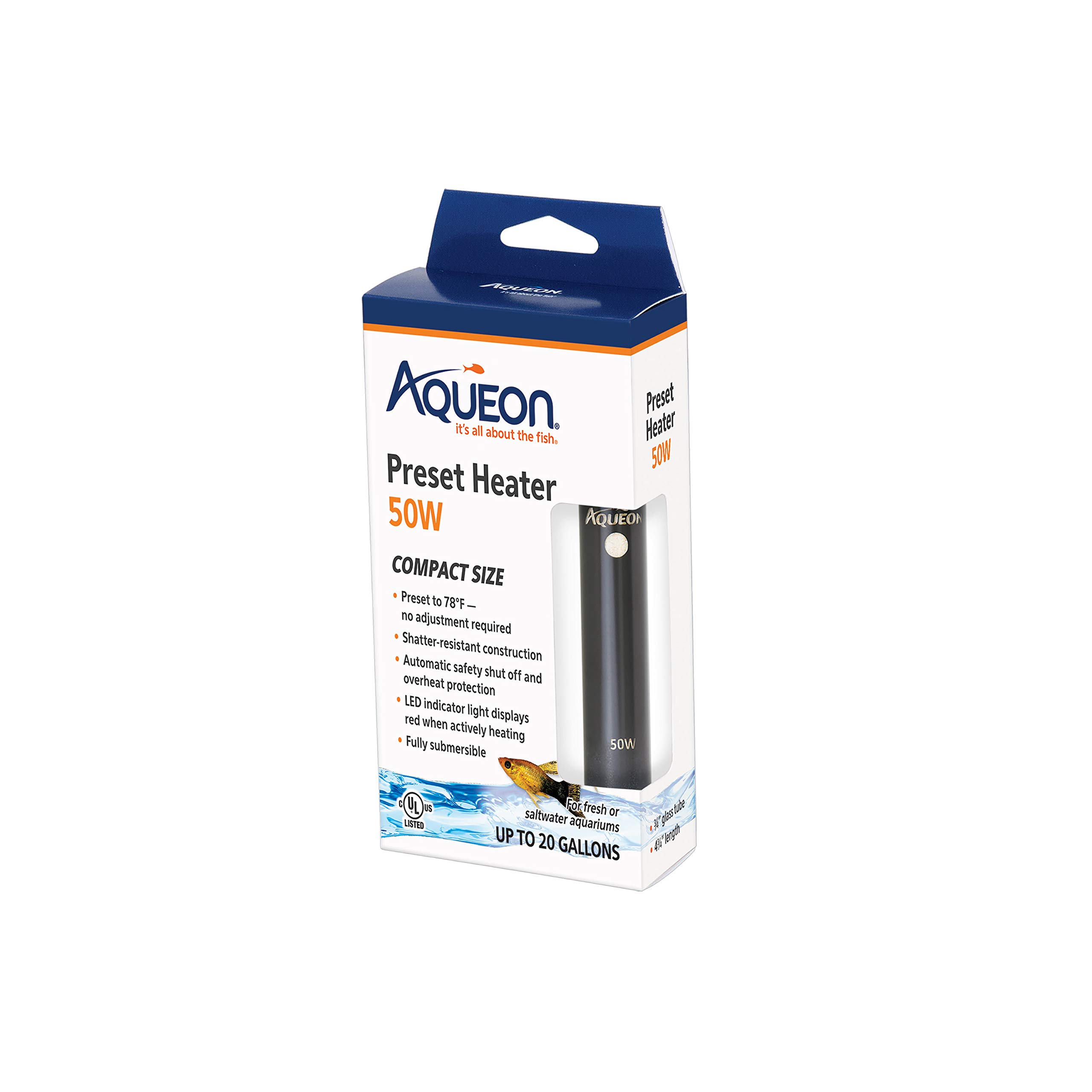
The Aqueon 50W preset heater solves the most common beginner heater problem: setting the wrong temperature. With a factory preset to 78°F and accuracy within ±1°F, there are no dials to misread or accidentally bump. The shatter-resistant construction uses a plastic outer shell rather than fragile glass, making it safe for tanks with curious fish or active cichlids that might break a standard heater. The auto shut-off feature cuts power when the heater is not fully submerged, preventing the dry-fire failures that ruin many cheaper heaters.
In a 10-gallon tank, this heater maintains a steady 78°F with a lid and drops only about 3°F without one — which is mostly fine since most tanks run covered. The compact 7-inch length fits easily in small sumps, nano tanks, and even 2.5-gallon quarantine setups. The LED indicator glows orange when actively heating, letting you visually confirm the thermostat is cycling on and off as needed. Over five years of customer reports, the heater consistently holds within 1°F of its 78°F target in tanks between 0.7 and 10 gallons.
The suction cup mount weakens after about a year, requiring replacement or a zip-tie hack to keep the heater in position. Some units run slightly cool, maintaining 77°F instead of the advertised 78°F — still within ±1°F but worth noting for fish species that require precise temperature at 78°F exactly. The 50-watt rating is undersized for tanks above 20 gallons; for larger aquariums you will need the 100W or 200W version.
Why it’s great
- No-dial preset at 78°F eliminates user error in temperature setting
- Shatter-resistant plastic shell is safe for active fish and nano tanks
- Compact 7-inch length fits small sumps and quarantine setups
Good to know
- Suction cup mount degrades after about 12 months of continuous use
- Not suitable for tanks larger than 20 gallons with 50W rating
7. Aquafa 10 lb Ceramic Bio Rings Filter Media
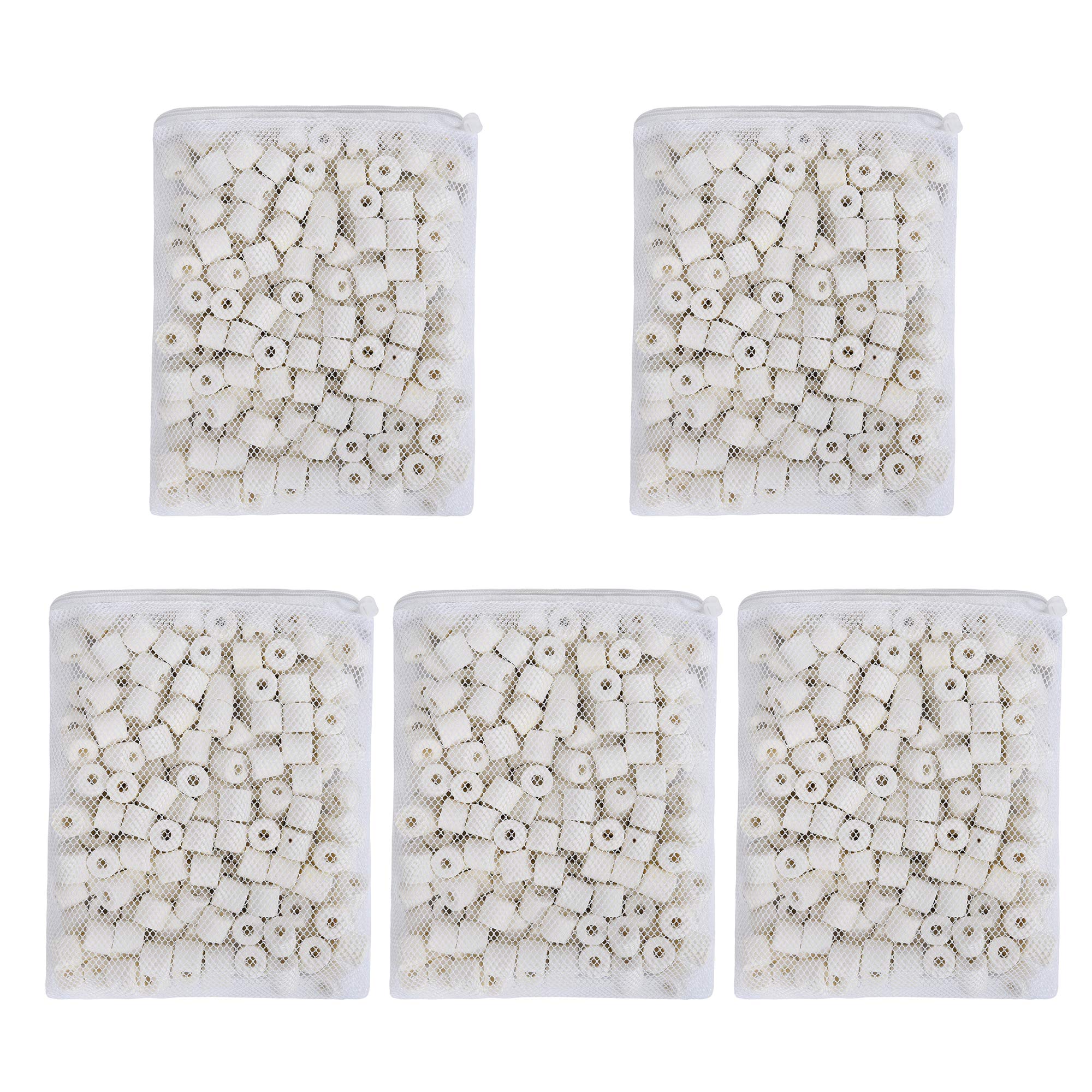
The Aquafa 10-pound bag of ceramic bio rings delivers the highest raw volume of biological filter media at the lowest cost per pound in this guide. Each ring measures 1/2 inch in diameter and length, making them ideal for smaller canister filter compartments, HOB filter baskets, and 29-gallon tanks where larger media would leave inefficient gaps. The porous ceramic structure provides ample surface area for nitrifying bacteria to colonize, and the ring shape promotes even water flow without channeling.
The primary cost-saving trade-off is initial dustiness — these rings arrive with more loose ceramic dust than premium brands, so thorough pre-rinsing in a bucket of aquarium water is mandatory before adding them to your filter. Once rinsed, they function identically to rings costing twice as much in terms of ammonia and nitrite reduction. The included mesh bag is functional but basic; you may want to double-bag them in a finer mesh if your filter has narrow intake slits.
Density is lower than the Fluval BIO-FX or Seachem Matrix, meaning you need roughly 30% more volume of Aquafa media to achieve equivalent bacterial colonization. For most community tanks this is irrelevant — the 10-pound bag provides enough media for a 55-gallon canister setup with room to spare. Advanced reef keepers pushing high bioloads will notice the difference in nitrate reduction capacity and may prefer the denser premium media instead.
Why it’s great
- 10 pounds of media at the lowest cost per cubic inch in this guide
- 1/2-inch ring size fits small filter compartments efficiently
- Functions reliably for ammonia and nitrite reduction after initial rinse
Good to know
- Significant ceramic dust requires thorough pre-rinsing before use
- Lower pore density than premium media means you need more volume for equal capacity
FAQ
How often should I replace biological filter media?
Can I use a Wi-Fi heater controller with any aquarium heater?
Why choose liquid test kits over test strips?
Final Thoughts: The Verdict
For most users, the best aquarium accessories winner is the Inkbird ITC-306A because its dual-relay safety design and 0.1°F temperature control solve the two biggest tank failures — overheating and thermal drift — with one device. If you want comprehensive water testing that covers the full nitrogen cycle, grab the API Freshwater Master Test Kit. And for biological filtration that keeps ammonia near zero even in heavily stocked tanks, nothing beats the Fluval BIO-FX 5L.