
Our readers keep the lights on and my morning glass full of iced black tea. As an Amazon Associate, I earn from qualifying purchases.
Specs are compiled from manufacturer listings and verified buyer reviews and can change over time — please confirm the key details on the product page before buying.
The silent killer in any fish tank is invisible: ammonia spikes from uneaten food and fish waste. You cannot see it, but it stresses and can kill your fish long before you notice a problem. The only way to catch it is to test regularly, and the best tool for the job depends on how much effort you want to put into each check.
I’m Min — the founder and writer behind Gadgets Feed. This guide is built by comparing the manufacturers’ published specifications and the patterns across verified customer reviews, so you get each pick’s real strengths and trade-offs instead of marketing spin.
Whether you are a first-time betta owner or running a planted reef tank, you need an aquarium ammonia test kit that fits your routine and budget.
Our Picks at a Glance

How To Choose The Best Aquarium Ammonia Test Kit
You are not really buying a kit; you are buying early warning. In a cycled tank, ammonia should always sit at 0 parts per million (ppm), so you need a test you trust to show a faint trace before it becomes a crisis. Your real choice depends on three things: the format, the accuracy, and how many tests you get per bottle or container.
Liquid Reagents vs. Test Strips
Liquid reagent kits are the old standard because you add drops to a vial of tank water and get a precise color. They are widely considered the most accurate option for reading low levels, which matters during tank cycling or after fish loss. The trade-off is effort: you measure water, count drops, and shake vials, which takes a few minutes per parameter.
Test strips are the modern convenience pick. You dip one strip for a couple of seconds, hold it flat for 30 to 60 seconds, and compare the pads against a chart. They are fast and mess-free, but the pads can be harder to read at very low levels like 0.25 ppm ammonia, so they suit routine checks more than emergencies.
How Many Tests You Actually Need
Count the tests per purchase, not just the price. A bulk box of 150 or 175 strips supports daily testing during a new tank cycle without reordering every week. A liquid kit with 800 tests across all parameters can last a typical hobbyist for a year or more, which makes it cheaper per reading over time despite a higher upfront number.
Quick Comparison
| Model | Best For | Format | Tests Included | Ammonia Range | Amazon |
|---|---|---|---|---|---|
| API Freshwater Master Test Kit★ Best Overall | Maximum accuracy for all tanks | Liquid drops | 800 tests | Precise low-level | Amazon |
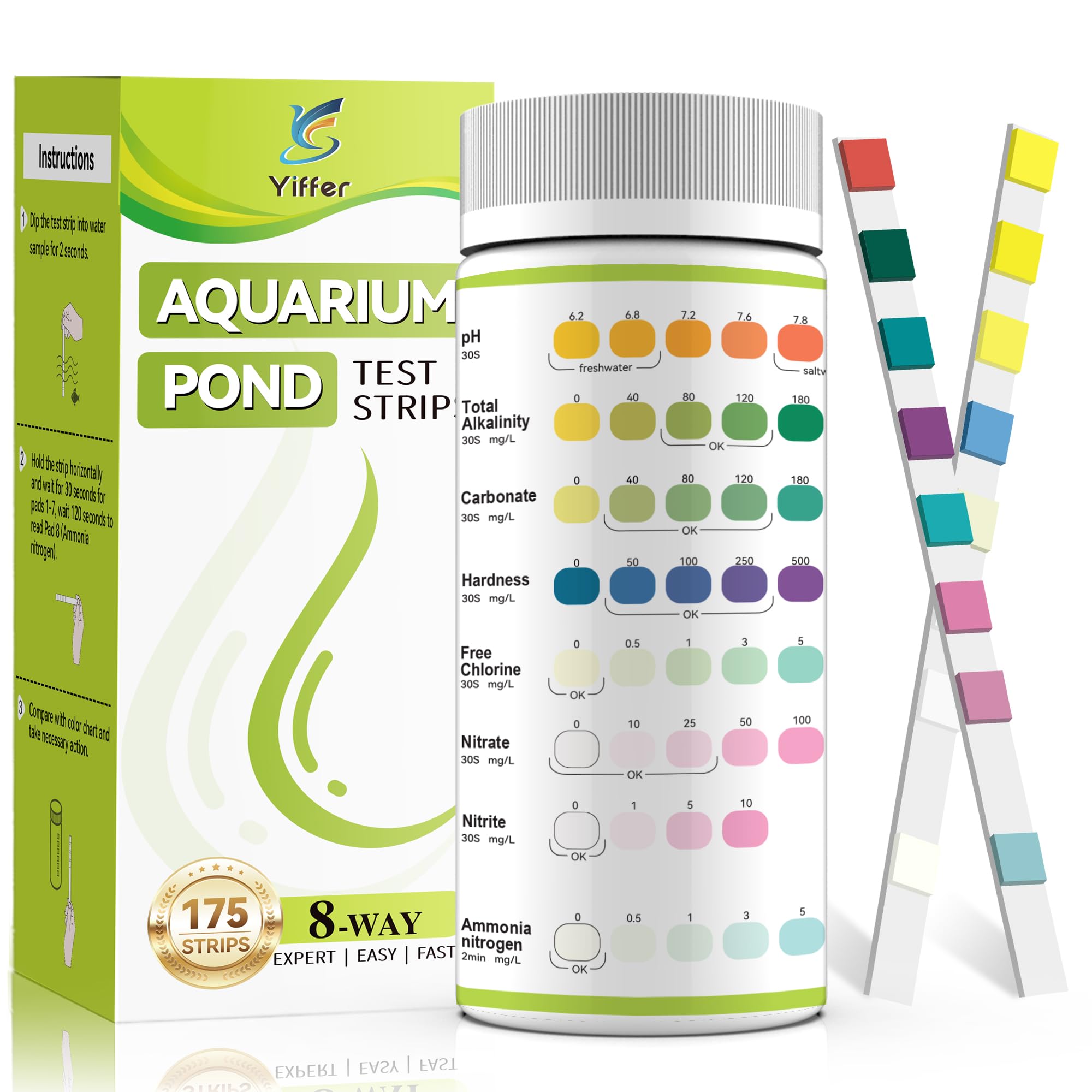
| Yiffer 175-Count 8-WayBest Value | Bulk value for multiple tanks | Strips | 175 tests | ±3% accuracy | Amazon |
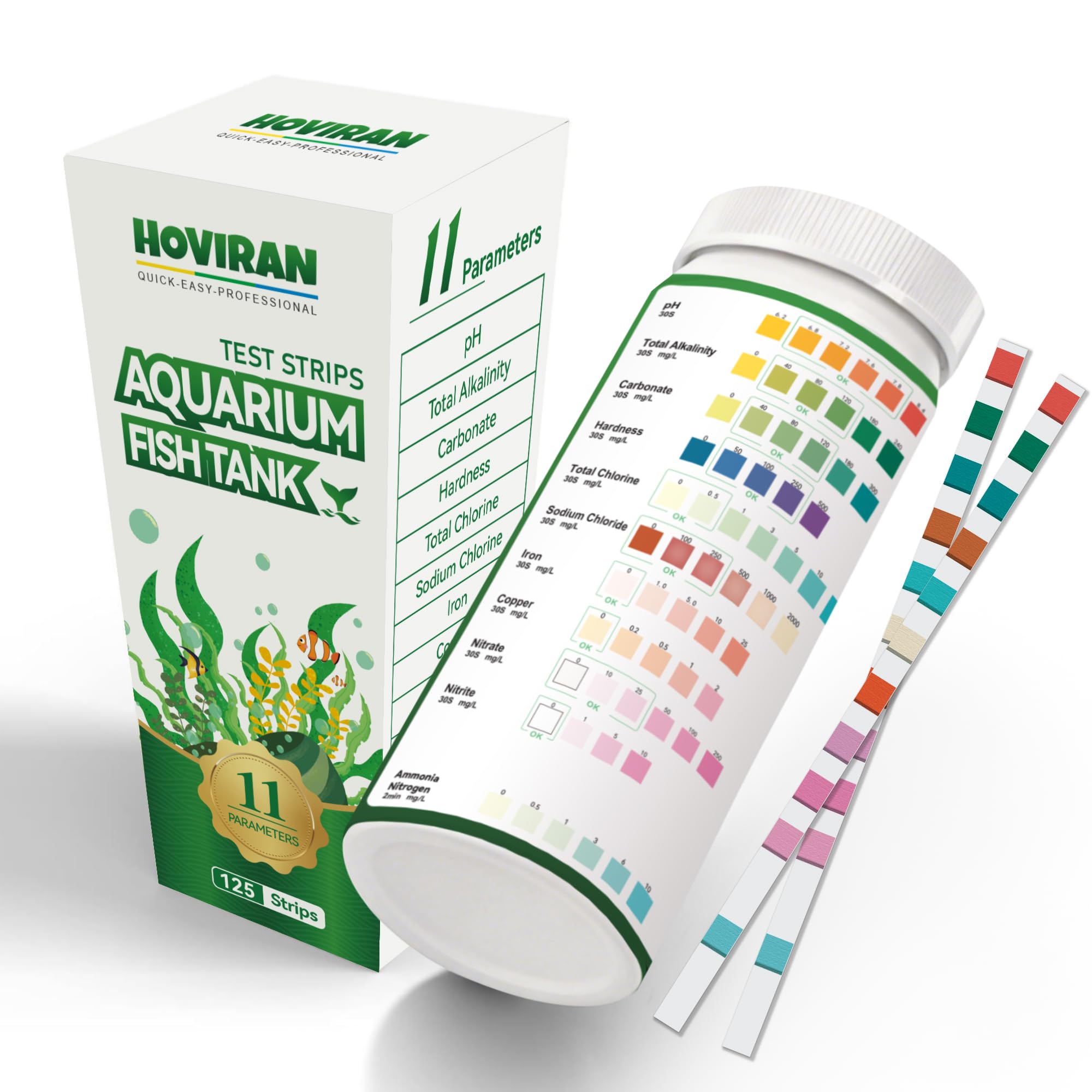
| HOVIRAN 11-in-1Most Versatile | Most parameters per strip | Strips | 125 tests | Ammonia Nitrogen | Amazon |
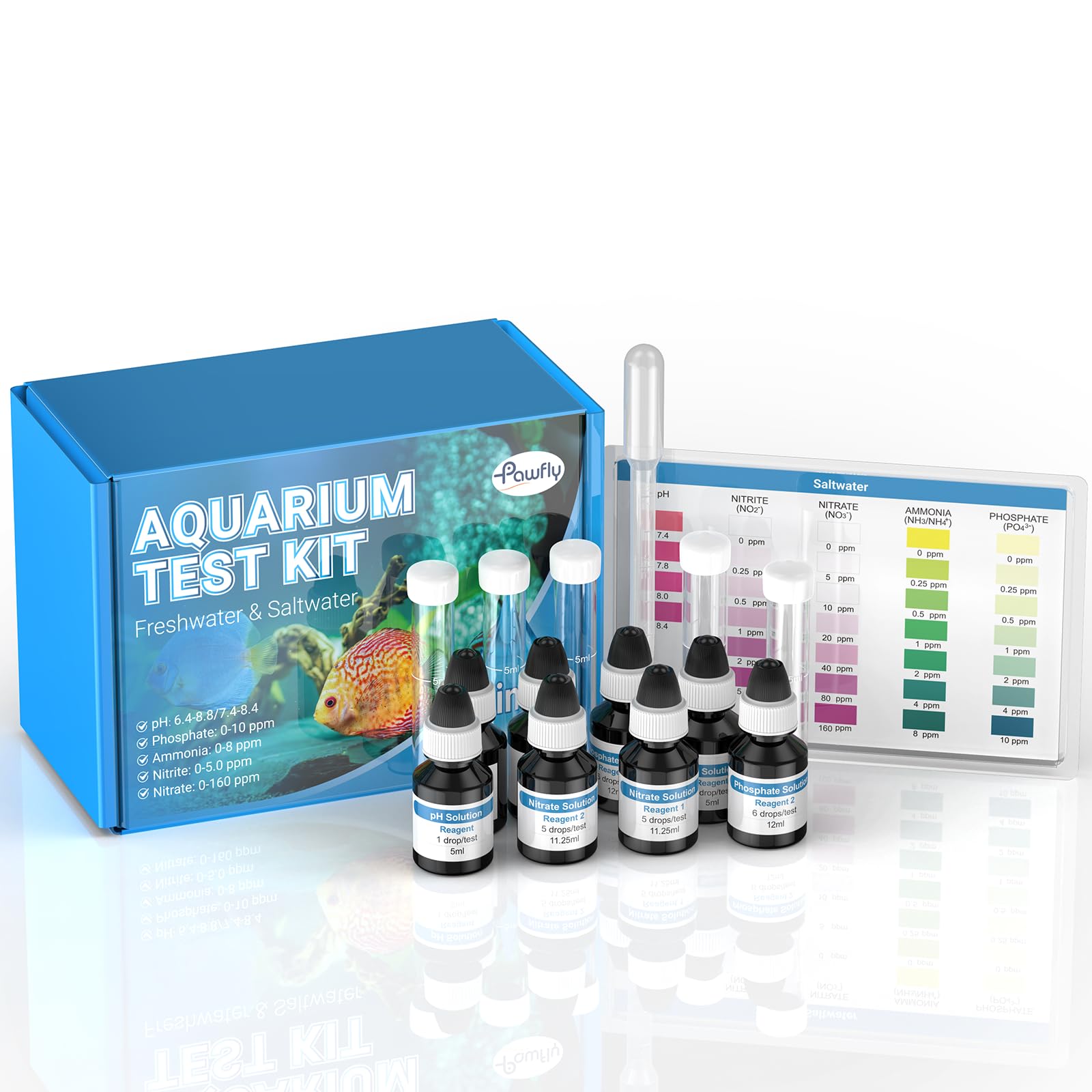
| Pawfly 5-in-1 Master Kit | Lab-quality liquid at home | Liquid reagent | 265 measurements | 30 ammonia tests | Amazon |
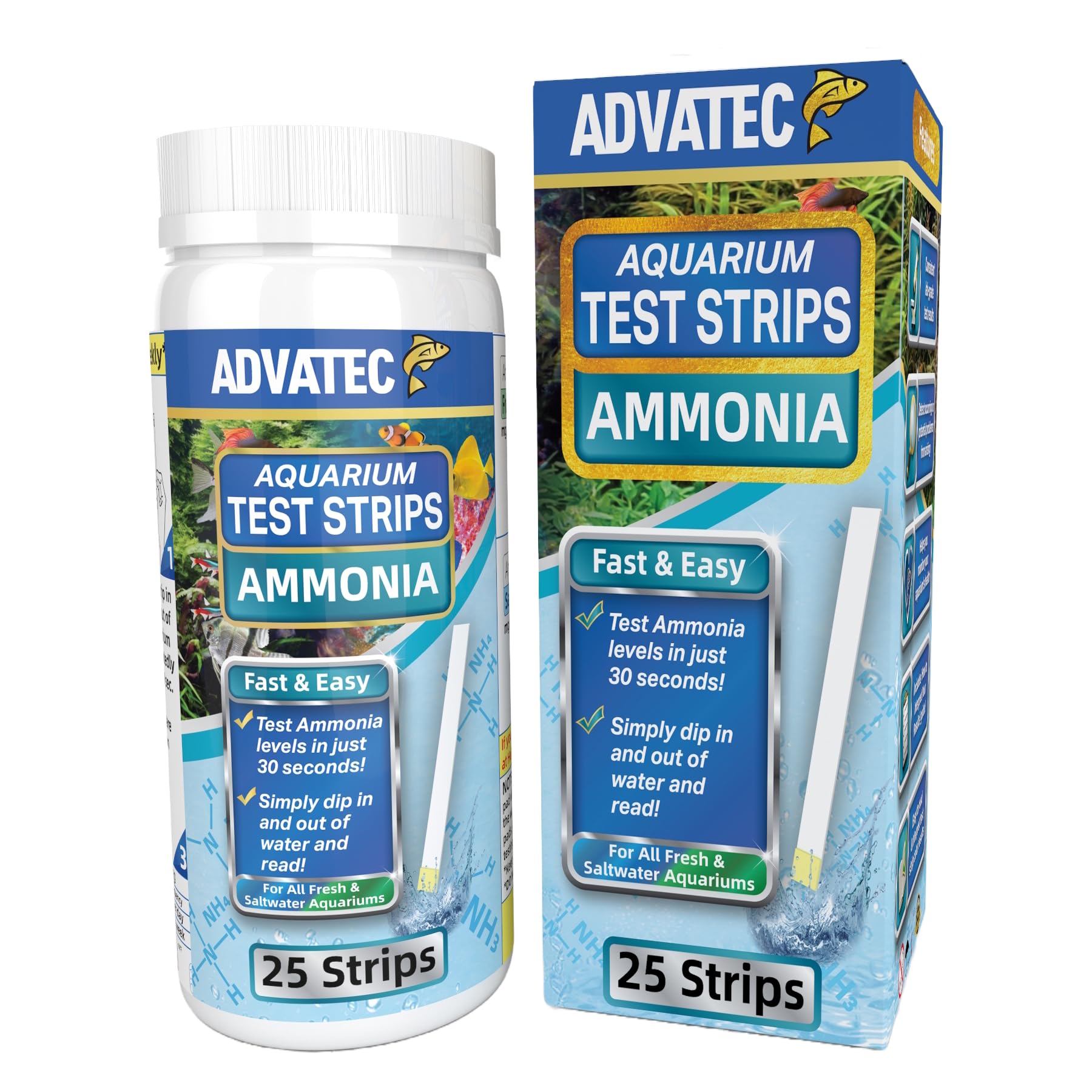
| Advatec Ammonia Strips | Quick single-parameter checks | Strips | 25 tests | 0.00 ppm readable | Amazon |
| Monitor Ammonia Test Kit | Distinguishing 0.25 vs 0.5 ppm | Liquid drops | 150 tests | 0–3 ppm critical zone | Amazon |
| A QUILA 9-in-1 | Fresh & saltwater variety | Strips | 150 tests | 9 parameters | Amazon |
| Huiguli 7-in-1 | Low-cost routine checks | Strips | 150 tests | Ammonia nitrogen | Amazon |
| Droplytix Digital 10-in-1 | App-guided no-guess readings | Digital strips | 10 tests | App-based scan | Amazon |
In‑Depth Reviews
1. API Freshwater Master Test Kit
Our pick — over 4.5★ from 31,000+ verified ratings; the strongest balance of quality and price.
The lab-grade gold standard that makes invisible water problems visible in five minutes.
This kit’s defining feature is its reach: it monitors the five most vital parameters — pH, high range pH, ammonia, nitrite, and nitrate — using seven bottles of testing solutions, four tubes with caps, and one color card. So you are not just checking ammonia; you are tracking the entire nitrogen cycle, which is what actually keeps fish alive through a new tank setup. The box measures 9.13 x 3.5 x 4.65 inches, a snug fit for a shelf or cabinet, and the durable plastic case travels well.
The real-world consensus is that this kit beats paper strips on reliability, with clear instructions that newcomers can follow, and results that arrive in about five minutes. Buyers report the reading is accurate enough to guide water changes and adjustments for tropical fish. The booklet explains cycling in detail, which is why it keeps being recommended as a starter kit for goldfish tanks and beyond.
There is a trade-off worth naming: the classic liquid routine takes more time than a quick dip-and-read strip. One buyer summed it up by calling it a must-have that is very accurate, while noting strips are more convenient and quicker for everyday checks. The plastic tubing is also fragile, and the lids can rip if you mishandle them, so treat the vials gently.
What wins people over
- Precise low-level ammonia readings you can trust during cycling
- 800 tests spread across five parameters, with refills available
- Beginner-friendly booklet that explains the nitrogen cycle clearly
Who should think twice
- Slower than strips when you just want a quick daily glance
- Fragile plastic vials need careful handling
Reach for this if: you want the most trusted ammonia readings and are cycling a new tank or nursing fish back to health.
Look elsewhere if: you prefer a two-second dip that does not involve counting drops and shaking vials.
2. Yiffer 175-Count 8-Way Aquarium Test Strips
A 175-strip bulk pack built for multi-tank owners who test constantly.
The headline number here is the count: 175 strips in one sealed case, which is a 17% larger supply than a typical 150-count competitor, and the 2.8-ounce package is light enough to store anywhere. Each strip checks eight key parameters — ammonia-nitrogen, pH, total alkalinity, carbonate, hardness, free chlorine, nitrate, and nitrite — so one dip gives you a full water picture instead of a single reading.
The design tackles the classic strip flaw of color bleeding: 6mm spacing between pads prevents colors from running together, and the pads are lab-tested to ±3% accuracy. That is a meaningful spec for anyone who has watched two strip colors blend into an unreadable mess. The process is a simple 3-step dip: submerge for 2 seconds, hold pads 1-7 for 30 seconds, pad 8 for 120 seconds, then compare.
Owners mention it is accurate, easy to use, and low-priced, and one multi-tank owner with five fish tanks confirmed it fits his needs perfectly. The long handle keeps hands dry during testing, and the airtight sealed case preserves strip freshness after opening. A few users found the color coordination chart still takes some learning, so expect a short familiarization period.
Bulk-buy logic: at 175 strips with 8-way coverage, this is the cheapest way to test several tanks frequently without reordering.
The honest catch: strips read fine for routine checks, but they are less precise than liquid drops for very low ammonia traces.
Best for: hobbyists running multiple aquariums who want a big, affordable stack of reliable strips.
Not for: anyone who needs laboratory-grade precision to diagnose a sick fish at 0.25 ppm.
3. HOVIRAN 11-in-1 Aquarium Water Test Strips
The widest single-strip net, measuring 11 parameters including salinity and ammonia together.
This kit stands out because it crams 11 essential parameters onto one strip: pH, total alkalinity, carbonate (KH), total hardness (GH), total chlorine, sodium chlorine, iron, copper, nitrate, nitrite, and ammonia nitrogen. Most strips stop at seven or eight, so this is the closest you get to a full lab panel without buying multiple separate kits. The 125-strip count supports heavy testing, and owners note a single tank setup can stretch the box across roughly a year of use.
Reading this strip takes a clever two-stage system. You dip the full strip for 2 seconds and read the first ten results after 30 seconds. Then you cut off the used pads, dip only the last ammonia pad into a fresh sample for 2 seconds, and read it after 2 minutes. That extra step exists because ammonia needs more time to react accurately. The upgraded pad design reduces color bleeding between zones for cleaner results.
Reviewers are candid that while it is less precise than liquid kits, it is reliable for daily monitoring of a stable tank, and it is excellent for cycling a new tank because you can test so often without running out. One owner praised it as the most complete option found, noting salinity and ammonia both on board, while another confirmed it eliminates the need for separate test kits. The alkaline pad can be hard to read, so keep a liquid kit handy if you obsess over that one value.
Where it shines
- 11 parameters per strip replaces several separate kits
- 125 strips last a single-tank owner roughly a year
- Upgraded pad design limits color bleed for clearer reads
Where it is softer
- Ammonia pad needs a second dip and a 2-minute wait
- Less precise than liquid drops for exact ppm values
Yours if: you want the broadest water snapshot per strip and test a planted or reef tank where many parameters matter.
skip it if: you only care about ammonia and do not need salinity, iron, or copper readings.
4. Pawfly 5-in-1 Aquarium Water Master Test Kit
Liquid-reagent laboratory accuracy that outperforms strips, with 265 total measurements in the box.
This kit delivers professional liquid reagents that the maker states far exceed traditional test strips in accuracy, giving you laboratory-quality results at home. It monitors all five critical parameters — pH, nitrite, nitrate, ammonia, and phosphate — which adds phosphate tracking most consumer kits ignore. The breakdown is generous: pH (100 measurements), nitrite (45), nitrate (50), ammonia (30), and phosphate (40), totaling 265 measurements for months of consistent monitoring.
It works for both freshwater and marine tanks, and the included color-matching charts make reading straightforward: compare your vial’s hue to the swatches for instant results. Owners love the glass vials for how clean and easy they are to read, and one buyer tested it against a premium Hanna master kit and found it surprisingly accurate for the money. The quality and value-for-money praise dominates the feedback.
The recurring operational gripe is the cap design: both caps on the reagent bottles twist off, and a few owners have accidentally removed the main cap and wasted reagent. It is a minor user-error issue rather than a defect, but worth knowing so you pay attention when opening bottles. The kit also lacks a carrying stand, arriving in a foam-and-box setup that one owner wished was easier to transport.
Why it earns the premium tag
- Liquid reagents beat strip accuracy for diagnosing problems
- 265 total measurements across five parameters
- Glass vials make color matching clean and easy
Handle with care
- Twist-off caps can waste reagent if you grab the wrong one
- No built-in carry stand, just foam and box
Choose this when: you want liquid accuracy plus phosphate monitoring and do not mind a few extra steps per test.
Pass if: the 30 ammonia tests feel too few and you test ammonia more than anything else.
5. Advatec Ammonia Test Strips
A focused, single-parameter strip that reads ammonia in about 30 seconds for mature tanks.
Unlike the multi-parameter giants, this kit strips the mission down to one job: ammonia detection, and it does that job fast. Customers note the strips register ammonia levels in roughly 30 seconds, and the laminated color chart is convenient enough to keep near the tank. The 25-count box is small, but for a mature, cycled tank that only needs a weekly ammonia confirmation, it is exactly the right size to avoid strips expiring before use.
The accuracy track record is strong in the feedback. Results have matched readings from two separate fish suppliers, and several owners confirmed their established tanks registered 0 with no false alarms. One buyer even tested the strips by adding a few drops of ammonia to tap water, watched the reading climb, and concluded the strips were trustworthy.
It suits freshwater and saltwater setups alike, from small to large tanks, and the maker suggests testing a new aquarium (0-6 weeks old) every other day and mature tanks weekly. The value-for-money verdict is mixed, which makes sense given the small per-box count, so weigh the convenience of a dedicated ammonia strip against the cost per strip compared to a bulk pack.
Single-mission clarity: if ammonia is your only worry, you avoid paying for pH and hardness pads you will never use.
The fair caveat: 25 strips go quickly if you test daily during a cycle, so treat this as a maintenance tool, not a cycling supply.
Ideal for: established tank owners who want a fast, dependable weekly ammonia check without color-guessing across nine pads.
Not ideal for: cycling a new tank where you will burn through 25 strips in under a month.
6. Monitor Ammonia Test Kit (150 Tests)

The drop kit that finally lets you tell 0.25 ppm apart from 0.5 ppm ammonia.
This liquid kit’s defining strength is a clearer color gradient in the zone that matters most. It is specially designed to differentiate ammonia levels between 0 and 3 parts per million (ppm), the range that is critical for living animals, while still measuring up to a high of 10 ppm. Owning the 0.25 versus 0.5 ppm distinction is the difference between watching a cycle progress and guessing, and buyers specifically praise that clarity.
It measures both ammonia (NH3) and ammonium ion (NH4) in freshwater, marine, and aquaculture water, plus ponds, ground water, and drinking water. Each of the 150 tests uses a small amount of reagent, which owners find economical compared to strips over time. One buyer, frustrated after two strip brands gave false readings, confirmed this kit verified results accurately before adding fish.
The test works by adding drops to a plastic vial and reading against the color card from above, a setup one owner compared favorably to premium Red Sea tests. There is no dropper included, so you supply your own, but the three-minute test is fast and leak-free in normal use. It is a niche tool rather than an all-in-one, so pair it with a broader kit if you also want pH and nitrate tracking.
What owners love
- Clear gradient between 0.25 and 0.5 ppm ammonia
- 150 tests at an economical reagent volume per use
- Works across freshwater, marine, and aquaculture water
Know before you buy
- No dropper included, so you need your own
- Ammonia only, so pH and nitrate need a separate kit
Reach for this if: precision matters and you are tired of strips that cannot separate 0.25 from 0.5 ppm during cycling.
Look elsewhere if: you want a single kit that also tracks pH, nitrite, and nitrate in one box.
7. A QUILA 9-in-1 Aquarium Water Test Kit
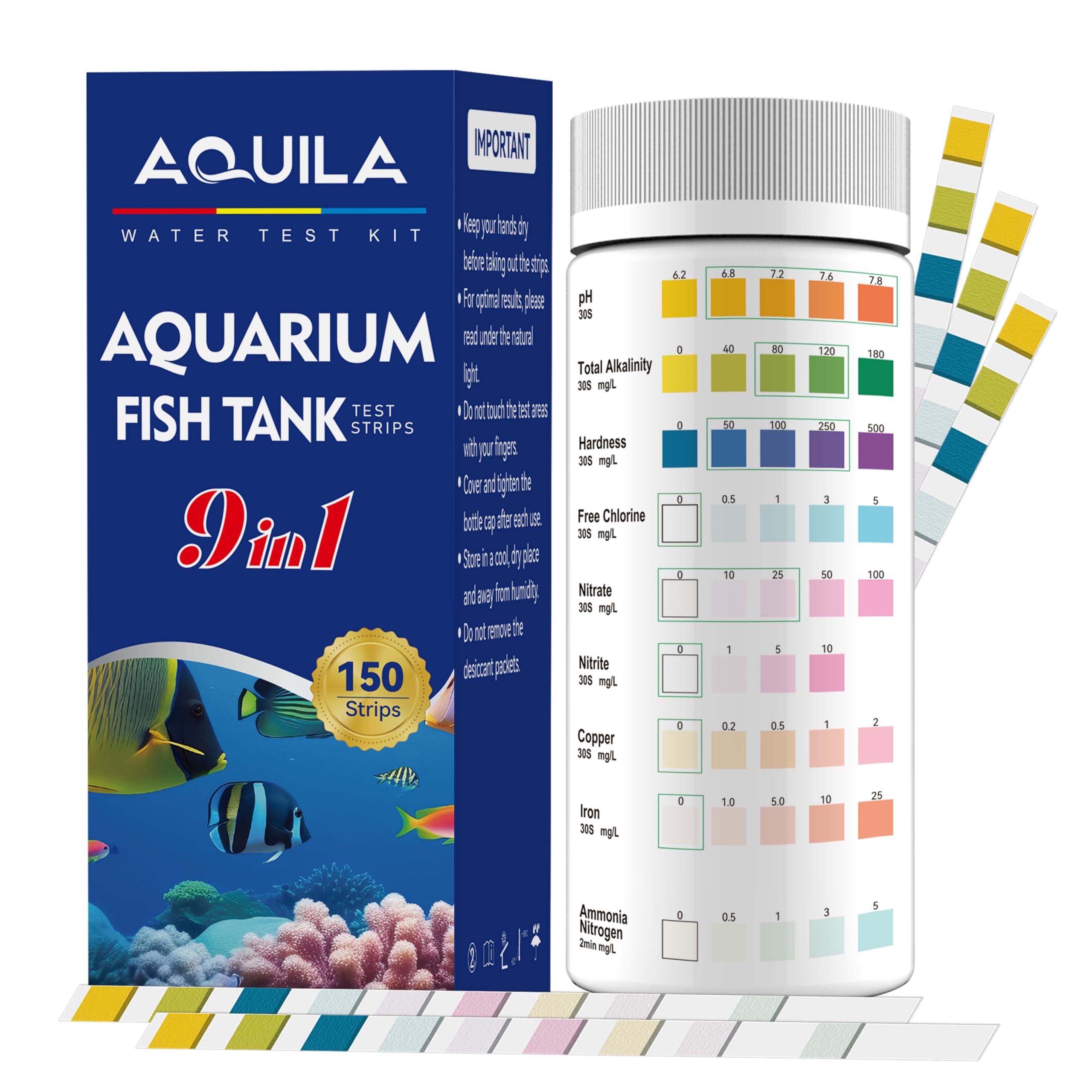
A nine-parameter strip kit that works across freshwater, saltwater, and ponds in one container.
This kit’s 9-in-1 panel covers pH, total alkalinity, hardness, chlorine, nitrite, sulfate, copper, iron, and ammonia, which is a wider net than most at this level. The versatility is the real story: it is compatible with freshwater and saltwater aquariums, betta tanks, marine tanks, planted tanks, and ponds, so one container legitimately serves multiple setups. The compact package measures just 2 x 2 x 5 inches and weighs 3.17 ounces, heavier than some rivals because of the screw-top fiber container that keeps 150 strips fresh.
New aquarium owners are the clear target audience here, and the feedback shows the dip-and-hold routine lands well for beginners. The simple 3-step process — dip, hold horizontally, compare to the chart — produces results within seconds, and the high-quality fiber strips resist color bleeding between pads. The screw-top container protects unused strips, which matters when you spread 150 tests across months.
The honest mixed note is accuracy: while many buyers call it the best on the market and easy to use, a fair share found readings off versus liquid drop tests. That makes it a strong routine-monitoring and value tool rather than a diagnostic instrument, so keep a liquid kit for confirmation when a reading looks alarming. The big-three coverage of ammonia, nitrite, and nitrate on one strip is what owners highlight most.
Biggest strengths
- 9 parameters on one strip including sulfate and copper
- One container serves fresh, salt, and pond water
- Screw-top fiber container keeps strips dry
Keep in mind
- Accuracy is mixed versus liquid drop kits
- Best treated as routine monitoring, not final diagnosis
Good fit for: beginners running multiple tank types who want one affordable, wide-coverage strip container.
Think twice if: you need laboratory confidence on ammonia during a fish-health crisis.
8. Huiguli 150 Count 7-in-1 Aquarium Test Strips

A no-frills 150-strip workhorse that matches branded strips at a fraction of the cost.
The core appeal here is brutal simplicity: 150 strips checking seven parameters — free chlorine, hardness, ammonia nitrogen, nitrate, nitrite, carbonate, and pH — for routine freshwater tank monitoring. The 2.4-ounce fiber-paper bottle features an aluminum foil seal that protects the strips from moisture and light, and 150 strips give you months of coverage without reordering. Owners repeatedly made the same point: these work exactly the same as branded strips at a better price.
The testing routine is the standard dip-and-compare: submerge for 2 seconds, hold flat for 30 to 60 seconds, then match colors against the chart. It is explicitly designed for freshwater aquariums, fish tanks, goldfish tanks, and ponds, so saltwater reef keepers should look at the A QUILA or HOVIRAN options instead. The strip design uses fiber paper with color pads for clear visual comparison.
One detail-oriented owner compared these against drop tests and found the strip pH readings matched, ammonia additions were detected, and chlorine read accurately at 0.5 mg/l. That same buyer noted the strips are less precise than drops for very low levels like 0.25 ammonia and 0.5 nitrites, but perfectly fine for high ranges and general pH zones. Consider this the dependable budget pick for catching big swings, not for micro-managing trace amounts.
Value verdict: for a 150-count box that performs like costlier branded strips, this is the sensible choice for regular weekly checks.
The limitation: very low ammonia traces under 0.25 ppm are hard to read precisely, so upgrade to drops if you need that resolution.
Best for: budget-conscious freshwater keepers who test often and want massive strip volume for the money.
Not for: saltwater tanks or anyone needing drop-level precision on faint ammonia traces.
9. Droplytix Digital 10-in-1 App-Enabled Test Kit
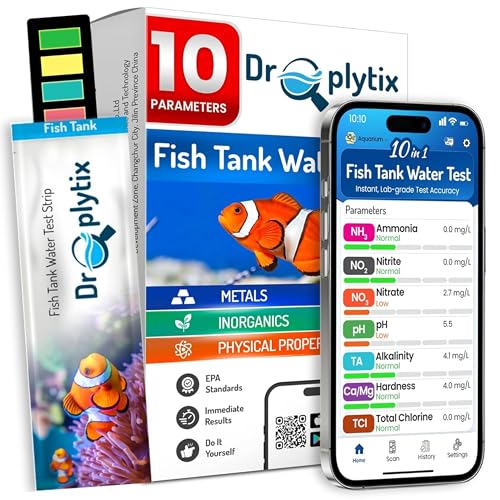
The kit that replaces paper color charts with a smartphone scan for instant digital results.
This is the modern answer to the oldest complaint about test kits: squinting at color pads and guessing. You dip a strip, scan it with the DROPLYTIX app, and get digital readings for ammonia, nitrate, nitrite, pH, GH, KH, chlorine, and more, without comparing colors to a printed chart. It works across freshwater, saltwater, reef, betta, shrimp, turtle, and axolotl tanks, making it among the most broadly compatible kits here.
The app-guided approach is genuinely useful for beginners because it removes the guesswork entirely and explains what each reading means. Owners highlight how it makes routine testing simple, with results coming back fast enough to finish before a water change is done. The ability to track trends over time in the app is a real advantage over paper charts, and one betta owner credits it with catching rising ammonia and nitrate before fin damage became permanent.
The honesty check is important here: accuracy is the most-discussed mixed point, with several owners calling the readings unreliable, including a high copper result on RO/DI water in a brand-new tank. The app lacks calibration for different lighting, which affects white balance in photos. Approach this as a convenience-first screening tool — one owner called it a great lazy check that tells you when to break out the serious liquid kit — not as your final authority on water quality.
The modern upside
- App removes color-matching guesswork entirely
- Tracks water quality trends over time digitally
- Works on the widest range of tank types
The honest downside
- Accuracy is mixed, especially in odd lighting
- Only 10 strips included, so it is a starter kit, not a bulk supply
Yours if: you are a tech-friendly beginner who wants the app to interpret readings and track trends easily.
Not yours if: you demand drop-test accuracy or need more than 10 tests before buying refills.
Understanding the Specs
Parts Per Million (ppm)
This is the unit every ammonia test reports in. It tells you how many parts of ammonia exist in a million parts of water. For a cycled, healthy tank, ammonia should read 0 ppm. Any reading above 0 means the biological filter is not keeping up, and levels above 1 ppm are dangerous to fish. Kits that can clearly show the difference between 0.25 and 0.5 ppm give you earlier warning during a cycle.
Test Count vs. Parameters
A “150-count” or “175-count” label means the number of individual strips or liquid tests in the box, not the number of parameters. A 7-in-1 strip checks seven things but only counts as one test. Bulk counts matter for daily testing during cycling, while parameter count matters for how complete your water picture is. A liquid kit listing “800 tests” spreads that across multiple bottles for different parameters.
FAQ
How often should I test ammonia in my aquarium?
What ammonia level is dangerous for fish?
Are liquid drop kits more accurate than test strips?
How many tests do I actually need in a kit?
Will freshwater test strips work in a saltwater tank?
What is the difference between ammonia, nitrite, and nitrate tests?
How do I get an accurate reading from a test strip?
Do aquarium test strips expire or go bad?
Can I use a drinking water test kit for my aquarium?
What does a 10-in-1 or 11-in-1 strip actually measure?
Final Thoughts: The Verdict
For the majority of shoppers, the aquarium ammonia test kit winner is the API Freshwater Master Test Kit because its trusted liquid readings and 800-test capacity cover every stage of fishkeeping, from cycling to rescues. If you want fast multi-tank coverage on a budget, grab the Yiffer 175-Count 8-Way and stop worrying about reordering. And for the broadest single-strip panel across fresh and saltwater, the HOVIRAN 11-in-1 is the one to reach for.
How We Picked
We do not accept paid placement. Every pick is matched to a real buyer and a real use-case; we do not hands-on test units.
Sources & Methodology
Specifications: manufacturer listings and product documentation. Review insights: verified customer reviews, as of September 2026. Pricing: not shown on this page (it changes often); check the current price via the retailer link.
As an Amazon Associate, Gadgets Feed earns from qualifying purchases. This does not affect which products we feature.