
Our readers keep the lights on and my morning glass full of iced black tea. As an Amazon Associate, I earn from qualifying purchases.
Specs are compiled from manufacturer listings and verified buyer reviews and can change over time — please confirm the key details on the product page before buying.
Getting the soil layer right is the single most important decision you’ll make for a planted aquarium. Pick the wrong bag, and you’re fighting murky water, ammonia spikes, and plants that just won’t root. The right substrate feeds plants from day one and stabilizes water chemistry for shrimp and fish.
I’m Min — the founder and writer behind Gadgets Feed. This guide is built by comparing the manufacturers’ published specifications and the patterns across verified customer reviews, so you get each pick’s real strengths and trade-offs instead of marketing spin.
Whether you’re starting your first aquascape or upgrading a mature tank, this breakdown of the best aquarium dirt substrate options helps you match the right grain size, volume, and nutrient profile to your plants and livestock.
Quick Picks
- ADA Aqua Soil Amazonia Ver 2 (9L) — Pro Aquascaper
- LANDEN Aqua Soil Substrate 5L (10lbs) — Best Value
- FZONE Aquarium Soil for Planted Tanks (8L) — Growth Champion
- Upgraded Aquarium Soil Water Grass Mud (20 Liters) — Budget Volume
How To Choose The Best Aquarium Dirt Substrate
Your choice depends on your plants, patience for water stabilization, and tank size.
Volume and Weight — Matching Tank Size
Check the volume in liters, not just the bag weight. A 5-liter bag of sintered clay weighs much more than 5 liters of porous baked soil, but the volume is what covers your tank floor. For a standard 20-gallon tank, you need about 9 to 12 liters for a 2-to-3-inch sloping bed. The average thickness recommended is 6 to 8 cm.
The Ammonia Leaching Period
Most nutrient-rich aqua soils release ammonia for the first one to four weeks after a fresh fill. This feeds new plants but is toxic to fish and shrimp. You need to cycle the tank, test the water, and do daily or frequent partial water changes until ammonia and nitrite drop to zero. A substrate that leaches 4-8 ppm of ammonia demands patience and regular testing.
Grain Size and Porosity
Grain size around 3 to 5 mm is standard. Smaller grains pack tighter and make it harder for roots to spread, while larger, porous granules allow water to circulate and beneficial bacteria to colonize. Porous sintered soil promotes fast bio-colonization, which helps keep the water clear and stable.
Quick Comparison
On smaller screens, swipe sideways to see the full table.
| Model | Best For | Volume | Weight | Grain Size | Amazon |
|---|---|---|---|---|---|
| ADA Aqua Soil Amazonia Ver 2 | Serious Planted Tanks | 9 Liters | 7 kg | Irregular natural shape | $62.99Amazon |
| FZONE Aquarium Soil | High-Nutrient Growth | 8 Liters | 17.64 lb | 3mm | $59.99Amazon |
| LANDEN Aqua Soil Substrate | Value & Stability | 5 Liters | 10 Pounds | 3-5mm | $36.99Amazon |
| Upgraded Hygger CO2 Soil | Large Tanks on a Budget | 20 Liters | 8.8 Pounds | Fine Sintered | $29.44$30.99PrimeAmazon |
In-Depth Reviews
1. ADA Aqua Soil Amazonia Ver 2 (9L)

The gold standard for demanding plants, with a nutrient punch that demands patience.
Made from rare Japanese plant-based black soil, this substrate naturally buffers the water — it lowers pH and hardness to the ideal level for most aquatic plants. Each 9-liter bag includes a separate bag of Amazon concentrate supplement, which lets you spot-enrich areas for different plant types without overdosing the whole tank. The granules are irregular in shape, which gives a natural look and creates space for roots to spread quickly.
Buyers report it causes a temporary ammonia spike for 1-4 weeks and is unsafe for fish or shrimp during that window. One reviewer noted that Ver 2 has fewer nutrients than the original version but causes less algae, and that it can be recharged later with root tabs. This is the pick if you keep finicky species like dwarf baby tears, Monte Carlo, or Bucephalandra with CO2 injection. Unlike the 5-liter LANDEN bag, the ADA delivers 9 liters versus 5 liters, but expect the longer cycling period.
What the Hobbyists Say
- Best in class for difficult plants (Utricularia graminifolia, Monte Carlo).
- Significantly lowers KH and pH without chemicals.
- Granules hold shape and don’t break down into mud.
The Hard Truth
- Requires 1-4 weeks of cycling before adding livestock.
- Pricey compared to mid-range options like FZONE or LANDEN.
- Comes with extra fertilizer that can cause high nitrates if used all at once, as one buyer mentioned.
Your plant list decides: If you are growing carpet plants and stem plants that demand soft, acidic water and don’t mind a month of cycling, this is the foundation for a serious aquascape.
Look elsewhere if: You need to add fish or shrimp immediately — the 1-to-4-week ammonia leach phase makes that impossible.
2. LANDEN Aqua Soil Substrate 5L (10lbs)

A balanced, ready-to-use substrate that leans porous and stable without the premium price tag.
Made from processed natural material, this black substrate provides fundamental minerals and trace elements rich in organic acids and nitrogen. The 3-5 mm porous grains create a stable breeding ground for beneficial bacteria and reproduce the mildly acidic water conditions most aquatic plants prefer. At 5 liters per bag with an approximate weight of 10 pounds, compared with the 20-liter Hygger bag at 8.8 pounds, you get denser grains that hold plants down better. The manufacturer recommends waiting at least one week before adding any fish or shrimp.
Owners mention mixing multiple 5-liter bags for a 55-gallon tank and getting crisp water with thriving fish, plants, and shrimp. One owner reported it contains some dried grass and gravel, so a rinse with nitrifying bacteria helped. Unlike the FZONE or ADA options that leach high ammonia for weeks, this product tends to cause little to no nitrate spike after the first week, making it a lower-maintenance entry into planted tanks.
The Practical Perks
- Quick stabilization — water conditions generally settle after one week.
- Porous structure provides long, slow release of fertilizer.
- No need to rinse before use (though some buyers choose to).
The Trade-Off
- Light porous grains can cause plants to float out easily.
- May contain dried plant matter; some batches need cleaning.
Best suited for: Hobbyists on a mid-range budget who want a reliable substrate for a community planted tank with shrimp and without the 4-week ammonia wait.
skip it if: You need to build a deep sloping bed for a 75-gallon tank — the 5-liter bags add up fast compared to the 20-liter Hygger option.
3. FZONE Aquarium Soil for Planted Tanks (8L)
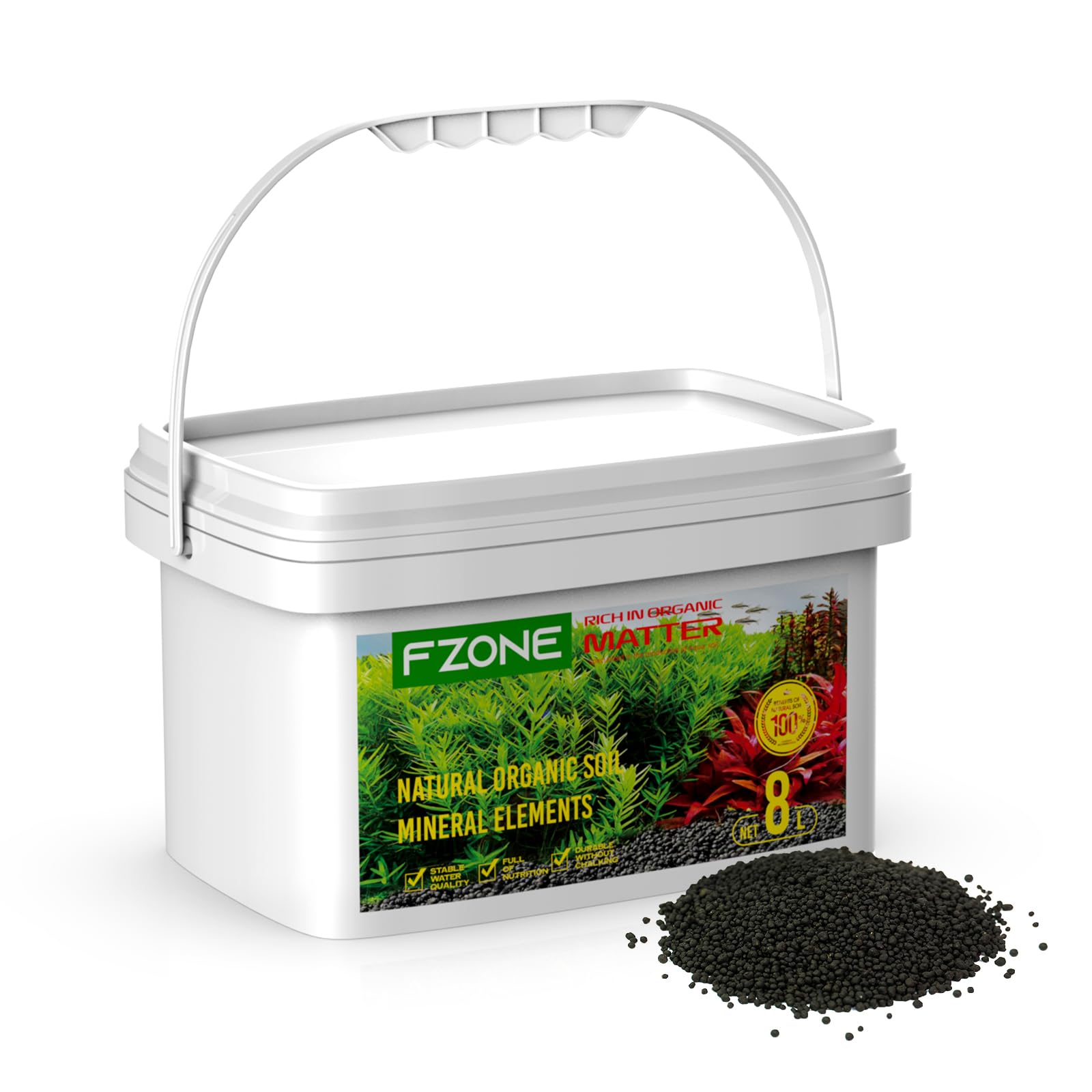
Nutrient-dense granules that push explosive plant growth but demand serious water management.
This 8-liter bag uses a blend of organic matter, activated carbon, silica, and minerals processed through high-temperature sintering to keep its shape. The 3mm porous granules promote strong root growth and gently lower pH by absorbing alkaline ions. The manufacturer claims no rinsing is needed — water stays clear from the first fill. At 17.64 pounds for 8 liters, compared with the 20-liter Hygger bag at 8.8 pounds and the 5-liter LANDEN bag at 10 pounds, these granules sink fast and hold position.
Customers note that this is “very nutrient-rich” and “leeches ammonia (4-8ppm) for about 17 days,” requiring frequent large water changes. One customer observed Monte Carlo carpet grew faster and larger with this soil compared to Fluval Stratum in a dry start. The same reviewer noted it is lightweight individually, so pre-soaking and burying roots deep helps prevent floating. Unlike the ADA Amazonia, this soil does not come with a separate fertilizer supplement, but the nutrient load inside the granules is powerful enough that some sensitive plants like Bucephalandra may experience ammonia shock during cycling.
Why It Stands Out
- Outpaces Fluval Stratum and similar brands in plant growth speed according to reviewers.
- Dust-free and holds shape without crumbling into mud.
- Superior reusable container packaging.
What to Watch For
- 17-day ammonia leach at 4-8ppm requires diligent water changes.
- Lightweight granules can float if not pre-soaked and buried deep.
Reach for this if: You are running a high-tech CO2 setup with heavy root feeders like Cryptocoryne and stem plants and are committed to daily water changes for the first 2-3 weeks.
Look elsewhere if: You want a set-and-forget substrate — the 4-8ppm ammonia leach for 17 days is not beginner-friendly.
4. Upgraded Aquarium Soil Water Grass Mud (20 Liters)
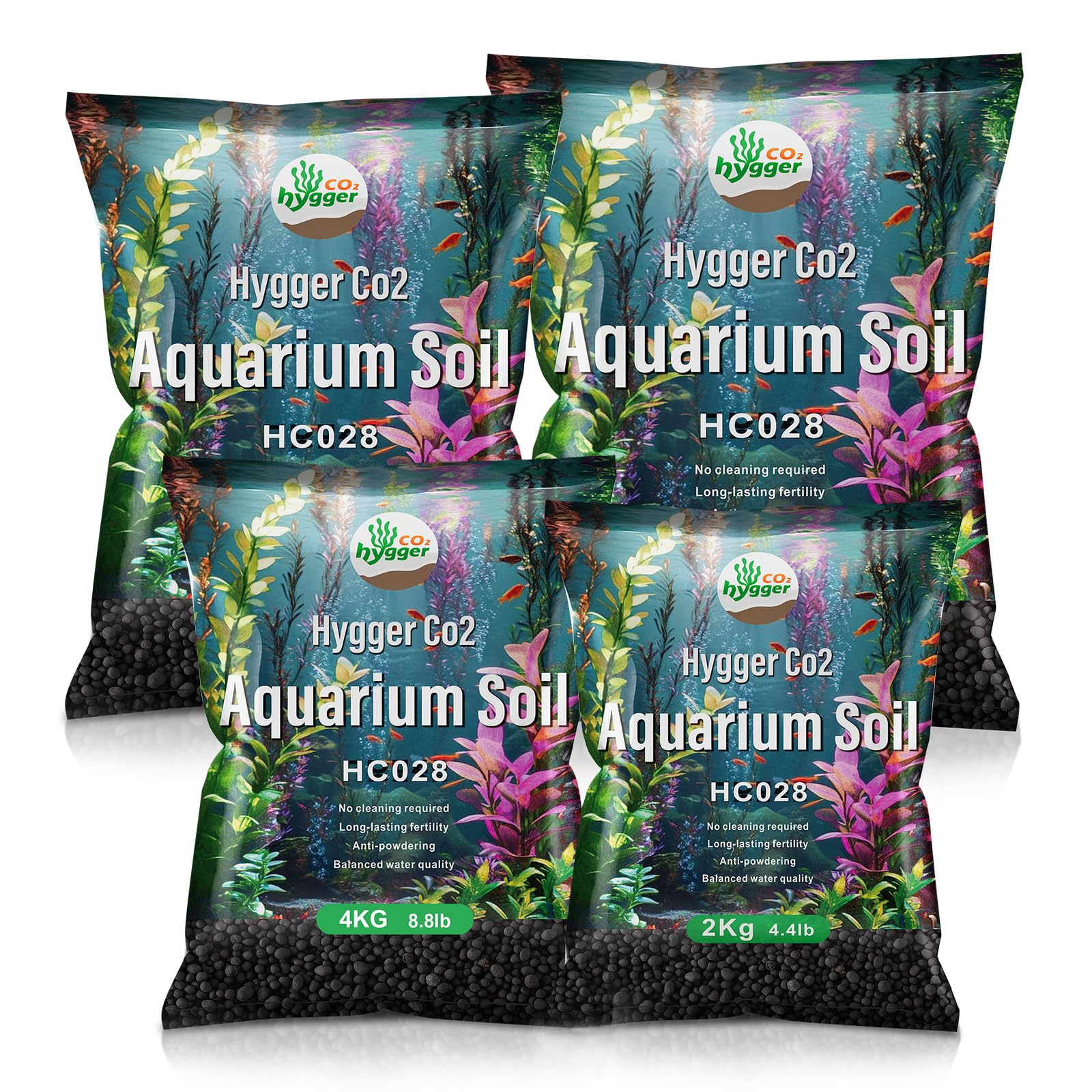
The biggest bag on the list by volume, aimed at covering large tanks while staying affordable.
You get a 20-liter bag of Hygger CO2 soil that weighs 8.8 pounds, versus the LANDEN bag at 5 liters and 10 pounds, so these are very light, porous sintered granules (baked clay particles). The manufacturer states it keeps a stable pH (acidity level) of 6.5-7.5 and that the porous structure helps beneficial bacteria grow fast while naturally making water softer and more acidic. The included 2-year warranty gives you a solid safety net for a budget-priced soil.
Reviewers point out mixed experiences. One reviewer described “white calcium-like deposits on glass within 12 hours” that required full water removal and scrubbing. Others noted the soil is “dirty when first opened” and needs thorough washing despite the official instruction saying not to rinse it. On the positive side, reviewers saw plants doing well after the initial cloudiness cleared. Unlike the denser FZONE or LANDEN options, these lighter granules are more prone to floating and clouding, and the lack of a consistent leach profile makes it riskier for beginners who cannot predict the ammonia curve.
The Upside
- 20 liters covers large tanks (55-gallon+) in a single bag.
- 2-year manufacturer warranty provides confidence.
- Maintains pH 6.5-7.5 for sensitive shrimp species.
The Downside
- Some batches produce white calcium deposits on glass according to one buyer.
- Requires daily water changes for the first 3-5 days minimum.
- Very light; can float and cloud water more than denser soils.
Pick this for: A budget-conscious large-tank build where you have the patience to do frequent early water changes and can inspect the bag before committing.
Avoid it if: You want predictable, consistent quality out of the bag — the FZONE or LANDEN options give more reliable grain structure and less risk of deposit issues for a few dollars more per liter.
Understanding the Specs
Ammonia Leaching Period
Every nutrient-rich aqua soil releases ammonia when first submerged because the organic matter inside breaks down. This feeds new plant roots but is toxic to fish and shrimp. The leach phase can last anywhere from one week (LANDEN) to 4-plus weeks (ADA). You must test your water and do frequent partial water changes until ammonia and nitrite read zero. If you skip this step, you lose livestock.
Volume vs. Weight
A bag that says 20 Liters but weighs only 8.8 pounds (like the Hygger) is filled with very light, porous material. A 5-liter bag that weighs 10 pounds (like the LANDEN) is much denser. Denser granules sink faster and hold plants in place better. Lighter granules are easier to slope but float more when you fill the tank. Always check both numbers: volume tells you how much floor it covers; weight tells you how compact and heavy each grain is.
FAQ
Can I use aquarium dirt substrate with a hang-on-back filter?
How much substrate do I need for a 20-gallon tank?
Can I reuse aquarium soil after tearing down a tank?
Do I need to rinse aquarium dirt substrate before using it?
Will aquarium dirt substrate raise or lower my pH?
How long does the ammonia spike last with new aqua soil?
Is aquarium dirt substrate safe for shrimp?
What is the difference between aqua soil and regular potting soil?
Final Thoughts: The Verdict
For the majority of shoppers, the best aquarium dirt substrate winner is the FZONE Aquarium Soil because it delivers the fastest plant growth in a dense, dust-free granule that holds its shape — as long as you commit to the 17-day water change schedule. If you want a lower-maintenance start with shrimp-safe stability after one week, grab the LANDEN Aqua Soil. And for high-tech aquascapers building a carpet of dwarf baby tears or Monte Carlo, the ADA Aqua Soil Amazonia Ver 2 is designed to give the richest nutrient base for that dense, low-growing look.
How We Picked
We do not accept paid placement, and we did not hands-on test every unit. Instead, we match each pick to a real buyer and use-case by comparing the manufacturers’ published specifications against the patterns in verified customer reviews — so you get each pick’s real strengths and trade-offs instead of marketing copy.
Sources & Methodology
Specifications: manufacturer listings and product documentation. Review insights: verified customer reviews, as of July 2026. Pricing: not shown on this page (it changes often); check the current price via the retailer link.
As an Amazon Associate, Gadgets Feed earns from qualifying purchases. This does not affect which products we feature.
Product prices and availability are accurate as of the date/time indicated and are subject to change. Any price and availability information displayed on Amazon at the time of purchase will apply to the purchase of this product. As an Amazon Associate I earn from qualifying purchases.
CERTAIN CONTENT THAT APPEARS ON THIS SITE COMES FROM AMAZON. THIS CONTENT IS PROVIDED "AS IS" AND IS SUBJECT TO CHANGE OR REMOVAL AT ANY TIME.
Amazon and the Amazon logo are trademarks of Amazon.com, Inc. or its affiliates.