
The fine print on aquarium filter media is the single most overlooked factor in stable water chemistry. Porous sintered glass, ceramic rings, and bio-balls each create radically different surface areas for beneficial bacteria to colonize, and choosing the wrong one means running a cycle that can never keep pace with your bioload. The difference between media that works and media that thrives lies in microns of pore structure and cubic feet of usable surface area per gallon.
I’m Rikta — the co-founder and writer behind Gadgets Feed. I’ve spent years analyzing the internal pore geometry, material density, and bacterial colonization rates across hundreds of filter media products to separate marketing claims from measurable biological performance. (And Homer 🐱 supervised from the warm laptop vent, unimpressed that none of this involved catnip.)
Whether you’re setting up a new tank, upgrading an overstocked cichlid aquarium, or dialing in the perfect sump for a reef system, the right media determines how quickly your filter processes waste. This guide breaks down the seven most effective options on the market to help you find the best aquarium filter media for your specific setup and budget.
How To Choose The Best Aquarium Filter Media
Filter media is the engine of your aquarium’s nitrogen cycle. Without sufficient surface area for nitrifying bacteria, ammonia and nitrite levels rise quickly. The choice between ceramic rings, sintered glass, and bio-balls comes down to three variables: the total surface area per unit volume, the pore size distribution, and how the media fits your specific filter type.
Surface Area Density Matters Most
The bacterial colonies that convert ammonia to nitrite and then to nitrate need physical space to establish themselves. High-end media like sintered glass offers around 1,800 square feet of surface area per gallon, while standard ceramic rings typically deliver 200 to 400 square feet per gallon. A media with more pores per cubic inch supports a larger bacterial population, which translates directly to faster waste processing and more stable water parameters.
Pore Structure and Water Flow
Pores that are too small trap debris and clog quickly, reducing flow through your filter. Pores that are too large provide less surface area for bacteria. The best media balances macro-pores for water passage and micro-pores for bacterial colonization. Irregular shapes and hollow centers, as seen in ceramic rings and spheres, improve flow dynamics and reduce channeling where water bypasses the media entirely.
Compatibility With Filter Types
Canister filters work best with media that stays contained in trays or bags, such as ceramic rings or sintered glass pellets. Hang-on-back (HOB) filters need media that fits the basket dimensions without blocking flow. Sump systems allow the most flexibility, letting you mix media types across compartments. Loose media requires mesh bags, while pelletized media can be poured directly into trays. Check your filter’s volume and media compartment size before buying.
Quick Comparison
On smaller screens, swipe sideways to see the full table.
| Model | Category | Best For | Key Spec | Amazon |
|---|---|---|---|---|
| EHEIM Substrat Pro | Sintered Glass | Maximum bacterial colonization | 1,800 sq ft per gallon | Amazon |
| ALEGI 6 lbs Spheres | Ceramic Spheres | High volume sumps | 6 lbs with 6 mesh bags | Amazon |
| AQUAPAPA 6 lbs Rings | Ceramic Rings | Large canisters | 6 lbs with 6 reusable bags | Amazon |
| AQUACITY 5 lbs Rings | Ceramic Rings | Mid-size setups | 5 lbs bulk rings | Amazon |
| JIH 4 lbs Rings | Ceramic Rings | Multiple filters | 4 lbs in 4 mesh bags | Amazon |
| CNZ Filter Media Kit | Mixed Media Kit | All-in-one starter pack | Carbon + bio-balls + rings | Amazon |
| Reefing Art Ceramic Blocks | Ceramic Blocks | Large sumps and ponds | 24 blocks, 1.75 lbs | Amazon |
In‑Depth Reviews
1. EHEIM Substrat Pro Biological Filter Media (Sintered Pearl-Shaped Glass) 1L

The EHEIM Substrat Pro uses sintered pearl-shaped glass pellets with an advertised 1,800 square feet of surface area per gallon — roughly four to five times what standard ceramic rings deliver. This extreme porosity allows a much denser colony of nitrifying bacteria to establish in the same footprint, making it the most efficient biological media in this lineup for the volume it occupies.
The pellets are robust enough to hold up during cleaning without crumbling, and the round shape minimizes channeling issues common with irregular media. Because fewer pellets are needed to achieve the same bacterial capacity, your filter trays have room for additional mechanical or chemical media. Users running canister filters report stable ammonia and nitrite levels even with heavy feeding schedules and overstocked tanks.
This media works in all EHEIM filter models and adapts well to third-party canisters. The 1-liter bag fits most standard filter trays, and the manufacturer recommends rinsing every one to three months with aquarium water and replacing every three to six months. For aquarists prioritizing biological filtration density above all else, this is the clear choice.
Why it’s great
- Class-leading 1,800 sq ft/gal surface area
- Durable pellets that survive cleaning cycles
- Round shape prevents water channeling
Good to know
- Higher cost per liter than ceramic alternatives
- Small pellets can be messy when pouring without a bag
2. ALEGI 6 lbs Aquarium Ceramic Bio Filter Media Sphere

The ALEGI 6 lbs Ceramic Bio Filter Media Sphere comes with six pre-packed reusable mesh bags, each holding roughly one pound of porous ceramic spheres. The spherical shape allows water to flow evenly around every piece, reducing dead spots and ensuring consistent contact with the bacterial colonies. Users with sump systems and large canister filters find this quantity sufficient to fill multiple compartments or even supplement a pond.
Each sphere is riddled with macro and micro pores that host nitrifying bacteria effectively. The mesh bags use plastic zippers that hold up to repeated rinsing and reinstallation. Because the media is pre-bagged, you avoid the dusty ceramic dust that sometimes accompanies loose bulk media. Several reviewers noted the spheres also help oxygenate the water through increased gas exchange at the surface of the bag.
At six pounds total, this is the heaviest single-media offering in the list and works well for 55-gallon and larger tanks. The value becomes clear when you consider the included bags, which eliminate the need for a separate purchase. The only trade-off is that the spherical shape occupies slightly more volume per pound compared to rings, so you may need more bags to fill the same tray space.
Why it’s great
- Six pre-bagged pounds for large setups
- Spherical shape promotes even water flow
- Includes reusable mesh bags with plastic zippers
Good to know
- Spheres occupy more volume per pound than rings
- Surface area per gallon lower than sintered glass
3. AQUAPAPA 6 lbs Premier Bio Ceramic Rings in 6 Free Mesh Bags

The AQUAPAPA 6 lbs Premier Bio Ceramic Rings use a hollow center design that allows water to flow through the interior of each ring, doubling the contact surface compared to solid media. At half-inch by half-inch per ring, the pieces are large enough to avoid clogging easily but small enough to pack tightly in filter trays. The six included mesh bags are sized at 8 by 5.5 inches each, which fits standard canister and sump compartments neatly.
The porous ceramic material absorbs water quickly and provides colonization sites for bacteria within the first week of use. Because the rings are hollow, they are less prone to trapping debris than denser media, which reduces the frequency of deep cleaning. Users with overstocked cichlid tanks and sump systems report that this media fills filter trays with minimal waste and maintains clear water for months between rinses.
The six-pound quantity gives you enough media to fill a 75-gallon canister filter plus extra for a hospital tank or quarantine setup. The rings are white ceramic that won’t leach anything into the water, and they are safe for both freshwater and saltwater. If you prefer rings over spheres for their flow-through design, this is the most generous ring option in the list.
Why it’s great
- Hollow center maximizes water contact area
- Six pounds enough for large canisters or sumps
- Six reusable mesh bags included
Good to know
- Some pieces may have slight manufacturing dust
- Not the highest surface area per volume ratio
4. AQUACITY Premier Bulk Bio Ceramic Rings (5 Lbs)
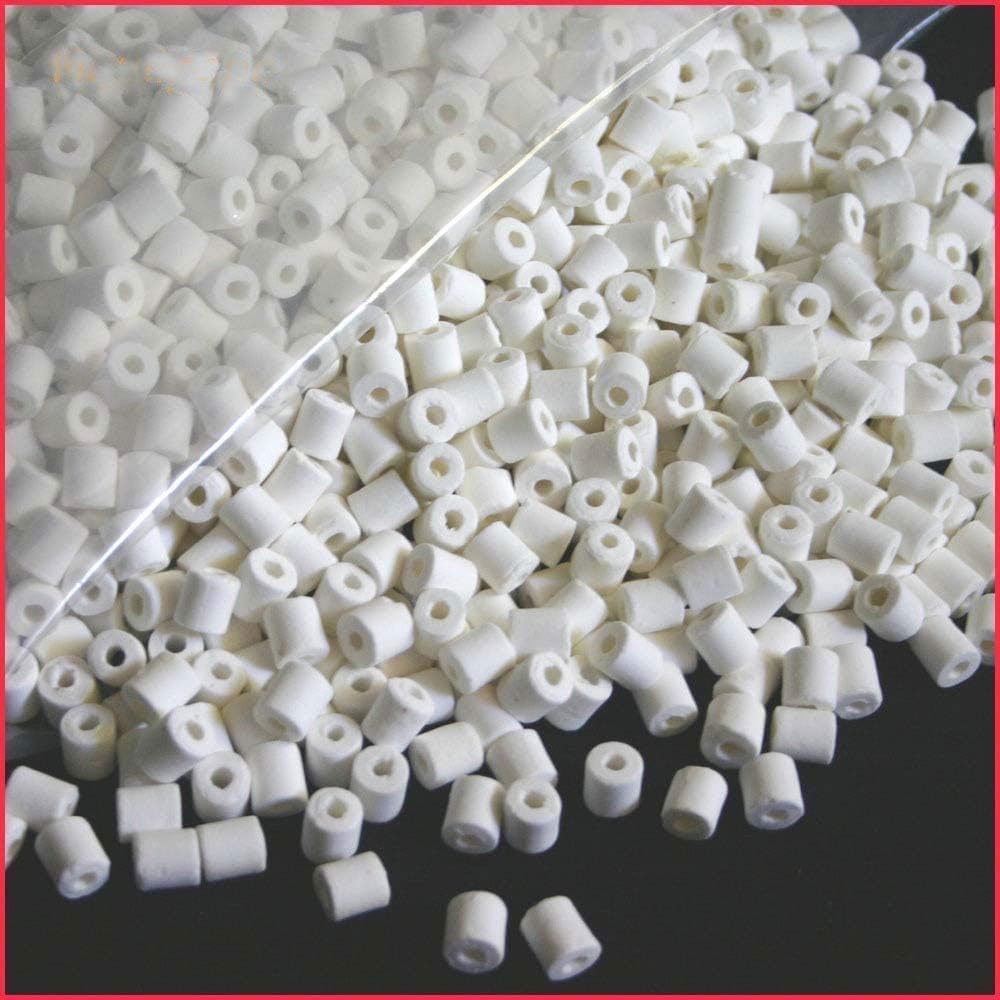
The AQUACITY Premier Bulk Bio Ceramic Rings come in a five-pound bulk package with no mesh bags included, making them the most economical choice if you already own reusable filter bags. The rings measure half-inch by half-inch and feature an extremely porous structure with very fine pores that house a dense bacterial population. Buyers report that the rings colonize quickly, often showing biological activity within days of installation.
Because the pores are very fine, users note that water flow through packed rings can slow down if debris accumulates, especially in canister filters with high mechanical loads. The trade-off is a higher bacterial density per ring compared to coarser media, which makes these rings particularly effective in hospital tanks, quarantine setups, or as supplemental biological media in sumps. The bulk format also lets you distribute the rings across multiple filters or tanks.
The manufacturer offers a lifetime warranty, which is rare in this category and signals confidence in the material durability. The rings are packaged loose in a box rather than bags, so expect some ceramic dust from shipping friction. Rinsing before first use removes the dust quickly. For dedicated aquarists who prefer to bag their own media and maximize every cubic inch of filter space, this five-pound bulk option delivers excellent value.
Why it’s great
- Very fine pore structure for dense bacteria colonization
- Lifetime warranty from manufacturer
- Economical bulk format for multiple filters
Good to know
- No mesh bags included in package
- Fine pores can clog faster in heavy debris loads
5. JIH Aquarium Bio Ceramic Rings (4 lbs in 4 Mesh Bags)
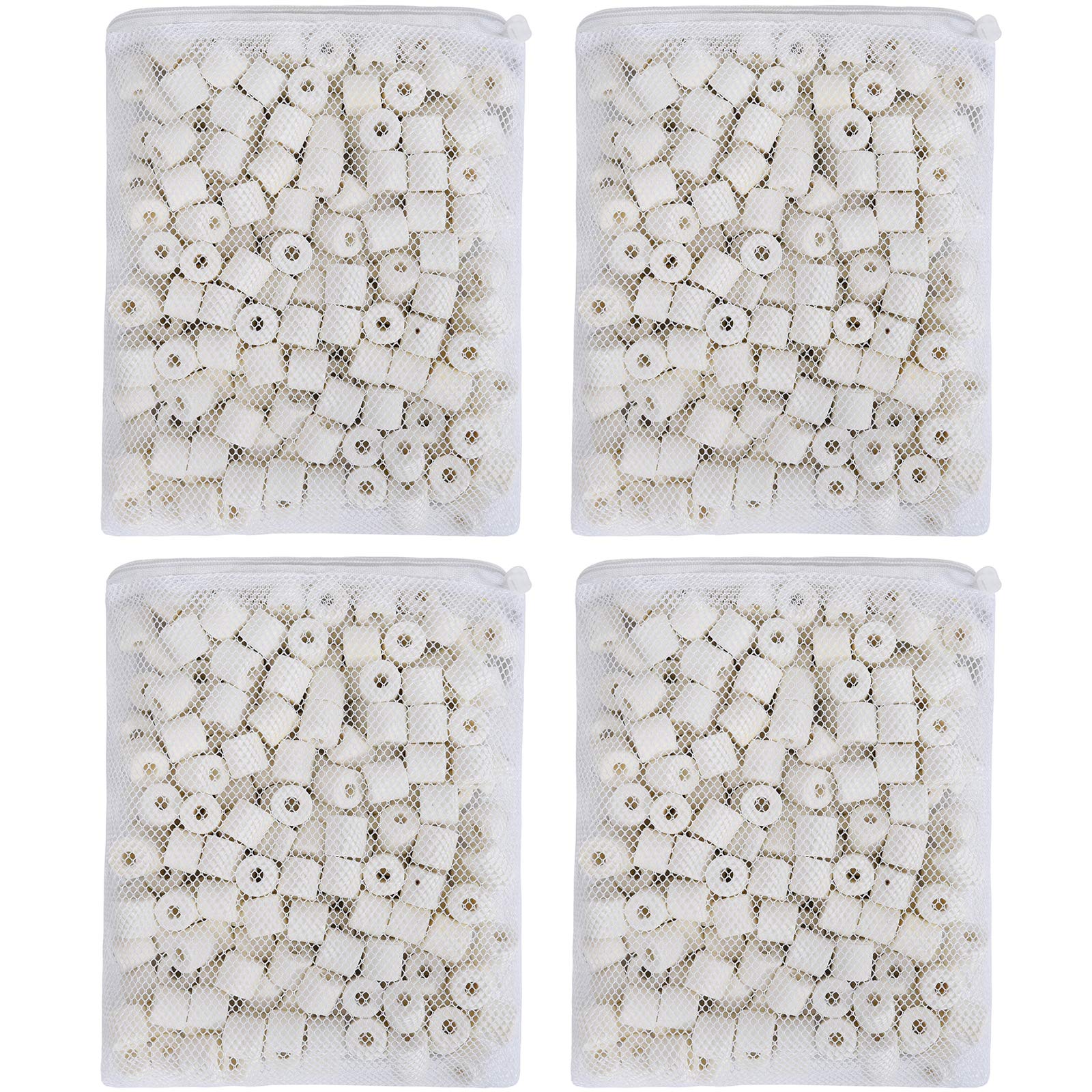
The JIH Aquarium Bio Ceramic Rings deliver four pounds of half-inch rings pre-packed in four separate mesh bags. The bagged format lets you drop one or two bags into a hang-on-back filter, canister tray, or sump compartment without measuring or transferring loose media. Users note that the rings are smaller than expected from the description, which actually helps in compact filter compartments where larger rings would jam.
The porous ceramic material does not affect water chemistry, making it safe for freshwater, saltwater, and reef tanks. The mesh bags use double-stitched seams and plastic zippers that hold up to multiple cleaning cycles. Because the rings are bagged separately, you can place them strategically in different filter zones or easily remove one bag for seeding a new tank. The quantity is ideal for a 20 to 40-gallon setup or for supplementing an existing biological filter.
The primary consideration is ring size — at roughly half-inch diameter, they are on the smaller side, which means they pack more densely and can slightly slow water flow if overfilled. For most canister and HOB filters, this is manageable. The included four bags give you flexibility in placement, and the price per pound makes this a strong entry-level option for new aquarists.
Why it’s great
- Pre-bagged for immediate use
- Good for compact filter compartments
- Safe for fresh and saltwater
Good to know
- Rings are smaller than typical half-inch media
- Dense packing can restrict flow slightly
6. CNZ Aquarium Filter Media Kit (Activated Carbon, Bio Ball, Ceramic Ring)

The CNZ Aquarium Filter Media Kit bundles activated carbon, polypropylene bio-balls, and ceramic rings in one package, making it the only product in this list that addresses chemical, biological, and mechanical filtration simultaneously. The activated carbon removes odors, discoloration, and organic pollutants, while the bio-balls increase dissolved oxygen levels and provide surface area for bacteria. The ceramic rings offer dense biological filtration as the final stage.
The components come loose in a zippered mesh bag, so you can layer them in the correct order inside your filter — carbon first to polish water, bio-balls in the middle for oxygenation and bacteria, and rings at the end for final biological processing. Users with 20 to 32-gallon tanks report crystal clear water and stable parameters for four to five months before replacement is needed. The kit is equally effective in freshwater and saltwater setups.
The trade-off is that none of the individual components are as specialized as a dedicated media would be. The carbon quantity is modest and needs replacement monthly for best results. The bio-balls are less porous than ceramic alternatives. For aquarists who want a single purchase that covers all filtration types and simplifies setup, this kit provides a convenient starting point that outperforms disposable cartridge systems.
Why it’s great
- Three media types in one package
- Zippered mesh bag for easy layering
- Works for fresh and saltwater
Good to know
- Activated carbon needs monthly replacement
- Individual components less specialized than standalone media
7. Reefing Art Ceramic Bio Filter Media (1 Box / 24 pcs)

The Reefing Art Ceramic Bio Filter Media comes as 24 solid ceramic blocks weighing 1.75 pounds total. Unlike rings or spheres, these rectangular blocks offer a large, uninterrupted surface that can be stacked in sumps or placed in canister filter compartments without escaping through grates. Each block is dense and porous, providing internal structure that hosts bacteria deep within the material. Users report minimal chipping during handling, which is a common issue with thinner ceramic media.
The blocks are made from non-metallic ceramic that will not leach aluminum or heavy metals, making them safe for sensitive reef systems and shrimp tanks. The porosity is well-suited for both freshwater and saltwater environments. Because the blocks are larger, they are less likely to clog than small rings, and they can be removed and rinsed individually without losing smaller pieces through filter slots. The half-gallon volume fills roughly one standard sump compartment.
The primary use case is in sump systems and large canister filters where blocks can be arranged for optimal flow. They are less practical for compact HOB filters due to their size. The 24-block count is a unique configuration not found in other ring or sphere products, catering to aquarists who prefer structured media over loose pieces. For those building a custom sump setup or needing a biological block for a pond filter, this format is worth considering.
Why it’s great
- Blocks stay in place without escaping through grates
- Dense internal porosity for deep bacteria colonization
- Safe non-metallic ceramic for sensitive tanks
Good to know
- Not suitable for compact HOB filters
- Blocks may shed fine dust from shipping abrasion
FAQ
How often should I replace ceramic filter rings?
Can I mix ceramic rings and sintered glass in the same filter?
Do bio-balls provide the same biological filtration as ceramic rings?
Final Thoughts: The Verdict
For most users, the best aquarium filter media winner is the EHEIM Substrat Pro because its sintered glass structure and 1,800 sq ft/gal surface area provide unmatched biological filtration density in any canister or sump. If you want maximum volume for the money, grab the ALEGI 6 lbs Ceramic Spheres for large setups with plenty of filter space. And for a complete all-in-one starter solution, nothing beats the CNZ Filter Media Kit that handles chemical, biological, and mechanical filtration in one purchase.