
A surface carpet of Salvinia, duckweed, or Water Lettuce transforms a bare tank into a self-regulating ecosystem by shading out algae and stripping excess nutrients from the water column — but selecting the wrong species for your light level and surface agitation can turn the top of your aquarium into a rotting brown mess within a week.
I’m Min — the co-founder and writer behind Gadgets Feed. I’ve spent hundreds of hours analyzing species propagation rates, root structure development, and temperature tolerance data across dozens of commercial and hobbyist floating plant listings to separate robust stock from fragile shipments that arrive pre-stressed.
This guide covers the seven top-performing varieties available now, from budget-friendly Water Spangles to premium Red Root Floater cultures. You will learn exactly which species matches your tank’s flow, light, and fish load with this expert-ranked analysis of the best aquarium floating plants.
How To Choose The Best Aquarium Floating Plants
Floating plants act as natural biofilters, but each species has a specific tolerance for water flow, light intensity, and temperature. Selecting the wrong type leads to melting leaves, stunted root growth, and eventual die-off within two weeks of introduction.
Surface Agitation Tolerance
Red Root Floaters and Water Lettuce prefer still or low-flow surfaces — strong filter output or wave makers push them underwater, coating their leaves in moisture they cannot shed, causing rot. Salvinia Minima and Giant Duckweed tolerate moderate surface movement much better, making them safer for tanks with HOB or canister filters that disturb the surface.
Nutrient Uptake Rate vs. Growth Speed
Fast-growing species like Giant Duckweed and Water Spangles consume ammonia and nitrate rapidly, requiring weekly thinning to avoid surface overcrowding that blocks gas exchange. Slower varieties such as Dwarf Water Lettuce and Red Root Floater demand less maintenance but offer slower nitrate reduction — choose based on your tank’s bioload and how much manual thinning you can commit to.
Lighting and Coloration Requirements
Red Root Floater develops its signature red-purple undertones only under moderate-to-high light with limited nitrogen — low-light conditions keep the leaves green. Salvinia Minima and Water Spangles remain consistently green regardless of spectrum, making them better for low-tech setups with budget LED strips. Always match the plant’s light preference to your existing setup before ordering.
Temperature Sensitivity and Shipping Window
Live floating plants ship in sealed bags and are vulnerable to extreme temperatures during transit. Most suppliers explicitly warn against ordering when local temperatures exceed 90°F or drop below 35°F. Water Hyacinth and Water Lettuce are particularly sensitive to cold damage below 50°F. Check your local forecast for the five-day window after purchase to minimize the risk of receiving a bag of decaying vegetation.
Quick Comparison
On smaller screens, swipe sideways to see the full table.
| Model | Category | Best For | Key Spec | Amazon |
|---|---|---|---|---|
| Aquarigram Combo Pack | Variety | Four-species diversity | 4 self-multiplying species | Amazon |
| Midnight Glo Red Root Floater | Premium | Visual impact & shrimp tanks | 80+ leaves | Amazon |
| Aquarigram Water Lettuce | Mid-Range | Dwarf rosettes for nano tanks | 12+ leaves | Amazon |
| Red Root Floater 60+ Leaves | Value | Ammonia control with color | 60+ leaves in 4oz cup | Amazon |
| Aquarigram Giant Duckweed | Budget | Rapid nutrient export | 60+ leaves + mystery bonus | Amazon |
| Water Spangles Salvinia Minima | Entry-Level | Beginner-friendly dense mat | 60+ leaves | Amazon |
| AquaLeaf Lettuce & Hyacinth Bundle | Outdoor | Pond water gardens | 2 Water Lettuce + 2 Hyacinth | Amazon |
In‑Depth Reviews
1. Aquarigram Floating Plant Combo Pack

This combo bundle from Aquarigram is the most strategic purchase for hobbyists who want to test multiple species in a single order without paying separate shipping fees. You receive Amazon Frogbit, Red Root Floater, Water Spangles, and Dwarf Water Lettuce — four distinct growth habits from one box, each self-multiplying under adequate light. The variety allows you to observe which species thrives in your specific surface agitation and light spectrum before committing to a larger mono-culture.
Customer feedback consistently praises the packaging quality — each species arrived well-separated with minimal leaf damage, and several buyers reported zero pest contamination (no snails or duckweed stowaways). A minority of reviewers felt the per-species quantity was modest given the price point, noting only two to three units of each plant. However, because all four varieties propagate quickly, a single order can fill a twenty-gallon surface within three to four weeks under medium light and low flow.
The live-arrival guarantee covers temperatures up to 100°F, which is generous compared to the 85°F–90°F caps on most single-species listings. For beginners unsure which floating plant fits their tank, this combo eliminates the guesswork and spreadsheets. Just ensure your filter output is gentle — the Red Root Floater and Water Lettuce in this pack will struggle under heavy surface agitation.
Why it’s great
- Four-species diversity in one purchase reduces trial-and-error cost
- All plants self-multiply, eventually filling the surface without repurchase
- Live-arrival guarantee up to 100°F offers wider safe shipping window
Good to know
- Per-species quantity is moderate — expect 2-3 units each, not a thick mat
- Strong filter flow will damage the Red Root Floater and Water Lettuce
2. Midnight Glo Red Root Floater (80+ Leaves)
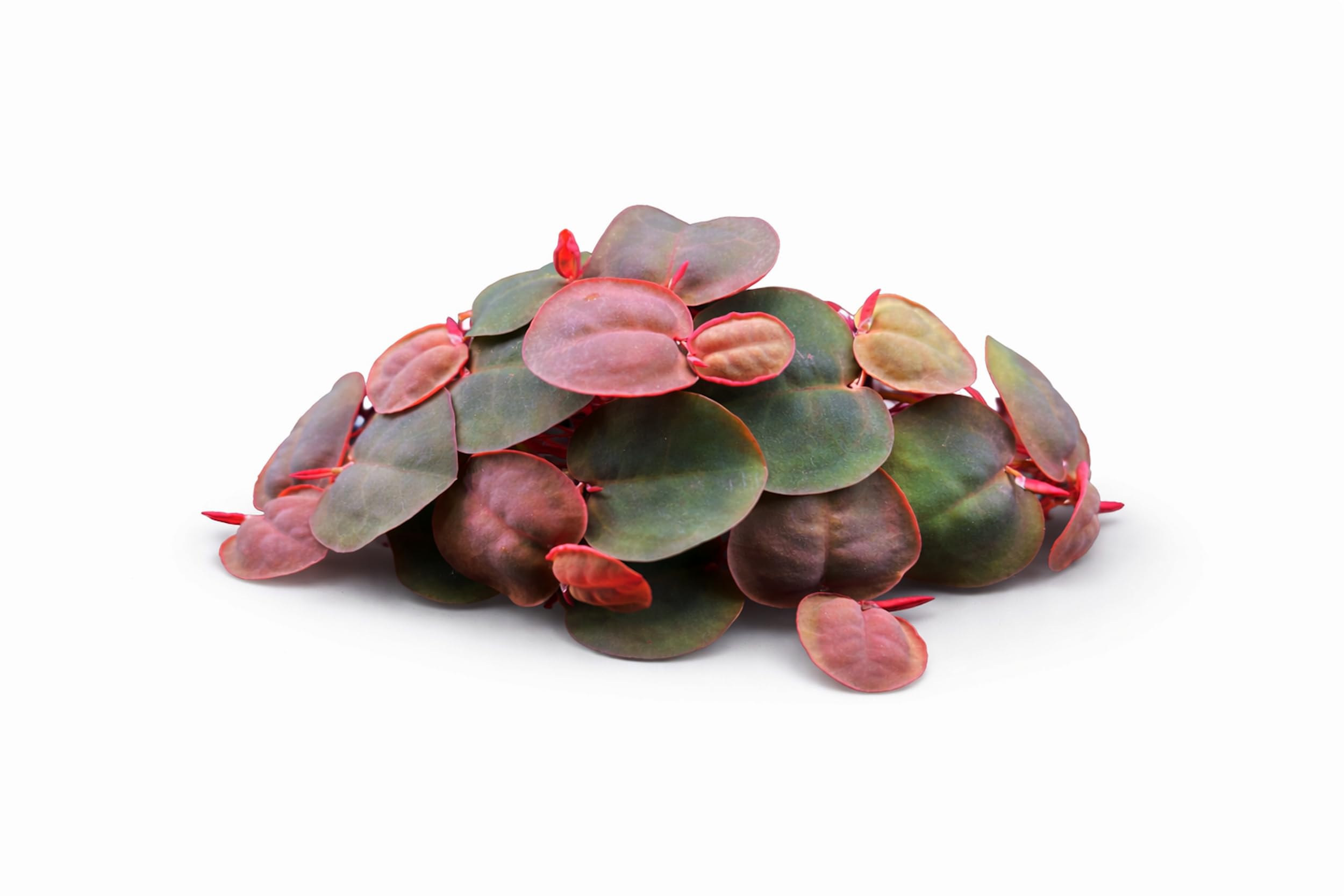
Midnight Glo’s Red Root Floater offering targets the aesthetics-focused aquarist who wants deep red roots and dark green leaves as a living centerpiece at the water line. The shipment contains 80+ leaves in a well-hydrated cup, and customer images consistently show long, vibrant red root systems that contrast sharply against light-colored substrate below. Under moderate-to-high light with controlled nitrogen levels, the leaves develop the characteristic red-purple undersides that set this species apart from ordinary green floaters.
The seller explicitly guarantees snail-free delivery and prevents contamination from duckweed or other hitchhiker plants — a valuable assurance for shrimp breeders who compete for nutrients. Reviewers highlight the secure packaging and fast shipping, though one buyer noted the leaf count felt slightly below the advertised 80+ figure. The growth rate is moderate compared to Water Spangles or Duckweed, meaning this plant will not overtake the tank in two weeks, but it also means slower nitrate reduction for heavily stocked tanks.
Temperature sensitivity aligns with industry norms (no orders above 90°F or below 35°F), and the product care instructions emphasize low-to-moderate light minimums. The real limiting factor is surface agitation — Red Root Floaters hate water droplets on their leaves. Still-water zones or a gentle sponge filter outflow are mandatory for long-term health. If you want a showpiece floater that draws the eye without requiring weekly thinning, this is the strongest candidate.
Why it’s great
- Rich red-purple coloration under high light provides dramatic visual contrast
- Snail-free and contaminant-free guarantee protects sensitive shrimp tanks
- Moderate growth rate requires less frequent thinning than duckweed or spangles
Good to know
- Does not tolerate surface agitation — still water is essential
- Some buyers reported leaf count slightly under the 80+ advertised number
3. Aquarigram 12+ Leaves Dwarf Water Lettuce

Dwarf Water Lettuce (Pistia stratiotes) forms individual rosettes that sit high on the water surface, providing dense shade underneath without completely blocking gas exchange. Aquarigram’s listing ships 12+ leaves from established stock, and buyer reports consistently describe the plants arriving in good condition with minimal browning. A notable advantage of this species is its moderate spread rate — it multiplies through runners but does not double overnight like duckweed, giving you more control over surface coverage.
The leaves are slightly stiffer than Salvinia or Frogbit, which helps them survive handling during transit and acclimation. Several reviewers noted that the plants attracted snails, which actually helped with pest removal since the broad leaves are easy to inspect and clean. The temperature threshold is the most conservative of any listing here — Aquarigram warns against ordering above 85°F, making this species a better choice for cooler-room tanks or spring ordering windows.
Root length is substantial, often extending two to three inches downward, which provides excellent shelter for fry and shrimp. The 12+ leaf count is sufficient to start a ten-gallon tank, but for larger aquariums you will need multiple units or patience for runner propagation. If you want a manageable, attractive floater that does not require weekly harvests, Dwarf Water Lettuce is the most forgiving mid-range option available.
Why it’s great
- Moderate growth rate prevents rapid overgrowth — less maintenance than duckweed
- Broad, stiff leaves survive transit handling better than delicate floaters
- Long dangling roots create excellent fry and shrimp shelter
Good to know
- Lower temperature threshold (85°F max) limits safe ordering windows in warm climates
- 12+ leaves cover smaller tanks initially — larger tanks need multiple orders or patience
4. Red Root Floater Live Aquarium Plants 60+ Leaves
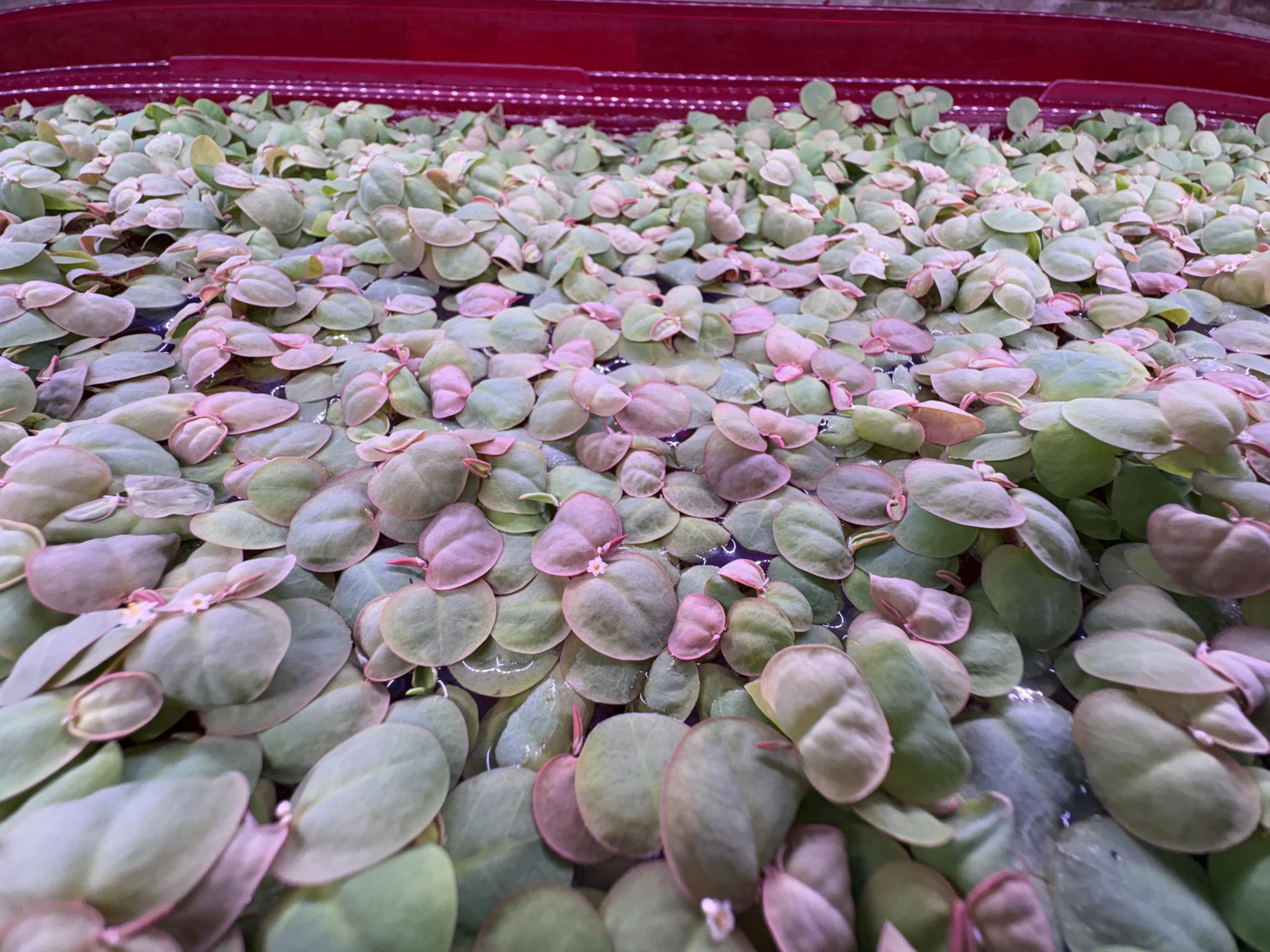
This 60+ leaf Red Root Floater offering from a generic brand focuses on value without sacrificing visual quality. Packaged in a 4oz water cup that keeps leaves hydrated and reduces shipping shock, the plants arrive with intact root systems and minimal yellowing. The red-purple undersides develop under moderate light, and because the leaves are smaller than Dwarf Water Lettuce, they cover more surface area per leaf count — enough material to shade a 6×6 inch area immediately, according to customer measurements.
The growth pattern spreads through runners, creating a connected floating network rather than loose individual plants. This structure makes manual thinning easier because you can lift connected sections rather than chasing scattered leaves. Reviews emphasize the rapid establishment time — buyers reported visible new growth within three days of introduction. The main constraint is, like all Red Root Floaters, its intolerance of surface agitation; still water zones are non-negotiable.
Temperature warnings mirror the industry standard of 90°F maximum, and the seller ships from the East Coast, which means longer transit times to West Coast buyers. For the price point, you receive a genuine culture that supports ammonia and nitrate removal while providing shade that directly reduces hair algae. If you want Red Root Floater aesthetics at a lower entry cost than the Midnight Glo option, this cup-based listing delivers consistent results.
Why it’s great
- 4oz cup packaging keeps roots hydrated and reduces transit shock significantly
- Runner growth creates connected mats that are easy to thin in sections
- Rapid establishment with visible new growth within 72 hours of introduction
Good to know
- Sensitive to surface agitation — must have still water zones to thrive
- Ships from East Coast, so West Coast buyers face longer transit risk
5. Aquarigram 60+ Giant Duckweed with Mystery Bonus Plant

Giant Duckweed (Spirodela polyrhiza) is the fastest-growing floater in this lineup, making it the most effective nitrate and ammonia sponge available. Aquarigram’s listing provides 60+ leaves plus a mystery bonus plant, and customer reports confirm that the duckweed multiplies rapidly under moderate light — one reviewer described removing excess plants weekly across four separate tanks. The larger leaf size compared to common duckweed makes it less prone to getting stuck on filter intakes, and it tolerates moderate surface movement better than Red Root Floaters or Water Lettuce.
The live-arrival guarantee covers temperatures up to 100°F, which is the most forgiving high-temperature threshold in the group. However, shipping times matter — one buyer received the package after 4-5 days in transit and noted minimal root development, though the plants survived. The mystery bonus plant is a welcome surprise, usually a small portion of another species like Water Sprite or Anacharis, adding extra value for budget-constrained setups.
The main trade-off is the relentless growth rate. Duckweed requires weekly thinning to prevent complete surface coverage that blocks oxygen exchange and reduces light penetration to submerged plants. It is also notoriously hard to eradicate once introduced — even a single leaf left behind can repopulate the surface. This makes it ideal for heavy-feeding tanks like goldfish or cichlid setups where nutrient export is the priority, but a poor choice for meticulously scaped aquariums where you want controlled coverage.
Why it’s great
- Fastest growth rate provides maximum nitrate and ammonia absorption
- Generous 100°F shipping threshold reduces weather-related die-off risk
- Mystery bonus plant adds unexpected value for the price
Good to know
- Requires weekly thinning to prevent full surface coverage and oxygen issues
- Nearly impossible to fully remove once established — one leaf regrows the colony
6. 60+ Leaves Water Spangles Salvinia Minima
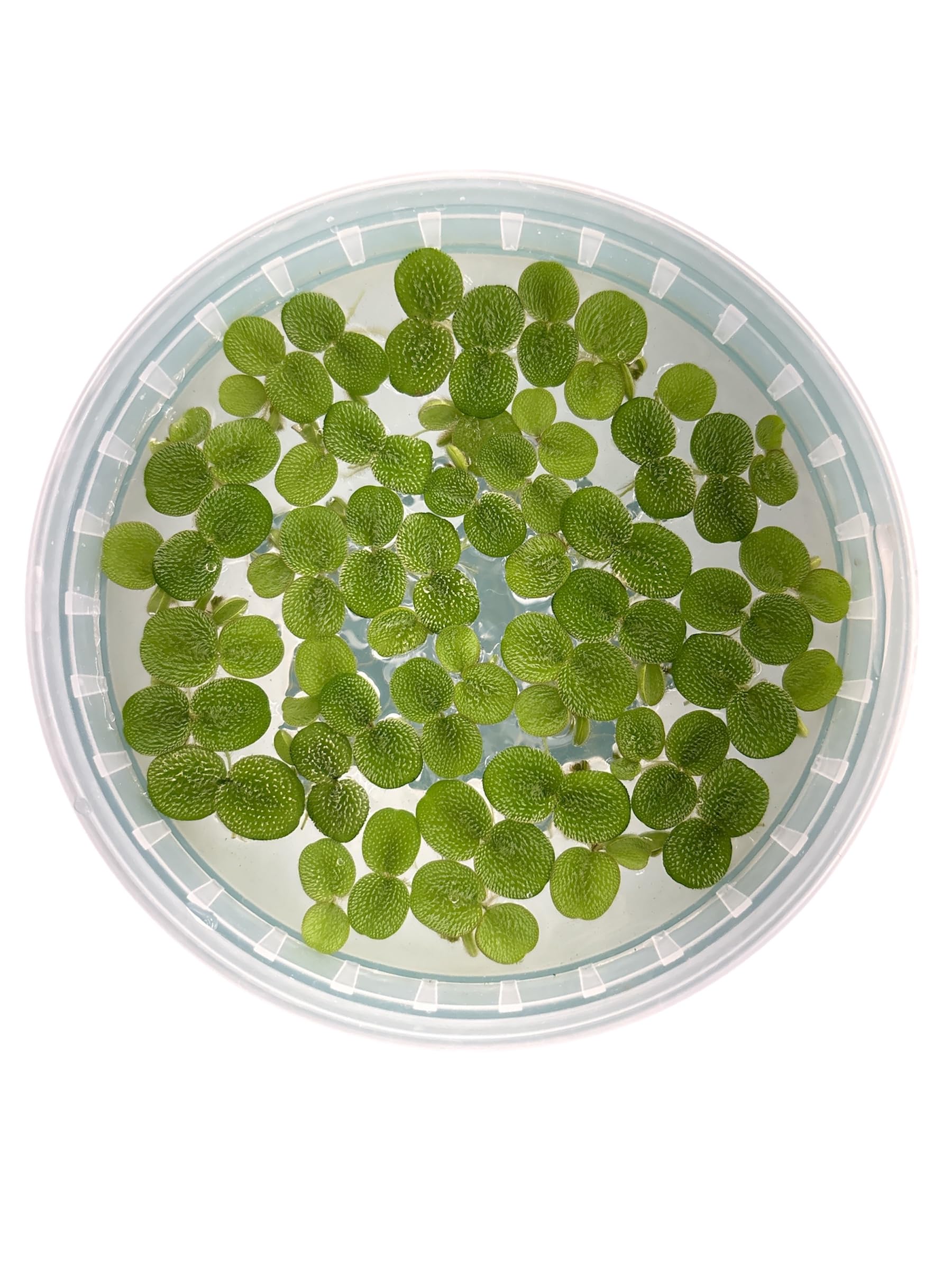
Salvinia Minima, commonly called Water Spangles, is one of the most beginner-friendly floating plants because of its compact size and tolerance for a wide range of water conditions. This listing ships 60+ leaves that form a dense, low-lying mat on the surface, creating a lush green carpet that effectively blocks light to prevent algae growth. Customer reviews are overwhelmingly positive — every verified review averages a perfect five-star score, with buyers consistently praising the health and quantity of the plants upon arrival.
The leaves are small, about the size of a dime to a nickel, which means 60 leaves cover roughly the surface area of a sheet of paper. This makes it ideal for nano tanks and betta setups where larger floaters would overwhelm the space. The species adapts to both freshwater and brackish environments, a versatility not shared by all floaters, and it thrives in medium-to-high lighting without requiring CO2 injection or specialized fertilization.
The temperature cap matches the 90°F industry standard, and the seller ships from the East Coast, so West Coast buyers should monitor transit times. One reviewer explicitly warned against ordering during extreme heat or cold. For anyone entering the floating plant hobby for the first time, Salvinia Minima offers the highest success rate with the lowest risk — the compact size and forgiving growth habit make it nearly impossible to kill as long as the surface remains calm and the lights stay on.
Why it’s great
- Extremely beginner-friendly with near 100% survival rate in customer reviews
- Small leaf size perfect for nano tanks and betta setups
- Adapts to both freshwater and brackish water environments
Good to know
- Requires moderate-to-high lighting — low light slows growth significantly
- East Coast shipping means longer transit to West Coast buyers during weather extremes
7. AquaLeaf Aquatics Water Lettuce & Water Hyacinth Bundle

This bundle of two Water Lettuce and two Water Hyacinth plants from AquaLeaf Aquatics is purpose-built for outdoor ponds and water gardens rather than indoor aquariums. Water Hyacinth (Eichhornia crassipes) produces lavender flowers during summer, adding ornamental value that no purely aquarium floater provides. The plants ship with trimmed roots because longer roots can break off during transit, and the instructions advise allowing a few weeks for root re-establishment after placement.
The natural biofiltration capacity is significant — the long root systems leach nutrients directly from the pond water, reducing the algae bloom that commonly plagues outdoor water features during summer heat. Customer reviews from koi pond owners confirm that the plants survive and thrive in full-sun conditions, though a minority of buyers reported receiving undersized specimens with leaf damage. The restricted shipping states (AL, FL, CT, MI, MN, OH, IN, TX, WI) reflect USDA compliance because Water Hyacinth is classified as an invasive species in those regions.
The temperature warning is the strictest — AquaLeaf advises against ordering when temperatures are above 90°F or below 20°F during the day. For most buyers, this means ordering in spring or early fall rather than peak summer. The roots ship trimmed to roughly 1–2 inches, which can be alarming if you expect established plants, but the growth rate in outdoor conditions is aggressive once temperatures stabilize above 60°F. If you have an outdoor pond that needs fast nutrient export and seasonal flowers, this bundle is the only option that delivers both.
Why it’s great
- Water Hyacinth produces ornamental summer flowers — unique among floating plants
- Deep roots provide excellent nutrient export and natural pond biofiltration
- USDA-compliant shipping ensures no invasive species introduction in restricted states
Good to know
- Roots arrive trimmed — requires patience for full re-establishment (2-3 weeks)
- Strict temperature shipping windows (20°F–90°F) limit safe ordering periods
FAQ
Why do my floating plants keep dying after I add them to the tank?
Can I put Red Root Floaters in a tank with a HOB filter?
How do I prevent duckweed from overrunning my tank?
Will floating plants block too much light for my rooted aquarium plants?
Are Water Hyacinth legal in all states?
Final Thoughts: The Verdict
For most users, the best aquarium floating plants winner is the Aquarigram Floating Plant Combo Pack because it lets you sample four different species in a single order, removing the guesswork of which variety matches your tank’s light and flow profile. If you want dramatic red-purple coloration and shrimp-safe guarantee, grab the Midnight Glo Red Root Floater. And for outdoor pond setups that need aggressive nutrient export and seasonal flowers, nothing beats the AquaLeaf Water Lettuce & Hyacinth Bundle.