
Your aquarium plants are yellowing at the tips, melting from the base, or simply refusing to root into the inert gravel you picked at the pet store. The problem isn’t your light, your CO₂, or your fertilizer routine — it is the lifeless layer beneath the roots that provides zero cation exchange, zero nutrient storage, and zero buffering capacity.
I’m Min — the co-founder and writer behind Gadgets Feed. After digging through hundreds of customer reports and comparing chemical composition, grain density, ammonia leach curves, and long-term nutrient depletion rates across the most popular active substrates on the market, I’ve mapped exactly which bag delivers what your plants actually need.
This guide isolates the seven contenders that define the current substrate landscape, each evaluated by its ability to anchor root systems while maintaining stable water chemistry, so you can finally stop guessing about which aquarium plant substrate will turn your tank into a lush, self-sustaining garden.
How To Choose The Best Aquarium Plant Substrate
Choosing the right base layer is the most consequential decision you will make for your planted aquarium. An inert substrate like plain gravel holds zero nutrients and will force you to rely entirely on root tabs and liquid fertilizers from day one. An active aquasoil, on the other hand, stores nutrients, buffers pH, softens water, and fosters the bacterial colony that keeps your nitrogen cycle stable. Matching the substrate type to your plant selection, fish species, and maintenance tolerance is the difference between a tank that thrives and one that frustrates.
Nutrient Content vs. Inert Base
Active aquasoils like ADA Amazonia or Fluval Stratum contain embedded organic matter and mineral compounds that leach into the root zone over weeks and months. These soils also possess cation exchange capacity — meaning they hold onto fertilizer ions and release them slowly as plants demand them. Inert substrates like CaribSea Peace River provide zero nutrients and zero buffering. They are purely aesthetic and structural, which simplifies water chemistry but demands a strict supplemental fertilization schedule. For heavy root feeders like cryptocorynes, swords, and vallisneria, an active soil is almost non-negotiable unless you enjoy injecting root tabs every few weeks.
Grain Size and Root Penetration
Grain diameter directly affects how easily plant roots spread and how well the substrate holds its slope. Fine powders around 1–2 mm (Fluval Bio Stratum, Controsoil extra fine) allow delicate roots from carpeting plants like Monte Carlo and dwarf baby tears to anchor without being lifted by water flow. Larger granules in the 3–5 mm range (Landen Aqua Soil, Seachem Flourite) provide better water flow through the bed and resist compaction, but they can allow small plant roots to drift upward. Bottom feeders like corydoras also prefer soft, small-grained substrates that won’t erode their barbels during foraging.
Ammonia Leach and Cycling Safety
Fresh aquasoil from a bag is biologically active — it releases ammonia as the organic components begin to break down. ADA Amazonia Ver 2 is famous for a significant ammonia spike that can last up to four weeks, requiring a full cycle before any livestock is introduced. Controsoil and Fluval Stratum are formulated with lower ammonia content, allowing faster cycling and earlier fish addition. If you plan to add shrimp or sensitive fish immediately, a low-ammonia option like Ultum Nature Systems Controsoil or a well-rinsed inert substrate capped over a nutrient layer is the safer route.
Quick Comparison
On smaller screens, swipe sideways to see the full table.
| Model | Category | Best For | Key Spec | Amazon |
|---|---|---|---|---|
| ADA Amazonia Ver 2 | Aquasoil | High-tech planted tanks | 9L volume, heavy ammonia spike | Amazon |
| Fluval Bio Stratum | Volcanic Soil | Root-heavy planted tanks | 1mm powder granules, 17.6 lbs | Amazon |
| Fluval Plant & Shrimp Stratum | Aquasoil | Shrimp and planted tanks | Neutral to slightly acidic pH, 17.6 lbs | Amazon |
| Landen Aqua Soil | Aquasoil | Budget mid-range planted tanks | 3-5mm grain, 5L / 10 lbs | Amazon |
| Ultum Nature Systems Controsoil | Volcanic Ash | Low-ammonia fast cycle | 6.8pH, extra fine 1L | Amazon |
| CaribSea SuperNaturals Peace River | Inert Gravel | Natural aesthetic, corydoras | 1-2mm smooth grains, 20 lbs | Amazon |
| Seachem Flourite Black Clay Gravel | Clay Gravel | Inert base with CEC | 7.7 lbs, true black color | Amazon |
In‑Depth Reviews
1. ADA Aqua Soil Amazonia Ver 2 (9L)

ADA Amazonia Ver 2 is the benchmark that every other aquasoil is measured against. The granular composition — made from rare Japanese plant-based black soil — is dense enough to hold a sloped aquascape yet porous enough for aggressive root penetration. Each bag includes a separate Amazon concentrate supplement that allows localized enrichment of organic components, which is a unique feature for tailoring nutrient density to specific layout zones.
The defining characteristic of this substrate is its powerful ammonia release during the first 1–4 weeks. This is not a bug — it is a feature that builds a robust nitrifying bacterial colony before any livestock is introduced. For high-tech tanks running CO₂ injection and demanding plants like Utricularia graminifolia, dwarf baby tears, and Bucephalandra, this soil is the foundation that makes those species viable. The pH and KH buffering is aggressive; expect a significant drop in both, so plan your water change schedule accordingly.
The Ver 2 formula has reduced nutrient content compared to the original Amazonia, which actually reduces the risk of nuisance algae blooms during the initial break-in period. The granules have an irregular shape that looks natural and locks together to prevent shifting. Three bags will comfortably cover a 90 cm tank with a sloped depth of 5–8 cm. This is not a beginner substrate unless you understand the cycling implications, but for the serious planted tank enthusiast, nothing else delivers the same foundation.
Why it’s great
- Superior buffering drops pH and KH to ideal levels for sensitive plants
- Comes with separate concentrate supplement for targeted nutrient zones
- Dense, irregular granules hold slopes without collapsing
Good to know
- Significant ammonia spike requires 1–4 week cycling before adding fish or shrimp
- Premium-tier price per bag; budget several bags for a medium tank
2. Fluval 12698 Natural Mineral-Rich Volcanic Soil Bio Stratum
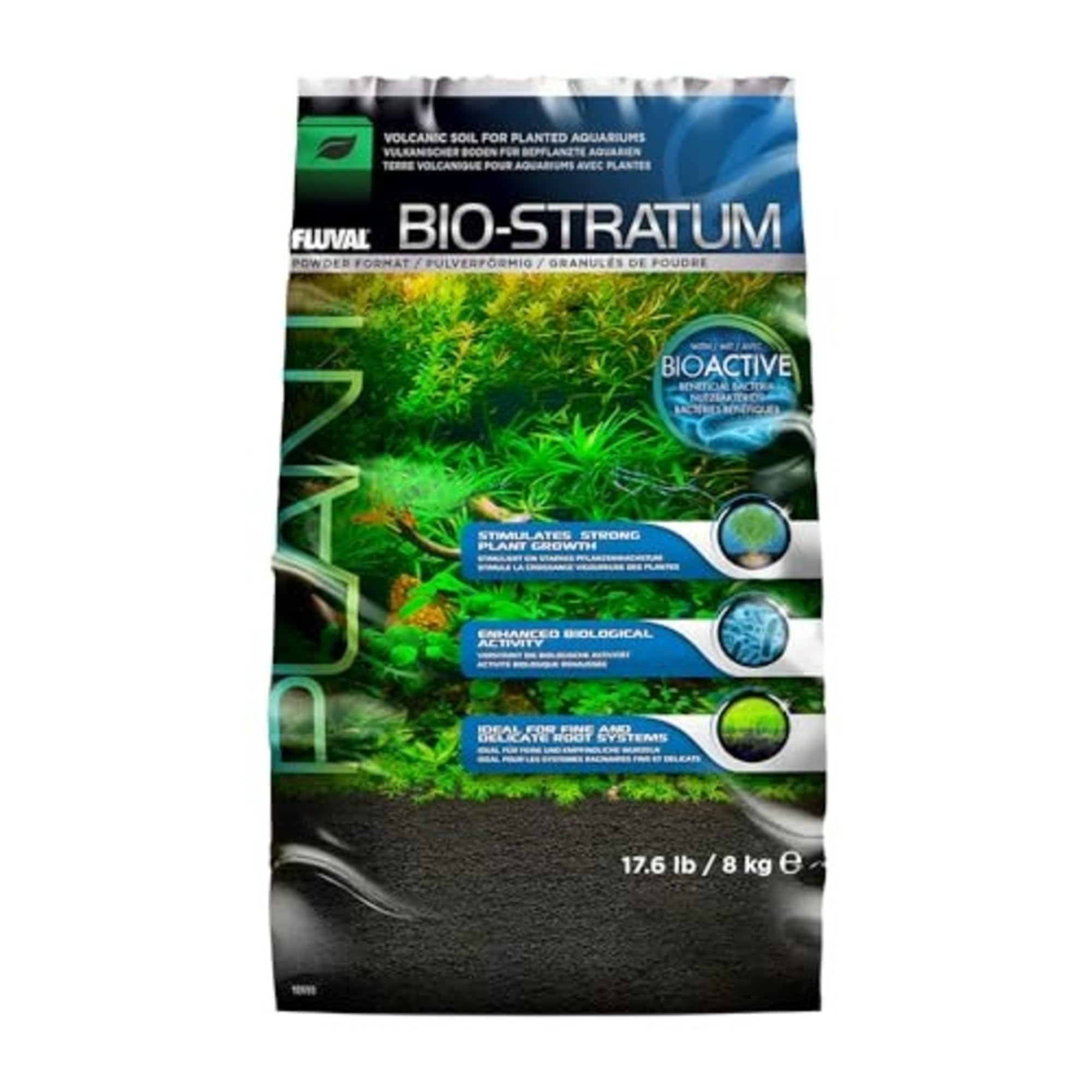
Fluval Bio Stratum takes the volcanic soil concept and refines it into an ultra-fine 1 mm powder that is unlike any other substrate on this list. The granule size is so small that delicate roots from carpeting plants and tissue cultures can penetrate and spread without encountering physical resistance. The non-compacting structure means the bed stays loose and oxygenated, preventing the anaerobic dead zones that plague denser clay-based substrates.
The key differentiator here is the dormant nitrifying organisms infused into the soil. Upon contact with water, these organisms activate and begin breaking down waste immediately, which accelerates the nitrogen cycle and rapidly reduces ammonia levels. Users report crystal-clear water within days of setup, and plants like Amazon swords and cryptocorynes show visible new growth within the first week. The potent mineral blend includes trace elements that promote vibrant coloration in red stem plants like Ludwigia and Rotala.
Because the granules are so light, floating particles can occur during filling if you pour water directly onto the bed. The standard technique — placing a bowl or plate on the substrate and pouring water onto it — solves this entirely. Many aquascapers cap this substrate with a thin layer of coarse sand to lock the powder in place. No root tabs are needed for the first three to six months, making this a cost-effective premium option despite the higher per-bag price.
Why it’s great
- Ultra-fine 1mm granules allow effortless root penetration for carpeting plants
- Infused with dormant nitrifying organisms that accelerate cycling
- Rich mineral content promotes vibrant coloration in stem plants
Good to know
- Lightweight granules can float if water is added too aggressively
- Premium price point; best value when capped with a decorative layer
3. Fluval 12695 Plant and Shrimp Stratum

Fluval Plant and Shrimp Stratum is the most popular mid-range aquasoil on the market for good reason. The porous granular structure provides an ideal surface area for nitrifying bacteria colonization while maintaining a neutral to slightly acidic pH range that suits both tropical fish and shrimp. Shrimp breeders consistently report heavy breeding activity and robust shell development when using this substrate, thanks to the balanced mineral profile.
The 17.6-pound bag is enough to create a 2–3 inch layer in a standard 10-gallon tank, which is the sweet spot for most hobbyists starting their first planted aquarium. The natural dark brown color provides a high-contrast background for green plants without looking artificial. Users note that the pellets are light enough that small plants can float if not anchored properly, so combining this substrate with plant weights or a gravel cap is recommended for heavy root feeders.
Water clarity is exceptional — the dust settles within 6 to 48 hours without requiring pre-rinsing, and the filter clears any remaining cloudiness quickly. The lack of a strong pH effect means you don’t have to fight unexpected swings, but it also means the buffering capacity is gentler than ADA or Controsoil. For a balanced, beginner-friendly substrate that supports both plants and shrimp without the complexity of high-tech management, this is the most forgiving choice on the list.
Why it’s great
- Porous structure enables fast bacterial colonization for stable water quality
- Color and grain size create a natural, attractive aquascape
- Excellent for shrimp breeding and shell health
Good to know
- Lightweight granules let small plants float without anchors
- Not nutrient-rich enough for heavy root feeders without root tabs
4. LANDEN Aqua Soil Substrate 5L (10lbs)

Landen Aqua Soil positions itself as a direct alternative to the premium Japanese brands at a significantly lower price point without sacrificing the core functional properties that define a good active substrate. The 3–5 mm grain size is ideal for medium to large planted tanks where water flow through the substrate bed is important. The porous structure provides the same bacterial colonization surface area and nutrient storage capabilities as soils costing nearly twice as much.
Users report that the substrate does produce some dust and requires thorough rinsing before use — typically three rinses until the runoff runs clear. A small number of organic debris pieces like dried grass or leaf fragments may be present in the bag, which is a function of the natural processing method rather than a quality defect. The pH settles around 6.0–6.5 after the initial break-in period, and the KH buffering is effective enough to keep soft-water shrimp species comfortable.
The 5L bag weighs approximately 10 pounds and covers a standard 20-gallon tank at a 2-inch depth. Some users note that the soil is light enough that plants can float out if not properly weighted, and that fish waste tends to sit on top of the granules rather than sifting through, making maintenance straightforward. For aquascapers on a budget who still want active soil properties — nutrient storage, pH buffering, and bacterial colonization — Landen delivers 90% of the ADA experience at roughly half the per-liter cost.
Why it’s great
- Excellent value for an active, nutrient-storing aquasoil
- Effective pH and KH buffering for soft-water species
- Porous granules support healthy bacterial colony growth
Good to know
- Requires thorough rinsing to remove dust and organic debris
- Lightweight granules can allow plants to float if not anchored
5. Ultum Nature Systems Controsoil Extra Fine (1 Liter)

Ultum Nature Systems Controsoil is engineered specifically for aquascapers who want an active substrate without the weeks-long ammonia spike that plagues traditional nutrient-rich soils. The base material is volcanic ash, which provides excellent porosity for bacterial colonization and impurity absorption without releasing the high organic nitrogen load found in soil-based substrates. The pH buffers to a stable 6.8, and the KH reduction is effective enough to create the soft, slightly acidic conditions that most tropical plants and shrimp prefer.
The extra fine grain size makes this an outstanding choice for bottom feeders like corydoras catfish, whose barbels can be damaged by sharp or large-grained substrates. Users report that the granules start as a light brown color and darken over several months to a deep black, which adds aesthetic depth to the tank as it matures. Because the substrate does not contain additional nutrients, controlled fertilization with root tabs and liquid additives is straightforward without the risk of nutrient overdose.
The 1-liter bag is compact and best suited for nano tanks, paludariums, or as a top-off layer for larger setups. For a 30×15 cm tank, a single bag provides roughly a 2-inch depth. The lack of nutrient content means you will need to supplement from the start, but the trade-off is a cycling period of just 2–3 weeks with the right starter bacteria — significantly faster than the 4–6 weeks typical of high-nutrient soils. This is the optimal choice for the hobbyist who values speed to livestock and precise control over fertilization.
Why it’s great
- Low ammonia content enables fast 2–3 week cycling
- Soft, round granules are safe for corydoras and other bottom feeders
- Volcanic ash base absorbs impurities and keeps water clear
Good to know
- No embedded nutrients requires immediate root tab supplementation
- 1-liter bag is small — multiple bags needed for tanks over 10 gallons
6. CaribSea SuperNaturals Peace River 20 lb
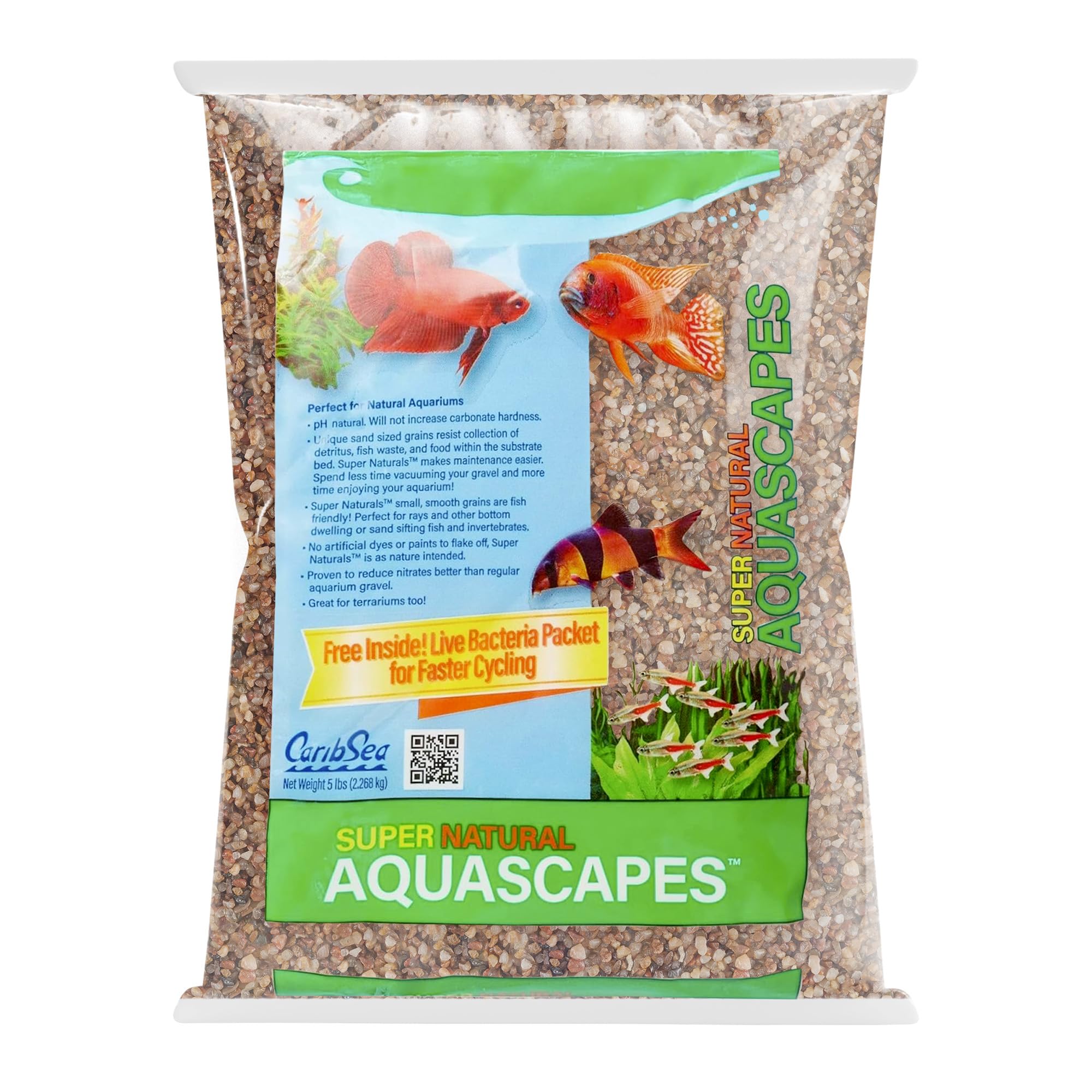
CaribSea SuperNaturals Peace River is an inert gravel that prioritizes aesthetics and fish safety over nutrient delivery. The 1–2 mm grain size sits in the sweet spot between sand and standard gravel — large enough to avoid compaction and allow water flow, yet small enough to prevent food from settling into inaccessible pockets. The smooth, rounded texture is specifically designed to protect the barbels of bottom-dwelling fish like corydoras and loaches, which can be eroded by sharp-edged substrates over time.
The color blend mimics natural riverbed sediment with chestnut, tan, and brown tones that look far more authentic than uniform artificial gravels. This substrate requires thorough washing before use — expect several rinses to remove the fine dust that naturally accumulates during packaging. Once clean, the gravel settles quickly and provides a stable base for medium-rooted plants when supplemented with root tabs. For aquascapers building a South American biotope or a natural stream layout, the visual authenticity is unmatched.
The 20-pound bag provides generous coverage for medium-sized tanks up to 40 gallons at a 2-inch depth. Because this is an inert substrate, it will not buffer pH or soften water, which is an advantage if you are keeping species like African cichlids that prefer hard, alkaline conditions. For planted tanks, expect to rely on liquid fertilizers and root tabs exclusively. This is not a substrate for high-tech aquascaping, but for the natural-looking community tank where fish comfort is the priority, it is the strongest inert option available.
Why it’s great
- Smooth, rounded grains are completely safe for sensitive bottom dwellers
- Natural color blend creates an authentic riverbed aesthetic
- Generous 20-pound bag covers medium tanks affordably
Good to know
- Inert — provides zero nutrients and requires root tabs for planted tanks
- Heavy dust content requires multiple washes before use
7. Seachem Flourite Black Clay Gravel, 7.7 lb

Seachem Flourite Black Clay Gravel occupies a unique position in the substrate market: it is an inert clay gravel that possesses cation exchange capacity (CEC), meaning it can hold and slowly release charged nutrient ions even though it contains no embedded organic fertilizer. This makes it a more effective base for root-fed plants than standard inert gravel, without the ammonia spike or pH swing associated with active aquasoils. The black color is baked into the clay — not painted on — so it will never fade or chip to reveal a lighter underlayer.
The 7.7-pound bag provides a 1.5 to 2-inch layer in a 6-gallon tank, making this an excellent choice for nano tanks, paludariums, or as a top-dressing layer over a nutrient-rich substrate. The clay grains are heavier than aquasoil granules, which means they stay in place during filling and do not float. However, the dust content is significant — users consistently recommend rinsing in a tray under running water until the runoff clears. The dust settles within 1–2 days if you skip rinsing, but pre-washing saves time and prevents an initial cloudiness.
Because Flourite is inert in terms of organic content, you will need root tabs for demanding root feeders like cryptocorynes and swords. But the CEC property means that whatever nutrients you add via root tabs stay in the substrate longer and are available to plants gradually rather than leaching into the water column. For budget-conscious aquascapers who want the structural benefits of a clay substrate without the volatility of active soil, Flourite is the most cost-effective long-term solution available.
Why it’s great
- Cation exchange capacity holds and releases nutrients better than standard gravel
- True black color is baked into the clay, not painted, so it never fades
- Heavy grains stay in place during filling and resist floating
Good to know
- Significant dust content requires thorough rinsing before use
- No embedded organic nutrients — root tabs are required for heavy root feeders
FAQ
Should I rinse aquasoil before adding it to my tank?
How deep should my aquarium plant substrate layer be?
Can I mix different plant substrates in the same tank?
Why is my aquarium plant substrate clouding the water?
Final Thoughts: The Verdict
For most users, the aquarium plant substrate winner is the ADA Aqua Soil Amazonia Ver 2 because its unmatched buffering capacity and nutrient foundation support the widest range of demanding aquatic plants in high-tech setups. If you want a fast-cycling option that lets you add livestock within two weeks, grab the Ultum Nature Systems Controsoil. And for a budget-friendly planted tank where root feeders still thrive, nothing beats the LANDEN Aqua Soil for delivering active soil properties at a fraction of the premium price.