
Shrimp tanks demand plants that don’t spike ammonia, rot easily, or outgrow the tiny grazers that call them home. A single melting stem can foul a five-gallon colony overnight, and broad-leaf anubias carrying pesticide residue can wipe out a berried female before you spot the damage. The right species deliver biofilm-rich surfaces for constant grazing and dense refuges that shield shrimplets from filter intakes and curious tank mates.
I’m Min — the co-founder and writer behind Gadgets Feed. After hundreds of hours cross-referencing leaf morphology with shrimp foraging behavior and reading through thousands of verified buyer experiences on live plant shipments, I narrowed down the species and grower practices that actually survive the mail and keep Neocaridina and Caridina colonies thriving.
Shrimp need plants that offer broad leaves for biofilm, dense roots for hiding, and zero risk of toxic melt. This guide ranks the best aquarium plants for shrimp based on real water parameter tolerance, shipment condition reports, and how well each species supports a self-sustaining colony.
How To Choose The Best Aquarium Plants For Shrimp
Shrimp are sensitive to sudden water chemistry shifts, and the wrong plant choice can release decaying organic matter or introduce copper-based fertilizers. Prioritize species that root through a rhizome or float freely — anything buried in nutrient-rich substrate often rots in low-tech shrimp setups. The goal is plants that anchor directly to hardscape and pull nutrients from the water column without needing root tabs.
Leaf Surface Area for Biofilm
Shrimp spend most of their waking hours scraping biofilm off surfaces. Broad, flat leaves like those of Anubias species maximize the edible surface area per square inch of tank space. Narrow stems or fine-leaved plants like Cabomba provide less grazing real estate and often drop needles that decompose quickly, spiking nitrates in densely stocked nano tanks.
Growth Rate and Maintenance Difficulty
Fast-growing floaters like Salvinia minima and Red Root Floaters consume excess nitrates aggressively, which helps stabilize water for breeding colonies. But they require weekly thinning to prevent light blockage and surface stagnation. Slow growers like Anubias and Java Fern need almost zero pruning — ideal for keepers who want a stable, low-intervention environment where shrimp can multiply without disturbance.
Shipping Hardiness and Live Arrival
Live plants shipped in extreme temperatures often arrive mushy, which can introduce rot bacteria into a shrimp tank. Look for sellers that include clear weather hold policies and guarantee live arrival with photo verification. Most of the plants in this guide ship from experienced aquatic vendors who use insulated packaging and explicitly warn against ordering during freezes or heat waves above 90°F.
Quick Comparison
On smaller screens, swipe sideways to see the full table.
| Model | Category | Best For | Key Spec | Amazon |
|---|---|---|---|---|
| Marcus Fish Tanks Anubias Nana Petite | Rhizome | Broad biofilm leaves for nano tanks | 20-30 leaves per potted plant | Amazon |
| Water Spangles Salvinia Minima | Floating | Nitrate absorption and surface shade | 60+ leaves per portion | Amazon |
| Marcus Fish Tanks Anubias Barteri | Rhizome | Larger leaf surface in mid-sized tanks | 2-inch wide pot, plant ~2-6 inches | Amazon |
| Java Fern and Anubias Bundle | Rhizome Combo | Low-maintenance variety in one order | 2-count: 1 Anubias + 1 Java Fern | Amazon |
| SubstrateSource Christmas Moss on Bridge | Moss | Dense shrimp refuge on hardscape | 6-inch height on coconut shell bridge | Amazon |
| Midnight Glo Red Root Floater | Floating | Dangling roots for shrimplet shelter | 80+ leaves with red root tendrils | Amazon |
| Swimming Creatures Java Moss | Moss | Dense mat for grazing and hiding | 25 sq inch portion | Amazon |
In‑Depth Reviews
1. Marcus Fish Tanks Anubias Nana Petite

Anubias nana petite is the most shrimp-friendly foreground plant available because its small, rounded leaves create the perfect biofilm grazing surface without blocking light to lower plants. Each pot arrives with 20-30 leaves, and multiple verified buyers report splitting a single pot into two separate plants that rooted onto driftwood within days. The compact size — roughly one inch in height — makes it invisible to even the smallest shrimplets while providing a safe resting spot directly in the grazing zone.
Shrimp colonies especially benefit from this species’ extreme water parameter tolerance. Reports confirm vibrant leaf color and strong root systems across tanks with pH ranging from 6.0 to 8.0 and temperatures from 68°F to 82°F. Because it grows from a rhizome rather than true roots, it never needs to be buried in substrate — glue it or tie it to any hardscape and it pulls nutrients directly from the water column, eliminating the risk of root rot that fouls shrimp tanks.
The seller backs every order with a live arrival guarantee that requires a photo of the unopened bag if the plant arrives dead. Multiple repeat buyers mention receiving plants that were “better than local options” with no trimming, no hitchhikers, and root systems already strong enough to anchor within hours of planting.
Why it’s great
- Broad, sturdy leaves provide optimal biofilm area for constant shrimp grazing
- Rhizome growth eliminates substrate rot risk in nano and breeder tanks
- Small enough to fit in 2.5-gallon setups while still offering refuge space
Good to know
- Extreme weather below 30°F may cause damage during shipping
- Very slow grower — expect only 1-2 new leaves per month under low light
2. Midnight Glo Red Root Floater
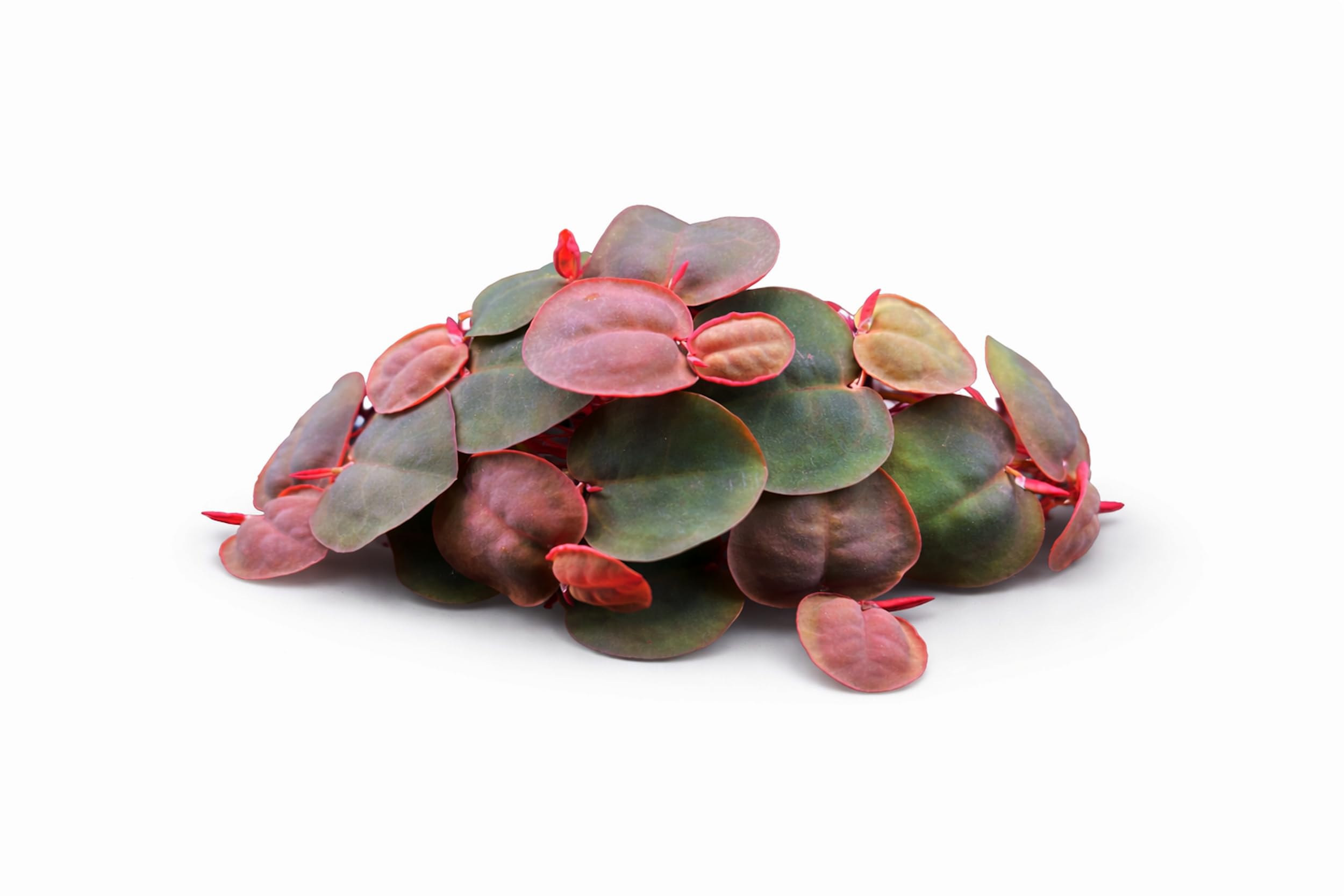
Red Root Floater stands apart from other floating plants because its long red roots hang several inches into the water column, creating a natural curtain that shrimplets use to escape from filter intakes and larger tank inhabitants. Each portion delivers 80+ individual leaves, and reports from buyers confirm that under moderate light the roots deepen to a vivid crimson that contrasts sharply against green leaves and provides additional biofilm surface for adult shrimp to graze.
This species consumes excess nitrates and phosphates aggressively, which helps maintain the stable, low-nutrient water that Caridina shrimp require. The grower ships these plants snail-free and duckweed-free, so there is zero risk of introducing competing floaters or pest snails that can overtake a shrimp tank. Buyers consistently note that after two weeks the mat doubles in size, requiring weekly removal of excess leaves to keep surface light from dropping too low for rooted plants below.
One critical shipping consideration: the seller advises against ordering when local temperatures exceed 90°F or drop below 35°F. Multiple reviewers confirm that packaging was secure and plants arrived with deep, rich color and no melting, though the leaf count may measure slightly under the advertised 80+ leaves.
Why it’s great
- Long red roots create dense shrimplet hiding zones below the waterline
- Aggressive nitrate consumption stabilizes water for sensitive Caridina colonies
- Grown snail-free and duckweed-free for contaminant-safe stocking
Good to know
- Requires weekly thinning to prevent surface light blockage
- Some buyers reported receiving slightly fewer than 80 leaves by count
3. Java Fern and Anubias Bundle (Marcus Fish Tanks)
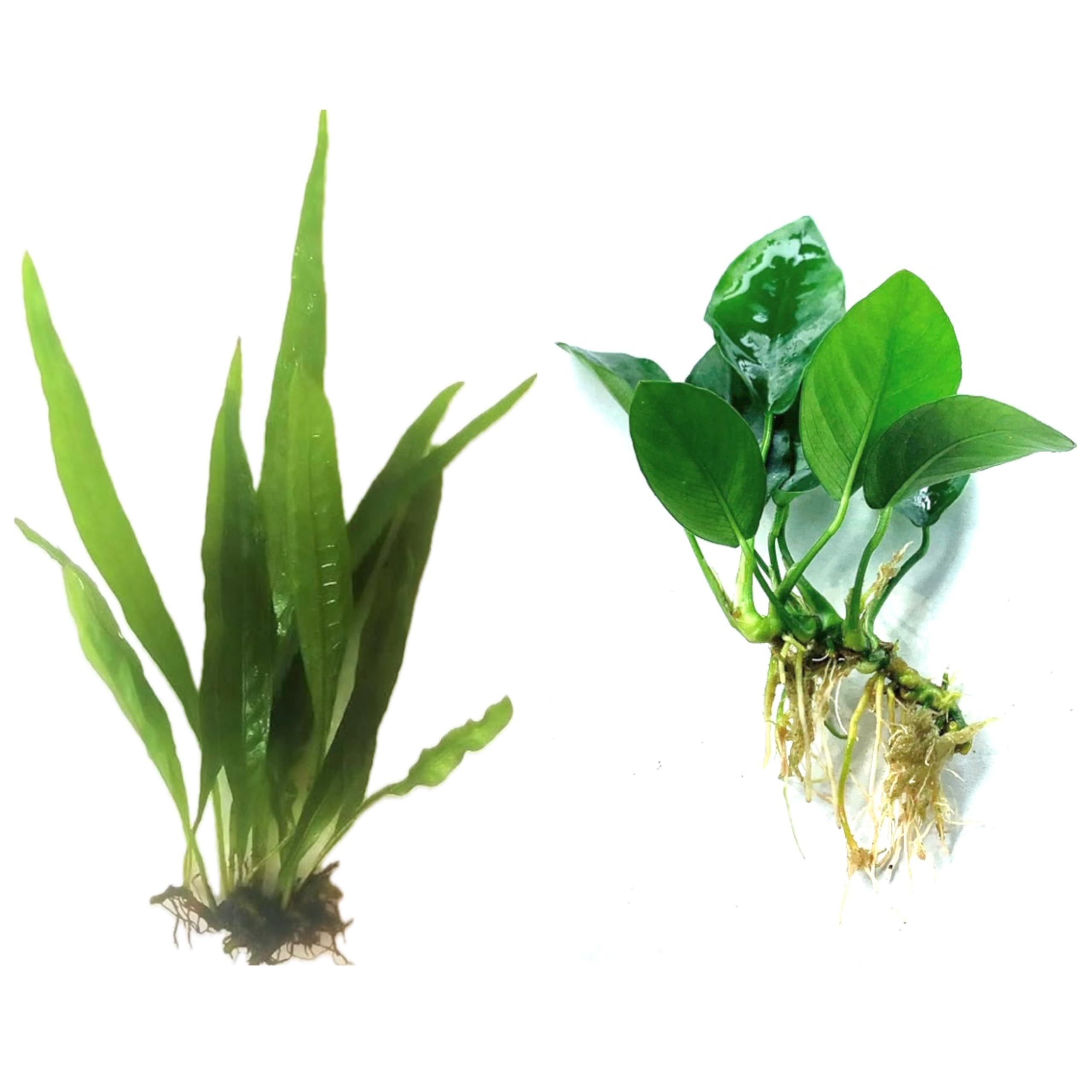
This bundle delivers two distinct rhizome species — Anubias Barteri and Java Fern — in a single order, which gives shrimp keepers both broad-leaf grazing surfaces and long, textured leaves for additional hiding. Java Fern’s undulating leaf edges catch small debris and biofilm particles that shrimplets feed on constantly, while the Anubias provides the flat, stable surfaces adults prefer for perching and molting. The sizes vary from 2-6 inches for the Anubias and 4-8 inches for the Java Fern, making them suitable for ten-gallon and larger tanks.
Both species are among the most forgiving plants for beginner shrimp keepers because they tolerate low light, soft water, and the low nitrate levels that dwarf shrimp prefer. Buyers consistently report that both plants arrived green, healthy, and well-packaged with no damage or melting. The bundle ships from Marcus Fish Tanks, the same vendor with a consistent track record of live arrival guarantees and responsive customer service — one buyer noted that a replacement was shipped within two days at no cost after an order issue.
A small number of buyers experienced die-off of one plant while the other thrived, which typically happens when Java Fern is buried too deep in substrate. Both species should be attached to rocks or driftwood with glue or thread — never buried. The bundle pricing undercuts buying Anubias and Java Fern separately, making it the most cost-effective way to diversify a shrimp tank’s plant structure.
Why it’s great
- Two different rhizome species in one order for varied shrimp microhabitats
- Java Fern leaf texture traps extra biofilm particles for shrimplet feeding
- Low-light tolerance makes it work under floating plant cover
Good to know
- Size varies widely — you may receive smaller or larger plants than photos
- Do not bury the rhizome; attach to hardscape to prevent rot
4. Marcus Fish Tanks Anubias Barteri

The standard Anubias Barteri is a step up in leaf size from the nana petite, with individual leaves reaching 2-4 inches across — providing significantly more biofilm surface for a colony of 20+ adult shrimp. The 2-inch pot arrives with an established rhizome that can be split into multiple sections, and multiple buyers report receiving six plants from a buy-2-get-1-free promotion, giving them twelve rhizomes total for a heavily planted 75-gallon community tank.
Because this species grows taller (2-6 inches) than the petite variant, it works best as a midground plant where shrimp can climb to higher grazing spots without being exposed to open water. The vivid green leaf color and strong root systems reported by buyers indicate healthy stock with minimal melting during acclimation. One reviewer placed these in a koi pond, which confirms the species can tolerate a broader temperature range than most shrimp-specific plants.
The primary downside is the 2-inch pot size may appear small relative to expectations — the plants are sold in starter pots, not fully grown specimens. Buyers who expected larger, more mature plants were occasionally disappointed, though the healthy rhizomes ensure rapid new leaf production within two to four weeks of planting.
Why it’s great
- Large leaves offer more biofilm per plant than petite versions
- Buy 2 Get 1 Free promotion doubles colony coverage potential
- Rhizome can be split into multiple fragments for wide coverage
Good to know
- Starter pot contains a small plant — expect immature size on arrival
- Not suitable for tanks under 5 gallons due to leaf spread
5. SubstrateSource Christmas Moss on Coconut Shell Bridge
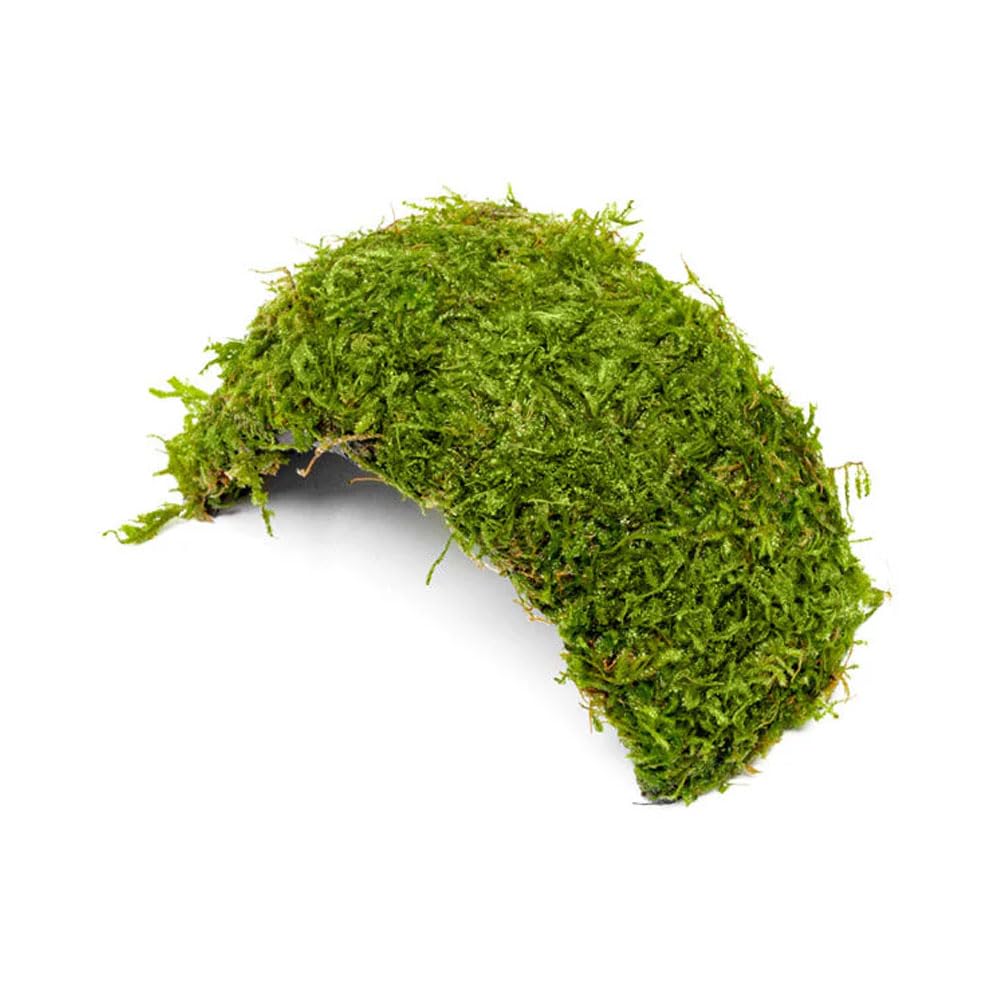
Christmas Moss (Vesicularia montagnei) is among the most shrimp-friendly moss species because its branching growth pattern creates hundreds of tiny crevices where shrimplets can hide during molting and vulnerable first days. This version arrives pre-attached to a coconut shell bridge, eliminating the need to glue or tie moss to hardscape — the bridge itself becomes an instant shrimp cave and grazing platform that can be placed directly into the tank without any curing time.
Buyers consistently praise the plant quality, with multiple reviews noting that the moss arrived “beautiful and green” rather than the brown, wilted condition common with mail-order moss. The 6-inch expected height makes it appropriate for midground placement in standard ten-gallon and twenty-gallon tanks. One shrimp keeper specifically reported that “shrimp like it,” confirming that the dense structure attracts immediate foraging behavior.
The main caveat is physical size — several buyers noted the bridge is smaller than expected, measuring approximately 2×2 inches rather than the 6-inch height suggested in the description. The moss grows slowly without CO2 injection, so patience is required to achieve full coverage. However, the pre-attached format removes the biggest headache of moss planting: keeping it weighted down while it attaches.
Why it’s great
- Pre-attached to coconut shell bridge for instant shrimp habitat placement
- Branching growth creates dozens of shrimplet-scale hiding crevices
- High-quality arrival condition reported consistently by buyers
Good to know
- Actual bridge size is around 2×2 inches — smaller than expected
- Slow growth without injected CO2 limits coverage speed
6. Water Spangles – Salvinia Minima
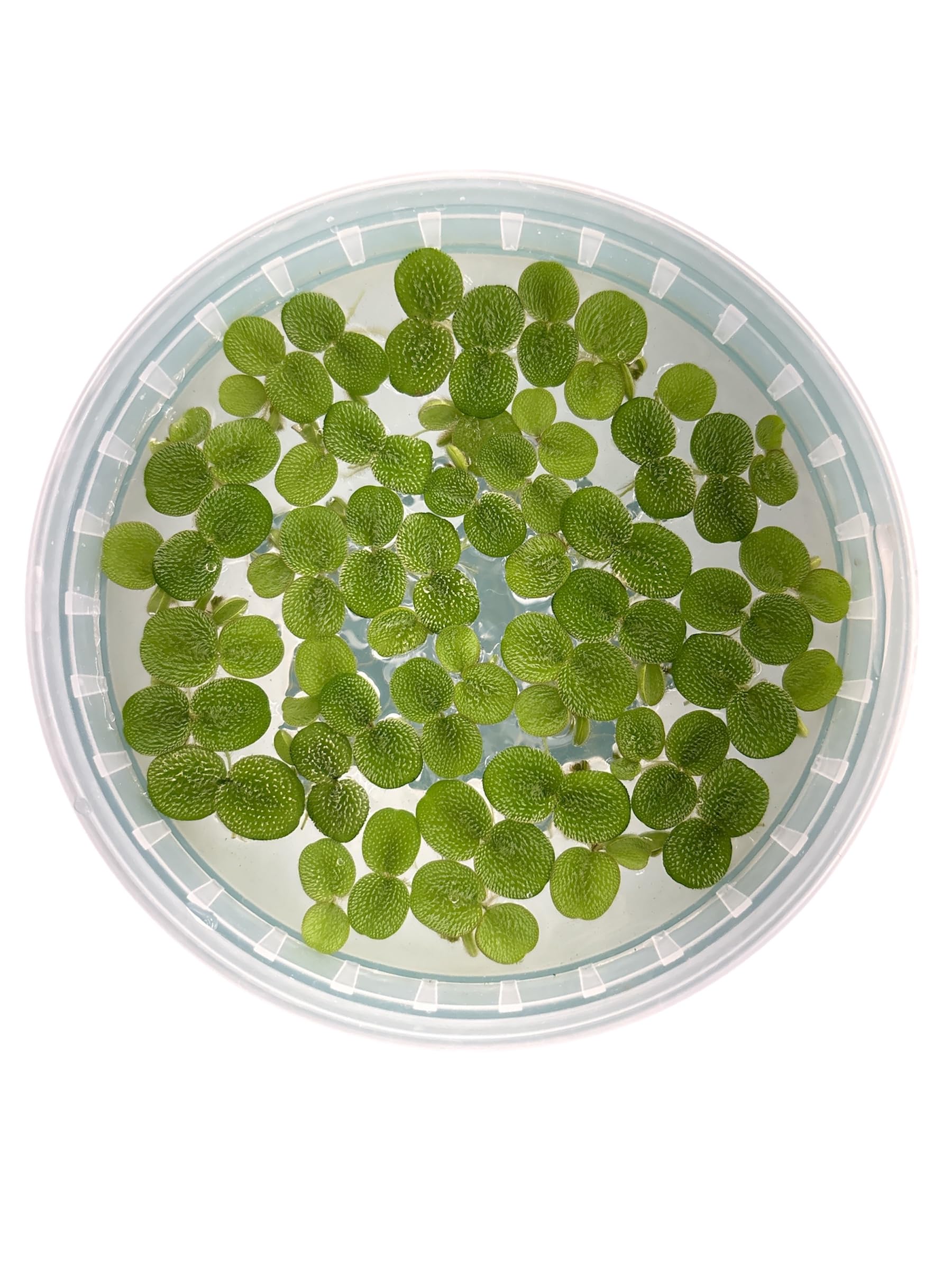
Salvinia minima, commonly sold as Water Spangles, creates a dense floating mat that shades the water surface and provides overhead cover for shrimp that prefer dimmer conditions. The 60+ leaves per portion spread rapidly in medium to high lighting, and multiple buyers report that within two weeks the mat doubles in size, requiring weekly removal to prevent complete surface coverage. Each tiny leaf has a hairy upper surface that repels water, keeping the top side dry while biofilm develops on the submerged underside for shrimp to graze.
This species is particularly useful for shrimp breeders because the dense root system traps fine particulates and offers a safe zone for newborn shrimplets to avoid filter currents. The roots themselves grow long and tangled, providing additional biofilm substrate that adult shrimp will pick at constantly. Buyers report receiving plants that were “the healthiest I’ve ever received” with vibrant green color and no brown spots, which suggests the seller packages with careful moisture control.
The primary operational downside: Salvinia minima is notoriously invasive and extremely hard to remove once established. If it hitchhikes into a sump or neighboring tank, it can crowd out slower-growing floaters like Red Root Floaters. Buyers in warmer climates should also note the seller advises against ordering above 90°F or below 35°F, as the plants can rot in transit under extreme temperatures.
Why it’s great
- Dense floating mat blocks excess light and reduces algae growth below
- Rapid propagation fills surface area quickly for immediate shade
- Long roots trap particles and provide biofilm grazing for shrimp
Good to know
- Extremely invasive — removing it once established is difficult
- Requires weekly thinning to prevent complete surface light blockage
7. Swimming Creatures Java Moss (25 sq inch Portion)
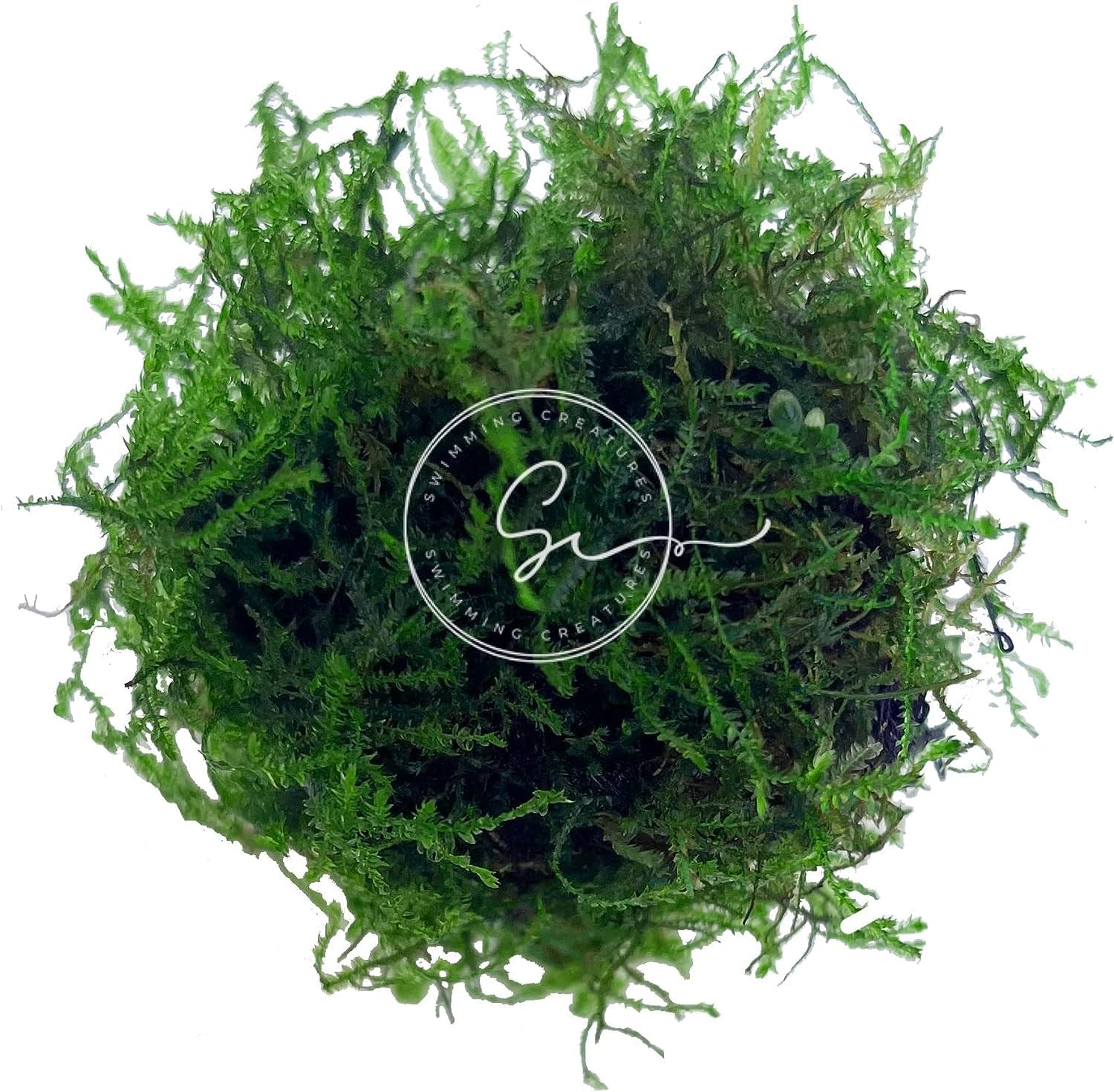
Java Moss is the workhorse of shrimp-friendly plants because it requires nothing beyond water to thrive — no substrate, no CO2, no special lighting. This 25-square-inch portion from Swimming Creatures provides a dense tangle of fine filaments that shrimplets weave through for protection and that biofilm colonizes within days. The moss arrives in a flat sealed bag, approximately 1/8 to 1/4 inch thick, and should be soaked in a diluted peroxide bath followed by a freshwater rinse before planting to prevent introducing any hitchhikers.
Buyers report that even after spending a week in the bag before planting, the moss remained healthy and began showing bright green new growth within 12 hours of being added to the tank. One reviewer tied the moss to driftwood with fishing line and reported that Amano shrimp immediately began foraging on it. The moss stays in place once attached and will eventually cover the surface naturally without needing constant trimming, though it does require occasional thinning to prevent it from blocking water flow through the filter intake.
The primary criticism from a minority of buyers is that the portion consists of loose clippings rather than an intact mat, making it harder to create the clean, uniform carpet look that aquascapers often want. For pure shrimp habitat value, however, the fragmented nature actually increases surface area for biofilm colonization — so this is a functional advantage for colony health even if it doesn’t look as polished as professionally grown moss walls.
Why it’s great
- Extremely low maintenance — grows in any lighting without CO2 or fertilizer
- Dense filament structure creates infinite shrimplet hiding spots
- Survived a full week in transit bag before planting according to buyer reports
Good to know
- Arrives as loose clippings rather than a cohesive mat
- Slow to attach to hardscape without glue or fishing line
FAQ
Are aquarium plants from Amazon safe for shrimp if they contain copper?
Can I bury Anubias or Java Fern directly in the substrate of a shrimp tank?
Final Thoughts: The Verdict
For most users, the best aquarium plants for shrimp winner is the Marcus Fish Tanks Anubias Nana Petite because its compact, broad leaves provide maximum biofilm surface per square inch while the rhizome growth pattern eliminates root rot risk in nano shrimp tanks. If you want floating coverage with striking red roots, grab the Midnight Glo Red Root Floater. And for a dense, low-maintenance refuge that requires zero CO2, nothing beats the Swimming Creatures Java Moss.