
Our readers keep the lights on and my morning glass full of iced black tea. As an Amazon Associate, I earn from qualifying purchases.
Specs are compiled from manufacturer listings and verified buyer reviews and can change over time — please confirm the key details on the product page before buying.
Root tabs are the quiet workhorses of a planted tank—they feed the roots directly beneath the gravel so your swords, crypts, and carpeting plants actually thrive instead of just surviving. The real challenge is picking a tab that feeds roots without clouding the water or harming fish—the key difference between the picks below.
I’m Min — the founder and writer behind Gadgets Feed. This guide is built by comparing the manufacturers’ published specifications and the patterns across verified customer reviews, so you get each pick’s real strengths and trade-offs instead of marketing spin.
Here is the shortlist of the best aquarium root tabs for planted tanks, judged on nutrient delivery, sink behavior, and safety for fish and shrimp.
Our Picks at a Glance


How To Choose The Best Aquarium Root Tabs
Root tabs are pressed fertilizer pellets you bury in the gravel so nutrients reach plant roots directly, bypassing the water column entirely. They shine for heavy root feeders like swords, crypts, and vallisneria—plants that absorb most of their food through the roots rather than the leaves.
Match the Dose to Your Tank Volume
Most brands publish a clear dosing guide, and following it is the difference between lush growth and murky water. For example, the Seachem Flourish Tabs instructions call for one tab every 10–15 cm (4–6 in.) radius, which works out to 6 tabs for a standard 10 gallon aquarium. A budget 100-count pack might ask for 5 tabs in a 5-gallon tank and 10 tabs in a 10-gallon tank, so bigger tanks need more tabs—check the label before you buy.
Check the Release Rate and Nutrient Mix
Slow-release technology is the single biggest feature to look for, because it feeds roots steadily over months instead of dumping nutrients at once. A balanced NPK ratio (nitrogen, phosphorus, potassium) matters too—low-nitrogen, low-phosphorus, high-potassium formulas like 1:0.5:2.8 cut excess nutrients that can feed algae. Some tabs also add trace elements like manganese and zinc, which drive the deep green color you see in healthy growth.
Consider Sink Speed and Fragility
A good tab sinks immediately and stays buried; a bad one floats to the surface or crumbles into a cloudy mess. Denser, more compact tabs are easier to place precisely with tweezers without disturbing the substrate, and they resist dissolving on contact with water. If you keep shrimp or fish, choose tabs explicitly marked safe for them, and start with roughly 80% of the recommended dose on first use to let the tank adjust.
Quick Comparison
| Model | Best For | Count | NPK Ratio | Release Window | Amazon |
|---|---|---|---|---|---|
| Seachem Flourish Tabs★ Best Overall | High-tech planted tanks | 40 tabs | Trace elements + vitamins | 3–4 months | Amazon |
| maozyiltle Root TabsBest Value | Budget bulk feeding | 100 tabs | 1:0.5:2.8 | 2–3 months | Amazon |
| FZONE Root TabsTop Performer | Carpeting plants & crypts | 50 tabs | 20:9:11 | Up to 2 months | Amazon |
| Montorchid Root Tabs | Long-term nano & large tanks | 100 tabs | 1:0.5:2.8 | 2–3 months | Amazon |
| Pondtabbs 60ct | Outdoor ponds & koi | 60 tabs | 10-14-8 | Slow-release | Amazon |
| API Root Tabs (3-Pack) | Root development boost | 30 tabs | Iron, Potassium, Carbon | Fast-dissolving | Amazon |
| Planted Aquarium Concepts | Non-crumbling cubes | 40 tabs | Full macro + micro blend | Slow-release | Amazon |
| 2HR Aquarist APT Jazz | Strong, dense growth | 18 tabs | 1:0:0 | Fast-acting | Amazon |
In‑Depth Reviews
1. Seachem Flourish Tabs 40 tab Pack
Our pick — over 4.5★ from 3,500+ verified ratings; the strongest balance of quality and price.
The gold-standard tab that turns inert sand into a root-feeding powerhouse.
Seachem Flourish Tabs earn the top spot because they deliver complete nutrition—essential trace elements, amino acids, and vitamins including iron, manganese, magnesium, calcium, and potassium—straight to the root zone. The nutrients are released slowly through the enzymatic action of the roots themselves, so the tab works with your plant, not against it. In inert sand where there’s no aqua soil to draw from, buyers report this is the difference between plants that survive and plants that carpet.
The dosing math is easy to plan around: push one tab into the gravel for every 10–15 cm (4–6 in.) radius, and a standard 10 gallon aquarium needs 6 tabs. Refill every three to four months for continuous growth, and the tabs won’t alter your pH—though in very soft water they carry slightly acidic properties similar to peat moss. Under high-tech setups with T5 lighting and CO2, owners note that dwarf hairgrass and microsword carpet quickly, though keeping a UV sterilizer on hand helps prevent cloudy water in these intensive conditions.
With 40 tabs in the box, this is roughly ten free tabs compared to a typical 10-tab pack, which is why the crowd keeps coming back. The one honest hiccup: a couple of recent packets arrived with 38 tabs rather than 40, so do a quick count when the box lands. The formula itself, however, is proven—plants turn visibly healthier, with stronger stems and deeper green leaves, often within 24 hours of placement.
Why It Leads the Tank
- Complete formula with trace elements, amino acids, and vitamins
- Time-released feeding through the plant’s own root enzymes
- 40-tab count stretches further than most competitors
- Won’t alter pH in standard setups
What to Watch
- Occasional packet lands with 38 tabs, not 40
- High-tech CO2 tanks may need a UV sterilizer against cloudiness
Reach for this if: you run a planted tank in inert sand or gravel and want a proven, biologist-formulated tab that feeds roots for months.
Keep shopping if: you want the absolute lowest cost per tab—the budget 100-count options below undercut this on raw price.
2. maozyiltle Root Tabs 100 Count
A hundred dense little disks that supercharge growth while staying affordable.
maozyiltle’s root tabs win on sheer volume and a smartly balanced formula. Each tab is upgraded to 1.0g with a low-nitrogen, low-phosphorus, high-potassium NPK ratio of 1:0.5:2.8—designed to cut excess nutrients so your water quality stays clean while roots get fed. Each tab covers roughly 25 sq. in. of substrate, and the 100-count box is enough for nano, medium, and large planted tanks alike.
The slow-release technology meters nutrients out steadily over 2–3 months, which stops the sudden water parameter swings that stress fish and shrimp. Owners say the tabs sink fast and nest near the roots without floating, and the about-a-dime diameter makes them easy to place. Plants turn greener and stronger, with roots establishing well even in shrimp tanks.
The fine print matters here: the manufacturer explicitly warns to start with 80% of the recommended dose on first use, and to space tabs a minimum of 5 inches apart. Overdosing is the recurring gripe—one owner admits the first application “messed up” the water because they used too many, and a single harsh review reports tabs breaking apart in water with pieces that fish ate. Used as directed, though, the value is hard to argue with for a 100-tab box.
Dose Discipline Required: this is a budget bulk buy that rewards restraint. See vibrant plant growth for pennies a tab, but respect the 80%-dose first-use rule and the 5-inch spacing to avoid cloudy water.
Grab this if: you have multiple tanks or a large planted setup and want a 100-tab arsenal at a budget-friendly price.
Think twice if: you’re prone to over-fertilizing—this one punishes heavy hands with murky water.
3. FZONE Root Tabs 50-Count
The tweezers-friendly tab that keeps Italian Val growing at record pace.
FZONE’s standout trait is its compact design—these tabs are noticeably smaller than most brands, which owners say makes them a joy to plant with tweezers, requiring less force and depth without disturbing the substrate. The nitrogen-phosphorus-potassium mix at a 20:9:11 ratio is built to push lush crypts, majestic sword plants, and delicate carpeting plants into vigorous growth.
The slow-release technology meters nutrients for up to 2 months while minimizing impact on water quality. Owners rave that the tabs sink immediately, never float, and don’t dissolve the moment they touch water—one Italian Val keeper says they’d never seen the plant grow so fast, staying strong and green. Another owner reports that swords, crypts, sag, buce, rotala, and hairgrass all showed boosted growth and color without a hint of algae or harm to shrimp.
Stacked against the Seachem pick above, FZONE matches the growth response at a lower per-tab cost, and owners who switched from capsule-style tabs find these far easier to bury. The one caveat is the size surprise—at about the size of a Motrin pill, they look smaller in person than in photos, and a 45-gallon tank needs around 12 tabs per application. The growth payoff has owners calling it a forever recommendation.
Small Tab, Big Growth
- Compact size plants easily with tweezers, no uprooting
- Sinks immediately and never floats
- 2-month slow-release keeps water clean
- No algae or harm to shrimp/fish reported
The Size Reality
- Tabs are much smaller than they appear in photos
- Large tanks need a dozen or more tabs per dose
Pick this one if: you have delicate carpeting plants or root feeders and want precise, tidy placement with tweezers.
Pass it by if: you hate surprises—the small tab size catches some owners off guard.
4. Montorchid Root Tabs 100 Count

A two-pack of 100 tabs that makes a seven-tank setup easy to feed.
Montorchid brings the same smart 1:0.5:2.8 low-nitrogen, low-phosphorus, high-potassium formula as its budget sibling, but in a 2 × 100 tab layout that’s built for serious multi-tank keepers. Each 1.0g tab covers roughly 25 sq. in. of substrate, and the slow-release technology feeds roots steadily over 2–3 months to prevent the water parameter swings that stress a planted ecosystem.
There’s a brief white suspension in the water after placement, which the manufacturer says is normal—slow-release trace elements like manganese and zinc dissipating fully within 3–4 hours with no residue. The caveat is dissolvability: a few owners note the tabs dissolve very quickly in the tank, so placement speed matters. For a keeper running multiple tanks, the value per dose is excellent, and the plants’ more intense color is the proof in the water.
Multi-Tank Workhorse: 100 tabs in a container is enough for roughly 7 tanks, and the plant response justifies the price. Just push them in fast—the quick-dissolve trait is the one thing to plan around.
Choose this if: you manage several planted tanks and want a long-term fertilization supply at a strong value.
Look elsewhere if: you want a tab that lingers intact—this one dissolves quicker than most.
5. Pondtabbs 60ct

The outside-water favorite that triples lily blooms in koi ponds.
Pondtabbs is the pick when your aquatic plants live outdoors. Enriched with a balanced mix of macro and micronutrients—led by a 10-14-8 nitrogen-phosphorus-potassium ratio—these tablets are formulated for koi ponds, water gardens, fountains, and natural ponds. The slow-release formula delivers a steady nutrient supply, and the application is as simple as pushing one tab into the soil near the base of the plant.
Owners mention new growth and flowers within weeks, with one keeper claiming the tabs “tripled” their lily blooms when used monthly during warm months. The water lilies are the standout success story, showing sudden growth and vibrant flowers that justify the price for dedicated pond hobbyists.
Two honest notes come out of the review pages. First, the tab count has been an issue—several customers received only 56 tabs instead of the expected 60, so count your box on arrival. Second, opinions on value split: plenty call it good value for the lily payoff, while others feel it’s not worth the price. For an outdoor pond with heavy-feeding lilies, the growth result speaks for itself.
Bloom Machine
- Drives rapid new growth and flowers in water lilies
- Slow-release formula suits outdoor ponds
- Simple finger-push application into the soil
Pond-Specific Quirks
- Some boxes deliver 56 tabs, not 60
- Value opinions split among owners
Go with this if: your plants live in a pond or water garden and you want dependable lily blooms all season.
skip it if: you keep an indoor aquarium—this is built for outdoor water features, not tanks.
6. API Root Tabs 3-Pack

The familiar-brand 3-pack that gets new plants off to a vigorous start.
API’s Root Tabs come as a pack of three boxes, each holding 10 tablets, for a total of 30—a neat middle ground between a single trial box and a bulk 100-count. The formula promotes strong root development with essential nutrients including iron, potassium, and carbon, aimed squarely at helping new aquatic plants get a vigorous start and keeping established plants flourishing.
Owners see the difference mostly in root feeders like swords and crypts, which respond quickly with fuller, more vibrant leaves. Plants show a noticeable growth boost after the tabs go in, and one owner saw aquatic plants blooming and sprouting new leaves by the second pack. The 3-pack format gives you roughly three months to decide whether the formula works for your setup.
The main trade-off is the tab’s behavior in water. Owners note the tabs dissolve fast—you have to be quick when adding them to the tank—and water quality feedback is mixed, with some reporting cloudy water after placement. For a recognizable brand with solid root-development results, the quick-dissolve trait is the price of admission, so keep your planting pace brisk.
Fast-Acting Familiarity: API delivers the trusted-brand growth response, especially in swords and crypts. The quick dissolve means you plant fast and accept some cloudiness risk in the first hours.
Try this if: you want a trusted aquarium brand with a 3-box format to test the formula over a few months.
Pass if: you want a slow-release tab that stays intact—API dissolves noticeably faster than slow-release rivals.
7. Planted Aquarium Concepts Root Fertilizer Tabs 40 Count

Dense little cubes that stay buried and feed java fern into propagation.
Planted Aquarium Concepts takes a different structural approach—these are dense cubes rather than crumbly tablets, and owners say that makes all the difference. The cubes don’t crumble like many tablets do, they sink well, and they don’t try to float up and make a mess. The balanced slow-release blend carries a full nutrient suite: N, P, K, Fe, Mg, Mn, Zn, Mo, B, Co, and Ni.
Growth results come through clearly in the reviews—crypts matured quickly, and one owner’s java fern started propagating fast after the tabs went in. In a 55-gallon tank, plants showed fast growth within 2 months of placement, with the tabs sitting easily in the substrate. The directions are straightforward, and the sink-and-stay behavior earns consistent praise from owners tired of floating tabs.
The honest trade-off is algae. A phosphate spike from these tabs triggered a severe brown algae outbreak for one owner, with the algae embedding in leaves that even nerite snails couldn’t clean. Another owner saw manageable algae on java fern and wisteria. If you run a lean, low-tech tank, plan for algae management when using these—the growth is excellent, but the nutrient load is real.
Stays Put, Feeds Hard
- Dense cubes don’t crumble or float
- Full 10-element nutrient blend
- Fast growth in crypts and java fern
The Algae Catch
- Phosphate spike can trigger brown algae outbreaks
- May need algae control in lean tanks
Reach for this if: you hate floating tabs and want a sturdy cube that stays buried while feeding heavy root feeders.
Think twice if: your tank is prone to algae—the nutrient load demands management.
8. 2HR Aquarist APT Jazz Root Tabs (18 Tabs)
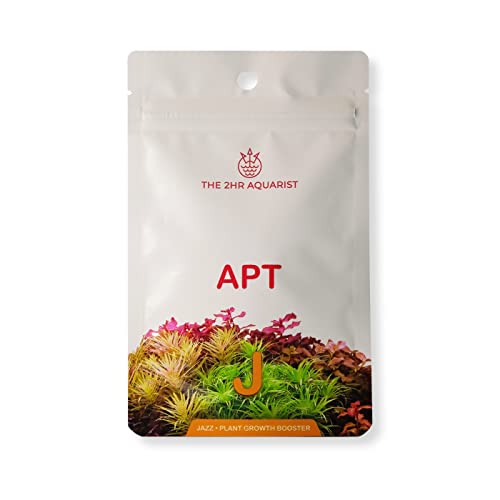
The specialist’s choice for thicker, fuller plant forms with nitrate control built in.
2HR Aquarist brings a different philosophy to root tabs. The APT Jazz formula uses a 1:0:0 N-P-K ratio—pure nitrogen with no phosphorus or potassium—designed for thicker, fuller growth while making nitrate limitation easy. This targeted approach appeals to aquascapers who run liquid fertilizers separately and want root tabs that complement, not compete with, their dosing regimen.
Owners who’ve cycled through many brands consistently call these the best they’ve tried. The praise is specific: tabs stay buried without floating—a contrast to GLA tabs that had staying-buried issues—and plants look noticeably more vibrant within just 2 days of placement. The growth boost is strong enough that owners describe it as a real kick to plant vigor.
The honest caveat is value. At 18 tabs, this is the smallest count on the list, and one owner found the premium price didn’t do anything special for their red plants compared to cheaper tabs. The mix of results means this is best for aquascapers who understand their dosing and want a specialized nitrogen-only spike, not for casual keepers seeking a cheap all-in-one tab.
Specialist’s Tool: strong, fast growth with a nitrogen-only formula that keeps nitrate management simple. The premium price and 18-tab count make it a targeted buy for experienced aquascapers, not a bulk solution.
Choose this if: you run liquid fertilizers and want a clean nitrogen-only root boost with proven stay-buried performance.
Look elsewhere if: you want maximum tabs per dollar—the 18-count box is the smallest and priciest here.
Understanding the Specs
NPK Ratio
NPK stands for nitrogen, phosphorus, and potassium—the three primary nutrients plants need. A ratio like 1:0.5:2.8 is low-nitrogen and low-phosphorus but high-potassium, which cuts excess nutrients that can feed algae while still feeding roots. A higher nitrogen ratio like 20:9:11 pushes faster leafy growth, while a 1:0:0 formula is pure nitrogen for targeted boosts. Match the ratio to your tank’s needs and your liquid fertilizer routine.
Slow-Release Technology
Slow-release tabs meter nutrients out steadily over weeks or months—typically 2 to 4 months depending on the brand—rather than dumping everything at once. This steady feed prevents sudden water parameter swings that stress fish and shrimp, and it’s the main reason quality tabs don’t cloud the water. Fast-dissolving tabs, by contrast, release quickly and require faster placement but can act faster on struggling plants.
Sink Behavior and Structure
A good root tab sinks immediately and stays buried; a bad one floats to the surface or crumbles on contact with water. Dense, compact tabs are easier to place precisely with tweezers without disturbing the substrate, and they resist dissolving instantly. Look for language like “sinks fast” or “won’t float” in the listing, and expect compact tabs to be smaller than they appear in marketing photos.
Dosing and Coverage
Dosing guides vary by brand but usually specify tabs per tank size or spacing between tabs. Some call for 1 tab per 10–15 cm radius, others suggest a minimum 5-inch spacing with 5 tabs for a 5-gallon tank. Overdosing is the most common beginner mistake—it spikes nutrients, clouds water, and can trigger algae. Most manufacturers recommend starting at 80% of the full dose on first use to let your tank adjust.
FAQ
How often should I replace aquarium root tabs?
Will root tabs cloud my aquarium water?
Are root tabs safe for fish and shrimp?
How many root tabs do I need for my tank size?
Can I use pond root tabs in an aquarium?
What is the difference between root tabs and liquid fertilizer?
Why do my root tabs float to the surface?
Do root tabs cause algae growth?
Final Thoughts: The Verdict
For most planted-tank keepers, the clear winner among aquarium root tabs is the Seachem Flourish Tabs 40-Pack because its complete trace-element formula and root-enzyme release system deliver proven growth in inert sand with a 40-tab count. If you want the biggest bang for your buck, the maozyiltle 100-Count gives you a full arsenal at a budget price—just respect the dosing guide. And for aquascapers chasing thicker plant forms with precise nitrate control, the 2HR Aquarist APT Jazz is the specialist’s pick, even if the 18-tab box asks for a premium.
How We Picked
We do not accept paid placement. Every pick is matched to a real buyer and a real use-case; we do not hands-on test units.
Sources & Methodology
Specifications: manufacturer listings and product documentation. Review insights: verified customer reviews, as of August 2026. Pricing: not shown on this page (it changes often); check the current price via the retailer link.
As an Amazon Associate, Gadgets Feed earns from qualifying purchases. This does not affect which products we feature.