
A planted aquarium starts at the bottom. The soil you choose determines whether your aquatic plants root deeply, absorb nutrients efficiently, and grow lush or whether they melt away slowly. Unlike inert gravel or sand, aquarium soil actively buffers pH, supplies essential minerals, and creates the porous environment beneficial bacteria need to colonize. Picking the wrong substrate can mean fighting cloudy water, algae blooms, and stunted plant growth for months.
I’m Min — the co-founder and writer behind Gadgets Feed. I’ve spent countless hours analyzing the composition, buffering capacity, grain size, and long-term durability of the substrates available on the market to help you find the right match for your aquascape.
Whether you’re setting up a shrimp breeding tank or a high-tech planted display, the right foundation matters. After researching dozens of options, I’ve assembled this guide to the best aquarium soil for every type of freshwater planted setup.
How To Choose The Best Aquarium Soil
Selecting the right substrate for a planted tank goes beyond aesthetics. You need to match the soil’s chemical properties, physical structure, and nutrient profile to your specific plants, livestock, and water chemistry goals. Three factors separate an ideal choice from a regrettable one.
Grain Size and Texture
Soils with granules between 2mm and 5mm strike the best balance between water flow and root stability. Extra-fine powders pack too tightly and can suffocate root systems, while oversized pebbles leave gaps where detritus accumulates. Soft, porous granules are gentle on bottom-dwellers like corydoras and shrimp but may break down over time, whereas harder clay-based options maintain their structure for years.
Buffering Capacity and Water Chemistry
Most quality aquarium soils are designed to buffer water to a slightly acidic pH between 6.0 and 6.8 while softening general hardness. This range suits the vast majority of tropical plants and shrimp. Soils with strong buffering capacity will exhaust over 12 to 24 months depending on water change frequency, after which you’ll need to supplement with root tabs or replace the top layer. Inert substrates like sand or gravel offer no buffering at all.
Ammonia Leaching and Cycling
Nutrient-rich aqua soils release ammonia during the first few weeks after setup — a natural byproduct of the organic matter used in their production. This spike can accelerate the nitrogen cycle if you stock fish afterward, but it can also harm sensitive livestock if you add them too early. Some brands produce low-ammonia formulations that allow for shorter cycling times, while others require a full 4-week wait before adding fish or shrimp.
Quick Comparison
On smaller screens, swipe sideways to see the full table.
| Model | Category | Best For | Key Spec | Amazon |
|---|---|---|---|---|
| ADA Aqua Soil Amazonia Ver 2 | Premium | High-tech planted tanks | 9L volume, strong pH buffering | Amazon |
| LANDEN Aqua Soil Substrate | Premium | Large planted aquariums | 5L (10 lbs), 3-5mm grain | Amazon |
| Fluval Plant and Shrimp Stratum | Mid-Range | Shrimp tanks | 8.8 lbs, porous structure | Amazon |
| Ultum Nature Systems Controsoil | Mid-Range | Aquascaping with precise control | 1L, low ammonia, volcanic ash | Amazon |
| Seachem Flourite Black Clay Gravel | Mid-Range | Durable planted tanks | 7.7 lb, fired clay composition | Amazon |
| CaribSea Samurai Soil | Premium | Shrimp and betta setups | 9 lbs, no ammonia spike | Amazon |
| Seachem Fluorite Black Sand Substrate | Budget | Very fine sand aesthetic | 7.7lb, 16 oz weight | Amazon |
In‑Depth Reviews
1. ADA Aqua Soil Amazonia Ver 2 (9L)

The ADA Aqua Soil Amazonia Ver 2 is widely regarded as the benchmark for high-tech planted aquariums. Made from rare Japanese plant-based black soil, it includes a separate bag of Amazon concentrate supplement that allows you to locally enhance organic components for different layout patterns. This is the substrate that serious aquascapers reach for when growing demanding species like dwarf baby tears, Monte Carlo, and Bucephalandra.
Its granules are irregularly shaped in sizes ideal for root development, and the soil naturally buffers pH down to a range that most tropical aquatic plants prefer. Users report a temporary ammonia spike during the first 2 to 4 weeks, which is typical for nutrient-rich soils and actually helps cycle the tank. After that period, plants grow vigorously with CO2 injection and liquid fertilizer supplementation.
At 9 liters per bag, this is a premium option that many consider the best investment for a long-term aquascape foundation. The Amazonia Ver 2 formula contains slightly fewer nutrients than the original version, which reduces algae issues while remaining rechargeable with root tabs. Beginners appreciate its ease of use, while experts value its predictable buffering and structural integrity.
Why it’s great
- Industry-standard substrate for high-tech planted tanks
- Includes Amazon concentrate supplement for localized nutrient boosting
- Naturally buffers pH to ideal levels for aquatic plants
Good to know
- Requires 2-4 week cycling due to ammonia leaching
- Premium price point may exceed some budgets
2. LANDEN Aqua Soil Substrate 5L (10lbs)

The LANDEN Aqua Soil Substrate delivers premium performance at a more accessible price point. Made from specially processed natural material, this 5-liter bag weighs approximately 10 pounds and features a consistent 3-5mm grain size that is ideal for most aquatic plants. Its porous structure provides an attractive home for beneficial bacteria while releasing fundamental minerals and trace elements gradually.
Users report that this soil reproduces the mildly acidic water conditions that most aquatic plants and shrimp prefer. It contains organic acids and nitrogen nutrients that promote healthy growth, though some initial cloudiness is normal and dissipates quickly with filter operation. The manufacturer recommends waiting at least one week before adding fish or shrimp for safety.
Some users note that the product may contain small dried plant matter or gravel pieces and benefits from light rinsing before use. Once settled, it holds pH at 6.0 to 6.5 and does not cause nitrate spikes. For larger tanks, multiple bags can be mixed easily, making this a flexible option for both beginners and experienced aquascapers who want quality without the highest price tag.
Why it’s great
- Excellent value for size and performance
- Porous structure fosters beneficial bacteria colonization
- Maintains slightly acidic pH for plant and shrimp health
Good to know
- Some users recommend rinsing before use
- Lightweight granules can float if water is added too quickly
3. Fluval Plant and Shrimp Stratum 8.8 lbs.

The Fluval Plant and Shrimp Stratum is specifically engineered for planted tanks and shrimp habitats. Its porous granular structure allows for exceptional root penetration and facilitates rapid colonization of beneficial nitrifying organisms. The substrate maintains a neutral to slightly acidic pH range, which is ideal for tropical fish and shrimp species that prefer softer water conditions.
One of the standout features noted by users is how well this Stratum supports shrimp breeding. The porous granules create micro-havens where newborn shrimp can hide from potential predators until they are large enough to emerge. Plants also respond vigorously, with many users reporting abnormally large and healthy growth after switching to this substrate.
A critical setup detail: this product should never be rinsed before use. Place it directly into the aquarium and fill slowly using a plate to disperse water pressure. Any initial cloudiness typically clears within 6 to 48 hours as the filter runs. Some users add paper towels to their filter media during the first few hours to speed up the process. The pellets are lightweight, so a depth of at least 3 inches or plant anchors may be needed for larger plants.
Why it’s great
- Excellent for shrimp breeding with natural hiding spaces
- Promotes strong plant growth through easy root penetration
- Maintains beneficial pH range for tropical species
Good to know
- Do not rinse before use; fill carefully to avoid cloudiness
- Lightweight pellets may require plant anchors for deep-rooted plants
4. Ultum Nature Systems Controsoil Brown, Extra Fine (1 Liter)

The Ultum Nature Systems Controsoil is a unique substrate made from volcanic ash that offers low ammonia release compared to many nutrient-rich soils. This makes it an excellent choice for aquascapers who want to cycle their tank quickly — often in 2 to 3 weeks — without the extended waiting period required by other soils. It buffers water to a slightly acidic pH and lowers total hardness for better plant nutrient consumption.
Users praise this substrate for its suitability with bottom-dwellers like cory catfish. The soft, lightweight pellets can crumble under gentle pressure, making them safe for delicate barbels. Plants such as Ludwigia Repens and Hornwort grow rapidly in this medium. The initial color is brownish-tan but darkens to a rich black with brown spots after several months underwater.
While the Controsoil is not heavily nutrient-rich, this absence gives you complete control over fertilization through root tabs and liquid additives. It does not require rinsing before use, though some users find it dusty and prefer a quick rinse to avoid muddy water. Because it is sold in 1-liter bags, larger tanks will require several units, but the clarity and plant growth results are consistently impressive.
Why it’s great
- Low ammonia release enables faster tank cycling
- Volcanic ash composition absorbs impurities effectively
- Soft granules safe for corydoras and other bottom feeders
Good to know
- Not nutrient-rich; requires supplemental root tabs
- Small 1-liter bag size may require multiple purchases
5. Seachem Flourite Black Clay Gravel 7.7 lb

The Seachem Flourite Black Clay Gravel is a fired clay substrate that stands out for its durability and longevity. Unlike soft soils that break down over time, this material holds its structure for years, making it a one-time purchase for planted tank enthusiasts. It is an inert medium, meaning it does not buffer pH or release ammonia, but it provides an excellent foundation for root tabs and liquid fertilizers.
Users consistently note that this gravel appears genuinely black rather than painted, and the color does not fade over time. The heavier grain size makes it easier to plant stems without them floating away, and it works well with under-gravel filter systems. A 7.7-pound bag provides a 1.5 to 2-inch layer in a 6-gallon tank, with many users buying multiple bags for larger setups.
One consideration is that this substrate produces fine dust when handled. Rinsing in a tray under running water is more efficient than bucket rinsing. Some experienced users skip rinsing entirely and let the dust settle within 1 to 2 days. Since the medium is inert, plants rely entirely on fish waste and root tabs for nutrition, but this gives the aquascaper full control over water chemistry.
Why it’s great
- Extremely durable fired clay that lasts for years
- Genuine black color that does not fade or leach
- Heavy grain holds plants in place during planting
Good to know
- Produces fine dust that requires thorough rinsing
- Inert medium requires root tabs for plant nutrition
6. CaribSea Dry Packed Substrate Samurai Soil 9lb
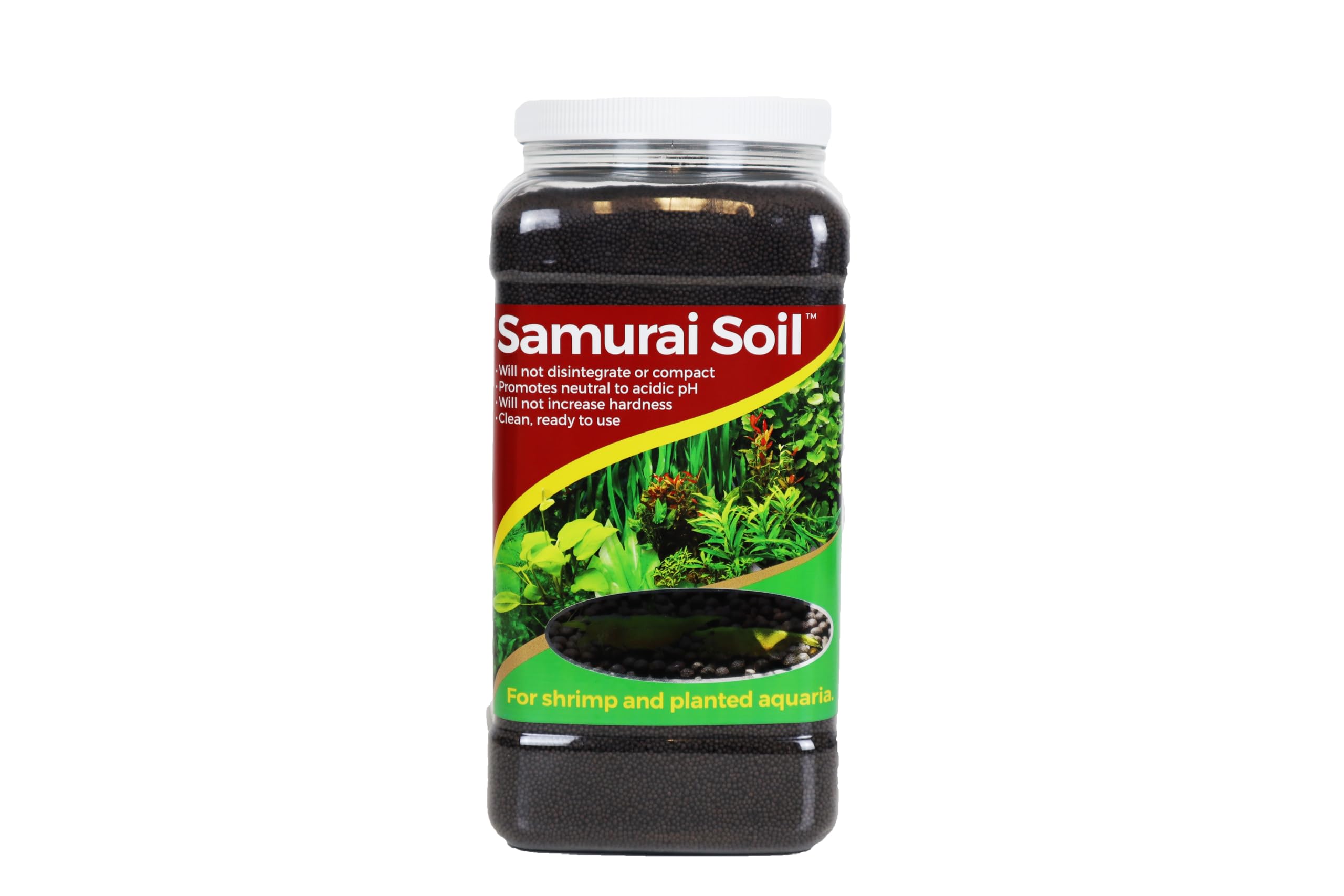
The CaribSea Samurai Soil is engineered for shrimp and planted aquaria with a focus on stability. It contains a dose of biologicals for a faster and more thorough cycle while promoting a neutral to acidic pH. Critically, it will not increase water hardness, making it an excellent choice for soft-water species like crystal red shrimp and bettas.
Users appreciate that this soil produces no ammonia spike, allowing for immediate setup and quicker introduction of livestock. It is cleaned and ready to use straight from the bag, with no rinsing required. The granules are structured to resist disintegration and compaction, maintaining their shape and porosity over the long term.
Some users have noted that the packaging could be more robust, with occasional reports of broken lids or damaged containers during shipping. However, the soil itself performs consistently, maintaining stable water parameters and clear conditions. Because it does not leach ammonia, it is a safe choice for those who want to avoid the extended cycling period typical of nutrient-rich substrates.
Why it’s great
- No ammonia spike allows for quicker livestock introduction
- Contains biologicals to accelerate the nitrogen cycle
- Will not disintegrate or compact over time
Good to know
- Packaging can be fragile during transit
- Higher price point than some mid-range options
7. Seachem Fluorite Black Sand Substrate 7.7lb

The Seachem Fluorite Black Sand Substrate offers a very fine grain that creates a smooth, natural-looking surface for planted aquariums. It is a premium natural sand that works well for the life of the aquarium without needing replacement. The deep black color makes plants and fish visually pop, transforming the aesthetic of any tank.
Users consistently emphasize that this sand requires extensive rinsing before use. It is extremely fine — some describe it as almost powder-like — and multiple rinses are necessary to prevent the water from turning cloudy. Once settled, the sand appears more gray than pure black when dry, but under water it takes on an attractive dark tone that does not fade.
This substrate works well for live plants and is particularly suited to shrimp tanks and community aquariums. The smooth texture is safe for bottom-dwellers, and the fine grain allows plant roots to spread easily. While it does not offer buffering or nutrient content on its own, it provides an excellent base for root tabs and is one of the most budget-friendly options for achieving a dark substrate look.
Why it’s great
- Very fine grain creates a smooth, natural aesthetic
- Safe texture for bottom-dwelling fish and shrimp
- Deep black color enhances plant and fish visibility
Good to know
- Requires thorough, repeated rinsing before use
- Inert substrate needs root tabs for plant nutrition
FAQ
Can I mix aquarium soil with normal gravel or sand?
How long does aquarium soil last before needing replacement?
Does aquarium soil affect fish and shrimp health?
Final Thoughts: The Verdict
For most users, the best aquarium soil winner is the ADA Aqua Soil Amazonia Ver 2 because it offers unmatched buffering quality and structural integrity for high-tech planted tanks. If you want a more budget-friendly option that still delivers strong performance, grab the LANDEN Aqua Soil Substrate. And for shrimp-specific setups with zero ammonia risk, nothing beats the CaribSea Samurai Soil.