
Our readers keep the lights on and my morning glass full of iced black tea. As an Amazon Associate, I earn from qualifying purchases.
Specs are compiled from manufacturer listings and verified buyer reviews and can change over time — please confirm the key details on the product page before buying.
Setting up a planted tank means choosing the ground your plants will live in, and the right call decides whether your carpet grows thick or your water turns to soup. The best aquarium substrate for planted tanks feeds roots, buffers water chemistry, and stays intact for years — and this guide breaks down eight proven options so you can match one to your tank size and plant goals.
I’m Min — the founder and writer behind Gadgets Feed. This guide is built by comparing the manufacturers’ published specifications and the patterns across verified customer reviews, so you get each pick’s real strengths and trade-offs instead of marketing spin.
Whether you are a first-time aquascaper or a seasoned hobbyist, the aquarium substrate for planted tanks you choose determines plant health, water clarity, and how much maintenance you sign up for.
Our Picks at a Glance


How To Choose The Best Aquarium Substrate For Planted Tanks
Planted-tank soil does two jobs. It anchors roots, and it feeds plants through stored nutrients. Match the soil’s nutrient load and pH buffering to your water hardness and plant species.
Match fertility to your plant load
Heavy root feeders like crypts and swords want a rich soil, while slow growers may prefer something lighter. Rich soils often release ammonia at first, so plan for water changes during the first few weeks.
Grain size changes planting and cleanup
Fine grains hold delicate carpet plants nicely, but they can muddy the water. Larger granules stay cleaner but show gaps. Consider how you plant — tweezers, dry-start, or replanting often — and choose a texture you can work with.
Know your water chemistry
Many planted soils buffer pH and hardness lower, which suits shrimp and soft-water fish. If your tap water is hard, a buffering soil helps, but you must monitor it. Some brands drop pH more aggressively than others.
Quick Comparison
| Model | Best For | Volume | Grain Size | Ammonia Leach | Amazon |
|---|---|---|---|---|---|
| THRIVA Natural Soil★ Best Overall | First planted tanks | 5L | ~1mm | Mild | Amazon |
| Doter Plant SoilPond Pick | Lotus & pond plants | 6.6 lbs | Very fine | Low | Amazon |
| ADA Aqua Soil Amazonia V2 (3L)Pro Classic | Demanding aquascapes | 3L | Fine | Notable | Amazon |
| UNS Controsoil | Shrimp & acidic tanks | 3L | Fine | Low | Amazon |
| FZONE Aquarium Soil | Dry-start carpets | 4L | 3mm | High | Amazon |
| Tropica Soil (3L) | Red plant colors | 3L | 2-3mm | Low | Amazon |
| ADA Aqua Soil Amazonia V2 (9L) | Large high-tech tanks | 9L | Fine | Notable | Amazon |
| Tropica Soil (9L) | Big low-tech setups | 9L | 2-3mm | Very low | Amazon |
In‑Depth Reviews
1. THRIVA Natural Soil Substrate (5L)
Our pick — over 4.5★ from 800+ verified ratings; the strongest balance of quality and price.
The crowd favorite that lets beginners skip rinsing and still grow a thick carpet.
This soil earns its Best Overall spot because it solves the two things new planted-tank owners fear most: cloudy water and slow growth. The ~1mm granules come from natural sources rich in organic matter and humic acid, and the slow-release wrapping keeps feeding plants evenly instead of dumping nutrients at once.
You get visibly clearer water and faster plant growth, with carpet plants rooting in about two weeks, according to owners. Across 832 ratings (4.6 stars), buyers call it a great value that fixed hard water and improved every water test in a 20-gallon setup.
The honest caveat: it lacks an ammonia warning on the bag. A 4/5 reviewer notes that even in a cycled tank, ammonia spiked, so pre-soaking the soil for two weeks with water changes is the smart play before adding shrimp or fish. Dust is a mixed point — floaters appear at fill, but they settle fast.
What wins owners over
- No rinsing needed — use it straight from the bag
- Plants thrive; carpet growth in ~2 weeks
- Clears to crisp water quickly
- Rebuildable in tanks many times without crumbling
What to plan around
- Ammonia spike possible even in cycled tanks
- Some floaters at first fill
- Wait at least a week before adding fish or shrimp
Reach for it if: you want the least-fuss path to a thriving planted tank with no rinsing and strong plant growth.
Plan for: a two-week pre-soak with water changes to flush ammonia before livestock goes in.
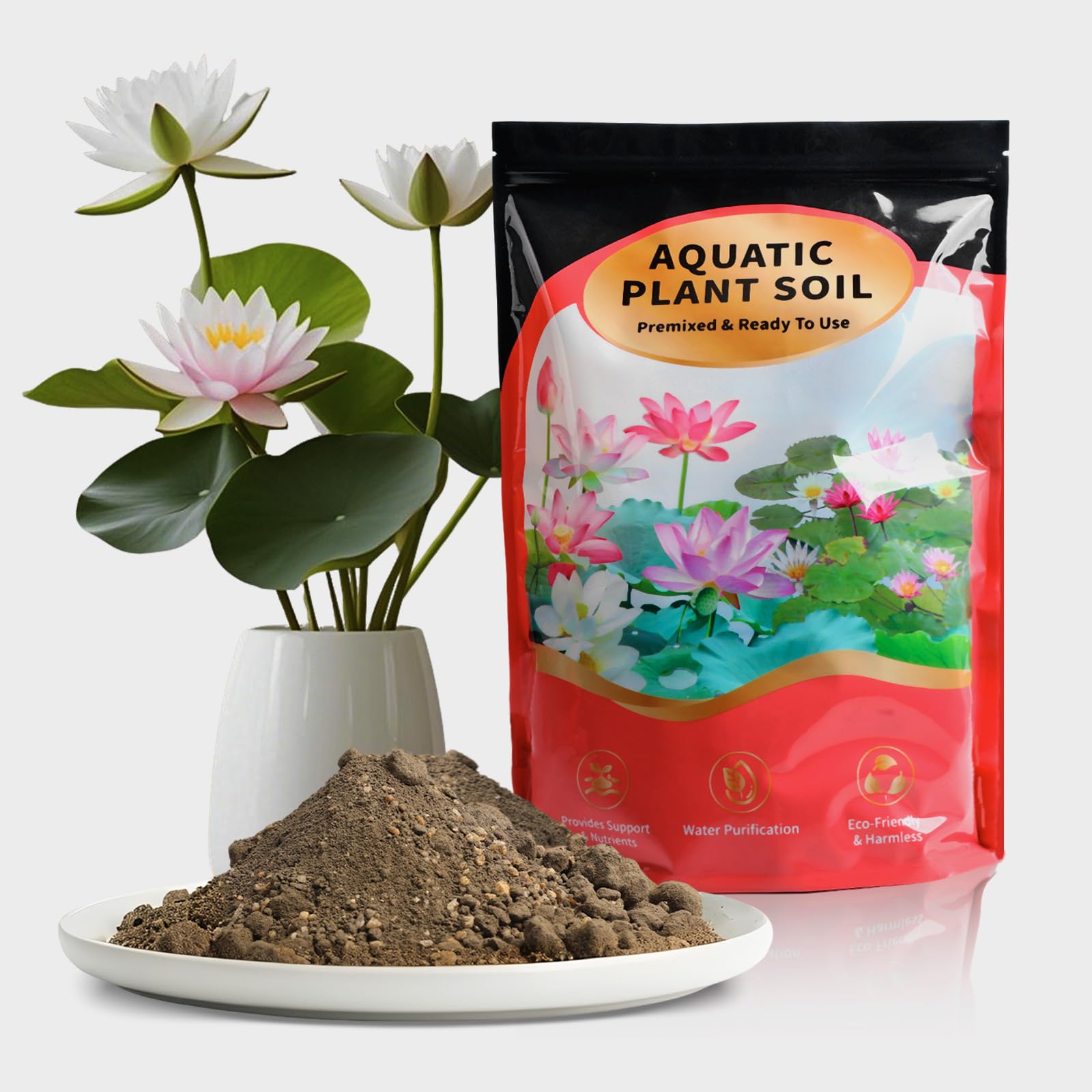
2. Doter Aquatic Plant Soil (6.6 lbs)
A 100% natural organic soil that lotus and water-lily growers swear by.
This one flips the usual aquarium-first pitch to target lotus, water lilies, and pond containers specifically. It is pre-washed and pH-stabilized for immediate use, and the slow-release minerals are aimed at faster leaf growth and brighter flowers rather than just carpet coverage.
The plant growth is the thing everyone mentions — buyers report it works wonders for transplanting lotus seedlings and use it as an aquarium substrate capped with sand. One buyer ran it that way in a tank and called the results amazing.
The trade-off is texture. At 6.6 lbs, the bag is smaller than it looks, and the soil is very fine — one owner found it made a slurry that turned smelly after several weeks growing lotus, and another warns you will likely need more than one bag even when mixed with sand.
Best for: a dedicated lotus or pond plant that needs a soft, nutrient-dense bed to root into — not for crisp aquascape slopes.
Keep a spare: the bag runs small, and the fine grain can pack into a slurry if left undisturbed too long.
3. ADA Aqua Soil Amazonia Ver 2 (3L)
The Japanese legend that keeps water levels balanced and rooted plants happy.
ADA is the name that defined modern aquascaping, and this Ver 2 refines the recipe with lower nitrogen than the original. That means fewer algae headaches while keeping the high humic and nutrient content that demanding plants need.
Owners mention plants grow constantly, and rooted plants take to it successfully. One clever approach: scoop the soil into mesh bags with non-metal zippers, place them on the tank floor, and top with fine gravel for easy rescapes. It also keeps water levels balanced and gives the tank a clean look.
The defining catch — and any ADA owner knows it — is the initial ammonia release. The review pages sum it up: it has to be handled with frequent water changes or a dark start. Plan that into your cycle and this 3L bag is a solid foundation for a scape.
Classic choice: a proven nutrient-dense soil for aquascapers who accept an ammonia curve in exchange for great plant growth.
Expect: a careful first month with water changes; the payoff is steady, balanced growth afterward.
4. Ultum Nature Systems Controsoil (3L)

Volcanic-ash granules that buffer to 6.8pH with far less ammonia drama.
If you keep shrimp or fish that prefer slightly acidic water, Controsoil is built for you. Made from volcanic ash, it buffers water to a mildly acidic 6.8pH, lowers hardness, and promotes beneficial bacteria — all without the heavy ammonia spike that plagues other rich soils.
Owners who have tried many substrates call this the cleanest by far, needing significantly less rinsing. Plant growth is strong, and one buyer described it as a “strong boost of vitamins” — fast, healthy growth from the start.
It isn’t perfect out of the bag. The fine granules rinse dirty and turn the tank cloudy on day one, though a running filter clears it within about 4 hours or overnight. That’s a small price for a soil that skips the weeks-long ammonia curve.
Why it stands out
- Buffers to a shrimp-friendly 6.8pH
- Low ammonia release
- Cleanest substrate owners say they’ve used
- No rinsing required
Fair warning
- Rinses dirty and clouds the tank briefly
- Clears in ~4 hours with a filter running
Choose this if: shrimp and soft-water fish are the priority and you want to skip a long ammonia cycle.
Budget for: a little patience on day one while the cloudiness settles.
5. FZONE Aquarium Soil (4L)
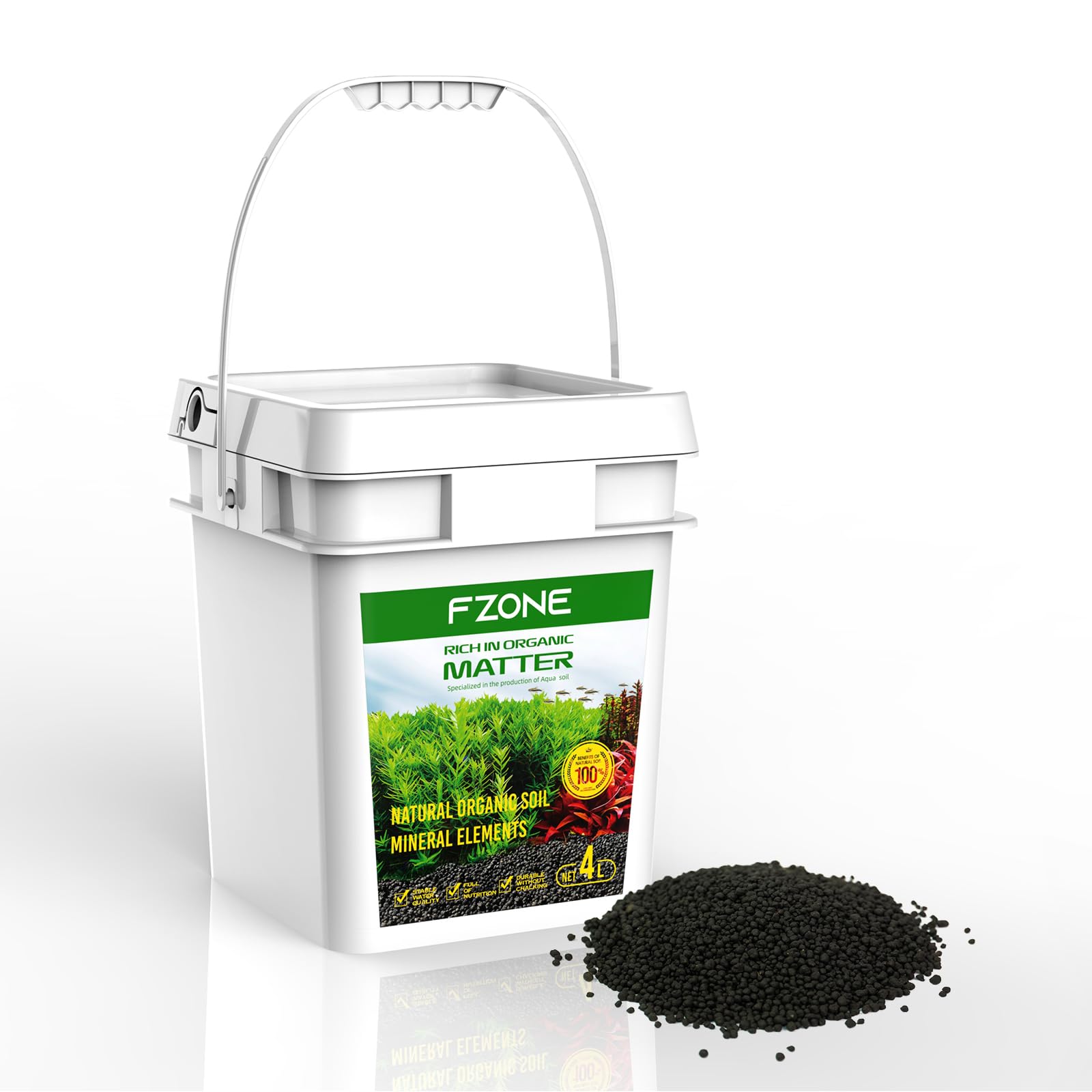
The 3mm porous granules that out-grow Fluval in dry-start carpets.
This is the pick for dry-start growers. The 3mm porous granules support strong root growth, capture debris, and lower pH gently — and customers note Monte Carlo carpets growing faster and bigger than in Fluval Stratum during a dry start.
The high-temperature sintering keeps granules intact underwater without breaking into dust or clouding the water, so no rinsing is needed. It holds plants in place well, and the reusable container packaging is a genuine bonus for storage.
Here’s the catch: this stuff is powerful. It leeches ammonia for 2+ weeks (4-8ppm initially), so plan for daily 50% water changes for the first week. Plant boom once ammonia drops, but sensitive species like buce can melt from the shock. Cap it with sand if you want a cleaner look.
Pick for: ambitious carpet projects where you’ll dry-start and monitor water closely.
Plan for: a demanding first two weeks of water changes — this is not a set-and-forget soil.
6. Tropica Plant Care Soil (3L)

A complete bottom layer with a 2-3mm grain that stimulates red plant shades.
Tropica built this as a one-and-done substrate — a complete bottom layer that needs no other base beneath it. The 2-3mm grain size makes planting easy, and the active formula lowers pH while boosting red plant colors, which is a rare specific claim among soils.
Owners find it similar to or better than Fluval shrimp substrate, with good performance across both high-tech and low-tech tanks. The 3L bag is a sensible start for a smaller scape, and the active growth from the beginning pleases quick results.
The price is the sticking point. Some owners call it too expensive, noting it behaves like Fluval Stratum for more money, and one experienced hobbyist found heavy ammonia leaching plus kH consumption that caused wild pH swings. Budget for careful monitoring in the first month.
Best for: aquascapers chasing vibrant red plant colors who want a complete single-layer soil.
Watch: the price tag and the kH buffering — test water weekly early on.
7. ADA Aqua Soil Amazonia Ver 2 (9L)

Four times the volume of the 3L with a separate Amazon concentrate supplement inside.
This is the big-boy ADA bag for serious scapes. The 9L of rare Japanese plant-based black soil covers a 90cm tank with three bags, and the separate Amazon concentrate supplement lets you target organic components exactly where different plant layouts need them.
The irregular granules create a natural look while supporting fast root development, and the soil buffers pH and hardness to ideal levels for most aquatic plants. Owners call it the best aquasoil on the market, with high growth rates even for demanding species like Monte Carlo and Bucephalandra when paired with CO2.
Expect the classic ADA ammonia spike lasting 2-4 weeks, plus a note from one owner to rinse it many times and use the included fertilizer sparingly to avoid high nitrates. It’s pricier, but the quality and reusability justify it for committed aquascapers.
Why it leads
- 9L volume covers large tanks
- Irregular granules for natural root growth
- Includes separate Amazon concentrate supplement
- Buffers pH and hardness down
Plan for
- 2-4 week ammonia spike needs cycling
- Rinse many times before use
- Don’t use all the included fertilizer
Choose this if: you’re building a large high-tech scape and want a rechargeable, top-tier foundation.
Expect to: manage a careful cycle and monitor nitrates closely.
8. Tropica Plant Care Soil (9L)

A complete bottom layer in bulk that skips the ammonia leach entirely.
For a large tank without the ADA ammonia curve, this 9L Tropica bag is the answer. It’s a complete bottom layer usable on its own, and reviewers point out no ammonia leaching at first setup — a huge relief for anyone tired of cycling around a nitrogen spike.
Holds banks very well with a lava rock base, and plants love it across both high-tech and low-tech setups. One owner in a low-tech tank trims plants every week using only aquarium co-op fert. The black color is uniform and pleasing, and the grain easily takes roots.
The one recurring warning is to cap this soil. One owner hit a massive algae bloom and plant melting without a cap; a second attempt with a sand cap and dry-start method fixed it. Add a cap and you get a durable, attractive base that holds up to frequent replanting.
Best for: larger low-tech tanks where you want zero ammonia hassle and easy planting.
Don’t skip: the sand cap — it prevents algae blooms and plant melt.
Understanding the Specs
Grain size and what it changes
Grain size determines root penetration ease and water clarity. Fine 1mm grains anchor carpet plants like Monte Carlo but can turn to slurry when disturbed. Larger 3mm granules resist clouding, hold slopes, and simplify replanting. Choose grain size based on whether you plant with tweezers, dry-start, or replant often.
Ammonia leach and the cycling curve
Nutrient-rich soils typically leach ammonia for 2-4 weeks during initial breakdown. Cycle the tank before adding fish, pre-soak the soil with water changes, or choose a low-ammonia brand. Richer soils demand more water changes and monitoring during the first month.
FAQ
Do I need to rinse aquarium soil before using it?
Why does my planted substrate release ammonia at first?
Should I cap my aquarium soil with sand or gravel?
How much soil do I need for my tank?
What is the difference between ADA Amazonia Ver 1 and Ver 2?
Is aquarium soil safe for shrimp?
Can I dry-start with aquarium soil?
Why is my water cloudy after adding new soil?
Final Thoughts: The Verdict
If you want one dependable pick, the aquarium substrate for planted tanks winner is the THRIVA Natural Soil because it combines no-rinse convenience, strong plant growth, and a price that fits first-time budgets. If you want a shrimp-safe buffer and low ammonia, grab the UNS Controsoil. And for carpet enthusiasts with a dry-start plan, the FZONE is the one to reach for. With 832 ratings behind it at 4.6 stars, THRIVA’s proven track record makes it the safest starting point for most planted tanks.
How We Picked
We do not accept paid placement. Every pick is matched to a real buyer and a real use-case; we do not hands-on test units.
Sources & Methodology
Specifications: manufacturer listings and product documentation. Review insights: verified customer reviews, as of August 2026. Pricing: not shown on this page (it changes often); check the current price via the retailer link.
As an Amazon Associate, Gadgets Feed earns from qualifying purchases. This does not affect which products we feature.