
Our readers keep the lights on and my morning glass full of iced black tea. As an Amazon Associate, I earn from qualifying purchases.
Specs are compiled from manufacturer listings and verified buyer reviews and can change over time — please confirm the key details on the product page before buying.
Setting up a planted tank means choosing between soil that feeds your plants and soil that just sits there looking like gravel. The right aquasoil buffers water, feeds roots, and stays dust-free for clear water. This guide breaks down seven planted-tank substrates by what actually matters: grain size, nutrient load, pH buffering, and how much rinsing (if any) you will really have to do.
I’m Min — the founder and writer behind Gadgets Feed. This guide is built by comparing the manufacturers’ published specifications and the patterns across verified customer reviews, so you get each pick’s real strengths and trade-offs instead of marketing spin.
Whether you are growing a carpet of Monte Carlo or keeping sensitive shrimp, the right aquarium substrate for plants determines whether your aquascape thrives or slowly fades.
Our Picks at a Glance

How To Choose The Best Aquarium Substrate For Plants
Planted-tank soil serves as the root zone, nutrient bank, and water conditioner. Before you buy, you need to match the soil type to the plants you want and the tank size you have.
Grain size decides what you can grow
Standard granules around 3–5mm suit most stem plants and root feeders. Powder or fine soil is for foreground carpet plants that need a shallow, smooth layer to spread across. Bigger granules let water flow through for oxygen exchange, which keeps roots healthy.
Nutrient load and pH buffering work together
Active aquasoils release nutrients and gently lower pH, which most tropical plants and shrimp prefer. Some soils release ammonia in the first weeks, so you will need water changes. A soil that buffers pH saves you from chasing water parameters later.
Rinsing: the hidden chore
Some substrates are ready to use straight from the bag; others need thorough washing or they will cloud your tank. Check the product instructions before you commit, because a no-rinse soil saves you a messy hour at the sink.
Quick Comparison
| Model | Best For | Volume | Grain Size | Rinsing | Amazon |
|---|---|---|---|---|---|
| LANDEN Substrate Soil 5L★ Best Overall | Beginner-friendly planted tanks | 5 liters | 3–5mm | None | Amazon |
| Hygger CO2 Aquarium SoilBest Value | Large tanks on a budget | 20 liters | — | None — do not wash | Amazon |
| ADA Aqua Soil Amazonia Ver 2 (3L) | High-nutrient aquascaping | 3 liters | — | None | Amazon |
| UNS Controsoil Fine 3L | Low-ammonia planted tanks | 3 liters | Fine | None | Amazon |
| FZONE Aquarium Soil 4L | Dust-free, clear-water setups | 4 liters | 3mm | None | Amazon |
| Tropica Soil Powder 3L | Foreground carpet plants | 3 liters | Powder | None | Amazon |
| ADA Aqua Soil Amazonia Ver 2 (9L) | Serious high-tech aquascapes | 9 liters | — | None | Amazon |
In‑Depth Reviews
1. LANDEN Aquarium Substrate Soil 5L
Our pick — over 4.5★ from 800+ verified ratings; the strongest balance of quality and price.
The no-rinse soil that has carpet plants rooting in about two weeks.
LANDEN’s 5-liter bag is the definition of set-and-forget planting. The 3–5mm black grains come ready to use with zero rinsing, which buyers report makes the whole install a five-minute job instead of a sink-side chore. Once filled slowly, the water stays clear — the dust-free formula means no clouding, and any floaters that appear at fill-up simply settle or get netted out.
The soil also conditions water. It creates mildly acidic conditions and hosts beneficial bacteria for tank cleanliness. Owners running everything from 20-gallon community tanks to 55-gallon setups report fish, plants, and shrimp all thriving on it. The one honest warning: expect an ammonia rise in the first two weeks, so plan for frequent partial water changes until things stabilize.
For a beginner or a veteran rescape, the quality-per-dollar here is hard to argue with, and the review pages back it up: quality is the thing everyone raves about, with value for money right behind it.
Why owners stay loyal
- No rinsing and no clouding, straight from the bag
- Plants root and grow fast — carpets in about 2 weeks
- Buffers to mildly acidic water shrimp and plants love
What to plan for
- Ammonia spike in the first 1–2 weeks needs water changes
- Heavier than some rivals at 10 lbs per 5L bag
Grab this for: a fuss-free planted tank where you want thriving plants without rinsing or waiting out heavy clouding.
Watch for: the early ammonia release — soak it or change water regularly in week one and two.
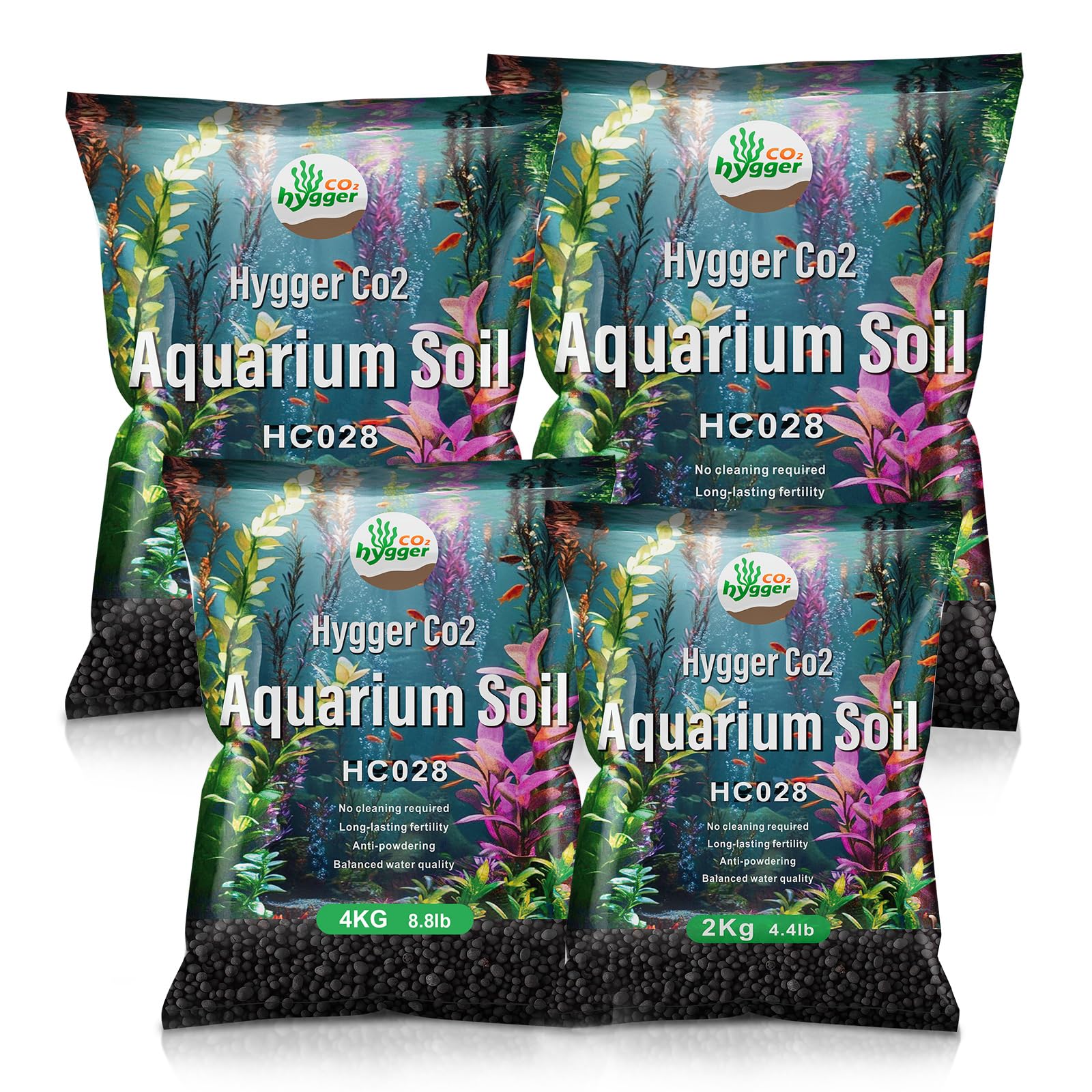
2. Hygger CO2 Aquarium Soil 20L
A 20-liter bag that covers big tanks without the big-ticket price.
If you are scaping a larger tank, this Hygger CO2 bag is the volume king here — 20 liters against LANDEN’s 5 liters, a 6.7x gap that makes it the obvious pick for deep or wide setups. Its porous sintered structure boosts beneficial bacteria, softens water, and targets pH 6.5–7.5 for shrimp.
The catch is real but manageable: owners mention the soil is dirty when first opened and needs washing before going in, and even then a bit of cloudiness can linger before clearing. The brand itself says never to rinse it — a conflict worth knowing. The workaround owners use is rinsing gently or filling slowly, then letting the filter clear the haze.
Plants respond fast here. Growers who could not get anything to take root before say this soil turned their freshwater tank around, with plants finally thriving. Granules run a little larger than expected for some, but a finer option exists for those who want it. A 2-year warranty adds confidence on a budget-tier price.
Coverage champion: the 6.7x volume advantage over the LANDEN pick makes it the value play for anyone scaping a 40-gallon-plus tank.
Reach for it if: you need serious volume for a big planted tank and are fine doing a bit of prep work.
Know before buying: the dirty-out-of-the-bag reality means washing or slow-filling, and cloudiness that clears on its own.
3. ADA Aqua Soil Amazonia Ver 2 (3L)

The aquascaper’s benchmark that feeds plants and buffers water in one.
ADA’s Amazonia Ver 2 is the name planted-tank veterans reach for when results matter. Made from natural soil through a special process with high humic and nutrient content, it does not need rinsing before use and arrives clean. Customers note it is the second time they are using it and still happy — a loyalty that shows in how well it feeds demanding plants.
This version contains less nitrogen than the original Amazonia, which owners actually prefer because it means fewer algae issues while still powering growth. The trade-off is an initial ammonia release you must manage with water changes or a dark start — skipping that step is the classic beginner mistake here. Capping it with an inch or two of sand stops nutrients from seeping into the water column.
At 3 liters it is a small bag aimed at focused scapes rather than big tanks, and the 2.64 kg weight gives you a sense of the dense, mineral-heavy composition. Owner tips include bagging it in mesh with non-metal zippers for easy rescapes, then topping with fine gravel.
Aquascaper staple: the nutrient density and water-balancing reputation is what wins people over — but the ammonia release demands respect during setup.
Choose it for: a serious planted scape where you want proven nutrient delivery and are ready to manage the cycling phase.
skip it if: you want a low-maintenance fill-and-forget — this soil asks for water changes and careful capping.
4. UNS Controsoil Fine 3L

The shrimp-safe fine soil that skips the scary ammonia spike.
Ultum Nature Systems built Controsoil for planted tanks where you do not want the classic ammonia rollercoaster. Volcanic ash buffers to slightly acidic pH, lowers hardness, and releases low ammonia for a gentler cycle. Reviewers point out plant growth that looks like a vitamin boost — Ludwigia and hornwort taking off fast.
The fine granules are soft and light, breaking into crumbs rather than crushing delicate things, which makes it a favorite for Cory catfish and bettas that sift through the bottom. It does need minimal rinsing, and the first fill can cloud briefly — owners say it clears in hours with a filter running. The honest surprise for many is the color: lighter brown-tan than expected out of the bag, darkening to black over months.
Value gets a mixed read — some call it worth it, others find it pricey for the 3-liter size. If low-ammonia cycling and shrimp-safe softness matter more than raw volume, this is the soil that fits.
What stands out
- Low ammonia release for a smoother cycle
- Soft, light granules gentle on bottom-dwellers
- Fast plant growth reported with minimal fuss
Fair warnings
- Color runs lighter than expected before darkening
- Can be dusty; a light rinse helps
Best for: shrimp keepers and planted tanks where you want to avoid a heavy ammonia spike.
Think twice if: the initial dust and lighter color would bother you — this soil needs a little patience at setup.
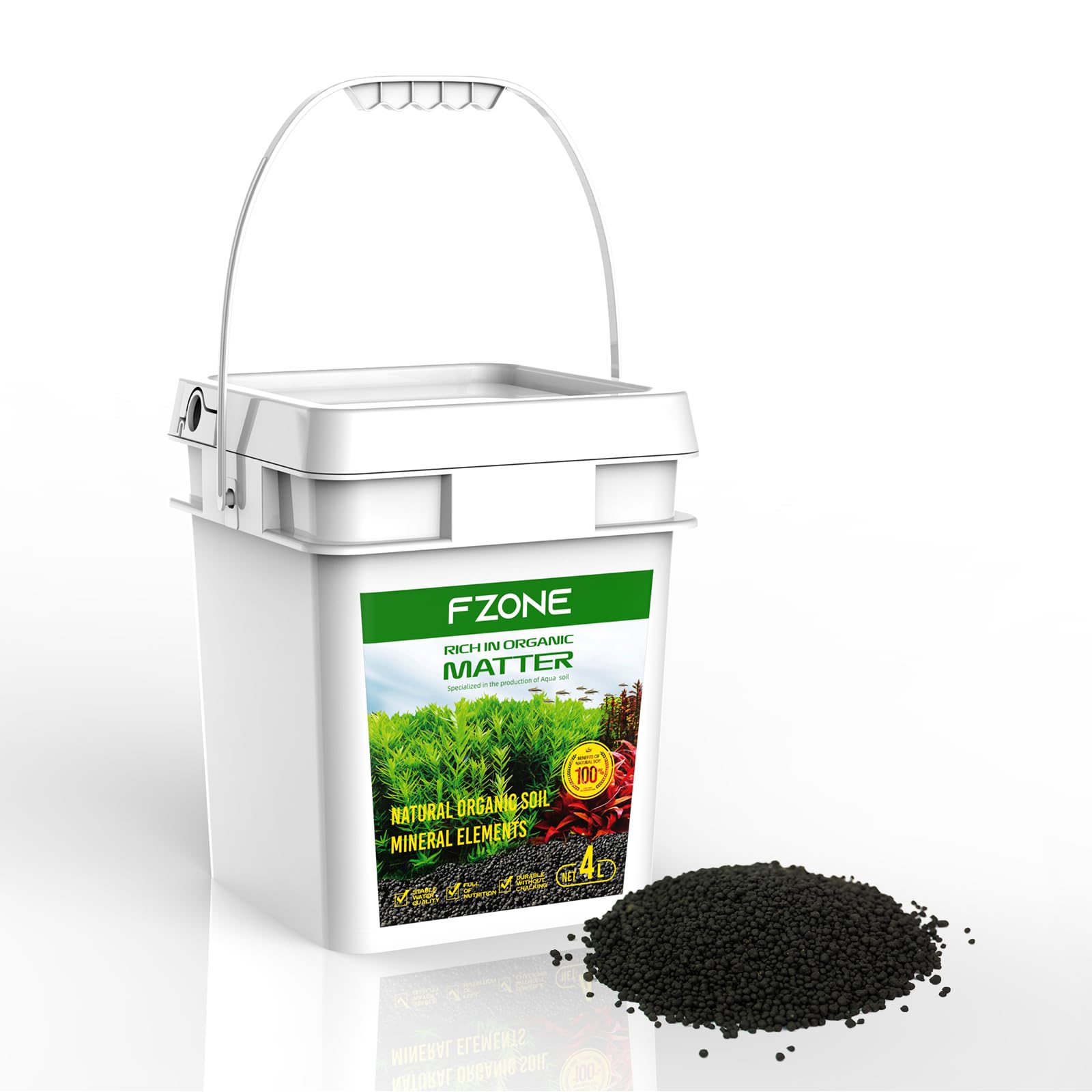
5. FZONE Aquarium Soil 4L
High-temperature-sintered soil that keeps your water crisp from day one.
FZONE’s claim to fame is the no-dust promise, and owners back it hard. The 3mm porous granules are processed with high-temperature sintering, which keeps them from breaking into dust or clouding the water. Buyers call it the cleanest soil they have used — zero clouding, zero floating particles — and it holds its shape even during rescapes.
Plant growth is the other headline. The nutrient-rich blend of organic matter, activated carbon, silica, soil, and minerals has owners describing plants growing like they are on steroids, with Monte Carlo, Rotala Colorata, and Ludwigia doing well even with minimal dosing. It gently lowers pH by absorbing alkaline ions, which shrimp keepers appreciate.
A reusable container packaging is a small but real win — no torn bags, no mess. The honest note: the brand recommends water changes daily for the first week before adding fish, so it is not entirely hands-off. But for anyone tired of cloudy tanks and crumbly soil, this is the cleanest path to a clear aquascape.
Clarity first: the no-clouding reputation is the thing everyone raves about — plant growth runs a close second in the owner consensus.
Reach for it if: a dust-free, crisp setup is your priority and you love watching roots grab hold fast.
Plan for: daily water changes in the first week before adding livestock.
6. Tropica Soil Powder 3L

A complete active bottom layer sized for foreground carpet plants.
Tropica’s Soil Powder is a complete active bottom layer, meaning you do not need anything underneath it. The powder grain size is the defining feature — it is made for foreground plants that need a fine, smooth surface to spread across and root into. If your goal is a lush carpet rather than tall stem plants, this is the shape for the job.
No rinsing is required, and owners confirm the water only clouds if you stir it up, then clears within a few hours. Filling the tank slowly keeps nearly everything from floating. The soil ensures proper growth and stimulates color development, which is exactly what you want when you are trying to get foreground species to fill in and pop.
This is a premium-tier pick — the 3-liter bag is priced accordingly, and owners are split on whether it is worth it for budget builds. But the quality feedback is uniformly strong. For a dedicated foreground or Dutch-style scape, the fine grain does what standard 3–5mm soil cannot.
Foreground focus: the powder grain is the standout spec that standard granules cannot match for carpet plants.
Choose it when: you are planting a foreground carpet and want a complete, fine-grained active layer.
Consider the cost: the premium price is the trade-off for specialized grain size and quality.
7. ADA Aqua Soil Amazonia Ver 2 (9L)

Rare Japanese black soil with a separate concentrate bag for high-tech scapes.
This is the big-sibling version of the 3L Amazonia, and it brings more of everything. Made with rare Japanese plant-based black soil, it ships with a separate Amazon concentrate supplement that lets you add organic components and essential elements exactly where different plant layouts need them. It naturally buffers pH and hardness to ideal levels for aquatic plants.
Irregular granules look organic and offer ideal size and density for fast root growth. Owners growing demanding species — baby tears, Monte Carlo, Bucephalandra — say this soil is the foundation their high-tech tanks need, especially with CO2 and fertilizers. The 9-liter volume covers a 90cm tank with room to slope, often with a lava rock base underneath.
The honest caveat: expect a temporary ammonia spike for 2–4 weeks, and the included nutrient pellets pack a punch — one owner warns they put out a lot of extra nutrients, so dose carefully. It is the priciest pick here, and a few buyers wonder if it truly beats cheaper soils. For serious aquascapers, the reputation and results speak for themselves.
The high-tech edge
- 9 liters covers large scapes with room to slope
- Separate concentrate allows targeted nutrient placement
- Irregular granules create a natural, root-friendly look
The real cost
- Ammonia spike for 2–4 weeks needs cycling and testing
- Premium price, and the pellets can over-dose if unchecked
For the committed: if you run CO2 and ferts and want the substrate that demanding plants reward, this is the one.
Not for beginners: the ammonia phase and nutrient management expect someone ready to test water regularly.
Understanding the Specs
Grain Size
This is the single biggest plant-decision spec. Standard 3–5mm granules suit stem plants and root feeders with good water flow. Fine or powder grains are for foreground carpet plants that need a shallow, smooth layer. Match the grain to your planting goal before you buy.
pH Buffering and Hardness
Active aquasoils naturally lower pH and soften water, which most tropical plants and sensitive shrimp prefer. A soil that buffers saves you from chasing parameters with chemicals. Check whether the soil targets a specific pH range, like 6.5–7.5, so you know what to expect in your tank.
Ammonia Release
Many nutrient-rich soils release ammonia in the first weeks as they establish. That fuels plant growth but can stress fish. Plan for frequent water changes or a dark start. Low-ammonia options exist if you want a gentler cycle, like the UNS Controsoil.
Volume vs Coverage
Soil volume determines how deep your bed can be. Deeper beds (6–8cm) support bigger root systems and sloping for aquascapes. A 20-liter bag covers a large tank, while 3 liters suits a nano or focused scape. Count your tank’s footprint before choosing.
FAQ
Do I need to rinse aquarium soil before adding it to my tank?
Why does my tank get cloudy after adding new substrate?
What does a pH buffer do in planted aquarium soil?
Is the ammonia spike from new aquasoil dangerous for fish?
Can I use regular gravel for a planted tank instead of aquasoil?
What is the difference between normal granule soil and powder soil?
How much substrate do I actually need for my tank?
Is aquasoil safe for shrimp?
Final Thoughts: The Verdict
For the majority of shoppers, the aquarium substrate for plants winner is the LANDEN Substrate Soil because it nails the essentials — no rinsing, no clouding, fast plant growth — at a mid-range price with the strongest owner consensus in the lineup. If you want maximum volume for a big tank on a budget, grab the Hygger CO2 20L. And for a serious high-tech aquascape where you are running CO2 and ferts, the ADA Amazonia Ver 2 9L is the one to reach for.
How We Picked
We do not accept paid placement. Every pick is matched to a real buyer and a real use-case; we do not hands-on test units.
Sources & Methodology
Specifications: manufacturer listings and product documentation. Review insights: verified customer reviews, as of September 2026. Pricing: not shown on this page (it changes often); check the current price via the retailer link.
As an Amazon Associate, Gadgets Feed earns from qualifying purchases. This does not affect which products we feature.