
Our readers keep the lights on and my morning glass full of iced black tea. As an Amazon Associate, I earn from qualifying purchases.
Specs are compiled from manufacturer listings and verified buyer reviews and can change over time — please confirm the key details on the product page before buying.
You want a huge screen without hauling a TV, or virtual worlds without a gaming PC tethered to your back. That is exactly what modern AR And VR Glasses deliver — the real question is which style fits your daily life, and this guide breaks down the best of both worlds across nine top contenders.
I’m Min — the founder and writer behind Gadgets Feed. This guide is built by comparing the manufacturers’ published specifications and the patterns across verified customer reviews, so you get each pick’s real strengths and trade-offs instead of marketing spin.
Whether you crave a private 201-inch cinema for flights or a wireless gaming rig for the living room, the best ar and vr glasses turn your downtime into a bigger, sharper, and more personal escape.
Our Picks at a Glance

How To Choose The Best AR And VR Glasses
Before you pick, you face one big fork in the road: do you want a virtual screen floating in front of your eyes (AR glasses), or an entire world wrapped around your head (VR headsets)? Both are in this list, and knowing which camp you belong to is half the battle.
Decide: Spatial Display vs Fully rich VR
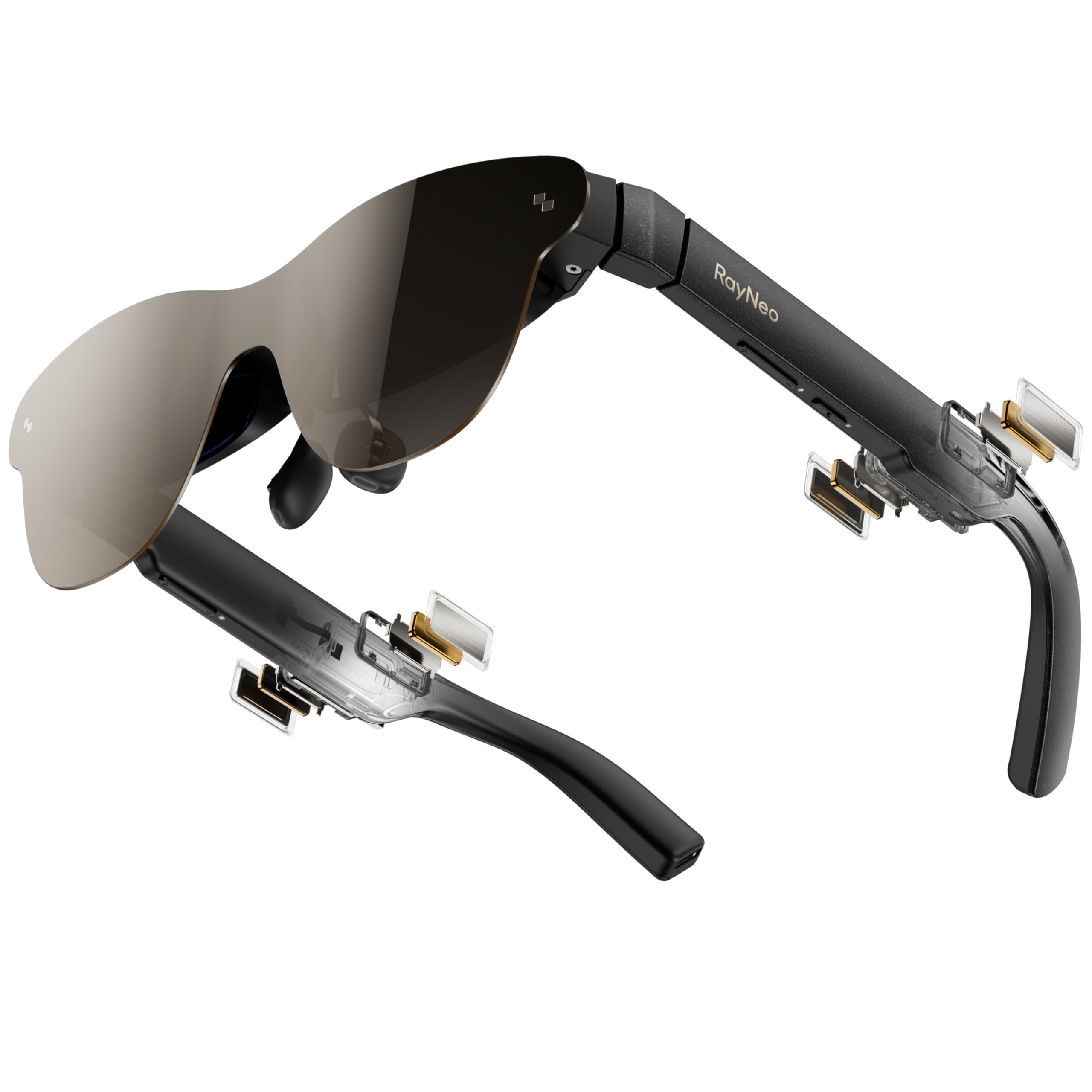
AR glasses like the RayNeo and XREAL models are basically wearable monitors. They plug into your phone, laptop, or console via USB-C and show a giant virtual display you can still see your surroundings around. They are ideal for watching movies in bed, gaming on a Steam Deck, or giving yourself an extra work screen on a plane.
Check the Connection: USB-C vs Standalone
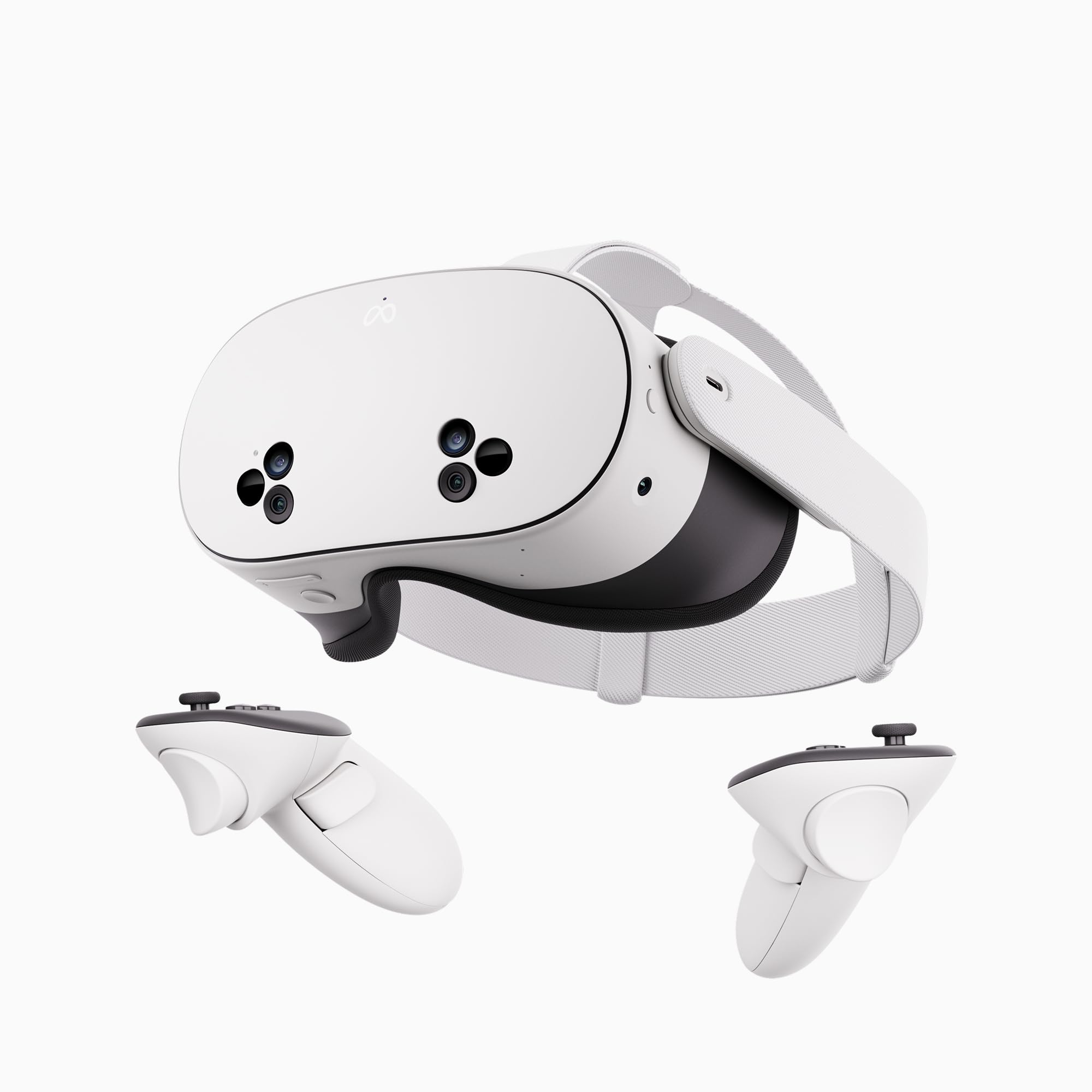
For total freedom of movement, pick a standalone headset like the Meta Quest 3S that runs everything on its own—no wires, no phone needed. For the sharpest picture in media, you usually give up that freedom and plug into a device with a USB-C cable that carries video signal; check that your phone or laptop supports “DP Alt Mode” (a feature that lets the USB-C port send video out).
Weigh the Numbers That Matter
Refresh rate (90Hz vs 120Hz) controls how smooth fast action looks—higher means less blur in games. Field of view (FOV) decides how much of your vision the screen covers, so a wider FOV feels more rich. Battery life sets how long you can stay in before recharging. Here is each spec in plain English, so you can match them to your own habits.
Quick Comparison
| Model | Best For | Display Resolution | Refresh Rate | Key Feature | Amazon |
|---|---|---|---|---|---|
| Meta Quest 3S 128GB★ Best Overall | Wireless standalone VR gaming | 2064×2208 pixels | 90 Hz | No-wire freedom with Snapdragon XR2 Gen 2 | Amazon |
| RayNeo Air 3s ProBrightest Display | Brightest display, daylight viewing | 1920×1080 pixels | 120 Hz | 1,200 nits brightness, highest in AR | Amazon |
| RayNeo Air 4 ProHDR Cinema | HDR movie and 3D content | 201″ virtual display | 120 Hz | HDR10 with Bang & Olufsen audio | Amazon |
| VITURE Luma | First-time XR users, budget | 146″ 1200p | 120 Hz | Built-in 3DoF with myopia adjustment | Amazon |
| XREAL 1S | Native 3DoF on any device | 1920 x 1200 | 120 Hz | X1 chip, no app needed for spatial screen | Amazon |
| VITURE Luma Pro | Sharpest text, productivity | 152″ 1200p | 120 Hz | Harman audio, per-eye focus dials | Amazon |
| Meta Quest 3 512GB | Best resolution VR, huge storage | 4K+ Infinite Display | 120 Hz | 512GB storage | Amazon |
| XREAL One Pro (L) | Widest FOV for immersion | 171″ FHD | 120 Hz | 57° FOV with X-Prism optics | Amazon |
| HTC Vive Cosmos Elite | PC-based room-scale tracking | 2880 x 1700 combined | — | SteamVR base station tracking, 160 sq ft | Amazon |
In-Depth Reviews
1. Meta Quest 3S 128GB
Our pick — over 4.5★ from 800+ verified ratings; the strongest balance of quality and price.
The wireless freedom king that cuts the cord for good and still packs next-gen power.
This is the pick for anyone who wants true virtual reality without fighting cables, a gaming PC, or a phone tether. The Meta Quest 3S runs everything on its own brain — the Snapdragon XR2 Gen 2 processor, so load times feel snappy and games look smooth. With 8GB of RAM you get sharper graphics and more responsive play in demanding titles.
The experience is what wins people over here. Full-color Passthrough from two RGB cameras blends your real room with virtual objects, so you are never fully cut off from your surroundings. The battery keeps you going for 2+ hours per charge, which the reviews say is enough for solid sessions, though the most dedicated players note it recharges fast. A 3-month Meta Horizon+ trial open up a growing catalog of 40+ games right from the start.
At 2064×2208 pixels per eye with a 90Hz refresh rate, the display is sharp and fluid for most games — buyers report it feels crisp with accurate tracking. The strap is a clear upgrade over earlier Quest models, with owners calling it genuinely comfortable for long play. The crowd favorite holds a strong 4.6-star score across 800+ ratings, and as buyers put it: “My son seems to love it and we haven’t had any issues. He has had it for 3 months now.”
Why It Wins
- True standalone freedom — no wires, no PC required
- Snapdragon XR2 Gen 2 processor
- Full-color Passthrough keeps you aware of your space
The Trade-Offs
- Battery life is a mixed note — great for short bursts, short for marathons
- 90Hz is smooth but the premium Quest 3 hits 120Hz
Reach for it if: you want the complete wireless VR gaming experience at a price that makes sense.
Think twice if: you plan marathon sessions — the 2+ hour battery means you will be hunting for a charger.
2. RayNeo Air 3s Pro
The one that stays crisp even in broad daylight, thanks to the brightest AR panel around.
If you plan to watch or game near a window, this is the pair to beat. The RayNeo Air 3s Pro hits 1,200 nits of brightness — the highest of any AR glasses on the market — so even faint stars in a movie stay visible instead of crushing to black. Buyers confirm you can use them in daylight, which is a rare trick for wearable displays.
The display quality dominates the conversation, with well over 140 owners praising it as the top feature. It uses a 5.5th-gen tandem Micro-OLED panel with a 200,000:1 contrast ratio and 98% DCI-P3 color coverage, meaning colors look rich and lifelike. At 1920×1080 resolution with a 120Hz refresh rate, fast action stays fluid, and the 46° field of view wraps a 201-inch virtual screen (at 6 meters away) around your vision.
Comfort is strong too—at just 76g, they are light enough for 2-3 hour sessions, and the silicone band helps. TÜV SÜD certification (a safety standard for low blue light and flicker-free viewing) plus 3,840Hz high-frequency PWM dimming (a fast flicker control that reduces eye strain) make long binges easier on the eyes. The honest trade-off: though the 201-inch claim is real at distance, some buyers find the perceived screen only modestly larger than a 15-inch laptop when working up close, so treat them as an entertainment device, not a full work-monitor replacement.
Daylight champion: The only wearable display here you can comfortably use outside, with picture quality that has buyers calling it top-tier AR.
The one catch: it is not a productivity tool for fine text — it shines for movies, travel, and handheld gaming instead.
Best for: travelers and daylight viewers who want the brightest, most color-rich wearable screen.
Look elsewhere if: you need a sharp virtual monitor for spreadsheets and code.
3. RayNeo Air 4 Pro
The only glasses here that turn any room into an HDR private theater with 360° sound.
Movie lovers, this is your pair. The RayNeo Air 4 Pro is the rare AR glasses pick with HDR10 support (a high-dynamic-range standard), open up over 10 billion colors with deep black levels that standard LCD screens cannot touch. On a 201-inch virtual display, Netflix and gaming look punchier and more rich, whether you are in bed, on a sofa, or 30,000 feet up.
Picture quality is the most-praised feature by a wide margin, with dozens of owners highlighting how much the HDR and AI upscaling add. That magic comes from the Vision 4000 chip, co-developed with Pixelworks, which upscales standard video to HDR in real time and keeps 120Hz motion smooth for PS5, Steam Deck, and Switch 2 play. The 3D mode converts 2D videos to 3D with AI depth, turning any show into a cinema event.
Audio is a headline feature too — four precision speakers tuned by Bang & Olufsen deliver 360° spatial sound, with a whisper mode for private listening on flights. At just 2.88 ounces, these are the lightest of the RayNeo lineup here, and they need no battery or Wi-Fi — just a USB-C plug into iPhone 17/16/15, Android, MacBook, iPad, or a console. Compatibility gets mixed notes in the reviews — they work flawlessly with Samsung Galaxy S25+ and other Android devices, but a few iPhone owners mention connection issues, so check your specific phone model first.
HDR standout: Owners upgrading from the Air 3s Pro call the HDR10 and AI enhancement a clear step up, calling it a must-buy for a personal HDR theater.
Know before you buy: the 3D and upscaling shine brightest on Android and console sources — iPhone compatibility is the recurring mixed note.
Reach for it if: you watch or game in HDR and want cinema-grade contrast in a featherlight frame.
Check first if: you are on iPhone — verify your model works before committing.
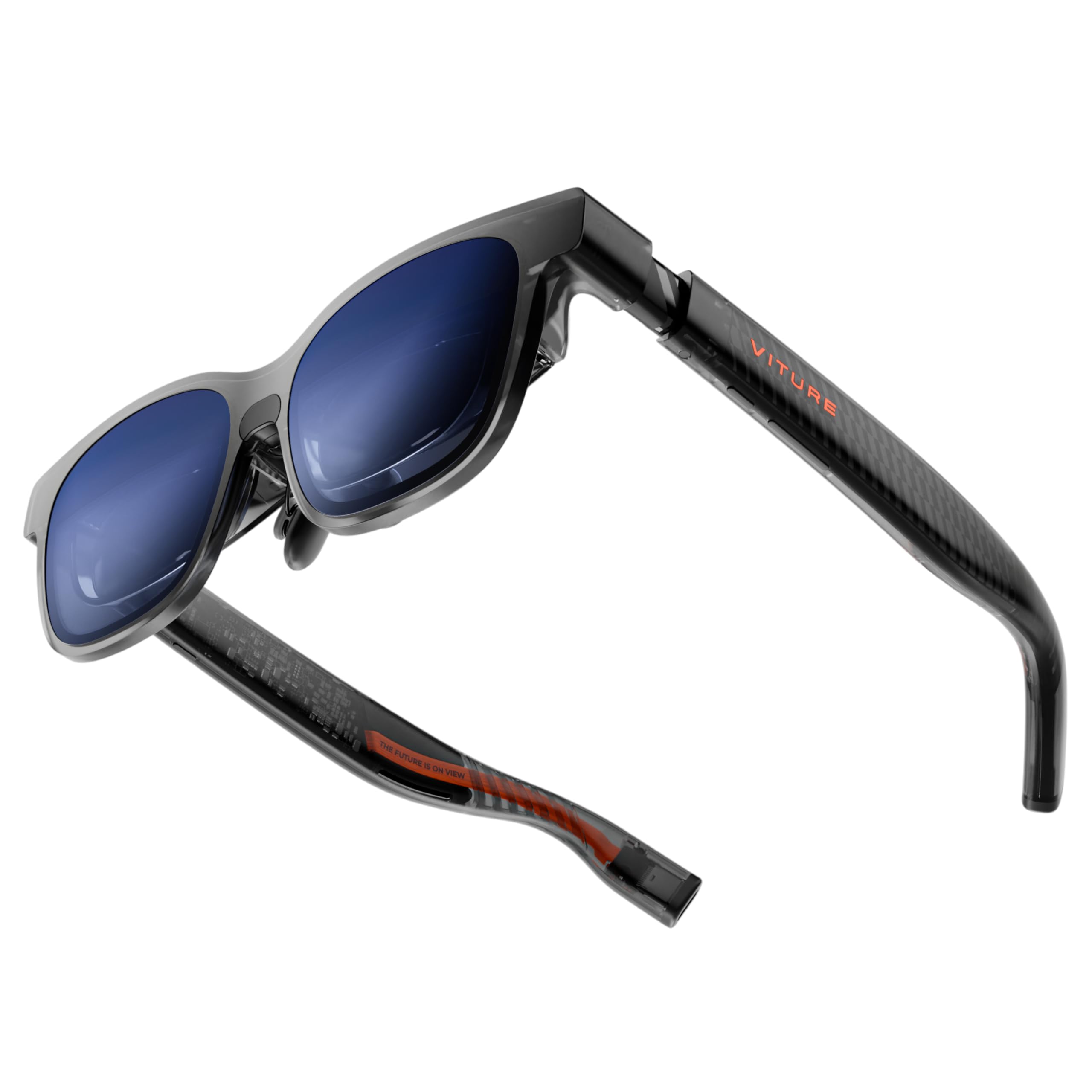
4. VITURE Luma
A friendly, affordable gateway into XR that keeps setup pain to almost zero.
New to the whole AR glasses idea? The VITURE Luma is built to be your first pair. It throws a razor-sharp 146-inch virtual screen with 1200p clarity at a 50° field of view and 1000 nits peak brightness, all running smoothly at 120Hz. The lightweight frame, flexible arms, and magnetic nose pads mean you can just put them on and go — no complex adjustments needed.
Compatibility and comfort are the two things owners praise most, with the universal USB-C connection working across phones, laptops (Mac and Windows with DP output), and handhelds like the Steam Deck. The built-in 3DoF tracking (which keeps a virtual screen pinned in space as you move your head) adds a spatial element most budget glasses skip. For nearsighted users, there is up to -6.0D of direct myopia adjustment — no inserts required — and magnetic prescription lenses cover stronger corrections.
The honest catch is the screen itself. While the resolution is sharp at the center, some customers note blurry edges at the top and bottom of the view, and a few mention the 3DoF feature only works within the SpaceWalker app rather than system-wide. It is excellent for entertainment and movie watching, and the reviews are clear it is more of a fun first step than a serious productivity tool. The electrochromic film, which darkens the lenses with one tap, is a standout for cutting reflections.
What Shines
- Plug-and-play USB-C setup across phones, laptops, and handhelds
- Up to -6.0D built-in myopia adjustment
- 1200p resolution and 120Hz at an entry-friendly price
The Fine Print
- Edge blurring on some units — center is sharp, edges can soften
- 3DoF spatial features need the SpaceWalker app
Best for: first-time XR buyers who want a bright, comfortable entertainment screen without the learning curve.
Not for: anyone expecting a pixel-perfect monitor for reading fine text at the edges.
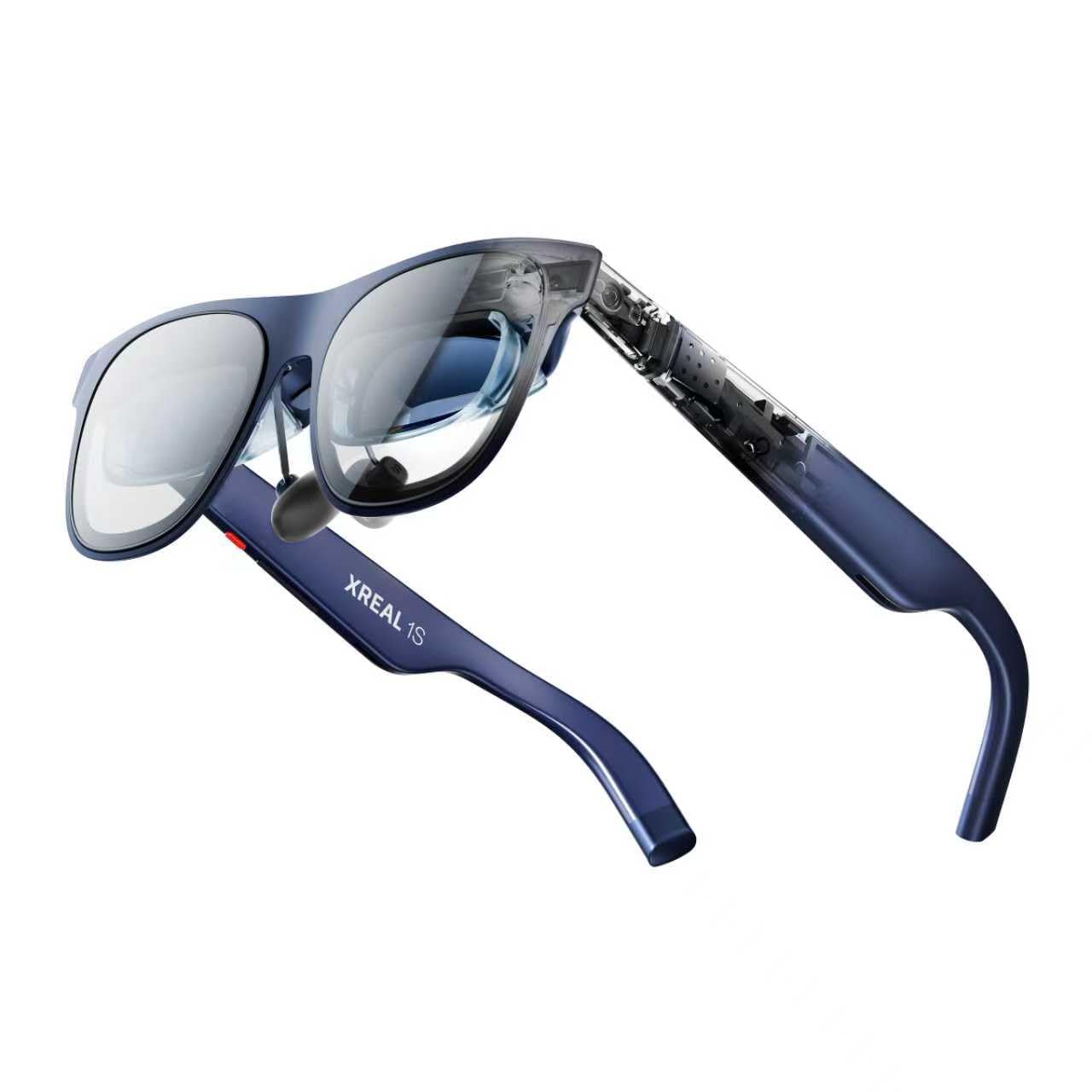
5. XREAL 1S
The spatial screen that locks in place with no apps, no setup, and no drift.
Here is the pair that thinks for itself. The XREAL 1S runs on the self-developed X1 chip — the first spatial computing processor built specifically for AR glasses — so the screen locks to a 3DoF anchor the moment you plug in, no phone app required. With a 3ms motion-to-photon latency at 120Hz, the virtual 500-inch screen stays rock-solid stable even as you turn your head.
Build quality is the most-praised feature, and the REAL 3D mode draws serious enthusiasm—it is the first on-glasses technology to convert any game, movie, or app into true 3D with one switch, supported at up to 30fps (frames per second). The 52° field of view and 90Hz global refresh keep things flicker-free, with a redesigned optical engine that owners say enhances clarity from center to edge. Sound comes co-developed with Bose, delivering deeper lows and crisp mids through open-ear drivers.
Buyers who use these on a treadmill or as a portable monitor for a Steam Deck report the anchor mode is a a standout feature for treadmill workouts and portable monitor use, and the on-board menus let you adjust screen size, distance, and ultrawide mode without a buggy app. The trade-offs are real: there is no diopter adjustment (only IPD range of 59.5–70.5mm, the distance between your pupils), so glasses wearers may need custom lenses, and some find the perceived screen closer to 27 inches at arm’s length rather than the 500-inch marketing claim. Glare in bright rooms is the recurring mixed note.
Smart spatial screen: No other pick here delivers stable 3DoF anchoring straight out of the USB-C port with this level of polish.
The honest limit: if you wear prescription glasses, factor in the cost of custom lenses — there is no built-in focus dial.
Reach for it if: you want a rock-solid anchored virtual monitor for travel, treadmill screens, or Steam Deck gaming.
skip it if: you need built-in prescription correction without extra accessories.
6. VITURE Luma Pro
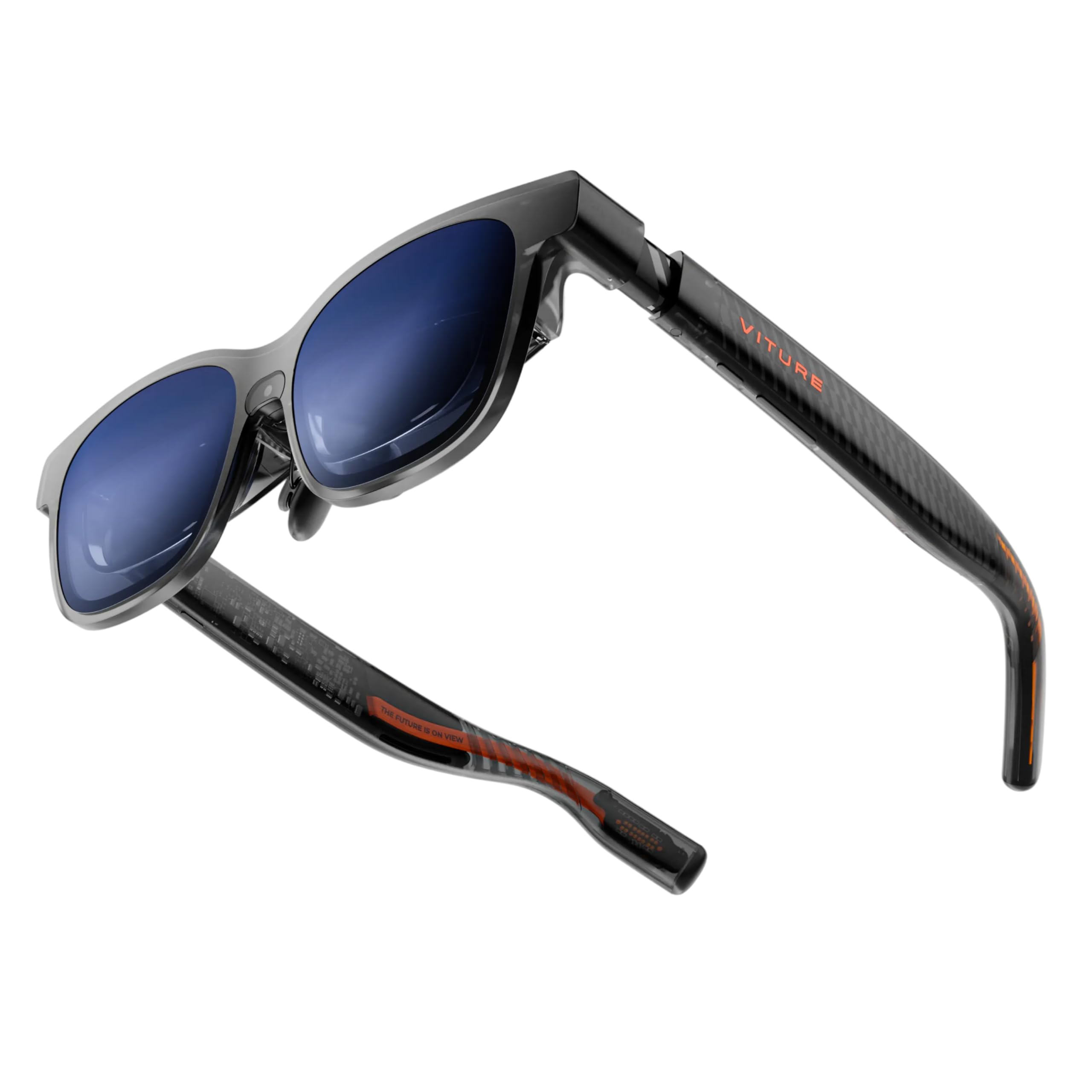
The productivity-minded pair that makes fine print readable and gaming buttery smooth.
This is the AR glasses pick for people who actually want to work, not just watch. The VITURE Luma Pro delivers a 152-inch virtual screen at 1200p resolution with a 52° field of view and 1000 nits brightness (a measure of screen brightness), and the clarity is what owners rave about first—with over 80 buyers praising the picture quality above everything else. The 120Hz refresh rate keeps fast games fluid, and the DeltaE < 2 color accuracy (a measure of color precision) means Hollywood-grade tones.
The defining feature here is the physical diopter adjustment on each lens, going up to -4.0D. Owners say you can dial in focus per eye with no prescription inserts, which is a huge win for glasses wearers who want a crisp virtual monitor. The electrochromic film darkens the lenses with one tap for total immersion, and the 152-inch panoramic workspace via the SpaceWalker app supports up to three virtual screens in horizontal, vertical, or code layouts.
Audio is tuned by Harman, adding deeper bass and crisper highs, though a few note the speakers are soft for noisy environments and prefer Bluetooth headphones. The honest mixed note is the weight distribution — the build can feel plasticky, and some report the frame gets warm during long sessions. Reviews are clear this is a media-first device that excels at movie watching (the wide panoramic view is especially nice in bed), but it is not a full monitor replacement for everyone.
Focus dials win: Owners with prescriptions call the per-eye adjustment the reason they chose this over rivals — no inserts needed up to -4.0D.
The catch: the screen feels closer to 100 inches at 4 meters than the 152-inch claim, so set expectations for actual size.
Best for: glasses wearers and productivity fans who want sharp readable text and per-eye focus control.
Look elsewhere if: you need thunderous built-in speakers for noisy travel.
7. Meta Quest 3 512GB
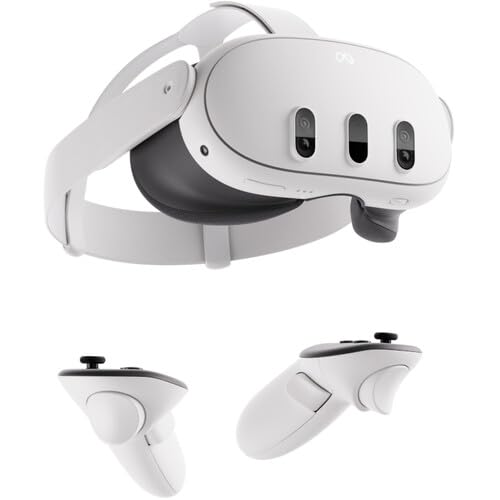
The premium standalone headset that trades up to a nearly 30% sharper picture.
If the 3S is the smart value, this is the step up for visual purists. The Meta Quest 3 512GB delivers a 4K Infinite Display that is nearly 30% sharper than the Quest 2, powered by the same Snapdragon XR2 Gen 2 processor. With 512GB of storage, you can fill it with a massive game library without ever deleting anything to make room.
Quality and value lead the owner conversation, with the crisp visuals and fantastic resolution getting top billing—one buyer called it “worth every penny.” The 120Hz refresh rate (versus the Meta Quest 3S’s 90Hz) makes fast-moving games noticeably smoother, and the dual RGB color cameras deliver full-color Passthrough (a feature that shows your real room through the headset) so your real room blends smoothly with virtual objects. The 2+ hour battery keeps sessions going, though the reviews note it runs short for marathon players and the stock strap is the weak point most owners replace.
This is still a fully wireless standalone unit, so no PC is required, though it does connect to one if you want PCVR. A 3-month Meta Horizon+ trial opens 40+ games on arrival. Owners love it for everything from VRChat to firearms proficiency training, with the full-color passthrough and intuitive controllers earning consistent praise. The battery life and comfort are the mixed notes — expect to budget for an aftermarket strap and possibly a battery pack for long sessions.
The Upside
- 4K Infinite Display
- 120Hz refresh for buttery-smooth gameplay
- 512GB storage fits a huge library with no deletions
The Downside
- Battery runs short for long sessions — plan for extras
- Stock strap is uncomfortable past an hour for many
Reach for it if: you want the sharpest, smoothest wireless VR experience and storage to spare.
Think twice if: you are on a strict budget — the 3S delivers most of the magic for less.
8. XREAL One Pro (L)

The widest window into AR here, wrapping your vision in a 171-inch field of view.
Immersion seekers, meet your match. The XREAL One Pro uses a 57° field of view — the widest in this lineup — to project a 171-inch virtual screen from four meters away, powered by Sony’s 0.55-inch Micro-OLED display and X-Prism optics. The built-in X1 chip delivers native 3DoF tracking with 3ms latency, so the screen stays pinned even when you move your head quickly.
Quality and screen size are what owners praise most, with the huge rich display getting consistent raves. The REAL 3D mode converts any content to true 3D with one switch, and the 120Hz refresh keeps fast games smooth. At up to 700 nits brightness with electrochromic dimming (a feature that darkens the lenses electronically), the display stays crisp indoors or out. Sound is tuned by Bose engineers with a unique acoustic chamber, giving open-ear audio that reviewers point out is surprisingly good.
The design is built for fit — two size options (this is the L, for IPD 66-75mm) with three-stage adjustable arms, zero-pressure nose pads in three sizes, and a spring hinge adapt to different head shapes. The honest mixed notes: display quality and comfort split reviewers, with some finding visuals sharp and others reporting blurry edges, and nose pressure after an hour being a recurring theme. It runs on any USB-C device with video output — iPhone 16/15, Android with DP support, Steam Deck, ROG Ally, MacBook — and pairs with the XREAL Eye for 6DoF anchoring and photo capture.
Immersion leader: The 57° FOV genuinely fills more of your vision than any other AR pick here, making movies feel like a theater.
The fine print: comfort is a fit-dependent affair — some owners need aftermarket nose pads or a headband for all-day wear.
Best for: users who want the widest, most theater-like AR screen and have a compatible USB-C device.
Not for: those who need built-in prescription adjustment — this relies on inserts and IPD-only tuning.
9. HTC Vive Cosmos Elite

The PC-powered room-scale veteran that tracks your whole space, not just your head.
This is the choice for PC gamers who demand precise, room-scale tracking. The HTC Vive Cosmos Elite uses SteamVR base station 1.0 tracking to cover up to 160 square feet of play space, so you can physically walk around your virtual world rather than just turning your head. The dual 3.4-inch LCD panels deliver a combined 2880 x 1700 pixel resolution, and the all-new panels reduce the distance between pixels to minimize the screen-door effect.
The VR experience is what owners highlight most, with solid hardware and crisp resolution drawing consistent praise. The flip-up design is a genuinely handy feature—you can go from virtual to real world in a second without removing the headset. The Vive Reality System (the headset’s interface) lets you browse, launch titles, and watch video in a smooth interface, with access to the Viveport Infinity library of games and apps.
This is a tracking-first system, and the base stations are the stars. Owners note the visuals are clearer than the Valve Index in some ways, though the field of view (97 degrees) is narrower. The honest caveats: this is a very front-heavy headset, with multiple buyers mentioning neck strain after just minutes of use, and the IPD wheel has been flagged by a few for fragile plastic gears. It requires a Windows 10/11 PC with 4GB RAM or more, so factor in the full setup — but for room-scale precision, nothing else here matches the base station accuracy.
Tracking titan: For full-room VR that follows your body, the base station system here beats every all-in-one in this list.
The weight to know: front-heavy design means neck fatigue for some — try it before committing if comfort is your top priority.
Reach for it if: you have a capable gaming PC and want precise room-scale SteamVR tracking.
Think twice if: you want a simple plug-and-play system or have neck sensitivity — this one is heavy.
Understanding the Specs
Refresh Rate (Hz)
This is how many times per second the screen updates the image. A 90Hz display refreshes 90 times a second, while 120Hz does it 120 times. Higher numbers mean smoother motion in fast games and less eye strain during quick head movements. For VR gaming, 120Hz is the premium target; 90Hz is still smooth for most titles.
Field of View (FOV)
Measured in degrees, this is how wide the virtual screen appears in your vision. A 46° FOV feels like watching a large TV, while 57° fills more of your peripheral vision for a more rich, theater-like experience. Wider FOV means you see the screen edges less, which matters for movies and racing games.
FAQ
Will AR glasses work with my iPhone or Android phone?
What is the difference between 3DoF and 6DoF tracking?
Can I wear AR glasses over my prescription glasses?
How long does the battery last on these headsets and glasses?
Do I need a gaming PC for VR headsets?
Can AR glasses replace my computer monitor for work?
What is Passthrough on VR headsets?
Will these glasses work with my Nintendo Switch 2 or Steam Deck?
How important is brightness (nits) in AR glasses?
Final Thoughts: The Verdict
Across the board, the ar and vr glasses winner is the Meta Quest 3S 128GB because it delivers true wireless VR with 2x graphical power, an 8GB memory boost, and a 90Hz display at a price that makes it the crowd favorite. If you want the brightest wearable AR screen, grab the RayNeo Air 3s Pro with its 1,200-nit display. And for the sharpest text and per-eye focus dials, the VITURE Luma Pro is the one to reach for.
How We Picked
We do not accept paid placement. Every pick is matched to a real buyer and a real use-case; we do not hands-on test units.
Sources & Methodology
Specifications: manufacturer listings and product documentation. Review insights: verified customer reviews, as of August 2026. Pricing: not shown on this page (it changes often); check the current price via the retailer link.
As an Amazon Associate, Gadgets Feed earns from qualifying purchases. This does not affect which products we feature.