
The promise of AR glasses with a camera is simple: capture your point of view without pulling out a phone. No fumbling for the shutter, no missing the moment. But the reality involves navigating different camera sensors, audio systems, display quality, and how each pair handles the light in your world. This guide breaks down the best options so you can pick the pair that actually fits your life.
I’m Min — the co-founder and writer behind Gadgets Feed. My analysis here is the result of dozens of hours spent cross-referencing technical specifications, reading through hundreds of verified buyer experiences, and mapping out the real-world trade-offs between camera capture, display brightness, audio immersion, and the all-important comfort factor that determines whether these glasses end up in your bag or on your face every day.
Whether you want a pair for hands-free content creation, private movie watching, or an always-available AI assistant, this guide to the best ar glasses with camera covers everything you need to make the right choice.
How To Choose The Best AR Glasses With Camera
Picking the right AR glasses with a built-in camera means deciding what matters most to you: capturing high-quality POV footage, displaying a crisp virtual screen for media, or balancing both in a comfortable, stylish frame. The following factors will help you separate the useful from the gimmicky.
Camera Quality & Field of View
The camera is the defining feature. Look at the megapixel count (12 MP is the current standard for the top-tier models) and whether the lens is ultra-wide to capture your full field of vision. Check real-world reviews for clarity, color accuracy, and how the camera performs in different lighting conditions. Some cameras, like the ones in the Ray-Ban Meta frames, are designed for social media sharing with integrated Facebook and Instagram livestreaming.
Display Brightness & Resolution
If you plan to use the glasses for media consumption or as a portable monitor, display brightness is non-negotiable. Measured in nits, brighter displays (1000 nits or more) remain usable outdoors and in brightly lit rooms. Resolution (FHD 1920×1080 is standard) and refresh rate (look for 120Hz for smooth motion) determine how sharp and fluid the virtual screen appears. Micro-OLED panels offer superior contrast and color.
Spatial Tracking & Comfort
The concept of degrees of freedom (DoF) dictates how the virtual screen behaves relative to your head movements. 0DoF means the screen follows your head (like wearing a monitor on your face). 3DoF locks the screen in space, letting you look away and have it stay put — critical for productivity or watching movies while walking on a treadmill. 6DoF adds the ability to move around the room. Comfort comes down to weight (under 80g is ideal), adjustable nose pads, and temple arm design.
Audio & Connectivity
Open-ear speakers are the standard for maintaining situational awareness, but audio quality varies dramatically. Premium brands partner with audio companies (Bose, Harman, Bang & Olufsen) to deliver a more immersive soundscape. Connectivity is simple: most modern AR glasses connect via a single USB-C cable that supports both video and power delivery. Make sure your phone, laptop, or gaming handheld supports DisplayPort Alt Mode over USB-C.
Quick Comparison
On smaller screens, swipe sideways to see the full table.
| Model | Category | Best For | Key Spec | Amazon |
|---|---|---|---|---|
| XREAL One Pro | Premium | Media & Spatial Computing | 57° FOV, 120Hz, X1 Chip | Amazon |
| VITURE Luma Ultra | Premium | Gaming & Hand Gestures | 1500 nits, 6DoF, 1200p | Amazon |
| XREAL 1S | Premium | Native 3DoF & Gaming | 52° FOV, X1 Chip, Bose Audio | Amazon |
| VITURE Luma Pro | Mid-Range | Clear Display & Audio | 1200p, 120Hz, Harman Audio | Amazon |
| Meta Oakley Vanguard | Mid-Range | Sports & Outdoor Use | 12MP Camera, 8Hr Battery | Amazon |
| Ray-Ban Meta (Skyler, Shiny Black) | Mid-Range | Social Media & AI | 12MP Camera, Open-Ear Audio | Amazon |
| Meta Ray-Ban (Skyler, Shiny Chalky Grey) | Mid-Range | AI Features & Style | 12MP Camera, Transitions Lens | Amazon |
| RayNeo Air 4 Pro | Mid-Range | HDR Content & Gaming | HDR10, 120Hz, B&O Audio | Amazon |
| RayNeo Air 3s Pro | Budget | Brightest Display & Travel | 1200 nits, 120Hz, 201” | Amazon |
In‑Depth Reviews
1. XREAL One Pro AR Glasses

The XREAL One Pro represents the peak of current wearable display technology. It features a self-developed X1 spatial computing chip that delivers native 3DoF tracking with an ultra-low 3ms motion-to-photon latency, meaning the virtual screen stays rock-solid even during rapid head movements. The 57-degree field of view is the widest among the premium group, creating a 171-inch virtual screen that feels genuinely immersive for both movies and gaming. The dual IPD design (available in M and L sizes) ensures a proper fit for a wide range of users.
Connectivity is universal via USB-C, supporting iPhone 16/15, Android devices with DP output, Steam Deck, ROG Ally, MacBook, and Windows PCs. The display uses a Sony 0.55-inch Micro-OLED panel at 1920×1080 resolution with a 120Hz refresh rate, providing a sharp and fluid image. Audio is professionally tuned by Bose, delivering a spacious soundstage through open-ear speakers that balance immersion with environmental awareness. The electrochromic dimming feature lets you instantly adjust lens tint to block out distractions.
Reviews highlight the plug-and-play simplicity of the native 3DoF processing, which eliminates the need for external accessories or apps for basic spatial anchoring. The anodizing coating is praised for reducing lens reflections and glare, and the built-in IPD adjustment software helps minimize blurring and edge cut-off. Some users note the audio is best for quiet environments and that the glasses can feel warm after extended use. The included prescription frame (without lenses) is a welcome addition for eyeglass wearers.
Why it’s great
- Industry-leading 57° FOV and 171-inch virtual screen
- Native 3DoF with ultra-low latency X1 chip
- Razor-sharp Sony Micro-OLED with 120Hz smooth motion
Good to know
- Audio is optimized for quiet environments
- No built-in myopia adjustment (prescription frame included)
- Can get warm after prolonged use
2. VITURE Luma Ultra AR Glasses
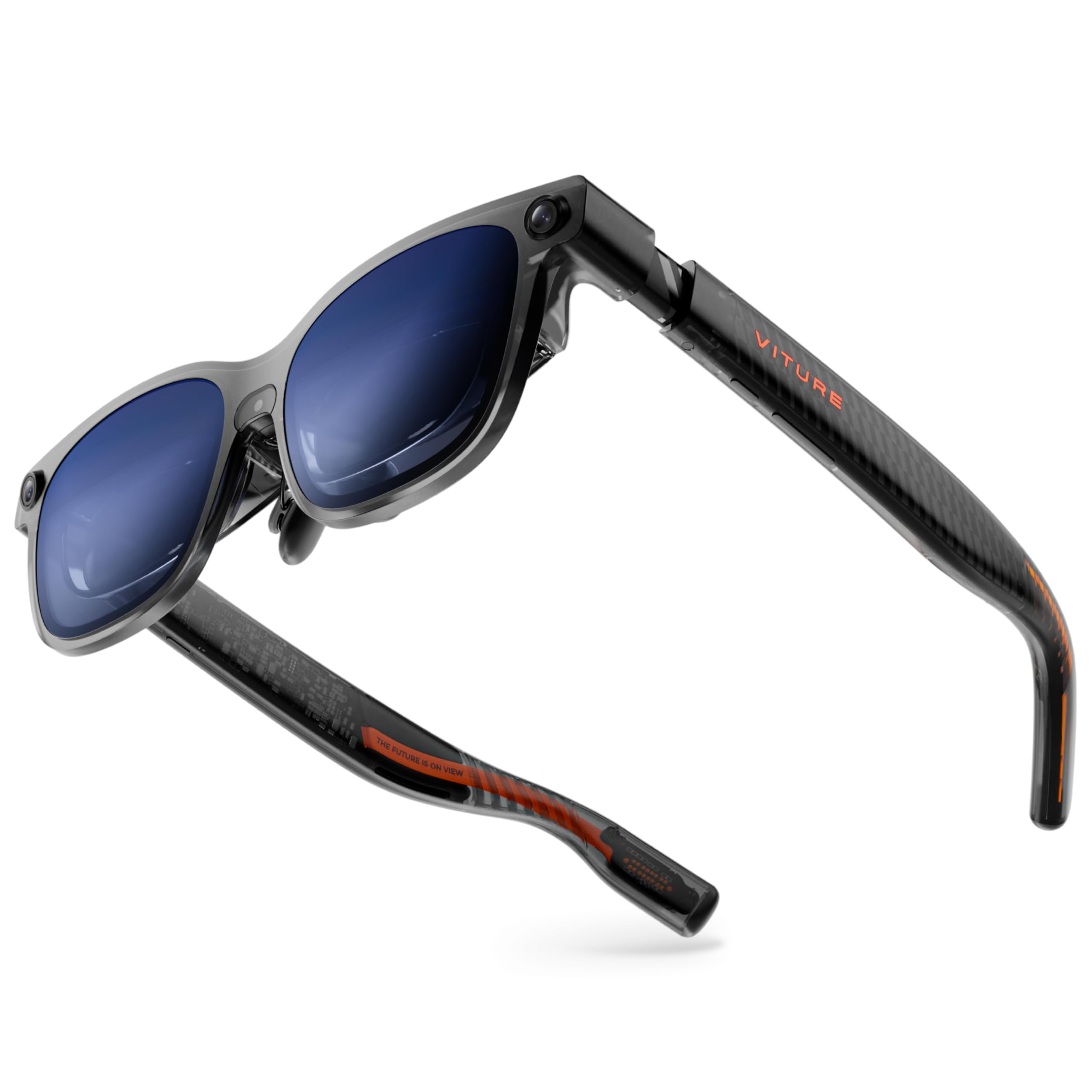
The VITURE Luma Ultra pushes the brightness envelope with a peak of 1500 nits, making it the brightest AR display on this list. It uses Sony’s latest Micro-OLED panels, which reduce power consumption by 35% compared to previous generations, allowing for sustained brightness without excessive heat. The 1200p resolution (1920×1080 per eye) ensures razor-sharp text and exceptional clarity. The 52-degree field of view creates a 152-inch virtual screen, and the 120Hz refresh rate keeps motion smooth and responsive during fast-paced gaming sessions.
What sets the Luma Ultra apart is its spatial computing capability. A front-facing RGB camera and dual depth cameras enable full 6DoF tracking and hand gesture recognition when paired with the VITURE Pro Neckband. This allows you to interact with virtual objects in your real-world environment using natural hand movements. The audio system is tuned by Harman, offering deeper bass and clearer highs than most open-ear designs. The built-in myopia adjustment (up to -4.0D) eliminates the need for prescription inserts for many users.
Reviewers consistently praise the display quality, noting the deep blacks and vivid colors that make media consumption a genuinely cinematic experience. The electrochromic film, activated with a single tap, instantly darkens the lenses for total immersion. However, some Android users report compatibility issues with the SpaceWalker app, and the hand gesture support is currently limited to the Neckband ecosystem. The frame feels light (83g) but not exceptionally sturdy, and the magnetic USB-C cable, while convenient, can be a bit too easy to disconnect accidentally.
Why it’s great
- Brightest display at 1500 nits for outdoor use
- Full 6DoF spatial tracking with hand gestures
- Built-in myopia adjustment up to -4.0D
Good to know
- Hand gesture support limited to Pro Neckband
- SpaceWalker app has Android compatibility issues
- Magnetic cable can disconnect too easily
3. XREAL 1S AR/XR Glasses
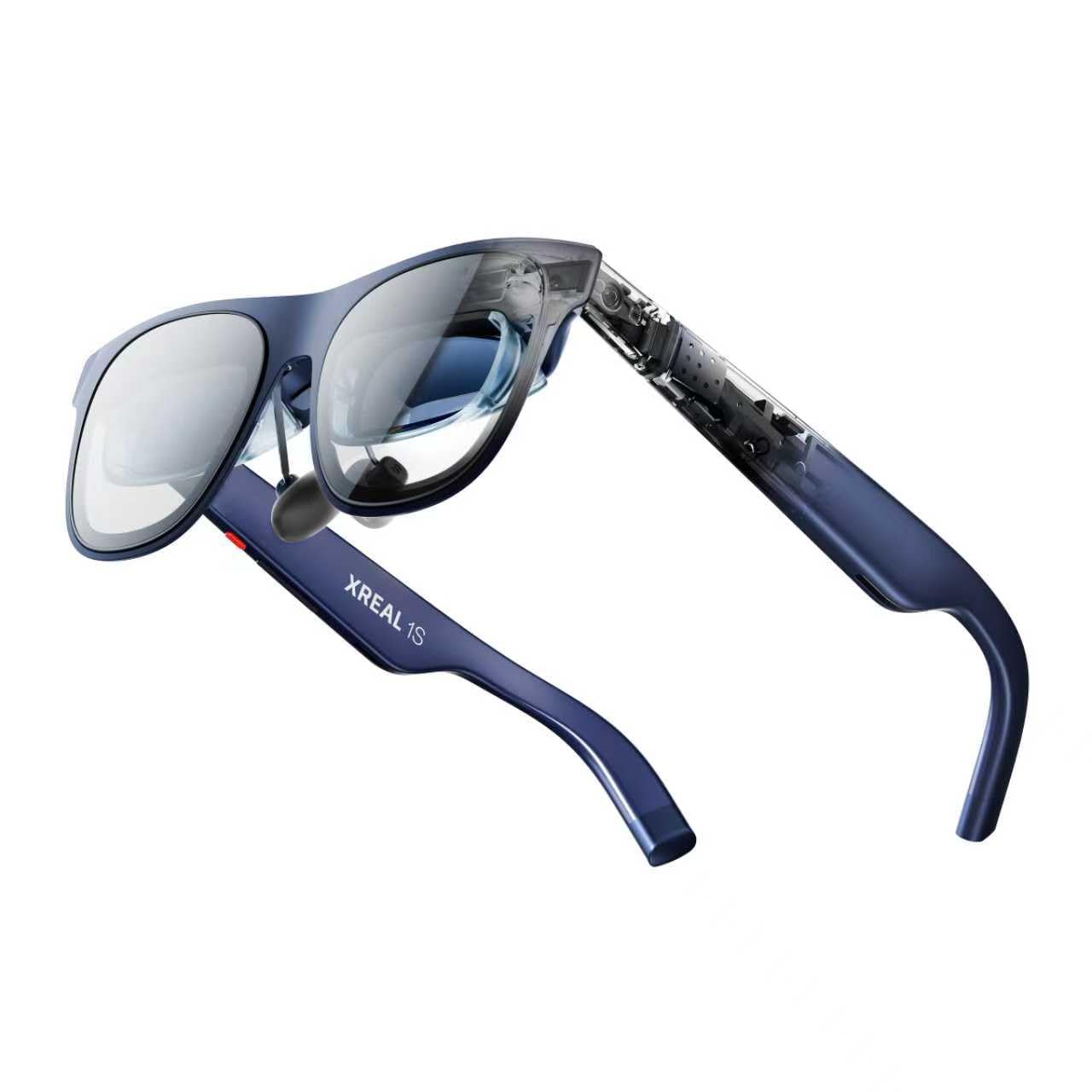
The XREAL 1S is a refined spatial display that delivers a 500-inch virtual screen (at a distance) with a 52-degree field of view. Like the One Pro, it is powered by the X1 spatial chip, offering native 3DoF tracking with a 3ms motion-to-photon latency. This means the virtual screen stays anchored in space as you move your head, making it an excellent choice for productivity tasks and treadmill walking. The display uses a 1920×1080 OLED panel with a 120Hz refresh rate in 3DoF mode, providing smooth and flicker-free visuals.
Audio is co-developed with Bose, featuring custom AR-grade drivers and a dedicated acoustic chamber that delivers deeper lows and clearer vocals compared to standard open-ear setups. The 1S supports multiple spatial viewing modes, including 0DoF follow, 3DoF anchor, ultrawide (32:9 or 21:9), and a new REAL 3D mode that converts 2D content into 3D in real-time. Individual color tuning ensures every unit is calibrated for natural hues, and the optical engine has been redesigned to boost clarity by 9%.
Users report that the glasses are comfortable for sessions lasting up to two hours, with the side-view mode being particularly useful for multitasking. The REAL 3D mode is described as a “game-changer” for immersive media, though some note a slight reduction in clarity when it’s active. The main drawbacks include a poor out-of-box experience — requiring users to visit online forums for setup guidance — and comfort issues with the nose pads for some face shapes. The Wayfarer form factor also doesn’t block side light well, causing reflections.
Why it’s great
- Native 3DoF with ultra-low 3ms latency
- Superb Bose-tuned open-ear audio
- Multiple spatial viewing modes (Anchored, Ultrawide, 3D)
Good to know
- Poor initial setup experience (no wizard)
- Nose pads uncomfortable for some face shapes
- Weak side light blocking causes glare
4. VITURE Luma Pro XR Glasses
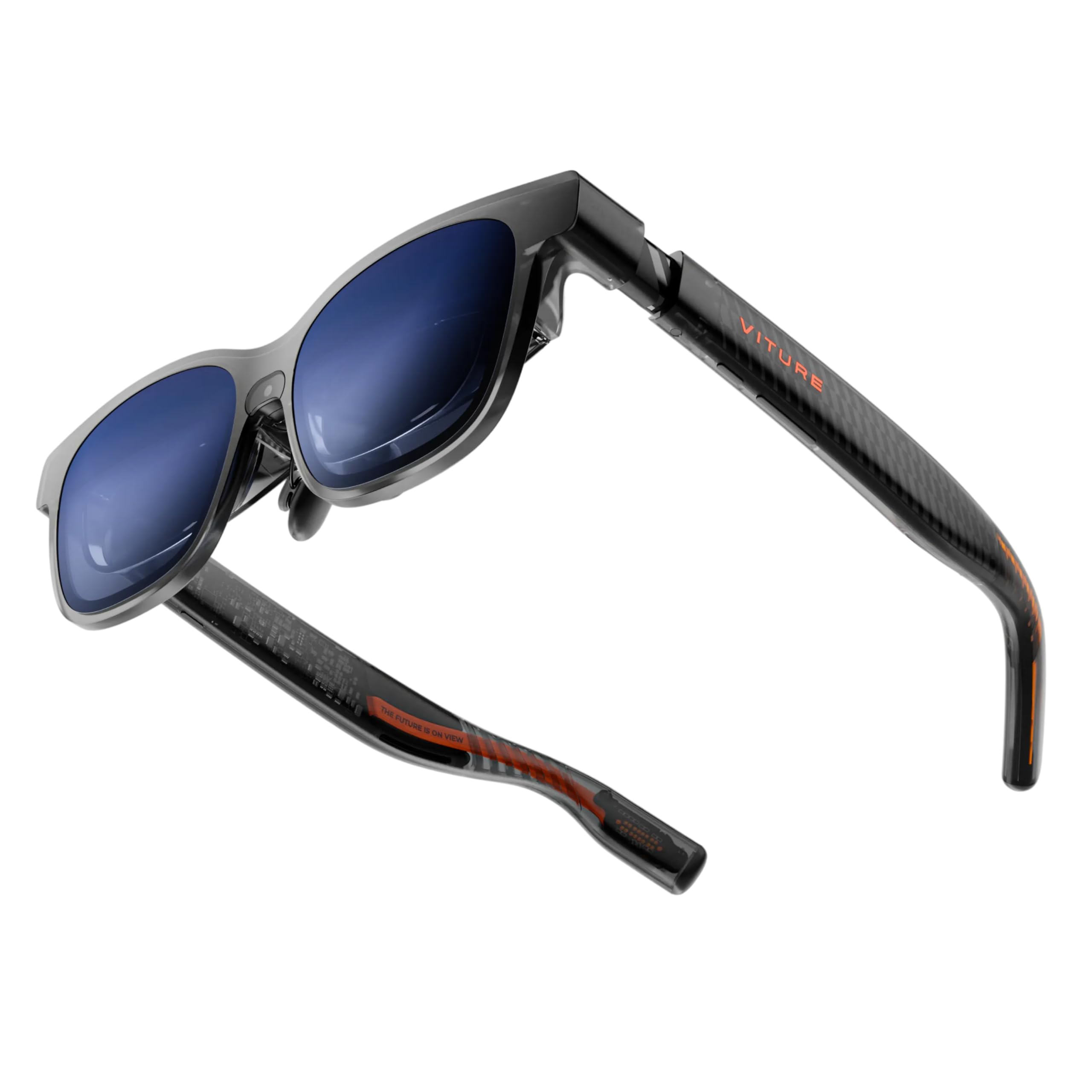
The VITURE Luma Pro is designed for users who prioritize display clarity above all else. It features a 1200p resolution that is noticeably sharper than the standard 1080p panels found in most competitors, making text incredibly crisp for reading and coding. The 152-inch virtual screen is paired with a 52-degree field of view, 1000 nits of brightness, and a 120Hz refresh rate. The display achieves a DeltaE color accuracy of less than 2, meaning colors are exceptionally true-to-life. Harman-tuned audio provides a fuller soundstage with better bass response than typical open-ear speakers.
One of the key features is the electrochromic film, which instantly darkens the lenses for total immersion with a single tap. The glasses also include built-in myopia adjustment up to -4.0D, eliminating the need for prescription inserts for many users. The Luma Pro is available in two sizes (Regular for IPD 64.0±6.0mm and Large for IPD 68.0±6.0mm), ensuring a better fit for a wider range of face shapes. The inclusion of programmable RGB lighting on the frame adds a unique, customizable aesthetic element.
Reviews consistently praise the picture quality, describing it as “razor-sharp” and “bright.” The SpaceWalker app is considered the best software companion among AR glasses, offering multi-screen work modes. However, some users with higher prescriptions or astigmatism report issues with the myopia adjustment not fully correcting their vision. The screen edges can appear slightly soft for some, and the 152-inch screen size claim is considered exaggerated by some users. Comfort is generally good, but the arms can feel a bit tight after extended wear.
Why it’s great
- Sharpest 1200p display with incredible clarity
- Electrochromic film for instant immersion
- Best-in-class SpaceWalker software with multi-screen
Good to know
- Myopia adjustment may not fully correct astigmatism
- 152″ screen claim feels inflated to some users
- Arms can feel tight after extended use
5. Meta Oakley Vanguard
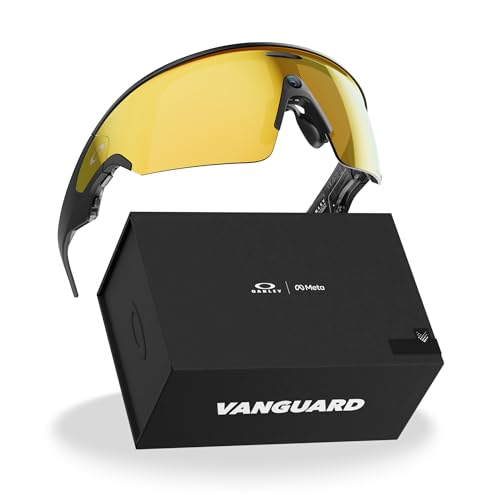
The Meta Oakley Vanguard brings the smart glasses concept directly into the sports and performance realm. It is essentially the same technology as the Ray-Ban Meta but wrapped in a durable, sport-oriented Oakley frame. The 12 MP ultra-wide camera captures high-quality photos and 3K Ultra HD video, and the five-mic system records immersive spatial audio. The standout feature is the up to 8 hours of battery life on a single charge, with the charging case providing an additional 48 hours — a massive improvement over other smart glasses.
This pair integrates deeply with Meta AI, allowing hands-free access to information, live translation, and activity sharing. For athletes, you can see wind conditions on the golf course or surf reports before hitting the waves. It also integrates with Garmin devices and Strava to overlay performance metrics on your captured videos. The open-ear speakers deliver clear audio for music and calls without blocking out your surroundings, crucial for outdoor safety. The Prizm 24K Black lenses enhance contrast and visibility in bright conditions.
User reviews are overwhelmingly positive about the camera and video quality, with many highlighting the ease of capturing POV footage during activities like paintball, cycling, and hiking. The stylish, low-profile design is appreciated, and the audio quality is considered “great” with minimal sound leakage. However, some users note a tight fit after 2-3 hours of wear and express privacy concerns about the deep integration with Meta’s ecosystem, requiring full app permissions and online data routing. The weight is also described as “slightly heavy” but tolerable for hours.
Why it’s great
- 8 hours battery life with 48-hour case
- 12MP camera delivers clear POV footage
- Deep sports integration with Garmin/Strava
Good to know
- Requires full Meta app and data permissions
- Feels tight after prolonged use (2-3 hours)
- No local or offline mode for data storage
6. Ray-Ban Meta (Gen 1), Skyler, Shiny Black
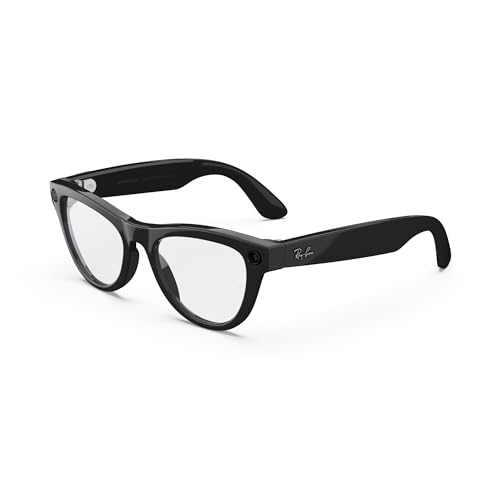
The Ray-Ban Meta (Gen 1) is the best-selling AI glasses for a reason — it perfectly balances style, functionality, and approachability. It looks exactly like a normal pair of Ray-Ban sunglasses, but hides a powerful 12 MP ultra-wide camera, a five-mic system for spatial audio capture, and open-ear speakers for music and calls. The camera captures 3K Ultra HD video and photos that are easily shared to social media via Facebook and Instagram livestreaming. Meta AI is built-in, allowing you to ask questions about your surroundings, get real-time translations, and send messages hands-free.
Connectivity is via Bluetooth, and the glasses work seamlessly with both Android and iOS devices. The open-ear speakers are surprisingly good for the form factor, delivering clear audio for music and calls while keeping you aware of ambient sounds. The hidden nature of the tech is its greatest strength — no one has to know you’re wearing a camera. The charging case is compact and provides multiple recharges, helping to offset the relatively modest 4-hour internal battery life. The clear lenses can be swapped for prescription lenses, making them a viable daily wear option.
Real-world feedback consistently highlights the convenience of hands-free capture. Users love being able to take a photo or start a video with a simple voice command or button press. The audio quality is described as “surprisingly good,” and the design is praised for looking like regular sunglasses. The main criticisms revolve around the limited battery life (4 hours of typical use), the lack of water resistance, and the fact that certain AI features like live translation are geographically restricted. Some users also find the 310-gram weight noticeable.
Why it’s great
- Looks like normal Ray-Ban sunglasses, discreet design
- 12MP camera with ultra-wide FOV and 3K video
- Hands-free Meta AI assistance and live translation
Good to know
- Battery lasts roughly 4 hours of typical use
- Not water resistant and no camera zoom
- Some AI features are geo-restricted
7. Meta Ray-Ban (Gen 1), Skyler, Shiny Chalky Grey
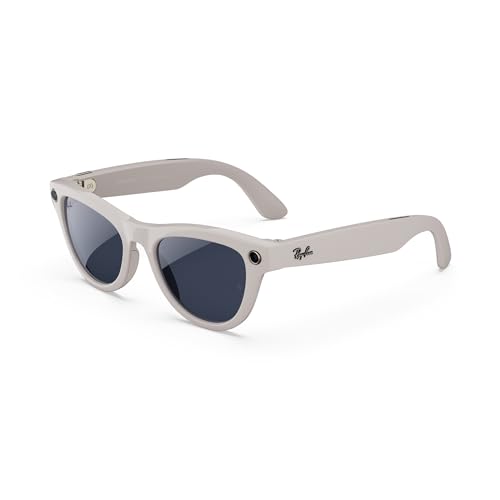
This version of the Ray-Ban Meta (Gen 1) is nearly identical to the Shiny Black model but comes with Transitions Sapphire lenses. These lenses automatically darken in sunlight and become clear indoors, making the glasses suitable for all-day, everyday wear without needing to swap frames. The core technology remains the same: a 12 MP ultra-wide camera capable of 3K video, a five-mic system for immersive audio, and open-ear speakers for hands-free calls and music. Meta AI provides real-time answers and contextual suggestions based on what you’re seeing.
The Gen 1 model supports hands-free calling, messaging, and Bluetooth connectivity. The audio quality is well-regarded for its clarity, particularly for phone calls. The charging case is portable and provides multiple charges, which is necessary given the glasses’ 4-hour battery life. The Transitions lenses are a significant value-add for users who want one pair of smart glasses that work in all lighting conditions. The glasses support voice commands for hands-free operation, and privacy controls allow you to manage settings.
User reviews overlap significantly with the Shiny Black model, with the same praise for the camera quality, audio performance, and discreet appearance. The Transitions lenses are well-received, offering convenience for users who move between indoor and outdoor environments. The same drawbacks apply: limited battery life, no water resistance, and no optical zoom. Some users also note that the glasses feel “heavy and chunky” compared to standard sunglasses, and the induction-style speakers lack privacy for those around you.
Why it’s great
- Transitions lenses adapt to all lighting conditions
- 12MP camera with ultra-wide FOV for POV content
- Hands-free Meta AI with contextual awareness
Good to know
- 4-hour battery life requires frequent charging
- Not water resistant and no zoom capability
- Heavy and chunky compared to regular glasses
8. RayNeo Air 4 Pro AR/XR Glasses
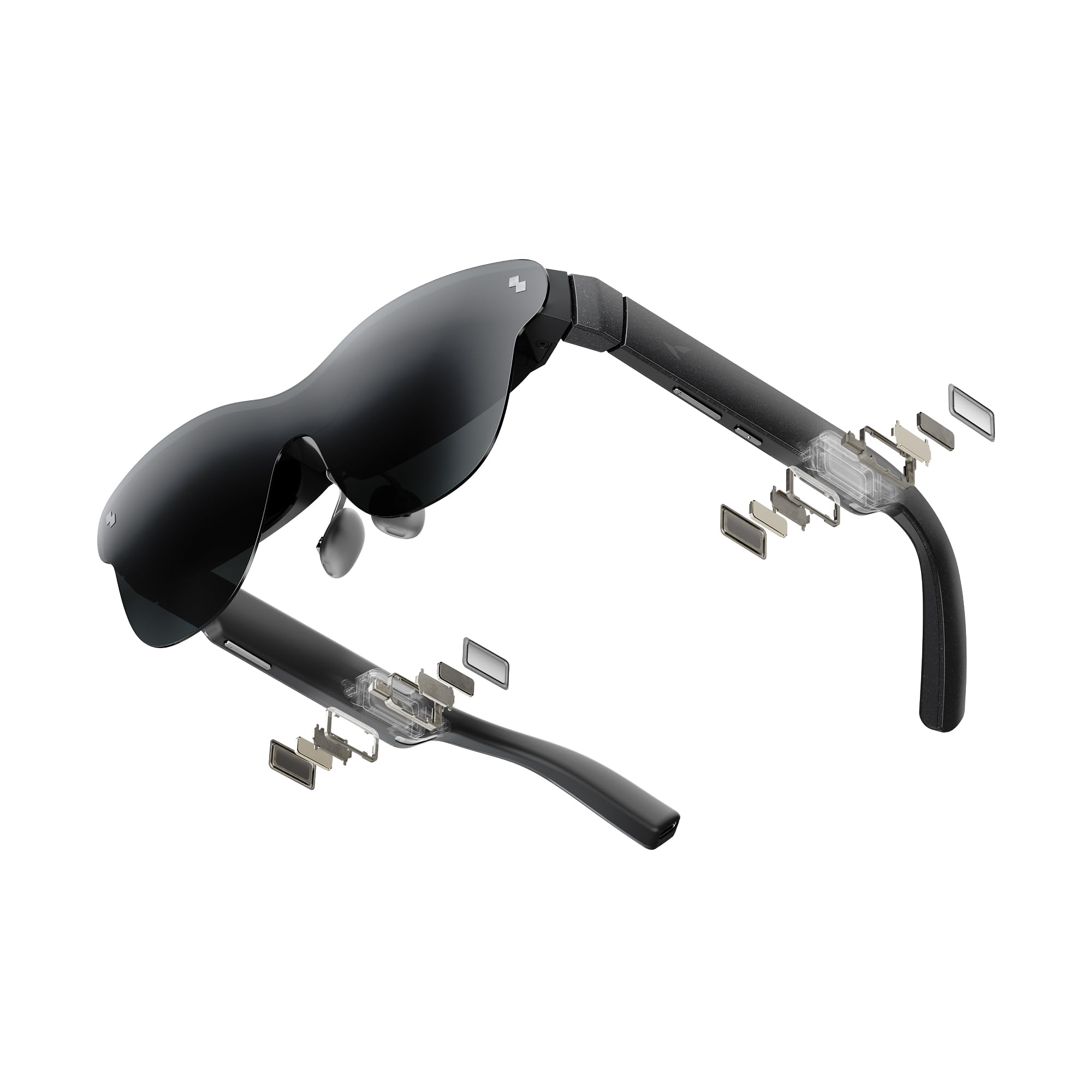
The RayNeo Air 4 Pro distinguishes itself as the world’s first HDR10-certified AR display, capable of producing over 10 billion colors with ultra-deep contrast. It uses a Vision 4000 chip co-developed with Pixelworks, which powers AI-driven SDR-to-HDR upscaling for real-time color, sharpness, and motion enhancement. The 120Hz refresh rate ensures smooth motion for gaming on PS5, Steam Deck, and Switch 2, while the 1200 nits peak brightness makes the 201-inch virtual screen (at 6 meters) usable even in well-lit rooms. Audio is provided by four precision speakers from Bang & Olufsen, delivering immersive 360-degree spatial sound.
Connectivity is simple and universal via a single USB-C cable. The glasses have no internal battery, making them lighter and requiring no charging — they draw power from the host device. This also means instant setup: plug in and the virtual screen appears. A built-in myopia adjustment (up to -4.0D) is included, along with a 3D movie mode that can convert 2D content to 3D using AI depth enhancement. The glasses support seven optimized viewing modes for different content types.
Reviewers consistently praise the display quality, calling it the “best screen” among comparably priced AR glasses. The HDR10 support and AI upscaling produce a noticeably wider color gamut and better contrast than standard SDR displays. The Bang & Olufsen audio is described as “impressive,” with excellent clarity and spatial separation. The main complaints center on the physical fit: the glasses only show about 90% of the screen for some users, the nose pads are uncomfortable for extended wear, and there is no 3DoF tracking — the screen follows your head movements (0DoF), which can be disorienting.
Why it’s great
- First HDR10-certified AR display with 10 billion colors
- Vision 4000 AI chip for real-time SDR-to-HDR upscaling
- Premium Bang & Olufsen 360° spatial audio
Good to know
- No 3DoF tracking (screen follows head movement)
- Nose pads can be uncomfortable for long sessions
- Full FOV not visible for some face shapes
9. RayNeo Air 3s Pro AR/XR Glasses
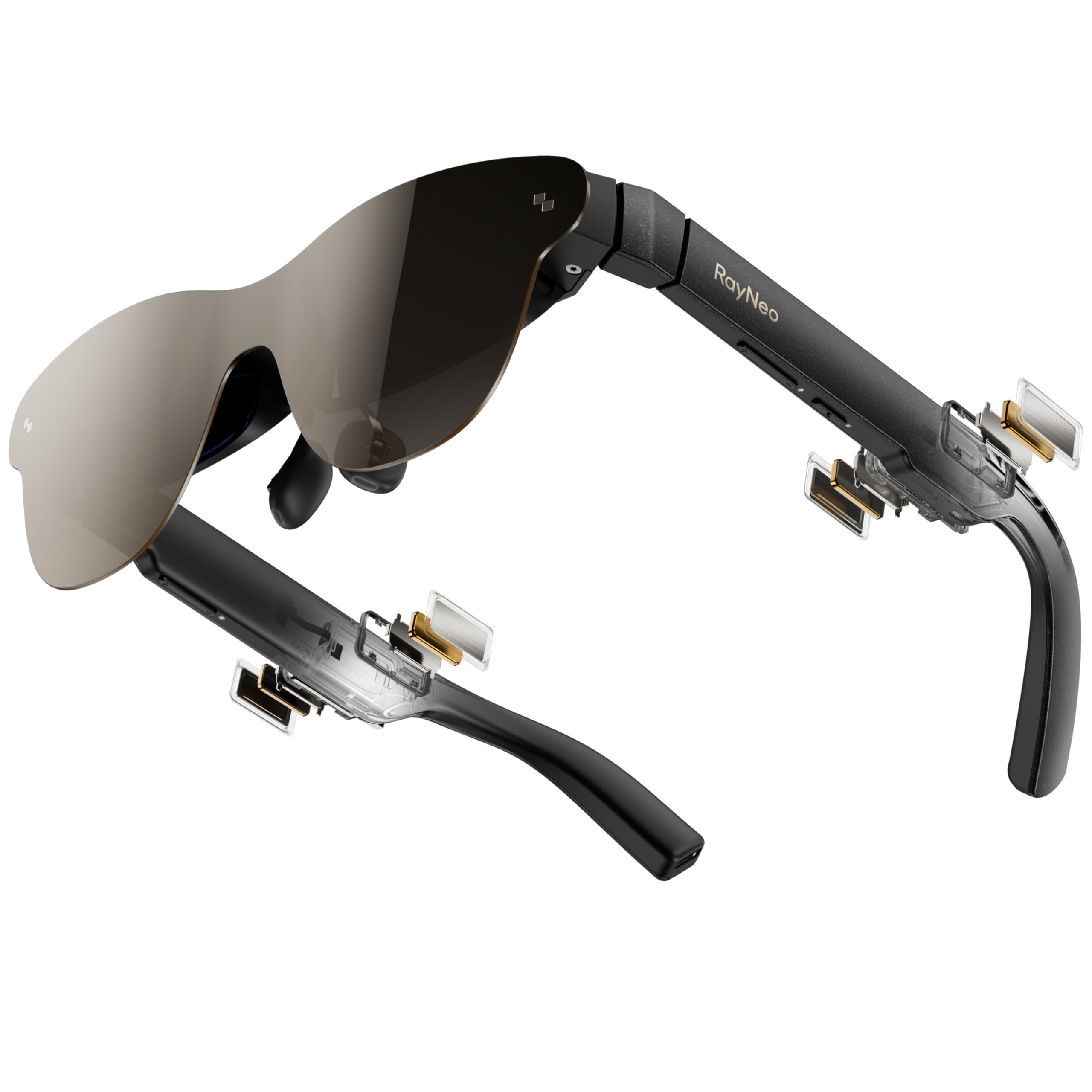
The RayNeo Air 3s Pro is a budget-friendly entry point into the world of AR glasses that still delivers a premium display experience. It features a 1200 nits-to-eye brightness, making it the brightest AR glasses available at the time of release. This allows for a highly visible virtual screen even in bright daylight conditions. The display uses the 5.5th-gen tandem Micro-OLED panel with a 200,000:1 contrast ratio and 98% DCI-P3 color gamut, delivering deep blacks and vibrant colors. The 120Hz refresh rate ensures smooth motion for gaming and movies.
The glasses project a 201-inch virtual screen at a distance of 6 meters, creating an IMAX-level viewing experience. RayNeo includes six optimized viewing modes for different content types, and the glasses are TÜV SÜD certified for low blue light and flicker-free viewing. The 3,840Hz high-frequency PWM dimming and 20-level brightness control help reduce eye fatigue during extended use. For users with vision correction needs, the glasses include a prescription lens sample that can be taken to a local optician. The audio system is adequate for casual use.
User reviews highlight the excellent value for the price, with many calling it the best option in its tier for media consumption and casual gaming. The display brightness and clarity are consistently praised, with users noting it works well even outdoors. The lightweight design (76g) is comfortable for 2-3 hour sessions. The main drawback is that the virtual screen edges are cut off for some users depending on their face shape, making productivity tasks difficult. The rigid cable can also pull the glasses down, and there is no built-in motion control or spatial tracking.
Why it’s great
- Brightest AR display at 1200 nits for outdoor use
- Vibrant colors with 98% DCI-P3 and 200,000:1 contrast
- Exceptional value for the display quality
Good to know
- Screen edges cut off for some face shapes
- No spatial tracking or 3DoF capability
- Rigid cable pulls glasses down during use
FAQ
Can I use AR glasses with a built-in camera for video calls?
Do I need a special phone to use these AR glasses?
How private are the microphones and cameras on these glasses?
Can I wear prescription lenses with these AR glasses?
Final Thoughts: The Verdict
For most users, the winner for the best ar glasses with camera is the Ray-Ban Meta (Gen 1), Skyler, Shiny Black because it combines a discreet design with a genuinely useful 12MP camera and Meta AI in a form factor that looks like normal high-end sunglasses. If you want the absolute best display quality for a portable theater experience, grab the XREAL One Pro for its native 3DoF and 57° FOV. And for the ultimate outdoor POV capture for sports and activities, nothing beats the Meta Oakley Vanguard with its 8-hour battery life and deep Garmin integration.