
Our readers keep the lights on and my morning glass full of iced black tea. As an Amazon Associate, I earn from qualifying purchases.
Specs are compiled from manufacturer listings and verified buyer reviews and can change over time — please confirm the key details on the product page before buying.
You spend your day on spikes, in crotches, and on narrow limbs — the last thing you need is a boot that slips, aches, or falls apart in months. Arborist boots sit at the intersection of climbing-specific grip, ankle support you can trust on a gaff, and serious protection from chainsaw contact and falling debris. The right pair delivers immediate comfort and safety from day one.
I’m Min — the founder and writer behind Gadgets Feed. This guide is built by comparing the manufacturers’ published specifications and the patterns across verified customer reviews, so you get each pick’s real strengths and trade-offs instead of marketing spin.
Every boot here carries steel or composite toe protection and chainsaw-resistant materials, three non-negotiables for anyone serious about tree work. Whether you climb daily or step into the canopy a few times a week, this guide to the best arborist boots breaks down three picks that actually earn their price tag.
Quick Picks
- Kenetrek Lineman Extreme Non-insulated Steel — Premium Pick
- EVO 2 Climbing Boots for Arborists — Best Overall
- Clip’n Step Tree Climbing Boots — Smart Value
How To Choose The Best Arborist Boots
Picking arborist boots means balancing three things: climbing-specific grip, protection against impact and cuts, and how long the materials hold up to daily abuse. Here is what separates the right pair from a painful mistake.
Sole Design and Grip
Climbing boots use a softer rubber compound than standard work boots so you can grip narrow crotches and bark without slipping. Look for a dedicated climbing zone at the toe (like a Vibram “climbing zone” tip) and a smooth but sticky tread pattern. The trade-off: that soft rubber wears faster on concrete and asphalt. If you spend equal time on the ground, a hybrid boot with a harder sole might suit you better.
Safety Protection: Toe and Chainsaw Resistance
Every boot here meets ASTM standards for impact and compression (steel or composite toe) and includes chainsaw-resistant material to slow a spinning chain on contact. Steel toes offer the highest impact protection but conduct cold and are heavier. Composite toes are lighter and non-conductive but have a slightly lower impact ceiling. Both protect your toes from falling branches and saw missteps.
Ankle Support and Climbing-Specific Features
When you are on spikes for hours, ankle flex and support matter. Look for a higher ankle collar — 8 inches or more — with padded support that does not dig in. A lacing system without exposed metal hooks prevents rope damage. Some boots offer an attachment point on the arch for a mechanical ascender, which saves wrestling with a foot loop.
Quick Comparison
| Model | Best For | Sole Type | Height | Weight per Boot | Amazon |
|---|---|---|---|---|---|
| Kenetrek Lineman Extreme | All-day climbing & ground work | Standard heavy-duty | 10″ | — | Amazon |
| EVO 2 Climbing Boots | Purpose-built tree climbing | Vibram Climbing Zone | — | 3.5 Pounds | Amazon |
| Clip’n Step Tree Climbing Boots | Ascender compatibility & budget | Soft, sticky rubber | — | — | Amazon |
In-Depth Reviews
1. Kenetrek Lineman Extreme Non-insulated Steel Toe Boot

The heavy lifter that treats your feet right whether you are eight hours up a pole or hiking to the next tree.
This is the boot built for linemen and arborists who cannot afford a mid-shift failure. The Kenetrek Lineman Extreme uses 2.8mm thick premium full grain leather with one-piece vamp construction — that means no seams down the tongue, so abrasion and water have fewer entry points. Buyers report pairs lasting over four years of daily climbing work: one reviewer noted their first set lasted four years and four months of line-clearance tree trimming and hiking before the tread finally gave out. That durability far exceeds the EVO 2, which climbers typically replace after six to eight months.
Comfort is the instant standout. The steel safety toe meets ASTM F2412-11 and ASTM F2413-11 standards for impact, compression, and electrical hazard safety. But unlike many steel-toe boots that need a brutal break-in period, the Lineman feels good straight from the start — a reviewer mentioned zero break-in time and noticeably reduced foot pain from hours in gaffs. The boot hardware swivels instead of breaking, a small detail that saves you from busted eyelets on a remote job site. One caveat: a buyer noted that a second pair suffered sole delamination after two months, which suggests quality control may vary on some runs.
What You Gain
- Premium 2.8mm full grain leather with one-piece vamp means fewer seams and longer life
- Steel toe meets ASTM F2412-11 and F2413-11 for impact, compression, and electrical hazard safety
- Owners mention zero break-in time and immediate comfort even in gaffs all day
- Hardware swivels instead of breaking, keeping you on the job
The Catch
- Premium price that buyers warn is only worth it if the boot lasts — a second-pair defect reported raises the gamble
- Heavier than climbing-specific boots due to the steel toe and thick leather build
Reach for this if: you are a full-time climber or lineman who needs a boot that can take four-plus years of abuse and feels good from day one.
Look elsewhere if: you climb exclusively and want a lighter, softer sole for maximum bark grip — the Lineman’s heavy-duty build prioritizes longevity over climbing sensitivity.
2. EVO 2 Climbing Boots for Arborists, Water Resistant
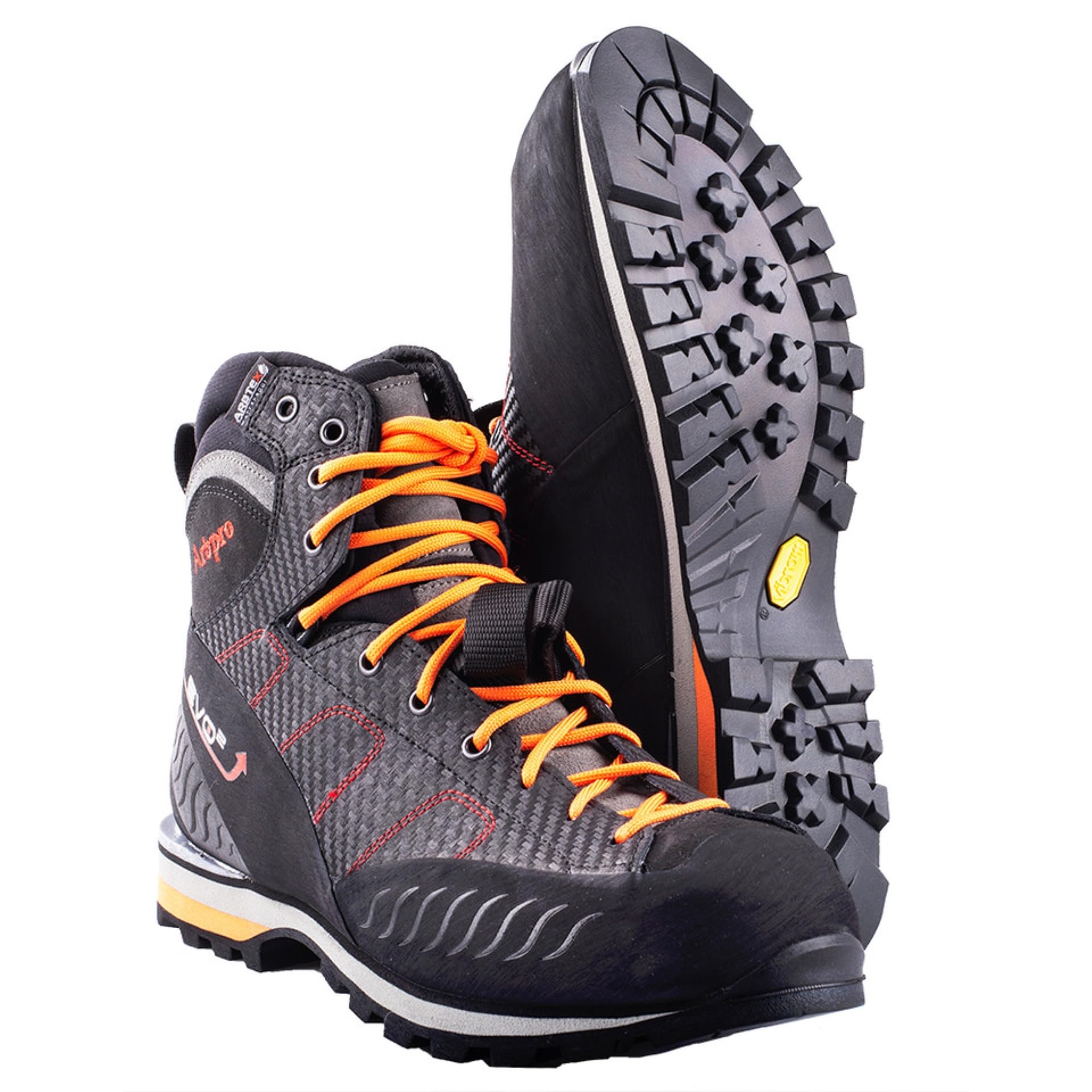
The purpose-built climber that wraps your foot around a branch and stays there.
Arbpro updated the EVO to the EVO 2 with three specific improvements: 25 mm higher ankle support with a softer pad, stronger stitching, and a reinforced lacing system that skips metal hooks entirely so you never damage your climbing rope. The custom high-grip Vibram sole includes a “climbing zone” at the toe designed for narrow crotches, and the slim profile keeps you from feeling bulky when you are working in tight canopy spaces. At 3.5 pounds per boot, it is noticeably lighter than the Kenetrek Lineman — easier on your legs during an all-day climb but with a softer sole that wears faster on concrete.
The trade-off is real. A reviewer on their second pair said straight up: “Mine only last 6=8 months.” The softer rubber that gives you incredible grip on bark does not survive long on asphalt or pavement. Buyers consistently call these the best climbing boots on the market — one reviewer has worn them for eight years — so the price makes sense if you are in the tree every day. The eVent membrane gives solid breathability and water resistance without making the boot feel like a rubber boot. European sizing runs slightly smaller, so most buyers recommend ordering a half size up.
Why It Wins
- Vibram sole with dedicated climbing zone gives confident grip on narrow crotches and bark
- Higher 25 mm ankle support pad reduces fatigue during long climbs
- No metal hooks on the lacing system means zero rope damage
- eVent membrane keeps feet breathable and dry without trapping sweat
What to Know
- Soft sole wears out in 6–8 months on mixed ground work — this is a dedicated climbing boot, not a ground boot
- European sizing runs small; buyers recommend going a half size up
- Not warrantied against normal wear from climbing or hard surfaces
Who It Fits: arborists who spend 80% or more of their day up in the tree and want the best canopy-specific grip and lightweight feel — the EVO 2 is built for climbing, not standing on concrete.
Who Should Skip It: if you do mixed duties (climb and ground work equally), the soft sole will frustrate you with premature wear — pick a harder-soled boot for longer service.
3. Clip’n Step Tree Climbing Boots
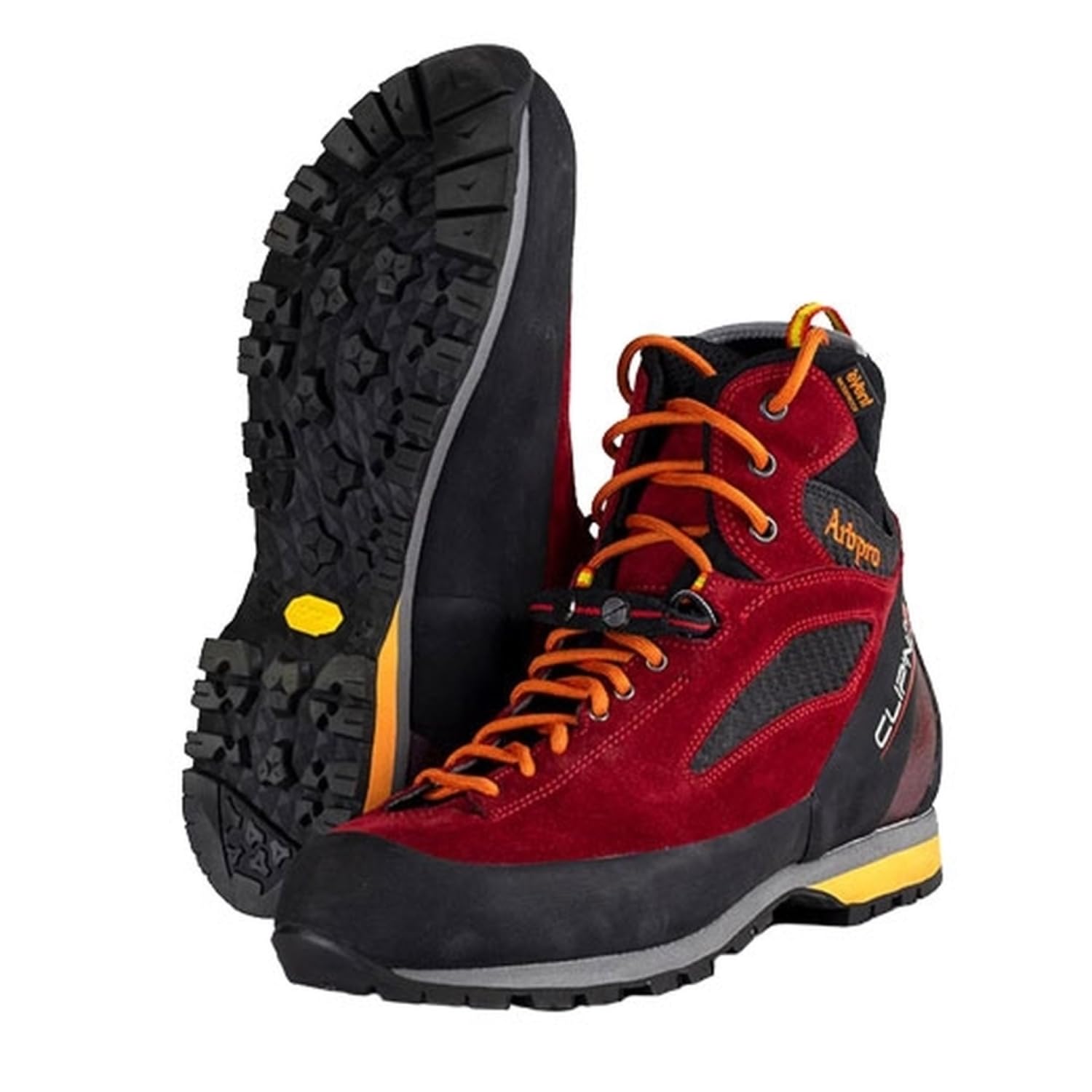
The lighter, more flexible climber with a built-in attachment point for mechanical ascenders.
Arbpro engineered the Clip’n Step as a lighter and flexier alternative to the EVO line, with a unique attachment point molded into the top of the foot. That lets you clip a mechanical ascender (like a HAAS or SAKA) directly to the boot without rigging a separate foot loop — a time-saver when you are making multiple ascents. The sole uses a softer, stickier rubber than the EVO 2 for even more bite on bark, and the eVent fabric keeps you breathable and water-resistant in damp conditions.
Where it saves you money, it does ask for a concession: this is a purpose-built climbing boot, not a do-everything work boot. If you spend most of your day on the ground, the soft rubber will wear down much faster than a standard sole. That said, buyers consistently rate the comfort and quality high — one buyer called it “justo lo que quería” (exactly what they wanted) — and the value is clear versus the EVO 2 if you are mainly in the tree and want the ascender-ready design.
Upsides
- Unique attachment point at the top of the boot works directly with mechanical ascenders — saves setup time
- Softer, stickier rubber gives even more bark grip than the EVO line
- Lighter and more flexible than the EVO 2, reducing leg fatigue on long climbs
- eVent fabric gives breathable water resistance for damp conditions
Downsides
- Soft rubber sole is not built for ground work — expect faster wear on pavement or dirt
- Fewer reviews and less long-term data than the EVO 2, so longevity is less proven
Best for: climbers who use a mechanical ascender regularly and want a lighter boot that is easier on the legs than the EVO 2 — the clip-in point alone saves frustration on every ascent.
Not for: ground-heavy work — the soft sole sacrifices durability in exchange for climbing grip, so stick to the Kenetrek or a harder-soled hybrid if you split time.
Understanding the Specs
Vibram Climbing Zone vs Standard Sole
A “climbing zone” is a section of the sole at the toe that uses a stickier rubber compound and a smooth or lightly textured surface to grip bark and narrow branch crotches without slipping. Standard work-boot soles are harder and last longer on concrete but lack that sticky bite. The EVO 2 uses this feature specifically; the Kenetrek Lineman uses a standard heavy-duty sole better suited for ground work and climbing on spikes.
eVent Membrane for Breathability
eVent is a waterproof and breathable fabric membrane that lets sweat vapor escape while blocking liquid water from entering. Unlike some waterproof liners that can feel clammy after hours of climbing, eVent breathes actively — useful when you are working up a sweat on a long ascent and then sitting still in the canopy. The Clip’n Step and EVO 2 both use it; the Kenetrek relies on thick full-grain leather for water resistance.
FAQ
What is the difference between arborist boots and regular work boots?
How long do arborist climbing boots usually last?
Should I buy a steel toe or composite toe for tree climbing?
Do arborist boots run true to size?
Can I use arborist boots for ground work too?
What does chainsaw resistance mean in a boot?
How important is a waterproof membrane in climbing boots?
Do these boots work with climbing spikes (gaffs)?
Why do some climbing boots have no metal hooks on the laces?
Is the Kenetrek Lineman worth the higher price over the EVO 2?
Final Thoughts: The Verdict
For most people, the best arborist boots winner is the EVO 2 Climbing Boots because it nails the core mission — sticky bark grip, rope-safe lacing, and light weight — at a price that sits in the mid-range. If you need a boot that can handle both tree work and heavy ground duty and you want four-year durability, grab the Kenetrek Lineman Extreme. And for climbers who use a mechanical ascender and want a lighter, flexier build at a lower entry point, the standout is the Clip’n Step Tree Climbing Boots.
How We Picked
We do not accept paid placement. Every pick is matched to a real buyer and a real use-case; we do not hands-on test units.
Sources & Methodology
Specifications: manufacturer listings and product documentation. Review insights: verified customer reviews, as of July 2026. Pricing: not shown on this page (it changes often); check the current price via the retailer link.
As an Amazon Associate, Gadgets Feed earns from qualifying purchases. This does not affect which products we feature.