
Our readers keep the lights on and my morning glass full of iced black tea. As an Amazon Associate, I earn from qualifying purchases.
A top-handle chainsaw is not a luxury for a working arborist — it is the single tool that makes one-handed pruning and limbing aloft physically possible. The wrong saw, one that is too heavy or poorly balanced, turns every climb into a fight against fatigue. Finding a machine that delivers enough chain speed to cut cleanly yet stays light enough to operate throughout a full workday is the defining challenge in this category.
I’m Min — the co-founder and writer behind Gadgets Feed. I have spent countless hours digging through engine displacements, battery voltages, chain pitches, and real-world user reports to isolate the models that actually hold up to the demands of daily tree work.
Whether you are a professional climber or a serious property owner working from a bucket truck, choosing the right arborist chainsaw means balancing weight, power delivery, and reliability in a machine you will trust at shoulder height.
How To Choose The Best Arborist Chainsaw
An arborist saw lives in a narrower performance window than a standard felling saw. You want enough power to cut through a 6-inch limb without bogging, but you also need the saw to weigh so little that your arm does not shake after fifty cuts. Understanding the trade-offs between gas displacement, battery runtime, bar length, and overall weight is what separates a smart buy from a regret.
Weight and Balance Are Everything
A sub-8-pound saw is the sweet spot for professional climbing. Any heavier and the fatigue penalty during a full day of pruning is severe. Top-handle saws concentrate mass near the grip, so balance matters just as much as the raw number on a scale. A poorly balanced 7-pound saw feels worse than a well-balanced 8.5-pound saw when you are reaching sideways to make a cut.
Gas vs. Battery Power
Gas saws offer instant refueling and sustained torque in dense, wet hardwoods, but they add weight from the engine and fuel, plus maintenance like carburetor adjustments. Battery models run quieter, start instantly, and weigh less, but runtime is capped by battery capacity and torque can dip under sustained heavy loads. For a climber making dozens of moderate cuts daily, a modern high-voltage battery saw often matches gas performance with less hassle.
Bar Length and Chain Pitch
A 10-to-12-inch bar is the standard for arborist work. Longer bars increase leverage and cutting capacity but add weight and reduce maneuverability in tight canopy spaces. Chain pitch — commonly 1/4-inch or 3/8-inch low-profile — determines cutting speed versus smoothness. A 1/4-inch pitch cuts faster and produces less vibration, but wears out quicker than a heavier 3/8-inch chain in dirty or abrasive wood.
Quick Comparison
On smaller screens, swipe sideways to see the full table.
| Model | Category | Best For | Key Spec | Amazon |
|---|---|---|---|---|
| ECHO CS-271T-12 | Gas | Professional climbing saw | 26.9cc engine, 12″ bar | $498.99Amazon |
| DEWALT DCCS674B | Battery | High-power battery cutting | 60V, top-handle design | $519.99Amazon |
| Makita XCU06Z | Battery | Ultralight one-handed pruning | 10″ bar, 7.2 lbs with battery | from $384.00Amazon |
| Echo CS-2511T-14 | Gas | Lightest gas climbing saw | 25cc, 5.2 lbs, 14″ bar | $608.99Amazon |
| Stihl MS 194 T | Gas | Premium German-engineered saw | 30cm bar, 1.4 hp | $599.99Amazon |
| Stihl MS 151 TC | Gas | Featherlight pruning specialist | 1/4″ pitch chain, 25cm bar | $824.91Amazon |
In‑Depth Reviews
1. Echo CS-271T-12
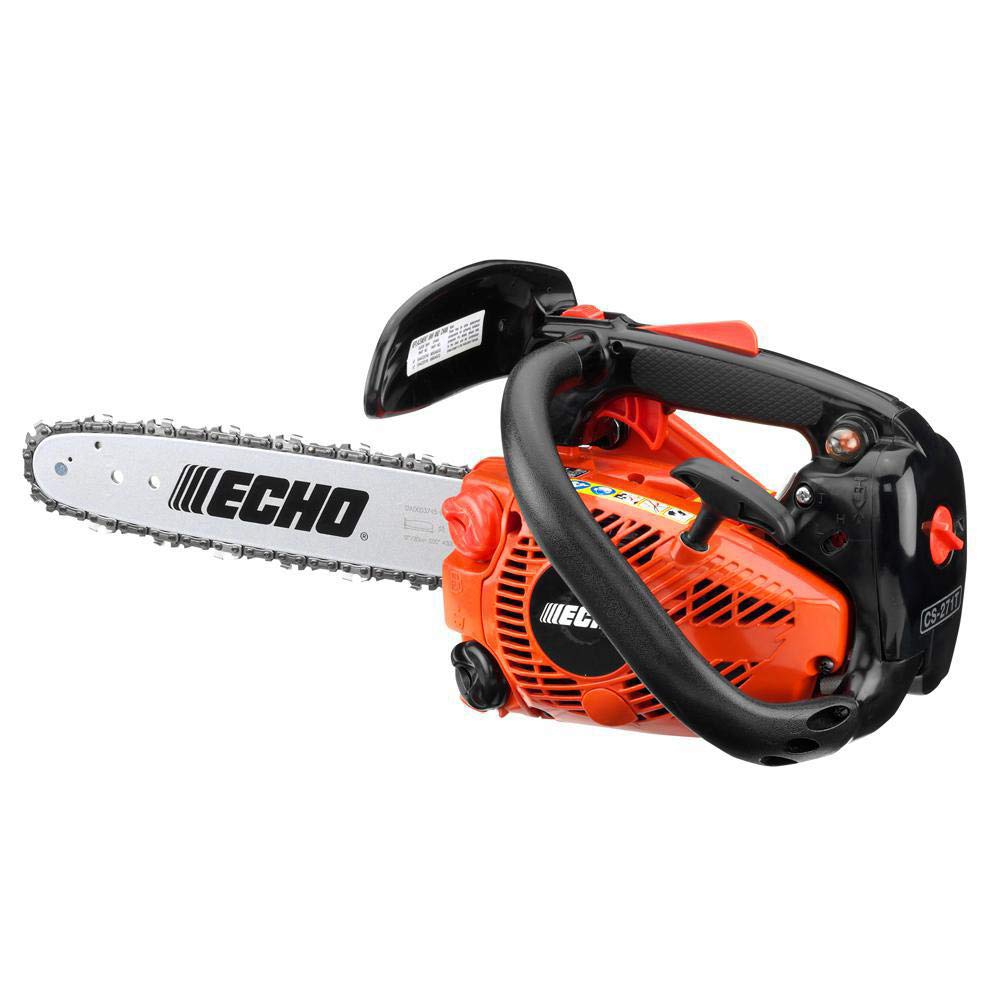
The Echo CS-271T is widely regarded as the benchmark pro climbing saw. Its 26.9cc engine delivers 5.3 horsepower, enough to chew through 8-inch hardwood without bogging, yet the saw remains compact enough for one-handed cuts in the canopy. The i-30 starting system reduces pull effort significantly, a genuine advantage when you are strapped into a harness fifty feet up.
Vibration isolation is excellent, which directly reduces hand fatigue during long sessions. The inertia-type chain brake engages reliably if the saw kicks back, and the side-access chain tensioner makes adjustments fast — no tools needed to tighten after initial stretch. The 12-inch bar gives you extra reach for larger limbs without penalizing maneuverability inside tight branching.
Fuel consumption is on the higher side, but the trade-off is consistent power delivery through the cut. The digital ignition ensures easy hot restarts, and the purge bulb clears air from the fuel line in seconds. For a working arborist who needs a saw that starts every time and does not quit mid-cut, this is the standard.
Why it’s great
- Strong 5.3 hp engine cuts dense hardwoods easily
- Lightweight and well-balanced for all-day climbing
- Easy-start system with reduced pull effort
Good to know
- Higher fuel consumption than smaller displacement saws
- Not as light as sub-7-pound battery models
2. DEWALT DCCS674B 60V Top Handle
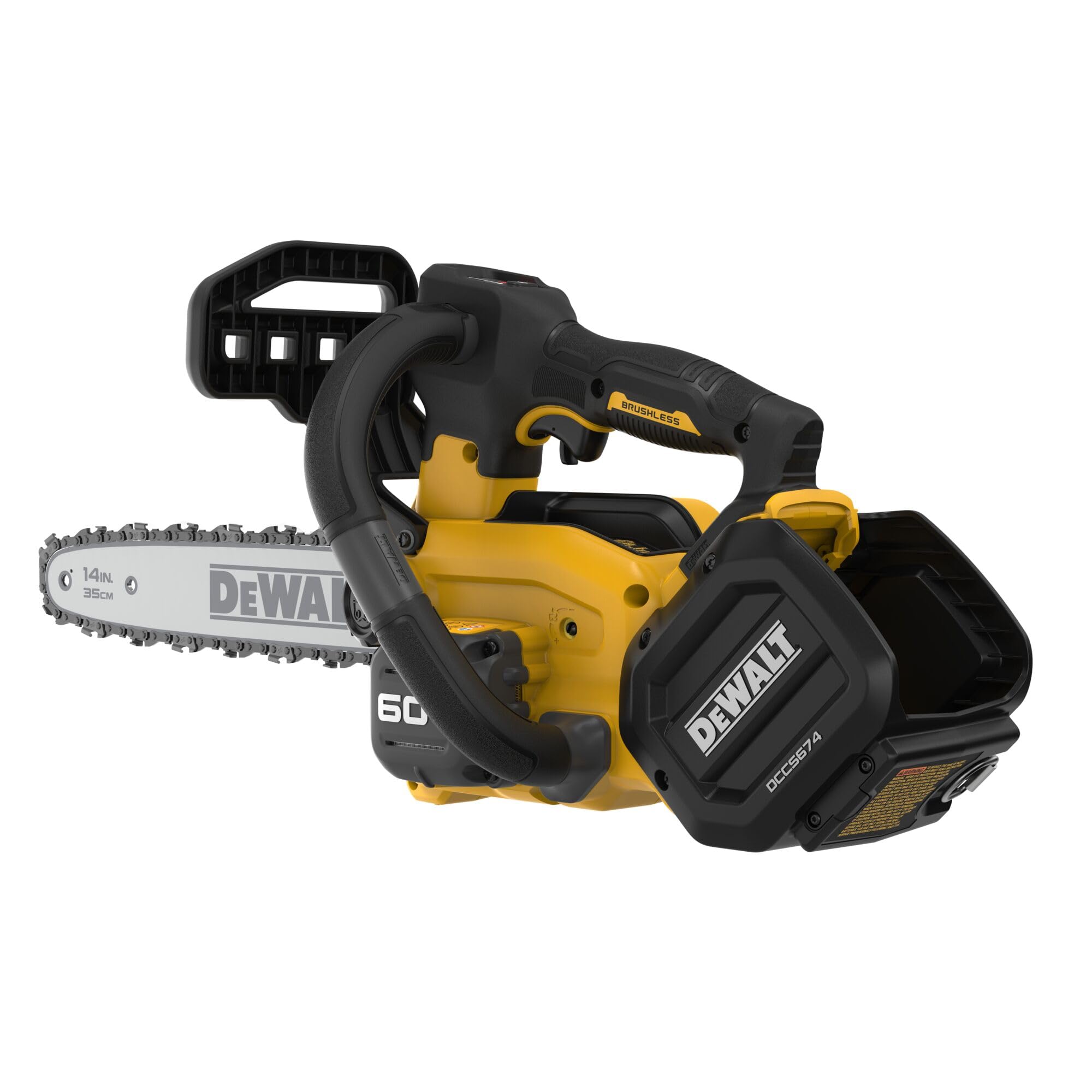
DeWalt’s DCCS674B is proof that battery-powered arborist saws have closed the gap with gas. Running on the 60V FlexVolt platform, this top-handle model delivers cutting speed comparable to a 30cc gas saw, and verified users report it cuts fast even through dense limbs. The instant torque of the brushless motor means no carburetor tuning, no pull cord, and no fumes.
Professional arborists in tree removal businesses are using this saw daily for climbing and ground trimming. When paired with a 9Ah battery, the runtime covers multiple large pruning jobs without needing a recharge. The top-handle design keeps the saw compact for slinging on a harness, and the lack of vibration from an engine makes it noticeably more comfortable for extended use.
The one catch is that you need to stay within the DeWalt 60V battery ecosystem, and the tool-only price assumes you already own compatible batteries. Some users note that aftermarket adapters to run other brands can cause overheating, so sticking with genuine DeWalt packs is recommended. If you are already invested in the platform, this saw is a natural upgrade.
Why it’s great
- Power close to gas saws without the fumes or pull-start
- Instant torque delivery for fast cutting
- Quiet operation suitable for noise-sensitive areas
Good to know
- Batteries sold separately and are expensive
- Runtime limited by battery capacity under heavy loads
3. Makita XCU06Z 18V LXT

The Makita XCU06Z is the lightest 10-inch chainsaw in its class at just over 7 pounds with a battery and oil. This weight advantage is immediately noticeable when you are making cuts above shoulder height — the saw feels like an extension of your arm. The Makita-built outer rotor brushless motor produces chain speed of 4,720 feet per minute, putting it in the same league as a 22cc gas saw for pruning and limbing.
Torque boost mode helps when cutting through dense material like oak or maple, and the captured bar nut with lateral chain tensioning keeps maintenance simple. The adjustable chain lubrication switch is a thoughtful detail — you can turn down the oil flow when storing the saw to prevent messy leaks. Users consistently report excellent cut quality in softwoods and good performance in hardwoods up to about 3 inches.
The tool-only format means you need Makita 18V LXT batteries, but if you already own any tools in that ecosystem, this saw slots in seamlessly. One limitation is the lack of a tool-less chain tensioner; you will need a tool for adjustment after initial chain stretch. For light professional trimming or heavy homeowner pruning, this saw delivers exceptional value per pound.
Why it’s great
- Class-leading weight of 7.2 lbs with battery
- Impressive 4,720 FPM chain speed for its size
- Adjustable oil pump minimizes leaks during storage
Good to know
- No tool-less chain tensioner
- Requires separate purchase of Makita battery and charger
4. Echo CS-2511T-14
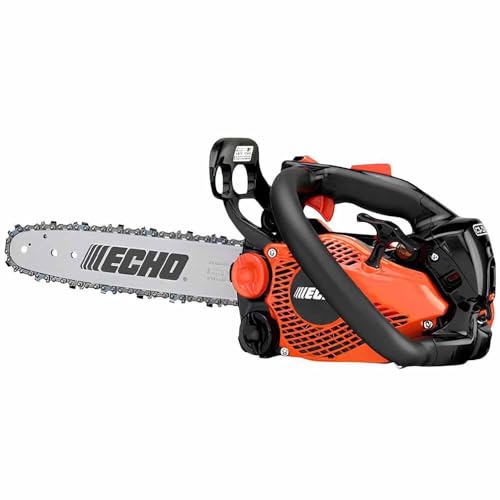
At just 5.2 pounds, the Echo CS-2511T is the lightest purpose-built gas climbing saw available. The 25cc professional-grade two-stroke engine punches above its displacement, powering a 14-inch bar that can handle larger cuts than its weight suggests. The G-Force Engine Air Pre-Cleaner extends filter life noticeably when you are working in dusty or debris-filled conditions.
Despite the small displacement, this saw is a proven workhorse. One user reported it survived Hurricane Helene cleanup duty, starting reliably every time after weeks of heavy use. The clutch-driven adjustable oiler only runs when the chain is moving, which reduces bar oil waste compared to continuous-feed systems. Balance is superior to many sub-7-pound gas saws because the engine mass sits directly over the grip.
There are some durability trade-offs at this weight. The oiler mechanism has been reported to fail after roughly a year of daily use, though it is a straightforward replacement part. Some units have arrived with minor assembly issues, so inspect the saw thoroughly on delivery. For climbers who prioritize absolute minimum weight, this saw is the lightest path to gas power.
Why it’s great
- Only 5.2 lbs — truly featherlight for climbing
- Excellent balance reduces fatigue at full reach
- 14-inch bar provides larger cutting capacity
Good to know
- Oiler may require replacement after heavy daily use
- Occasional quality control issues reported
5. Stihl MS 194 T

Stihl’s MS 194 T is engineered with the precision and durability that define the German brand. This top-handle saw delivers 1.4 horsepower from its gas engine, paired with a 30-centimeter bar that is ideal for precise limbing cuts in tight canopy spaces. Owners consistently praise its light handling and one-handed operation, noting that it feels supremely balanced whether you are cutting overhead or at ground level.
The micro chain system on this model cuts noticeably faster than standard 3/8-inch pitch chains on larger Stihl saws, making it surprisingly quick for its size. The quality of the build is immediately apparent — the housing, the choke mechanism, and the chain brake all operate with a tightness that cheaper saws lack. One owner deliberated for two months before purchasing and reported zero regrets, calling it a superb one-handed pruning tool.
The price reflects the Stihl name and the premium manufacturing, and replacement parts are widely available through dealers. The 3.3-kilogram (7.3-pound) weight places it slightly heavier than the lightest battery saws, but the gas-powered torque advantage is real in dense, wet wood. If you want a saw that will still be running reliably a decade from now, this is a strong candidate.
Why it’s great
- Premium Stihl build quality and dealer support
- Fast-cutting micro chain system
- Excellent balance for one-handed climbing cuts
Good to know
- Premium price compared to competitors
- Slightly heavier than the lightest battery models
6. Stihl MS 151 TC

The Stihl MS 151 TC takes the concept of a lightweight arborist saw to its logical extreme. Weighing only 2.6 kilograms (5.7 pounds) with its 25-centimeter bar, it is nearly a full kilogram lighter than the already-impressive Husqvarna alternative. The 1/4-inch pitch chain cuts through branches faster than the more common 3/8-inch low-profile chain, making this saw ideal for rapid-fire pruning where every second of cut time matters.
This saw is specifically designed for one-handed pruning at height. The compact body tucks easily into a climbing harness, and the reduced weight becomes a major advantage during long days when you are making hundreds of cuts. Users describe it as the perfect elagueuse (pruning saw) for overhead work, handling cuts up to the full length of the guide bar without bogging in smaller-diameter wood.
It is not meant for felling or bucking firewood — the narrow chain and small engine are optimized for the branch-cutting tasks that dominate an arborist’s workflow. The price is premium, and you are paying for the featherlight German engineering and the reduced fatigue it delivers. For climbers who want the absolute lightest gas saw available, this is it.
Why it’s great
- Extremely light at 5.7 lbs with bar
- 1/4-inch chain cuts very fast through branches
- Ideal for all-day one-handed pruning aloft
Good to know
- Premium price for a specialized pruning saw
- Not suitable for felling or large-diameter cuts
FAQ
What is the ideal weight for a climbing arborist chainsaw?
Can I use a rear-handle chainsaw for tree climbing?
How many cuts should I expect per battery charge on an electric arborist saw?
What chain pitch should I look for in a climbing saw?
Final Thoughts: The Verdict
For most users, the arborist chainsaw winner is the Echo CS-271T-12 because it delivers the ideal balance of power, weight, and starting reliability for daily professional climbing. If you want battery convenience with near-gas power, grab the DeWalt DCCS674B. And for maximum budget value in a featherlight package, nothing beats the Makita XCU06Z.
Product prices and availability are accurate as of the date/time indicated and are subject to change. Any price and availability information displayed on Amazon at the time of purchase will apply to the purchase of this product. As an Amazon Associate I earn from qualifying purchases.
CERTAIN CONTENT THAT APPEARS ON THIS SITE COMES FROM AMAZON. THIS CONTENT IS PROVIDED "AS IS" AND IS SUBJECT TO CHANGE OR REMOVAL AT ANY TIME.
Amazon and the Amazon logo are trademarks of Amazon.com, Inc. or its affiliates.