
Our readers keep the lights on and my morning glass full of iced black tea. As an Amazon Associate, I earn from qualifying purchases.
Specs are compiled from manufacturer listings and verified buyer reviews and can change over time — please confirm the key details on the product page before buying.
You need a rope that holds a heavy limb steady, lets your friction hitch (the knot that grips the rope as you climb) bite or slide smoothly, and reaches your tallest anchor. This guide compares nine ropes for tree work, rigging, and climbing, and matches each one to the job it handles best.
I’m Min — the founder and writer behind Gadgets Feed. This guide is built by comparing the manufacturers’ published specifications and the patterns across verified customer reviews, so you get each pick’s real strengths and trade-offs instead of marketing spin.
Find the best arborist rope for your climbing or rigging needs by matching tensile strength, construction, and length to your specific tree work.
Our Picks at a Glance


How To Choose The Best Arborist Rope
An arborist rope has one main job: to handle the forces of a tree without failing under load, abrasion, or sunlight. Start with the rope’s job — climbing, rigging, or both — and let that decide the construction and strength you need.
Match the rope to the task
Climbing ropes are built to be static, meaning they stretch very little so you don’t bounce on your ascent. Rigging ropes need high tensile strength to lower heavy limbs, and they often take more abrasion from rubbing against bark. A 12-strand rope is a common middle ground for both, while a double braid adds a protective cover over a core for extra toughness.
Understand the numbers on the label
Tensile strength is the breaking point, usually listed in pounds. The working load limit is far lower — for one popular rope, a 5,800-pound tensile strength comes with a 1,175-pound working load limit that you should not exceed. Diameter matters too: a 1/2-inch rope is a standard workhorse, while an 11mm rope is lighter and often pairs better with mechanical ascenders.
Quick Comparison
| Model | Best For | Length | Tensile Strength | Construction | Amazon |
|---|---|---|---|---|---|
| Blue Ox 12-Strand★ Best Overall | Climbing & speedline | 150 ft | 8000 lbs | 12-Strand Polyester | Amazon |
| Right Rope Bull RopeBudget Champion | Budget rigging & pulling | 150 ft | 5800 lbs | Polyester/Polyolefin | Amazon |
| CHUMEN 16 CarrierWet-Work Pick | Wet-work climbing | 150 ft | 6000 lbs | 16-Strand Jacket/Core | Amazon |
| Samson Arbor-Plex | Smooth friction hitches | 120 ft | — | 12-Strand Polyester | Amazon |
| Pelican 24-Strand | Lightweight climbing | 120 ft | 7000 lbs | 24-Strand Nylon/Poly | Amazon |
| Blue Ox Double Braid Platinum | Heavy rigging & felling | 150 ft | 7000 lbs | Double Braid Polyester | Amazon |
| Blue Ox Double Braid Org/Blk | Rigging with visibility | 150 ft | 7000 lbs | Double Braid Polyester | Amazon |
| Blue Ox 12-Strand Blue/Org | Climbing & knot holding | 150 ft | 8000 lbs | 12-Strand Polyester | Amazon |
| Pelican Arborist-Pro | MRS/SRS climbing systems | 120 ft | 7000 lbs | 24-Strand Nylon/Poly | Amazon |
In-Depth Reviews
1. Blue Ox 12-Strand Arborist Rope
Our pick — over 4.5★ from 500+ verified ratings; the strongest balance of quality and price.
The 8000-pound workhorse that doubles as a speedline without blinking.
With an 8000-pound tensile strength and a 150-foot length, this rope is the top pick for a simple reason: it handles both climbing and light rigging. It is a 12-strand polyester line, and that construction gives you a flexible feel with good knot retention — the kind of rope that stays put when you tie off for a limb walk. Its 12-strand polyester cover resists abrasion, milking, and twisting, so it holds its round shape on rough bark.
The praise here centers on quality and strength, with owners calling it the best rope they have used. It proved itself as a speedline, holding a 900 lb top during a removal — a real-world test that matches its spec sheet. The stretch draws mixed opinions, which makes sense: some want low stretch for climbing, while others appreciate the give when pulling trees. Measured at a true 13mm rather than a true 1/2-inch, it may not fit every mechanical device perfectly, so check your gear before committing.
One honest note: it is not ideal for mechanical ascenders like the Rope Runner Pro, where it squished after around ten climbs. For traditional friction hitches like a Blake’s hitch, it works well after a short break-in. Buyers report it takes real abuse, which is why it earns the top spot for mixed tree work.
What wins people over
- 8000 lb tensile strength handles heavy loads
- Quality is the most-praised trait — it feels premium
- Resists abrasion, milking, and UV for long life
Know before you buy
- Runs at 13mm, not true 1/2-inch, so gear fit varies
- Not suited to mechanical ascenders
Reach for this if: you climb with friction hitches and also rig heavy limbs — it does both at 8000 pounds.
Look elsewhere if: you rely on a mechanical ascender, where the diameter causes problems.
2. Right Rope Arborist Bull Rope
The economical bull rope that pulls logs without the premium price.
This is the entry-level pick that still does real work. At 5800 pounds of tensile strength in a 150-foot length, it is lower-rated than the Blue Ox ropes, but it is also noticeably more affordable. The construction pairs high tenacity polyester cover yarns over a polyolefin core, which keeps it soft in the hand while maintaining abrasion and UV resistance.
Owners mention it is the best price-to-quality deal they found after a lot of searching, and it holds up well to pulling logs onto a trailer. The working load limit of 1,175 pounds is printed right on the listing — do not exceed that for safety, even though the rope itself is rated to 5800. It coils well without twisting, which makes it easy to handle on the job site.
What makes this a value pick rather than a top climber is the lower strength ceiling and the polyolefin core, which is less traditional for climbing. It shines as a rigging and pulling line — the kind of rope you grab when a tree needs to fall in the right direction. Customers note it works well for that exact job.
Best for the money: a strong, soft-handling pulling line at 5800 pounds that makes budget buyers happy.
The trade-off: the lower working load limit means it is not a heavy-rigging workhorse.
3. CHUMEN 16 Carrier Arborist Rope
A 13.2-pound line that keeps its grip when rain moves in.
Built with a 16-strand braided polyester jacket over a parallel stranded nylon core, this rope works well when wet — a critical trait for arborists who can’t wait out the weather. At 6000 pounds of minimum tensile strength and 150 feet long, it carries 71% more weight in the coil than the lighter Samson at 7.7 pounds, and you feel that heft on your harness.
An arborist and rock climber was impressed with the quality, praising the low stretch and handleability. The 16-strand jacket shrugs off abrasion from mesquite, pine, and sisso bark. It also holds knots well and can be winched up when you need extra pull.
The durability feedback is mixed, with a few noting the outer cover can separate from the inner core over time. Treat it as a working line rather than a lifetime investment, and it will do the job. It is a solid mid-range option that excels in wet conditions where other ropes go slick.
Grab it for: rain-soaked climbing days and heavy pulling — the 16-strand jacket holds up when wet.
skip it if: you want the lightest rope on your saddle; the 13.2-pound weight is noticeable.
4. Samson Arbor-Plex 12-Strand

The certified classic that makes a climber’s hitch feel easy.
Samson is a name that carries weight in the rope world, and this 12-strand Arbor-Plex delivers a smooth tie. At just 7.7 pounds for a 120-foot hank, it is dramatically lighter than the CHUMEN’s 13.2 pounds — a difference you appreciate after a full day aloft. The smoothness of the rope means tying a climber’s hitch, bowlines, and half hitches is a fluid operation with less struggle.
Owners who climbed with a bull rope for years switched to this and found it far better for climbing, calling it the best buy they could find anywhere on the Internet. It is certified, but the reviews note you must pair it with the proper equipment to keep that certification valid. At 120 feet, it is shorter than the 150-foot ropes on this list, so plan your anchor height accordingly.
This rope is for the climber who values feel and knot work over raw strength. It is a premium mid-range pick that suits the traditional closed-system climber who ties their own hitches and wants a rope that cooperates.
The smooth edge
- Light 7.7-pound hank is easy on the saddle
- Friction hitches tie smoothly with no struggle
- Certified rope from a trusted brand
Size reality
- 120-foot length limits anchor height
- Smoothness means less grip for some hitches
Choose this when: smooth hitch performance matters more than raw tensile — it is a joy to climb on.
Think twice if: you need 150 feet of reach for tall trees.
5. Pelican 24-Strand 11mm

The featherweight 11mm line that climbs without weighing you down.
At 7/16-inch (11mm) diameter, this Pelican rope is the slimmest on the list, and that translates to a lighter carry and smoother running through gear. It still delivers a 7000-pound minimum breaking strength in a 120-foot hank, and reviewers point out it meets rated strength for fall protection with a rope grab. It held a climber 60 feet up in a silver maple canopy without drama — real proof of its capability.
The 24-strand construction makes it flexible, easy to coil, and smooth to the touch. It works well with ascenders, which is a point in its favor for mechanical systems. But the slim diameter has a cost: in a Z-rig with a pulley, the 11mm thickness creates friction drag that reduces efficiency, so hauling heavy loads takes more effort.
Durability gets mixed feedback, with some fraying concerns, so inspect it regularly. For the climber who prioritizes a light, flexible line for ascent work, this is a strong contender that pairs well with mechanical hardware.
Why it stands out: 7000 pounds of strength in a lightweight, flexible 11mm rope that ascender users love.
The cost: that slim diameter creates drag in pulley systems and raises fraying risk.
6. Blue Ox Double Braid Platinum

A 14-pound double braid built to take down 100-foot pines.
This is the heavy lifter of the Blue Ox lineup. A double braid polyester construction with a 7000-pound tensile strength in a 150-foot length, it is tightly braided for abrasion resistance that holds up against bark. At 14 pounds, it is the heaviest rope here, but that weight buys you confidence when rigging big wood.
The real-world story here is compelling: it took down four 100-foot pine trees leaning toward a house, pulling opposite the lean with a snatch block and a truck in 4L. It did not get hard after being under pressure, which is a trait owners appreciate. It also works with a tractor for felling, holding a good bit of strain without issue.
Functionality is the most-praised trait, with value for money close behind. The honest downsides: knots can be hard to untie after heavy tension, and it stretches a bit more than expected. Durability draws mixed feedback, so treat it as a strong working line rather than an indestructible one.
The heavy hitter
- 7000 lb tensile handles big leaning trees
- Does not stiffen up after heavy pressure
- Works with snatch blocks and tractors
Watch for
- Knots bind after tension — plan your tie-offs
- 14-pound weight is a lot to carry up a tree
Pick this for: ground rigging and felling where raw pulling power and abrasion resistance matter most.
Not for: climbers who need a light line on the saddle all day.
7. Blue Ox Double Braid Orange/Black

Bright orange 7000-pound rigging rope you can spot from the ground.
This double braid polyester rope stands out for one practical reason: the bright orange color makes it easy to see from a distance and through foliage. At 7000 pounds of tensile strength and 150 feet long, it is a professional-grade rigging line that handles demanding loads while keeping low stretch. The color also boosts safety during tree work and rigging operations.
Owners rave about the value, saying it paid for itself several times over when they cut seven tall oak and pine trees themselves instead of paying for bids. It performs well through pulleys with very little stretch, and the bright color means you never lose sight of your line. Quality is the most-praised trait, followed closely by value for money.
It is slightly less strong than the 12-strand Blue Ox ropes at 8000 pounds, but the double braid construction gives it a tough outer jacket for ground work. Shoppers say it is not chainsaw-proof, so keep it clear of any cutting. For rigging down branches and felling trees with clear visibility, this is a dependable premium pick.
The visibility edge: a 7000-pound double braid in bright orange that you can spot at a glance.
The limit: at 13 pounds, it is a ground-rigging rope more than a climbing line.
8. Blue Ox 12-Strand Blue/Orange

The 8000-pound line that grips knots without tangling or fraying.
Sitting at the top of the Blue Ox strength range with an 8000-pound tensile rating, this 12-strand polyester rope matches the winner’s power but adds a high-visibility blue and orange color scheme. In a 150-foot length, it holds knots exceptionally well without becoming tangled easily, and buyers report no issues with fraying even after frequent use.
It held 180 lb without complaint during tree trimming, and the bright colors make it easy to keep an eye on. The knot retention is the standout feature here — it stays put when you tie off, which is essential for safe limb walking. Quality draws the most praise, with durability close behind and no mixed feedback dragging it down.
The key difference from the Best Overall pick is the color and the slightly different construction focus on knot holding. If you want the same 8000-pound muscle but prefer a blue and orange line that is easier to spot, this delivers. It is a premium pick for climbers who tie their own hitches and want maximum strength.
Reach for it if: you want 8000 pounds of strength with superb knot retention for hitch climbing.
Compare to: the Best Overall Blue Ox, which trades this one’s color for a slightly different feel at the same strength.
9. Pelican Arborist-Pro 11.8mm
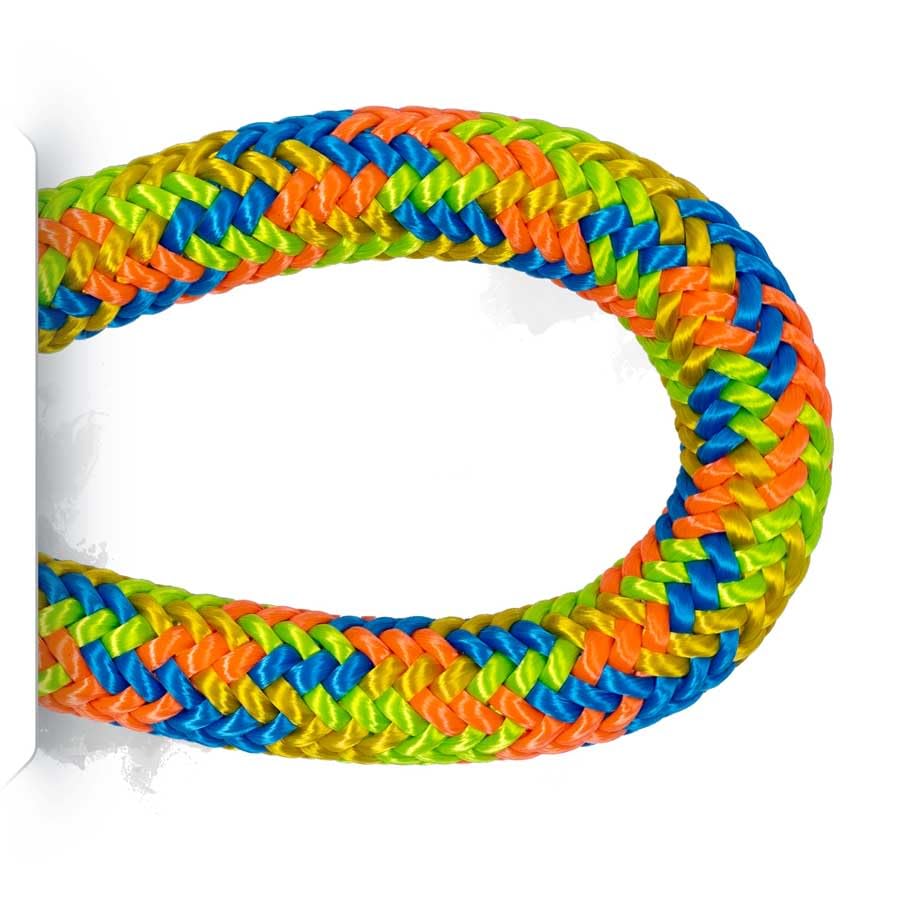
The 11.8mm system rope built for MRS and SRS climbing techniques.
This rope is built for climbers who want a traditional closed system (where the rope stays attached to you and the tree). It is 11.8mm thick, 120 feet long, and rated to hold 7000 pounds, so it can control heavy limbs without snapping. The 24-strand build keeps it light and compatible with both MRS and SRS climbing systems. Owners say it pairs well with standard arborist gear for a smooth, reliable climb.
Its friction hitches grab and hold without running, unlike tighter-woven ropes. It bends easily for a flexible feel, resists abrasion and chemicals, and shows zero milking.
Expect a break-in period for knot grip, and store it clean and dry to extend its life. For serious climbers on modern systems, this top-tier rope withstands real abuse.
System strengths
- 7000 lb tensile in a slim 11.8mm line
- Friction hitches hold without running
- Zero milking keeps the cover tight
The learning curve
- New rope needs a break-in for knot grip
- Requires clean, dry storage for longevity
Best for: the modern climber running MRS or SRS systems who wants a dependable, flexible line.
Consider the alternative: the lighter Pelican 11mm if you want even less weight for ascent work.
Understanding the Specs
Tensile Strength vs Working Load
Tensile strength is the absolute breaking point measured in pounds — the Blue Ox ropes rate at 8000 pounds. The working load limit is the safe weight you should actually put on the rope, which is far lower. The Right Rope Bull Rope, for example, lists a 5800-pound tensile but a 1,175-pound working load limit you should never exceed. Treat tensile as the ceiling, not the everyday target.
Strand Count and Construction
The number of strands changes how a rope feels and handles. A 12-strand rope is a versatile middle ground for both climbing and rigging, offering flexibility with good knot retention. A 24-strand rope is smoother and often lighter for its strength, while a double braid wraps a protective jacket over a core for maximum abrasion resistance. More strands usually mean a softer feel but not necessarily more strength.
FAQ
What is the difference between a climbing rope and a rigging rope?
How much tensile strength do I need for tree work?
Is a 1/2-inch rope too thick for climbing?
Can an arborist rope be used with a mechanical ascender?
How long does an arborist rope last?
What does “static” mean in a climbing rope?
Is a 120-foot rope long enough for most trees?
What is the benefit of a double braid rope?
Final Thoughts: The Verdict
For the majority of shoppers, the arborist rope winner is the Blue Ox 12-Strand because its 8000-pound tensile strength and flexible 12-strand construction handle both climbing and light rigging with proven durability. If you want a budget pulling line that still does real work, grab the Right Rope Bull Rope at 5800 pounds. And for the modern system climber, the Pelican Arborist-Pro in 11.8mm is the one to reach for with its MRS and SRS compatibility.
How We Picked
We do not accept paid placement. Every pick is matched to a real buyer and a real use-case; we do not hands-on test units.
Sources & Methodology
Specifications: manufacturer listings and product documentation. Review insights: verified customer reviews, as of August 2026. Pricing: not shown on this page (it changes often); check the current price via the retailer link.
As an Amazon Associate, Gadgets Feed earns from qualifying purchases. This does not affect which products we feature.