
Our readers keep the lights on and my morning glass full of iced black tea. As an Amazon Associate, I earn from qualifying purchases.
Specs are compiled from manufacturer listings and verified buyer reviews and can change over time — please confirm the key details on the product page before buying.
Buy the arc rating your site’s risk assessment actually calls for, not the cheapest coverall you can find. That is the whole game with arc flash clothing. A garment rated at 8 cal/cm² (calories per square centimeter, the measure of heat energy the fabric can block) will not do the job where the hazard is assessed at 40 cal/cm². And paying for 40 cal when your task sits in the 12 cal band just buys you bulk you hate wearing. The short answer: match the cal rating to the hazard, check the certification labels, then decide how much comfort you are willing to trade for it.
I’m Min — the founder and writer behind Gadgets Feed. This guide is built by comparing the manufacturers’ published specifications and the patterns across verified customer reviews, so you get each pick’s real strengths and trade-offs instead of marketing spin.
Below you will find the head, hand, and body layers that actually carry a printed arc rating, sorted by who they genuinely suit. Every pick here is a real safety garment with a stated cal/cm² number, so you can compare like for like and choose the right best ARC Flash Clothing for your task.
Our Picks at a Glance


How To Choose The Best ARC Flash Clothing
Arc flash clothing is not one item — it is a layered system, and each layer has its own rating job. The hood protects your face, neck, and head. The coverall or coat-and-bib protects your torso, arms, and legs. Gloves protect your hands. Buy them as a matched set only when the job demands full-body coverage, because a 40 cal coat does nothing for your face if your hood is rated at 16.
Start with the hazard level, not the garment
Your site’s risk assessment produces a required arc rating in cal/cm² (calories per square centimetre — the amount of heat energy the fabric can absorb before it fails). The garment you buy must meet or exceed that number. That is why plain “flame resistant” wording on a listing means little on its own: it tells you the fabric will not melt, drip, or ignite, but it does not tell you how much heat it can take. Look for a printed ATPV or arc rating figure and the HRC/CAT category beside it.
Read the CAT category and certification labels
The HRC or CAT number (Hazard Risk Category, called PPE Category in newer standards) groups garments by hazard band. CAT 2 sits at the middle of that scale, which is why so many coveralls here carry an 8 to 12 cal/cm² rating and a CAT 2 tag. CAT 4 is the top band, and the 40 cal kit further down carries it. On a live site, also confirm the certification bodies named on the tag — NFPA 70E, ASTM F1506, NFPA 2112, and a UL classification are the ones that matter.
Then weigh comfort against protection
Heavier fabric buys durability and often a higher rating, but it costs you breathability and mobility on a long shift. Lightweight ripstop and FR cotton twill trade some of that bulk for airflow. If you work hot, humid, or confined spaces, look for moisture-wicking knits under hard hats and action back pleats on coveralls. If you wear the same set every day in a fixed location, the heavier, higher-rated option is usually the safer long-term buy.
Quick Comparison
| Model | Best For | Arc Rating | Fabric Weight | HRC / CAT | Amazon |
|---|---|---|---|---|---|
| Flame Resistant Ultrasoft Knit Hood (H11RY)★ Best Overall | Head and neck base layer under a hard hat | 16 cal/cm² | 6 oz Westex TrueComfort Rib | HRC 1 to HRC 2 | Amazon |
| LAPCO FR Deluxe Coverall (CVFRD7KH)Premium Pick | All-season daily industrial coverall | ATPV 8.7 cal/cm² | 7 oz FR cotton twill | HRC / CAT 2 | Amazon |
| Bulwark FR Excel ComforTouchPremium Pick | Premium lightweight CAT 2 wear | CAT 2 FR/AR | — | CAT 2 | Amazon |
| Just In Trend Hi Vis Reflective Coverall with Leg Zipper | Low-light visibility plus arc protection | ATPV 12 cal/cm² | 7 oz cotton/nylon twill | HRC 2 | Amazon |
| MAGID Arc-Rated N1540 | Snap-front coverall with tool pockets | Arc-rated | 9.0 oz FR cotton sateen | — | Amazon |
| Portwest UBIZ1 Dual Hazard Coverall | Welding-focused dual hazard workwear | ASTM F1959 ATPV | 330g Bizweld Work cotton | — | Amazon |
| BOCOMAL FR Ripstop Coverall CAT2 | Lightweight water-repellent CAT 2 | ATPV 8 cal/cm² | 6 oz ripstop cotton | CAT 2 | Amazon |
| Flame Resistant Hi Vis Coverall | Class 3 high-visibility flash fire work | ATPV 12 cal/cm² | 7 oz cotton/nylon twill | HRC 2 | Amazon |
| Oberon Arc Flash Coverall Kit | Mid-band kit for electricians | 12 cal | — | — | Amazon |
| Oberon Arc Flash Suit Kit 40 Cal | Top-band full hood, coat and bib kit | 41 cal/cm² | 88% cotton, 12% nylon | PPE Category 4 | Amazon |
In‑Depth Reviews
1. Flame Resistant (FR) Ultrasoft Knit Hood, 16 Calorie Arc Rated (H11RY)
Our pick — 4.0+★ from 700+ verified ratings; the strongest balance of quality and price.
A 16 cal/cm² knit hood that stays comfortable under a hard hat through a full shift.
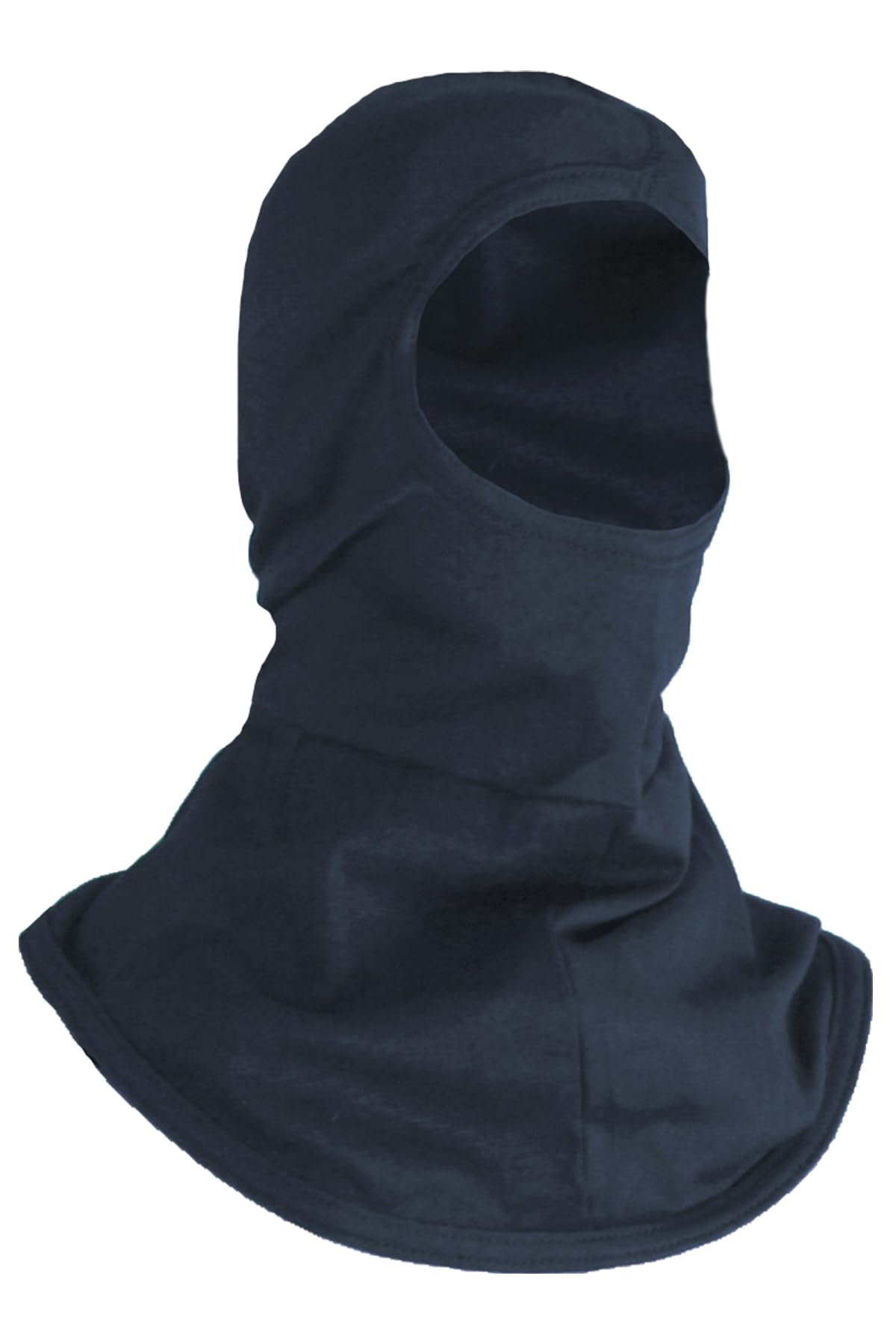
This 16 cal/cm² knit hood is the base layer that sits closest to your skin under a hard hat. It carries a 16 cal/cm² arc rating (calories per square centimetre — the heat energy it can absorb before failing) and sits in HRC 1 to HRC 2 territory. That places it squarely in the middle band where most electrical and utility tasks land, so it covers a lot of real workdays without the full bulk of a heavyweight hood.
What wins people over is the quality of the build — it earns the most praise of any trait in its reviews by a wide margin. The 6 oz Westex TrueComfort rib fabric (a ribbed knit that stretches with head movement) is moisture-wicking, so you stay dry under a hard hat through a long shift. Flat lock seams (stitching that lies flat instead of rubbing) mean no pressure ridges under a faceshield. It also accommodates a half-face respirator, which is the kind of detail that decides whether a hood is wearable or gets left in the truck.
Here is the catch worth knowing before you commit. Warmth is a genuine strength of the knit — and it is also durable protection that demands care on the seams, which is the trade-off. Follow the wash instructions and inspect the stitching; treat it as base-layer armour, not a disposable beanie. The 16 cal rating also stops short of CAT 4 work, so this is a mid-band hood, not a full 40 cal solution.
Tops The List On
- 16 cal/cm² arc rating covers HRC 1 to HRC 2 tasks — the middle band most electrical work sits in
- 6 oz Westex TrueComfort rib knit wicks moisture, so you stay dry under a hard hat
- Flat lock seams and a half-face respirator fit keep it wearable for full shifts
- Made in the USA, flame resistance guaranteed for the life of the garment
Where It Stops Short
- It is a hood, not a full suit — you still need a rated body layer to complete the setup
- Seam durability needs attention; an occasional unit shows seams loosening after washing
- 16 cal/cm² does not reach PPE Category 4 work
Reach for it if: you work electrical or utility tasks in the HRC 1 to HRC 2 band and want a head and neck layer you can wear all day without overheating.
Look elsewhere if: your assessment calls for full CAT 4 coverage, where you need the 40 cal kit below.
2. LAPCO FR Flame Resistant Deluxe Coverall (CVFRD7KH)
A 7 oz FR cotton twill coverall with a printed ATPV 8.7 cal/cm² and CAT 2 rating for year-round wear.
This one leads on the fabric: a 7 oz (ounce per square yard) 100 percent FR (flame-resistant) cotton twill with a moisture management finish. That weight is the balance for year-round wear — light enough that a summer shift does not cook you, sturdy enough that the cotton does not feel papery. The safety credentials are printed, not implied: ATPV 8.7 cal/cm² (arc thermal performance value, the heat energy the fabric blocks), HRC / CAT 2 (hazard risk category 2, the middle hazard band), NFPA 70E compliant (the electrical safety standard), UL Classified NFPA 2112 (flash fire standard), and ASTM F1506 compliant (arc flash standard). In plain terms, it is rated for the middle hazard band and independently certified against flash fire and arc flash.
The build details are what separate it from cheaper coveralls. Triple needle stitching (three parallel rows of stitching instead of one) runs along the inseam, outside seam, and arm seams — the three spots that blow out first on heavy use. Hidden snaps on the cuff and pant legs keep you sealed from sparks, and a full rack of pockets — pencil, zipper chest, back patch, tally book, utility leg, and slant hip — means you are not hunting for storage. It is available from men’s Small up to 6XL in Short, Regular, Tall, and X-Tall, which matters if you are tall or broad and have been squeezed into one-size-fits-most gear.
One honest note: fabric weight is the most-debated trait in this coverall’s feedback, with some finding it lighter than expected and others heavier.
What the certification buys you: the CAT 2 and ASTM F1506 tags let you hand a supervisor a documented rating, not a verbal promise — that is worth the premium over an unlabelled cotton suit.
The sizing stretch: the 4XL navy example sits at 3.5 pounds, versus the 6 oz BOCOMAL below, so tall and broad frames should plan for that weight on their shoulders.
Built for: anyone who wants one certified coverall to wear across all four seasons and needs the extended size run.
Think twice if: you are chasing the lightest possible fabric for hot-climate work — the 6 oz options lower down suit that better.
3. Bulwark FR Men’s Lightweight Excel ComforTouch Premium
A lightweight CAT 2 FR/AR coverall with elastic waist inserts and a pleated action back for mobility.
Bulwark’s pitch here is simple and honest: deliver CAT 2 FR/AR protection without added bulk. That is the whole reason to spend premium money on this instead of a basic cotton coverall. The Excel ComforTouch build is aimed at people who resent the stiff, sweltering feel of traditional FR gear and want something that moves with them on a long shift.
The mobility engineering is where the money goes. Elastic waist inserts give a little as you bend, and a deep-pleated action back (extra fabric folded into the shoulder area so you can reach) keeps your arms free overhead. Eight total pockets mean you keep tools at hand without strapping on a separate pouch. It is a men’s garment in the CAT 2 band, so it lines up with the majority of electrical and industrial tasks rather than the extreme high-hazard work.
Why pay more: the lightweight premium fabric and mobility details are the upgrade — you are buying all-day wearability on top of the CAT 2 rating, not more cal.
The trade-off to weigh: CAT 2 covers the middle band, and this is a body layer only — you still pair it with a rated hood for full coverage.
A good match if: comfort on a long shift is your priority and your hazard assessment lands in the CAT 2 band.
Not the one if: you need PPE Category 4 protection — step up to the 40 cal kit for that.
4. Just In Trend Flame Resistant Hi Vis Reflective Coverall with Leg Zipper

An ATPV 12 cal/cm² HRC 2 coverall with ANSI/ISEA 107 Class 3 reflective tape for low-light work.
This coverall solves two problems at once. The arc protection is real: ATPV 12 cal/cm² at HRC 2, on an 88 percent cotton / 12 percent nylon 7 oz twill fabric that balances durability with breathability. That is a notch above the 8 cal class of coverall — the BOCOMAL below rates 8 calories/cm², so this one carries the higher printed number. The second problem is visibility: full 2 inch silver FR reflective tape, ANSI/ISEA 107 Class 3 compliant, wraps visibility around you for low-light and roadside work.
The details show someone thought about getting dressed fast. Brass FR leg zippers (10 to 14 inch) let you pull the coverall on over boots without wrestling. Elastic sides flex as you move, and action back pleats free your shoulders when you reach. Storage is generous — two chest pockets, two swing front pockets, two back patch pockets, a utility pocket, and a pen or cell phone sleeve. The fabric is mercerized cotton, which minimizes shrinkage so it does not creep up after the first washes. It is certified to NFPA 2112 for flash fire and ASTM F1506 for arc flash, plus UL certified with a three-point label system.
The caveat: for layering or industrial laundering, the maker advises ordering a size up, so plan your fit around that rather than your usual size on the tag.
The two-for-one: a 12 cal/cm² arc rating and ANSI Class 3 visibility in a single garment is rare — most hi-vis gear stops at flash-fire protection without the higher arc number.
Fit note: order up for layering or industrial wash, and the leg zippers make getting in and out over boots far quicker.
Reach for it if: you split time between electrical work and roadside, rail, or night-shift environments where being seen matters as much as being protected.
skip it if: you never work in traffic or low light and want the simplest, lightest coverall — a non-hi-vis option does the job with less fabric.
5. Flame Resistant FR High Visibility Hi Vis Coverall

An ATPV 12 cal/cm² HRC 2 hi-vis coverall with a two-way YKK brass FR zipper and a hammer loop.
Here is the number that stands out: ATPV 12 cal/cm² at HRC 2, on a 7 oz 88 percent cotton / 12 percent nylon twill fabric. That is the same 12 cal class as the Just In Trend above, and a step above the 8 cal BOCOMAL. It is independently tested against both NFPA 2112 for flash fire and ASTM F1506 for arc flash, with ANSI/ISEA 107 Class 3 high visibility and a UL certified three-point FR label. For the money, this is a lot of printed certification in one garment.
Build quality is what earns it its reputation — it is the most-praised trait in its reviews by a clear margin, ahead of value for money. The hardware is sturdy: a heavy-duty two-way YKK brass FR zipper, adjustable cuffs on full sleeves, action back pleats, and an elastic side waist that flexes with you. Storage is thorough — two chest pockets with flaps and snaps, two rear patch pockets, a utility pocket on the right thigh, a pen and phone pocket on the left sleeve, plus a hammer loop and side vents.
Now the honest part. Fit draws the most discussion of any trait here, and it cuts both ways — some find the large lands perfectly, others find it snug through the waist and shoulders. The maker even recommends ordering a size up for layering or industrial laundering. Treat the size chart as your starting point, not your usual tag size, and a few also note the fabric can move a little after washing.
The Case It Makes
- ATPV 12 cal/cm² and HRC 2 on a genuinely comfortable 7 oz twill
- Full ANSI/ISEA 107 Class 3 reflective hi-vis plus NFPA 2112 and ASTM F1506 certification
- Heavy-duty two-way YKK brass FR zipper and a hammer loop for real jobsite use
- Dense pocket layout keeps tools and phone on you all shift
Worth Weighing Up Front
- Sizing splits opinion — order up for layering as the maker advises
- Some fabric movement after washing, so follow the care label
- CAT 2 ceiling means it will not cover PPE Category 4 tasks
Best bet for: a working electrician or oil-and-gas hand who wants certified 12 cal protection with real hi-vis and sturdy hardware in one buy.
Only hesitation: get the size right first — measure against the chart rather than guessing your usual fit.
6. MAGID Arc-Rated 9.0 oz. Flame Resistant (FR) Cotton, N1540, 1 Pair

A 9.0 oz FR cotton sateen coverall with a snap front and a Mandarin collar for welding and hot work.
The defining figure here is fabric weight: 9.0 oz per square yard of 100 percent flame resistant cotton sateen, against the 6 oz ripstop of the BOCOMAL further down. Heavier fabric means more mass between you and the hazard, and the sateen weave gives it a denser, tougher hand-feel. It is constructed with Nomex thread (a flame-resistant thread that holds under heat) and is specially treated to resist flames and high heat, so the garment is built to take punishment.
The dressing experience is the selling point. Snap closures run the front, so you get in and out fast over regular clothing at the start or end of a shift — no fighting a zipper with gloves on. The Mandarin collar rises up the back of the neck and tucks neatly under a hood or behind a shield, which protects that easy-to-burn lower neck area. Storage is thorough: two hip, two back, a ruler pocket, an inside patch pocket, and a front pass-through pocket. The rigid collar and 3.4 pound weight mark it as serious workwear rather than a lightweight summer suit.
Where it earns its place: the 9.0 oz cotton sateen versus the 6 oz BOCOMAL, which means more fabric and more durability for grinding, hot-work, and repetitive shifts — pay for that mass if you want it.
The honest catch: at 3.4 pounds versus the 3 pound hi-vis coveralls in this lineup too, and 9.0 oz cotton runs warm — this is a cooler-climate or high-hazard garment, not a hot-weather pick.
Pick it for: welders and industrial workers who want an arc-rated cotton coverall with fast snap closure and a protective high collar.
Leave it if: you work in heat and humidity and need the lightest breathable fabric — the 6 oz options suit you better.
7. Portwest UBIZ1 FR Coveralls Cotton Arc Rated Dual Hazard Workwear

A 330g Bizweld cotton coverall certified to ASTM F1506 and ASTM F1959 for dual weld and arc hazard.
This Portwest is aimed at the welder who also works around electrical hazards. The 330g Bizweld Work cotton construction is a medium-weight 100 percent cotton build, engineered to be a durable one-piece layer for demanding environments. It is independently certified to ASTM F1506 and ASTM F1959 arc rating ATPV, so it has the arc flash paperwork behind it rather than just a flame-resistant claim.
Practicality is where it shines. A concealed snap front gives a clean closure line and makes pulling it on over your clothes straightforward at the start of a shift. Two chest pockets with snap closures keep essentials contained so you are not digging around mid-task. The design is intentionally plain and straightforward, which is what you want from a garment that gets abused daily — simple pocket and closure details that keep the workday organized without fuss.
The smart part: dual hazard certification means one garment addresses both the weld spark and the arc flash risk — fewer layers to manage if you move between tasks.
Check before you buy: confirm the marked ATPV rating against your own site risk assessment, since the listing describes the standard rather than printing a single figure.
Right for: welders, fabricators, and maintenance hands who need durable one-piece cotton coverage with both arc and weld protection.
Check the numbers first if: your site assessment demands a specific cal/cm² figure you can verify before ordering.
8. BOCOMAL FR Coveralls Men Lightweight Stretch Ripstop Flame Resistant CAT2

The featherweight of the crew — 6 oz ripstop that breathes where heavier cotton bakes.
If weight is your deciding factor, this is the lightest coverall on the list. It uses a 6 oz lightweight ripstop 100 percent cotton — ripstop being a fabric woven with a grid of reinforcing threads so a small tear stops instead of running. At 8 cal/cm² ATPV versus the hood’s 16 cal/cm², and it sits in the CAT 2 band classified by UL, meeting NFPA 70E, ASTM F1506, and NFPA 2112. For a hot, active day in the middle hazard band, that lighter fabric is the reason to choose it.
The functional extras are thoughtful for a lightweight suit. It has a water-repellent and stain-resistant finish to keep you dry and clean against oil and dust, and the fabric is prewashed and preshrunk so it stays true to size and resists wrinkles. A hidden double-headed zipper runs down the front for easy on and off, and adjustable snap cuffs let you seal the wrists. ANSI/ISEA 107-2020 Type O Class 1 reflective striping keeps you visible without the full tape load of a Class 3 suit.
The catch worth sizing around: this one runs large, so go down rather than up if you are between sizes. Value and durability split opinion — some find it very durable, some consider it pricey for the weight, so set expectations around the lightweight trade-off.
Why lightweight matters: at 6 oz ripstop this is the lightest body layer here, and the lower 8 cal rating is the direct trade for that breathability — choose it for comfort, not maximum hazard.
Sizing reality: order down if between sizes, since this one runs large and preshrunk fabric stays put.
Made for: workers in hot climates or confined spaces who want the lightest, most breathable CAT 2 coverall they can get.
Not for: high-hazard tasks that need a 12 cal or higher rating — reach for the hi-vis 12 cal options instead.
9. Oberon Arc Flash Coverall Kit – 12 Cal

When you want the whole layer sorted in one box, this is the mid-band kit to beat.
Oberon sells this as a kit rather than a single garment, and it lands at a 12 cal rating — the same middle band as the two hi-vis coveralls above, where a lot of live electrical work sits. Buying a kit is the appeal here: instead of matching a coverall, hood, and accessories yourself and hoping the ratings line up, you get a coordinated set built around the same arc rating. For a crew onboarding new hands or a department standardizing gear, that one-box simplicity is worth real money.
The brand is a known name in arc flash PPE, and the 12 cal Figure allows this to sit between the lighter CAT 2 coveralls and the full 40 cal suit at the top of the list. It is a practical middle option — more protection than an 8 cal garment, less bulk and cost than a Category 4 suit.
The kit advantage: coordinated pieces at one arc rating means no mismatched layers and one purchase to standardize a team.
Know before you buy: this is the 12 cal version — if your assessment lands in the right band it fits, but confirm your hazard level since Oberon also builds a 40 cal set for the top category.
A fit for: electricians and maintenance teams who want a matched, mid-band arc flash set in a single purchase.
Not the one if: your risk assessment calls for Category 4 protection — the 40 cal suit handles that.
10. Oberon Arc Flash Suit Kit – 40 Cal – Hood, Coat, Bib
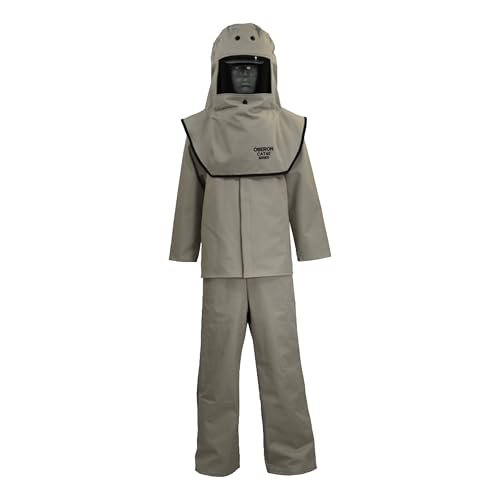
The full-body answer for the highest hazard band — hood, coat, and bib in one Category 4 kit.
The top of the arc flash ladder is here. This kit carries an arc rating of 41 cal/cm² and meets Arc Flash PPE Category 4 standards (the highest hazard band), along with ANSI/ISEA 125 Level 2 Conformity (a conformity assessment standard). That puts it well above the 16 cal hood and the 12 cal coveralls in this list — it is built for industries where the hazard assessment demands the maximum protection band, such as utilities, manufacturing, construction, and maintenance. It ships as a complete kit with a hood, coat, and bib suit, so the whole body is covered at one rating.
The hood detail is where Oberon clearly invested. A polycarbonate window (impact-resistant clear plastic) with anti-scratch and anti-fog coating keeps your vision usable while you work, and their True Color Grey patented technology is claimed to show colours with zero distortion — so you are not peering through a tinted or warped window at wiring. The coat and bib are made from arc rated flame resistant treated cotton with a relaxed fit, using an 88 percent cotton / 12 percent nylon blend, and the closure is FR Velcro. It is made in the USA.
There is no pretending this is everyday wear — a 40 cal suit is hot, heavy protection you put on for high-hazard tasks, not all-day comfort gear. That bulk is the cost of Category 4 coverage.
The headline figure: 41 cal/cm² and PPE Category 4 is the highest protection tier in this entire guide — nothing else here reaches that band.
Set your expectation: this kit is warm and heavy by nature, and the clear anti-fog window is the detail that keeps it workable while you are sealed in.
For the highest-risk jobs: utility, construction, and maintenance crews whose assessment requires Category 4 protection and a full hood, coat, and bib setup.
Overkill if: your work sits in the CAT 2 band — the lighter 12 cal coveralls will serve you with far less bulk.
Understanding the Specs
Arc Rating in cal/cm²
Calories per square centimetre measures how much heat energy a fabric can absorb before it fails. The higher the number, the more heat the garment takes before it lets that energy through to your skin. You compare this figure against the arc rating your site’s risk assessment calls for — the garment must meet or exceed it. An 8 cal coverall and a 41 cal suit are not interchangeable; they belong to different hazard bands.
HRC / CAT Category
Hazard Risk Category, now often written as PPE Category under newer standards, groups arc-rated garments into bands by hazard level. CAT 2 covers the middle band where most coveralls here sit, and CAT 4 is the top. Matching the category to your task is how you avoid both under-protecting and over-buying bulky gear you will not want to wear.
Fabric Weight in Ounces
Fabric weight in oz per square yard tells you how dense and durable the garment feels. A 6 oz ripstop is light and breathable for hot work; a 9.0 oz cotton is heavier and tougher for hard use. Lighter fabric usually means more airflow and less bulk, while heavier fabric adds mass and longevity — a straight comfort-versus-durability trade.
Certification Labels
Look for the certifying standards printed on the tag, not just the words “flame resistant.” NFPA 70E, ASTM F1506, and NFPA 2112 are the arc flash and flash fire standards; ANSI/ISEA 107 covers high visibility, and a UL classification confirms the garment’s FR integrity. Confirm the marked rating against your own site risk assessment before you rely on it.
FAQ
What arc rating do I actually need for my job?
Is flame resistant the same as arc rated?
Can I wear a CAT 2 coverall for Category 4 work?
How do I choose between the hood and a full suit kit?
Do arc flash coveralls shrink after washing?
Should the coverall be loose or fitted?
What is the difference between a coverall and a coat-and-bib suit?
Can I layer an arc rated hood under a hard hat and faceshield?
Are high visibility coveralls as protective as plain colored ones?
How should I wash arc rated workwear to keep the protection?
Final Thoughts: The Verdict
For most electrical and utility hands, the arc flash clothing winner is the Enespro Ultrasoft Knit Hood because its 16 cal/cm² rating covers the HRC 2 band most of this work sits in, and it wicks moisture so it stays wearable under a hard hat all shift. If you want an all-season body layer with certified CAT 2 paperwork and an extended size run, the LAPCO FR Deluxe Coverall is the one. And for the highest hazard band where a full hood, coat, and bib setup is required, the Oberon 40 Cal Suit Kit at 41 cal/cm² and PPE Category 4 is the protective ceiling of this list — and the highest-rated pick in the whole guide at 4.5+ stars across a small but committed base of buyers.
How We Picked
We do not accept paid placement. Every pick is matched to a real buyer and a real use-case; we do not hands-on test units.
Sources & Methodology
Specifications: manufacturer listings and product documentation. Review insights: verified customer reviews, as of November 2026. Pricing: not shown on this page (it changes often); check the current price via the retailer link.
As an Amazon Associate, Gadgets Feed earns from qualifying purchases. This does not affect which products we feature.