
Our readers keep the lights on and my morning glass full of iced black tea. As an Amazon Associate, I earn from qualifying purchases.
Specs are compiled from manufacturer listings and verified buyer reviews and can change over time — please confirm the key details on the product page before buying.
If your arches ache halfway through a kettlebell circuit, the shoe’s missing midfoot structure is usually the culprit, not your form. A cross trainer with real arch support puts a firm shank or stability post under your midfoot, so it stops collapsing inward during lunges, lateral shuffles, and heavy squats. This guide narrows the field to five cross trainers with named support features, then matches each to your foot width, your gym work, and your budget.
I’m Min — the founder and writer behind Gadgets Feed. This guide is built by comparing the manufacturers’ published specifications and the patterns across verified customer reviews, so you get each pick’s real strengths and trade-offs instead of marketing spin.
You will see which designs hold the midfoot firm, which run narrow, and which suit all-day standing better than gym work. Here are five arch support cross trainers that build structure into the midfoot.
Our Picks at a Glance

How To Choose The Best Arch Support Cross Trainers
Arch support in a cross trainer is structural, not cosmetic. The shoe earns the label when the midsole, heel, and upper work together to stop your foot from rolling inward under load. Four things decide whether a pair actually delivers that.
Look for a named stability feature, not just a cushioned insole
A stability post, a firm heel counter, or a dual-density midsole gives your midfoot something solid to press against. The New Balance 857 V3 uses a ROLLBAR stability post for exactly this job. A removable insert helps, but the shoe’s own frame has to do the heavy lifting.
Match the cushioning to your day
If you stand on concrete for long shifts, a rocker sole and impact-absorbing heel pad ease the load. If you lift, a low, firm platform transfers power better. The Under Armour TriBase Reign 6 sits low to the ground for that reason, while the G-DEFY MATeeM runs a rocker sole for walking comfort.
Check the width and the sizing note before you buy
A supportive shoe that pinches is useless, so check the listed width tiers — standard, wide, or extra wide — before you buy. Some picks run true to size, some run narrow, and one runs small enough that sizing up matters. Buyers with wide feet should confirm the width tier instead of assuming a standard fit will stretch.
Weigh the upper material against your training
Mesh uppers breathe and flex, leather uppers hold their shape longer. A TPU-reinforced mesh gives you both durability and airflow, while an all-leather build trades some breathability for structure. Pick mesh for sweaty circuits, leather or suede for all-day wear.
Quick Comparison
| Model | Best For | Support Feature | Weight | Listed Width / Fit | Amazon |
|---|---|---|---|---|---|
| Under Armour TriBase Reign 6★ Best Overall | Gym sessions and heavy lifts | External heel clip and internal heel counter | 2.4 pounds | Men’s | Amazon |
| New Balance 608 V5Best Value | All-day standing and everyday wear | Internal midsole shank plus ABZORB heel pad | 2.4 pounds | Women’s | Amazon |
| New Balance 857 V3 | Lateral movement with arch support | ROLLBAR stability post | 2.4 pounds | Women’s, narrow fit reported | Amazon |
| Mizuno Wave Lagacy | Multi-sport training days | Mizuno Wave plate | — | Women’s, runs small | Amazon |
| G-DEFY MATeeM | Prolonged standing and walking | VersoShock technology and heel support | 2.45 pounds | Women’s, M / W / XW widths | Amazon |
In‑Depth Reviews
1. Under Armour Men’s TriBase Reign 6 Trainer Shoes
Our pick — 4.5+★ from 800+ verified ratings; the strongest balance of quality and price.
The low-slung trainer that plants three contact points and refuses to wobble under a barbell.
The spec that earns this pick the top slot is three points of ground contact under the UA TriBase outsole. That triangulated base keeps the shoe flat and planted when you press through a squat — no rocking, no tip-toe, no hunting for balance. The external heel clip and internal heel counter add a second layer of hold at the back, so your heel stays locked as you drive up. At 2.4 pounds it sits in the same weight band as the G-DEFY MATeeM at 2.45 pounds, so you are not paying for stability with extra bulk.
Underfoot, the midsole runs softer in the forefoot and firmer in the heel. That split is the everyday benefit: cushion where your toes flex during lunges, structure where your heel needs to stay quiet during a clean. Full-rubber outsole wraps up the sides, and the medial rope grip means you can pull rope or climb without shredding the inner edge. The UA WARP upper adds TPU mesh for support during side-to-side movement, plus airflow so a circuit session does not turn into a foot sauna.
The honest catch is that this is a gym-first shoe. Low ground feel is the whole point for lifting, but it is not a plush standing shoe for a twelve-hour shift — the New Balance 608 V5 covers that job better. If your arches want structure rather than softness, this is where the money goes. As owners put it across the review pages, the shoe feels solid while jumping and squatting, and the wide toe box gets called out often as a comfort win for feet that normally fight a narrow fit.
What earns it the crown
- Three contact points under the outsole keep the base flat during lifts
- External heel clip plus internal heel counter holds the ankle steady
- TPU mesh upper balances support with airflow through a circuit
- Medial rope grip protects the inner side during rope climbs
Where it stays specialized
- Ground-hugging ride is built for the gym, not cushioned all-day standing
- Men’s sizing only — women need to size down into the men’s line
Built for: lifters and cross-training regulars who want their foot planted and their heel locked.
Think twice if: you spend your day on concrete and want a rocker sole under you instead.
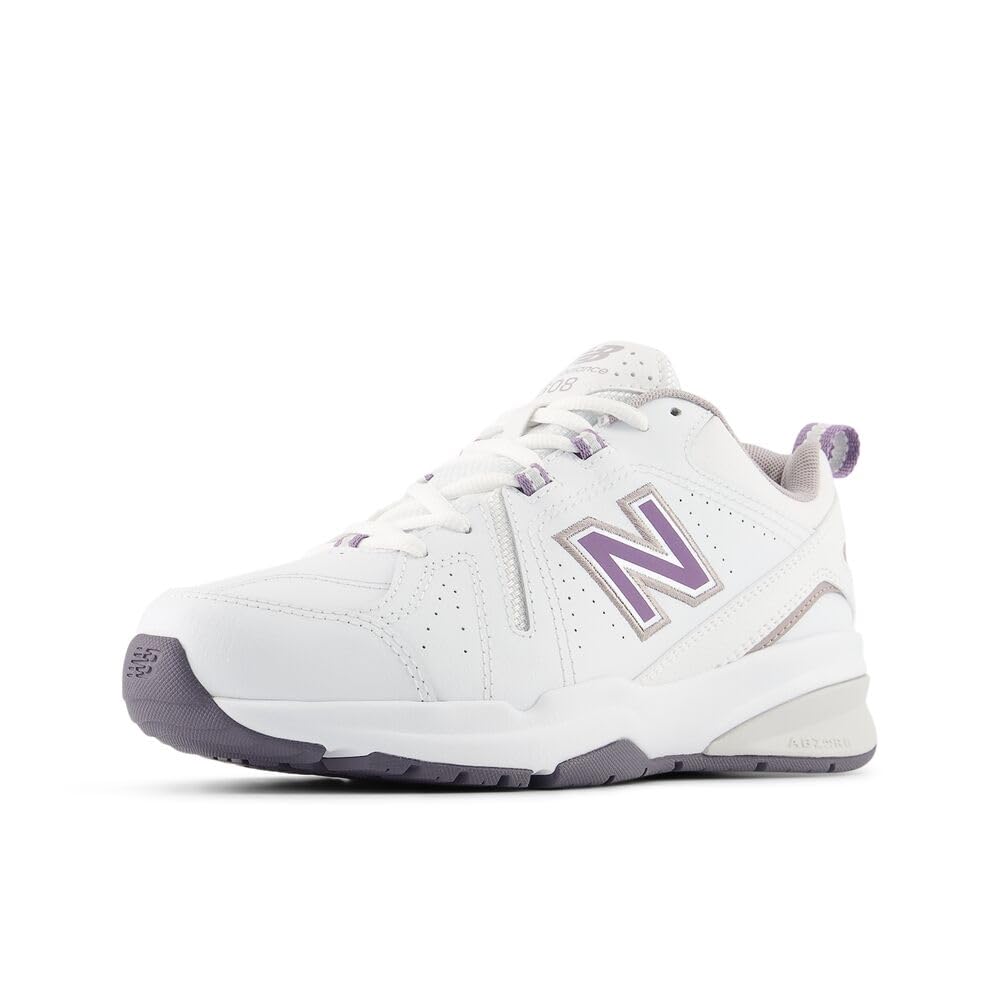
2. New Balance Women’s 608 V5 Casual Comfort Cross Trainer
The workday workhorse that supports your midfoot from a morning commute to a closing shift.
The defining number here is the internal midsole shank, a stiff insert that runs through the middle of the shoe and keeps your arch from folding under weight. Pair that with the ABZORB heel crash pad, which soaks up landing impact every time your heel hits the ground, and you get a shoe that protects you on an eight-hour standing shift rather than just a forty-minute gym session. A molded PU insert adds another supported layer underfoot, and the dual density collar foam wraps the ankle.
Where this one separates from the stiffer gym picks is the upper. Sturdy suede holds its shape and breaks in over time, and the Phantom Liner interior keeps seams to a minimum so nothing rubs against your arch or heel. The relaxed fit last gives you room across the forefoot. Owners describe it as a proven favorite for standing work, and the wide-feet crowd is well represented — this is a shoe that gets bought repeatedly for people who stand all day.
Two caveats worth knowing. The suede upper is warmer and heavier than mesh, so a sweaty gym session is not its best setting. And the cushioning earns a mixed verdict — most feet feel great, but a minority find it firm. Treat it as a support-first everyday cross trainer, not a cloud. Durability draws the same split: plenty of pairs wear well, and a few fall apart early. The 608 V5 is the sensible pick for anyone whose day is longer than their workout.
The support layer nobody sees: the internal shank and ABZORB heel pad are working inside the shoe, holding your arch and absorbing landings without adding visible bulk.
Right call for: nurses, retail staff, and anyone logging long hours on their feet who still wants a cross trainer.
Skip these if: you want a breathable mesh shoe for high-sweat gym circuits.
3. New Balance Women’s 857 V3 Cross Trainer Shoes

A stability post under the midfoot, built to keep your arch from rolling through a lateral shuffle.
A ROLLBAR stability post is the headline. It is a firm structure under the midfoot that resists the inward roll a collapsing arch produces during side-to-side moves — the exact motion that makes a lot of neutral trainers feel unstable. Combined with a PU insert underfoot, the 857 V3 gives your arch something solid to press down onto. If a lot of arch-support shoes flex like a sock, this one holds its line.
The all-leather upper adds durability and keeps the shoe’s shape over time. That sturdier build helps when you are moving laterally across a gym floor or walking your morning commute in the same pair. The shoe is designed for that dual role: gym-ready and everyday-wearable. Where lateral stability is the whole job, this pair stays composed.
The trade-off is fit. The 857 V3 runs on the narrow side, so plenty of buyers love the close hold while others find it too tight — a wide-footed buyer should treat this as a narrow shoe and size accordingly. Comfort draws a split verdict too, with satisfaction and soreness in roughly equal measure. The shoe deserves its place for one clear reason: it is the most firmly structured arch-support option on this list, and it delivers that structure where your foot actually needs it.
Pick this when: your workout involves cutting side to side and you want a firm post under your arch.
Look elsewhere if: your feet run wide and you need generous toe room.
4. Mizuno Women’s Wave Lagacy

A wave plate under the midfoot for athletes who want traction on the field and support in the rack.
The Wave Lagacy is a cross trainer built around Mizuno’s proprietary Wave plate, a shaped midsole piece that adds structure and stability underfoot. That plate is the reason this shoe is worth a premium consideration — it gives you a supported platform without adding the rigid feel some stability shoes carry. The X10 high-performance outsole adds traction, so you can pivot and push through a practice session without your foot sliding on the shoe’s platform.
Arch support is the aspect owners praise first, and they pair that with a lightweight feel and easy-on-the-eyes colors. The shoe is designed for athletes who move between the practice field, the weight room, and the travel to the next game — that versatility is real here. It is the only pair on this list that reads as a multi-sport trainer rather than a specialist.
Here is where the honesty starts. This shoe runs small, so try a half size up before committing — fit is the most discussed concern and the sizing complaint is the recurring one. Durability is also a point of friction, with some pairs breaking down early. That does not undo what the Wave plate does well under a trained foot, but it is the reason this one lands fourth in the running order and not higher. Treat it as a support-focused trainer for athletes who will rotate it, not a daily beater.
What the plate buys you: a structured midsole platform plus X10 traction, so your foot stays composed through lateral moves without feeling boxed in.
Where the caveat sits: sizing runs tight and long-term wear is a mixed report — half-size up and rotate it.
Best match: athletes trading between field work and the weight room who want a supported midsole with grip.
Not for: buyers who want one shoe to last multiple hard seasons on its own.
5. G-DEFY MATeeM Women’s Cross Trainer Shoe
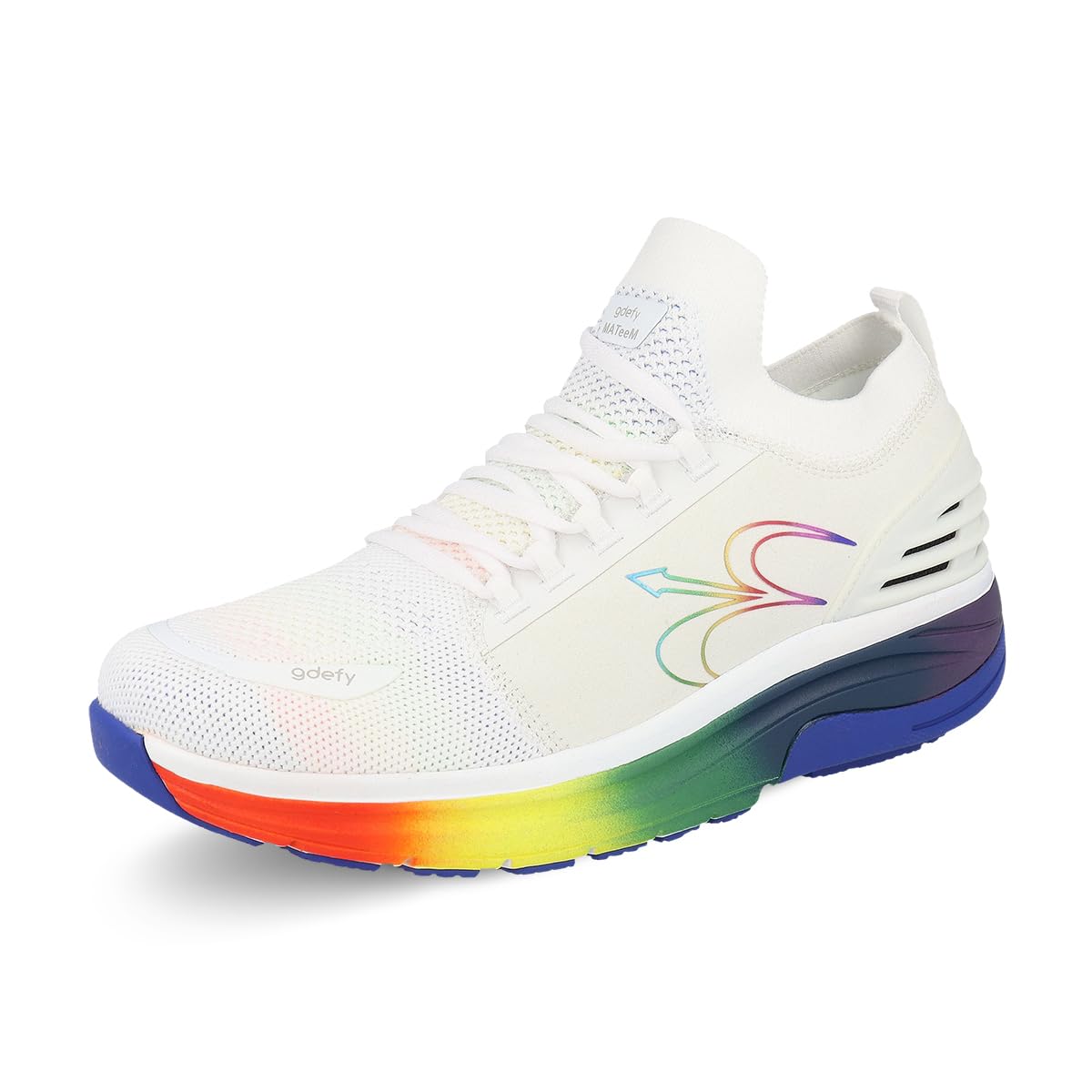
A rocker sole that rolls your foot heel to toe so a long shift on your feet stops grinding.
VersoShock technology and a rocker sole set the direction here. The rocker shape guides your foot through a heel-to-toe roll on each step, which is the physical reason this shoe suits prolonged standing and walking better than a flat gym trainer. Heel support and arch support are both built into the design, and the shoe ships with a free orthotic you can drop in as a starting point. At 2.45 pounds it is the heaviest listed pair here, just past the Under Armour TriBase Reign 6 at 2.4 pounds — the structure carries the weight.
Width is where this pick earns its keep. It comes in three tiers — M for standard, W for wide, and XW for extra wide — and the maker states W is roughly a quarter inch wider than standard and XW roughly half an inch wider. That is genuine room for feet that cannot squeeze into a narrow cut. Sizing runs true, with a half size up recommended if you are between sizes or unsure.
Now the fit note. This is a shoe people love or fight. Comfort earns the strongest praise, and buyers describe walking with almost no pain and their feet no longer aching — but fit draws mixed reviews and the sizing runs inconsistently, so some wide-footed buyers still find it snug. Expect a short adaptation period too: the maker suggests wearing them one to two hours daily for the first three to five days while your body adjusts to the rocker, and starting on flat surfaces before stairs. Give it that break-in and the roll becomes natural.
Why it suits long days
- Rocker sole guides a heel-to-toe gait that eases prolonged standing and walking
- Three width tiers including wide and extra wide give real room
- Ships with a free orthotic to start from
- True-to-size fit with clear guidance for between sizes
What to plan around
- Rocker sole takes a few days to feel natural
- Fit runs inconsistently for some wide-footed buyers
This is your shoe if: standing all day is the job and you want support that rolls you forward.
Walk past it if: you lift heavy and want a low, flat platform under a barbell.
Understanding the Specs
Stability post / heel counter
A stability post is a firm insert under the midfoot that resists inward roll — the New Balance 857 V3 uses a ROLLBAR post for this. A heel counter is the stiff cup around the back of the shoe that holds your heel still. Together they are the real arch support, because they stop your foot from collapsing during side moves and heavy lifts. A soft insole alone cannot do that job.
Midsole density split
A dual-density midsole means the foam is softer in the forefoot and firmer in the heel, as on the Under Armour TriBase Reign 6. Softer forefoot lets your toes flex during lunges, firmer heel keeps your ankle quiet during a lift. It is a way of matching cushioning to the job each part of your foot does.
Rocker sole
A rocker sole has a curved profile that rolls your foot from heel to toe on each step instead of letting it land flat. That roll is why it suits prolonged standing and walking, and the G-DEFY MATeeM builds its design around it. Expect a short adaptation period while your gait adjusts.
Midfoot shank
A shank is a stiff strip that runs through the middle of the shoe’s sole. It keeps the shoe from folding in half, which keeps your arch supported when you put weight through it — the New Balance 608 V5 uses an internal midsole shank. Without one, a flexible shoe can bow under load.
FAQ
Do arch support cross trainers work for wide feet?
Can I use arch support cross trainers for running?
How long does a break-in period take?
Are these shoes good for plantar pain or prolonged standing?
What is the difference between a stability post and a rocker sole?
Do these cross trainers run true to size?
Which pair is best for heavy lifting?
Are these shoes breathable enough for sweaty workouts?
Can I remove the insole and use my own orthotic?
How do I know if a cross trainer really has arch support?
Final Thoughts: The Verdict
The best arch support cross trainers pick for most lifters is the Under Armour TriBase Reign 6: three contact points, an external heel clip, and a dual-density midsole keep you planted under a barbell, and it holds 4.5+ stars across 800+ ratings. If your day is spent standing rather than squatting, the New Balance 608 V5 gives you the internal shank and ABZORB heel support that suit a long shift. For firm lateral stability, reach for the New Balance 857 V3 and its ROLLBAR post. Buy for how you spend your hours, not just your workouts — the midfoot structure is what keeps your arch quiet all day.
How We Picked
We do not accept paid placement. Every pick is matched to a real buyer and a real use-case; we do not hands-on test units.
Sources & Methodology
Specifications: manufacturer listings and product documentation. Review insights: verified customer reviews, as of November 2026. Pricing: not shown on this page (it changes often); check the current price via the retailer link.
As an Amazon Associate, Gadgets Feed earns from qualifying purchases. This does not affect which products we feature.